


LG K8 and LG K10 hands on: mid-range moneymakers
LG didn’t bring the big guns to CES 2017, but it did bring the guns that make money. The K series – short for Kinetic and spiritual successor to the now-defunct L series – fit comfortably in the budget mid-range spectrum with sub-$200 price points. We’re only covering the two higher-end variants here, the K10 and K8, but LG also presented the even-lower-end K4 and K3.
See also:
Best cheap Android phones
2 weeks ago
As the K series model numbers decrease, so too do their display sizes. The K10 is the largest of the bunch at 5.3 inches while the K8 comes in at 5 inches. As an upgrade to last year’s K series, the entire range of 2017 K models feature IPS in-cell displays. Both the K10 and K8 have HD resolution and share a very similar design generally.

Battery capacity increases are thankfully part of the updated package, with the K10 packing a 2,800 mAh removable battery – up from 2,300 mAh last year – and the K8 a 2,500 mAh cell, up from 2,125 mAh. The K10 also gains a fingerprint scanner and USB OTG support, both of which the K8 misses out on (although it still has a rear-mounted power button). On the software front, both devices run Android Nougat out of the box.
Camera resolutions get a nice bump, with both models sporting a 13 MP/8 MP combination, however the K10’s selfie shooter is a 120-degree wide-angle lens. Both devices feature LG’s Ultimate Selfie, Gesture Shot, face detection Auto Shot and soft-white selfie “flash”, enabled via a illuminated screen when shooting with the front-facing camera.

On the specs side, the K10 packs an octa-core MediaTek MT6750 chipset clocked at 1.5 GHz paired with 2 GB of RAM and 16 GB ROM with microSD expansion up to 2 TB. The LG K10 will be available in black, gold and titan (gray) colors.
The K8 is powered by the quad-core Snapdragon 425 (MSM8917) clocked at 1.4 GHz with 1.5 GB of RAM and 16/32 GB of storage with microSD expansion up to 32 GB. The K8 is available in silver, titan, dark blue and gold color options.

Both phones weigh 142 grams, despite their difference in size, and for no particular reason feature a microUSB charging port. Fortunately, their mass tier status also means they’re holding onto the 3.5 mm headphone jack. The speaker grill in both cases is mounted on the rear.
There’s nothing terribly special about the new K series devices to get hardcore Android fans excited about, but the specs upgrades across the board, Android Nougat and nice camera and battery bumps will ensure these phones get lots of play in the mass tier market. Exact pricing and release details will be available in the coming days.
Tesla’s Gigafactory ramps up to full battery production
Following earlier production tests, Tesla’s Gigafactory is now pumping out Powerwall 2 and Powerpack 2 energy storage products at full speed, with Model 3 cell production set to follow next quarter. By 2018, it’ll produce 35 GWh of lithium-ion cells per year, “nearly as much as the rest of the entire world’s battery production combined,” the company wrote.
The Gigafactory, a joint venture between Tesla and Panasonic, is still less than 30 percent of its eventual 4.9 million square foot size. However, the company needs lots of batteries and needs them fast, considering that it received 400,000 pre-orders for the $35,000 Model 3. So, it’s using a phased approach by starting now and expanding later, which “also allows us to learn and continuously improve our construction and operational techniques,” Tesla wrote.
The company said battery cell costs will decline as much as 30 percent by 2020 as economies of scale and increased automation kicks in. At full tilt, it will produce enough for 1.5 million cars a year, about half of Ford’s annual production. Despite using robots throughout the factory, Tesla and Panasonic say they’ll hire several thousand local employees in 2017 alone. “At peak production, the Gigafactory will directly employ 6,500 people and indirectly create between 20,000 and 30,000 additional jobs in the surrounding area.”
Source: Tesla
Samsung will ‘soon’ reveal the cause of Galaxy Note 7 fires
Samsung might finally be ready to bring the Galaxy Note 7’s fiery story to a close. The company opened up its CES keynote with a promise that it would “soon” report on the root cause of the Note 7’s battery fires. That’s not exactly a clear timetable, but it indicates that Samsung is finally close to an answer — important when the tech giant has been stumped for months. And when South Korean newspaper JoongAng Ilbo cited sources claiming that Samsung would shed light on the issue in January, “soon” may be a matter of a few weeks.
Whenever an explanation arrives, it likely won’t come soon enough. The company lost a lot of trust (and money) after the rash of battery fires, and there’s a real concern that lingering suspicions could hurt sales of the Galaxy S8 and other mobile devices. How many people do you know who think the issue is with all Samsung phones and not just one? The quicker Samsung can prove that this mistake won’t happen again, the more likely shoppers are to focus on the future rather than dwelling on the past.
Click here to catch up on the latest news from CES 2017.
Apple to Announce Q1 2017 Earnings on January 31
Apple today updated its investor relations page to announce that it will share its earnings for the first fiscal quarter of 2017 (fourth calendar quarter) on Tuesday, January 31.
The earnings report will take a look at iPhone 7 and iPhone 7 sales throughout the holiday quarter, as well as sales of the new MacBook Pro that was introduced in October.
For the fourth quarter of 2016, Apple posted revenue of $46.9 billion and net quarterly profit of $9 billion, or $1.67 per diluted share. That was down from $51.5 billion and net quarterly profit of $11.1 billion, or $1.96 per diluted share in the year-ago quarter.
Apple’s guidance for the first quarter of fiscal 2017 includes expected revenue of $76 to $78 billion and gross margin between 38 and 38.5 percent. Based on Apple’s estimates, Q1 2017 will mark Apple’s return to growth following its first annual revenue decline since 2001.
Apple will release its quarterly earnings statement at 1:30 p.m. Pacific Time (4:30 p.m. Eastern Time), with a conference call to follow at 2:00 p.m. Pacific Time (5:00 pm. Eastern Time). MacRumors will provide live coverage of the results and the call.
Discuss this article in our forums
The Ricoh R spherical camera is designed for 360-degree live streaming
The Ricoh R offers 24-hours of 2K 360-degree streaming.
Building on the success of the Theta, one of last year’s best 360-degree cameras, Ricoh has announced the Ricoh R — a camera designed for long spherical live-streams.

Under the new “ruggedized” chassis are internals that mark an improvement on the predecessor in almost every way. The output stream is at 2K and 30 frames per second. The video can be stitched from the two fisheye lenses in real-time and use the EPF (Equirectangular Projection Format) standard for spherical streams. You can output the stream through HDMI or USB as well as stream directly to an SD card for offline use. For live-streaming, Ricoh says you’ll be able to run a stream for a full 24-hours as long as you supply power.
While still not quite photo-realistic VR, it gets close. The Ricoh R should make for a great way to stream 360 videos without spending thousands of dollars.
Developer kits are expected to ship later in 2017.
See at Ricoh
Tango and Daydream finally coexist in a single phone thanks to the ASUS ZenFone AR
Finally, Google’s AR and VR vision in a single phone.
Google’s vision for augmented reality and virtual reality are built by separate teams with different goals, but the things they have in common are significant. First, despite not having massive user bases right now, Tango and Daydream have healthy lists of apps with high profile software exclusives.
Second, there are plenty of would be fans wondering if their next phone will support either of these platforms. The obvious answer for those eager to dive headfirst into VR and AR would be a single phone with both experiences onboard, but the first phone with Tango onboard was only built with AR in mind and would struggle to offer a quality Daydream experience.
Fortunately for those eager to be a part of Google’s reality platforms, ASUS has stepped in with a single phone that handles both Daydream and Tango. Meet the ZenFone AR!

As the second partner for Tango, ASUS had some big shoes to fill. Instead of matching Lenovo’s massive 6.4-inch body to support the Tango sensor setup and a reasonable battery, ZenFone AR slims things down a little to 5.7 inches. While that’s still a little on the big side by current smartphone standards, ASUS and Google have clearly worked together to address the size requirements for Tango.
The camera array required to make Google’s Tango software work well has now been clustered together at the top in an system ASUS is calling TriCam. The Tango camera requirements haven’t changed though, which means on the back of the ZenFone AR you get a motion tracking camera, a fisheye depth sensing camera, as well as a standard 23MP Sony IMX318 camera sensor. That sensor offers a few more megapixels than what Lenovo offered in the Phab 2 Pro, but the real benefit will be greater functionality in low light.
ZenFone AR will handle Daydream apps when in a Daydream View, and Tango apps when you are in Tango Mode. No crossing of the streams here.
The other thing that a 2560×1440 resolution is going to be good for, when you aren’t creating a dinosaur exhibit in your living room, is Google Daydream. ASUS is using the Snapdragon 821 processor with 6GB or RAM in this device, which means there’s more than enough power to handle Daydream apps and a display that is more than capable of offering a great visual experience.
Qualcomm, Google, and ASUS have all worked closely together to ensure the 821 is up to handling both Tango and Daydream tasks, though Google is quick to point out that there will be no Daydream apps that use Tango to offer any kind of hybrid experience. This phone will handle Daydream apps when in a Daydream View, and Tango apps when you are in Tango mode. No crossing of the streams here.

ASUS is also talking up the speaker and thermal system in this new ZenFone. A 5-magnet speaker is coupled with the use of DTS Virtual Surround Sound ensures audio through headsets and the equipment baked into the phone will be loud and capable, with Hi-Res audio supported out of the box. For thermal management, ASUS claims a “sophisticated vapor cooling system” is in use on the ZenFone AR. This thermal system appears to be similar to Samsung’s “liquid cooling” on the Galaxy S7, which is effectively a copper heat pipe with a small amount of vapor inside to help dissipate heat more effectively.
While being Tango and Daydream capable are the big points here, and clear signs that these two technologies may soon be under one “roof” at Google is awesome, the ZenFone AR is also looks like a decent phone. The design language shows clear ASUS features in a form factor that handles the physical space required by the TriCam array quite well.
There’s an almost Nokia PureView 808 look to the back, which is a nice step forward from what was available last year if you wanted the Tango experience. The only thing missing now is a price tag, which ASUS says it will announce at a later date.
ASUS ZenFone 3 Zoom joins the dual-camera train, adds a 5000 mAh battery for good measure
ASUS heard cameras and batteries are a big deal right now.
It’s no surprise that two of the biggest things many people look for in a smartphone right now are camera quality and battery life. Photo quality has dramatically improved over the las two years, and manufacturers are trying new things to see what the most important next step is going to be.
In the process, many of these phones wind up in the 5-inch range with just enough battery to get you through a busy day. Sacrificing camera quality for battery life isn’t fun, though, but if you look back at 2016 that’s largely what happened.
ASUS seems to think they have the camera-focused phone with the least amount of compromise, and a big part of that experience is the 5000 mAh battery stuffed inside. Check out the new ZenFone 3 Zoom.

Unlike its rather disappointing predecessor, ASUS is not using a custom physical zoom mechanism in the ZenFone 3 Zoom. As cool as it was to use something like that in a phone, more moving parts in something you’re likely to drop has its own problems. Instead, ASUS is joining the dual-camera crowd. The ZenFone 3 Zoom is packing a pair of 12MP sensors, one with a 25mm wide-angle lens and one with a 56mm lens to offer 2.3x optical zoom.
If you’re thinking that sounds eerily similar to the iPhone 7 Plus dual-camera deployment, you’re mostly right. Apple’s optical zoom is limited to 2X, and ASUS has an ƒ/1.7 aperture instead of the ƒ/1.8 found on the iPhone. While these may seem like minor differences on paper, they may lead to real-world improvements.
It’s clear ASUS has been watching as people are frustrated with trading battery for camera tricks.
The physical camera is just the start of efforts made to ensure this camera is special. ASUS is using two Sony IMX362 sensors with 1.4-micron pixels to ensure the device can hold its own in low light, and claims Dual Phase Detection Auto Focus will ensure every phono is nice and crisp. Full manual mode and RAW support sit alongside continuous autofocus when recording in 4K as among the top features, though ASUS warns not all of this will be available until the phone is updated to Android 7.0. It will launch in February with Marshmallow.

Powering this impressive camera, and the rest of the hardware encasing it, is Qualcomm’s reliable Snapdragon 625 processor. When coupled with the 5000 mAh battery, this phone becomes capable of crazy things like recording 6.4 hours of 4K video on a single charge or sitting on standby with 4G radios enabled for up to 40 days. The 5.5-inch 1080p display is covered in Gorilla Glass 5 and works with the aluminum body to better absorb impacts from drops as well, making the whole package come together for something clearly built for photographers. Perhaps most impressive is how ASUS managed all of this in a phone only 7.83mm thick and weighing in at 170g.
There’s still a lot we don’t know about the ZenFone 3 Zoom, but it’s clear ASUS has been watching as people are frustrated with trading battery for camera tricks.
ASUS plans to release ZenFone 3 in February, but is not currently ready to announce pricing and storage options. This could be a great solution for anyone eager to to more with phone cameras, but we’ll know a lot more in the coming days!
We’re giving away an Honor 6X to three Android Central readers!

Want to win a brand new Honor 6X? Live in the U.S.? You’re in the right place!
Huawei has taken to CES once again to unveil its latest device, the Honor 6X. Keeping in the tradition of this line, the Honor 6X comes in at a budget-friendly price of $249 — and though it has the sort of mid-range specs you’d expect, there are a few neat bonuses here you don’t always find on a phone of this price.
The 6X offers a few nice-to-have features and a solid metal body for an affordable price. Pre-orders start January 4, with full sales starting on January 10 from Honor’s own website, as well as other online retailers. But while you wait, why not enter to win one for free? Keep reading for all the details.
THE GIVEAWAY: Head down to the widget at the bottom of this page. There are multiple ways to enter, so complete all of the tasks for maximum entries and your best shot at winning! You can also come back daily and enter again for even more entries! The giveaway is open until January 9th, and the winner will be announced right here shortly after the close date.
Please note that due to sponsor restrictions, this giveaway is only available to Android Central readers in the U.S.. All winning entries are verified and if the task was not completed or cannot be verified, a new winner will be chosen.
Good luck everyone!
We’re giving away an Honor 6X to three Android Central readers! Enter here!
Amazon is building the next important OS, and Google can’t keep up
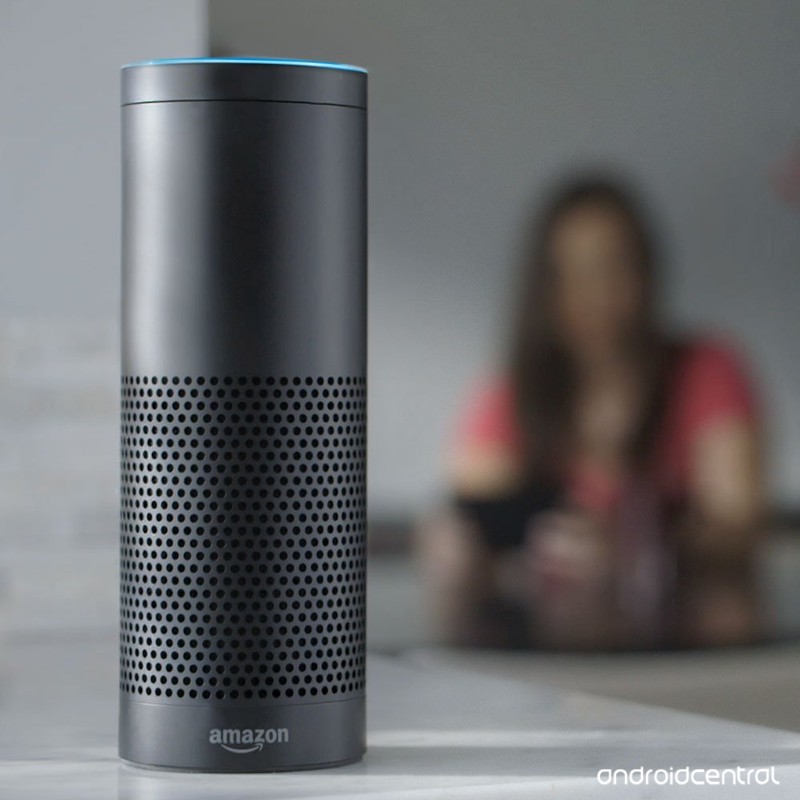
Alexa is an operating system, and that could mean trouble for Google.
Google made a fundamental mistake by launching Google Home two years after Amazon Echo, says Ben Thompson of Stratechery. Amazon’s Echo and its growing lineup of first-party hardware, including the Tap and Dot, are less significant to the company’s future than Alexa itself, the voice-enabled operating system that seems to be growing in reach and intelligence more quickly than any other.
The Echo created its own market: a voice-based personal assistant in the home. Crucially, the home was the one place in the entire world where smartphones were not necessarily the most convenient device, or touch the easiest input method: more often than not your smartphone is charging, and talking to a device doesn’t carry the social baggage it might elsewhere.
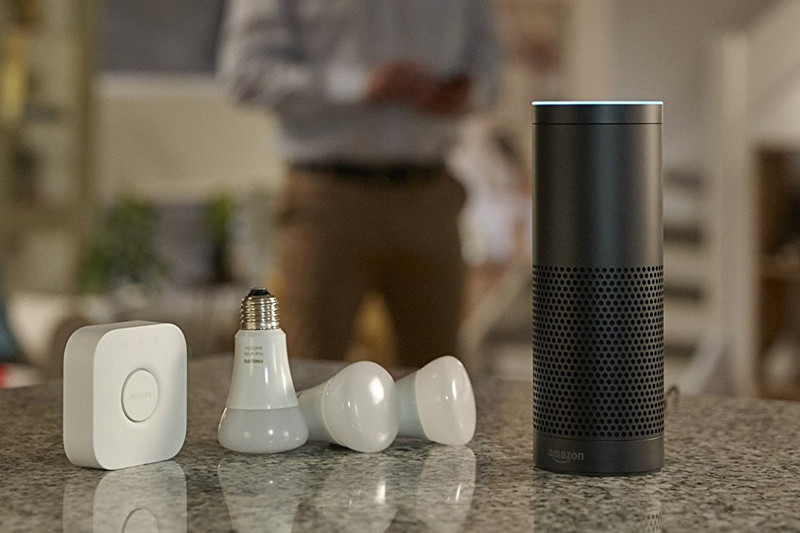
Thompson says that Alexa capitalized on the home automation trend at the perfect time, and because Alexa is not linked to any one piece of hardware, it can exist in as many rooms as a family can afford, without taking much away from the unassailable relationships we have with smartphones today.
Amazon seized the opportunity: first, Alexa was remarkably proficient from day one, particularly in terms of speed and accuracy. Then, the company moved quickly to build out its ecosystem in two directions:
First, the company created a simple “Skills” framework that allowed smart devices to connect to Alexa and be controlled through a relatively strict verbal framework.
That simplicity has allowed vendors from Sonos to LG to seamlessly integrate Alexa into their existing lineups.
Secondly, “Alexa” and “Echo” are different names because they are different products: Alexa is the voice assistant, and much like AWS and Amazon.com, Echo is Alexa’s first customer, but hardly its only one. This year CES announcements are dominated by products that run Alexa.
That’s the beauty of Alexa: it doesn’t cost the vendors anything (or at least, very little) to integrate, and because all that’s needed is a microphone, a speaker and a connection to the internet — Amazon itself does all the hard work in the cloud backend — it can scale beautifully. And as we’ve seen with products like the Echo Dot, Alexa is better the more places it’s in.
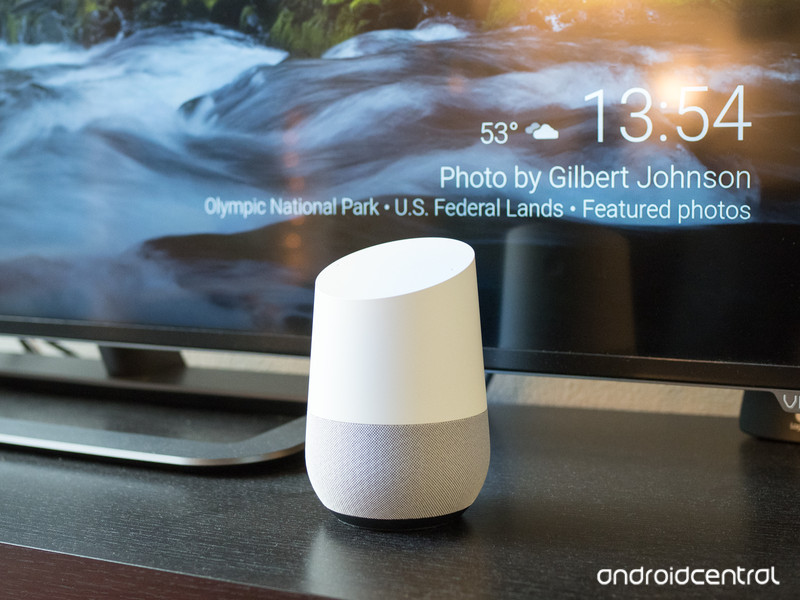
Google Home is arguably a better product than the Echo, that’s no doubt: it’s sleeker, cheaper, and even in its infancy, far more intelligent. But Thompson argues that Google still relies too heavily on needing a phone in-hand, and that its primary business model, search advertising, does not have the revenue potential in a voice-first product. Amazon, on the other hand, can afford to give Alexa away for next to nothing because it fosters the single-action purchase intent that fuels the company’s core ecommerce business. Thompson explains:
Amazon, meanwhile, doesn’t need to make a dime on Alexa, at least not directly: the vast majority of purchases are initiated at home; today that may mean creating a shopping list, but in the future it will mean ordering things for delivery, and for Prime customers the future is already here. Alexa just makes it that much easier, furthering Amazon’s goal of being the logistics provider — and tax collector — for basically everyone and everything.
So what do you think? Is he right? Wrong? Discuss it in the comments below!
See at Amazon
Amazon Echo
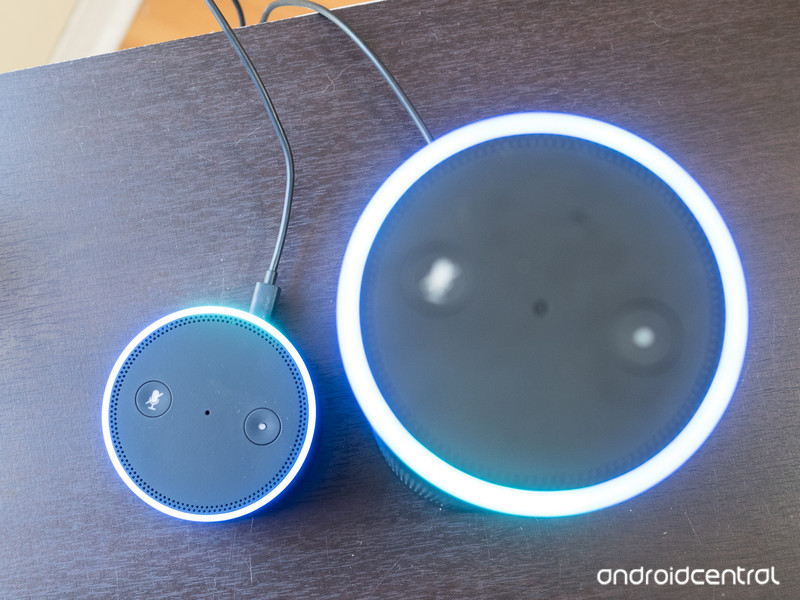
- Amazon Echo review
- Echo Dot review
- Top Echo Tips & Tricks
- Tap, Echo or Dot: The ultimate Alexa question
- Amazon Echo vs. Google Home
- Get the latest Alexa news
Amazon
Samsung’s new Chromebook is a convertible with a stylus
Ready for a Chromebook built for the Android apps era?
Samsung made one of the first Chromebooks back in 2011, and has made a few different models over the years, but the new Chromebook Pro and Plus are making a big statement about Samsung’s commitment to Chrome OS. Designed in conjunction with Google, these are the first Chromebooks to truly be designed for full hardware support of Android apps on Chrome OS.
The Chromebook Pro and Plus are full 360-degree convertible Chromebook, working in both the traditional notebook form factor or flipping around to work as a touchscreen tablet. Samsung made the device rounded all around, making it comfortable to hold in every orientation.
But convertible Chromebooks aren’t a new thing, so what makes these different? Samsung built in the same accelerometers and gyroscopes you’d find in a smartphone, enabling the Chromebook Pro and Plus to interact fully with motion-controlled Android apps and games in a way that’s simply not been possible before now. Want to play Asphalt 8 on your Chromebook? The Samsung Chromebook Pro can do it.
As this is Samsung’s first Chromebook with touch support, Samsung did exactly what you would expect: they built in stylus support. The Chromebook Pro and Plus have a small silo on the right side in which you’ll find what is essentially a Samsung S Pen stylus, just like you’d find on a Galaxy Note phone. Pop out the pen and a quick actions menu pops up from the bottom menu.


The cooperation with Google extends to the pen — Google’s used machine learning from a corpus of anonymized handwriting and drawing to predict where your drawn line is going to go and reduce latency. There’s no personalized profile of pen use, the handwriting corpus is supposedly “good enough that we don’t really need it” and Google’s argued that a personalized profile could lead to overcorrection and poorer predicition. This machine learning predictive pen use is supposed to offer a dramatic reduction in latency (faster than a Microsoft Surface Pro with the excellent Surface Pen, they say), but in our time with the Chromebook Pro the lag with the pen in handwriting was almost unbearable. But at least the fidelity of the results was quite fine and accurate.
Both versions of Samsung’s new Chromebook are equipped with a 12.3-inch 2400×1600 LED touch display at a comfortable-as-a-tablet 3:2 aspect ratio, 4GB of RAM, and 32GB of e.MMC SSD storage. They both are going fully all-in on USB-C, sporting a pair of the reversible USB connectors and a MicroSD card slot.
So what’s different between the two? It’s in the processors.
- Samsung Chromebook Plus: hexa-core OP1 ARM processor (2x Cortex-A72 cores + 4x Cortex-A53 cores)
- Samsung Chromebook Pro: dual-core 2.2GHz Intel Core M3 6Y30
The Chromebook Plus will be priced at $449 when it lands in February, while the Chromebook Pro will come later in Spring 2017 for an undisclosed but likely higher price.
 AIVAnet