


Galaxy S7 on Nougat: Exploring the new notifications and quick settings

Samsung brings a fresh visual style to a familiar part of Android — along with a bunch of new features.
Notifications are a staple part of the Android experience, and they’ve been changed up in a big way in version 7.0, Nougat. Notifications are more functional and information-dense than ever, with inline replies and bundled notifications allowing you to see and do more without opening the app.
In its Nougat update for the Galaxy S7 and S7 edge, Samsung has expanded upon Android’s base feature set, and overhauled its quick settings panel in the process.
Here’s what we’re currently seeing in the Android 7.0 beta for the Galaxy S7. All this stuff is subject to change, but most this will likely carry over to the final Nougat update.
Everything we know from stock Nougat

Samsung hasn’t messed too much with Nougat’s standard notification layout. You get big, full-width notifications with ample information density. Alerts for many messaging and email apps like Gmail, Hangouts and Samsung’s own SMS app can be expanded to show bundles of notifications. And inline reply makes it easy to respond to messages directly from within the
Elsewhere, the color scheme has been tweaked somewhat, in keeping with Samsung’s new, lighter design language, and there’s a button to jump straight to notification settings alongside the standard “clear all” shortcut.
New quick settings and customizations

Samsung has completely overhauled its quick settings area, and the result is something that behaves a lot more like stock Nougat — with a bit of added visual flair, and some extra functionality thrown in. Swiping down from the notification shade expands the single line of shortcuts into a full grid layout, and from there you can scroll horizontally to see even more settings shortcuts. In addition to moving the icons around, it’s possible to change the arrangement of the grid — 3×3, 4×3 or 5×3 icons — and swap around the placement of the brightness slider, so it’s always at the top.
As well as standard options like Wi-Fi and Bluetooth, the new quick settings area adds shortcuts for the blue-light filter mode (for reducing eye strain), high-performance mode, battery-saving mode, the Always-On Display and private mode.

Search
Samsung has been quietly been building out in-app search features throughout its software, and there’s now a top-level search bar located at the top of the quick settings area.
This lets you find nearby devices, apps on the phone, files on your internal storage, contacts in your address book, appointments in your calendar and just about anything else you can think of.
The implementation isn’t perfect in the current build, often throwing up a lot of irrelevant info in no particular order. But it’s an improvement on the old S Finder setup included on older Samsung phones.

Quick connect
Samsung’s quick connection assistant has moved from being a persistent bar at the bottom of your notification area — something we’d often turn off shortly after setting up the phone — to a smaller and less intrusive toolbar that only appears when it’s got something useful to show.
Quick connect shows devices, like Bluetooth speakers or headphones, or Wi-Fi printers, that are connected to the device, along with relevant options. For instance, with audio devices, you can choose where you want to have you media and call audio piped to, and quickly jump to Bluetooth settings to configure things further.
The new notification area us just one of the many new features in Android 7.0 Nougat on the Galaxy S7. Be sure to check out the rest!, and let us know what you think down in the comments!
Android Nougat
- Android 7.0 Nougat: Everything you need to know
- Will my phone get Android Nougat?
- Google Pixel + Pixel XL review
- All Android Nougat news
- How to manually update your Nexus or Pixel
- Join the Discussion
Samsung Galaxy S7 and S7 edge
- Galaxy S7 review
- Galaxy S7 edge review
- U.S. unlocked Galaxy S7
- Should you upgrade to the Galaxy S7?
- Best SD cards for Galaxy S7
- Join our Galaxy S7 forums
Unlocked
AT&T
Sprint
T-Mobile
Verizon
Android Pay is now live in Ireland

Now available for MasterCard and Visa users.
Android Pay is now live in Ireland for AIB and KBC customers, with support for more banks set to be added in the coming months. With Android Pay, customers in the country will be able to pay with their phones at thousands of retail stores, including Eason, McDonald’s, Tesco, SPAR, Londis, Boots, KFC,and more.
The mobile payments service should work anywhere contactless credit and debit cards are accepted. Android Pay can also be used to make payments within apps like Adverts, Hotel Tonight, Uber, Deliveroo, Fancy, and more.
From Pali Bhat, global head of payments products at Google:
We feel it’s going to provide Irish users with a lot of choice in using their device and being able to pay. We expect Irish users to start adopting mobile payments en masse.
Whenever you use Android Pay at store, you never share your credit card info with the store. If there is any sort of breach at the store, you’re protected because you haven’t shared your card info with them.
If you have a compatible card, you can now download Android Pay.
Google’s Daydream performance promises are falling short

Not all Daydream-ready phones are created equal.
News that Google had cleared Lenovo’s Moto Z and Moto Z Force for Daydream was cause for celebration. Users who had already purchased a great phone were being granted access to Google’s new VR platform without needed to buy new hardware, and the existence of MotoMods meant you could strap a massive battery to the back of your Moto phone and enjoy Daydream for much longer than any other phone. Google’s vision for Daydream, a platform that delivers high quality VR to many people without requiring a specific brand, seemed to be coming true faster than originally expected.
And then I used a Moto Z in Daydream.
Read more at VR Heads!
Pebble shuts down following Fitbit acquisition

Fitbit picks up Pebble’s software assets and IP.
Following reports from earlier today, Fitbit has officially announced that it is acquiring “specific assets” of Pebble that includes “key personnel and intellectual property related to software and firmware development.” No monetary terms were disclosed, but Bloomberg’s report suggested the deal was valued under $40 million.
Fitbit co-founder and CEO James Park said in the official announcement that Fitbit is now “well positioned to accelerate the expansion of our platform and ecosystem to make Fitbit a vital part of daily life for a wider set of consumers, as well as build the tools healthcare providers, insurers and employers need to more meaningfully integrate wearable technology into preventative and chronic care.”
Following the acquisition, Pebble will cease to operate as an independent entity. The company has already stopped taking any new orders, and has mentioned that warranty support is no longer available. Pebble has also clarified that Kickstarter customers awaiting their orders will receive refunds within 4-8 weeks.
Here’s the breakdown, straight from Pebble:
- Pebble is no longer promoting, manufacturing, or selling any devices.
- Pebble devices will continue to work as normal. No immediate changes to the Pebble user experience will happen at this time.
- Pebble functionality or service quality may be reduced in the future.
- Kickstarter backers who have not received their rewards will receive a full refund within 4-8 weeks as a chargeback to their credit cards. No further action is needed. For more information, please visit our Support page.
- Orders from pebble.com are no longer being accepted or fulfilled, including Pebble 2 pre-orders, which have not yet been charged or shipped.
- Warranty support is no longer available for Pebble watches. How-to information and troubleshooting can still be found on our Support page and in the Pebble Forum.
- Returns of pebble.com orders that were successfully completed before December 7, 2016 will be refunded by our Support Team.
- Pebble watches purchased at retail may be returned or exchanged based on the retailer’s return policy.
- Pebblers can still find replacement charging cables and other compatible accessories (bands, skins, etc.) from Amazon.com and third-party vendors like GadgetWraps and Clockwork Synergy.
- If you have any other questions about Pebble’s wind-down of operations, please visit this page.
Despite its troubles, the company managed to carve out a niche in the wearable segment, and will be sorely missed. Read Pebble founder and CEO Eric Migicovsky’s statement in its entirety below.
Dear Pebblers,
Thank you all for being such loyal supporters and champions of the Pebble community and brand. You helped start something fantastic when you backed our first Kickstarter project (and shout-out to the first inPulse users). Since then, we’ve shipped over 2 million Pebbles around the world!
However—due to various factors—Pebble is no longer able to operate as an independent entity. We have made the tough decision to shut down the company and no longer manufacture Pebble devices. This news has several major implications, and we hope to answer as many questions as possible here, in Kickstarter Update #17, and on our Support site.
Making Awesome Happen will live on at Fitbit. Our developer community set Pebble’s wearable technology ecosystem apart from the rest. No other wearable platform was more open or gave developers more freedom to create, experiment, and delight the world with beautiful watchfaces, useful apps, and unique experiences. The Pebble Dev community’s mission was to Make Awesome Happen, and they accomplished that beyond our wildest dreams.
Wearables have evolved tremendously since our Kickstarter project in 2012. Significant advancements and exciting new products on the horizon will drive the continued growth of the category. In evaluating our future, we wanted to align with a company that shared our take on how wearable technology can bring delight and utility to our lives.
While dissolving Pebble as you know today is difficult, I am happy to announce that many members of Team Pebble will be joining the Fitbit family to continue their work on wearable software platforms. Pebble’s successful approach to third-party wearable development is undeniable, and Fitbit is welcoming our expertise in this space wholeheartedly.
It is because of the close collaboration with the Fitbit team that the Pebble user experience will continue. Fitbit will maintain services so that Pebble devices continue to work as normal. Pebble functionality and service may be reduced in the future. We applaud their efforts as we collectively work to streamline this transition for Pebblers everywhere.
For nearly ten years, Fitbit has been the pioneer and leader in creating innovative health and fitness-focused devices and experiences that help people reach their wellness goals. They differentiated themselves from the competition with broad, cross-platform compatibility, a range of price points, long battery life, and a focus on design so that devices can integrate seamlessly into our lives. These are all values we championed at Pebble, so aligning with Fitbit felt natural. The arrangements were finalized today for Fitbit to acquire our technology, software, and other intellectual property (IP). Fitbit will share more about their plans in the future, but from what I’ve seen so far, it’s very exciting.
Developers have an exciting opportunity to reach and delight over 50 million users and counting. The team joining Fitbit will help the company accelerate development of the tools and resources devs need to enhance future Fitbit products with experiences that can take wearables to new heights of utility and appeal. If this opportunity excites you too, join us for the ride! The Pebble Developer Blog has more detail on how we’re bringing Pebble’s expertise in this realm to Fitbit.
It’s a bittersweet day, but I want to extend my biggest thanks to the Pebble community. Personally, one of the best feelings ever is spotting you on the train, running through an airport, or finishing a bike ride and checking your Pebble. If you catch me staring at your wrist (I’ll be the tall guy wearing a Pebble t-shirt), stop me and say “Hi.” If you’re wearing your Pebble, a drink is on me!
Thank you as well to all of Team Pebble—past and present. You’ve worked incredibly hard over the last 8 (!) years and created something amazing. It’s been a pleasure working with you and I can’t wait to see what you have in store for the future.
Yours,
Eric Migicovsky
Fashion forward Fitbit Alta available at the best price we’ve seen
Fitness trackers can be expensive, but right now you can save big on the Fitbit Alta, dropping it to the lowest price we’ve seen. Amazon is currently offering the fashion forward fitness tracker in a variety of colors and sizes for just $85, which is a savings of $45. The Alta can track how many steps you’ve taken, how many calories you’ve burned, and much more with its waterproof design.

When comparing to other trackers, the Alta is one of the best ones you can buy right now. This deal is only good for today, December 7, so be sure to act quick if you want to pick one up for yourself or someone else as a gift!
See at Amazon
Best Streaming TV Services For Cord-cutters
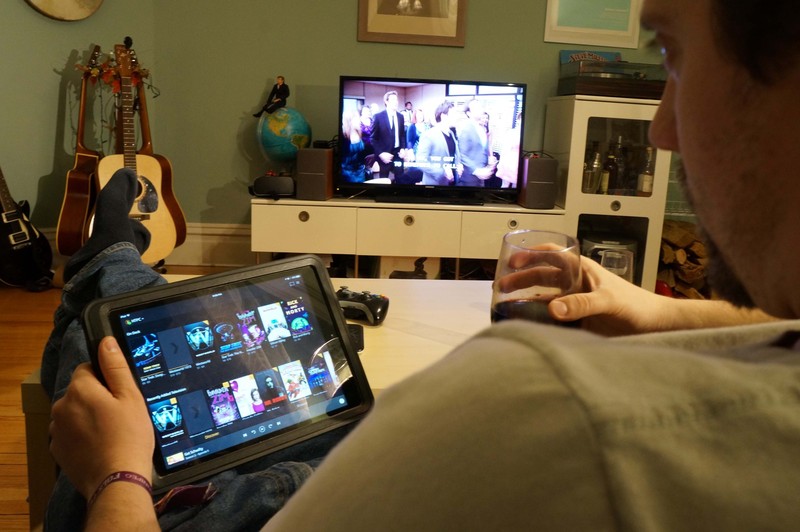
Want to join the cord-cutting revolution? Here are some services you ought to read up on!
Cutting the cord is becoming more commonplace every year. While popular streaming services such as Netflix and Hulu have done an excellent job of leading the charge, some people would love to cut the cord but still enjoy the same TV programming their cable provided provides them.
Streaming TV Services are a blend of traditional cable and streaming services that allow you to access not only on-demand but also live TV channels, so you don’t have to miss out on your favorite shows.
- PlayStation Vue
- Sling TV
- DirectTV NOW
Playstation Vue
Available for PlayStation 3 and PlayStation 4 consoles across the U.S., PlayStation Vue lets you access some of the most popular networks on television for a monthly subscription fee.
They have four different subscription packages, that range from $39.99 to 79.99 a month, meaning you should be able to find the package that is right for you. All of the packages come with a slew of channels such as AMC, Cartoon Network, CNN, Discovery, Disney Channel, E!, ESPN, ESPN2, Food Network, Fox News Channel, Syfy, USA, and more! Plus, you can add individual premium channels to any package for an additional monthly cost.
PlayStation Vue also allows you to record live TV so you can watch it later, just like a DVR, and even has an explore mode to give you suggestions of what to watch when you can’t decide.
See at PlayStation
Sling TV
The first thing that may excite you about Sling TV is its price of $20 per month, but there is more to life than just its price tag.
Sling TV is accessible through an app for Android, iOS, Roku, and Apple TV, so chances are you don’t have to invest in a device to enjoy the service. Plus it comes with some great channels which include AMC, TNT, ESPN, CNN, History, HDTV and the Disney Channel, so you’re bound to find something to keep you entertained.
Sling TV does have a few drawbacks. There is no DVR, so most channels don’t let you control playback, and right now you can only stream to three screens at a time, so if you are a family with lots of TVs on all the time that could be problematic.
See at Sling TV
DirectTV NOW
DirectTV NOW certainly sounds like an impressive deal; you get 100 channels for $35 a month, which is the most channels for the lowest price currently on the market for service like this.
You can even get local shows depending on where you live. Certain regional sports programs, as well as regional divisions of networks like NBC, are available in the major cities plus you can add premium channel like HBO and Showtime for only an extra $5 per month.
See at Direct TV
Need more cord-cutting ideas?
With the holidays coming up we’ve found some of the best gifts for cord-cutters if you need some inspiration!
Pebble is dead and your warranty expired, Fitbit finalises acquisition
We first heard the news that Fitbit was on the verge of buying Pebble at the beginning of the month, one week later and the deal has been finalised.
However, it’s not great for fans of the smartwatch manufacturer.
Fitbit has said it’s only interested in specific areas of Pebble, including “key personnel and intellectual property related to software and firmware development”. The buyout does not include Pebble hardware. That, for all intents and purposes, is being scrapped.
Instead, Fitbit will stick with its hardware designs and manufacturing processes and just take bits of Pebble’s smartwatch software to enhance its own.
- Which Fitbit is right for me?
Fitbit CEO James Park says he’s confident the acquisition will result in faster delivery of new products and software updates, with the overall aim being to better compete with rivals and to offer products that can used as part of daily life, as opposed to just fitness purposes. He added, “We saw the acquisition as an opportunity to build on our strengths and extend our leadership position in the wearables category.”
In short, Pebble is dead and the Fitbit brand will incorporate some its technologies in its own products.
How does the Pebble sale affect me?
Pebble was forced to sell up, with the figure estimated to be $40 million, after facing intense competition from other smartwatches, especially the Apple Watch. The company used Kickstarter to help fund its product, with the first edition raising more than $10 million and was seen as a massive crowdfunding success story. One that didn’t have a happy ending, however.
Pebble issued a statement about the deal and said anyone who pledged money for a Pebble 2 and not received theirs yet, or an unreleased Time 2 or Pebble Core, will receive a full refund back to the original payment method.
Anyone who already has a Pebble watch can continue to use it as normal, but Pebble said it doesn’t expect to release regular software updates or introduce new features anymore. It’s also possible that “functionality or service quality may be reduced down the road”.
Any active Pebble watches are also no longer covered by a warranty for repair or exchange.
If you have ordered and received a Pebble watch from pebble.com, you’re not able to return or exchange it, but if a return was completed before 7 December, a full refund will be carried out.
Further information can be found on Pebble’s Kickstarter page.
Comcast finally allows HBO, ESPN streaming via PlayStation 4
For those who maintain a cable subscription, one of the (many) annoying aspects is that sometimes channels have streaming apps you can’t use, despite being a paying customer. Over the years, Comcast has decided that it’s not going to allow customers to use whatever channel’s app on one platform or another, but now the PlayStation 4 is off of that list. According to a tweet, owners with Comcast subscriptions can finally log in and use the WatchESPN and HBO Go apps on their game console.
Good news: Xfinity TV customers can now log-in and access HBO Go and WatchESPN on PS4.
— PlayStation (@PlayStation) December 6, 2016
As usual, there’s no explanation as to why it took so long (HBO Go launched on the PS4 in May 2015, WatchESPN just arrived in September). Even Roku scored Comcast support for HBO streaming back in 2014. Now, Comcast is one of the notable holdouts from the Apple TV single sign-on scheme. Whatever the reason, it’s resolved in this case, so it’s time to catch up on that Westworld finale.
Source: PlayStation (Twitter)
Fitbit buys Pebble’s smarts, but not its products
The rumors were true: Fitbit is buying Pebble. Well, its talent and intellectual property, at least. The wearable maker confirmed today that it has acquired “specific assets” of Pebble, including key staff members and its software and firmware developments. Once a shining example of how crowdfunding can help smaller companies share their technology with the world, Pebble will cease the manufacturing, promotion and selling of all its devices and shut down.
Fitbit says the acquisition will enable it to bring new products to market quicker and improve those it already sells. With Pebble’s help, it also intends to develop customized products and third-party apps for corporate customers and researchers. Bloomberg reported yesterday that up to 40 percent of Pebble employees will be given the opportunity to work with Fitbit.
In a blog post, Pebble thanked its community for helping the company ship over two million Pebble wearables and detailed what customers can expect now that it is shutting down. As it stands, existing Pebble device owners will see no immediate changes, as Fitbit will “maintain services,” but the company says functionality could be impacted in the future.
The Pebble Time 2, Pebble Core, and Pebble Time Round Kickstarter Editions won’t go into final production and all backers who haven’t already received their device will be refunded. There could be a wait, though, as Pebble said it will remunerate pledges by March 2017.
It’s a sad end for Pebble, which had managed to carve out a small niche in the wearable market with its e-paper smartwatches but struggled to innovate as bigger players like Apple, Samsung and, of course, Fitbit launched similar products. The startup found it hard to find cash, cutting a quarter of its workforce in March, even though it had previously set records on Kickstarter.
“Our heartfelt gratitude goes out to each and every Pebbler for making awesome happen with us over the years,” says Pebble founder Eric Migicovsky. “Our community is vibrant. Our community is passionate. You are what made Pebble special and worth fighting for, every second of every day. We will always remember the love you showed Pebble, through thick and thin.”
Source: Pebble, Fitbit
Smart cycling glasses show data without blocking your view
You can already buy smart glasses for cycling, but they tend to have one big catch: the heads-up display partly obscures your view. That’s annoying at best, and risky at worst. Everysight thinks it can do better. It’s close to finishing development of Raptor, a set of augmented reality glasses that projects data on a transparent display on the lens. You’ll get navigation, speed, heart rate and other vital info without losing valuable visual real estate. They’ll even record your ride in HD (with sound), so you can review your performance after the fact.
You have a few choices for control, too, including buttons on the handlebars, a touchpad on the glasses themselves or voice commands. You’ll need to pair with a companion app on your phone, but that also lets you share data with other fitness apps.
A full-fledged public launch is still some distance away (Everysight hasn’t provided specifics). However, the company is taking sign-ups for a Test Pilot Program. If you ride at least 12 times a month and use fitness tech like bike computers or heart rate monitors, you might get a chance to try an early pair of Raptors. You have until December 23rd to apply, but there will be an expanded program in 2017 if you don’t make the initial cut.
Source: Everysight
 AIVAnet