


Beats Solo 3 wireless headphones review: Bass solo
Beats has been pretty quiet of late, but with the launch of the new iPhone 7 and iOS 10 the company has released four new headphones – including an update to its popular Solo range.
The Solo 3 headphones come with Apple’s new W1 chip inside, promising greater battery, greater range, and greater connectivity options for iPhone users. They will work for other brands too.
We’ve been listening to see if the Beats Solo 3 revolutionise wireless listening or if these bass-heavy cans are out-performed by the competition.
Beats Solo 3 wireless headphones review: Design
If you’ve seen the Beats Solo range before then you’ll be instantly familiar with the Solo 3. The design hasn’t really changed since the last iteration – although there are a number of new colours to match the colours of the iPhones. Yes, you now can get a finish in rose gold.
Pocket-lint
For those not familiar with the design, the over-ear Solo 3 headphones come with a hinge design, allowing you to fold them for travel. The headphones themselves are very rigid, with their plastic design sitting tight and snug on your head. That means you can shake your head pretty vigorously before they’ll fly off, but can also means that over time they can feel a bit “tight”.
That ID and iconography is clearly Beats. People who know the brand will instantly know you are wearing Beats even from a glance. The iconic “b” found on the outside of both earcups and the word “beats” across the headband make that clear.
Basic playback and volume controls are found hidden on the left earcup, while a four LED battery gauge allows you quickly see how much charge you’ve got left from the built-in battery. There is also a built in hidden mic so you can take calls and bark orders as Siri without touching your phone.
Pocket-lint
Charging is via micro USB rather than Lightning cable (that’s reserved for the new Beats X model) and there is an option to plug in a 3.5mm cable for when you don’t want to be listening wirelessly. That all means the Solo 3 are perhaps best set as the headphones for all users – iPhone or not.
Beats Solo 3 wireless headphones review: Connectivity
However, there is a lean towards Apple users because, just like the new Apple AirPods wireless in-ears released in September, the Beats Solo 3 also feature the new W1 processor. This makes connecting them to your iPhone or Apple device incredibly simple.
Turn the Beats Solo 3 on, put them near your Apple device and they connect. That’s it.
Pocket-lint
That connection profile is then shared with your Apple iCloud account – meaning you can quickly use the headphones with any other Apple devices, such as your Watch, MacBook, or iPad. It can get a little confused if you are constantly switching between devices all sat on your desk in front of you (#firstworldproblems), but on the whole, the experience is seamless.
The W1 connectivity approach is an Apple-only feature, although the Solo 3 do work with Android and any other Bluetooth device, such as a Windows laptop. It’s simply a case of connecting via Bluetooth just as you ususally would.
Beats Solo 3 wireless headphones review: Battery and range
The Apple W1 processor doesn’t just bring improved connectivity options, but also improved battery life and range compared to the earlier Solo 2 headphones.
The Solo 3 offer a whopping 40 hours of battery life (compared the 12 hours previously offered by the Solo 2), which makes a huge difference and means you won’t have to spend hours charging everyday.
Pocket-lint
If you do run out of battery the Solo 3 come with a technology that Beats called Fast Fuel technology. Put into English that means you’ll be able get three hours of playback from five minutes of charge. Good stuff.
The W1 also seems to increase range of connectivity. We’ve been able to get a good 30m away from the iPhone and still listen to music using the Solo 3. Furthermore we’ve yet to experience any dropouts that you can sometimes get with standard Bluetooth headphones (note: the Solo 3 simply use Bluetooth technology, however, the W1 is the pairing mechanism).
Beats Solo 3 wireless headphones review: Sound quality
Beats has always been known for a more bass-heavy experience, and that doesn’t change with the Solo 3 headphones. Yep, bass is the defining focus. Which is great for hip-hop and dance, but no so great for more delicate vocal and guitar led tracks.
Pocket-lint
Listening to Paul McCartney or Daniel Powter, for example, can lead the vocals feeling lost – drowned out by a sea of low-end addition from all the instruments. It just means the higher frequencies can sound a little lost. Even Adele’s powerful voice struggles at times against the bass these headphones focus on. Strangely they do cope well with classical music though.
Choose tracks that play to the headphones’ bass strengths, though, and the results are great considering their diminutive size. Artists like Massive Attack, Daft Punk, Feist, and Jay Z are all able to cope with the sound set up the headphones offer.
Verdict
The Beats Solo 3 headphones offer a great music experience for a certain listener. The W1 connectivity options and huge battery life are certainly the stars of the show for the Solo 3.
When it comes to sound quality the headphones perform, but not for all genres: as we’ve come to expect from Beats the bass heavy listen won’t suit all music tastes. Others will love that low-end focus though.
If you spend a lot of time listening to delicate vocal music then the Beats Solo 3 probably aren’t for you. However, if you’re into your Dre, West and Snoop then you’ll be as happy as if in a club – without 99 problems.
Inception announces ‘Born for VR’ content platform for everything other than gaming
Inception is a new start-up that’s determined to be the “Netflix of VR” by delivering original and compelling content to your virtual reality headsets. The team behind Inception includes several industry experts including the executive producer of Homeland. Inception’s content doesn’t include gaming, but instead comprises other VR experiences such as being able to visit the Dali Museum or attend a party in Ibiza all without leaving your home.
- Best VR headsets to buy in 2016, whatever your budget
Inception has also partnered with Boiler Room, a community for underground music fans, to broadcast live music events in virtual reality. Both companies are also working together to develop the first “Born for VR” venue that can be used by anyone to broadcast tailor-made VR content to Inception’s app.
Inception’s content is all designed and filmed specifically for VR, rather than filming something in 360 degrees and streaming it through the app. Content has an element of interactivity as well, for example, if you visit the Dali Museum you can look at different paintings and then select to view a short video that deconstructs the painting to give deeper meaning.
The Inception app is available now for Android, iOS, Samsung Gear VR and Oculus Rift, but HTC Vive and PlayStation VR apps have been confirmed. The company says its app uses proprietary streaming technology to deliver a lag-free experience whilst adding a level of “gamification and interactivity in what would otherwise be standard, linear content, adding an additional layer of immersion that allows the user to control their experience”.
- Ultimate guide to VR: Everything you need to know about virtual reality
Benny Arbel, CEO and Co-founder of Inception said: “At Inception we share the belief that VR is not just the next step in the evolution of TV, it’s a revolution of the entertainment industry”.
“No longer is the audience just a 3rd party viewer. With Inception’s born-for-VR formats, the viewer is actually the director of the content. The user can actually interact with the content and control his or her own storyline.”
Micro:Bit computer is gearing up for a worldwide rollout
The BBC micro:bit computer has been available in the UK since March this year. It’s a small circuit-board, similar to the Raspberry Pi, with an array of LEDs, a Bluetooth sensor, accelerometer, compass and two built-in buttons. It also has five rings to connect other sensors. The idea behind the Micro Bit computer is to encourage people to learn coding.
- How to get started with the BBC micro:bit computer
It’s been aimed at school children in particular, with 1 million units being sent to schools around the UK for year 7 pupils.
The project was initially spearheaded by the BBC, but now the Micro Bit Educational Foundation, a non-profit organisation led by former ARM employee Zach Shelby has taken over, and it has big plans to expand the reach of the coding computer. The computers will still bear BBC branding.
Shelby has said it’s the Foundation’s goal to “go out and reach 100 million people with micro:bit, and by reach I mean affect their lives with the technology”.
The Foundation plans to make the micro:bit available across Europe by the end of 2016 and is already developing Norwegian and Dutch-language versions of the coding web tools. The plan for 2017 is to expand into North America and China, as well as introduce upgraded hardware which will include more computing power. Shelby has said it’s more difficult than he originally thought to display Chinese and Japanese characters on the LED array.
- BBC micro:bit now available to pre-order, get your kids into coding
If you’re not a year 7 pupil or a parent of one and you’d like to get your hands on a micro:bit computer, you can. You can head to element14’s website and buy the computer on its own, or as part of a package with various extras, with prices starting from £12.99
Chrome’s experimental browser comes to Android
You no longer have to stick to your computer to try the cutting edge version of Google’s web browser. The company has started offering Chrome Canary for Android, giving you a taste of new mobile browsing features before the beta crowd gets its turn. As always, the Canary releases are something of a gamble. Google will automatically post updated versions every weekday without human testing, so there’s no guarantee that they’ll work properly or at all. Thankfully, you don’t have to ditch your regular version of Chrome. If you just want to experiment with Chrome on the side, it probably won’t hurt to give this a shot.
Source: Google Play, Chromium Blog
Venus might still have active volcanoes
We already know that Venus has more volcanoes than any other planet in our solar system. What we’re still not sure of is whether those volcanoes are still active — now a new study suggests that at least one of them exploded quite recently. A team of scientists led by Piero D’Incecco from the German Aerospace Center in Cologne took a closer look at Idunn Mons, a massive volcano on the planet that’s around 120 miles in diameter. To put that into perspective, Mauna Loa, known as the largest active volcano on Earth, is only 75 miles across.
The team combined the near-infrared imagery taken by the European Space Agency’s (ESA) Venus Express mission (see above) in 2006 and 2007 with high-res radar photos taken by NASA’s Magellan probe in the 1990s. They had to rely on different sets of images, because Venus is covered by a thick cloud that prevents telescopes and spacecraft from capturing detailed pictures. The team then used a technique that “pushed the limits of the data resolution” in order to see through those clouds.
What they found was five distinct lava flows around the volcano: one blanketed its peak, while the others flowed down to its base. Based on their findings, these lava flows coincide with the locations Venus Express’ infrared equipment identified as warm. These warm rocks also show few signs of weathering and sit atop the volcano’s other features, which don’t exhibit the same temperature.
All of these strongly suggest that the lava flows are fresh and recent additions. However, we still can’t say with 100 percent certainty that Idunn Mons continues to remain active. Japan’s Akatsuki is already orbiting Venus and beaming back data, though, and NASA is planning to launch a low-cost mission called VERITAS. If we’re lucky, they might be able to gather the data we need to finally be able to figure out if volcanic eruptions still rock Earth’s twin planet.
Via: Space
Source: DLR
The BBC Micro:bit is going global
After a bit of a slow start, the BBC’s mini computer, the Micro:bit, has now made its way to more than one million children across the UK. Designed to help bridge the computing skills gap and inspire more children to take up coding, the credit card-sized board has enjoyed support from some of the biggest names in technology including Samsung, Microsoft and ARM. With their help, the BBC confirmed today that the Micro:bit is going on a worldwide tour, thanks to the formation of a new non-profit called the Micro:bit Educational Foundation.
Sinead Rocks, Head of BBC Learning, explains that the Micro:bit was never meant to be a “flash in the pan.” The Micro:bit Educational Foundation, much like the Raspberry Pi Foundation, exists to foster the development of maker culture, offering low-cost computing to people who would not normally engage in such projects. Now, the money made from the board will go towards sustaining the seven-person company, allowing it to focus on expanding sales of the Micro:bit to other countries.

According to Zach Shelby, the Foundation’s new chief, the organization will expand sales of the Micro:bit across Europe and build Norwegian and Dutch version of its coding tools to boost demand. Next year, the Foundation will look beyond to North America and China, targeting bigger markets with an upgraded version of the hardware.
Source: BBC
Huawei announces next-gen Kirin 960 processor

New chip boasts Mali-G71 MP8 GPU and ARM Cortex-A73 cores, upgraded networking tech.
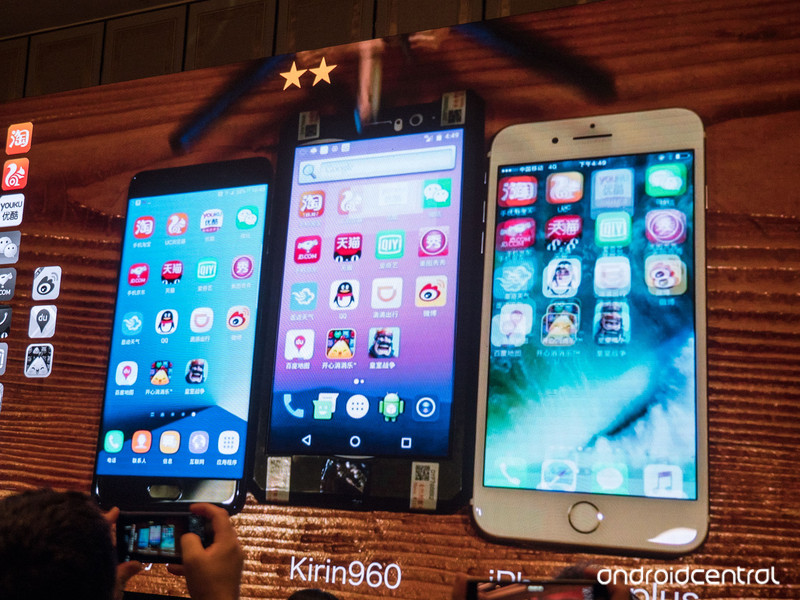
Today at a press conference in Shanghia, China, Huawei officially unveiled the chip that’s expected to feature in its next flagship phone when it’s announced in early November. The Kirin 960 processor uses four of ARM’s new, high-performance Cortex-A73 cores and four low-powered A53 cores, produced using a 16nm manufacturing process. It’s also the first processor to use ARM’s Mali-G71 MP8 GPU for improved graphics and gaming performance.
At today’s press conference, Huawei demonstrated a Kirin 960 test device alongside an iPhone 7 Plus and Samsung Galaxy Note 7, demonstrating that out of the 14 most common apps in China, 13 launch fastest using Kirin 960, as opposed to the two competing devices.
Huawei’s own numbers show that Apple’s A10 processor still rules in single-core performance, however Kirin 960 pulls ahead of the latest iPhones — and all the Android competitors — in the company’s multicore tests.
Kirin 960’s new Mali-G71 GPU is 180% faster than the previous generation Mali-T880, coming close to matching the iPhone’s graphical prowess; Huawei contends that other areas of Kirin’s performance allow it to feel faster — for instance, faster random read/writes thanks to UFS 2.1 storage support. (For what it’s worth, Mali-G71 is the GPU rumored to appear in Samsung’s upcoming Galaxy S8 in early 2017.
Huawei’s already using the GPU rumored to come with the Galaxy S8.
Connectivity-wise, Kirin 960 significantly adds native CDMA support, which potentially allows it to potentially break into markets where the standard is still in use, like the United States. (Previously, CDMA tech would’ve been licensed from Qualcomm.) The new chip also supports four component carriers (4CC) for LTE, as opposed to rivals’ 3CC, effectively adding extra channels for data throughput, and making it easier to hit peak data speeds of 600Mbps. There’s support for Cat. 12 LTE for downloads, and Cat. 13 for uploads, and support for radio frequencies between 330MHz and 3.8GHz, opening up the chip a wide range of carriers globally. Huawei also says it’s improved radio performance in specific, challenging situations, like using data on a high-speed train.
Huawei also talked up the new chip’s camera capabilities, demonstrating how its new ISP (image signal processor), which it says takes smartphone cameras “closer to the vision of the human eye.” These can create clearer images, showing improvements in fine detail reproduction through an “eye test” between its new image processing tech and the iPhone 7 Plus. The processor also allows for a wider range of refocusing options than previous generations. (Naturally, overall image quality will depend on the optics paired with Kirin 960 in upcoming phones.)

‘How can we reduce the power consumption of finding Pokémon?’
Battery life continues to be a major focus, and Huawei used the example of Pokémon Go to show how it can work to reduce power consumption from demanding apps. Working with partners, Huawei says the optimizations in its low-power i6 “smart sensing” core allows users to go from less than half a day of Pokémon catching to 1.2 days — thanks to enhancements like low-power GPS.
When it comes to security, Huawei announced that Kirin 960 has been certified by UnionPay and the People’s Bank of China for use with mobile payments. Meanwhile Huawei’s Kirin inSE security design builds security into the SoC design itself, adding over 1000 “anti-hacking sensors,” along with a 3-tier security system and support for financial industry standard encryption techniques.
Huawei didn’t officially announce any new phones with the processor, however the features showcased at today’s Kirin presser show what we’re likely to see from the next Huawei flagship — the rumored Mate 9 when it’s announced on November 3 in Munich, Germany.
You can now book an Uber or Ola directly from Google search results in India

Google Maps picked up integration for ride-hailing services earlier this year, allowing customers to see fare estimates and pickup times for Uber, myTaxi, Ola, Gett, and other services from within the Maps interface.
The company is now rolling out the feature to its search results. Just enter your intended destination in the Google Search app or in Chrome, and you’ll see fare estimates and pickup times for ride services within the search results.

For instance, querying for “Uber to airport” gives you a tariff estimate as well as nearby cabs in your location. Prices for various tiers — such as UberGo, UberX, or UberSUV — are listed, and you can tap the Order Now button to book a cab from Uber. The integration is seamless, and lets you quickly book a cab from the search results.
Cops’ facial recognition database has half of US adults on file
American law enforcement agencies have created a massive facial recognition database. If you’re an adult in the US, you might already be in it. According to a comprehensive report by the Center for Privacy & Technology at Georgetown Law, the law enforcement’s database has 117 million American adults on file. That’s one of two adults in the US or half of the 18-and-above population. The report says authorities used driver’s license IDs from 26 states to build the database, which includes people who’ve never committed any kind of crime before.
That’s already a problem in and of itself, but it’s compounded by the lack of oversight on how it’s used. Clare Garvie, the report’s lead author, said “there are no standards ensuring its accuracy” and “it has no systems checking for bias.”
The team asked 100 law enforcement agencies whether they’re using facial recognition, and 52 admitted that they do. Out of those 52 agencies, only one (the Ohio Bureau of Criminal Investigation) prohibits officers from looking up people “engaging in political, religious or other protected free speech.” Further, only nine out of the 52 log and audit searches for improper use and only one (the Michigan State Police) showed the team documentation that they’re actually auditing their officers’ searches. In other words, most authorities can look up anyone in the database for any reason, and nobody will double check their queries.
All these factors combined could spell disaster, especially for people who tend to be misidentified by the technology. Facial recognition systems are known for making mistakes identifying black people, women and folks aged 18 to 30. And it’s no joke to be misidentified as a criminal — just ask Steve Talley, who went through hell after he was accused of being a bank robber.
That’s why 52 civil liberties and human rights groups sent a letter to the Justice Department after the report came out. They’re asking the DOJ to investigate whether facial recognition tech “has had a disparate impact on communities of color.” The letter also mentioned that facial recognition is being used “at protests and rallies, raising significant First Amendment concerns.”
American authorities and the government have been ramping up the use of facial recognition in the country. New York governor Andrew Cuomo recently announced his plans to install cameras in tunnels and on highways to be able to identify terrorists. Earlier this year, the US Government Accountability Office also discovered that the FBI’s facial recognition tech has access to 412 million photos of Americans and foreigners alike, even those with no prior criminal records.
Via: The Intercept, Ars Technica, Wired
Source: Georgetown Law (PDF), American Civil Liberties Union
Facebook isn’t done trying to copy Snapchat
Facebook’s Snapchat-alike Messenger Day app has expanded to a new test ground: The Land Down Under. “We know that people come to Messenger to share everyday moments with friends and family,” a spokesperson told TechCrunch. “In Australia we are running a small test of new ways for people to share those updates visually.”
As a bit of catchup, Messenger Day’s main rub is it hosts photos and videos that expire within 24 hours. You can add stickers (of which there are apparently quite a few) and filters to dress up your evaporating stories, too. So yeah, like the Facebook-owned Instagram’s Stories feature, this is a carbon copy of Snapchat — just without that app’s lurid reputation.
How long before the app hits domestic shores, and its life expectancy if and when it does, are up in the air at this point.
Holy crap, they’ve built Snapchat into Facebook Messenger as “Messenger Day”. I must be on some sort of A/B test. pic.twitter.com/hv3I8ubqEG
— Long Zheng (@longzheng) October 18, 2016
Source: TechCrunch
 AIVAnet