


Dish helps you follow out-of-town NBA teams
It’s tough being a San Antonio Spurs fan living in New York City, since I can only watch games shown on national TV. With NBA Team Pass, though, that’s not a problem. And starting today, Dish is making it available to its subscribers for $119 per season, becoming the first pay-TV provider to do so. Up until now, Team Pass was only available as an online streaming service, but you should note that out-of-market blackout restrictions still apply with Dish’s offering.
Once you pick your favorite team, out of the 30 in the league, you can watch live and on-demand regular season games directly from your satellite box. To make this more appealing, Dish is giving customers the ability to split the total payment into four installments of $29.75. But, if you want to see how it works first, the company says there is a free preview of the add-on until November 1st.
Now, in case one team isn’t enough, you do have the NBA’s full-fledged League Pass, which gives you access to content from the whole league for $200 per season. Don’t forget that includes weekly livestreams of games in virtual reality.
Source: Dish
Disney makes facial capture tech more practical for movies
If you don’t see facial motion capture everywhere in movies and video games, there’s probably a good reason for it. In order to train a capture system to match expressions, you frequently have to record the actor making all kinds of faces in different conditions… that’s a lot of effort, especially for studios that don’t have much time or money. Disney Research has a better way. It recently developed a face capture system that uses only a tiny number of recordings and synthetically generates the data you need to train the system. The solution is a multi-camera, uniformly-lit rig that creates an adjustable 3D model of the actor’s face that you can use to create the info you need.
It doesn’t sound like much at first, but the gains are huge. The amount of data you need to collect is “tens to hundreds of times” smaller, even as you maintain accuracy. That could save a tremendous amount of time and let studios focus on recording scenes, rather than slogging through prep work. You could not only see more widespread use of facial motion capture, but more complicated uses of it with numerous actors. Disney will have to refine its technique, and there’s no guarantee that it will offer the feature to other companies. However, it’s safe to predict that at least some movies and games will have an extra dash of realism in the future.
Via: EurekAlert
Source: Disney Research
Microsoft makes its deep learning tools available to all
The same internal, deep learning tools that Microsoft engineers used to build its human-like speech recognition engine, as well as consumer products like Skype Translator and Cortana, are now available for public use. Redmond announced today that it is open-sourcing the Cognitive Toolkit that has led to many key developments coming out of its dedicated AI division. In other words: anyone can now train their own artificial intelligence.
Formerly known as the CNTK, Microsoft says the beta version of the Cognitive Toolkit is not only faster than previous incarnations, but it is also beats out competing deep learning toolkits – especially when crunching large datasets across multiple machines. On a more practical level for startups and hobbyists, Microsoft says the platform is flexible enough to run on a solo laptop — just in case you don’t have a server farm loaded with NVIDIA GPUs at your disposal. The public release also allows developers to bring their own Python or C++ code to the deep learning party.
The Cognitive Toolkit is available now on GitHub, but Microsoft has also put together an expansive set of documentation, complete with tutorials and example models, on its own Cognitive Toolkit site.
Source: Microsoft, Cognitive Toolkit, GitHub
Daily Briefing: The Pixel is too popular for its own good

Tuesday, October 25 feels like a Thursday. You know?
Xiaomi is an interesting company. The same day that it announces a phone that looks almost identical to the Galaxy Note 7, it follows up with another that looks like nothing else out there. The Mi Note 2 could stand in for any Samsung or Huawei phone from the past year, but Xiaomi says that the future is all-screen, no bezel, and that includes pioneering a number of ways to hide sensors that we rely on every day in our current devices.
There’s no current plan to bring the Mi Mix to America — heck, neither phone will be sold outside China for the foreseeable future — but Xiaomi keeps trolling the industry, operating at once as a master of mimicry and a master of ambition. Perhaps the two aren’t mutually exclusive these days.
And now, the news you need today.
Demand for Google Pixel outstripping supply
Good news for Google, bad news for impatient customers. Google says that demand for all models of the Pixel, especially the Pixel XL, is outpacing supply right now, leading to wait times into late November for those who ordered the phone. The company told 9to5Google:
We’re thrilled to see the excitement for our new Pixel phones, and frankly pre-order demand has exceeded our expectations. We’re working to restock our inventory as soon as possible.
Xiaomi’s concept phone is the gadget we’ve all been waiting for
Xiaomi’s Mi Mix doesn’t have a home button, bezels, or a proximity sensor. There’s no earpiece either, with the phone transmitting sound through a piezoelectric ceramic drive instead. What it does have is a 91.3% screen-to-body ratio, and a serious price tag. More
Xiaomi Mi Note 2 has high-end specs, global LTE bands
Xiaomi also introduced the Mi Note 2, a high-end phone with a 5.7-inch dual curved QHD display and Snapdragon 821. The handset is the first from Xiaomi to offer global LTE bands, making it compatible with carriers in the UK, U.S., and other Western markets. More
BlackBerry has a new phone, and it’s not really a BlackBerry
BlackBerry’s new DTEK60 is yet another rebranded TCL construct, which is fine because it’s much more powerful than the last TCL construct. More
Samsung Pay hits a huge expansion on its one-year anniversary
The addition of three new countries rounds out the total supported to 10 for the payment service. Bigger still is the new expansion to online payments through a partnership with Mastercard’s Masterpass system, as well as the addition of in-app purchase support for apps that wish to partner with Samsung. More
Amazon adds even more Dash buttons
Amazon has added 60 new Dash buttons, including Cheez-It, Coca-Cola, Pop-Tarts, Powerade, Purell, and more.
Google Store adds three new Android Wear watches
Though Android Wear 2.0’s release has been pushed back to early 2017, the Google Store has added new listings for the Nixon Mission, Polar M600 and Michael Kors Access. The watches aren’t cheap, but have the hardware set to run Android Wear 2.0 when it becomes available.
Google’s ‘Jamboard’ is a huge collaborative touchscreen for businesses
The 55-inch 4K touchscreen is meant to replace the cluttered whiteboards in office spaces, and integrates fully with Google’s full G Suite of enterprise services. Host video chats, collaborate remotely and pull in information from Docs, Sheets, Drive and more all on a huge screen. It’s going on sale for “under $6000” starting in 2017
WhatsApp adds video calling
WhatsApp’s latest Android beta has added video calling, a long-awaited feature that puts its billion-plus users within reach of a full-stack, business-ready messaging experience. More
AT&T’s DirecTV Now will cost $35, zero-rate mobile data
AT&T’s direct-to-consumer streaming television product, DirecTV Now, will debut in November for $35 and include “more than 100 channels,” according to a report by Business Insider. The service will, perhaps most interestingly, zero-rate mobile data for AT&T subscribers, meaning that customers won’t need to pinch bandwidth pennies when streaming over the provider’s 4G LTE network.
That’s it from us! See you tomorrow, and take care of yourselves.
Samsung Pay adds online and in-app purchases, expands to new countries
A year after launching, Samsung Pay makes a big expansion to new countries and platforms.
After growing its base of compatible banks and credit unions to over 500, Samsung is now targeting an expansion of Samsung Pay starting with the addition of Malaysia, Russia and Thailand — bringing the service to 10 countries in total. Further, Samsung has inked a deal with Mastercard to integrate Samsung Pay with its Masterpass online payment service.
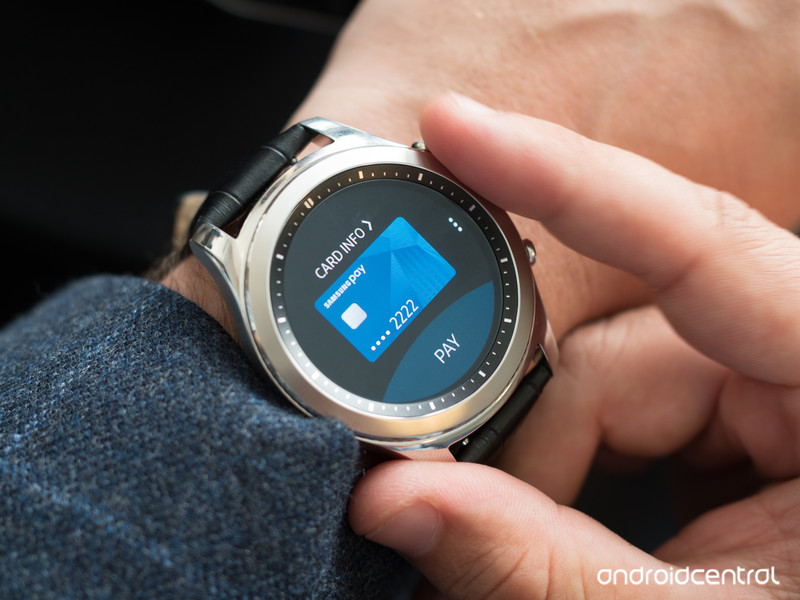
This new partnership with Mastercard brings Samsung Pay from just physical sales to the online payment realm, something that it has trialed previously in South Korea. With the Masterpass integration, Samsung Pay users can use their Mastercard payment methods stored in Samsung Pay, along with personal information like shipping addresses, to make purchases seamlessly with any online retailer that already integrates with Masterpass — no additional account information or signup required.
Interestingly, this integration with Masterpass comes just a day after Google announced that Android Pay would have the exact same integration for online payments. Google also managed to on-up things with the same sort of arrangement in partnership with Visa Checkout for online sales, covering even more potential customer cards.
Samsung and Google are doing battle in the mobile payments space.
Going head-to-head with Android Pay in another way, Samsung Pay is also expanding to in-app purchases starting in the U.S. this year. With updates to the Samsung Pay app, you’ll soon be able to quickly make payments inside supported apps using your payment information stored within Samsung Pay — this will first appear in the Velocity, Raise, Fancy, Hello Vino, Wish and Touch of Modern apps, with even more to come in the future.
Samsung Pay’s app improvements also go a step further with the inclusion of a nearby deal tracker that shows you which retailers partner with Samsung to give you discounts for shopping there. Discounts are instantly redeemable if you pay with Samsung Pay in the store.
With support from banks reaching the point where Samsung Pay supports 85% of all cards in the U.S., it was important for Samsung to move on to launching its service into new markets. Samsung is already the clear leader in terms of physical store presence with its exclusive MST technology, and it was only a matter of time before it finally jumped into the online and in-app payment arena as well. How well it partners with websites and app makers going forward will make all the difference in this expansion.
Press release:
Samsung Pay to Add Three New Countries, Online and In-App Payments, Location-Based Deals and more
One Year after Launching, Samsung Pay expanding to online payments and three new markets while also adding further digital wallet features
LAS VEGAS – October 25, 2016 – Samsung Electronics Co. Ltd. today announced Samsung Pay will add three new countries to the roadmap including Malaysia, Russia and Thailand, which will bring the convenience of the service to 10 countries by the end of 2016. Samsung Pay also announced a global partnership with Mastercard to offer a simplified online payment and express checkout solution through its digital payment service Masterpass, starting early next year. Hundreds of thousands of merchants in 33 countries currently accept Masterpass for online payments.
“When we introduced online payments in South Korea last year, the service was well received by the market. Online payments accounted for more than 25 percent of the 2 trillion won in processed transactions, demonstrating that consumers may be actively looking for solutions to make their online experiences faster, simpler and secure,” said Thomas Ko, VP and Global GM, Samsung Pay, Mobile Communications Business at Samsung Electronics. “By partnering with Masterpass in the U.S. and rolling out online payments globally, we will simplify the online transaction experience by eliminating the need for customers to fill out tedious online checkout forms, remember long passwords or fumble for their wallets.”
“Mastercard is working to ensure that every one of our accounts is as digital as the people using them,” said Garry Lyons, Chief Innovation Officer at Mastercard. “Enabling our cardholders to use Samsung Pay to shop online via Masterpass is the latest example of our work – alongside our banks, merchants and digital partners – to deliver rich, innovative, compelling and secure ways to pay and get paid across all channels and devices, redefining commerce globally.”
Samsung Pay will provide consumers with a seamless online payment platform with benefits including:
-
Express Checkout: Skip the process of filling out long online forms. With the express checkout solution, customers will be able use their Mastercard debit or credit cards along with the shipping information saved on their Samsung Pay account to quickly complete online transactions.
-
Make Purchases from Any Device: Customers can make online purchases from a computer, tablet or smartphone while shopping on their favorite sites or apps.
-
Secure Transactions: Security remains our top priority. When making online payments, a unique token is used in an encrypted form – not the actual debit or credit card number. Users can authenticate transactions using secure methods including a fingerprint scanner, which is built into Samsung’s mobile devices.
-
Samsung Pay also announced new features in the United States, including support for in-app payments and new nearby discounts and savings, marking one more step toward a true digital wallet. The announcements came at Money 20/20, a leading payments and financial services event.
Access to Deals at Nearby Stores:
Beginning in November, Samsung Pay users will be able to locate discounts and coupons for nearby stores and restaurants through the new Deals feature within the Samsung Pay app, and redeem these deals instantly. With a new refreshed look, and enhancements to user experience and design on the Samsung Pay app, users will be able to find and redeem instant savings easily and quickly.
New In-App Payments:
In November, users will also be able to use Samsung Pay as their payment option when they shop at select merchant apps. Simply select Samsung Pay during check-out, and select from the cards loaded within the app to make an in-app payment. To start, in-app payments will be available for Samsung Pay users when they shop with Velocity, Raise, Fancy, Hello Vino, Wish and Touch of Modern, with more to come.
Partnership Ecosystem:
With the addition of its latest financial partners Capital One and USAA, Samsung Pay now supports over 500 banks and credit unions, representing over 85 percent of the U.S. debit card and credit card market.
Apple Pay transactions surge by 500 percent
Mobile payments are all the rage among tech companies, but how successful have they been, really? Quite successful, if you ask Apple. While discussing its latest earnings, the Cupertino firm revealed that Apple Pay purchases were up 500 percent year-over-year in the third quarter. In fact, there were more transactions this September than in all of Apple’s fiscal 2015 — not bad for a tap-to-pay service that’s still unavailable in many parts of the world, not to mention many stores. Apple didn’t say what prompted the spike, but there are a handful of factors beyond any increases in popularity.
One major component: regional expansion. The launch of Apple Pay in China may have played the biggest role, but there was also a steady stream of expansions to key markets like Australia, Canada and swaths of Asia and Europe. Also, there were simply more people with Apple Pay-capable devices. You had to buy one of two high-end iPhones (the 6 and 6 Plus) to use Apple Pay throughout most of fiscal 2015, but the service was an option across all of Apple’s phone lineup by the time the iPhone SE arrived in March of this year. That’s also excluding those people who may have an iPhone 5 or 5s and are using an Apple Watch for their payments.
Whatever is involved, it’s likely that Apple Pay will see continued growth for at least a while. The payment system reached both Japan (as of iOS 10.1) and Russia in October, and there’s still room for both more countries as well as additional cards and stores in existing regions.
The question is whether or not Apple still has a lead in this fledgling industry. The company hasn’t divulged its latest transaction numbers, you see. Samsung was quick to boast about having 100 million transactions for its own service in August, but the lack of context makes it difficult to say whether it’s catching up (Apple is estimated to have racked up $10.9 billion in purchases in 2015) or trailing behind. About the only certainty is that Google’s Android Pay will need to grow faster if it’s going to latch on. It only just reached the UK in May, and card support isn’t as broad as you get with its rivals.
VW will begin buying back diesel vehicles in mid-November
Volkswagen’s ongoing diesel emissions scandal puttered forward again today as a US federal judge finally approved the $14.7 billion settlement between the automaker and owners of some 475,000 diesel vehicles. According to Reuters, Volkswagen will start buying back those fraudulent vehicles around the middle of November.
To refresh: the massive settlement is one of the largest consumer class-action settlements ever in the United States. Just over $10 billion of the cost will go towards the aforementioned vehicle buybacks and compensating VW owners, while the other $4.7 billion will used to offset emissions and build more zero emission vehicle infrastructure. That cost does not include another $1.8 billion in legal fees related to the scandal, and the car company could still face billions more in settlement costs for another 85,000 vehicles. Then there’s the matter of VW’s investors suing for $9.1 billion more in a German court, plus lawsuits from 16 more US states.
While the costs keep piling up, Volkswagen does have an ambitious plan to roll out 30 different electric vehicles in the next 10 years, including the futuristic I.D. in 2020. Still, it will take a lot of EVs to offset the damage done by nearly half a million vehicles pumping out a whopping 40 times the legal emissions.
Source: Reuters
Google’s home delivery service now covers most of the US
Google’s same-day delivery service, Express has been growing quickly (it just spread throughout New England), but it’s now poised to be almost ubiquitous in the US. The internet giant has expanded its I-want-it-now shopping option to 12 more states: Alabama, Florida, Georgia, Idaho, Kentucky, Montana, North Carolina, Oregon, South Carolina, Tennessee, Utah and Washington. That puts Google Express within reach of 70 million more people, or about 90 percent of Americans. The whole continental US should be covered by the end of 2016, Google adds.
As before, Express is really about bringing a same-day choice to retailers where it wouldn’t otherwise have the option, such as Costco, Fry’s and PetSmart. You have to buy a minimum amount ($15 to $35), but you can pay a delivery fee (typically $5) instead of opting for the $95 annual membership. It’s not quite an Amazon Prime competitor, but it does serve as a foil to Google’s arch-rival. If you’re like many shoppers, you skip search engines entirely in favor of store sites like Amazon — this is Google’s way of bringing you back to its home turf.
Source: TechCrunch
Twitch picks up ‘ChefShock,’ a daily live cooking show
Twitch, the Amazon-owned game streaming network, is branching out to appeal to the foodies of the world with a new daily show. Variety is reporting that the service has signed a deal with Justin Warner, former winner of Food Network Star, to front a cooking show called ChefShock. The show will air between Monday and Friday at 8pm ET / 5pm PT starting Monday, October 31st and will feature Warner preparing a meal. Users will be encouraged to order the ingredients in advance of each episode and then follow along with him as he teaches them how to be a better gourmand.
Twitch became a household name by streaming games, but it looks as if the company has found a ceiling relating to how big its audience can go. That would explain why it’s spent the last year or so broadening its appeal with various non-gaming initiatives. For instance, the outfit purchased the rights to broadcast Bob Ross’ The Joy of Painting and followed that up with a Food channel that showed re-runs of Julia Child’s The French Chef. Given how YouTube and Facebook Live are also eagerly attempting to woo younger viewers, we can expect to see plenty more moves like this from the service.
Source: Variety
Delta’s RFID luggage tracking system now includes a map view
Delta’s new RFID luggage tags rolled out earlier this year, making it harder for at least one airline to lose your bags. Now, just in time for the holiday travel rush, Delta has already upgraded their baggage tracking system to include a up-to-the-minute map view of a bag’s journey.
84 of Delta’s largest destinations in the US already have RFID tracking installed and the airline says all domestic stations will now be able update the “first-of-its-kind” map view in its Fly Delta mobile app. Because the tracking is based on RFID tags and scanner checkpoints placed throughout each airport, travelers won’t actually see the bag’s exact location, but they will get a map pin for each checkpoint the bag has passed, plus the last time it was tagged by the system. Tapping each pin will bring up even more information about each location the bag has passed. While it is not exactly a realtime GPS view, it’s still a big improvement over the old system: staring out the window, watching the baggage handlers and wondering if your bag made that tight connection.
According to Delta, push notifications for luggage will also be coming to the app later this year, so users won’t even need to open it to check on their bag’s status. The Fly Delta app is currently available for iOS and Android.
Source: Delta News Hub
 AIVAnet