


Space drone learns how to see with one eye in zero-G
One of the small drones aboard the ISS taught itself how to go around station with just one eye, and it was a lot harder than you might think. For starters, the SPHERE drone (that’s short for Synchronized Position Hold Engage and Reorient Experimental Satellite) learned on its own by using machine learning. That method isn’t typically used for space applications, because if it fails, it could result in a costly catastrophe. This is the first time a drone in space employed the technique to teach itself. Robots also still can’t judge distances between objects using just one camera. Plus, the drone was operating in microgravity, floating around in a place where there’s no up or down.
Here’s how the SPHERE drone did it despite all those difficulties: first, it zoomed around the station’s Japanese module using its 12 gas thrusters, recording everything in sight with two cameras. Once it was done learning distances between objects after that two-eyed run, it was able to navigate on its own without bumping into things with only a single camera open. Before all these, though, the team tested their learning software on a quadcopter in sets they built at the Delft University of Technology.
Dario Izzo, the project coordinator from the European Space Agency, said his team have been working towards this goal for five years:
“It was very exciting to see a drone in space learning using cutting-edge artificial intelligence methods for the very first time.
At ESA, in particular in our team, we’ve been working towards the goal for the last five years. In space applications, machine learning is not considered a reliable approach to autonomy: a ‘bad’ learning approach may result in a catastrophic failure of the entire mission.”
They recently presented their results at the International Astronautical Congress in Mexico. You can read their paper if you want to learn every detail about the experiment, or watch the video below for a more visual explanation.
Source: Delft University of Technology, ESA
Meerkat the livestreaming app is no more
Meerkat took SXSW by storm in 2015, and for a while, the livestreaming app seemed promising. But then Periscope arrived and reigned supreme with Twitter’s help. Now, we can say it has officially killed Meerkat in the same way VHS buried Betamax and Blu-ray permanently knocked out HD DVD. Ben Rubin, the CEO of the firm that created Meerkat, has announced on Twitter that his team pulled it down from the App Store. The app’s Google Play listing doesn’t work for us anymore either, and its official website and Twitter account are dead.
Rubin told TechCrunch in an email that he and the app’s other creators had decided to “change directions” merely six months after Meerkat was released. He described removing it from the App Store a “bittersweet moment,” because while the livestreaming app is now truly dead, his new one has been doing quite well. His company revealed a few days ago that it’s behind Houseparty, an app more than two users can use to video chat, that it released under a pseudonym. It launched Houseparty with little to no fanfare, but it still racked up users so quickly, almost a million people signed up by the time Rubin and his team admitted their involvement.
He told TechCrunch in a statement:
We may have just pulled Meerkat from the app store, but it was actually six months after we launched that we made the decision to change direction. The category of broadcast (one-to-many) wasn’t breaking as a daily habit… it’s too far away from the everyday user.
The mission of our company has always been to connect people in the most human way possible while physically apart. Not only do we believe that Houseparty is a better manifestation of that vision, but also the market has shown us that too… spreading the app simply by word of mouth.
We just removed Meerkat from the AppStore 😔 bitter sweet moment seeing it go while celebrating @houseparty
— Ben Rubin (@benrbn) September 30, 2016
Source: TechCrunch
Major Netflix outage interrupts your weekend viewing plans
We hope you weren’t dead-set on watching all of Luke Cage this weekend. As we write this, Netflix is recovering from a serious worldwide outage that knocked out its service from around 3PM Eastern to shortly after 5PM. While the streaming video company is no stranger to technical problems lasting for a few hours, the sheer scale and severity is noteworthy — you couldn’t even visit Netflix’s website.
We’ve asked Netflix for more details and will let you know if it can explain how and why its service went down. It’s tempting to pin the failure on crushing demand for Luke Cage (which premiered just the day before), but there’s no guarantee that this is the case. Netflix has previously coped with launch day demand for shows like House of Cards and Daredevil, so it’s not as if Reed Hastings and crew are unfamiliar with traffic spikes. Whatever happened, it’s a sore spot in what was supposed to be a banner weekend for Netflix.
Hi all – we are aware of streaming issues and we are working quickly to solve them. We will update you when they are resolved.
— Netflix CS (@Netflixhelps) October 1, 2016
And we’re back! The streaming issues we reported are now resolved.
— Netflix CS (@Netflixhelps) October 1, 2016
Source: Netflix (Twitter 1), (2)
Leak shows how EU would punish Google over Android practices
You might not have to wait until the European Union officially launches its Android antitrust case to find out how it plans to punish Google. Reuters says it has obtained a copy of the European Commission’s statement of objections (aka a charge sheet), and it looks like regulators wouldn’t be playing softball. They’d not only order Google to stop offering payments or discounts in return for pre-installing apps, but issue a fine that could be tied directly to that which Google values most: its search ad revenue.
The Commission could determine the fine based on revenue from European ad clicks, in-app ad displays or searches for products, according to the leak. It could also be linked to Google Play app downloads. The exact ratios aren’t available, but the fine would be steep enough to “ensure deterrence.” In other words, its penalty would likely be directly proportionate to its success, and might make Microsoft’s antitrust payout seem modest.
A spokesperson for the Commission declined comment to Reuters. We’ve asked Google for its own take, although it has already denied requiring exclusive contracts and otherwise running afoul of antitrust law.
There could be some changes to the leaked plan, provided it’s accurate. The Commission was sending the document to complainants for feedback and might tweak the finer points before any official action. However, it looks like the core of the complaint is in place — don’t be surprised if there’s a formal move in the near future.
Source: Reuters
Android and chill: Google hardware could be about taking control

Google getting serious about selling phones could be a way to show how good Android can really be.
On October 4 we all get to see Google’s plans for the next year when it comes to Android and the phones (and other stuff) that use it. That’s only a few days away. We’ll see flat screens and phone-shaped slabs of metal and glass that some will love and some will hate. Basically, the same thing we see every year. But I think we’re also going to see something new from the company. In fact, we’ve already seen a glimpse of it during Monday Night Football and rumored the rest to death — Google cares about making phones people want to buy and selling as many of them as they can.
Also, a moment to express how lucky we are to have Alex Dobie. He is all over every Pixel rumor in ways that could be illegal in the Bible Belt and sorts through them so you know what’s worth talking about without having to wade through the crap. Thanks, Alex!
A Chromebook-style experience is what can happen when Google gets their own way. Android needs some of that.
Not that Google didn’t care before. They surely wanted the Nexus phones to meet the expectations of the people buying them, and no company likes to lose money. But the few phones sold with the Nexus brand on the back were a drop in the bucket when it comes to Google’s business model and the money they make from every phone from Apple, Samsung, LG or the rest of the companies selling them. Google is everywhere and in everything it seems, and they’re going to make money from ads and marketing whether you’re using a Nexus 6P or an iPhone 7. That isn’t going to change if they get serious about selling their own phones. This might be about taking control.
I’ve spoken many times (far too many times, probably) about why Google can’t do a damn thing when Samsung won’t update a phone or when HTC doesn’t deliver on promised dates for security releases. Their hands are tied because Android is not something they sell or license like Google branded apps and the Play Store are. And using those as leverage will likely get Google in even more hot water over the monopoly they enjoy in the mobile space. The Play Store isn’t a soccer ball that they can grab and take home when they don’t like the way things are going. Google is doing things to make Android a little more modular, yet we’re still seeing companies make 100 or more different models and only really caring about one or two of them. For the people who bought those other models, the idea that Android sucks is very real. Making their own high-end consumer hardware gives Google their own space where they are in charge of it all and will let people see that maybe it’s the company name you see on the back that sucks and not the software they use for free.
They’re good at it, too. Anyone who uses a Chromebook knows that having Google dictate how things on the software side will be and how they will change can be better than having ASUS and Acer and HP and everyone else just doing their own thing. The experience is solid and consistent across a wide range of hardware because of it. If HP (for example) doesn’t like it, they are free to take the Chromium source and build their own better vision of it. Canonical does, as do many other independent Linux software teams. I wish HP or ASUS would do it, too, but that’s another article for another day. But to get that Chrome logo, they need to play ball and follow strict guidelines. Android needs an injection of this, but that won’t happen. The next best thing is Google doing it as an example.
A Pixel phone gives Google a space to show the world how to do it right. It’s their Lumia.
Making two high-end phones with all the bells and whistles, just as ready for the future as they are today is a step in the right direction. Buying billboards and commercial space during sports events so people know you’re doing it is another step. Speculation about having a well-trained support staff that you can reach anytime from anywhere through the phone’s settings points to yet another. If Google builds a better mousetrap and makes sure everyone knows they built a better mousetrap, the world may beat a path to their door.
I’m still not convinced that Google will go as far as publicly shaming partners (as was rumored earlier this year) when it comes to not caring enough about security or your experience or if that would even be necessary. This does fit right in with a Google that’s serious about showing people what Android can be, though. (And I would love to see it happen.) The Pixel brand can be Google’s Lumia. It could fail as hard as Microsoft’s Lumia did. But if they can position themselves as the leader when it comes to making Android phones, other companies will be inclined to follow them or compete in a different way. Or just step out of the way.
Now all they need to do is actually build a better mousetrap. We’ll find out in a few days.
Best accessories for the Honor 8
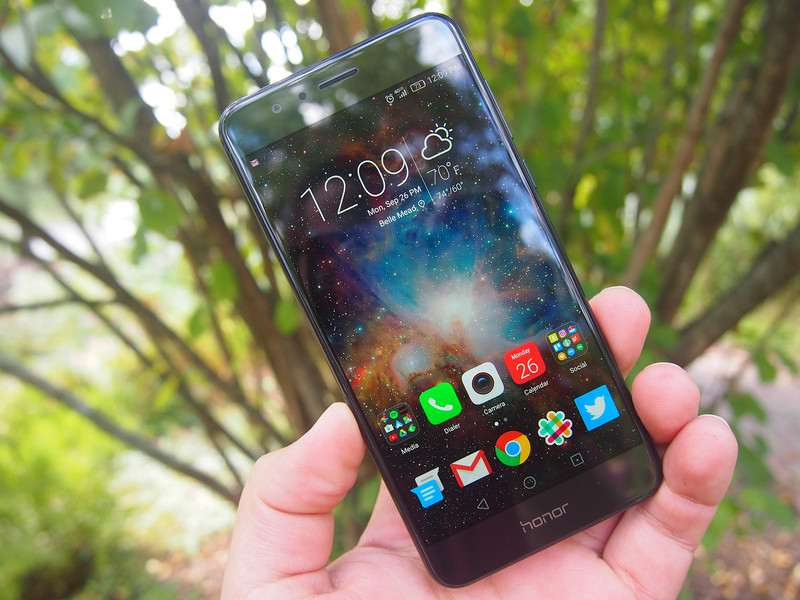
What are the best accessories for the Honor 8?
The Honor 8 is a great Huawei phone, featuring stylish design and a dual-sensor camera for taking amazing photographs. But you’ll definitely to invest in some accessories to make your phone that much more awesome.
We’ve broken down some of great accessories — from cases and car chargers to connected devices — that will make your Honor 8 experience that much better.
- Huawei Honor 8 Case
- AUKEY 30W 2-Port USB Car Charger
- Belkin Certified 2.0 USB-A to USB-C Charging Cable
- Honor Band Z1
- Chromecast
- Spigen Style Ring
Huawei Honor 8 Case
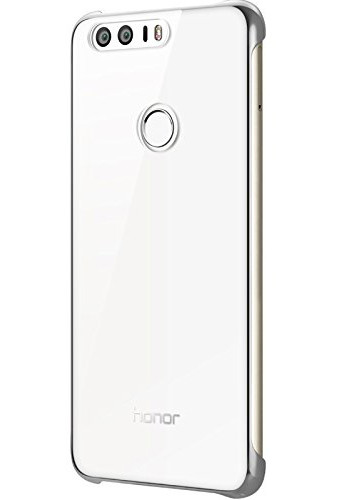
One of the first accessories most people seek out for their new phone is a quality case. Here, we’re inclined to recommend the one made by Huawei.
Made of clear TPU, you can still show off the color and design of your phone while keeping it protected. Since it’s made by Huawei, you can be assured everything has been precisely designed for the Honor 8, with cutouts on the back for the camera and fingerprint sensor.
For other case recommendations, check out our list of the best Honor 8 cases.
See at Amazon
AUKEY 30W 2-Port USB Car Charger
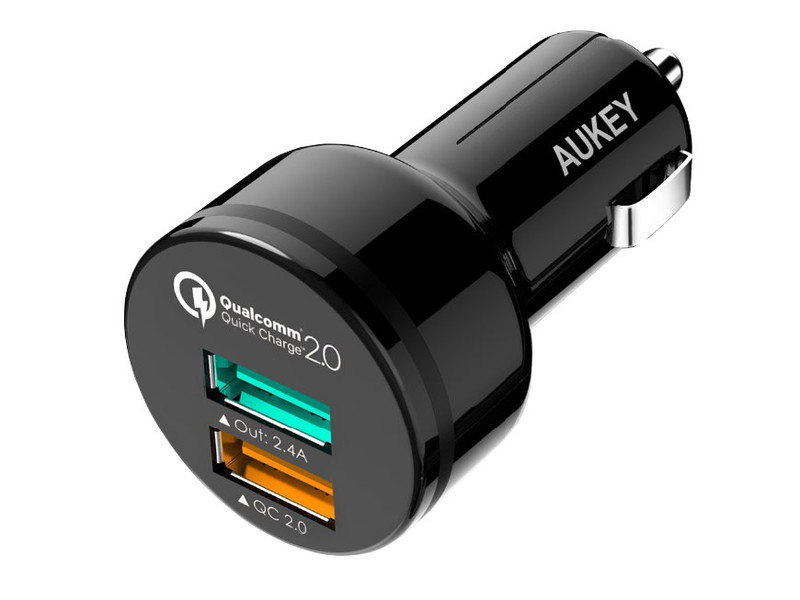
When you’re heading out the door, the last thing you need to be worrying about is whether your phone’s battery is topped up. That’s why a quality car charger is always a good accessory to have.
With the AUKEY 30W 2-Port USB Charger, you’ll have a trustworthy way to charge your phone in your car without having to worry about excessive current, overcharging, or overheating. With two ports, you can charge your Honor 8 in the 2.4A port safely while a passenger charges their phone in the second port. It’s a small and well-built car charger that’s backed by a 24-month warranty.
See at Amazon
Belkin Certified 2.0 USB-A to USB-C Charging Cable
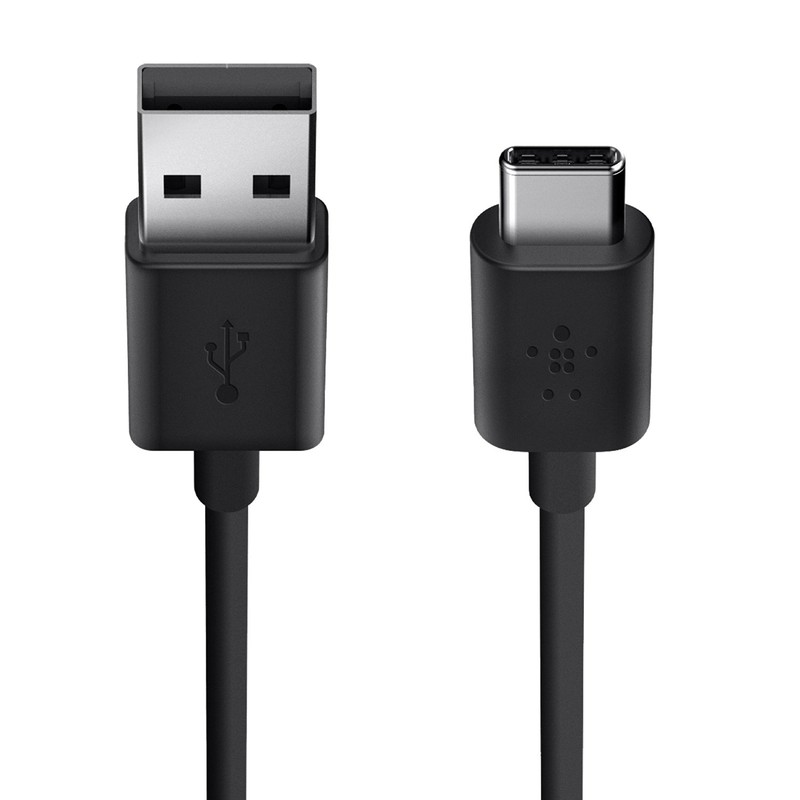
If you end up getting the car charger above, you’re going to need at least one extra USB-C charging cable so you’re not relying on carrying around the one that came with the phone. Whether you’ll be using it solely in the car or leaving it at work, it’s never a bad thing to have an extra charging cable kicking around.
This cable supports transfer speeds of up to 480MB/s and supports up to 3A of power output. Belkin is one of the most trusted brands in smartphone accessories, so buy with confidence.
See at Amazon
Honor Band Z1
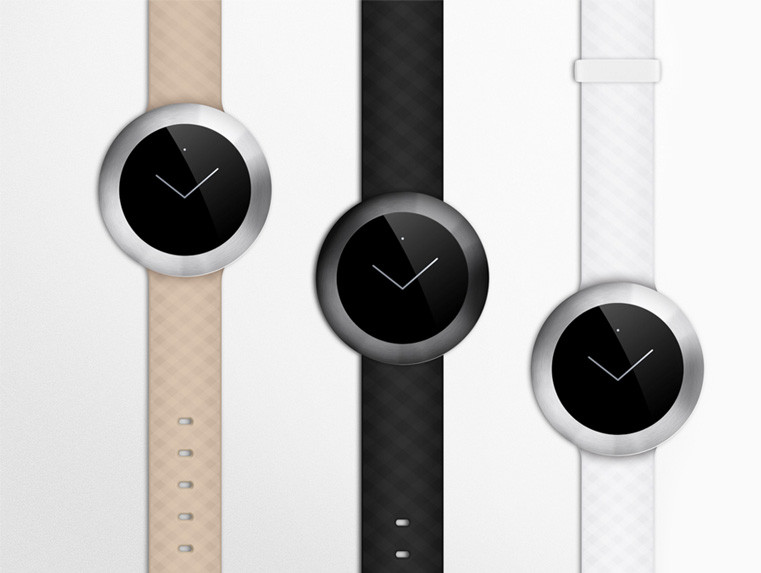
If you’re looking for a wrist accessory to go along with your new phone, you may want to consider the Honor Band Z1. Featuring an elegant design and a simple interface, the Band Z1 is a small, lightweight wearable with fitness and sleep tracking capabilities, as well as notification alerts. It has IP68 certification for dust and water-resistance and can pump out four days of usage on it’s 70mAH battery, or 14 days on standby.
At well under $100, it’s a stylish fitness tracker that will pair well with your Honor 8.
See at Honor
Chromecast
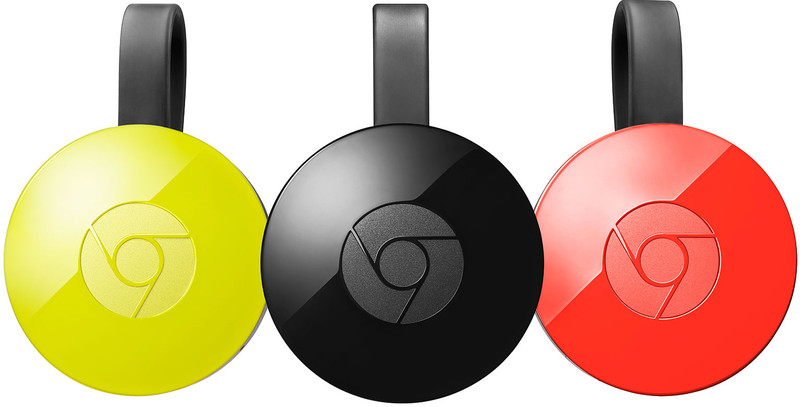
Chromecast is a fantastic accessory that we can safely recommend alongside any Android phone.
This little dongle connects to your TV via HDMI and lets you cast all sorts of media from your phone over Wi-Fi. You can choose to mirror your phone display, or stream content from a growing number of Chromecast-enabled apps such as YouTube, Netflix, HBO Now and more. With its portable size and ease of setup, it’s simply one of the best accessories you can buy.
See at Google
Spigen Style Ring
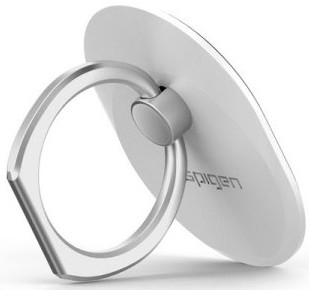
Given the Honor 8’s design, it’s a perfect candidate for the Spigen Style Ring.
If you place of the ring just off-center on the back of your phone, your finger should slip perfectly through the style ring and land right on the fingerprint scanner every time, giving you added peace of mind every time you go to pick up your phone. Beyond that, it’s also an amazing kickstand and also works as a car mount with the included hook mount for your dashboard.
See at Amazon
The bottom line: Our quick verdict on the Apple Watch Series 2
The Apple Watch Series 2 is what the company should have put out last year: It’s faster than the original, with longer battery life, a more intuitive OS, brighter screen, built-in GPS and waterproof design. If this were Apple’s only new smartwatch, we would have given it an even stronger recommendation than we actually did. The problem is, the company does indeed have another wearable on offer. The Series 1, as it’s called, costs a hundred dollars less and is basically last year’s model, upgraded with the same dual-core processor used in the Series 2. It, too, runs watchOS 3 out of the box. As an all-purpose smartwatch, then, the experience should be similar to what you’d get on the souped-up version.
Meanwhile, though the GPS inside the Series 2 mostly matches readouts on other devices, the difference is often big enough to have big implications for estimated pace. That shouldn’t be a big deal for walkers, but more serious athletes who train for events where speed matters won’t want to give up their dedicated sports watches just yet. Given that, the Series 2 mostly makes sense for either swimmers or people who want distance tracking but don’t care about accurate pace tracking (like we said: walkers, hikers and joggers). Everyone else, save yourself a hundred bucks and get the Series 1 instead.
US officially reduces its internet oversight
After lengthy delays and no small amount of political opposition, it’s official: the US has given up a key aspect of internet oversight. As of October 1st, the Internet Corporation for Assigned Names and Numbers (the outfit that manages the domain name system) is no longer under the watch of the US’ National Telecommunications and Information Administration. ICANN is now a private, non-profit organization that will take its input from academics, companies, governments and the public. While the American government didn’t really wield its influence, it no longer has that option.
The handover follows an unsuccessful last-minute attempt by four states’ Republican attorneys general to block the transition. A federal judge shot down their temporary injunction request, which centered around the notion that the US was “giving away government property” and required Congressional approval to give up ICANN. The attorneys echoed their party’s worry that reducing US control would open the internet to greater censorship by countries like China and Russia. They were also concerned that the shift could threaten US government domains like .gov and .mil.
Proponents of the transition argue that the move is not only harmless, but might avert a far worse outcome. They say that censorship-heavy countries don’t have any more power over the internet than they did before, especially since ICANN will still operate out of Los Angeles. If anything, a privately-managed domain system reduces the pressure to relinquish control to the United Nations, where China and Russia would have some influence. There’s also a fear that continued American oversight would encourage countries to set up their own domain systems and fragment the internet.
In practice? Barring surprises, you shouldn’t notice a difference at all. The NTIA did little more than rubber-stamp ICANN’s actions — this is more of a formality than a practical change, at least in the near term. It’s an acknowledgment that the internet has been decentralized for decades, and that no one country has a claim to it.
Via: BBC
Source: ICANN
New York Public Library has a mini roller coaster for books
On October 5th, the New York Public Library near Bryant Park in Manhattan will open up its newly renovated reading room to everyone. When that happens, members of the public will be able to get their first look not only at the gorgeous new working area, but also the building’s new book delivery system. I was lucky enough to be treated to a tour of the library’s facilities to get a behind-the-scenes preview of the now-colloquially-named “book train.”
First of all, if your mind is conjuring up images of a bespectacled Thomas the Tank Engine carrying a line of book-laden cars, stop. Although it’s technically a train made up of linked carriages, the setup looks nothing like your typical railroad vehicle. Instead, imagine a series of standing document boxes on wheels, zooming around.
A video posted by Engadget (@engadget) on Sep 30, 2016 at 3:43pm PDT
The new machines replaced an aging conveyor belt that was installed in 1991. According to NYPL’s director of facilities Gerry Oliva, there’s a total of 950 feet of track running throughout the building, and parts of it look like roller coasters as they scaled walls and rounded corners. Two sets of tracks allow for simultaneous travel in both directions. From the starting point deep underground (27 feet, to be exact) near the building’s new book storage facility, the cars have to travel 350 feet to the reading room on the 8th floor, twisting and turning the whole way. That journey takes about five minutes, translating to a speed of about 75 feet per minute.
And here we have @cherlynnstagram showing off the cars that make up the @nypl’s new “Book Train.” Each car is capable of carrying about three large “art books”, and has a microprocessor on-board to guide their journey (climbing over 94 feet) from starting point to the library’s reading rooms. Visit Engadget.com for more. :books: :steam_locomotive: #technology #tech #trains #nyc #libraries #books #microprocessor #howitsmade #newyorkpubliclibrary #booktrain
A video posted by Engadget (@engadget) on Sep 30, 2016 at 3:59pm PDT
As the train goes up, down and upside down during its trips, a suspended grey container within each car will, like a gimbal, adjusts to stay upright. This prevents books from falling out as they shuttle between the 11 stops throughout the building. The tracks are equipped with electronic sensors so the system knows the position of each car at all times. Once a car has been dispatched it has to move beyond the first sensor on the track before the next car can be released. This results in a 15-second delay between the receptacles to prevent accidents or congestion. The library has a total of 25 of these cars right now, and each can carry about three art books, four smaller books, or about ten pamphlets, said Natalie Caruso, NYPL’s manager for access services.
Construction on the new track began in January this year, and was completed in August. That’s a surprisingly short time, but a lot of the infrastructure was already thanks to the old conveyor belt. Oliva told Engadget that they could have finished the project sooner, but were slowed down by the desire to avoid structural modification. Using the existing shaftways had the additional benefit of keeping costs down.
While construction on the book train was taking place, library staffers had to revert to the old-school way of moving books around the 8-storey building: manually loading them onto carts and dragging them around. Now that the new system is up and running, it certainly looks like a far more efficient (and perhaps enjoyable) experience for staffers, visitors and even the books.
Win a free HTC 10 from Android Central and HTC!

Celebrating customers and fans, HTC kicks off a week of Green. Join in the celebration with a chance to win an unlocked HTC 10!
From October 1st through October 8th HTC’s “Green is Good” celebration is underway, with the sweetest deal ever on the HTC 10. This week only, get $150 off the purchase of an HTC 10 from HTC.com!! This price includes UH-OH Protection, a free service where HTC will replace the phone if there are accidental screen cracks or water damage during the first 12 months of owning. Also be sure to take advantage of $80 off the HTC Desire 626 and HTC Desire 626s, $100 off the UA Healthbox, and $60 off the UA Band. All promos are valid in the US only and while supplies last.
Green is Good week is all about celebrating loyal customers. Make sure to visit the Green is Good page to enter for additional chances to win prizes throughout the week, fun activities, and see all memorable moments allowing you to win awesome HTC prizes, including an HTC VIVE.
Keep reading to learn all about the HTC 10, and for all the details you need to enter the contest!

About HTC 10
Every element of HTC 10 has been designed, refined and perfected. From the bold new chamfered contour to its stunning dual-textured finish and quality construction.
Audio: HTC 10 sets a new gold standard in sound quality with its brand new BoomSound Hi-Fi edition speakers, Personal Audio Profile and Hi-Res audio earphones.
Power: This is something everyone is going to love. Every part of HTC 10 has been optimized from the ground up to run more efficiently. Giving you up to 2 days* of use. It also stays cooler while charging faster than ever – up to 50% in just 30 minutes – enough for a day on the go.
Camera: With HTC 10 we’ve delivered what we believe to be the best smartphone camera available on the market today. With the world’s first optically stabilized, larger aperture f/1.8 lenses on both the front and rear cameras, new larger sensors, 12 million of our new generation UltraPixels (1.55um per pixel), faster laser autofocus powering the main camera and a wide angle lens and screen flash on the on the front UltraSelfieTM camera, this smartphone delivers brilliantly sharp, low light and high-resolution photos whether behind or in front of the lens.
With the camera designed to launch in as little as 0.6 seconds, and a 2nd generation laser auto focus that gives you focused shots faster, it’s quick enough to even work in burst mode. All the settings are also conveniently located at your fingertips with Pro Mode still offering advanced options for more experienced photographers, including RAW format functionality.
Themes and Stickers: Complete freedom and control: One of the greatest things about Android is how it empowers you. HTC 10 magnifies the level of control you have and lets you easily personalize your phone in ways you’ve never thought possible. HTC 10 is yours. By reducing the number of duplicative and preloaded apps and bloatware, and integrating the best of both HTC and Google, we have created a more streamlined phone that enables you to decide what you want on your handset.
Your smartphone should be as unique as you are and the HTC 10 is the only smartphone that gives you full creative control. Create your own theme or select one from the thousands in our library that come with their own icons, background and sounds. The new HTC Freestyle Layout frees you from the grid of the home screen layout. Select the Sticker you want to represent any app, widget and shortcut. Layer them, group them, put them anywhere you like – HTC 10 is your new canvas.
The Contest
Two lucky Android Central readers will each win an unlocked HTC 10 in their choice of Carbon Gray or Glacier Silver! To enter, head down to the widget below (or the big blue button if you’re using the Android Central app). There are multiple ways to enter; complete all of the tasks for maximum entries and your best shot at winning! Keep in mind that all winning entries are verified and if the task was not completed or cannot be verified, a new winner will be chosen. The giveaway is open until October 8th, and winners will be announced right here shortly after the close date. Please note that due to sponsor restrictions, this giveaway is restricted to the US. Good luck to everyone that enters!
Win a free HTC 10 from Android Central and HTC!
 AIVAnet