


iPhone 7 Plus Seeing its Widest Availability Yet Across United States
Just one week after Apple said there would be no iPhone 7 Plus stock on launch day for walk-in customers, in-store availability of the dual-camera smartphone has reached its widest level yet across the United States. iPhone Upgrade Program members can use Apple’s online reservation system to secure their model for in-store pickup, or visit an Apple location as a walk-in customer.
iPhone 7 Plus stock at Apple Stores in the U.S. on Thursday
iStockNow, a website that uses Google Maps to visualize the real-time status of iPhone availability at Apple Stores, currently shows iPhone 7 Plus models in select colors and storage capacities available in dozens of states, such as California, Connecticut, Florida, Illinois, Massachusetts, New York, the Carolinas, and Texas. Jet Black models, however, remain out of stock at stores across the country.
 iPhone 7 Plus stock at Apple Stores in the U.S. on Tuesday
iPhone 7 Plus models in select storage capacities and colors, sans Jet Black, are also available in Canada at Eaton Centre in Toronto, Markville Shopping Centre in Markham, Upper Canada Mall in Newmarket, Masonville Place in London, Rideau Centre and Bayshore Shopping Centre in Ottawa, and Place Sainte-Foy in Québec City. Availability in western provinces should be updated around 8:00 a.m. local time.
Reserve and Pick Up in Canada is not tied to the iPhone Upgrade Program, and simply allows customers to reserve and pay for an iPhone at a local Apple Store, with a 30-minute check-in window. Activation is available for carriers like Bell, Rogers, and Telus, or customers can buy an iPhone outright and use their own SIM card. Make sure to have a piece of government-issued ID with you upon pickup.
iPhone 7 Plus availability could change at any time. iPhone 7 models remain more widely available in both the U.S. and Canada.
Related Roundup: iPhone 7
Tags: Reserve and Pickup, Canada, Apple retail
Discuss this article in our forums
Intel’s Mobile Processor Roadmap May Force Graphics Changes for Apple’s 15-Inch MacBook Pro in 2017
While many Mac notebook users have been long awaiting refreshes for the MacBook Pro and MacBook Air lineups based on Intel’s 6th-generation Core “Skylake” processors, a recently leaked April roadmap for Intel’s processors beyond Skylake posted to the AnandTech forums raises questions about future updates for the 15-inch MacBook Pro in particular.
The update bottleneck for future Mac notebooks is primarily related to the performance of Intel’s integrated graphics, and it appears that an emphasis on processing cores over graphics by Intel may force Apple to make some changes to its graphics strategy down the road.
The MacBook Air and 13-inch MacBook Pro run exclusively on integrated graphics bundled with Intel’s chips, while since late 2013 the 15-inch MacBook Pro has come in two versions, a lower-end configuration with only integrated graphics and a higher-end configuration that adds a dedicated graphics chip for higher performance. 15-inch MacBook Pro models equipped with both types of graphics can automatically switch between the two depending on whether better performance or better battery life is required.
Given the importance of integrated graphics for Apple’s notebooks, Apple has typically used chips including Intel’s “GT3” or “GT3e” tier for graphics performance, with the “e” suffix on GT3e denoting embedded DRAM on the chip for improved performance compared to the GT3 tier. These tiers are powerful enough to provide reasonably strong graphics performance for a notebook.
Looking at Intel’s roadmap for chips beyond Skylake, the 15-inch MacBook Pro runs into a problem as Intel appears to have no plans for any quad-core chips with integrated graphics higher than the “GT2” tier, which typically has about half the raw power of the GT3 tier, to be launched in the next-generation “Kaby Lake” processor family.
As a result, the currently available Skylake “H-series” chips appropriate for the 15-inch MacBook Pro that we’re expecting to see in an update as soon as next month may remain Intel’s lead offerings for these types of high-performance mobile chips until the introduction of new “Coffee Lake” chips in the second quarter of 2018. Even then, initial Coffee Lake chips will include only GT2-level graphics that may not be powerful enough for Apple’s needs.

The situation is a bit better for the 13-inch MacBook Pro and the MacBook Air, which use 28-watt and 15-watt versions of the “U-series” processors respectively. The leaked roadmap indicates that Kaby Lake versions of these chips with GT3e graphics are scheduled to launch in the first quarter of 2017, making them available for updated notebooks perhaps in the middle of next year following Skylake updates within the next month or two.
Rounding out the Mac notebook lineup is the MacBook, which was updated in April with Skylake processors. Kaby Lake versions of those “Y-series” chips have already been launched, so they are ready to be used in next-generation MacBooks whenever Apple decides to release them. Those Kaby Lake Y-series chips will be part of Intel’s lineup until late 2017 when new Cannon Lake chips based on a smaller 10 nm process are scheduled to debut.
So what exactly is this Coffee Lake family coming in early 2018? As outlined by The Motley Fool, it appears to be based on the Cannon Lake architecture that has been under development for some time, but manufactured on the current 14 nm process rather than the next-generation 10 nm process of Cannon Lake.
What Intel seems to be doing here with respect to Cannon Lake and Coffee Lake (aka 14-nanometer Cannon Lake) appears to be the result of good planning and an honest internal assessment of the health of the company’s upcoming 10-nanometer manufacturing technology.
As I have written before, I believe that the reason that Intel is keeping its high performance notebook and desktop processors on its 14-nanometer technology is cost. By late 2017/early 2018 (when Coffee Lake is expected to launch), Intel’s 14-nanometer technology should be quite mature, while the company’s 10-nanometer technology will have barely just begun production.
As a result, Coffee Lake would be Intel’s fourth processor family to come from its 14 nm process, following Broadwell, Skylake, and Kaby Lake.
It’s not entirely clear how Apple will deal with the apparent high-end integrated graphics stagnation at Intel when it comes to future MacBook Pro updates, but there are a few possibilities including a return to dedicated graphics chips across the 15-inch MacBook Pro lineup or perhaps significant enough improvements in Intel’s GT2 tier to make it a viable primary option for low-end configurations. It’s possible Intel will also be able to release some additional “refresh” Skylake chips with faster CPU speeds to extend the lifecycle of that family, but there’s only so much that can be squeezed out of the current design.
With the MacBook Pro set to receive a redesign at its next update as soon as next month, Apple could also be planning larger changes to the machine’s internals than the largely drop-in chip upgrades we’ve seen in recent years, a shakeup that could make predicting Apple’s plans from Intel’s roadmaps a bit more difficult.
Related Roundups: MacBook Air, MacBook Pro, Retina MacBook
Buyer’s Guide: MacBook Air (Don’t Buy), Retina MacBook Pro (Don’t Buy), MacBook (Neutral)
Discuss this article in our forums
Pax returns with its most versatile vaporizer yet
Since the introduction of its original Pax vaporizer in 2012, Pax Labs (formerly Ploom) has been making a name for itself as one of the most intuitive and user-friendly vaporizers on the market. Less than a year after the introduction of it’s superior sequel, and Pax Labs is back with $46.7 million in funding, a smartphone app and two fresh new devices that promise to improve the vaporizer experience even further.
The newly redesigned Pax 3 has roughly the same form factor and features as the Pax 2, but with a more customizable experience to fine-tune your sessions and choose between loose leaf or concentrate materials. While you’ll still find the built-in accelerometer and smart gesture controls, the heating system now warms up in a mere 15 seconds and offers double the heating power with three, easily swapped ovens: one full-size, one half-pack for shorter sessions and one attachment compatible with the new Pax Era concentrate pods. A haptic feedback system also gives you a physical indicator so you can tell when you vapor is ready or the device has gone into standby mode.
Completely new is the “years in development” Pax Era, which borrows some looks from its nicotine-dispensing Juul cousins and claims to be the first temperature-controlled portable oil vaporizer. The Era foregoes the standard threaded cartridge system of other vape pens, but Pax claims its Era Pods offer a better flavor and more consistent vapor quality along with a more customizable experience. The Era also offers a few features that you won’t find in other systems, like a “puff counter” on the LED display that helps you keep track of your sessions and integration with the new Pax Vapor app (more on that in a second). For now, however, you’ll have to wait until the device goes on sale later this month to see if the proprietary pods catch on among retailers and concentrate producers. If Pax’s distribution deals are any indicator, this hopefully won’t be a problem.
Building on that customizable experience, both the Pax 3 and the Era feature a Bluetooth connection to talk to your Android or iOS device running the Pax Vapor app. From the app, users can dial their vaporizer to a precise temperature, change the LED color themes, lock the device or even download firmware updates as they become available.
The Era goes on sale for $59.99 via Paxvapor.com and select retailers in California and Colorado on September 29th. The Pax 3 will retail for $274.99 starting in mid-October and comes in Black, Gold, Silver and a limited-edition Rose Gold finish.
NOAA’s solar storm forecasts now show the most affected areas
Solar storms are no joke — they can knock out power grids and leave entire towns in the dark. Unfortunately, the forecast model the US National Oceanic and Atmospheric Administration (NOAA) uses only shows the current geomagnetic activity for the entire planet. It can give us a pretty good idea of when a solar storm will happen, but it can’t tell us where it will hit the hardest. That’s why NOAA has developed a better forecast model that can pinpoint which locations in the world will be affected the most. For instance, it can show if a storm’s bound to have a bigger impact on a European country than on the US, so power companies there can take the necessary precautions.
According to NOAA’s lead forecaster Bob Rutledge, “This is the first time we will get short-term forecasts of what the changes at the surface of the Earth will be. We can tell a power-grid customer not only that it will be a bad day, but give them some heads-up on what exactly they will be facing.”
To design this new model, NOAA had to combine three older models scientists developed in the past. The most important among the three focuses on the Earth’s inner magnetosphere and describes how charged particles from the sun flow as they approach our planet’s poles. The agency plans to continue refining this model further with the help of future studies. One of its goals is to determine whether the geology of the sites where power grids are built affects solar storms’ intensity. While it took twenty years for NOAA to conjure up this model, we have access to newer technology these days, including the Solar Dynamics Observatory. If everything goes well, we might not have to wait that long for an even better one.

[Image credit: NOAA/Nature]
Source: Nature
Stream Android apps on Facebook Live with Bluestacks
Streaming your favorite smartphone apps on Twitch is pretty hard. Through Facebook? Even harder. To simplify the process, Bluestacks is adding a Facebook Live option to its desktop Android emulator. So whether you’re using a PC or Mac, you can now grab your favorite games from the Play store, launch them and stream using the same interface. Bluestacks added a similar Twitch-streaming option just a few month ago — while Amazon’s platform is known for gaming, Facebook clearly has similar ambitions. (You can already broadcast Blizzard titles on the social network, for instance.) With so many eyeballs, its influence is growing fast.
Bluestacks isn’t perfect, however. Portions of the app look a little rough and browsing Android can feel unintuitive with a mouse and keyboard. Some players will, inevitably, always prefer an authentic mobile experience too. Even if you have a Windows laptop with a touch screen, it’ll never be quite the same as using a real smartphone or tablet. Slower-paced games translate pretty well, but anything fast and swipe-heavy can be hard to control. Of course, Bluestacks can tackle other types of applications too. If you want to explain how a new feature works in Instagram, for instance, or react to a movie trailer on YouTube, this could be a solid option.

Source: Bluestacks
‘Yahoo View’ App Debuts With Hulu Content Amid ‘Massive Data Breach’ of Yahoo Services
Earlier in August, Hulu announced that the company would be moving to a subscription-only model, gradually phasing out its free tier — which let users watch the most recent episodes of shows after they aired live on TV — over the subsequent weeks. Thanks to a partnership with Yahoo, Hulu’s free service continues in a website and, recently launched by the company, a free iOS app called “Yahoo View.”
The mobile app appears to be a noticeably tampered-down experience, however. According to TechCrunch, “due to streaming rights” the app only has short clips and trailers from well-known shows, late-night comedy, sports, and news programs, but it doesn’t let users watch full-length TV episodes of anything besides certain anime series. The website version does offer full episodes, but users have to wait eight days after each episode originally airs live on TV for it to appear on Yahoo View.
Featuring Hulu content, the Yahoo View app brings you thousands of clips on-the-go and lets you be the first to see the hottest videos. Watch the latest must-see clips in comedy, late night talk shows, celebrity & entertainment, news and movie trailers. Don’t miss a single moment from your favorite TV shows like The Tonight Show Starring Jimmy Fallon, Dancing With The Stars, The Voice, Law & Order: SVU, New Girl, Black-ish, Modern Family, Empire, Grey’s Anatomy and many more.
The website version of Yahoo View also includes a “Beyond the Episode” feature that lets users navigate GIFs, previews, clips, and spoiler discussions for the episode they just watched, all content integrated with Tumblr, which the iOS app lacks.
The launch of Yahoo View on iOS coincides with an unfortunate news story surrounding the company, which is expected to soon confirm a “massive data breach” that is threatening the exposure of 200 million user accounts. The hack, which includes user credentials dating back to 2012, could potentially cause trouble for the $4.8 billion sale of Yahoo’s core business to Verizon, announced over the summer.
But there’s nothing smooth about this hack, said sources, which became known in August when an infamous cybercriminal named “Peace” said on a website that he was selling credentials of 200 million Yahoo users from 2012 on the dark web for just over $1,800. The data allegedly included user names, easily decrypted passwords, personal information like birth dates and other email addresses.
Although unconfirmed, a source speaking to Recode suggested the hack could target over 200 million user accounts, with the potential for more. “It’s as bad as that,” said one source. “Worse, really.” The company has yet to call for a wide user password reset, but sources close to the matter believe that “Yahoo might have to, although it will be a case of too little, too late.”
The Yahoo View app is available to download on the iOS App Store [Direct Link] for free, and an Android version is expected to launch sometime soon.
Tags: Yahoo, Hulu
Discuss this article in our forums
Lenovo Z2 Plus comes to India: 5-inch FHD display, Snapdragon 820, 3500mAh battery for $300

An excellent mid-range phone at an excellent price.
The Indian handset segment is rife with excellent budget phones under ₹15,000 ($220), and great mid-range options like the OnePlus 3, which is priced at ₹27,000 ($415). There haven’t been many devices in the ₹15,000-₹25,000 that stood out in terms of a value proposition. Until now. Lenovo has launched the Z2 Plus in India, and the key highlight isn’t the fact that it comes with the Snapdragon 820, but its pricing: the phone will be available for just ₹17,999 ($268).
To put things into context, the Moto G4 Plus with a Snapdragon 617 SoC, 3GB of RAM, and 32GB storage currently retails for ₹14,999 ($225) on Amazon India. Then there’s the ZenFone 3 series, which is powered by a Snapdragon 625 and costs ₹22,999 ($345). Xiaomi’s Mi 5, which has the 1.8GHz variant of the Snapdragon 820, costs ₹22,999 ($345) as well. So, what’s Lenovo offering for ₹17,999? Let’s take a look.
The Z2 Plus is essentially the ZUK Z2 that debuted in China earlier this year. Lenovo is putting its own brand name front and center in India as a way to effectively market the phone. The Z2 Plus — as it’ll be known in the country — features a 5-inch Full HD display, 2.1GHz Snapdragon 820, 13MP ISOCELL camera, 8MP front shooter, fingerprint scanner at the front, LTE, Wi-Fi ac, Bluetooth 4.1, USB-C connectivity, and a 3500mAh battery with Quick Charge 3.0. The phone runs Android 6.0.1 Marshmallow out of the box, and the Google Now Launcher is the default launcher on Indian units.
The phone will be sold in two storage variants: a base model with 3GB of RAM and 32GB storage for ₹17,999 ($268), and a variant with 4GB of RAM and 64GB storage that retails for ₹19,999 ($298). The handset rocks a fiberglass outer shell with a rollcage that’s inspired by ThinkPad designs of old.
Much like the Moto G4, the Z2 Plus will be exclusively sold on Amazon India. Sales kick off from September 26, and the phone will be available via open sale. No flash sales here. We’ll have a lot to talk about the Z2 Plus in the coming weeks, so stay tuned.
See at Amazon
Allo: Everything you need to know

Everything you need to know to get started with Google’s new messaging service.
Allo is finally available, and it offers a first look at what’s possible with Google Assistant. Assistant is Google’s AI chatbot that answers questions by drawing on the vast trove of information it has collected over the years. It suggests replies in conversations, offers recommendations on nearby points of interest, tells bad jokes, plays games with you, and so on. Unlike Google Now, interacting with Google Assistant feels more personal and conversational.
If you’re just getting started with Google’s latest messaging service, we’ve got you covered.
Setting up Allo
Haven’t gotten around to downloading Allo just yet? Here’s the Play Store link. Once you’re done downloading the app, it’s a straightforward process to register using your phone number. We’ve covered the basics of getting started with the app below:
How to install and set up Allo
Allo and text messages
First off, Allo isn’t a Hangouts replacement. You can’t set the messaging service as the default SMS client on your phone. It does offer the ability to message a contact that doesn’t have Allo installed through Play Services, but that’s about it. You can also talk to contacts over SMS, with the message itself routed through Google’s servers, but Allo isn’t an SMS service by design. In this regard, it has more similarities to WhatsApp than iMessage.
Allo is mobile-first, which means that right now, there’s no way to access it over the web. It requires your phone number to register, and you can only use it on one device at a time. Google will add more functionality to the app over time, but for now, Allo is in the proverbial beta stage that we’ve come to expect from many Google services.
- Here’s how Allo handles text messages
- Here’s what you need to know about Allo and phone numbers
All the features of Allo
Allo is loaded with functionality that differentiates it from the slew of messaging services available today. First up is Google Assistant, which offers contextual information within chats, reply suggestions, emoji parties, and much more. Assistant is always running in the background, and is there to assist when needed. Sharing a picture of food? It’ll ask if you want to take a look at restaurants nearby. Interested in going out? It’ll offer a list of nearby attractions, events, and movies right there in the chat window.
The messaging service also offers an incognito mode for private chats, and you can choose from a variety of stickers for when words just aren’t enough.
These are the top Allo features you need to know
Traveling with Allo
Allo is tied to your main phone number, but you can switch your SIM card out while traveling and continue to use the service without any issues. As long as you don’t active Allo on another device with the same number, you’ll be able to access the service.
Here’s how SIM card switching works in Allo
Should you use Allo?
Allo is just getting off the ground, and as such there are several features missing from it. Even though it’s tied to your Google account, chats are stored locally, and don’t make their way across when you switch to a new device. That, and the lack of a desktop client, are the biggest drawbacks for me, but these issues should (hopefully) be fixed shortly. For context, WhatsApp didn’t have a chat backup feature for years. I remember transferring WhatsApp conversations in text format to my email to preserve them when switching devices.
Overall though, Google may have missed a beat by not bundling Duo into Allo. Video calling is the one feature that isn’t available on WhatsApp or Messenger, and if Google managed to bake it into Allo, it would’ve gotten a decent headstart over its rivals. Google Assistant is great, but it needs a lot of polish before it can be usable every day. While Google works on that, I have the arduous task of convincing my friends and family to switch to Allo.
Are you using Allo? Share your first impressions down in the comments!
Morning brief: Pixels in pools, S7 on Android 7 and Galaxy C in China

Day 2 of Allo, and we’re still figuring out where the new chat app fits in.
Welcome to Thursday on Android Central! We’re still just getting acquainted with Allo, Google’s new, promising but still very imperfect messaging app. Harish has an excellent roundup of everything you need to know about the app — from the phone number requirement to Google Assistant — right here. So far the AC team’s experience of Allo has mainly consisted of a messy group chat replete with stickers, GIANT SHOUTY TEXT and comically boring smart replies. Allo has promise, but there are many sticking points — no way to port chat histories, no multiple-device support, no web presence. Eventually these functionality gaps will be plugged, but it’s clearly going to take some time.
Other goings-on: We’ll have a pretty big review landing later today, so keep watching, along with more thoughts from the AC editors on the longterm impact of the Note 7 fiasco. In the meantime, on with the day’s news!
You can increase the battery limit on your explodey Note 7 to 80 percent
An update issued over-the-air limits potentially unsafe Galaxy Note 7 phones to 80 percent, up from the standard 60 percent charging limit, by changing a software setting. Of course, you should probably just return it under the recall program in exchange for one that won’t catch fire at any moment.
Galaxy S7 Nougat update to bring updated UX from Note 7
No huge surprise here: Many of the visual refinements we see in the Galaxy Note 7’s UI will purportedly be coming over to the GS7 and GS7 edge as part of their Android 7.0 update. SamMobile reports via leaks on Chinese social network Weibo that changes like the new notification area and enhanced Always-On Display will make it over, along with some performance tweaks.
There’s no firm date on when the upgrade will land, but Samsung has previously talked about a two-to-three-month window following the public code drop, which means updates should be rolling out by the year’s end.
The feature behind Allo’s “App Preview Messaging” will be opened up to developers
Google has clarified what’s going on with one of Allo’s more confusing features — the ability to send messages to Android friends who don’t have the app installed. Apparently that’s a Play Services feature that’s being opened up to third-party devs too, which is nice to see — and largely does away with the argument that Google’s unfairly using its position as a platform holder.
Lenovo’s Z2 Plus is turning out to be a great $300 phone
Lenovo launched the Z2 Plus in India, bringing great hardware for ₹19,999 ($298). The phone features a 5-inch Full HD display, Snapdragon 820, 4GB of RAM, 64GB storage, 13MP camera, 8MP front shooter, LTE, and a 3500mAh battery. It’ll go on sale starting September 26. More
Lenovo sells a whole lot of budget phones in India
Lenovo rolled out the Moto E3 Power in India earlier this week, and the company has announced that it sold 100,000 units in a single day. The Moto E series is a popular line in the entry-level segment, and the new phone offers decent hardware for its asking price of ₹7,999 ($120).
You probably shouldn’t take the upcoming Pixel phones to a pool
According to Android Police, Google’s upcoming Pixel phones will have an IP53 rating. It means that the phones will be protected against dust, but you’d best leave them out of the pool. Read our IP ratings guide for more information on how rugged ratings work.
Samsung working on Galaxy S5 Pro and C7 Pro for China
It looks like Samsung will introduce the Galaxy S5 Pro and C7 Pro in the Chinese market. Like the Galaxy C series, the C5 Pro and C7 Pro will be exclusive to China. From the specs on offer, the Galaxy C series sits one tier below the Galaxy A lineup, which is one tier below the flagship Galaxy S phones. It’ll be interesting to see where the C5 Pro and C7 Pro slot in.
How to change your wallpaper on an Android phone or tablet
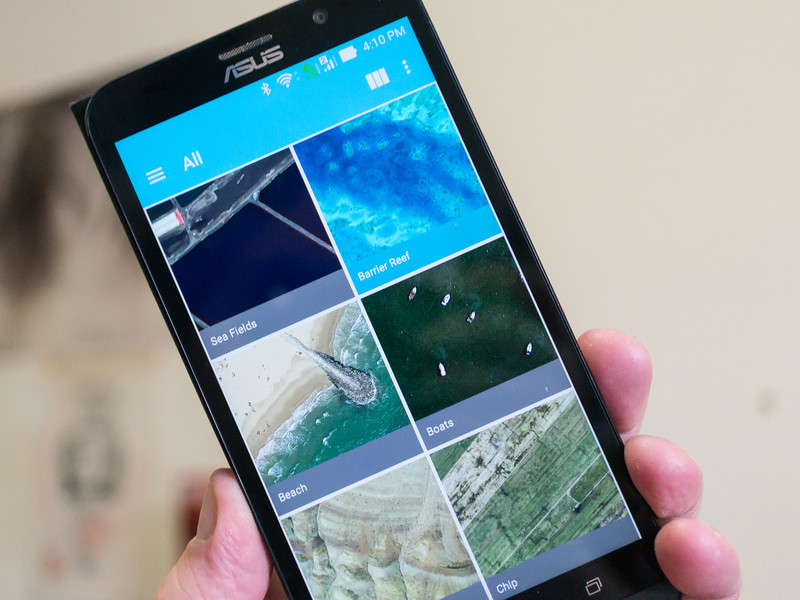
Changing your wallpaper is as easy as a tap.
Phones have in many ways becomes the nexus of our lives. They hold our most important information, let us access the internet, and store many of the photos we take during day to day life. So it’s no surprise that customizing our phones in a variety of ways is so popular. One of the easiest ways to customize your phone, is by switching up the wallpaper and we’ve got the details on how to do it.
Google Now Launcher, Nova Launcher and Action Launcher
Most phones use this method to change your phone’s wallpaper. That makes it simple to remember, and easy to do, when you upgrade your device.
Tap and hold the home screen.
Tap the wallpapers icon on the bottom left of your screen.
Choose from from the default wallpapers, or from your photos.
Tap Set as wallpaper on the upper left corner of your screen.

Samsung Phones
Changing the wallpaper on a Samsung phone is just a little bit different than the method detailed above. That’s because Samsung actually gives you a few more options than most other phones.
Tap and hold on the Home screen
Tap the Wallpapers icon in the bottom left corner.
Choose Home screen, Lock screen, or Home and Lock screen in the upper right corner.

Tap a Samsung wallpaper or choose a photo from your gallery at the bottom of your screen.
Tap set as wallpaper on the bottom of your screen.

Note: This method works with Samsung phones running Android 5.0 Lollipop and above, but due to the variations in Samsung software from country to country and generation to generation, it may look slightly different on your phone.
Your turn!
What’s you favorite wallpaper, and how often do you switch it around? Let us know in the comments below!
 AIVAnet