


Digital Offers: Keep your browsing private and secure for only $39!
There’s so many reasons why you’d want to securely browse the internet anonymously in 2016; whether you don’t like how advertisers and marketers track your every search and click online, you hate dealing with geo-locked content, or you’re bothered by the idea of your ISP or government snooping on you.
The obvious solution is to get yourself a VPN subscription, but those can be a hassle to set up and can end up costing you hundreds of dollars over time. Plus, there’s typically limitations on the number of devices you can use it for.

That’s what makes this deal from Android Central Digital Offers so amazing. You can get a lifetime subscription to Windscribe VPN for just $39.99! Featuring a desktop application and a browser extension that work in conjunction with one another, Windscribe VPN not only protects your online privacy and unblocks geo-locked websites but it also removes ads and trackers from your browsing experience.
Windscribe helps you stay private online by blocking ads and trackers and changing your IP address to one that is shared by thousands of people, so your Internet activity cannot be tracked by your Internet Service Provider and other parties. It also features a top-notch firewall and can be used on all your devices simultaneously (compatible with PCs running Windows XP, Vista, 7, 8, 10, Macs running OS X 10.8 or later, and Linux as well).
A lifetime subscription to Windscribe would typically run you upwards of $900. That’s why you should act now and save 95% with this amazing deal. Keep your browsing private and safe with Windscribe VPN.
See at Android Central Offers
Best OnePlus Phone
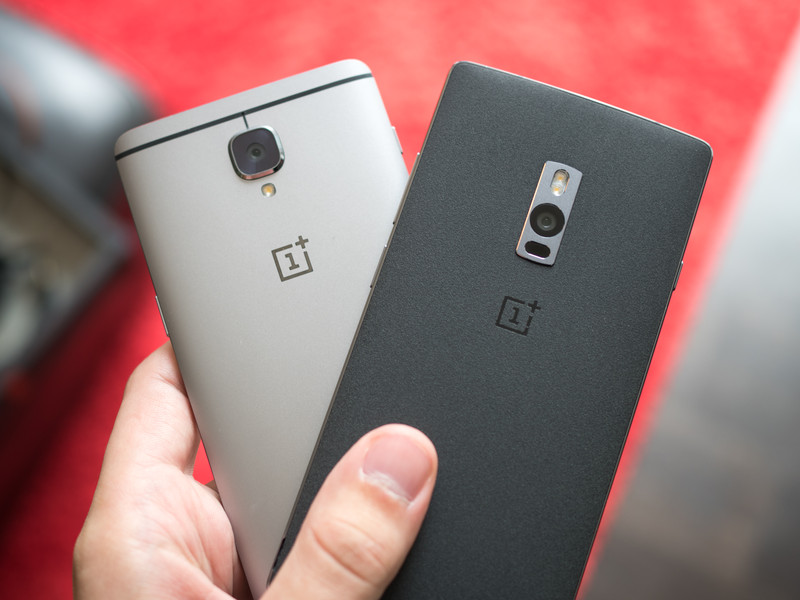
If you’re interested in getting the best OnePlus phone you can buy today, look no further than the OnePlus 3. It’s a fast and capable device all wrapped up in a beautiful chassis.
Best overall
OnePlus 3

See at OnePlus
The OnePlus 3 is the latest and greatest phone to come from OnePlus, and by far the best flagship they’ve released thus far. Featuring all the hardware specs and features you’d expect from a top-tier smartphone — a great screen, solid camera, speedy software, and long battery life — it’s one of the best Android phones of 2016.
And best of all is the price. At only $399, it costs significantly less than any other major 2016 flagship. While there are more affordable OnePlus phones available, none of them come close to matching the high quality experience you get from the OnePlus 3.
Bottom line: After years of fine-tuning, OnePlus has finally introduced a phone that’s worthy of competing in the competitive high-end smartphone market. That phone is the OnePlus 3.
One more thing: The OnePlus 3 comes in a single 64GB version, which is plenty of storage space for even the most avid of media collectors. And it’s dual-SIM too!
Why the OnePlus 3 is the best
Premium package at a mid-range price!
OnePlus has been trying to make major waves into the mainstream phone market, and they really hit their stride in a big way with the OnePlus 3. After previously dabbling with different materials, the OnePlus 3 gets a premium full aluminum build. Paired with the beautiful 5.5-inch, 1080p display protected by Gorilla Glass 4, it’s a stylish design with no compromises.
Powered by a Snapdragon 820 processor and 6GB of RAM, there’s plenty of power for running a mostly pure Android experience from OnePlus’ Oxygen OS. There a solid 16 megapixel camera on the back and an 8MP front-facing camera and in terms of storage, the OnePlus 3 comes with 64GB, but sadly no external SD slot. Other features such as a fingerprint scanner, NFC for Android Pay and two sim card slots are
On top of all that, there’s a capable 3000mAh battery which offers fantastic battery life during an average day of usage. When it’s time to top up, use the included Dash Charge wall plug to get your phone back up to 60% in just 30 minutes.
Here’s what Android Central’s Andrew Martonik had to say on it in his official review:
No longer are we looking at a phone that’s “good for the money” or downplaying shortcomings in light of the phone as a whole — the OnePlus 3 is aiming to just be a top-end phone, before you discuss the price or the company behind it.
Best for less
OnePlus 2
See at OnePlus
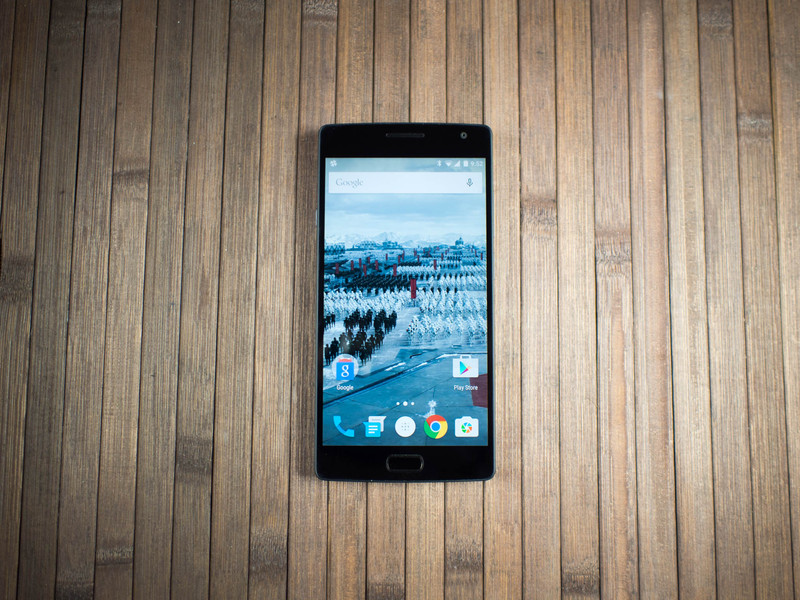
The OnePlus 2 was a somewhat interesting release in 2015. Following their “Never Settle” motto, OnePlus went with the year’s top chip: a Snapdragon 810 processor with 4GB of RAM for the 64GB model of the OnePlus 2. There is a handy notification slider opposite the power and volume buttons, allowing you to discretely silence your phone without taking it out of your pocket. However, OnePlus also left out features such as expandable memory, NFC support, and included a removable backplate but no removable battery. Depending on your usage habits, those might be deal breakers.
Even though it’s a year old, it’s a capable device that could be a decent option for folks looking for a mid-range phone with good specs. Currently running on Marshmallow, it should get an upgrade to Nougat along with the OnePlus 3 in 2017. The build quality here is quite nice as well — after the OnePlus One’s all-plastic body, the company transitioned to an aluminum-magnesium alloy frame with a swappable back cover. It’s a unique look that won’t be to everyone’s tastes, but the included sandstone cover is quite comfortable to hold.
Bottom line: If affordability is your top priority and you don’t care about lack of external storage or NFC, at $299 it will still serve the average user well.
Best budget
OnePlus X

See at OnePlus
OnePlus put style first with the OnePlus X. With an engraved aluminum frame and black Onyx glass on the back, the compact OnePlus X has a polished look and feel to it that stands out among all other OnePlus phones. It’s got a brilliant 5-inch 1080p AMOLED display and performs well running the streamlined Oxygen OS.
This is a true budget phone, so it has a weaker camera than the OnePlus 2 and 3, but it does include the flexibility of either using two sim cards, or one sim card and a microSD — up to 128GB supported. Starting at only $199, it’s the most inexpensive of the three.
Bottom line: If you’re looking for an affordable, stylish phone in a compact size, the OnePlus X is a decent option.
One more thing:: The OnePlus X almost certainly won’t get Android 7.0 Nougat due to the use of an older Snapdragon 801 processor.
Best overall
OnePlus 3
See at OnePlus
The OnePlus 3 is the latest and greatest phone to come from OnePlus, and by far the best flagship they’ve released thus far. Featuring all the hardware specs and features you’d expect from a top-tier smartphone — a great screen, solid camera, speedy software, and long battery life — it’s one of the best Android phones of 2016.
And best of all is the price. At only $399, it costs significantly less than any other major 2016 flagship. While there are more affordable OnePlus phones available, none of them come close to matching the high quality experience you get from the OnePlus 3.
Bottom line: After years of fine-tuning, OnePlus has finally introduced a phone that’s worthy of competing in the competitive high-end smartphone market. That phone is the OnePlus 3.
One more thing: The OnePlus 3 comes in a single 64GB version, which is plenty of storage space for even the most avid of media collectors. And it’s dual-SIM too!
ICYMI: All aboard the world’s largest boat elevator

Today on In Case You Missed It: The Three Gorges Dam in China is home to the largest ship elevator, hauling up to 3000 tons of cargo from one lower level of water to the higher stream at the top. Meanwhile, Georgia Tech engineers believe their new fabric, which can harvest energy from both movement and the sun, will revolutionize how we keep devices charged.
The three baby parent video is here, and the crystallizing salts are here. As always, please share any interesting tech or science videos you find by using the #ICYMI hashtag on Twitter for @mskerryd.
Amazon’s new Fire TV Stick comes with an Alexa remote for $40
Amazon’s next take on the Fire TV Stick looks pretty much the same as before, but it brings along some useful upgrades to keep it current. The biggest difference? It now includes an Alexa-enabled remote at the same $40 price. It also packs in a faster quad-core processor (compared to a dual-core chip before) which Amazon claims is 30 percent faster than its predecessor, as well as speedier 802.11ac WiFi. Mostly, it seems like Amazon is trying to keep the Fire TV Stick more competitive with Roku’s excellent $50 streaming stick.
Unfortunately, there’s still no 4K support on this stick — if you want that, you’ll have to shell out for Amazon’s $100 Fire TV. I’d also expect that device to get a refresh soon to support HDR, just like Roku’s newest lineup. The Alexa remote appears to work just like before, allowing you to search for content, launch apps and ask for things like the weather.
You can preorder the new Fire TV Stick today, and Amazon says it’ll start shipping on October 20th. The company is also offering early customers $65 worth of free content from the likes of Hulu, Sling TV and Amazon Video.
Source: Amazon
Volume is a $1,000 holographic display for your home
Just when we were running out of things to throw our money at, along comes a new product nobody actually asked for. Startup Looking Glass made a “personal volumetric display” called Volume that it says will let you see VR (or really, 3D content) without a headset, so you can share such content with people around you. The display is also interactive so you can move things around either by swiping on the touch-sensitive screen, waving your hands in front of it or pairing up a gaming controller. It’s the world’s first affordable personal volumetric display, said the company. Such an outlandish device has an equally far-out price, should you want to buy it: Volume is now available for preorder for $999.
To be fair, this is a first-generation device that’s intended for early adopters or developers who wish to create content for such a canvas. And based on my brief experience with a preview unit earlier this year, Volume certainly doesn’t seem ready for the general public. Although it definitely delivered on its promise of providing holograph-esque 3D images that everyone in front of it could see, the graphics seemed faint, especially when not in low light.

Despite its resolution of more than two million 3D pixels, the projected pictures also seemed somewhat blurry. Don’t get me wrong — I thoroughly enjoyed myself playing a game where I had to move my hand in front of the Volume in tandem to the rhythm it played. But I still had a hard time seeing at least this iteration of the display taking off.
The company used a technology that it developed, called lightfolding, that projects millions of points of colored lights into a glass cube that measures 21.2 x 10.6 x 7.6 inches. The screen’s dimensions are 10.1 x 7.6 x 5.9 inches and it acts as a canvas for the light show. The projector is housed at the bottom of the unit. With an optional Leap Motion add on, you can wave your hands in front of the screen to move objects around, or use the included touch sensitive panel.
Volume is integrated with Unity3D, so developers can more easily display their projects on the device. The company says it’s looking to release a range of plugins to support 2D creation tools as well. An app library will also be available with several free titles including 3D Etch-a-Sketch, Adobe Animate, Volume Paint, Volume Sculpt as well as Volumetric arcade games. It will also offer Holovid, an iPad app that lets you record and playback volumetric videos.

Looking Glass emphasizes Volume’s ability to let groups of people “experience 3D content simultaneously without any additional accessories,” such as headsets. But glasses-free 3D TVs and projectors have already done that, and deliver superior image quality as well. The HoloFlex, a smartphone cover that’s a bit more similar to Volume, also suffers the same issue with resolution, although it uses different technology. These examples lack Volume’s capacity for touch interactivity at the moment, though, and also aren’t available for consumer purchase just yet.
I won’t deny that the idea of a personal holographic display is pretty cool and could be a really great tool for collaborative work. But the idea that a $999 device is “affordable” is harder to justify. Looking Glass said its lightfolding technology reduces the cost of traditional volumetric displays nearly 100-fold, which is impressive. But until the experience gets better in later-generation models, it’s difficult to see the typical consumer shelling out for Volume.
Apple chooses Battersea Power Station for new London HQ
Apple has settled on a new base of operations in London: Battersea Power Station. The iconic landmark, situated on the Southwest side of the city, has laid mostly dormant since its closure in 1983. A huge regeneration effort is now underway, however, which will include a mixture of offices, restaurants and stores. Apple has agreed to take six floors inside the central Boiler House, accommodating 1,400 of its workforce. As the Evening Standard reports, this will cover its “central function” staff who are currently based in other offices, such as the one in Hanover Street, Mayfair.
The company will move in 2021, once the bulk of the new campus has been completed. The money involved is a mystery, but the deal has been described as “the largest office letting in London’s wider West End” for the last 20 years. The new space will cover 500,000 square feet, making Apple the largest office tenant in the area. It’ll fit up to 3,000 people, ensuring the company can comfortably hire and transfer more staff down the road if needed. “It’s a great opportunity to have our entire team working and collaborating in one location while supporting the renovation of a neighbourhood rich with history,” an Apple spokesperson said.
If you’re curious, here’s an artist’s impression of the new site:

Source: Battersea Power Station, Evening Standard
Photo editor uses neural networks to airbrush like a pro
Most people think Photoshop is a magical tool that can change reality, but it does require a skilled artist for decent results. Using neural networks, however, University of Edinburgh researcher Andrew Brock has built an uncanny image editing app that can transform someone’s entire hairstyle with just the stroke of a brush.
To use the Neural Photo Editor, you select the “contextual paintbrush,” choose a color and start mousing the part you want to change. The system can recognize if you’re on the model’s hair, for instance, and intelligently fill in the area, changing the color to match your brush. In another example, the user paints over the subject’s mouth with a white brush to make their smile bigger.
Brock says that basic system works well if you use system-generated images, but falls apart with existing photos. However, by adding a type of deep learning called an “adversarial network,” the algorithm can compare the differences between the original and modified photo and apply changes naturally. That means that an artist can completely modify someone’s looks in a random photo with just a few brush strokes.
If you’re code savvy, you can download the Neural Photo Editor from Github and try it for yourself. Just be aware that it’s still in the early stages, and only works on very low-resolution images. As shown in the video above, it doesn’t work at all sometimes and generates “bizarro” results, as Brock puts it. Still, it’s a pretty good preview of future image editing software and shows how even Photoshop artists must fear the robot revolution.
Via: PetaPixel
Source: Neural Photo Editor
Narrative shuts down its lifelogging camera business
Remember the Narrative Clip, that wearable camera that let you document your day with a steady stream of photos or video? It was a novel idea, but it doesn’t look like many people embraced the concept. Narrative is telling customers that it’s filing for “voluntary dissolution” following financial trouble that came to a head this summer, when it restructured in a bid to stay afloat. That will put an end to Clip sales and support (a Facebook group will offer help), but the company is promising a solution that prevents your lifelogging camera from becoming a paperweight.
The company says it’s releasing a tool that will both let you download shots from Narrative’s servers and, more importantly, grab new content from your Clip. It’s not clear how this will work or when this will be available (we’ve reached out to Narrative for details), but that should make the device useful after Narrative calls it quits. You’ll just have to manage and upload images yourself.
It’s a quiet, sad end to one of crowdfunding’s more successful darlings (it got off the ground back in 2012), but not entirely unexpected. The notion of snapping a photo every 30 seconds with a collar-mounted camera is only going to appeal to so many people. Chances are that you’ll be happy with capturing the occasional interesting moment on your phone, especially in an era when you can livestream your adventures. And while the price did come down over time, $199 for the Clip 2 meant that you had to think carefully about your purchase. Narrative had an interesting product — it just wasn’t going to be a runaway hit.
Sad that Narrative Clip maker has gone out of business. I loved “lifelogger” category but it became clear through use it was not viable. pic.twitter.com/E6EWLbc1Rn
— Ben Wood (@benwood) September 28, 2016
Via: SlashGear
Source: Ben Wood (Twitter)
iPhone 7 Camera Test Touts Excellent Exposure, Lower Noise, and Richer Colors
DxO Labs has published an in-depth iPhone 7 camera review, calling it “a very solid evolution over the iPhone 6s” after extensive testing. The single-lens smartphone achieved an overall DxOMark Mobile Score of 86, topping the iPhone 6s by two points but trailing the Samsung Galaxy S7 Edge and five other devices.
iPhone 7 has a wider DCI-P3 color gamut that allows for more vibrant colors compared to the traditional sRGB standard. The photo on the right, for example, rendered using the DCI-P3 color space, has richer reds displayed compared to the photo on the left rendered using the traditional sRGB color space.
One of the interesting innovations in the iPhone 7 is its use of a wider-gamut color space, allowing it to store and display deeper-and-richer colors in its JPEG photos. To take full advantage of this new capability you’ll want to view your images on a color-rich display like that of the iPhone 7 and other Apple devices that support the new DCI-P3 color gamut used by the iPhone 7 and iPhone 7 Plus, or on a premium, color-managed monitor or an Ultra HD TV. Conversely, iPhone 7 photos may look slightly washed-out when viewed on devices that do not support the appropriate color management (DCI-P3), as they would wrongly interpret iPhone7 JPEGs as being encoded in sRGB.
DxO said the iPhone 7 offers great exposures with wide dynamic range, accurate white balance and color rendering, and good detail preservation when shooting outdoors in bright daylight. The test noted some exposure failures, such as overexposed highlights, but said the instances of these were minimal.

Shooting in bright light, the iPhone 7 captures very good exposures with wide dynamic range, making it an excellent choice for landscape, streets scenes, and architecture, as well as for general outdoor (daylight) photography. Colors are both vivid and pleasant, especially in sunny conditions, and generally the white balance is stable. We observed some light green casts in some very specific conditions, but they were fairly minimal.
The review also awarded high marks for the iPhone 7 camera’s excellent corner-to-corner sharpness, reduced noise, and accurate color representation. DxO shared the photo below as an example of what it called excellent White Balance. The review said, in some cases, a barely noticeable green cast can appear.

Accurate color representation is only possible when the camera correctly estimates the color of light falling on the scene – typically called the White Balance. Part of the job of the camera’s image processing chip is to analyze the scene as it is captured and select a White Balance, ranging from warm to cool, that recreates the scene the way the human eye sees it. The new image signal processor in the iPhone delivers on this test, with images typically showing excellent White Balance.
Additional photos and test results can be found in the DxOMark review. DxO has analyzed the image and video quality of over 9,000 cameras, lenses, and mobile phones, and its tests are generally respected within the industry. The company also sells some consumer-facing products like the DxO ONE camera.
DxO said its iPhone 7 Plus camera review is coming very soon.
Related Roundup: iPhone 7
Tags: cameras, DxOMark
Discuss this article in our forums
Apple Planning New UK Headquarters in London’s Historic Battersea Power Station
Apple is working on building an all-new campus location in London’s Battersea Power Station, where 1,400 employees will be moved from eight locations around London to occupy the company’s new UK offices (via Evening Standard). Battersea is currently under a “painstaking” restoration process after 33 years of being abandoned, with a predicted opening date for Apple’s offices expected sometime in 2021.
For the site, Apple is leasing 500,000 square feet in total, making it one of Apple’s largest offices outside of its monolithic campuses in the United States. The company’s official European headquarters is said to remain in Cork, Ireland, where 4,000 of its employees work.
Rendering of redeveloped Battersea campus with historic brick power station in center
In a statement to the Standard, Apple said it was looking forward to the 2021 opening of “our new London campus” as staff relocate to “this magnificent new development at one of the city’s best-known landmarks”. It added: “This is a great opportunity to have our entire team working and collaborating in one location while supporting the renovation of a neighbourhood rich with history.”
Apple’s “central function” employees are believed to be relocated to Battersea, including individuals in finance and human resources. The 42-acre location isn’t dedicated solely to Apple, with various other residential, office, and retail shops planned for the area. The Cupertino-based company is predicted to occupy about 40 percent of the total office space at Battersea once everything is finished, with enough room for 3,000 employees.
Apple will occupy the top six floors inside the former boiler house around a huge central atrium. There will also be three floors of shops, 253 apartments around a “garden square in the sky”, a 2,000-seater auditorium and cinemas in a scheme designed by London architects Wilkinson Eyre.
The first tenants will move into the Battersea complex’s apartments as early as December, with shops and restaurants coming in the spring of 2017. Apple will keep working in various other London offices — including locations in Hanover Street and James Street — until the completion of its section of Battersea in 2021.
In California, construction on Apple Campus 2 is continuing to inch closer to the site’s expected completion by the end of the year. The newest drone video shows the 2.8 million square foot campus with a nearly-complete main building as workers begin to focus on landscape additions and finishing up the glass facade of the circular building.
Tags: United Kingdom, Apple Battersea
Discuss this article in our forums
 AIVAnet