


Morning news briefing: September 13, 2016

The Note 7 recall saga continues, HTC teases its next Desire, and Google opens an online gallery.
The big news of the morning is that there are no 70 confirmed cases of Note 7s catching fire or exploding in the U.S. alone, as Samsung launches its own IMEI checker to reassure Note owners. It’s the latest development in a dire couple of weeks for Samsung, as replacement Notes start to trickle out to customers.
Meanwhile it’s looking like we’ll see the HTC Desire 10 for the first time next week, with a virtual launch event on September 20 welcoming the new mid-ranger into the world. Kick off your Tuesday with the latest Android news from around the web, curated by the AC team!
Samsung launches Galaxy Note 7 IMEI checker
You can now plug your phone’s IMEI into a form and see if it’s safe or potentially explosive. Read More
Health Canada is working with Samsung on the Note 7 recall
Some interesting nuggets from this Canadian government report: 21,953 Note 7s were sold in Canada and will need to be recalled, with just a single instance of a Note 7 catching fire or exploding in the country. The report also says the number in the U.S. has risen to 70 — significant since just 35 were confirmed by Samsung initially. Read More
Google Arts & Culture now lists natural history exhibits
Google has partnered with over 50 natural history museums around the world to open an online gallery. The exhibition features over 300,000 photos and videos, 150 interactive stories, and 30 virtual tours showcasing key evolutionary changes spread across 4.6 billion years. The collection is available for viewing on the web, and through the Google Arts & Culture app.
Xperia X Compact now available in the UK
Unlocked Mobiles has the pint-sized Sony phone available now for £378.98 SIM-free, in black, white and blue. Sony’s latest Compact doesn’t pack all the power of the XZ, but it does include the company’s fancy new 23-megapixel OIS camera. From our hands-on preview:
As the Android phone marketplace continues to be dominated by 5.2- to 5.7-inch handsets, it’s great to see Sony sticking with a smaller option for those who want something more hand- and pocket-friendly. There are some compromises to be made coming down from the XZ to X Compact, sure — a less beastly CPU, less exotic materials and lower-resolution display. But if you’re looking for a decent, small Android phone in 2016, the X Compact might well be your best option.
Moto E3 Power is coming to India on Sept. 19
Motorola is teasing the upcoming launch of the entry-level Moto E3 Power on its social channels. With the Moto G4 Plus exclusive to Amazon India, Flipkart is getting exclusive rights to sell the E3 Power in the country. Key specs include 5-inch 720p display, quad-core MT6735P SoC, 2GB of RAM, 16GB storage, microSD slot, 4G, 8MP camera, 5MP front camera, and a massive 3500mAh battery. Pricing is likely to be below that of the Moto G4 Play, which retails for ₹8,999 ($135).
Samsung launches the Galaxy Tab A (2016) in Korea
The new mid-range slate packs an S Pen, a 10-inch 1920×1200 display, optional LTE connectivity and microSD expansion up to 256GB. It’s only been announced in Samsung’s home country so far, where it’ll sell for the equivalent of $437.
Euro Sony Xperia XZ pre-orders get free wireless headphones
Pre-order Sony’s new flagship in Europe and the company will throw in a pair of Sony MDR-XB950BT Extra Bass wireless headphones, worth around £100, according to XperiaBlog. If you’re on the fence, be sure to check out our Xperia XZ review!
HTC will announce the Desire 10 series on Sept. 20
No, it’s not Google and HTC’s new Pixel phone. Instead HTC’s “Be Edgier” teaser looks like it’s for the Desire 10, the latest in its mainstream Desire range. Based on leaked renders, we can expect fingerprint security, a big honkin’ camera module and plenty of gold.
The virtual launch event kicks off on HTC.com at 3 a.m. ET, September 20.
We’re giving away a ZTE Warp 7 to three Android Central readers!

Surf, stream and get more done with the ZTE Warp 7. Powered by a super-fast, power-saving quad-core processor and Android 6.0 Marshmallow, this phone won’t miss a beat. Watch your favorite videos on the large 5.5-inch HD screen covered with Gorilla Glass, snap high-quality photos with a sharp 13MP rear camera, and use the 5MP front-facing camera for perfect selfies.
Sound interesting? We’ve got three ZTE Warp 7 devices to give away this week, so read on to see how to get yourself entered to win one!
THE PRIZE: THREE (3) Android Central readers will be taking home a brand new ZTE Warp 7 phone! Please note, these are Boost Mobile compatible, but service is not included and is the responsibility of the contest winners.
THE GIVEAWAY: Head down to the widget at the bottom of this page. There are multiple ways to enter so complete all of the tasks for maximum entries and your best shot at winning! Keep in mind that all winning entries are verified and if the task was not completed or cannot be verified, a new winner will be chosen. The giveaway is open until September 26th, and the winner will be announced right here shortly after the close date. Good luck!
We’re giving away a ZTE Warp 7 to three Android Central readers! Enter now!
iPhone 7 and 7 Plus review: Apple (mostly) plays it safe
Tick-tock. Tick-tock. That clockwork rhythm has more or less defined Apple’s iPhone road map since the days of the 3GS. One year we’d get a new iPhone with a new look and loads of features to agonize over and opine about. Then, the following year, we’d get the same general design with a faster chipset and a few new tricks. The rhythm was almost comforting in its regularity, which made Apple’s unveiling of the new iPhone 7 and 7 Plus such an anomaly. It’s easy to look at these devices as another year’s worth of modest updates crammed into a familiar body, but trust me: It’s a little more complicated than that. What Apple ultimately did was create two world-class smartphones that skew more toward “safe” than “state of the art”. The big question here is whether a bunch of relatively unexciting changes add up to greatness.
Hardware

You don’t need me to tell you that this year’s iPhones look an awful lot like last year’s. Like it or not, Apple believed there was still room to improve the phone design we’ve been using for two years, so it focused on that instead of cooking up a brand-new aesthetic. It’s tempting to say Apple’s current design philosophy boils down to “if it ain’t broke, don’t fix it,” but that’s not really true either: The company actually fixed a lot this year.
Some changes are subtler than others. The 7 and 7 Plus’s antenna bands swoop around the phones’ curves instead of cutting across their backs. The iPhone’s 12-megapixel camera (or cameras, in the case of the 7 Plus) is surrounded by an aluminum hump, rather than just jutting out like in the old days. Apple finally made 32GB the new storage baseline and gave the 7 and 7 Plus a seriously spacious 256GB option. Both models are the exact same size as the models that preceded them, but the 7 and 7 Plus have each shed a couple of grams here and there. The loss of a few paper clips’ worth of weight isn’t nothing, though, especially when we’re talking about devices that we hardly ever put down.
From there, the list of changes starts to look more substantial. If you’re lucky, you’ll never need to know that the 7 and 7 Plus meet IP67 water-resistance standards. In other words, they’re built to withstand dust ingress and, more important, submersion in up to a meter of water for 30 minutes. Apple’s rivals have made big strides in making their smartphones more life-proof, so all I can really say is: It’s. About. Time. Finally, we get iPhones that’ll survive when you drop them in puddles, get caught in the rain or intentionally dunk them in beer. (Note: liquid damage still isn’t covered by Apple’s warranty.) Catching up to the competition has never been so welcome, or so tasty.

Meanwhile, the all-too-familiar home button isn’t a physical button anymore. It’s a solid-state affair that makes the phone taptically throb when you push it. This wound up being way more divisive a tweak than I expected; when I showed it off to colleagues, just about all of them recoiled at first press. As a longtime iPhone user, I can’t quite explain how off the sensation felt at first, but it only took about a day for me to get over it. Now it’s a little weird to press an older iPhone’s home button and not get the little bzzt of feedback from the Taptic Engine; but I digress.
The phones come in new colors too: a matte black and “jet black.” The former looks exactly what you’d expect a black iPhone to look like, though the dark finish does a good job obscuring those antenna bands. Jet black, meanwhile, is at once lovely and a bit of a bummer. When I say lovely, I really mean it: The moment I touched one, I couldn’t believe it was made of the same 7000 series aluminum as the others. In fact, it doesn’t feel like metal at all, thanks to Apple’s lengthy anodization and polishing process. Jet black iPhone bodies feel just as glossy and slick to the touch as their glass screens, and that unity makes them feel like seamless, cohesive wholes. The entire thing is seriously impressive, even if it feels sort of plasticky.
Then the scratches and smudges appear. I’m not a case person, but I take good care of my things and exercised what felt like a more than reasonable level of caution carrying these new phones around. It didn’t even take 24 hours for the first batch of scratches to appear on my jet black iPhone 7’s back, which was either the result of placing it on a bar’s granite countertop or repeatedly shoving it into my empty jeans pocket. Those little nicks have only multiplied, which could be an understandable deal-breaker for some of you.
And now we’ve come to the elephant in the room. Neither the iPhone 7 nor the iPhone 7 Plus has a traditional 3.5mm headphone jack. To hear Apple tell the tale, getting rid of that decades-old standard wasn’t just a practical move to make waterproofing and increased battery life possible — it was also an act of “courage.” Here’s a bit of unsolicited advice for Apple: I get that changing the world is sort of your thing, but maybe go easy on the hubris next time. Anyway. I’ll dig into audio quality in just a moment, but suffice to say that the toughest part of not having a headphone jack is trying to break all my old listening habits. I can’t tell you the number of times I tried to plug a regular pair of earbuds into these phones before — d’oh! — remembering that doesn’t work and then having to root around for the included Lightning-to-3.5mm adapter.

This also means you can forget about charging your phone while listening to music at the same time — unless you have wireless headphones or are willing to buy a third-party adapter to split that Lightning port. (When asked if the company planned to release its own splitter, an Apple spokesperson said they had “nothing to announce.”) The iPhone 7 and 7 Plus have better batteries than the models that came before them, so charging and listening honestly hasn’t been a big issue, but still, no one would fault you for crying foul. Either way, Apple isn’t the only company to have signed the headphone jack’s death warrant. Motorola released two flagship phones this year that used their USB Type-C ports for audio, though it did so at least partially because it expected Apple to ditch that jack, too.
Display and sound

Once again, the smaller iPhone 7 has a 4.7-inch Retina HD screen, while the Plus has a 5.5-inch display. The resolution and pixel density are the same too, so you’re not going to be seeing anything more crisply now than you did in 2015. Rather than chase other companies squeezing higher-res displays into their phones, Apple chose to focus on a more fundamental part of these screens: how they render color. The 7 and 7 Plus support the DCI-P3 wide color gamut, which — long story short — means they’re capable of reproducing more colors than the standard sRGB color range. Put another way, they’re able to display more vivid, nuanced images than the iPhones that came before them, thanks to a color space that’s standard in the film industry.
So what does that mean for your day-to-day life? Well, it kind of depends on how good your eyes are. The difference between these displays and the ones we got last year aren’t always obvious. Colors are often a touch brighter, and you can see subtle shades that help images feel more lifelike: Skies are bluer, sunsets are warmer and people’s skin looks more lively. Then again, changes that seemed subtle to me were more pronounced to others, so maybe my eyes are a little dim.

The screens in the iPhone 7 and 7 Plus are also notably brighter than on last year’s models, and they’ve gained a new trick for when you’re outdoors. Apple says it uses the 7 and 7 Plus’s ambient light sensor to tell if you’re inside; if not, the screen can get even brighter to compensate for sunlight. That’s right: Not all maximum brightness levels are created equal. That being the case, I’m a little surprised Apple didn’t bring the 9.7-inch iPad Pro’s TrueTone color-temperature-tweaking system to the 7 and 7 Plus. My guess is they couldn’t squeeze it into these phones’ smaller bodies.
Here’s another first: The 7 and 7 Plus are the first iPhones to feature stereo audio (another trick Android phone makers have dabbled with for ages). Why it took so long for Apple to try this eludes me; they’re a huge addition to the iPhone formula. Movies, podcasts and speakerphone calls sound dramatically better now, though the stereo separation doesn’t seem quite as pronounced as on devices like the old HTC Ones. That’s thanks to Apple’s speaker setup — rather than stick two speakers right on these iPhones’ faces, sound springs forth from the main earpiece and the speaker on the bottom-right edge. I’ll take it.
If you’re still bristling about the whole needing-an-adapter-for-your-headphones thing, well, at least the sound quality doesn’t suffer in the process. I used my go-to headphones (a pair of Samsung Level On PROs) to listen to the same music on the 6s and on an iPhone 7 with the Lightning adapter, and couldn’t tell any difference at all. Ditto for a blind listen-off between the 6s and the 7 Plus: They sounded identical to me.
Camera
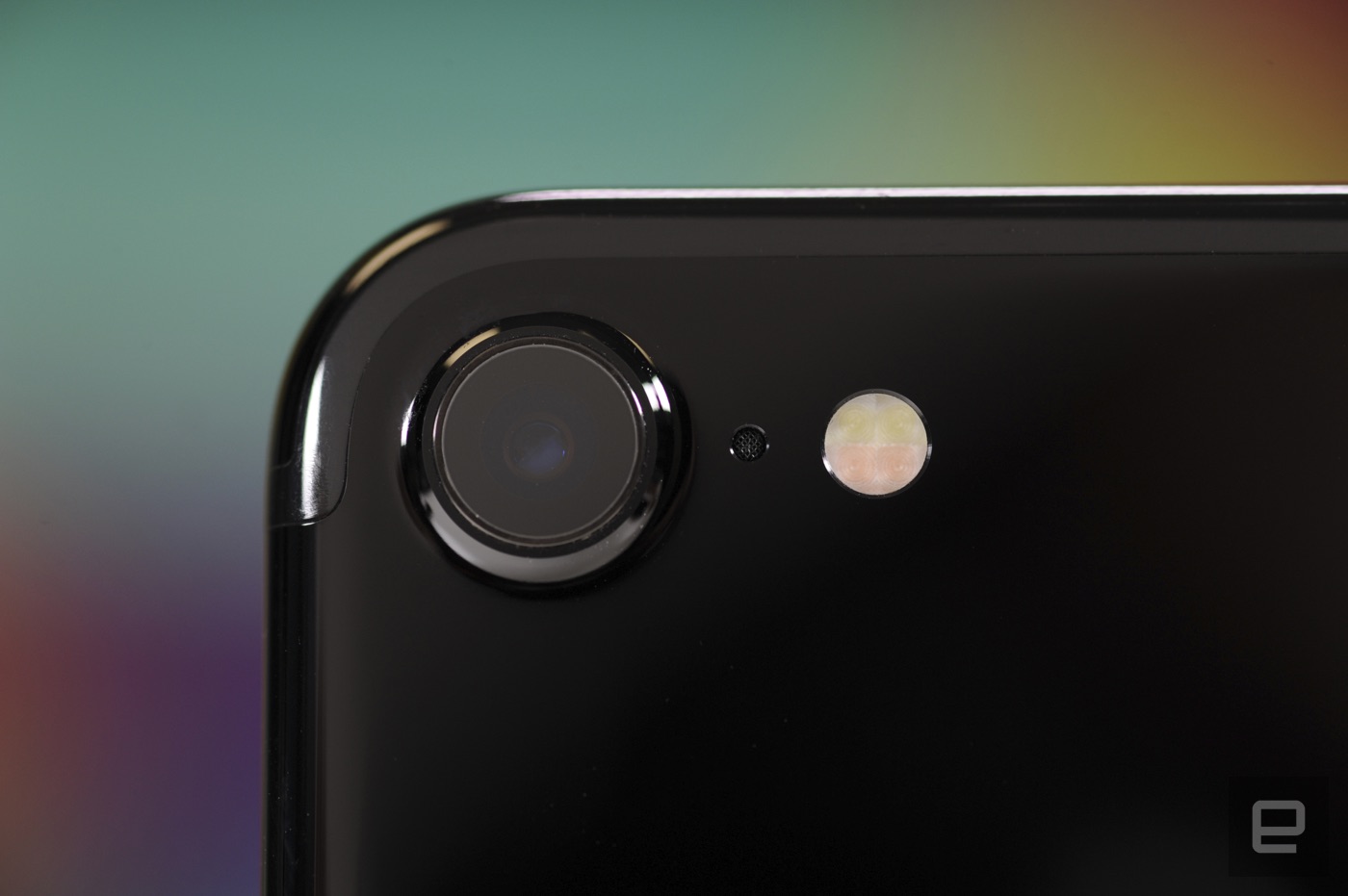
This is where things get really interesting. By now you know the iPhone 7 has a single 12-megapixel camera on its back, and guess what — it’s a damned good one. That’s saying something, considering there’s been no resolution boost since last year, and the pixels on that new sensor haven’t gotten bigger either. And yet the photos they capture come out significantly better; there wasn’t a big difference in how much detail was captured, but colors looked more vibrant and true to life than on the iPhone 6s Plus.
Surprised? You shouldn’t be. The iPhone 7’s camera captures more color data than previous ones (the better to view on that wide-color-gamut display), and the results are pretty great. In fact, I generally preferred shots taken with the iPhone 7 and 7 Plus to ones captured with a Galaxy S7 Edge. The latter captured a wider field of view and was sometimes better accurately rendering green landscapes, but the iPhone’s leg up on colors meant their photos tended to look nicer (to me, anyway). Test shots taken with the iPhone 7 were also generally better exposed than similar shots taken with the 6s, which in my case usually meant fewer blown-out skies washing out my photos. But every smartphone camera does well when it’s bright outside. What about when things get dim?
It’s a toss-up. The inclusion of optical image stabilization across both versions of the iPhone 7 helps, as does the main camera’s f/1.8 aperture. Props to Samsung: Photos taken with the S7 Edge did indeed look brighter, but the iPhone 7 and 7 Plus offered more natural colors. Before today I would’ve said the S7s and the Note 7s had the best all-around smartphone cameras, but now Apple is right there, neck and neck with the best of them. The iPhone 7’s front-facing camera has also received a major upgrade. It’s been bumped up to seven megapixels and inherited some of the architecture that made the rear cameras so formidable. Long story short, your selfies are going to look lovely. Oh, and videos look really nice too, since they exhibit the same accurate colors as stills. Go forth and vlog, you pioneer.
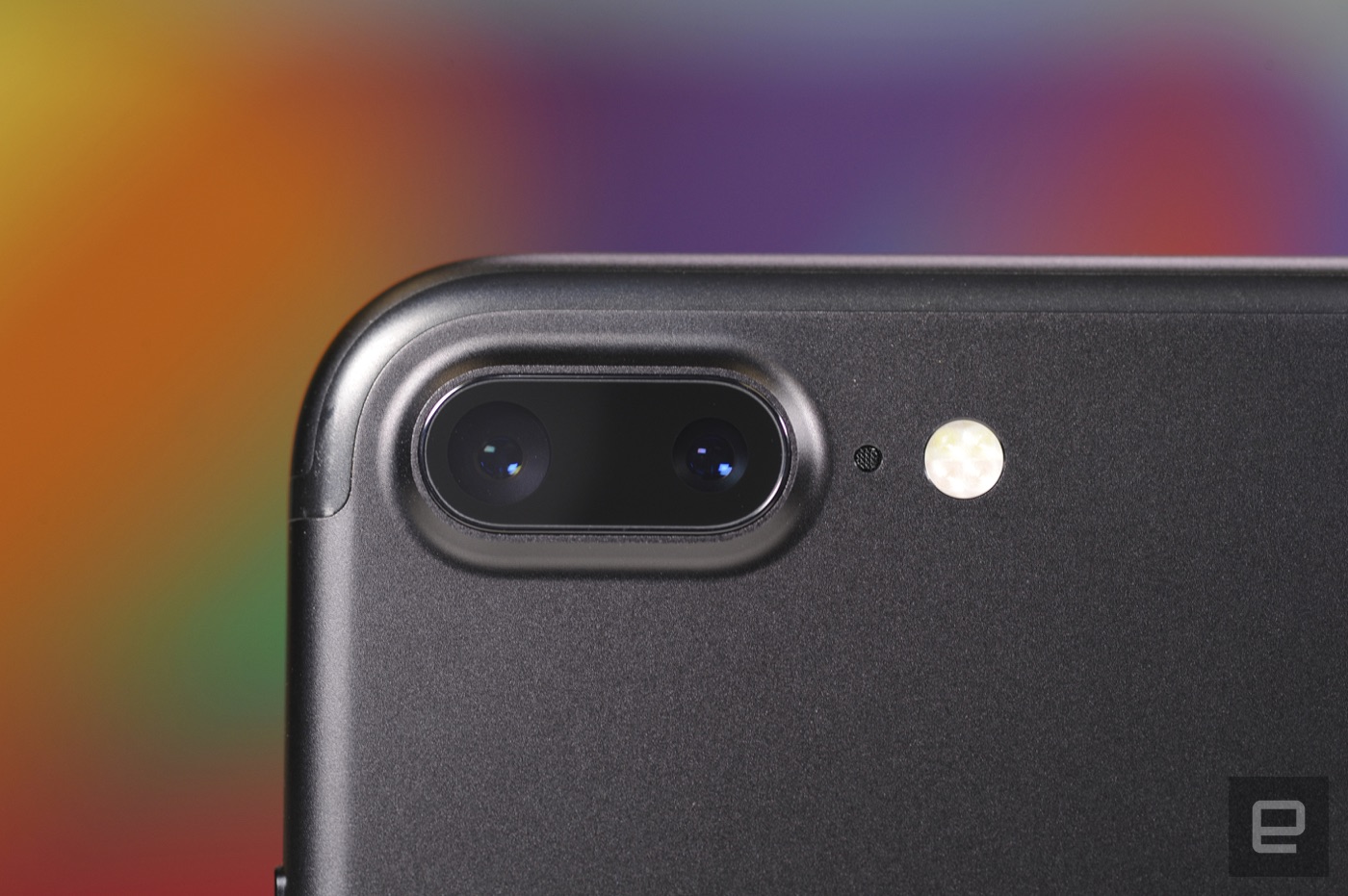
Then, of course, there’s the iPhone 7 Plus’s dual camera setup, which pairs a 12-megapixel wide-angle shooter with a 12-megapixel telephoto camera to give the Plus an actual zoom. Apple isn’t the first to dabble in dual cameras, nor is it the first company to attempt this zooming configuration; LG tried it earlier this year with half-decent results. Apple’s approach feels more elegant, though — with a quick tap you can switch between 1x and 2x zoom modes, or you can drag a slider or pinch with two fingers for more precise control. By the way, you’ll probably want to stay at 1x or 2x zoom (or somewhere in between). Apple added digital zoom up to 10x, and the closer you get to that ceiling, the noisier and more indistinct things get. That’s not surprising, though.

This whole thing might sound like a gimmick, and it sort of feels like one for a few minutes. After that, the “what do I do with this?” factor falls away and the optical zoom just becomes a handy trick to have at your disposal. The photos turned out great too, though you might notice some differences in the colors and exposure if you take comparison shots with both of the iPhone 7 Plus’s cameras. The secondary telephoto camera still shoots 12-megapixel photos, but it has a slightly wider f/2.8 aperture. Basically, it doesn’t let as much light in, so the photos come out a little different. Avid photographers might take issue with these minute changes; everyone else need not worry. For now, this is the only trick the 7 Plus has that the smaller 7 doesn’t, but that’ll change soon. Apple’s going to update it with a feature that lets you play with depth of field when you’re shooting portraits, so you can get a little more bokeh going on.
Software

The iPhone 7 and 7 Plus might not seem like the most exciting hardware updates, but there’s plenty to get excited about in iOS 10. Granted, very little of it will come as a surprise, since it’s been available as a public beta for months now. Our full review is coming soon, and I’ve already detailed some of the new features, so I’ll just recap the highlights here.
It took a while for me to get used to the revamped Photos app, but I sort of love it now. The app’s original form was really basic: You could sift through your photos by “Moment” and poke around in albums, shared or otherwise. The iOS 10 version, meanwhile, uses machine learning to sort photos into themed “memories” based on where you’ve been and when you’ve done things. The best part: searching through all your photos by keyword, since iOS 10 uses AI to identify what’s in your picture. As it turns out, I have 14 pictures with bibs in them despite not being a parent.
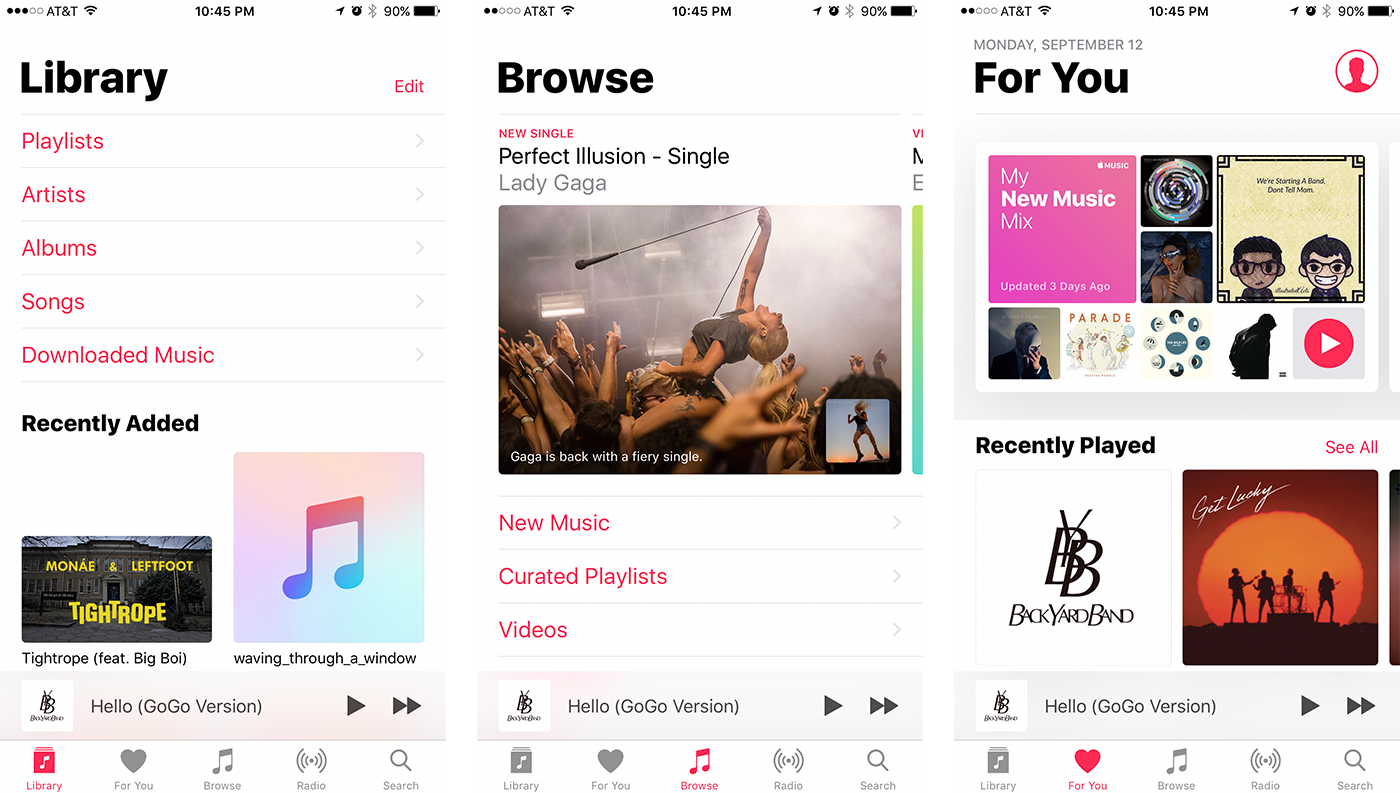
Apple’s bright, bold new Music app was easier to jump right into, and I’m a fan now. The first time you launch the app, you’re dropped right inside your music library (which is how it should be). All of the touch targets are bigger and easier to hit, even when I was glancing down at them mid-run. It’s also satisfying to see 3D Touch finally get more use. I wrote in my iPhone 6s review that using that pressure-sensitive screen was something I eventually wanted to do all the time; too bad iOS 9’s never tapped into its full potential. Not anymore. It feels like 3D Touch is connected more strongly to iOS 10’s core; I’ve been using it to expand notifications, bring up contextual menus in Apple Music and glance at widgets for first-party apps like the dialer and Weather.
Apple is also making better use of the Taptic Engine this time around, so you’ll feel it all over the place — literally. The prominent examples are the ones you’d expect, like 3D-Touching notifications and using the home button, but you’ll also feel a brief thud when you flick the Control Center open. Skimming your Apple Music collection for a specific song? Sliding your finger down the alphabet on the side of the screen feels like running your finger down a washboard, allowing you to more easily stop on a letter.
Oh, by the way, the process of forcing your 7 or 7 Plus to restart is totally different. Instead of holding down the power and home buttons like we have been for a decade, the new process requires you to hold down the power and volume down keys.

And now for some bad news: I still haven’t been able to test some of iOS 10’s headline features. Siri’s intelligence is poised to get a big upgrade thanks to third-party apps, but I couldn’t yet ask her to call me an Uber or send my friend $20 via Venmo. And while I’m also a little obsessed with sending these weird new iMessages, it’s too bad that at time of writing, the iMessage app store was still virtually barren. I’ll update this review as the store comes online and I get to play with more weird stuff.
Performance and battery life

Another year, another high-powered A-series chip to play with. The iPhone 7 and 7 Plus both run the company’s new A10 Fusion, a quad-core chipset that pairs two speedy CPU cores with two longer-lasting ones that use 20 percent of the power the others do. It’s easily the fastest chip Apple has ever stuck in a mobile device, beating out even the 9.7-inch iPad Pro’s A9X processor. More important, there’s basically zero difference in performance between the 7 and 7 Plus, even though the smaller version has 2GB of RAM, versus 3GB on the Plus.
I restored the new iPhones from backups of our 6s and the differences were immediately clear. There’s almost no delay from when you tap an app icon to when it launches, and popping in and out of apps was noticeably faster too. Both the 7 and 7 Plus were also able to handle graphically demanding games like Warhammer 40,000: Freeblade, Submerged and Mortal Kombat X without breaking a sweat.
In fairness, the 6s and 6s Plus played these nearly as well, but the 7 and 7 Plus’s batteries don’t get depleted as much in the process. Part of that is likely due to the 6s’s battery deteriorating over time, but the A10 Fusion’s GPU is also more power-efficient. Ultimately, what might be most telling is that when it came to day-to-day use, I stopped thinking about performance completely.
| 3DMark Unlimited IS | 37,663 | 37,784 | 24,601 | 27,542 |
| Geekbench 3 (multi-core) | 5,544 | 5,660 | 4,427 | 4,289 |
| Basemark OS II | 3,639 | 3,751 | 2,354 | 2,428 |
We can’t talk performance without delving into the 7 and 7 Plus’s batteries, and thankfully they’re an improvement over last year. One of the few upsides to removing that headphone jack was that it freed up more space to make these batteries a little bigger — 14 percent larger in the iPhone 7 and 5 percent in the 7 Plus. In our standard video rundown test (in which the phones are connected to WiFi with a video looping at 50 percent brightness), the 7 lasted for 12 hours and 18 minutes, or just about two hours longer than the 6s. The 7 Plus, meanwhile, looped Whiplash for 14 hours and 10 minutes, or about an hour and a half longer than the 6s Plus. That’s also on par with Samsung’s Galaxy Note 7. Not bad at all.
Eventually, though, I had to give up on bingeing on a raw jazz thriller and get some actual work done. These days, my usual routine involves lots of Slack messages, emails, Spotify playlists and marathon Hearthstone sessions. When put through that very specific kind of wringer, the iPhone 7 usually stuck around for a full workday and often survived until mid-morning the following day. The 7 Plus, meanwhile, frequently lasted through nearly two days of mixed use and downtime, a notable improvement over the 6s Plus. Obviously, your mileage will vary, but here’s hoping that these upgraded batteries stay this good over time. (We’ll see about that.)
The competition

Under normal circumstances, the Galaxy Note 7 would be at the top of this list, but, well … you know. While Samsung continues its global recall over exploding batteries, you should consider the Galaxy S7 and S7 Edge in the Note’s place. They share the same Snapdragon 820 chip and 4GB of RAM, not to mention the same lovely 12-megapixel cameras that rival the sensor Apple used this year. If you’re a screen snob, Samsung’s displays might be more appealing, since they run at a higher resolution and also support a wider color gamut than the sRGB standard. Apple and Android fans often tussle over which platform is superior, but make no mistake: The newest iPhones and the newest Galaxies are all truly excellent smartphones.
Looking for impeccable build quality and equally good sound? Consider HTC’s underrated 10. It’s easily the most impressive phone the company has crafted in years, and with support for hi-res audio and a headphone jack, it’s arguably a more versatile media machine. Speaking of HTC, it’s rumored to be working on the two most anticipated Android devices of the moment. We’re not entirely sure if they’ll be called Nexus phones or Pixel phones or something else entirely — either way, Google is said to be prepping for an October 4 unveiling. Codenamed “Sailfish” and “Marlin,” both are expected to pack quad-core Qualcomm chipsets (either the Snapdragon 820 or 821) with 4GB of RAM and 12-megapixel main cameras.
The biggest difference is reportedly the size of their screens, with the smaller Sailfish sporting a 5-inch or 5.2-inch 1080p display, while the Marlin runs with a 5.5-inch Quad HD screen. If you don’t care about smartphones as much as you care about getting the best phone, period, you might want to wait and see what Google has up its sleeve.
Wrap-up

The iPhone 7 and 7 Plus are at once the most technically impressive smartphones Apple has ever made and the most divisive. After all, they’re excellent because of Apple’s renewed attention to the basics: the speed, the camera, the screen, the battery. None of these improvements on their own are terribly exciting, but together they make for a pair of phones that are more than the sum of their parts. Then again, where’s the envelope-pushing? Where’s the Apple that upended an industry? It’s surely still there, locked behind closed doors that won’t be opened again for another year. In the meantime, we’re left to consider this year’s work.
If you can get over the all-too-familiar design and the no-headphone-jack thing, then the iPhone 7 and 7 Plus are serious contenders for best smartphones, period. Note that I used the word “best,” not “most innovative” — neither of these devices is groundbreaking. We’ve seen many of these features (or features like them) pop up in rival phones already. That headphone jack thing aside, most of the choices made in the iPhone 7 and 7 Plus feel like safe ones. There’s nothing wrong with that, but no matter how good the iPhone 7 and 7 Plus are (answer: very, very good), Apple already has us all wondering what next year’s iPhone is going to be like.
Apple’s AirPods aren’t a must-buy — yet
The iPhone 7 goes on sale in a few days, and with it comes another nail in the headphone jack’s proverbial coffin. Included in the box you’ll find a pair of Lightning-tipped EarPods and a Lightning-to-3.5mm adapter for your analog headphones, but to hear Apple tell it, the future of music is wireless. That’s where the $159 AirPods come in: the company’s totally cordless earbuds are slated for an October launch, and they promise elegance, ease of use and great sound. They deliver … some of that, but after about a week of testing, they often felt as confusing as they did cool.
Getting started

When you open the packaging for the first time, you’re met with a rounded white mass that looks similar to a container of dental floss. That’s the charging case, and it’s where the AirPods are going to spend most of their time. It’s almost completely nondescript, save for a chrome-accented hinge, a Lightning port on the bottom and a small button on the back — you’ll need that to pair the AirPods for the first time. Side note: You don’t need to be an iOS devotee to use these things. They paired just fine with a Galaxy S7 Edge, but all of the fun stuff basically evaporated; all you can do is listen to music and take calls.
Speaking of pairing, it’s a cinch if you’re using the AirPods with iPhones running iOS 10, though you’ll get an error if you try connecting them to a phone still on iOS 9. (The AirPods are also compatible with Apple Watches running watchOS 3 and Macs on macOS Sierra, but I didn’t have anything like that lying around.) Just open the charging case near the phone, et voilà: A window will pop up on the screen prompting you to connect the AirPods. Hold down the button and that’s it — you’re ready to let the tunes flow. Granted, it was never all that hard to get things connected via Bluetooth, but this simplicity is one of the best parts of using AirPods. They just work.
Design

Naturally, ease of use doesn’t mean a thing if you’re not comfortable having these in your ears. In brief, if you hated the way Apple’s wired EarPods looked or felt in your ears, these aren’t going to do anything for you. I never minded them myself — they were fine for when I went on runs, and I never had problems with them falling out of my ears. That streak continued nicely with the AirPods, but I know a ton of people for whom EarPods just never fit. Still others could get EarPods in their ears but couldn’t use them for long because they’d just fall out. Sound familiar? You probably shouldn’t take a chance on these.
They also just look sort of awkward, as though you popped in some EarPods and immediately snipped the cords off. My colleague Andy might have said it best: When I strolled into our San Francisco office wearing them, he said I looked like I had broken Q-Tips off in my ears. He had a point. In fairness, I’m stunned Apple squeezed as much tech into the AirPods as they did; there’s a pair of batteries to keep everything working, plus accelerometers and an optical sensor to determine whether the AirPods are in your ears.
Powering all that is a tiny chip called the W1 that manages the connection between the AirPods and the device they’re connected to. Apple has said this silicon will wind up in Beats wireless headphones soon too, though I’ll bite my tongue and not make jokes about Beats’ audio quality until I actually get a chance to try them. Oh, here’s a quick (and probably obvious) pro tip. The AirPods are prone to the same absentminded goofs that could spell doom for other completely wireless earbuds. In fact, just before I sat down to write this sentence, I rushed to my laundry room to fish the AirPods out of a pair of jeans I had just thrown in the hamper. Don’t be like me, people. Always put them back in the case.
In use

After popping in the ‘Pods and hearing the instrumental confirmation sound, things are ready to happen. Now we’re getting to the meaty part: How do these things actually sound? Not bad, but ultimately not much better than the EarPods we know and love. That’s not to say there aren’t any improvements. In general, the AirPods gave mids a little more meat than EarPods did, and drum fills felt crisper and more precise. My test tracks — which these days include a lot of jazz and EDM — came across warmer than I would have expected, which was a pleasant surprise.
That said, the all-too-familiar design means the AirPods inherit my biggest pet peeve with the EarPods — how airy they make my music sound. Songs that go heavy on the highs and lows tend to sound a little toothless, which, again, is natural for this design. I’m just frustrated that Apple couldn’t have tweaked it to achieve a little more oomph.
I also wish we had the option to customize the AirPods’ controls more. By default, double-tapping one of the buds wakes Siri up, and she can do all the things you’d expect. You can change these controls so that a double tap pauses and plays the current track, but that’s really about it. (You can also just remove an earbud to pause your music, which seems like the more natural way to go anyway.) The thing is, if you want to change tracks or tweak the volume, you have to either ask Siri to do it or reach for your phone. That’s it. Years of using Apple’s white earbuds have ingrained in me the double click to skip a song and a triple click to go back. It seems odd that there’s no way to program these common controls.

Lest you think I’m being needlessly picky, know that the AirPods actually work really well for voice calls. The stems that point down from the buds house the antenna and microphone, and no one I spoke to over the course of the week had any complaints about audio quality. The battery life has generally been impressive too, with the AirPods typically lasting a little over the five hours Apple said to expect. Frequent trips to the charging case help in a pinch too, since it can extend the Pods’ runtime by up to three hours with a 15-minute charge. I’ve plugged in the whole pod-and-case package just once since I received these things a week ago and the case is still sitting pretty with 33 percent battery life. Not bad at all.
Wrap-up

When I first encountered the AirPods, I said I didn’t think they’d be a must-have. One week later, that’s still where my head is: The Pods are smart, and their integration with iOS 10 is first-rate, but they fall short in some important ways — sound quality could have been better, and I wish the controls had some more nuance. That said, I’m intrigued by the possibilities they present. If Apple had made the software and controls a little more flexible, this review might have taken a very different turn. If you’re reading this, Apple, this was a solid first attempt. Don’t give up on the concept, because I believe future AirPods could be great.
Samsung loses $26 billion of market value after Note 7 recall
Samsung was having a great year, thanks to the S7 and S7 Edge, enticing investors to toss their money into the pool. Unfortunately, the rest of 2016 hasn’t been going according to Samsung’s forecast. The Korean chaebol has lost a whopping $26 billion (with a B) of its market value since it announced the Galaxy Note 7 recall, according to financial data provider Factset. Its shares apparently dropped 6.9 percent between the Korean Exchange’s close on Friday (September 9th) and Monday, and its stock is currently priced at a bit above $1,300. That’s the lowest it’s been in months, although as you can see in the graph below the fold, the company has recovered a bit since yesterday.
Since around 2.5 million devices were shipped before the recall started, it might have alarmed investors and made them question Samsung’s future in the mobile business. Perhaps in an effort to assuage their fears, the company announced on Monday that Vice Chairman Jay Y. Lee will officially take over his father’s role as the company’s chief.
Samsung expected to maintain its high-end smartphone sales in the second half of 2016 with the Note 7’s release. And it probably would have succeeded — we called the latest in the series the “best phone Samsung has ever made.” However, the corporation had to issue a recall after reports came out that some units’ batteries were faulty, making them prone to overheating and exploding.
There are now over 70 reported cases of Note 7 devices overheating in the US alone. The government even stepped in and asked people to stop using their phones until they get safe replacements scheduled to come out on September 19th. Ordinary consumers have become so wary of the device, tech analyst Rod Enderle told Inquisitr that the company might have to announce the Note 7’s successor ahead of time in order to bounce back.

Source: Quartz
Shell may launch a UK EV charging network in 2017
Charger availability has long been a point of concern for aspiring EV owners in the UK. An electric car with stellar range will certainly mitigate the problem, but the fact remains: more chargers make its easier to drive a Tesla or Nissan Leaf around the country. Thanks to Shell, it could soon be a little easier to find an EV-friendly pump. In a statement to the Guardian, the company confirmed that it’s “examining the potential” of putting chargers “across some parts of our UK retail network” from early 2017.
The comments follow a slew of emails, retrieved by DeSmogBlog through a Freedom of Information request, between Shell and the British government. During these exchanges, the company asks about range anxiety and its relationship with the UK’s charging infrastructure. In one email, an employee mentions: “I have been asked whether Shell will need an electricity supply license if we are to provide a service to customers to charge their electric cars.” Which would, of course, seem to indicate that the company is quite interested in offering its own EV chargers.
EV adoption is a chicken and egg problem. Without drivers, it’s difficult to make money from a UK charging network. Similarly, without chargers, it’s hard to persuade people to choose an electric car over a traditional gas guzzler. Tesla has its own Supercharger network which, while useful and growing, still covers a relatively small part of the island nation. A few other companies, such as Ecotricity and Chargemaster, are working to fill the gaps and drivers can, of course, plug in whenever they get home. If Shell garages were to offer EV charging, however, it would boost the viability of electric car ownership massively. Fingers crossed it actually happens.
Source: the Guardian
RBS, NatWest and Santander now support Android Pay
Google’s contactless payment platform has been given a big boost in the UK after three big banks today enabled Android Pay support. In an announcement, the company confirmed that Royal Bank of Scotland, NatWest, Santander and Ulster Bank customers can begin adding cards to their Android smartphone to enable NFC and web purchases. While Google confirmed earlier this month that TSB customers would enjoy support in the “coming weeks,” the bank isn’t quite ready for primetime but is on course to launch before October.
Android Pay, like Apple Pay, lets you use your phone to pay for items like you would with a contactless card. Businesses can also embed Android Pay functionality into apps and websites (via Chrome), ensuring that you don’t have to manually type in their card details. Signing up to Android Pay also grants you access to Android Pay Day, which offers discounts every month on the Tuesday before your next pay slip. Starbucks and Deliveroo have both offered deals, but there hasn’t been much activity since its launch in June.
Deleted Amazon Tweet Leaks ‘All New’ $50 Echo Dot Smart Speaker
Amazon appears to be readying a cheaper version of its popular Echo Dot speaker, if a tweet that showed up briefly on the company’s Twitter account this morning is anything to go by.
The voice-controlled smart speaker that houses Amazon’s personal assistant Alexa was announced back in March, costing $89.99, and is a smaller, palm-sized expansion to the company’s flagship Echo product that lets users expand the capabilities of the latter device to different rooms of their house.
Now it seems Amazon is almost set to offer a cheaper “all-new” version of the Dot at $49.99. The tweet, which was quickly deleted from the company’s Twitter account but picked up by some users, linked to Amazon’s existing page for the Echo Dot, which is currently sold out.
Apparently not? @amazonecho: Introducing the all-new Echo Dot. Add Alexa to any room – now for just $49.99. https://t.co/AQkwY5xbHh/s/Z-sj
— Darrin (@Indypodcaster) September 12, 2016
Recode queried the deleted tweet with Amazon spokespeople but they declined to comment, suggesting the pre-emptive tweet was a genuine accident.
It’s not the first social media announcement blunder we’ve seen this month. Last week, during Apple’s “See You on the 7th” event in San Francisco, Apple’s re-animated Twitter account began posting video clips of the new iPhone 7 complete with pre-order links, before the phone had even been mentioned on stage.
Tag: Amazon Echo
Discuss this article in our forums
iPhone 7 Reviews: ‘Terrific Phones’ That Offer a ‘Foundation’ for the Future, But Not an Essential Upgrade
The official launch of the iPhone 7 and iPhone 7 Plus is still three days away on September 16, but the first reviews of the new smartphones have started showing up online this morning. Some of the sites have been quietly testing out the new handsets for around a week, and general impressions have been positive, despite the lack of a radical design overhaul compared to last year’s iPhone 6s and 6s Plus.
The Verge offered perhaps the most balanced perspective on the iPhone 7 series, which it called “terrific phones” but also “incomplete”, given that the wider color gamut, and the real potential of the Taptic Engine and the iPhone 7 Plus’s dual-lens camera – which rely on software updates – won’t be realized at launch.
The Verge said non-adopters “won’t actually be missing out on much” if they don’t get an iPhone 7, which it described as a “transitional step to a vision of the future” and a “foundation” for how the next generation of iPhones will integrate into our lives.
The entire time I was using the iPhone 7, I felt like I had a prototype of next year’s rumored drastic iPhone redesign disguised as an iPhone 6. All those bold bets on the future are legitimately exciting, but here in the present using the iPhone 7 in a case feels a lot like using a iPhone 6S with a weirder home button and more adapters.
Meanwhile, Mashable offered a more enthusiastic line of thinking for early adopters, calling both devices “worthwhile upgrades” that “inch us ever-closer to the completely sealed, moving-parts-free ideal of a smartphone slab”. The review notes that both phones are “fast” and the stereo speakers “really shine” when it comes to gaming, while battery life was impressive, with the larger handset closing in on two days with moderate use.
It also put the phones through some underwater ordeals, the result of which was “pretty awesome” and offered peace of mind for those prone to dropping their phones in the toilet, but it didn’t recommend going for a swim with the devices.
I had a good time placing the iPhone 7 and 7 Plus under running water and dropping them into water-filled containers and sinks. Not only did they hold up, but both phones continued to function in the drink.
Each time I tried this, the iPhone 7 and 7 Plus were unharmed. I fished them out of the water and dried them with a cloth and then continue using them. One thing you cannot do right after submerging your phone, though, is charge it. Apple recommends letting the Lightning port dry out for five hours before attempting to charge either device again.

TechCrunch got hold of a glossy black iPhone 7 and remarked that it definitely showed scratches and abrasions after a weeks’ use. It also mentioned that the home button’s Taptic Engine feedback makes it feel as if the whole bottom half of the phone is clicking, yet it called the implementation a “flawless transition” from the physical home button that prepares users for when the button disappears entirely. It said Apple’s new flagship devices are “fast, capable, and functional” and “probably the best portable cameras ever made”.
This is quite simply the most sophisticated camera and image processor pairing ever seen in a smartphone or any camera period. There have been a couple of other applications of dual camera setups in phones, but the execution is crude by comparison.
The optical zoom works great, and the 56mm lens naturally adds that nice compression of facial features and slight blurring of background that a standard lens gives, especially up close.
It won’t be long before Apple customers begin to receive the iPhone 7 and 7 Plus handsets themselves, as the September 16 launch date approaches. Images have emerged online of iPhone 7 shipment batches ready to leave factories in Zhengzhou, China, while some customers have already received shipping confirmation.
Other reviews: Business Insider, BuzzFeed, The Wall Street Journal, Daring Fireball, Wired, Ars Technica, The Loop.
Related Roundup: iPhone 7
Discuss this article in our forums
HTC Desire 10: Release date, specs and everything you need to know
HTC is teasing the launch of its latest handset. Having been rather quiet following the launch of the HTC 10 and focusing on the HTC Vive VR launch, it now seems that there are Desire handsets in the works.
The Desire family is HTC’s mid-range, with a few exceptions. Generally speaking, Desire is more affordable and uses plastics rather than the metals that the One devices were known for.
We’ve also seen some gems from the Desire line, including the likes of the Desire Eye, so it potentially offers up a few treats too. The rumours have it that HTC is preparing to launch the HTC Desire 10, with mention of this handset first appearing in early-July.
Here’s everything that we know, and everything that you need to know, about HTC’s forthcoming handset.
Two HTC Desire 10 models?
There’s talk of two Desire models lining up to be launched, known as the HTC Desire 10 Pro and the HTC Desire 10 Lifestyle, according to Evan Blass writing on VentureBeat.
Reporting the details from a source familiar with HTC’s plans, the two handsets are thought to be launching in tandem, but only details on the HTC Desire 10 Lifestyle were detailed, likely to be the low-spec device of the pair.
HTC Desire 10 design
HTC is teasing its forthcoming device with a Twitter #hashtag of #beedgier, an emphasis that’s highlighted in HTC’s announcement of the live broadcast for the launch, as well as in some of the teaser videos.
It looks as though HTC is going to be contrasting the edges against the rest of the body. This appears to follow the design of previous Desire devices, a little like the plastic contrast of the Desire 830, for example. For the Desire 10 it’s difficult to discern whether this is metal edging a plastic body, or just plastic trim on a plastic body, but it’s a distinct gold trim. Nowhereelse.fr says it is a metal build, which will please many if the price is right.
It’s coming. 09.20 #BeEdgier pic.twitter.com/sh605tYYe4
— HTC (@htc) August 31, 2016
HTC’s own teasers go some way to revealing a range of details, all of which happen to match what looks like an official product photo from Evan Blass, @evleaks, who spills the beans on most forthcoming devices.
This reveals what looks like a slight curve to the rear, but most noticeably, a rear fingerprint sensor. HTC placed one on the front for the HTC 10. The location of the fingerprint scanner is confirmed by HTC itself in yet another teaser video.
It’s coming. 09.20 https://t.co/qJ9XDwNqEU #BeEdgier pic.twitter.com/aDgB1NOl9t
— HTC (@htc) September 12, 2016
With leaks and official sources corroborating, there’s little left to the imagination when it comes to design.
HTC Desire 10 display
The VentureBeat source suggests a 5.5-inch display, meaning that the HTC Desire 10 Lifestyle is likely to be a large device – larger than the 5.2-inches of the HTC 10. That’s not uncommon: the Desire family has produced a number of larger devices with lower prices and plastic builds, and the Desire 10 might fit into that programme – again, the Desire 830 springs to mind, also a 5.5-inch device.
The resolution is suggested as 1280 x 720 pixels. As this is suggested for the Lifestyle, there’s a chance that the Desire 10 Pro would offer 1920 x 1080, like the Desire 830, giving a point of differentiation between the two models.
HTC Desire 10 specs
Sitting in the mid-range, it’s mid-range hardware that we’d expect to see. VentureBeat pins it down to a Qualcomm Snapdragon chipset, but there’s no details on which model it might be – there’s chatter that it could be a Snapdragon 400 series, which will set it at a lower tier than some of the recent mid-range launches, although that might see it offered at a very competitive price. With MediaTek hardware in the One A9s that’s just been announced, that’s another avenue for HTC’s power.
RAM is given as dependent on territory. This is a common move, offering 2GB/16GB storage or 3GB/32GB storage based on what the market will probably want and be able to sell. Support for microSD card is likely, based on HTC’s track record.
HTC Desire 10 BoomSound: Audio power
One of HTC’s signature moves is BoomSound. This has evolved recently from offering stereo front-firing speakers that were class leading, into BoomSound Hi-Fi, which still uses two speakers, but pairs it up with higher quality 24-bit audio processing for headphones, and a premium pair of headphones in the box.
According to VentureBeat’s details, the HTC Desire 10 is going to hit hard in the audio department and follow the HTC 10.
HTC Desire 10 software
On the software front things are more predictable. HTC hasn’t made any indication of being close to rolling out a Nougat build, so we’d expect Android Marshmallow with HTC Sense at launch.
As per HTC’s other recent launches, we’d expect this to mostly stick to Google’s native offering, but changing a few areas where HTC thinks it can make improvements. We liked this experience on the HTC 10, so we’d expect a fairly fuss-free software experience on the Desire 10 models.
HTC Desire 10 cameras
HTC’s track record with cameras hasn’t been great recently, although the HTC 10 is better than it’s been before.
We’re expecting to see a 13-megapixel rear camera and a 5-megapixel front camera. They are likely to be of the same origin as those in the HTC 10 and offer many of the same tricks, but perhaps with some step-down measures, like restricting 4K video capture. There’s mention from Nowhereelse.fr that both cameras will offer stabilisation.
What we can see from the leaked photo, however, is a dual LED flash and the laser autofocus sensor, confirming those technologies.
HTC
HTC Desire 10 release date and price
The HTC Desire 10 is likely to be launching on 20 September. That’s the date given in HTC’s teaser videos and social media, with an event to be hosted on htc.com/launch, from 8am BST on 20 September.
Although we won’t know prices until launch day, there’s been the suggestion from known HTC leaker @LlabTooFeR that it will fall into the $150-200 price range.
 AIVAnet