


Facebook Messenger chief admits bot launch was ‘overhyped’
Chatbots were oversold and not that great when they first launched earlier this year, Facebook Messenger VP David A. Marcus told Techrunch’s Disrupt conference. “The problem was that it got really overhyped very, very quickly,” he said. “And the basic qualities we provided at that time weren’t good enough to replace traditional apps.”
The problems, he added, are typical with the growing pains for any ecosystem. It didn’t help that Facebook gave developers a very limited amount of time (just two weeks) to develop the first bots before they debuted at the F8 developer conference in April. “This is a long journey, and you have to start somewhere,” said Marcus.
Despite that, Facebook is now satisfied with the way bots are progressing. 34,000 developers are now working on them, and the platform has over 30,000 bots total — triple the number since July. To prove that they’re getting better, he cited chatbots that let you pay, and others that can display web content directly on Messenger. Other successful bot categories include news bots, mapping and retail sales.
Facebook has developed a lot of AI tech to support the bots, including apps that can recognize objects and read books to learn more quickly. It has open-sourced not only the algorithms, but the hardware and servers that can do the intensive number-crunching required. If machine learning advances as fast as some experts believe (and fear), the bots should become very capable, very quickly.
Source: Techcrunch
Uber cries foul over London Mayor’s plan to support black cabs
It’s no secret that London’s black cab trade has suffered as Uber’s popularity has grown, but Mayor Sadiq Khan has further plans to level the playing field. As part of new proposals geared towards supporting the capital’s iconic Hackney carriages, Khan wants to integrate black cab info into the Transport for London (TfL) journey planner by next summer. While it’s likely you’ll still have to use services like Gett, Hailo, or the old-school wave to hail them, it would increase awareness of this option and highlight potential time savings over public transportation.
Increasing the number of taxi ranks from 500 to 600 by 2020, opening up more bus lanes to black cabs, and recognising The Knowledge as a formal qualification (possibly allowing drivers to apply for study loans) also form part of the proposals. Bearing in mind any newly registered black cab must be zero-emissions capable from January 1st 2018, Khan is suggesting several-thousand-pound grants to encourage the purchase of such vehicles, too.
None of the proposals have any direct impact on the private hire industry, but Uber has decided to have a moan anyway. The ride-hailing service has yet again sent an email out to some users, calling on them to lobby Khan to revisit new private hire regulations — and, once more, Uber will even go to the trouble of drafting an email to that effect on your behalf.
While black cabs are getting a helping hand, TfL will soon be imposing stricter rules on private hire operators. Uber is particularly unhappy with a new English language test drivers must pass, though it has also taken umbrage with the requirement for part-time drivers to have year-round commercial insurance, and the need for operators to have a London-based call centre, among other things.
It’s unclear exactly why Uber is still asking users to spam the London Mayor with pre-prepared statements, though. Uber’s thoughts on the matter have been well-publicised already, and earlier this month, the ride-hailing service was granted a judicial review of many of these new regulations by the High Court, even if the scope of said review is narrower than Uber would’ve liked.
Via: Evening Standard
Source: TfL Taxi and Private Hire Action Plan (PDF)
Human and machine become one for birth of the Cybathlon
On a bright Tuesday morning, about six miles north of Zürich, an ice-hockey team skates onto a rink for a practice round. Each player, dressed in a white jersey and matching protective gear, slides a puck in the direction of a heavily padded goaltender. The little discs swish across the floor in a black blur before smashing against the peripheral walls in loud thuds that echo throughout the Swiss Arena.
The arena is home to the Kloten Flyers, Switzerland’s leading hockey team, who regularly play to a packed house. But in less than a month, the icy floor inside the country’s largest indoor venue will transform into a race course for a different kind of sporting event. On Oct. 8th, the stadium will open its doors to the world’s first Cybathlon, a multidiscipline competition for people with disabilities who use bionic technologies to augment their bodies.
The Cybathlon will introduce “pilots” with spinal-cord injuries and amputations who will control robotic devices to navigate obstacles in six disciplines. Technologies such as powered exoskeletons, powered prostheses (arm and leg), functional electrical-stimulation bikes, powered wheelchairs and brain-computer interfaces will each get their own race track in the middle of the arena.
Instead of the usual goalposts that stand on each end of the rink, the floor will be set up with a sequence of obstacles along the center for the pilots wearing exoskeletons or prosthetic limbs. Another track will be laid out with machines for the brain-computer interface race. And a bigger racetrack will wrap around the rink for the pilots on bikes.

The Swiss Arena will host the first Cybathlon in October.
While the categories within rehabilitative robotics extend beyond the chosen disciplines, the first edition of the Cybathlon focuses on those that currently affect the largest number of people. Years of dedicated research and constant tinkering in labs have slowly brought technology to a point where it can support the most basic movements for people with disabilities. The event is designed to find the technology that touches and improves everyday life for millions who are living with the loss of a limb or are confined to wheelchairs.
The obstacles within each race are carefully built to replicate daily tasks that people with disabilities often struggle to complete and sometimes find impossible to even attempt. For instance, a pilot in an exoskeleton suit will need to walk on different surfaces to win the race. An amputee with a powered leg will be asked to carry a cup of tea and climb a flight of stairs without any support. A powered-arm pilot will have to crack open a jar of jam before spreading it on a slice of bread.
For an able-bodied person, these tasks might seem mundane; they require little to no effort and are often taken for granted. But for a paraplegic man who was told he would never walk again, the task of standing and balancing on uneven surfaces in an exoskeleton suit can be incredibly tedious and near impossible, even with today’s advanced technology.
The Cybathlon is as much a contest of those technological breakthroughs as it is of human strength. Each pilot will be backed by the technical team from the research lab or company that built the technology. “We need the symbiosis,” says Robert Riener, the Cybathlon organizer who has spent the last couple of decades finding and building rehabilitative robotics for people with severe injuries. “The pilot, on one side, needs the technology to be mobile, to perform the tasks. But on the other side, the pilots are the masters; they’re controlling the device. There has to be a careful balance; otherwise, they feel controlled like a technical slave.”
“The idea is to find the best pilots who are able to control technology for the improvement of daily life tasks.” – Robert Riener, Cybathlon organizer
For its unique emphasis on cutting-edge technologies that boost human abilities, the Cybathlon is now popularly known as the “cyborg olympics.” About four years ago, when Riener saw a man with a mind-controlled prosthetic limb scale Chicago’s Willis Tower, he decided there needed to be a competitive space for people who overcome their disabilities with the use of bionic-assistive devices.
Riener started to give that space a concrete shape back in Switzerland. As a longtime professor for sensory-motor systems at ETH Zurich, a leading European science and technology institute, he found himself in a unique position to reach out to a wide network of research labs, standalone developers and commercial giants that make up the field of rehabilitative robotics.
Despite the extensive access, though, he quickly ran into his first challenge: He needed people to take the event seriously enough to start assembling teams, technologies and funding to make it to the final competition. Through a combination of his direct conversations and steady promotions at medical fairs and conferences over a few years, he was able to drum up support and participation from teams across the world. The Cybathlon has 74 competing pilots and their accompanying technical teams from 25 countries.
From a well-established prosthetics company in Reykjavik, Iceland, to a federally funded research lab for spinal-cord-injury patients in Cleveland, the event has pooled the strengths of commercially available technologies and the novelty of experimental solutions. In its global and competitive ambitions, the Cybathlon is comparable to the Olympics and the Paralympics. But the premise is entirely different: Unlike the world’s biggest sporting platforms, which forbid the use of active technologies that enhance performance, the Cybathlon encourages it.

Robert Riener, a professor at ETH Zurich, is the organizer of the Cybathlon.
“We allow technology — we have to have technology,” says Riener. “At the Paralympics as well as the Olympics, the goal is to find the best-trained athlete who can perform the fastest and who [is] the strongest. At the Cybathlon, the idea is to find the best pilots who are able to control technology for the improvement of daily life tasks. They also need to be skilled and trained, but they’re training together with the technology.”
The field of robotics has made strides at large but it hasn’t reached a point where it can provide daily comfort and support to the people who need it the most. “There’s still a big need to improve the development of assistive devices for people with motor disabilities,” says Riener. “[…] It’s not visible for the general public because people are a little bit spoiled by Hollywood. The Terminators and Iron Mans. But that technology, which we see on TV, is not yet available.”
Most prosthetic devices continue to be too bulky or fragile for amputees to use freely. A large number of wheelchair options are non-motorized, which tends to get in the way of mobility for spinal-cord-injury users. And the ones that are powered are limited. “That’s why we want to push the development, which has to be done together with the pilots and medical experts,” says Riener. “That’s how we get rid of barriers between developers and people with disabilities. Often developments are being done as separate units. We’re bringing together users who get to benefit [with] the medical experts and the engineers.”
Even as the developers build better solutions, the world isn’t always equipped for these new technologies and the people who use them. From doors that are too narrow for wheelchairs to the taboos that often restrict open conversations around disability, there is a lack of awareness that gets in the way. By bringing people of all abilities together at the Cybathlon, Riener hopes to bring about a change, both in the technology and in public perception.
“We can show the general public what novel technologies are existing and working, but also show what’s not working,” Riener says. “A lot of discussions are going on about including people with disabilities in society, there’s a new conversation about funding and support for them. It’s not just about the technology, but also about acceptance.”
This is the first episode in a five-part video series called Superhumans, which follows the Cybathlon from start to finish. Watch out for the next episode on Tuesday, Sept. 20th, right here on Engadget.
Technical Certification Lists Improved iPhone 7 Battery Capacity, 3GB RAM for iPhone 7 Plus
Although Apple revealed a lot of information about the iPhone 7 and iPhone 7 Plus last week, the technical specifications of each device’s mAh battery capacity and RAM were left undisclosed, as per usual with iPhone announcements. Now, new information from a technical certification obtained by Chinese site TENAA (via WCCFtech) appears to confirm previous rumors that placed the iPhone 7 Plus with 3GB of RAM and the iPhone 7 with a 1,960 mAh battery.
Specifically, the performance specifications list the iPhone 7 with 2GB of RAM and a 1,960 mAh battery, an improvement over the 1,715 mAh battery in the iPhone 6s. The rumors of an improvement in battery life emerged over the summer from OnLeaks’ Steve Hemmerstoffer (who’s known to share details and part leaks on devices before they launch), as well as an alleged iPhone 7 battery image leak that marked the new iPhone as having a capacity of 7.04 watt-hours, larger than the 6.61 watt-hour battery in the iPhone 6s.
The iPhone 7 (left) and iPhone 7 Plus (right)
The iPhone 7 Plus appears to be facing a similar uptick in battery, with the filing depicting the 5.5-inch iPhone as having 3GB of RAM and a 2,900 mAh battery, another slight but noticeable improvement over the 2,750 mAh battery in the iPhone 6s Plus. What might be more interesting to some is the inclusion of 3GB of RAM, which has been rumored as a potential upgrade in the larger-screen iPhone 7 Plus because of the increased resource demands of the dual-camera system. A seemingly legitimate Geekbench benchmark test gave more credence to the rumor last week.
The resolution of the display for each iPhone also falls in line with what was previously known, with 1134 x 750 (326 ppi) for the iPhone 7 and 1920 x 1080 (401 ppi) for the iPhone 7 Plus.
If accurate, today’s filing also pinpoints an interesting return to the battery life of the iPhone 6 and iPhone 6 Plus, which Apple lessened in the iPhone 6s and iPhone 6s Plus with lower-capacity batteries to potentially make room for 3D Touch’s Taptic Engine. The iPhone 6 had a 1,810 mAh battery, while the iPhone 6 Plus has a battery capacity of 2,915 mAh.
As we near September 16 and the launch of the iPhone 7 and iPhone 7 Plus, more information and opinions regarding the new smartphones will continue to come to light. This morning, embargoes lifted on reviews for Apple’s new smartphones, with the consensus stating the models are “terrific,” foundational blocks for future iterations, but if you skip this generation you won’t be missing out on much.
Related Roundup: iPhone 7
Discuss this article in our forums
Apple Maps Expands Transit Data to Columbus and Pittsburgh
Apple Maps has been updated with comprehensive transit data for the U.S. cities of Columbus, Ohio and Pittsburgh, Pennsylvania, enabling iPhone users in the areas to navigate using public transportation, including buses or light rail.
Transit routing options in the Pittsburgh metropolitan area include Port Authority of Allegheny County buses and light rail, while directions for Central Ohio Transit Authority buses are provided in the Columbus metropolitan area.
Apple introduced Transit in Maps as part of iOS 9 in select cities around the world, including Baltimore, Berlin, Boston, Chicago, London, Los Angeles, Mexico City, New York, Philadelphia, San Francisco, Sydney, Toronto, and over 300 cities in China. The feature has its own tab in Apple Maps on iOS 10 when entering directions.
The feature has since expanded to a number of regions around the world, including Atlanta, Dallas-Fort Worth, Denver, Honolulu, Kansas City, Miami, Montréal, Portland, Prague, Rio de Janeiro, Sacramento, San Antonio, San Diego, Seattle, parts of New South Wales in Australia, and parts of British Columbia in Canada.
(Thanks, Ram!)
Tags: Apple Maps, transit
Discuss this article in our forums
2017 iPhone Will Include Edge-to-Edge Display With ‘Virtual Button’ Built Into Screen
In the midst of the publication of multiple iPhone 7 and iPhone 7 Plus reviews, one tidbit within The New York Times’ mostly positive review of the 2016 iPhone briefly looked forward to the much-anticipated “mega cycle,” ten-year anniversary model of next year’s iPhone. According to the publication, who spoke with two anonymous Apple employees, “next year’s iPhone will have a full-screen face with the virtual button built directly into the screen.”
While not new information, the comment does continue a rumor of a drastically redesigned iPhone in 2017 that will introduce an edge-to-edge OLED display and eliminate the top and bottom bezels, where the front-facing FaceTime camera and Touch ID Home Button are currently housed. The redesigned Home Button of the iPhone 7 and iPhone 7 Plus (which isn’t an actual button, but packs in Apple’s Taptic Engine to mimic a button press) will be completely gone in 2017, and fused with the OLED display, along with Touch ID functionality.
But taking the leap to the 7 may be a wise bet, even for late technology adopters. Apple is likely to continue making iPhones without headphone jacks, and next year’s iPhone will have a full-screen face with the virtual button built directly into the screen, according to two people at the company who spoke on condition of anonymity because the product details are private. Apple declined to comment on next year’s iPhones.
With an all-glass, edge-to-edge display, Apple design chief Jony Ive’s vision of an iPhone that looks like a single sheet of glass could finally come true in 2017. Regarding the display, it’s said to be flexible OLED rather than an LCD, allowing Apple to introduce a thinner device that consumes less power and offers a better display with higher contrast ratio and more true to life colors.
It may also feature edges that are curved on both sides, similar to the Samsung Galaxy S7 Edge. That curved model could potentially be placed as a 5.8-inch premium addition to the line, with the other 4.7-inch and 5.5-inch, lower-priced iPhone 8 tiers including flat LCD displays.
Coming up sooner, the iPhone 7 and iPhone 7 Plus will be launching this Friday, September 16, to the first round of pre-order customers. While an iterative design, Apple has made a few notable changes to the iPhone line this year, including the removal of the 3.5mm headphone jack, a flush Home Button, improved water resistance, and major overhauls to the camera, especially with the dual-lens system on the iPhone 7 Plus.
Related Roundup: iPhone 8 (2017)
Discuss this article in our forums
Honor 8: Challenges and opportunities ahead as sales pass 1.5 million

Honor’s relationship with Huawei will soon bring huge software benefits — but it’s unclear how a more fleshed-out Honor lineup might coexist with the parent brand.
At a recent event in China, Honor Vice President George Zhao announced that the Honor 8 had passed 1.5 million units sold in just two months. The phone went on sale first in China in July, before arriving in the West less than a month ago. Underscoring the rapid growth of Huawei’s online-centric brand, Zhao also revealed that 100 million Honor phones had been sold in total throughout the brand’s 999-day history.
Those are two big milestones, but the early success of the Honor 8 in particular stands out — surely helped along by Honor’s more established presence in Europe these days, and the overall quality of the product.
Honor owes a lot of that to Huawei. Beneath its ridiculously reflective exterior, the Honor 8 is basically a Huawei P9. And this year’s Honor phones have benefitted from the vast improvements in the company’s EMUI software, which is more usable than ever.
And on the software side, things are about to get a lot better. EMUI 4.1 still has some nagging issues, mainly to do with the way background apps, notifications and app-switching are handled. What little we’ve seen of the upcoming EMUI 5, based on Android Nougat, gives us hope that these last vestiges of Huawei weirdness are going away, replaced by an altogether more Western-friendly UI. The leaked EMUI 5 build we’ve seen running on the Huawei P9 has stock Android-style notifications and task-switching UI — finally — alongside other visual tweaks.
These are big, important change that’ll make all Huawei — and by extension, Honor — phones more appealing to phone buyers in the West. As things stand, software is still Huawei’s biggest weakness. When EMUI 5 lands, and that’s no longer the case, expect adoring praise from the tech press to bolster sales of Huawei phones among enthusiasts.
As we discussed a few months back, it’s partly thanks to Huawei’s new focus on software design, led by a big new hire:
[EMUI 5] will be the first chance we get to see the work of former Apple creative director Abigail Brody, who Huawei hired in September 2015 to oversee user experience, building a team out of its newly established San Francisco design center. That in itself should tell you how serious Huawei is about software design […]
A more streamlined, Googley Huawei UX layer should also help the company push out Android updates faster — like many phone makers, Huawei has struggled to push out new versions in a timely manner. In a recent interview, Huawei smartphone chief Changzhu Li revealed that the company has set a two-month target for updating its phones in future. Sure, it’s one thing to set such a target and another to achieve it, especially with carrier certification and other hoops to jump through.
Next-gen Honor phones should get all the EMUI 5 goodies as standard.
The next generation of Honor phones should get all this stuff as standard. (And the current ones, when they’re updated, will get much better too.) Honor’s phones have always been about higher-end hardware than you’d expect at a lower price point than you’d anticipate — with the caveat that the software’s a bit weird. When the one major catch next to any Honor phone purchase goes away, expect sales to rise accordingly.
However the Huawei angle also presents some challenges. The parent brand has a more fleshed-out phone lineup than ever before, particularly in Europe. There’s the Mate and “P” lines at the high end, and the new Nova in the middle. There’s already a bit of crossover between Nova and Honor, with similar price points getting you either superior build and battery life (in the Nova and Nova Plus) or flashier specs and design (in the Honor 8).
But the real conundrum is between the Huawei P9 and the Honor 8. On the inside they’re basically the same phone. Sure, distribution channels are different — the Huawei phone lives within the traditional carrier system, the Honor phone is sold mainly online. (That’s to say nothing of the visual differences that speak to each brand’s image.) But Huawei is increasingly competing with itself in this space, and it’s hard to avoid the conclusion that the Honor 8 may erode European P9 sales in the longterm. If the same happens with next year’s P10 and Honor 9, it may be time to further differentiate the two lines’ hardware.
However things pan out, 2017 is sure to be an interesting year for both Huawei brands, with plenty of momentum and important new software changes.
Honor 8

- Honor 8 review
- Honor 8 specs
- Pre-order the Honor 8
- 5 things to know about the Honor 8 in Europe
- All the Honor 8 news
- Join the discussion in the forums
Amazon
HonorBest BuyNeweggB&H
Morning news briefing: September 13, 2016

The Note 7 recall saga continues, HTC teases its next Desire, and Google opens an online gallery.
The big news of the morning is that there are no 70 confirmed cases of Note 7s catching fire or exploding in the U.S. alone, as Samsung launches its own IMEI checker to reassure Note owners. It’s the latest development in a dire couple of weeks for Samsung, as replacement Notes start to trickle out to customers.
Meanwhile it’s looking like we’ll see the HTC Desire 10 for the first time next week, with a virtual launch event on September 20 welcoming the new mid-ranger into the world. Kick off your Tuesday with the latest Android news from around the web, curated by the AC team!
Samsung launches Galaxy Note 7 IMEI checker
You can now plug your phone’s IMEI into a form and see if it’s safe or potentially explosive. Read More
Health Canada is working with Samsung on the Note 7 recall
Some interesting nuggets from this Canadian government report: 21,953 Note 7s were sold in Canada and will need to be recalled, with just a single instance of a Note 7 catching fire or exploding in the country. The report also says the number in the U.S. has risen to 70 — significant since just 35 were confirmed by Samsung initially. Read More
Google Arts & Culture now lists natural history exhibits
Google has partnered with over 50 natural history museums around the world to open an online gallery. The exhibition features over 300,000 photos and videos, 150 interactive stories, and 30 virtual tours showcasing key evolutionary changes spread across 4.6 billion years. The collection is available for viewing on the web, and through the Google Arts & Culture app.
Xperia X Compact now available in the UK
Unlocked Mobiles has the pint-sized Sony phone available now for £378.98 SIM-free, in black, white and blue. Sony’s latest Compact doesn’t pack all the power of the XZ, but it does include the company’s fancy new 23-megapixel OIS camera. From our hands-on preview:
As the Android phone marketplace continues to be dominated by 5.2- to 5.7-inch handsets, it’s great to see Sony sticking with a smaller option for those who want something more hand- and pocket-friendly. There are some compromises to be made coming down from the XZ to X Compact, sure — a less beastly CPU, less exotic materials and lower-resolution display. But if you’re looking for a decent, small Android phone in 2016, the X Compact might well be your best option.
Moto E3 Power is coming to India on Sept. 19
Motorola is teasing the upcoming launch of the entry-level Moto E3 Power on its social channels. With the Moto G4 Plus exclusive to Amazon India, Flipkart is getting exclusive rights to sell the E3 Power in the country. Key specs include 5-inch 720p display, quad-core MT6735P SoC, 2GB of RAM, 16GB storage, microSD slot, 4G, 8MP camera, 5MP front camera, and a massive 3500mAh battery. Pricing is likely to be below that of the Moto G4 Play, which retails for ₹8,999 ($135).
Samsung launches the Galaxy Tab A (2016) in Korea
The new mid-range slate packs an S Pen, a 10-inch 1920×1200 display, optional LTE connectivity and microSD expansion up to 256GB. It’s only been announced in Samsung’s home country so far, where it’ll sell for the equivalent of $437.
Euro Sony Xperia XZ pre-orders get free wireless headphones
Pre-order Sony’s new flagship in Europe and the company will throw in a pair of Sony MDR-XB950BT Extra Bass wireless headphones, worth around £100, according to XperiaBlog. If you’re on the fence, be sure to check out our Xperia XZ review!
HTC will announce the Desire 10 series on Sept. 20
No, it’s not Google and HTC’s new Pixel phone. Instead HTC’s “Be Edgier” teaser looks like it’s for the Desire 10, the latest in its mainstream Desire range. Based on leaked renders, we can expect fingerprint security, a big honkin’ camera module and plenty of gold.
The virtual launch event kicks off on HTC.com at 3 a.m. ET, September 20.
We’re giving away a ZTE Warp 7 to three Android Central readers!

Surf, stream and get more done with the ZTE Warp 7. Powered by a super-fast, power-saving quad-core processor and Android 6.0 Marshmallow, this phone won’t miss a beat. Watch your favorite videos on the large 5.5-inch HD screen covered with Gorilla Glass, snap high-quality photos with a sharp 13MP rear camera, and use the 5MP front-facing camera for perfect selfies.
Sound interesting? We’ve got three ZTE Warp 7 devices to give away this week, so read on to see how to get yourself entered to win one!
THE PRIZE: THREE (3) Android Central readers will be taking home a brand new ZTE Warp 7 phone! Please note, these are Boost Mobile compatible, but service is not included and is the responsibility of the contest winners.
THE GIVEAWAY: Head down to the widget at the bottom of this page. There are multiple ways to enter so complete all of the tasks for maximum entries and your best shot at winning! Keep in mind that all winning entries are verified and if the task was not completed or cannot be verified, a new winner will be chosen. The giveaway is open until September 26th, and the winner will be announced right here shortly after the close date. Good luck!
We’re giving away a ZTE Warp 7 to three Android Central readers! Enter now!
iPhone 7 and 7 Plus review: Apple (mostly) plays it safe
Tick-tock. Tick-tock. That clockwork rhythm has more or less defined Apple’s iPhone road map since the days of the 3GS. One year we’d get a new iPhone with a new look and loads of features to agonize over and opine about. Then, the following year, we’d get the same general design with a faster chipset and a few new tricks. The rhythm was almost comforting in its regularity, which made Apple’s unveiling of the new iPhone 7 and 7 Plus such an anomaly. It’s easy to look at these devices as another year’s worth of modest updates crammed into a familiar body, but trust me: It’s a little more complicated than that. What Apple ultimately did was create two world-class smartphones that skew more toward “safe” than “state of the art”. The big question here is whether a bunch of relatively unexciting changes add up to greatness.
Hardware

You don’t need me to tell you that this year’s iPhones look an awful lot like last year’s. Like it or not, Apple believed there was still room to improve the phone design we’ve been using for two years, so it focused on that instead of cooking up a brand-new aesthetic. It’s tempting to say Apple’s current design philosophy boils down to “if it ain’t broke, don’t fix it,” but that’s not really true either: The company actually fixed a lot this year.
Some changes are subtler than others. The 7 and 7 Plus’s antenna bands swoop around the phones’ curves instead of cutting across their backs. The iPhone’s 12-megapixel camera (or cameras, in the case of the 7 Plus) is surrounded by an aluminum hump, rather than just jutting out like in the old days. Apple finally made 32GB the new storage baseline and gave the 7 and 7 Plus a seriously spacious 256GB option. Both models are the exact same size as the models that preceded them, but the 7 and 7 Plus have each shed a couple of grams here and there. The loss of a few paper clips’ worth of weight isn’t nothing, though, especially when we’re talking about devices that we hardly ever put down.
From there, the list of changes starts to look more substantial. If you’re lucky, you’ll never need to know that the 7 and 7 Plus meet IP67 water-resistance standards. In other words, they’re built to withstand dust ingress and, more important, submersion in up to a meter of water for 30 minutes. Apple’s rivals have made big strides in making their smartphones more life-proof, so all I can really say is: It’s. About. Time. Finally, we get iPhones that’ll survive when you drop them in puddles, get caught in the rain or intentionally dunk them in beer. (Note: liquid damage still isn’t covered by Apple’s warranty.) Catching up to the competition has never been so welcome, or so tasty.

Meanwhile, the all-too-familiar home button isn’t a physical button anymore. It’s a solid-state affair that makes the phone taptically throb when you push it. This wound up being way more divisive a tweak than I expected; when I showed it off to colleagues, just about all of them recoiled at first press. As a longtime iPhone user, I can’t quite explain how off the sensation felt at first, but it only took about a day for me to get over it. Now it’s a little weird to press an older iPhone’s home button and not get the little bzzt of feedback from the Taptic Engine; but I digress.
The phones come in new colors too: a matte black and “jet black.” The former looks exactly what you’d expect a black iPhone to look like, though the dark finish does a good job obscuring those antenna bands. Jet black, meanwhile, is at once lovely and a bit of a bummer. When I say lovely, I really mean it: The moment I touched one, I couldn’t believe it was made of the same 7000 series aluminum as the others. In fact, it doesn’t feel like metal at all, thanks to Apple’s lengthy anodization and polishing process. Jet black iPhone bodies feel just as glossy and slick to the touch as their glass screens, and that unity makes them feel like seamless, cohesive wholes. The entire thing is seriously impressive, even if it feels sort of plasticky.
Then the scratches and smudges appear. I’m not a case person, but I take good care of my things and exercised what felt like a more than reasonable level of caution carrying these new phones around. It didn’t even take 24 hours for the first batch of scratches to appear on my jet black iPhone 7’s back, which was either the result of placing it on a bar’s granite countertop or repeatedly shoving it into my empty jeans pocket. Those little nicks have only multiplied, which could be an understandable deal-breaker for some of you.
And now we’ve come to the elephant in the room. Neither the iPhone 7 nor the iPhone 7 Plus has a traditional 3.5mm headphone jack. To hear Apple tell the tale, getting rid of that decades-old standard wasn’t just a practical move to make waterproofing and increased battery life possible — it was also an act of “courage.” Here’s a bit of unsolicited advice for Apple: I get that changing the world is sort of your thing, but maybe go easy on the hubris next time. Anyway. I’ll dig into audio quality in just a moment, but suffice to say that the toughest part of not having a headphone jack is trying to break all my old listening habits. I can’t tell you the number of times I tried to plug a regular pair of earbuds into these phones before — d’oh! — remembering that doesn’t work and then having to root around for the included Lightning-to-3.5mm adapter.

This also means you can forget about charging your phone while listening to music at the same time — unless you have wireless headphones or are willing to buy a third-party adapter to split that Lightning port. (When asked if the company planned to release its own splitter, an Apple spokesperson said they had “nothing to announce.”) The iPhone 7 and 7 Plus have better batteries than the models that came before them, so charging and listening honestly hasn’t been a big issue, but still, no one would fault you for crying foul. Either way, Apple isn’t the only company to have signed the headphone jack’s death warrant. Motorola released two flagship phones this year that used their USB Type-C ports for audio, though it did so at least partially because it expected Apple to ditch that jack, too.
Display and sound

Once again, the smaller iPhone 7 has a 4.7-inch Retina HD screen, while the Plus has a 5.5-inch display. The resolution and pixel density are the same too, so you’re not going to be seeing anything more crisply now than you did in 2015. Rather than chase other companies squeezing higher-res displays into their phones, Apple chose to focus on a more fundamental part of these screens: how they render color. The 7 and 7 Plus support the DCI-P3 wide color gamut, which — long story short — means they’re capable of reproducing more colors than the standard sRGB color range. Put another way, they’re able to display more vivid, nuanced images than the iPhones that came before them, thanks to a color space that’s standard in the film industry.
So what does that mean for your day-to-day life? Well, it kind of depends on how good your eyes are. The difference between these displays and the ones we got last year aren’t always obvious. Colors are often a touch brighter, and you can see subtle shades that help images feel more lifelike: Skies are bluer, sunsets are warmer and people’s skin looks more lively. Then again, changes that seemed subtle to me were more pronounced to others, so maybe my eyes are a little dim.

The screens in the iPhone 7 and 7 Plus are also notably brighter than on last year’s models, and they’ve gained a new trick for when you’re outdoors. Apple says it uses the 7 and 7 Plus’s ambient light sensor to tell if you’re inside; if not, the screen can get even brighter to compensate for sunlight. That’s right: Not all maximum brightness levels are created equal. That being the case, I’m a little surprised Apple didn’t bring the 9.7-inch iPad Pro’s TrueTone color-temperature-tweaking system to the 7 and 7 Plus. My guess is they couldn’t squeeze it into these phones’ smaller bodies.
Here’s another first: The 7 and 7 Plus are the first iPhones to feature stereo audio (another trick Android phone makers have dabbled with for ages). Why it took so long for Apple to try this eludes me; they’re a huge addition to the iPhone formula. Movies, podcasts and speakerphone calls sound dramatically better now, though the stereo separation doesn’t seem quite as pronounced as on devices like the old HTC Ones. That’s thanks to Apple’s speaker setup — rather than stick two speakers right on these iPhones’ faces, sound springs forth from the main earpiece and the speaker on the bottom-right edge. I’ll take it.
If you’re still bristling about the whole needing-an-adapter-for-your-headphones thing, well, at least the sound quality doesn’t suffer in the process. I used my go-to headphones (a pair of Samsung Level On PROs) to listen to the same music on the 6s and on an iPhone 7 with the Lightning adapter, and couldn’t tell any difference at all. Ditto for a blind listen-off between the 6s and the 7 Plus: They sounded identical to me.
Camera
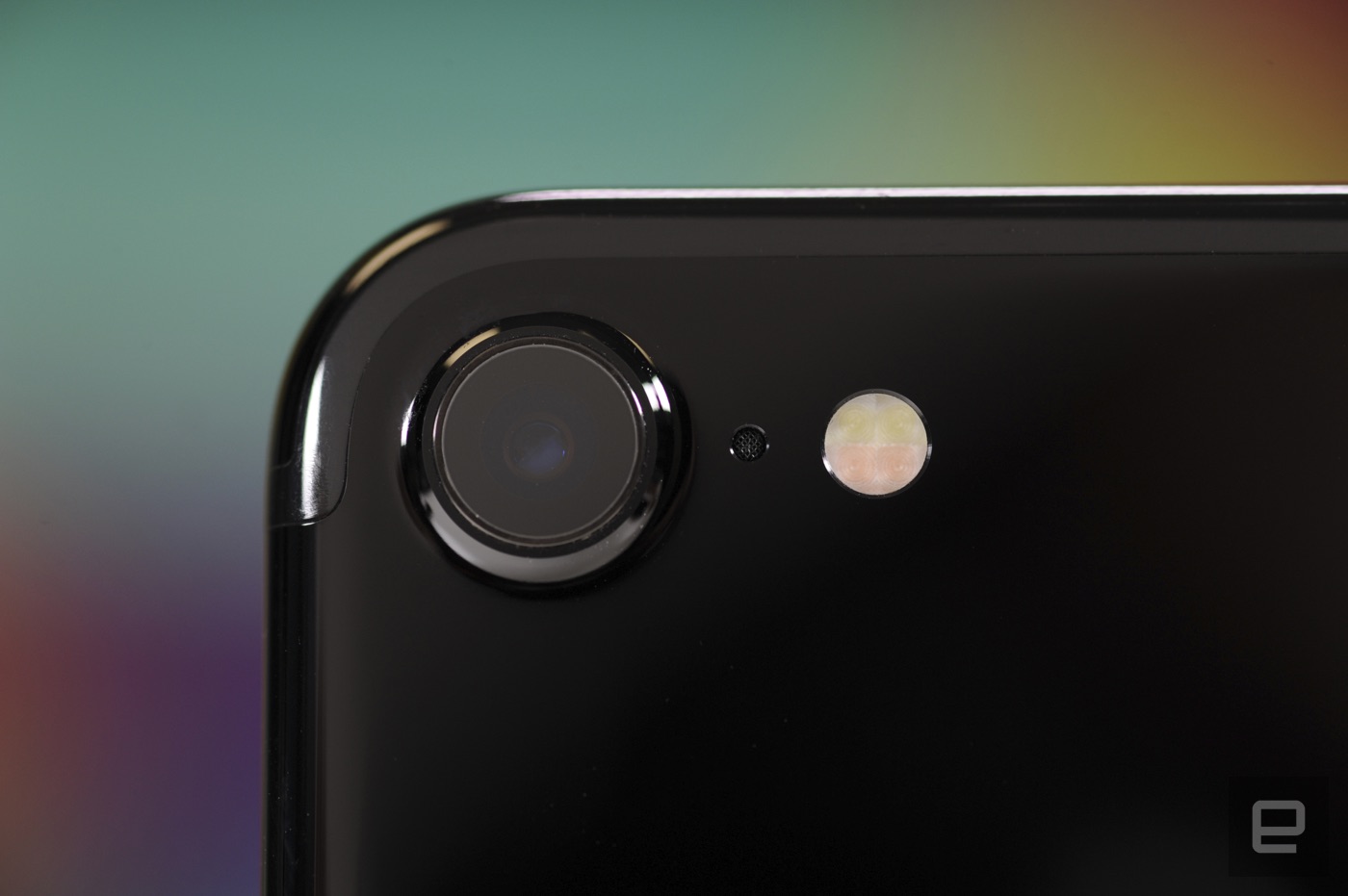
This is where things get really interesting. By now you know the iPhone 7 has a single 12-megapixel camera on its back, and guess what — it’s a damned good one. That’s saying something, considering there’s been no resolution boost since last year, and the pixels on that new sensor haven’t gotten bigger either. And yet the photos they capture come out significantly better; there wasn’t a big difference in how much detail was captured, but colors looked more vibrant and true to life than on the iPhone 6s Plus.
Surprised? You shouldn’t be. The iPhone 7’s camera captures more color data than previous ones (the better to view on that wide-color-gamut display), and the results are pretty great. In fact, I generally preferred shots taken with the iPhone 7 and 7 Plus to ones captured with a Galaxy S7 Edge. The latter captured a wider field of view and was sometimes better accurately rendering green landscapes, but the iPhone’s leg up on colors meant their photos tended to look nicer (to me, anyway). Test shots taken with the iPhone 7 were also generally better exposed than similar shots taken with the 6s, which in my case usually meant fewer blown-out skies washing out my photos. But every smartphone camera does well when it’s bright outside. What about when things get dim?
It’s a toss-up. The inclusion of optical image stabilization across both versions of the iPhone 7 helps, as does the main camera’s f/1.8 aperture. Props to Samsung: Photos taken with the S7 Edge did indeed look brighter, but the iPhone 7 and 7 Plus offered more natural colors. Before today I would’ve said the S7s and the Note 7s had the best all-around smartphone cameras, but now Apple is right there, neck and neck with the best of them. The iPhone 7’s front-facing camera has also received a major upgrade. It’s been bumped up to seven megapixels and inherited some of the architecture that made the rear cameras so formidable. Long story short, your selfies are going to look lovely. Oh, and videos look really nice too, since they exhibit the same accurate colors as stills. Go forth and vlog, you pioneer.
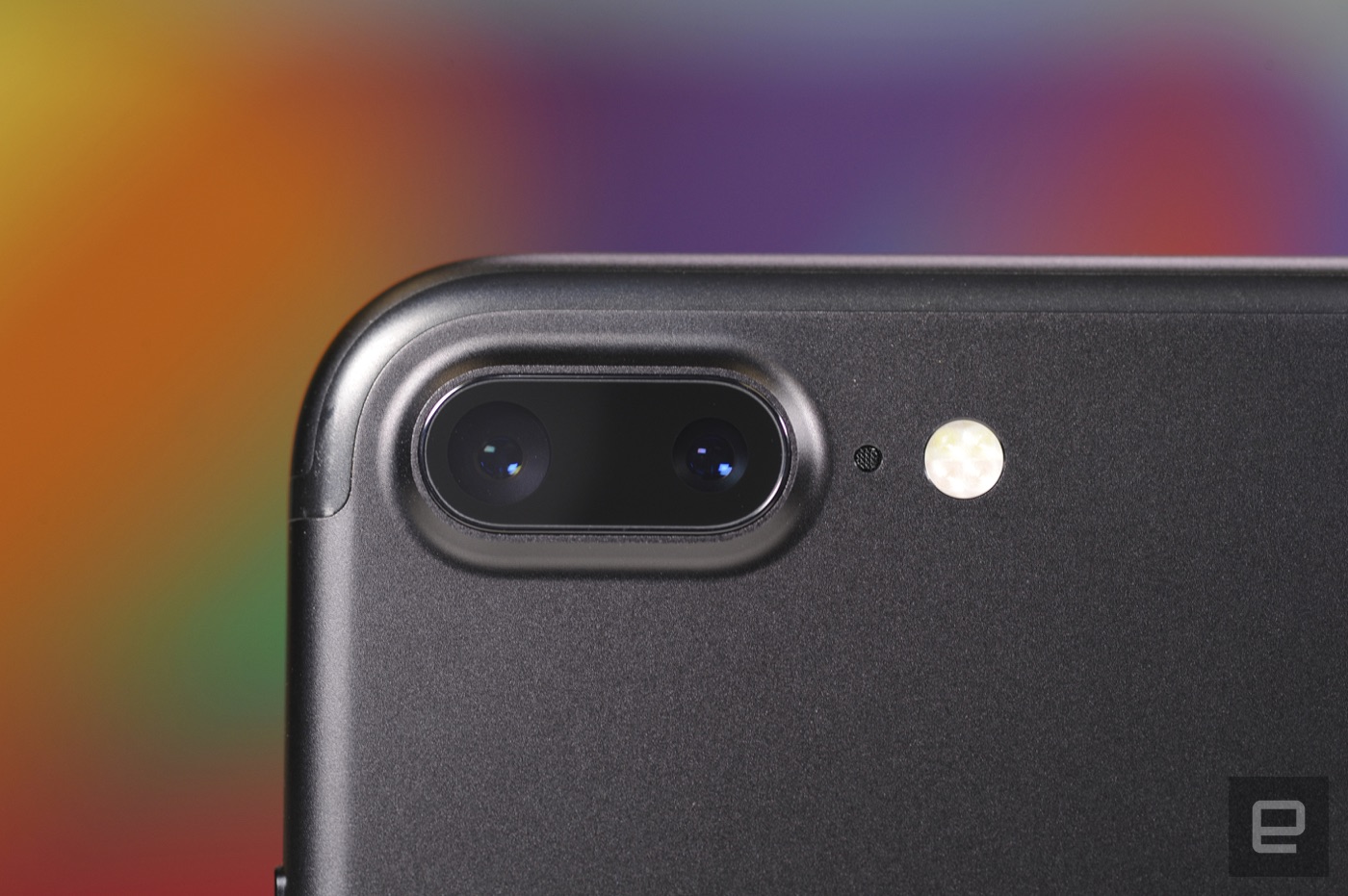
Then, of course, there’s the iPhone 7 Plus’s dual camera setup, which pairs a 12-megapixel wide-angle shooter with a 12-megapixel telephoto camera to give the Plus an actual zoom. Apple isn’t the first to dabble in dual cameras, nor is it the first company to attempt this zooming configuration; LG tried it earlier this year with half-decent results. Apple’s approach feels more elegant, though — with a quick tap you can switch between 1x and 2x zoom modes, or you can drag a slider or pinch with two fingers for more precise control. By the way, you’ll probably want to stay at 1x or 2x zoom (or somewhere in between). Apple added digital zoom up to 10x, and the closer you get to that ceiling, the noisier and more indistinct things get. That’s not surprising, though.

This whole thing might sound like a gimmick, and it sort of feels like one for a few minutes. After that, the “what do I do with this?” factor falls away and the optical zoom just becomes a handy trick to have at your disposal. The photos turned out great too, though you might notice some differences in the colors and exposure if you take comparison shots with both of the iPhone 7 Plus’s cameras. The secondary telephoto camera still shoots 12-megapixel photos, but it has a slightly wider f/2.8 aperture. Basically, it doesn’t let as much light in, so the photos come out a little different. Avid photographers might take issue with these minute changes; everyone else need not worry. For now, this is the only trick the 7 Plus has that the smaller 7 doesn’t, but that’ll change soon. Apple’s going to update it with a feature that lets you play with depth of field when you’re shooting portraits, so you can get a little more bokeh going on.
Software

The iPhone 7 and 7 Plus might not seem like the most exciting hardware updates, but there’s plenty to get excited about in iOS 10. Granted, very little of it will come as a surprise, since it’s been available as a public beta for months now. Our full review is coming soon, and I’ve already detailed some of the new features, so I’ll just recap the highlights here.
It took a while for me to get used to the revamped Photos app, but I sort of love it now. The app’s original form was really basic: You could sift through your photos by “Moment” and poke around in albums, shared or otherwise. The iOS 10 version, meanwhile, uses machine learning to sort photos into themed “memories” based on where you’ve been and when you’ve done things. The best part: searching through all your photos by keyword, since iOS 10 uses AI to identify what’s in your picture. As it turns out, I have 14 pictures with bibs in them despite not being a parent.
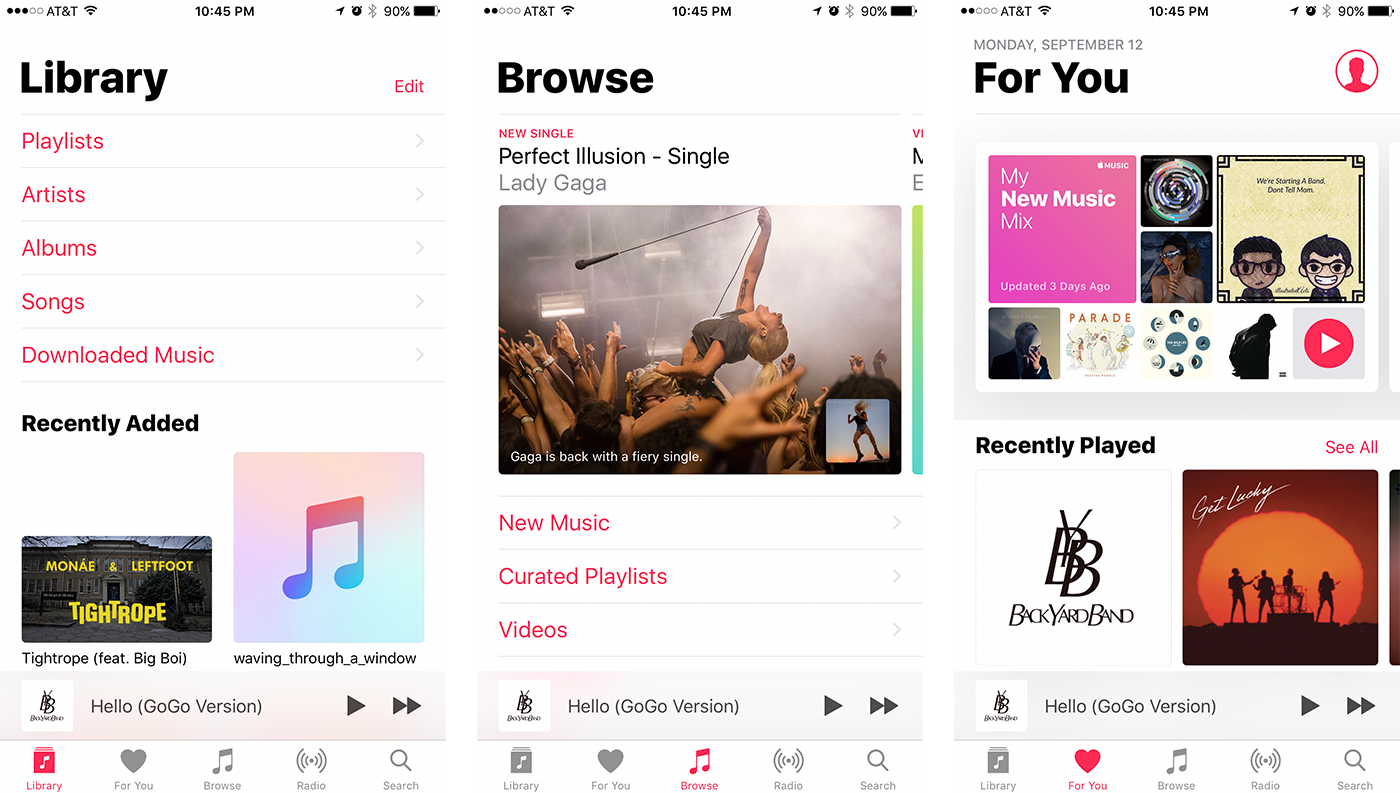
Apple’s bright, bold new Music app was easier to jump right into, and I’m a fan now. The first time you launch the app, you’re dropped right inside your music library (which is how it should be). All of the touch targets are bigger and easier to hit, even when I was glancing down at them mid-run. It’s also satisfying to see 3D Touch finally get more use. I wrote in my iPhone 6s review that using that pressure-sensitive screen was something I eventually wanted to do all the time; too bad iOS 9’s never tapped into its full potential. Not anymore. It feels like 3D Touch is connected more strongly to iOS 10’s core; I’ve been using it to expand notifications, bring up contextual menus in Apple Music and glance at widgets for first-party apps like the dialer and Weather.
Apple is also making better use of the Taptic Engine this time around, so you’ll feel it all over the place — literally. The prominent examples are the ones you’d expect, like 3D-Touching notifications and using the home button, but you’ll also feel a brief thud when you flick the Control Center open. Skimming your Apple Music collection for a specific song? Sliding your finger down the alphabet on the side of the screen feels like running your finger down a washboard, allowing you to more easily stop on a letter.
Oh, by the way, the process of forcing your 7 or 7 Plus to restart is totally different. Instead of holding down the power and home buttons like we have been for a decade, the new process requires you to hold down the power and volume down keys.

And now for some bad news: I still haven’t been able to test some of iOS 10’s headline features. Siri’s intelligence is poised to get a big upgrade thanks to third-party apps, but I couldn’t yet ask her to call me an Uber or send my friend $20 via Venmo. And while I’m also a little obsessed with sending these weird new iMessages, it’s too bad that at time of writing, the iMessage app store was still virtually barren. I’ll update this review as the store comes online and I get to play with more weird stuff.
Performance and battery life

Another year, another high-powered A-series chip to play with. The iPhone 7 and 7 Plus both run the company’s new A10 Fusion, a quad-core chipset that pairs two speedy CPU cores with two longer-lasting ones that use 20 percent of the power the others do. It’s easily the fastest chip Apple has ever stuck in a mobile device, beating out even the 9.7-inch iPad Pro’s A9X processor. More important, there’s basically zero difference in performance between the 7 and 7 Plus, even though the smaller version has 2GB of RAM, versus 3GB on the Plus.
I restored the new iPhones from backups of our 6s and the differences were immediately clear. There’s almost no delay from when you tap an app icon to when it launches, and popping in and out of apps was noticeably faster too. Both the 7 and 7 Plus were also able to handle graphically demanding games like Warhammer 40,000: Freeblade, Submerged and Mortal Kombat X without breaking a sweat.
In fairness, the 6s and 6s Plus played these nearly as well, but the 7 and 7 Plus’s batteries don’t get depleted as much in the process. Part of that is likely due to the 6s’s battery deteriorating over time, but the A10 Fusion’s GPU is also more power-efficient. Ultimately, what might be most telling is that when it came to day-to-day use, I stopped thinking about performance completely.
| 3DMark Unlimited IS | 37,663 | 37,784 | 24,601 | 27,542 |
| Geekbench 3 (multi-core) | 5,544 | 5,660 | 4,427 | 4,289 |
| Basemark OS II | 3,639 | 3,751 | 2,354 | 2,428 |
We can’t talk performance without delving into the 7 and 7 Plus’s batteries, and thankfully they’re an improvement over last year. One of the few upsides to removing that headphone jack was that it freed up more space to make these batteries a little bigger — 14 percent larger in the iPhone 7 and 5 percent in the 7 Plus. In our standard video rundown test (in which the phones are connected to WiFi with a video looping at 50 percent brightness), the 7 lasted for 12 hours and 18 minutes, or just about two hours longer than the 6s. The 7 Plus, meanwhile, looped Whiplash for 14 hours and 10 minutes, or about an hour and a half longer than the 6s Plus. That’s also on par with Samsung’s Galaxy Note 7. Not bad at all.
Eventually, though, I had to give up on bingeing on a raw jazz thriller and get some actual work done. These days, my usual routine involves lots of Slack messages, emails, Spotify playlists and marathon Hearthstone sessions. When put through that very specific kind of wringer, the iPhone 7 usually stuck around for a full workday and often survived until mid-morning the following day. The 7 Plus, meanwhile, frequently lasted through nearly two days of mixed use and downtime, a notable improvement over the 6s Plus. Obviously, your mileage will vary, but here’s hoping that these upgraded batteries stay this good over time. (We’ll see about that.)
The competition

Under normal circumstances, the Galaxy Note 7 would be at the top of this list, but, well … you know. While Samsung continues its global recall over exploding batteries, you should consider the Galaxy S7 and S7 Edge in the Note’s place. They share the same Snapdragon 820 chip and 4GB of RAM, not to mention the same lovely 12-megapixel cameras that rival the sensor Apple used this year. If you’re a screen snob, Samsung’s displays might be more appealing, since they run at a higher resolution and also support a wider color gamut than the sRGB standard. Apple and Android fans often tussle over which platform is superior, but make no mistake: The newest iPhones and the newest Galaxies are all truly excellent smartphones.
Looking for impeccable build quality and equally good sound? Consider HTC’s underrated 10. It’s easily the most impressive phone the company has crafted in years, and with support for hi-res audio and a headphone jack, it’s arguably a more versatile media machine. Speaking of HTC, it’s rumored to be working on the two most anticipated Android devices of the moment. We’re not entirely sure if they’ll be called Nexus phones or Pixel phones or something else entirely — either way, Google is said to be prepping for an October 4 unveiling. Codenamed “Sailfish” and “Marlin,” both are expected to pack quad-core Qualcomm chipsets (either the Snapdragon 820 or 821) with 4GB of RAM and 12-megapixel main cameras.
The biggest difference is reportedly the size of their screens, with the smaller Sailfish sporting a 5-inch or 5.2-inch 1080p display, while the Marlin runs with a 5.5-inch Quad HD screen. If you don’t care about smartphones as much as you care about getting the best phone, period, you might want to wait and see what Google has up its sleeve.
Wrap-up

The iPhone 7 and 7 Plus are at once the most technically impressive smartphones Apple has ever made and the most divisive. After all, they’re excellent because of Apple’s renewed attention to the basics: the speed, the camera, the screen, the battery. None of these improvements on their own are terribly exciting, but together they make for a pair of phones that are more than the sum of their parts. Then again, where’s the envelope-pushing? Where’s the Apple that upended an industry? It’s surely still there, locked behind closed doors that won’t be opened again for another year. In the meantime, we’re left to consider this year’s work.
If you can get over the all-too-familiar design and the no-headphone-jack thing, then the iPhone 7 and 7 Plus are serious contenders for best smartphones, period. Note that I used the word “best,” not “most innovative” — neither of these devices is groundbreaking. We’ve seen many of these features (or features like them) pop up in rival phones already. That headphone jack thing aside, most of the choices made in the iPhone 7 and 7 Plus feel like safe ones. There’s nothing wrong with that, but no matter how good the iPhone 7 and 7 Plus are (answer: very, very good), Apple already has us all wondering what next year’s iPhone is going to be like.
 AIVAnet