


Xiaomi Redmi Note 4 Release Date, Price and Specs – CNET
 Xiaomi
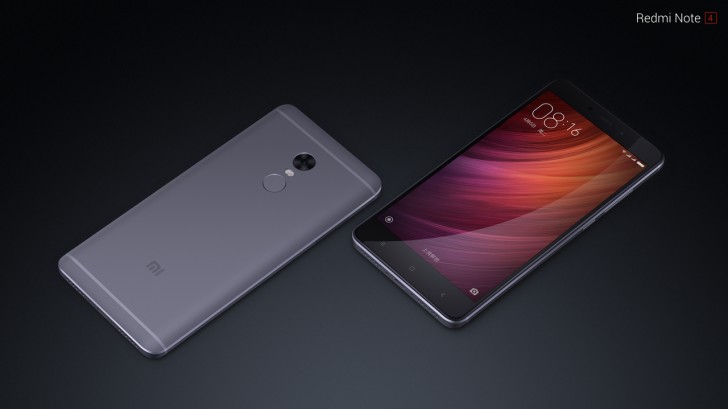
Xiaomi found success with the Redmi Note 3, and it’s not deviating too much from there with its newly announced Note 4. Instead, the new 5.5-inch smartphone refines its predecessor’s metal body design with chamfered edges for a more premium look while incrementally improving its insides.
The Redmi Note 3 used a Qualcomm Snapdragon 650 processor, but Xiaomi here has decided to go with Qualcomm’s rival MediaTek. The Note 4 packs a deca-core Helios X20 processor, which should be zippy, especially for a budget phone. The battery of the device gets a slight bump from 4,000mAh to 4,100mAh, though the camera drops a few megapixels from 16 to 13. It also runs Xiaomi’s latest Android-based MIUI 8 skin.
The Note 4 will retail in China for a mere 899 yuan ($135, £100 and AU$175) for the version packing 2GB RAM and 16GB of onboard storage. A slightly more powerful variant, with 3GB RAM and 32GB of storage, will sell for 1,199 yuan (approximately $180, £135 and AU$235).
While it is currently China only, expect the phone to launch in other markets soon, particularly India, where Xiaomi hopes the Redmi Note 4 will do as well as its predecessor.
Key specs
- MediaTek 10-core Helio X20 processor
- 5.5-inch full HD 1,920×1,080-pixel display
- 4,100mAh battery
- Rear fingerprint sensor
- 4G dual-SIM
Xiaomi Announces ‘Redmi Note 4’ in China Amid Market Share Concerns
Chinese mobile manufacturer Xiaomi announced a new smartphone today amid market research speculation that the Beijing-based company is struggling.
The successor to the popular Redmi Note 3, the new Note 4 has a unibody all-metal design with chamfered edges and a 5.5-inch 1080p curved-glass display.
The handset is powered by MediaTek’s Deca-Core Helio X20 SoC (clocked up to 2.1GHz) and comes in 2GB/3GB RAM and 16GB/64GB storage capacities, with a 13-megapixel rear camera and a 5-megapixel front-facing one. The handset has a dual SIM slot with space for an SD card up to 128GB. A fingerprint scanner is also featured on the rear.
The Redmi Note 4 comes in silver, gold, and dark grey, while pricing is RMB 899 ($135) for the 16GB model and RMB 1199 ($180) for the 64GB device.
The smartphone goes on sale tomorrow in China, at a time when suggestions are emerging that the so-called “Apple of the East” is feeling the squeeze in an increasingly punishing mobile sector.
Between 2011 and 2015, Xiaomi managed to become the world’s third largest smartphone distributor, competing with the likes of Lenovo, LG, Samsung, and Apple, but historically it has been difficult to know how many handsets Xiaomi sells because it doesn’t release any data. However, global consumer technology researcher IDC recently estimated that its mobile shipments had fallen 38.4 percent in the April to June quarter of this year compared to 2015.
Information published by Counterpoint Research in April also showed the company’s global market share shrinking, down more than 12 percent for Q1 this year compared to the same period last year. Xiaomi has disputed those numbers, and says that estimates from other research houses are more upbeat. In a statement given to the BBC, a Xiaomi spokesperson said:
We understand that different analyst firms have different calculation methods. There are many other third-party reports out there, including those by Strategy Analytics, Gartner and IHS that put our Q2 2016 numbers significantly above what IDC estimated, and those are much closer to our true sell-out number.
We are seeing very healthy demand, but also experiencing some challenges in the supply chain this year. We are ramping up and in June, we sold 6.94 million phones in just one month.
Two months ago, the company unveiled its first ever PC laptop, named the “Mi Notebook Air”. Xiaomi has been forced to defend itself from copycat accusations in the past. Its devices have been publicly criticized for heavily borrowing design elements from Apple’s iPhones and iPads and adopting marketing materials tactics similar to Apple’s, leading Apple chief designer Jony Ive to call the company’s antics “theft” and “lazy”.
Tag: Xiaomi
Discuss this article in our forums
PlayStation 4 Slim: Release date, rumours and everything you need to know
This isn’t about the PlayStation Neo, a console upgrade that Sony has already confirmed, but rather a second console that has leaked online and is going by the name PS4 Slim.
While PS4 Neo is expected to offer 4K output and beefed-up internals, the PS4 Slim is thought to be simply a slim console upgrade like we’ve seen with previous PlayStations, including the PS2 Slim and PS3 Slim. Sony will likely unveil this trimmed-down console alongside the PS4 Neo at a New York City event scheduled for 7 September. Here’s everything you need to know about it.
- What to expect from Sony’s PlayStation New York event
- Xbox One S: 4K, Ultra HD Blu-ray and HDR examined in more detail
- Sony PlayStation 4 Slim confirmed to exist
- Sony PlayStation 4K: What is PS4.5/Neo?
- Xbox One S vs PlayStation Neo: What’s the rumoured difference?
PS4 Slim: Release date
Sony is holding an event to announce something about PlayStation on 7 September, but in a flurry of leaks, some of that news might have escaped early. Sony confirmed its event on 10 August, inviting media to a New York launch. It said the event would relate to “the PlayStation business”. For some time, the launch of an upgraded 4K capable PlayStation has been rumoured.
The Wall Street Journal reported that we can expect two consoles to launch at the New York event: the rumoured PlayStation Neo, as well as a new “standard” slim model. While all attention has been on a future high-powered console, no one expected a “Slim” model to be announced too. Sony has a history of revamping its consoles, usually with a launch of a Slim model at a lower price.
@shortmaneighty2
The Wall Street Journal reported that we can expect two consoles to launch at the New York event: the rumoured PlayStation Neo, as well as a new “standard” slim model. While all attention has been on a future high-powered console, no one expected a “Slim” model to be announced too. Sony has a history of revamping its consoles, usually with a launch of a Slim model at a lower price.
PS4 Slim: Design
Auction site Gumtree had a listing for a PlayStation 4. The unreleased console had been listed for sale and bought. The buyer shared photos of the new console via Twitter, though it was never powered on. Eurogamer went to see the buyer, took photos and a video, and confirmed it was the real deal. It has since removed the video, citing “legal” reasons, which sort of removes any doubt.
@shortmaneighty2
Also, thanks to a series of leaks spotted by NeoGaf, including an unboxing video that has is now removed from YouTube, we can see that PS4 Slim has a slanted front and back, is significantly slimmer than its predecessor, and has most of the same connectors as the standard PS4. It has a power port, accessory port, HDMI out, and Ethernet port. It appears to be lacking an optical port, however.
PS4 Slim: Specs
A recent analysis by Digital Foundry supposedly revealed that the PS4 Slim has improved internals that should boost game framerates. That said, there are still significant questions about what Sony has packed into its PS4 Slim. It’ll be interesting to see how Sony compete with Microsoft’s new Xbox One S, which is a slimmer version of the standard Xbox One.
@shortmaneighty2
With the Xbox One S, Microsoft changed what gamers expect from a console hardware refresh. Not only did it have a slimmer profile, but it also brought an Ultra HD Blu-ray player, HDR, and 4K upscaling. It’s unclear if PS4 Slim will have these features.
PS4 Slim: Controller
The PS4 Slim might get a new controller, according to a recent leak. It looks as though the new controller isn’t going to vary too much from the DualShock controller of the PS4, but there’s a change to the light bar, now showing through on the top of the controller. Originally there was a video of this new controller shared by ZRZ on YouTube. A picture of the controller is floating around still, however, thanks to Engadget.
ZRZ (YouTube) via Engadget
To verify the new design, a gamer who was able to buy that original PS4 Slim from Gumtree, has confirmed that this visible bar on the top just looks like a transparent section, allowing the light that shows at the front to be seen on the top too. Speculation suggested that this might be for linking-up with PS VR when it launches. With the number of leaks appearing, this is all looking likely.
PS4 Slim: Price
We don’t yet know how much the PS4 Slim will cost – even though Sony’s previous Slim models were sold at a reduced price compared to the original console. The 500GB of the PS4 currently retails for around $350 (£250), so the PS4 Slim might cost that much, or more likely, less.
PlayStation Network adds two-factor authentication: Here’s how it works
If you own a PlayStation console or PSP, you can now enable two-factor authentication on your PlayStation Network account.
Sony has introduced the much-requested layer of protection, saying via Twitter that users can activate it on their accounts. It also provided a link to a security page that explains what to do. If you enable the safety measure, from now on you will receive a special code via SMS that you’ll need to enter along with your password and username when signing into PlayStation Network.
Keep in mind Sony was hacked about five years ago, and over 77 million PSN users had their details compromised. Also, Microsoft has long offered two-factor for both its online accounts and Xbox Live. Sony’s been under scrutiny for not giving its users more protection. That all changes now. Although you’re not immune to hacking, your chances will be greatly diminished.
Here’s everything you need to know about two-factor authentication, including how to set it up on PSN.
- What to expect from Sony’s PlayStation New York event
- Xbox One S: 4K, Ultra HD Blu-ray and HDR examined in more detail
- Sony PlayStation 4 Slim confirmed to exist
- Sony PlayStation 4K: What is PS4.5/Neo?
- Xbox One S vs PlayStation Neo: What’s the rumoured difference?
Sony
PSN: What is PlayStation Network?
PlayStation Network (also called PSN) is an online gaming service for the PlayStation gaming console. It allows for online gaming on not only the PlayStation, but also PlayStation Portable, and PlayStation Vita. It’s different than PlayStation Plus, a paid PlayStation Network subscription service that provides users with access to premium features like beta trials and discounts.
PSN: What is two-factor authentication?
If you use the same password for multiple accounts, click on a malicious link, or open phishing emails, your password will most likely one day be compromised. But there are ways you can prevent that from happening – like by using two-factor authentication. With that extra layer of protection, you will receive a verification code on your mobile phone via text whenever you try to sign into PlayStation Network.
You must input that code along with your password and username when signing into PSN. This is basically like requiring two forms of identification for sign-in, because in order to log in, a hacker will not only need your login credentials but also access to your mobile device. In other words, your account and personal information will be better protected if you enable two-factor authentication.
PSN: How do you set up two-factor?
Simple: hit the orange activate now button on this new Sony PlayStation page. You will then be brought into a sign-in screen. Once you log in, follow the on-screen instructions for setting up two-factor authentication for your PSN account.
HTC confirms timeline for Android Nougat updates
With the release of Android 7.0 Nougat by Google, it’s now the turn of all the manufacturers to get to work on versions of the software for their own phones.
HTC has taken to Twitter to confirm that the final software has been released to them by Google, meaning that this conversion and compatibility work can start.
For those who don’t remember, HTC has a 90-day guarantee. This is the timeframe in which the company aims to get the new version of the software onto its flagship device, in this case the HTC 10.
HTC has something of a mixed record with this, with some unlocked versions getting the update close to that timeframe, others slipping because of factors beyond HTC’s control – especially when carrier/network testing gets involved for locked devices.
We’re excited to receive final shipping Android 7.0 Nougat software from Google! pic.twitter.com/BNbQBpgddK
— HTC (@htc) August 24, 2016
HTC hasn’t committed to a specific date, just that it is aiming for Q4 for the Android Nougat update on HTC 10, HTC One M9 and HTC One A9. Currently, no other devices have been mentioned, but we suspect that’s because they will follow later.
For those who don’t remember, the HTC One A9 launched almost with vanilla Android Marshmallow in 2015. The HTC 10 followed suit, with HTC saying it was moving closer to Android, the aim being less bloat, plus offering the advantage of being able to update quickly.
Now that Android Nougat has dropped, it’s time to see if that holds true and if HTC’s purer software will see it updated before its rivals.
LG V20 photo leaks showing off a simple design
On Wednesday we bought you pictures of the V20 from a case manufacturer, talking about the predictability of device leaks. Thursday brings us a photo of the new handset from @evleaks, proving that the LG V20 is following a typical path of exposing itself to the public.
The LG V20 is the successor to the LG V10, the video-focused handset that was widely lauded in the US, but didn’t make it to launch globally. The fact that the V20 is coming is no secret, as LG has already confirmed the device and started drop-feeding us some of the details.
From a design point of view, @evleaks’s track record with device leaks is very good, so we can say with some confidence that this is what the V20 will look like from the front at least. We suspect there will be more leaks to come in the following days.
LG V20 pic.twitter.com/EmmZN21ENM
— Evan Blass (@evleaks) August 24, 2016
The design, as one commenter points out, looks a little like the BlackBerry Z30 thanks to those straight lines top and bottom framing the display.
The display has some sections blacked-out to hide some details, like location in the weather widget. There appears to be a front ticker display like the V10, although the alignment of this in the photo with the rest of the display suggests there’s been some manipulation of the photo here, so we can’t be certain: on the G5, LG opted for an “always on” display instead and might opt for that on the V20 instead.
Other details include the front camera to the left. The other pictures we saw on Wednesday suggested twin front cameras: again, that could have just been lifted from the V10, as it doesn’t appear here in this hardware.
The question of modularity still remains. We’ve seen a couple of previous suggestions that the V20 will have a button on the lower right-hand side to release the bottom section of the phone, and that’s not visible in this image.
LG will be launching the V20 in 6 September at a launch event in New York and so far it has been confirmed that it will be arriving with Android Nougat out of the box.
- Want to follow the full story of the LG V20? We’ve been tracking the rumours, leaks and all the official announcements right here.
- LG V20 is the first confirmed Android 7.0 Nougat phone, coming in September
- LG V20 design possibly revealed by case manufacturer
Germany’s aerospace agency built a safer rail car
An aerospace agency might seem like an unlikely place to find a breakthrough in railroad safety equipment, but that is exactly what the engineers at the German Aerospace Center (better known as DLR) have recently come up with. As Wired reports, DLR engineers have designed a new less smash-prone crumple zone meant to reduce the impact of train car collisions.
In cars, the crumple zone is meant to be crushed and compacted in order to absorb some of the energy of the collision, protecting the passenger cabin in the process. DLR’s new rail car crumple zone works in a similar way, using a series of metal cylinders that slide into slots to create a “controlled deformation process” that saps the kinetic energy out of a crash.
To test their prototype, DLR’s engineers attached it to the front of an 80-ton tanker car loaded with cameras and sensors and then slammed a second tanker car into it at a (somewhat sluggish) 11.5 mph. The result? The unprotected tanker was mostly undamaged and the prototype with the crumple zone budged a bit. Naturally, DLR brought along a video showing the device in action (audio in German):
Via: Wired
Fujifilm’s entry-level mirrorless will up your selfie game
Fujifilm has launched the X-A3, a low-priced mirrorless camera aimed at casual users, particularly those who want excellent selfies. It has a number of improvements to its successor, the X-A2, in that regard. The sensor now has 24.2-megapixels, a big improvement over the 16.3-megapixels of the last model. However, as before, it uses a regular CMOS sensor, not X-Trans model (with effectively higher resolution) used in Fujifilm’s X-Pro2, X-T10 and other, more expensive models.
Fujifilm added a flip screen to the X-A2 model, making it much useful to the selfie vacation set that’s in the target price market. The screen on the X-A3 now rotates 5 degrees more than the previous model to 180 degrees exactly, thanks to a new mechanism. The company has also added a smile detection feature and skin-tone improvements, a further nod to its people-centric raison d’etre.

That said, the camera is no slouch in the spec department and compares very favorably to other mirrorless models in its price category. It features a 77-point autofocus, “fashionable” retro body (that brown color is nice), 1080p, 60fps video and a newly designed APS-C sensor that’s considerably larger than any on Micro Four-Thirds cameras. The X-A3 arrives in October for $600 with the 16-50mm f/3.5-5.6 OIS II kit lens.
Fujifilm also revealed a new lens, the XF 23mm f2 WR, compatible with all Fujifilm X models. While not as low-light capable as the company’s 23mm f/1.4 model, it’s weather resistant, more compact and quicker focusing. It arrives in September for $449.
Source: Fujifilm
Elton John and Britney Spears Among Apple Music Festival’s Headline Acts
Apple today announced the artist lineup for its 2016 Apple Music Festival, the free annual concert series that takes place at the London Roundhouse theater from September to 18 to September 30.
Headliners at the festival’s 10th anniversary this year will include Alicia Keys, Bastille, Britney Spears, Calvin Harris, Chance The Rapper, Elton John, Michael Bublé, OneRepublic, Robbie Williams and The 1975, Apple revealed.
“Over the past decade, the Festival has brought the biggest and best artists from all over the world to London and into the homes of millions of music fans,” said Oliver Schusser, Apple’s VP of International Content. “This year’s Apple Music Festival builds on that incredible legacy and we couldn’t be more excited to have another amazing lineup to celebrate our 10th birthday.”
Prior to 2015, the event previously called the iTunes Festival lasted for a full 30 days, but was scaled down to 10 days with the revamp. Apple also now offers the music festival performances live and on-demand in the Apple Music App on iOS devices, as well as on Mac, PC, Apple TV, and Android phones.
Like last year, Apple is also set to offer special Apple Music Festival playlists, artist news, and backstage interviews via its subscription streaming music service.
Tags: Apple Music, Apple Music Festival
Discuss this article in our forums
Xiaomi Redmi Note 4 now official with Helio X20, 4100mAh battery, and MIUI 8 for just $135
The successor to Xiaomi’s best-selling phone of the year is here.
Xiaomi has unveiled the Redmi Note 4, the first phone to offer MIUI 8 out of the box. The phone retains the 5.5-inch Full HD display as the Redmi Note 3, but we’re now looking at a metal unibody design with chamfered edges and much-needed 2.5D glass at the front.

Specs on offer include a MediaTek Helio X20 SoC with ten CPU cores (two Cortex A72 at 2.1GHz, four Cortex A53 at 1.8GHz, and four Cortex A53 at 1.4GHz), dual SIM slots with a hybrid microSD slot, 13MP f/2.0 camera with PDAF, storage configurations of 16GB and 64GB, and a massive 4100mAh battery. Like the Redmi Note 3, the Note 4 offers a fingerprint sensor at the back.
The Redmi Note 3 proved to be incredibly popular for Xiaomi in India, with the company seeing a record 880,000 shipments in Q2 2016. Since its debut in March, Xiaomi sold over 1.75 million units of the Redmi Note 3 in India. It isn’t hard to see why the phone did so well in the market. The Redmi Note 3 featured a great metal design, excellent hardware in the form of a Snapdragon 650 SoC, 3GB of RAM, 32GB storage, 16MP camera, and a huge 4100mAh battery that lasted at least a day and a half on a full charge.
With the Redmi Note 4, Xiaomi isn’t changing a lot (which is a good thing), with the major difference being the Helio X20 SoC and the 13MP camera. The design is also much more polished, and makes the Redmi Note 4 look premium.


Xiaomi will kick off sales of the Redmi Note 4 in China starting August 26 for ¥899 ($135) for the 16GB variant, and ¥1,199 ($180) for the model with 64GB of storage. No word as of now regarding availability in India or other Asian markets, but seeing as how Xiaomi will be looking to continue its momentum, it shouldn’t be too far off.
What do you guys think of the Redmi Note 4?
 AIVAnet