


HP Spectre 13 review: Supreme quality design
Look at the high-end, stylish Windows laptops released over the last five years and you’ll see quite a lot that look a bit like a MacBook of one kind or another. The HP Spectre 13 is a concerted attempt to make something that looks about as far from a MacBook as possible, while still having the same level of design and portability cred.
Indeed, like us, you might even think it looks better. But this laptop has caused many a raised eyebrow. Some of you will love it. Others will be blinded by the light reflecting off its shiny bits.
At £1299, though, it’s a pretty massive investment. And it’s not the all-purpose beast a MacBook Pro at the same price offers. Is its standout design enough to make it the Windows 10 laptop to go for?
HP Spectre 13 review: Design
HP doesn’t want the HP Spectre 13 to look like any old laptop, and it certainly doesn’t. The shape may be similar to that of last year’s 13-inch HP Spectre x360, but its visual impact is in an entirely different class.
Pocket-lint
If the Aztecs still existed and formed a tech company, the HP Spectre 13 is the sort of laptop you could imagine them coming up with. There are more than a few jutting angles here and there, the HP logo has been given a fancy chopped-up haircut, while the ultra-glossy gold-colour metal used to form the laptop’s hinge make the Spectre 13 something you can imagine being buried in some rich guy’s tomb as a prized possession (ok, so maybe we’re mixing up our Aztecs and Egyptians a bit – you get the idea though).
The lid and main part of the Spectre 13 are metallic grey, cast in aluminium. This clashes dramatically with the gold of the backside, which returns in the lettering and sides of the keyboard keys, but in more muted form.
Its big banner claim has nothing to do with the colour accents, though. HP says this is the thinnest laptop ever, at 10mm thick. It sure is supremely thin, and brilliantly light too, at just 1.3kg. That’s closer to the weight of some 11-inch laptops, and similar to the MacBook Air.
Pocket-lint
What makes this HP a truly successful design is that there’s no sense of structural compromise to get down to those skinny dimensions. The Spectre 13 is stiff as you like, which may be helped by the use of carbon fibre on the bottom instead of aluminium.
HP Spectre 13 review: Connections
The Spectre 13 is clearly meant to be a vision of the laptop that grabs some attention. Has it gone too far, though? HP has ditched all traditional USB ports and all standard video connections in favour of USB Type-C ports. This is the kind used in the 12-inch MacBook – the same laptop that may thought was too far ahead of its time.
There’s one port used to charge the laptop, while another two are compatible with the Thunderbolt 3.0 standard. That means you get loads of bandwidth, enough to connect multiple high-data peripherals if you attach the right hub or connector.
Pocket-lint
You only get the one USB-C-to-USB cable in the box, letting you plug in, say, a mouse or external hard drive. If you’re someone forever attaching things to your laptop rather than simply firing whatever you’re working on up to Google Drive, this may get on your nerves. There’s also no memory card slot, which is another potential headache to deal with. All the ports sit on the back too.
The HP Spectre 13’s ports are powerful little things, but make sure you’re prepared to live with them before you drop nearly £1300 or more on one of these.
For all its glamour and forward-looking connectors, the HP Spectre 13 is ultimately a very traditional laptop. The hinge extends back less than most and it doesn’t even have a touchscreen. HP doesn’t think a laptop needs so be slathered in tablet sauce to justify its existence – and nor do we, especially one this good looking.
HP Spectre 13 review: Screen and keyboard
The Spectre 13’s display is great too, even though it doesn’t jam in as many pixels as you might expect for the cash. This is a 13.3-inch 1920 x 1080 pixel IPS LCD screen. Yep, it’s not OLED like the top-end Spectre x360 either.
Still, colour and contrast are both great. Colours aim for a natural look rather than an overblown one, while contrast levels destroy the quasi-rival Lenovo Yoga 900. This is a tasteful screen.
Pocket-lint
However, as there’s no touchscreen you have to use the trackpad to control 24/7. It’s a big pad with a super-smooth surface, and a mouse button response that, for once, just feels right. Loads of Windows laptops have issues with button layout, or the workings of their trackpad drivers. But it seems HP has put in the extra effort required here.
The HP Spectre 13’s keyboard is good too. Its key action is very crisp and light, with the sort of definition you can only get in an ultra-rigid laptop frame. It feels a little more hollow than the keys of a MacBook Pro, and the key action bottoms-out abruptly, but in a 10mm-thick laptop the Spectre is a bit of an achievement. We could type away on it all day without problems, and indeed have been.
As you’d expect of a laptop this pricey, the HP Spectre 13 has a keyboard backlight. However, it doesn’t have a graduated backlight intensity control, which would have been nice.
HP Spectre 13 review: Performance
If having a decent keyboard in a laptop this thin is a nice surprise, the CPU the HP Spectre 13 packs-in is a bit of a jaw-dropper. instead of the Intel Core M series processor used in a lot of very thin and light laptops it has an Intel Core-i7-6500U.
This chipset can produce a lot more heat than a Core M, requiring fans that snatch up more of the minimal space available in this tiny frame. But HP has managed it, somehow.
Pocket-lint
It means the HP Spectre 13 absolutely has the power to become most people’s “main” computer. It’ll glide through Photoshop tasks, and can handle more intense tasks like serious video editing, which a Core M will struggle with a little.
Its 8GB RAM tells you this really isn’t meant to be a number-crunching powerhouse, but the 512GB-as-standard SSD does help explain why the HP Spectre 13 is quite as expensive as it is. High-capacity SSDs still aren’t cheap.
The Spectre 13 can even handle some recent-ish games if you really turn down the visuals. This is far from a gaming machine, but the Intel HD 520 graphics used in this chipset probably aren’t as bad as you might imagine. It’ll out-game an iPad.
There are a couple of ways you pay for this extra power, though. The first is noise. Its CPU fan whirs away all the time, which you might find distracting if you’re used to a passively-cooled laptop. Almost all Core i-based laptops have an always-on fan, though.
Pocket-lint
Where this becomes a bit of an issue is when you start stressing the laptop with heavyweight tasks. At the slightest whiff of exertion the fans become quite a lot louder, struggling to ferry all the heat created by the CPU through the little heat vents by the back-most bit of the gold hinge. Not to say that other laptops don’t do this, we’re fairly used to it in the MacBook Pro – although that only tends to kick in serious fanning when fully necessary.
The HP Spectre 13 acts like a star, basically, getting in a bit of a hissy fit if you ask it to do too much. We didn’t see it overheating despite playing high-end-ish games for a decent chunk of time, though. Pop in your headphones or turn on a podcast and just forget the whirr.
HP Spectre 13 review: Battery life and sound
Battery life does make us wonder what a HP Spectre 13 with a Core M CPU would feel like, though. With a Core i7 CPU its stamina is fair, but not close to the longest-lasting ultra-portable laptops.
Pocket-lint
If you put in some overtime, the HP Spectre 13 won’t last you a full work day either. And we can’t really argue if that’s a deal-breaker for you. Using the machine for writing and browsing, it lasts just under seven hours. That’s not terrible, but is a way off the eight-hours-plus we ideally want to see from an everyday portable work machine.
Give the Spectre 10 a very tight task like playing back a locally stored video and it’ll last a couple of hours more, but as soon as you hear those fans working a bit harder, you know the battery drain is ramping-up. And it doesn’t take all that much.
It’s a great excuse for HP to come up with a cheaper, but still as nice, Core M version soon, though. So here’s hoping.
One aspect we’d like to see improved, too, is the speaker array. As you’d guess from looking at the laptop, the sounds comes out of the patterned grilles to the left and right of the keyboard.
Pocket-lint
They’re Bang & Olufsen speakers, and go reasonably loud. However, they don’t have the extra mid-range or bass mileage of a genuinely decent laptop speaker – again, the result of a super-slim build. You’ll occasionally hear some mid-range distortion at max volume too. You may get a hi-fi name, but you don’t really get hi-fi sound.
Verdict
Quality, quality, quality with a side order of shiny gold hot pants is the HP Spectre 13’s way. Whereas other recent HP laptops have made a great impression with their price, this one wants to make its pure presence the appeal.
It works, particularly as the build quality, screen colour and contrast, keyboard and trackpad are all sound. The use of a punchy Intel Core i7 CPU is great in power terms, but it does mean the Spectre 13 is both noisier and less long-lasting than you might hope for.
We still find a pricey but USB-less, memory card-less Windows laptop hard to swallow for £1300. But then we just take another look at that super design and almost all is forgiven. In the style stakes this is the Windows 10 laptop few other companies can compete against.
Nikon D3400 updates entry-level DSLR with Bluetooth, for instant smartphone sharing
Nikon has announced the Nikon D3400 DSLR, updating the existing Nikon D3300 with additional connectivity options to make it more attractive to those shooting on the move.
With traditional cameras under threat from the convenience of smartphones, Nikon’s response is to increase the connectivity of its entry-level DSLR, so you can share high quality photos from your smartphone wherever you are.
Using Nikon’s SnapBridge service, the D3400 will create a Bluetooth LE (low energy) connection to your smartphone, meaning you can sync photos, embed location and time data and share your shots on the move.
SnapBridge is a feature that’s available on high-spec Nikon DSLR cameras too and some offer remote control functions using Wi-Fi, but that’s not supported on this model. Currently, only Android is supported via the app on Google Play, with Nikon saying that iOS support will be coming by the end of August 2016.
Aside from the connectivity, there’s a full range of functions similar to the D3300, offering a DX format 24-megapixel sensor, but here with a boosted ISO range running up to 25,600, aiming to give you better low light results.
The D3400 is pitched as an ideal DSLR for those new to this type of photography, boasting a guide mode to assist you and help you get the most out of the camera. It’s also priced competitively, £399 body only, or from £469 with a 18-55 kit lens.
The Nikon D3400 will be available from 15 September 2016.
Huawei P9 with Leica optics finally debuts in India for ₹39,999
Four months after its international debut, the Huawei P9 has made its way to India. The phone will be available in Titanium Grey, Mystic Silver, and Prestige Gold color options, and will go up for sale starting later today for ₹39,999 ($600).
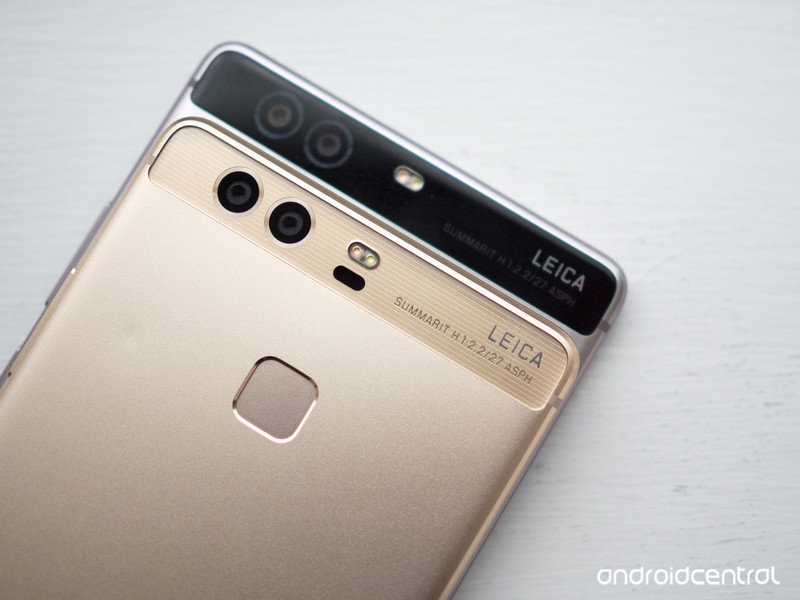
Since its launch, Huawei has sold over 4.5 million units of the P9. The highlight of the phone is the dual 12MP camera arrangement at the back, with the lenses certified by Leica. Huawei is also offering two-year warranty for the P9, which includes fixing any display damages for up to three months following the purchase of the phone. Here’s what’s on offer:
| Display | 5.2-inch IPS LCD, 1920×1080 |
| Processor | Octa-core Kirin 955 Four Cortex A72 cores + Four Cortex A53 cores |
| Storage/RAM | 32GB/3GB or 64GB/4GB |
| OS | Android 6.0 with EMUI 4.1 |
| Rear cameras | Dual 12MP (monochrome + color), f/2.21.76-micron pixel equivalentLeica certification |
| Front camera | 8MP |
| Connection | USB-C |
| SIM/SD | Dual SIM with hybrid microSD slot |
| Battery | 3000mAh |
| Dimensions | 145 x 70.9 x 6.95mm |
| Weight | 144g |
| Security | Fingerprint |
| Price | ₹39,999 |
| Other | Infrared, stereo speakers |
Huawei has been uncharacteristically late in bringing the P9 to India, which will undoubtedly hurt the brand. With the Galaxy Note 7 going up for sale in two weeks’ time and mid-range phones like the OnePlus 3 available for ₹27,999 and the ZenFone 3 series making its debut later today, Huawei will face an uphill battle to convince buyers to go for the P9.
We’ve already talked extensively about the Huawei P9 and the larger P9 Plus, so if you’re interested in what’s on offer with the phones, be sure to check out the Android Central review:
Honor 8 preview: Budget phone gets big features, Huawei P9 dual cameras and more
Honor is best known for its budget phones, rather than high-end feature phones, but the Honor 8 looks to change that. This 5.2-inch budget beauty apes many of the Huawei P9’s features – principally its dual cameras – in a powerhouse design complete with octa-core processor.
One of last year’s surprise handsets was the Honor 7, which combined decent build quality, battery life and cameras into a £250 design. The Honor 8 further enhances the design, shaving a millimetre of thickness (it’s 7.45mm), while adding a 15-layer etched design that catches the light very well indeed. That’s all held together by dual side 2.5D glass and an aluminium frame. It’s unsurprisingly very iPhone like.
Price isn’t official just yet for the UK, but given the way the mid-level market is going, we suspect it’ll be landing in and around the £350 mark. Which is perhaps no surprise, given the competition. Think OnePlus 3, at £320, and there’s barely a whiff of “mid-level” about that phone. That’s how strong the competition is.
In this market, Honor – or, indeed, Huawei, given the Honor 8’s similarities to to Huawei Mate 8 – has seen that it needs to compete. And that’s exactly what the Honor 8 does: under the hood is an octa-core Kirin 950 chipset (4x Cortex A72 2.3GHz & 4x Cortex A53 1.8GGHz), along with 4GB RAM, makes for one of the most premium CPUs available today.
Pocket-lint
What’s more interesting, though, is the Honor 8’s camera arrangement. You’ll have already spotted the dual lenses on the rear of the device, because – and just like the Huawei P9 – the Honor 8 offers both colour and monochrome shooters. Or, if you’re feeling creative, the data from both cameras can be used together for post-production depth-of-field effects. Just like the P9, these cameras are flush in the design, which is great to look at, but means no built-in optical image stabilisation.
READ: Huawei P9 review
Software-wise Android 6.0 means baked-in features such as Google Doze – which puts the phone to sleep when it’s not been in use for a significant period of time – means the Honor 8’s 3,000mAh battery should last out for ample periods of time. It’s not the 4,000mAh of the Huawei Mate 8, but this is a slimmer, smaller and more attractive phone overall. It’s not pure Android, though, with Huawei’s EMUI 4.1 skin taking place – a software arrangement that’s got better with each iteration, but is still a bit overburdening in its alerts and over-alert battery saver technology. Honor has added knuckle detection this time around, too, so the firm back of your knuckles can affect different actions.
Pocket-lint
Other gesture-based controls are found in the rear-positioned fingerprint scanner. A press-and-hold will, for example, automatically fire-up Twitter. It’s a subtle but accomplished addition to what is already one of the best fingerprint scanners that we’ve ever used. No iris detection to be found here, but we are talking mid-range – this isn’t Note 7 rivalling.
There are some less-than-top-end specifications, though, such as the screen. This 5.2-inch panel is LCD, not AMOLED, with its Full HD (1920 x 1080) resolution not matching up to some of the qHD flagships out there. Does it really matter? Not hugely: there’s enough resolution here, at 423ppi, to ensure things don’t look jaggy.
Pocket-lint
Besides, such a screen resolution means it goes easier on battery life. According to Honor that 3,000mAh cell will last for more than a day. We doubt that, with the kind of use we ask from a phone in a day, but with Fast Charge available, top-ups from the plug are extra quick.
First Impressions
The Honor 8 is, in essence, the collision of a Huawei Mate 8 and Huawei P9 – both great phones in their own regard, that have clearly fed into this Honor’s lifeblood. There are some software foibles, sure, but with a $400 price tag for the 32GB model (we presume £330 in the UK) it’s a definite steal.
LG gives select Korean G5 users access to Android Nougat
LG is giving very few G5 users a taste of Android’s upcoming mobile platform. And when we say “very few,” we mean it: the phonemaker is limiting beta Nougat access to 2,000 G5 owners, which is but a minuscule fraction of the world’s Android users. Also, if you want to be one of the lucky 2,000, you need to be in South Korea.
If you just happen to be in LG’s home country, you need to download the OS Preview application from the local version of Google Play, according to Droid Life. After you’ve installed and downloaded the OS, you can send in your thoughts to the phonemaker. Now, if you’re in the US and other parts of the globe, though — or if you’re using another Android device — you can always sideload the developer preview in case you really can’t wait for the platform’s official release.
Via: Droid Life
Source: LG
Intel is building a virtual reality studio in LA
Intel has dropped another virtual reality revelation at this year’s developer conference besides its new Project Alloy all-in-one headset. Apparently, it’s also building a new studio in Los Angeles, which company chief Brian Krzanich called the “Intel Tech Experience Labs,” specifically for sports and entertainment virtual reality projects. While the company hasn’t released more details about the studio yet, LA Times said it will focus on helping companies and other third parties create VR videos using Intel’s technology. VentureBeat also said that the studio will build upon the 360-degree replay tech Intel purchased earlier this year that the NBA used to show different angles of the court.
By building a VR studio, Intel is following in the footsteps of other companies that already made the investment. Facebook’s Oculus has the Story Studio, pretty much the Pixar of virtual reality, that churns out short films. YouTube’s LA and NYC offices are already equipped with their own VR rigs, and even Engadget’s parent company AOL snapped up a VR studio for 360-degree HuffPo videos. Intel will most likely release more details about its venture in the future — we’ll keep you updated when we hear more.
Disclosure: As you probably know by now, Engadget is owned by AOL.
Via: VentureBeat, LA Times
World’s largest offshore windfarm to be built in the UK
Britain is set to become home to two of the world’s largest offshore wind farms after ministers approved plans for a new 1,800-megawatt project capable of supplying 1.8 million UK homes. Hornsea Project Two will be built 55 miles off the coast of Grimsby and could feature up to 300 turbines — each one taller than the Gherkin building in London.
The development will take advantage of the £730 million made available by the government as part of its commitment to renewable energy. Offshore wind is already on track to meet 10 percent of the UK’s total electricity demand by 2020 and the Hornsea project will help the government meet its target of 10GW installed by that time. It’ll also support 1,960 construction jobs and 580 operational and maintenance jobs, say ministers.
The approval comes just weeks after the government delayed plans for the new Hinkley Point C nuclear plant. The project, which is said to cost £18 billion but could set back the taxpayer up to £37 billion, has been criticised because energy generation is significantly more expensive than gas-powered plants. If built, Hinkley Point C will generate 3,200 megawatts or 7 percent of the UK’s total power, supplying around 6 million homes.

If Hornsea Project Two is built to full capacity, the project is expected to cost £6 billion. Taxpayers are only on the hook for £730 million of that and it will be spread across all renewable efforts during this government. Arguments could be made that six Hornsea offshore wind installations could be built for the same total subsidy cost of Hinkley, which could theoretically generate a lot more power than the nuclear project.
Green campaigners have long championed the benefits of wind energy as it would help lower the UK’s carbon footprint and may also increase investment in UK steel and boost Britain’s manufacturing industry. Over the past three years, offshore wind construction costs have almost halved and the government expects UK wind prices to match those of new gas generation within a decade.
Dong, the company behind the Hornsea build, are also set to build a 660-megawatt farm in the Irish Sea. The Walney Extension project will be located 12 miles off the coast of Cumbria, ensuring the UK becomes home to two of the world’s biggest wind projects.
Source: Gov.uk, Dong
‘Destiny’ to add private matches and user-hosted tournaments
The reasons for Destiny splitting paths between the PlayStation 3 and Xbox 360 versions and their current-gen counterparts are becoming a lot clearer. With the “Rise of Iron” expansion, the team is adding private Crucible matches, support for clans and user-hosted tournaments with cash prizes.
The first is pretty self explanatory, and there are tons of granular options for ensuring your private matches are just the way you like them. Gametype, map, score limit, light level restrictions and even time of day for the selected map are customizable. The clan roster system essentially gives you a bird’s eye view of who in your clan is playing at a given moment, check out their gear and join in a Fireteam with them.
Where the update gets interesting is with what Bungie calls the “Destiny Competition License.” It’s a set of rules that outline what you can and cannot do when hosting your own Destiny tournament. From Bungie.net:
- The value of the total compensation including prizes, prize money, salaries, travel and accommodation stipends or reimbursements, and appearance fees paid by organizers and sponsors to the players, teams and team owners, for participating in the competition (“Compensation”), must:
- Not exceed Five Thousand US Dollars ($5,000 USD) or the equivalent for a single competition
- Not exceed Ten Thousand Dollars ($10,000 USD) or the equivalent for all of the events organized or hosted by you during the last 12 months pursuant to this Destiny Competition License
- Provided you comply with all applicable laws (including residency eligibility requirements), you may charge players and/or teams entry fees to compete in your community competitions under the following guidelines:
- Your local laws allow organizers to charge entry fees for participants to compete in the competition
- The value of the Compensation must be at least equal to the combined value of the entrance fees paid by players
Pretty cut and dried, right? Aside from that, you’re welcome to stream on any platform of your choosing, so long as the chat is moderated and doesn’t turn into a cesspool. Streams can earn up to $50,000 “in conjunction with the broadcast of your competition” which includes things like a sponsored stream. But you absolutely cannot charge admission for the event be it to watch online or in person. Donations and subscriptions on Twitch are totally okay, though. Oh, and you can’t broadcast your stream on TV.
So there you have it: Destiny year two is priming itself for eSports and wants you to be a part of it on September 20th. Are you coming along for the ride?
Source: Bungie
Apple Expands iTunes Carrier Billing to Japan as Rollout Gains Pace
Apple today added Japan to its list of countries eligible for iTunes carrier billing, suggesting the company is set to fast-track its expansion of the payment feature to regions across the globe (via Mashable).
Japan becomes the fifth market to accept the transaction method, which allows users to charge iTunes content purchases directly to their cellphone bill instead of registering a bank card or using a gift coupon. The feature got its launch in Switzerland and Taiwan yesterday, following its debut in Germany and Russia last year.
According to an anonymous source who spoke to CNBC, customers with Japan’s second largest mobile company KDDI will be able to use the payment mode, which has yet to be officially announced in the country. Apple has posted instructions on how to use the convenience feature, which can be found in the Payment Information section of the iTunes Store after users have signed in with their credentials.
Users in Japan make up the third largest market for App Store transactions, behind China and the U.S., indicating Apple’s willingness to make carrier billing its next go-to online purchase method behind Apple Pay. There’s no word as yet regarding which countries will be next to get Apple’s approval for the feature, but the company has several more countries in the near-term pipeline, sources said.
Apple appears ready to go the way of Google, which already offers mobile billing to users of its Google Play store in 45 markets, including deals with Japan’s top three cellular carriers.
Apple’s more deliberate rollout has likely been dependent on how prepared mobile companies are to cut a deal with Cupertino and accept lower transaction handling rates. While carriers have charged as much as 10 to 30 percent to handle transactions in the past, Apple has previously secured deals for better rates in the single digits.
Tags: Japan, carrier billing
Discuss this article in our forums
Intel all set to build 10nm ARM SoCs, starting with LG
Intel is finally starting to flex its fab muscle.
Intel has failed to make a mark in the mobile SoC market with its Atom lineup of processors, but the chip vendor has announced plans to manufacture ARM-based designs on its 10nm FinFET manufacturing process. Intel also said that it will partner with LG to fabricate a “world-class mobile platform” based on the 10nm node.

The deal will see Intel leverage ARM’s Artisan physical IP and POP IP to build 10nm Cortex cores. For now, it doesn’t look like Intel will be able to fabricate custom solutions from architecture licensees like Qualcomm, NVIDIA, and others.
Samsung scored a massive victory last year by being the first in this space to make the shift to a 14nm manufacturing process, leading to Qualcomm partnering with the South Korean company to manufacture the 14nm Snapdragon 820 SoC at its semiconductor fab. While Intel will start off with off-the-shelf Cortex cores, it is still a huge deal for the chip vendor in its bid to challenge TSMC and Samsung in the mobile segment.
TSMC is already well on its way to 10nm, with mass production set to commence from the end of 2016. Samsung has also stated that it would begin the shift to 10nm later this year. With Intel joining the fray, we’re going to see competition intensify in the mobile space.
As for LG, the South Korean company failed to make a mark with its Nuclun SoC, which made its debut in the LG G3 Screen. Going with Intel means that we’ll be looking at a stock Cortex core implementation, but other than that, there’s no further information as to what we can expect from LG’s upcoming SoC.
LG’s decision to go with an in-house SoC in lieu of Qualcomm’s offering isn’t surprising given the headway Samsung made with its Exynos lineup. Samsung offers its own Exynos M1 CPU cores in the Exynos 8890, and fabricates them at its own foundry. However, LG will likely emulate Huawei’s efforts in this segment with its Kirin SoCs, which offer stock Cortex cores with in-house optimizations.
We’ll have to wait and see what comes out of LG, but with Intel deciding to fabricate ARM cores starting next year, things are about to get very interesting in the mobile SoC segment.
 AIVAnet