


Apple Working on Video-Sharing Social Network App for Launch in 2017
Apple is working on its own social networking app, in the style of Facebook and Snapchat, according to a new report from Bloomberg. The company, “seeking to capitalize on the popularity of social networks,” will focus on video in the new app, letting users record a video, edit it, apply a filter, add doodles, and then send it out to friends. Apple’s goal is said to make the app quick and easy to use, with one-handed controls and an interactive process that includes shooting, editing, and uploading videos “in less than one minute.”
Apple and CEO Tim Cook are said to be looking to its services business to continue to increase profit as its hardware sales slow down amid a modest update year for its flagship iPhone line. In order to “remain relevant” on the software side of things, the company wants to aim the new app at younger users who are spending 50 minutes a day on Facebook’s family of apps (including Instagram and Messenger), and 30 minutes a day on Snapchat.
The growth of Apple’s hardware business is slowing and Chief Executive Officer Tim Cook is looking to the company’s services business, such as the App Store and iCloud storage, as a way to generate increased revenue. Apple has failed to successfully launch social-media services in the past, including an iTunes-focused social network called Ping in 2010. Now as Snapchat and Facebook’s Instagram and Messenger apps grow atop Apple’s iOS mobile operating system, Apple is seeking to create its own features to remain relevant, particularly for younger users.
One of the prototype designs for the unnamed app was said to record video in a square-shape, like Instagram, according to a group of people close to the project. The current plans for the app are to offer it as a download via the App Store, but the company could pivot and bundle its proposed social network directly into the existing camera app in iOS. To help bolster its features, Apple is using the same team that created Final Cut Pro and iMovie to develop the social network.
The app is being developed in the same Apple department that developed Final Cut Pro and iMovie software, according to the people. Apple hired Joe Weil, the former president of a New York-based video production company, to lead the vision for the project, the people said. Weil, who co-developed a video blogging app called KnowMe, joined Apple in December 2015, according to his LinkedIn profile.
Ultimately, Apple hopes it can launch the new app sometime next year, but if it doesn’t meet the company’s expectations — or if executives see potential problems, along the lines of Ping and Connect — it could be scrapped.
Besides the proposed video app, Apple has also been working on “multiple social-related features” for iOS over the past year, none of which have launched. One proposed update includes consolidating every communication between a user and a specific contact on one screen, so “two friends could be able to see all text messages, e-mails, and social network interactions between each other in a single window.”
No word was given on the launch of the social features not related to the video app, but a team within Apple that rules on the privacy implications of its software will ultimately decide when, and if, any of these experiences make it to a public release. As such, Apple’s 2017 launch window for the video app could also be pushed back indefinitely. Still, it’s interesting to see the company move to create its own social networking experience, instead of solely designing the hardware on which many people visit apps that may soon be its rivals, like Facebook and Snapchat.
Closer to a wide launch is the company’s brand-new and revamped Messages application coming in iOS 10, which elevates the platform above a simple texting service thanks to the addition of features like handwritten messages, full-screen effects, photo doodling, and much more.
Related Roundup: iOS 10
Tag: bloomberg.com
Discuss this article in our forums
YouTube Wants to Create Video-Focused Social Network Called ‘Backstage’
Popular video platform YouTube is reportedly seeking to greatly expand its social features with a new section called “Backstage,” where users can share photos, polls, links, text posts, and videos to anyone subscribed to their channel (via VentureBeat). According to internal sources at YouTube, Backstage will launch in the fall both on the company’s mobile apps and desktop. The initial soft launch will only be for “select popular YouTube accounts” and include “limited features,” however.
YouTube’s social expansion is believed to be in response to the popularity of services like Facebook, Snapchat, and Twitter, which are increasingly improving their own video functionality — particularly Facebook — and pulling away users from sharing YouTube videos within each network. Posts shared on Backstage will curate in a reverse chronological order, and each user’s content will be found next to the “Home” and “Video” tabs within a YouTuber’s channel. Backstage posts will also be pushed to every subscription box, similar to any time a new video is posted, “making them highly visible to fans.”
Backstage marks a pivotal shift for YouTube, whose sole focus on video and unsuccessful Google+ integration have left the door open for popular users to flock to competing services like Twitter and Facebook in order to better communicate with fans. By introducing new ways for users to converse, Backstage could reverse the historically one-way communication between stars and their fans. Video sharing and watching will remain the primary function of YouTube, but Backstage may help make YouTube a better place to talk about those videos, too.
It’s not clear what will be initially available for the select users during Backstage’s soft launch, but eventually YouTube wants to enable users to share both traditional videos and “Backstage-only” videos on the service. Although still unconfirmed, this could mean “more intimate” video-sharing abilities between users, potentially even ephemeral posts that disappear, similar to Snapchat and, now, Instagram Stories.
Down the line, the company wants to “spur new types of conversation” on the platform, allowing users to respond to Backstage posts with their own photos, videos, “and other types of comments.” These response features are being referred to as “rich replies” by those close to the project. The company’s goal is to keep YouTube watchers within its ecosystem to talk about videos, and not defecting to Twitter or Facebook to chat with friends, or even contact their favorite popular YouTuber. It wasn’t mentioned whether Backstage would be exclusive to the company’s premium paid YouTube Red subscription service or not.
The Backstage news comes at the same time of Apple’s reported interest in creating its own video sharing app, with the hope of competing with existing social networks as well. YouTube’s concerns undoubtedly stem from Facebook’s focus on video, which began with a comment by CEO Mark Zuckerberg earlier in the year, and has expanded into MSQRD integration, an entirely new app, and the testing of autoplay videos with sound in its iOS and Android apps.
Tags: YouTube, venturebeat.com
Discuss this article in our forums
Here’s why you should buy the Galaxy Note 7 over the S7 edge in India

The Galaxy S7 edge recently received a significant price cut, but that doesn’t mean you should discount the Note 7 altogether.
The Galaxy Note 7 is now up for pre-order in India. The phone will be available in store shelves from September 2 for ₹59,990 ($895), or ₹3,000 more than the launch price of the S7 edge. But the S7 edge has seen a price cut to ₹50,900 ($745), making it a much more alluring option.
For years now, Galaxy Note phones featured the best hardware that Samsung has to offer. The large screen and S Pen differentiated the Note lineup from the more mainstream Galaxy S phones, but this year Samsung is unifying its product lines. As such, we’re looking at largely unchanged hardware from the S7 and S7 edge, and near-identical designs.
Samsung may not have the most spec-intensive phone in the Galaxy Note 7, but it offers several new features that make it worth your money.
The Note 7 is all about refinement
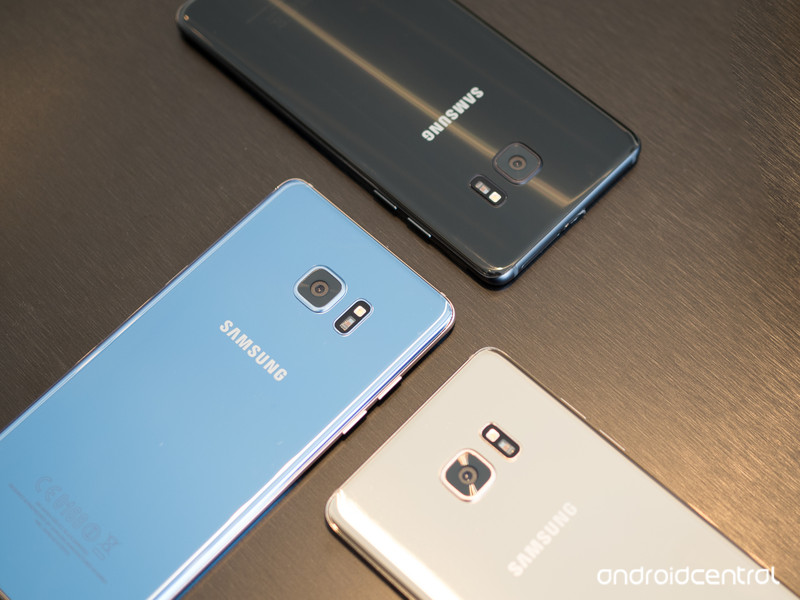
The S7 and S7 edge offer excellent Quad HD AMOLED screens and incredible cameras, but the Note 7 is much more polished than this year’s Galaxy S lineup. Samsung has been continually tweaking its industrial design ever since the launch of the Galaxy S6 last year, and the result is that the Note 7 looks and feels stunning. The dual curved screen at the front is narrower and tighter than the one on the S7 edge, and it makes a drastic difference in day-to-day usage.
Narrow curves on the Note 7 edge screen make a remarkable difference.
I wasn’t a fan of the S7 edge. The edge screen dug into my palm, and it was infuriating to use the phone one-handed on account of all the accidental touches. That isn’t the case on the Note 7. The rounded metal frame and subtler curves result in a significantly improved in-hand feel, and you don’t notice the 0.2-inch bump in display size. Also, Gorilla Glass 5 protects the front and back of the phone, which should make it more resilient to tumbles. After seeing two S7 edge displays shatter, I’m hoping Gorilla Glass 5 fares better. Overall, the Note 7 is much better to hold and use than the S7 edge.
While the design changes are welcome, the main differentiator between the Note 7 and the S7 edge is the S Pen, which has more functionality. Samsung has doubled the pressure sensitivity from the Note 5, making for an experience that mimics writing on paper. The S Pen can make GIFs out of anything, serves as a translation tool, and can be used to doodle on-screen when the display is off. Oh, and unlike the Note 5, you won’t break the phone while trying to insert it backwards.
If you’re not looking to pick up the Note 7 for the stylus, the phone has other features to offer. The built-in storage is double that of the S7 edge’s at 64GB, you get USB-C connectivity, and there’s an iris scanner in addition to the fingerprint scanner embedded in the home button.
Not convinced yet? The Note 7 comes in a murdered-out black edition that looks absolutely magnificent. After being treated to gold and silver designs for years (and that weird faux leather finish), it’s great to see an all-black version in the Note series.
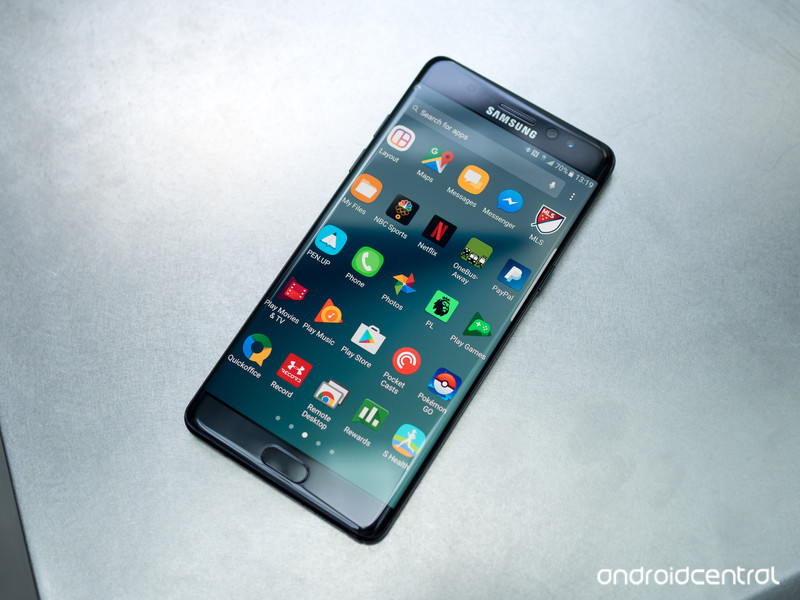
The biggest case for the Galaxy S7 edge is its 3600mAh battery, which is larger than the 3500mAh battery in the Note 7. Compare that with the larger 5.7-inch display on the Note 7, and it is easy to see that the Galaxy S7 edge is a better choice if you’re looking for battery life. That said, you’re looking at an incremental increase in battery life.
It may not seem like there’s a lot of difference between the Note 7 and the S7 edge on the surface, but there are plenty of changes that are immediately noticeable once you start using Samsung’s latest flagship. The S7 edge is by no means a bad phone, but the Note 7 is better. If you’re looking to get in on the Note 7 during the pre-order stage, you get to buy the new Gear VR at a discounted price of ₹1,999.
See at Amazon India
Which phone are you guys looking to buy? Let us know in the comments.
Samsung Galaxy Note 7
- Samsung Galaxy Note 7 review
- The latest Galaxy Note 7 news!
- Here are all four Note 7 colors
- Complete Galaxy Note 7 specs
- Join the Note 7 discussion in the forums!
Verizon
AT&T
T-Mobile
Sprint
How to set up your fingerprint on Galaxy Note 7

How can I use my fingerprint to unlock my Galaxy Note 7?
The Galaxy Note 7 features a lightning-quick fingerprint scanner which lets you unlock your device with just a touch of the Home key. If you decided not to add your fingerprints during the initial setup, you’ll be happy to know it’s easy to add a fingerprint — or two, or three.
How to add a fingerprint on your Galaxy Note 7
Tap to open Settings from the home screen or app drawer.
Tap Lock screen and security.
Tap Fingerprints.

Unlock your phone with your unlock pattern or whatever method you’ve set up. This is a security check to make sure no one else is able to add their own fingerprint your phone.
Next, you’ll be prompted to place your finger on the home key, then lift it off.
Keep placing your finger on the home key in different orientations until the meter reaches 100%. The more different parts of your fingerprint that your phone can scan, the quicker it will be to unlock your phone.

Tap Enable to allow your fingerprint to unlock your phone.
Touch the Home key to confirm, or tap Close.
Tap Add fingerprint if you want to enable another fingerprint to unlock your phone.

Adding additional fingerprints will let you unlock your phone regardless of which hand you’re holding it in, or make it easier to unlock your phone if it’s laying on a table.
Samsung Galaxy Note 7
- Samsung Galaxy Note 7 review
- The latest Galaxy Note 7 news!
- Here are all four Note 7 colors
- Complete Galaxy Note 7 specs
- Join the Note 7 discussion in the forums!
Verizon
AT&T
T-Mobile
Sprint
Samsung Gear S2 iPhone compatibility now in beta testing
Samsung wants its Tizen-based wearables to be compatible with the iPhone. It expressed that desire at the beginning of 2016 at CES. At the same time, the date for iOS compatibility was suggested as mid-January.
Since then, Samsung has gone rather silent on the whole iOS-Gear S2 affair. We’ve been asked about it so many times, we started to think it would never happen.
Now Samsung has opened up an elective beta programme for those in Korea, so it looks like compatibility with the iPhone is finally coming around.
The timing might seem a little strange, as Samsung is just about to launch its next-gen smartwatch, thought to be called the Gear S3, at IFA 2016.
According to SamMobile, the survey is running until 19 September, so it might just be that this beta testing fits into the timeline for the launch of the new device anyway, and that it’s really software testing for a feature we’ll see pushed heavily with the new device.
Either way, if you’ve been wanting an update on the position of Samsung Gear devices with the iPhone, this is probably the news you’ve been waiting for.
- What to expect at IFA 2016: Smartwatches, smartphones, smarthomes
- Samsung Gear S3 smartwatch: Release date, specs and everything you need to know
Uber will let you pre-book rides in London
Uber is adding one of the big missing features to its service in the UK: the ability to pre-book.
Uber has had a rough ride since its launch in London, but the app-powered taxi service has found favour with Londoners, beating black cabs hands-down when it comes to prices on those longer rides around the city, especially for revellers heading home at the end of the night.
While part of the joy of getting an Uber involves opening the app, hitting the button and watching the car moving closer to you on the map, the big hole in Uber’s service has been the ability to book in advance. This is where rivals have offered more, with companies like Addison Lee offering pre-booking as a major part of its service.
From 4pm today business users will be getting access to the new service, according to Engadget, with regular private users getting the option “within two weeks”.
You’ll be able to book an Uber anything from 15 minutes to 30 days in advance, meaning the business customers can book an Uber to take their CEO to that important meeting, or more likely, people will be able to book an Uber to take them to the airport at 5am.
The important thing about adding the feature is that for many users, they will be able to stick to Uber, and won’t then have to use a different service for those occasions when pre-booking is essential.
Boeing simulates worst-case scenarios for space taxi landing
Boeing ran into some issues that ended up delaying its space taxi’s debut until 2018, but it never stopped preparing for the time it has to begin ferrying astronauts to the ISS. The aerospace company has actually just kicked off a series of ground landing tests, which simulate different scenarios its Starliner spacecraft and the crew inside could experience on their return trip. Boeing test engineer Preston Ferguson said they’re creating the worst possible landing angles and velocities at NASA’s Langley Research Center to make sure Starliner can handle them.
While they’re only using a mock-up Starliner, Ferguson said these tests will allow the company to “verify the capability of landing at enveloping capsule and soil conditions to make sure that the vehicle will be stable and that the crew will be safe under expected parachute landing conditions.” The team will compile the data collected from this series with what they gathered from doing 20 abort water landing scenarios in the past. They’ll then apply what they learned to conduct another series of landing simulations, this time with a dummy crew inside. That’s similar to what NASA is doing with the Orion — they’ll have to prove that those mannequins won’t disintegrate upon impact, after all, before they can ask humans to step on board.
Source: NASA
Garmin’s latest smartwatch is for athletes with deep pockets
Garmin is no stranger to the smartwatch game and now the company is adding another timepiece to its lineup. The Fenix Chronos is Garmin’s high-end wearable that offers “a full multi-sport and navigational toolset,” if you’re willing to pay big bucks. First, the Fenix Chronos comes in either titanium or steel to complete the refined look. The company says that these materials offer a design that can make easily the switch from hiking and biking on a trail to attending a dressy event that evening. Both versions have a scratch-resistant sapphire lens and a 1.2-inch Chroma display with LED backlighting for high visibility at all times.
Garmin’s ConnectIQ app store is at work here once again, bringing the company’s add-ons to the new wearable. That downloadable content includes apps, widgets, watch faces and data fields. When paired with a smartphone, the Fenix Chronos will display incoming call, text and email alerts on the watch face and uploads any collected activity data to Garmin Connect. Speaking of tracking, the Fenix Choronos employs an omni-directional EXOTM antenna with GPS and GLONASS satellite reception. In order words, the location tech here works better in “challenging environments” than regular ol’ GPS. The new model also houses Garmin’s Elevate tech for heart rate tracking on your wrist.
In addition to GPS guidance and pulse monitoring, the Fenix Chronos can track daily activity like steps taken, calories burned, steps climbed and sleep. Built-in altimeter, barometer and compass will help users keep track of location and more during activities like running, biking, swimming, rowing, golf and more. In terms of battery life, Garmin touts 25 hours in UltraTrac battery-saver mode, 13 hours in GPS mode and one full week in smartwatch mode. Of course, the company says that the exact performance depends on the settings of the device while it’s in use.
There’s good and bad news in terms of availability. The good news is the Fenix Chronos is available now. The bad news is the most affordable model is $900. For that sum, you’ll get the steel housing with a leather band. If you swap out the leather band for a stainless steel band, you’ll have to pay $100 more. Finally the top-end titanium model with a matching band will set you back $1,500. That’s an awful lot to pay for a smartwatch when there are plenty of options in the $300-$500 range. The titanium model is one of the highest-priced we’ve seen as it equals TAG Heuer’s Connected smartwatch. If Garmin’s high-end wearable caught your eye, be prepared to empty that piggy bank in order to get one for your wrist.
Uber starts letting Londoners book rides in advance
Hailing an Uber is very much an immediate experience: Open the app, pin your pick-up point, request a ride and wait a few minutes for your car to arrive. Great when you just want to get home, but not ideal when planning an airport run or some other journey with minimal margin for error. Uber is beginning to encroach on the sacred territory of the traditional cab operator from today, however, as it starts allowing users in London to book rides in advance.
The new Scheduled Rides feature goes live for business account holders at 4PM today, letting them book a car from 15 minutes to 30 days in advance — and within two weeks, the rest of the capital’s Uber users will have access to the feature too. The ability to book ahead isn’t exactly a game-changer. All of Uber’s main competitors, including Hailo, Gett, Kabbee and Karhoo, already offer this convenience. For Uber, though, it’s a pretty big expansion for what was previously just an instant ride-hailing service.

London is the first city in Europe to receive the new feature, and it’s actually the first major rollout aside from a limited trial among business users in the US. You may remember Transport for London was thinking about forcing Uber to add pre-booking as part of updated private hire regulations. As it turned out, that proposal didn’t make the final cut. Uber isn’t happy about some that did, though, such a new English language requirement, and just last week it launched legal action against the transport authority as a result.
Google App on iOS Gains Expanded Support For 3D Touch Actions
Google today updated its iOS app of the same name, with increased support for 3D Touch on compatible devices.
The update expands on 3D Touch support originally introduced to the Google app in December, allowing iPhone 6s and 6s Plus owners to make more use of the devices’ “peek” and “pop” gestures.
Deep pressing on a title or map in Google search results now offers a “peek” preview of the linked page, while pressing harder “pops” the page into fullscreen view.
Elsewhere, users can deep press on the “G” button to start a search from anywhere within the app. Users without a 3D Touch-supporting device can long press on the button instead for the same action.
Google for iOS can be downloaded from the App Store for free. [Direct Link]
Discuss this article in our forums
 AIVAnet