


Polar thinks there’s room for another Android Wear smartwatch
It was inevitable that smartwatches would eventually consume “dumb” activity trackers like the Fuelband (RIP) and Fitbit. These days, almost any device that you can slap on your wrist offers you basic fitness and sleep tracking as standard. Similarly, most of these gadgets offer smartphone notifications and control of your smartphone’s music playback. But as smartwatches have made in-roads to the world of fitness tech, there’s been little pushback from companies like Garmin, Polar and TomTom. At least, not until now.
The Polar M600 is the Finnish company’s first Android Wear device, which the firm’s Marco Suvilaakso describes as a “sport optimized smartwatch.” Rather than simply slapping its branding on a generic wearable, Suvilaakso says that his team has worked to make the unit a class-leading activity tracker. The result is a muscular, fully-featured smartwatch that’s as comfortable tracking laps in the swimming pool as helping you order an Uber.
There’s nothing particularly eye-catching about the M600, although that’s made up by a series of neat touches that help mark it out from the pack. For instance, rather than using one or two LEDs in the optical heart rate monitor, Polar equipped its version with six. That should both increase the reliability and accuracy of its pulse tracking and also reduce the need for the strap to be on so tight. Much like the company’s A360, the HRM will only operate during training, unlike all-day trackers like Sony’s SmartBand 2. Suvilaakso says that this is because such data isn’t “meaningful.”
The device is waterproof and has a Gorilla Glass lens covering the 1.3-inch TFT touchscreen, making it ideal for Tough Mudder types and triathletes. The silicone housing / strap, meanwhile, is removable and washable, not to mention swappable for different colors. The M600 will retail initially in black or white, with the spare band costing $30, but there’s also a red version that’s coming at some point in the not-too distant future.

Beneath the display you’ll find integrated GPS and GLONASS as well as a 500mAh battery that, Suvilaakso promises, will last two days on a charge. If, however, you want to use location-tracking, you’ll crank 8.5 hours out of that same power cell before resorting to the custom charger. The M600 uses the same custom, magnetized charging cable as the Polar Loop 2, and apparently you’ll be able to share them between these two devices.
A button on the left hand side will let you swap from Polar’s custom watch face and the Android Wear elements of the device. Additionally, a central button below the display sends you straight into the M600’s training mode, a feature that can be configured further via companion app Polar Flow. Another nice little touch is baked into the face itself: a blue line that creeps up the screen activity you do through the day.
Polar’s also hoping that its software smarts will help set it apart from other Android Wear devices, like its Smart Coaching and Activity Prompts. If you’re having a day where you’ve been grinding at the office too long, the device will let you know what you have to do to make amends. In addition, if you need to get in shape for an upcoming race, plug in the deadline and what targets you need to hit and you’ll be told what you need to do to get there.
Like several other Android Wear watches, there’s 4GB of on-board storage which can be used to sync music from Google Play. That way, they can connect a pair of Bluetooth headphones and leave their smartphone at home when they go for a run. The device works with Android and iOS devices, and will set you back $329.00 / €349.00 when it launches at some point at the end of Q3.
Chrome for Android makes video smoother, less power-hungry
Google set the stage for the latest Chrome for Android update by revealing that a billion hours of video are now viewed per week on the browser, much of it on mobile. The Android team consequently focused on video for release 52, saying it’s now “smoother, loads faster and consumes less battery.” A video (below) shows load times that are five times faster, a trick that will save a bit of power and time. If you use the browser’s Data Saver mode, you’ll also get lightweight, more compressed video (much like T-Mobile’s “Binge On” mode), in case your plan is close to the limit.
Google says the changes work with HTML5, so they presumably don’t fix slow-loading Flash-based video. The improvements will be mainly beneficial for short clips, though the Data Saver video mode will obviously help if you’re watching a half-hour tutorial. You might have to wait a bit for the new version, as it appears to be on a staged rollout and our editors in Europe or the US have received it yet. Now, if it could just do something about the resource-hungry desktop browser …
Source: Google
Meeting strangers in the VR wilderness
I didn’t expect to see anyone. Not in the woods. I blink a few times and widen my stance, swiveling my head back and forth to see if there are others. No, just the one. A bearded face floating in midair, a pair of white gloves dangling underneath. “Was that…?” I whisper under my breath but before I can finish the question, the strange being has teleported a few meters toward me. Another split-second and he’s standing a stone’s throw away. “Hello,” he says with a wave and a grin.
The world I’m standing in doesn’t seem particularly dangerous. The sky is light blue, punctuated with sharp, angular mountains. Some birds are chirping in a nearby tree, and a basic campsite, complete with a tent and fire, is visible just behind me. Still, I’m tense. I was expecting a tranquil, solitary piece of escapism in VR — this stranger has caught me off guard. “Oh, hi,” I offer with a hint of trepidation. He’s not an NPC (non-player character), that’s for sure. The intonation in his voice, his body language — if you can call it body language — it’s too real. “Are you a member of the press? Or someone working on the game?” I probe, cautiously.
The bearded man, it turns out, is Dedric Reid, founder and CEO of Hello VR. His company built this virtual escape, called the “MetaWorld,” as a way for people to meet up and socialize. I’m jacking in from London, with an HTC Vive strapped to my face, while Reid is based in San Francisco. With some wand controllers and room-scale tracking, we can move our hands, pick up objects and walk around in a limited capacity.
Our impromptu meetup was, in fact, a cleverly orchestrated introduction to the game and its creator. I smile and shake my head as we exchange pleasantries, realizing how I was subtly duped. There was little explanation when I entered this virtual world, and that was intentional: The developers wanted to show me what it was like to meet a stranger in VR.
The MetaWorld feels vast but primitive. The ground is flat, a single shade of green stretching into the distance. I can see some trees, but they have simple textures and basic, circular shadows. Compared to a blockbuster video game like The Witcher 3, or even smaller titles such as Firewatch, it looks basic. But unlike those games, the MetaWorld is properly persistent. When you throw a rock or drop a stick, it stays in that exact spot until you or someone else decides to move it. The idea is that the space has its own ecology and history, changing over time as people interact with it.
“If I wasn’t conducting an interview, I think we would be bonding; remove the questions and we’re messing about, just killing time.”
The woods where we’re chatting measure a square mile. But this “place,” as the developer calls it, is only one thread in a tapestry that will eventually measure 80,000 square miles. Each will be molded by the community and allow for different types of activities. In this one, for instance, Hello VR wants to make a fishing mini-game and other camp-related tasks. Reid points to a table with a chessboard in the distance and explains how to teleport — the only way of moving beyond HTC’s room-scale body-tracking. By pressing the touchpad on the right controller, I can see a flight path and my projected position. Moving the wand changes the destination and tapping the trigger on the underside of the remote executes the jump.

The chess pieces are scattered across the board. As I pick up the rook and place it on the back row, I’m struck by the strangeness of the situation. I’m hanging out with Reid. It’s more than a conversation — that could be done on the telephone or over Skype. It’s the sense of presence and our physical interactions. If I weren’t conducting an interview, I think we would be bonding; remove the questions and we’re messing about, just killing time.
“We’re aiming for a very intimate experience,” Reid explains. “Something like this, we’ll limit to maybe 20 or 30 people. Anything beyond that will break the level of social immersion that we’re trying to achieve. But beyond this space, we’re looking at thousands of players that could coexist.”
Work to be done
The MetaWorld has been in development for six months though Reid says he’s been working on the idea for well over a year. Before Hello VR, he contributed to the Xbox One as part of Microsoft’s Interactive Entertainment Business (IEB) and then, under Comcast, the Xfinity X1 cable box. In 2014, Reid became head of design for a company called AltspaceVR, which is developing a virtual playground similar to the MetaWorld, where people can hang out, play games and watch movies together. The big difference is that the world isn’t persistent or as large as the one that Reid wants to build with Hello VR.
Future versions of the MetaWorld will have full character models and a backpack for managing your inventory. As you wander through the woods, you’ll be able to pick up items and store them in a 3D-modeled rucksack. You’ll swing it over your shoulder and use your hands to dig inside, compare and share your belongings. It’s a novel approach to inventory management and one that promotes exploration, social interaction and ownership over what can otherwise feel like virtual tat in video games.
Hello VR has a lot of work to do. Reid is keen for the community to shape the design and personality of each world. That means designing content-creation tools — a notoriously difficult problem in video games, especially if it involves freeform sculpting. Before that, however, Hello VR needs to build more objects and richness into the environment. Reid also wants “a sort of locomotion mechanic” that can supplement the game’s teleportation. “This is one square mile out of about 80,000, so how do we get to the other 79,999?” I give a half-hearted shrug in response, before realizing my character doesn’t have any shoulders. I raise my hands instead, palm-side up — the universal body language for “I don’t know” — which garners a quick chuckle from Reid.

Hello VR started with the HTC Vive, but it’s looking at other VR platforms too. Reid says the MetaWorld could theoretically support a variety of headsets, including the Oculus Rift and PlayStation VR. The mechanics will need to be modified — Sony’s headset, for instance, doesn’t have room-scale body tracking — but he’s confident the controls can be adapted. In the end, he promises you won’t be able to tell which hardware people are using.
Meeting the founder of Hello VR online was exhilarating. But these sorts of public interactions won’t be for everyone. In fact, I can see the MetaWorld appealing to smaller groups of people that already know each other. I love the idea of kicking back with some friends after work, sitting around a campfire and exchanging stories. Or taking a virtual road trip and spending a day, if not more, pitching tents and playing hide-and-seek. Sure, it wouldn’t be the same as a real camping trip — the great outdoors is exactly that, outdoors — but it could serve as a decent substitute. Especially if you want to connect with friends who are scattered all over the world.
“That’s exactly what we’re thinking,” Reid says. “Honing in on the more intimate experiences, but also opening them up in a vast sort of way. It’s intimate, but it’s still vast; we’re not cooped up in a room together.”
We spent our last few minutes together trying to hit a rock with a stick. I was the pitcher; Reid was the batter. The results were terrible and also hilarious; it’s clear the game’s basic controls were never designed for such sportsmanship. Still, it was a fitting way to cap off our little meeting. We were doing nothing in particular — just goofing around like children. But doing that in VR, with the knowledge that thousands of miles separate us, felt special. Eventually, we shook hands and said goodbye.
Improbable, not impossible
The MetaWorld is a grand undertaking. To build such a space would, years ago, have required an enormous budget and technical knowhow. Hello VR, however, claims to be sidestepping the problems by using Spatial OS, a service developed by a little-known company called Improbable.
The team, which numbers around 100, has developed a way to better harness servers and their computational power. You may have noticed that in most MMORPGs, like World of Warcraft, the player base is split into different servers. The world might be large, but it’s effectively mirrored for these groups. The monsters are tightly regulated, both in number and where they can roam. Environmental damage disappears. These restrictions help the developer to control the game experience, and, more importantly, manage the load on its servers. Allowing every monster and player to fight in the same dungeon would cause the game to crash.

World of Warcraft, the most popular MMORPG. Credit: Blizzard
There are ways to get around this. CCP Games, which runs the spaceflight MMO EVE Online, has a feature called “time dilation,” which slows down particularly large battles so that its servers can keep up. Improbable thinks it can solve this problem by chaining servers together into a swarm-like platform. The technology means that data and problem-solving can be shared between them, enabling larger worlds and more complex ecosystems. “It’s like a giant game of musical chairs,” Herman Narula, CEO of Improbable says, “where servers and computational agents are moving between different machines in order to make the simulation possible.”
It’s a deep engineering problem, and one that few companies have been able to solve before now. “It’s not like a footnote or a little library or background detail,” Narula explains. “It’s a whole new science. A new approach to making large-scale distributed systems possible.”

Herman Narula, CEO of Improbable. Credit: Edge Magazine via Getty Images
The company is offering its capabilities through Spatial OS. Narula calls it a “distributed operating system,” referring to its ability to run a single application on a thousand different machines. Developers can log onto the Improbable website and download a console application that allows them to program a game or experience compatible with Spatial OS’ APIs. The final product can then be “pushed” to servers that Improbable is renting from the usual technology behemoths, such as Amazon and Google.
The system means that Spatial OS customers pay Improbable, not the server-farm owners, for the computational power that they need. Improbable acts as the middle man for both parties, charging developers a subscription based on their requirements.
Spatial OS can support many types of experiences: video games, such as the MetaWorld and the equally persistent Worlds Adrift, city simulations and medical research. The only requirement is that each project involves entities, with properties, in some kind of space. (Hence the name.) You wouldn’t use the platform to analyze language in a million books, for instance. That’s a problem that could be split up and handled by many servers working in isolation. Instead, Spatial OS is designed to deal with objects that interact and influence one another — animals in an MMORPG, or cars trying to weave their way through a traffic jam.
Keeping quiet
Improbable is working with a small group of developers right now. The company has been “deeply involved” with some of these early testers, but the plan is to build an interface that people can use entirely on their own. “The end game is that you rock up to the Spatial OS website, download the SDK and then you’re away,” Nurman says.
The company has been quiet for the last few years, beavering away at the algorithms that power Spatial OS. But slowly, it’s been expanding the pool of developers that have access to the platform. Worlds Adrift, a game developed by Bossa Studios, is one of the first projects to receive mainstream attention. And with good reason: It offers a large, persistent play space like the MetaWorld, which players can change and interact with in permanent, meaningful ways. “When a ship blows up, all of those little pieces fall to the ground, and they’re permanently there for thousands of other players to find,” Nurman says. “The ecology will then clean them up over time. All of this creates a whole new kind of experience.”
The promise of Spatial OS seems, at times, to be too good to be true. Maybe it is.
The promise of Spatial OS seems, at times, to be too good to be true. Maybe it is. But that’s why Improbable invited me in to see the MetaWorld and speak with Reid through VR. It’s a hint at the scale and social intimacy that can be achieved with a thousand servers working in harmony. “This is something tangible,” Nurman promises. “You put on a headset and you saw something today. That’s the beginning, the acorn of something interesting.”
Twitter for iOS Gets Shortcut Keys for Smart and Bluetooth Keyboards
Twitter has quietly introduced new keyboard shortcuts for iPad owners using Bluetooth and Smart Keyboards, in the latest update to its iOS app.
The new shortcuts were revealed in a series of tweets by Twitter app developer Amro Mousa yesterday. Mousa let it be known that holding down the Command key brings up a shortcut sheet on connected devices running iOS 9 or later.
Holding down the key shows shortcuts for a new tweet (Command+N), move left one tab (Shift+Command+[), and move right one tab (Shift+Command+]), but there are others available, as Mousa later highlighted.
@amdev CMD+R to reply in tweet details or a DM conversation. And CMD+Enter to send. 😋
— Amro Mousa (@amdev) August 2, 2016
The additional shortcuts are for closing a tweet dialog (Command+W), replying in tweet details or a DM conversation (Command+R), sending a tweet (Command+Enter), and another way of cycling through Home, Notifications, Moments, Messages, and Me screens in the app (Command+1 through 5).
Twitter can be downloaded from the iOS App Store for free. [Direct Link]
Tag: Twitter
Discuss this article in our forums
Writing App ‘Ulysses’ Gains WordPress Publishing Support and More
Popular writing app and Apple Design Award winner Ulysses gained WordPress publishing and Dropbox support today, in a simultaneous update to its iOS and Mac apps.
The changes that come with version 2.6 of the writing app mean that bloggers can publish their texts straight to a WordPress account, complete with tag, category, excerpt, and featured image support.
Writers using the iOS or Mac app can also schedule the publishing time and preview their posts before they go live, all from within Ulysses. German developers The Soulmen say the app supports blogs hosted on WordPress.com as well as self-hosted installations, and also allows publishing to multiple accounts.
As with the Mac, iPad and iPhone users can now also sync their texts over Dropbox instead of via iCloud, with full support for adding Dropbox folders to Ulysses’ hierarchical text library.
In addition, plain text and Markdown files stored in Dropbox folders behave just like native Ulysses sheets – supporting the app’s sorting tools, filters, group goals, favorites, and so on – so users no longer need to import their files manually.
The ‘Quick Open’ feature on Ulysses for Mac has also made its way over to the iOS version, allowing users to perform entire library searches and open sheets without navigating through text hierarchies.
Meanwhile, Ulysses 2.6 brings Typewriter Mode to iOS, which promises the same focused writing experience to be found in the Mac app, allowing writers to highlight paragraphs and sentences, fix scrolling, mark the current line, and more.
Lastly, Ulysses 2.6 has been optimized for accessibility, to better cater for visually impaired writers working in macOS and iOS, with support for VoiceOver on both platforms.
Ulysses for Mac costs $44.99 and can be found on the Mac App Store. [Direct Link]
Ulysses for iOS is available as a universal app on the App Store, priced at $24.99. [Direct Link]
Tag: Ulysses
Discuss this article in our forums
Porsche 911 Carrera (2017) review: Engine evolution?
Throughout its history the Porsche 911 has undergone some critical design changes, each one of which naysayers have warned might kill off what makes this car so special. There have been impact bumpers, the move from an air-cooled to water-cooled engine, the last generation’s move to an electric power steering system, and now – in a move some purists see as heresy – the turbo-charging of the engine. Say hello to the Porsche 911 Carrera.
But wait, hasn’t there always been a turbo-charged 911? Indeed there has, the “big T” 911 Turbo, which has been revamped too – we drove it for the first time in May, in its higher output Turbo S format. But the lesser 911 models (if you will), the ones the majority of people buy, have never been turbo-charged. And now they are. All of them. Playing “little t” to the big, bad proper Turbo model.
To a 911 newbie, all of this will sound bizarre. A storm in a Porsche-shaped tea cup. But underestimate this change at your peril, because the 911 is a car that engenders both huge loyalty in its fans, and deep emotions among many more. If Porsche has screwed this up, it’s really serious news. Because fundamentally it changes the character of the car.
So the big question: does all this mean the 911 has lost its magic? We’ve spent a week and some 600-miles with one to find out.
Porsche 911 Carrera review: Serious hardware
You’ll note that we’ve chosen to drive the least powerful version of this new-generation 911. A long held theory is that the least powerful, lightly specified 911 is the finest of the breed. So we asked Porsche to keep it simple.
Pocket-lint
That meant shunning the Carrera S and doing without the PDK automatic gearbox (which 90 per cent of 911 owners now choose). On the chassis and powertrain side of things, our car did without a host of new chassis aid options, simply taking the £1,125 Sport Chrono pack, which brings the dash-top lap timer, dynamic engine mounts and an associated sport/sport plus system to sharpen everything up.
It’s a base model, so should we not set our expectations too high? Far from it. The new, twin-turbo charged, flat-6, 3.0-litre engine produces 370bhp and 450Nm of torque. Porsche’s active damper and suspension system – known as PASM – now comes as standard (on the last generation it was optional) and the manual gearbox contains seven ratios.
The result of which is that when you press the loud pedal the 911 still goes like a scalded cat. Those twin turbos come on stream at just a couple of thousand revs, which means the new 911 gets the wind in its sails from a very early point in proceedings. This is very much in contrast to the last car, which while ferociously quick, still needed a lot of revs on board before you could really feel it was travelling. It’s a perception thing, but turbos definitely help the base 911 feel and not just be faster. And fundamentally change the character and the drive.
Porsche 911 Carrera review: Serious software
But while the engine is the thing that will get the 911 purists frothing at the mouth, for those of us concerned with the real-world usability of the 911, it’s in the cockpit where the greatest changes have been wrung.
Pocket-lint
Out goes the old PCM communication and nav system, replaced by a new, much swifter running, Volkswagen-sourced system – supported by host of apps to extend and enhance your Porsche-branded lifestyle, and Google-based online mapping/navigation, DAB digital radio, a bluetooth phone system and online portal.
All of the above is now standard, which is a big deal as Porsche typically made you pay extra before now. You even get an interface for iPod/iPhone – and no that’s not us being Apple biased, it’s Porsche, as the company apparently did research and found most of its drivers had Apple devices. Your Android phone will still connect to the car, but won’t have quite the same functionality as Apple. Talk about risking techie buyers.
The system runs much faster than before, and the expensive, curved-edged glass capacitive touchscreen responds keenly to inputs. Just a pity it kept telling us how Google was loading, or plonking the mapping technology copyright watermark right where you don’t want it. Despite online functionality, a phone running Google maps still ran rings around it for avoiding traffic. Will in-car nav ever catch the tech players for this type of thing? When it can’t in a new £80k Porsche, we do wonder.
Pocket-lint
Still, it’s nice Porsche now gives you this for free – it would be churlish to say its tech offering is not a step forward. Certainly compared to the system we ummed and ahhed over in the company’s Macan earlier in the year, it’s a lot more user friendly.
Porsche 911 Carrera review: Serious drive
The interior is a success story too, the reasons so many people default to a 911 are all present and correct this time around. Rear seats that fit children? Check. It even fits a baby seat if you try hard enough. Front boot that can accommodate a full-sized suitcase? Check. Super comfy seats that (although low mounted in the car) don’t require body contortion to get into? Check. Easy-to-adjust seat and wheel? Check. You get the picture.
You’ll note we’ve largely ignored talk of the exterior design. As this is a facelift of the last-generation car, it looks largely the same – bar for a few bumper changes and light technology detailing, which add a certain fussiness but certainly don’t ruin the looks.
Pocket-lint
We will deal with the drive in fine nuances, because that is the way the 911 itself goes about business. To pronounce conclusive judgement on the model’s dynamic qualities is tricky, such is the array of permeations and variations that the 911 comes in – from two- or four-wheel drive, a range of wheel sizes, suspension setups and driving assistance systems. As we’ve said, our car is almost as pure a 911 as you can have today. And so it perhaps serves as a range benchmark.
Inherent to any Porsche driving experience is the consistency of control weighting, and in this new car Porsche proves it still is the best in the industry at matching the way a set of pedals, gearshift, steering and cabin switches can work together in harmony to perfectly portray the idea of a well-oiled machine. Nothing feels too light, too sloppy, nor too hard to work. It might sound precious, but it’s from such consistency that much of the joy of driving a 911 comes.
The gearbox and ride are worthy of separate note. We never drove the manual, 7-speed version of the old 911 – but many journalists felt the gearbox was not worthy of the Porsche name. While the 7-speed gate can still catch you out (7th can only be selected from 5th or 6th) the action of the shift is hefty, precise and a general delight to use.
Pocket-lint
Likewise the ride – with our car running on 20-inch wheels – has a firmness that’s befitting of the 911’s sporting nature, and allows precious little body pitch and roll, yet manages to deal with the sorry state of British roads with aplomb. Most hatchbacks handle potholes worse. It goes without saying the level of grip is astonishing. In the dry, and with the stability systems switched on, the days of a 911 ejecting you off the road, hedge-first, should be gone, for all but the most ham-fisted.
The steering is an ongoing moan, though, because the electrically-assisted setup doesn’t transmit as much information through the wheel as a hydraulic system. But it is nonetheless perfectly well weighted, and very accurate. It makes the 911 fun to drive. Only when you step into another Porsche from a generation or two back do you realise the new setup is giving you less information. But as far as contemporary competitors go? Maybe Jaguar’s F-Type setup just shades it.
Porsche 911 Carrera review: Engine alterations
Which leaves just that new element: the engine. On a cold start, it’s still loud, bold and has a level of chatter that any owner of a Porsche flat-6 unit will identify with. At revs, it develops a blaring, baritone note that is not unpleasant. It just lacks the range of the previous engine – which grew to a spine-tingling wail, over the last 1,500rpm of its range.
Pocket-lint
It’s the noise we miss if we’re honest. We have fond memories of drives across the North Yorkshire moors in a 2013 911 Carrera 4 S, on one bright June Sunday morning. Memories involving repeatedly changing down to simply rev out the engine and hear that incredible, spine-tingling noise as it passes 7,000, then 8,000rpm. In 2016? Well, we rode a wave of torque and changed up 2,000rpm earlier (partly because the new engine has a lower rev limiter).
Note that in give-and-take driving the 2016 Carrera feels just as fast as a previous-gen Carrera S. It’s just not quite as addictive or memorable in the way you exercise it.
Our review 911 also came with a sports exhaust (£1,773), with pops and splutters on the over-run. It’s a laugh at first, you can activate it more or less via a button on the centre console. But after a week you realise the noises are repetitive – giving the game away that this is programmed, thus just feeling a little synthetic.
Pocket-lint
Let’s get things in perspective: this is far from a bad engine. It still sounds more cultured than any four-cylinder. It sounds, largely, like a 911 should. And for a turbo-charged engine, it is mercifully free from turbo lag. It’s also easier and quicker to overtake and take advantage of gaps – because of the torque lower down in the rev range. Ultimately it doesn’t ruin the 911. It just doesn’t define it anymore, either.
For the purists, that could be a problem. For those less steeped in 911 culture it may not be. We think it’s a slight shame, but not a deal-breaker. And it’s certainly not enough of an issue to see the 911 dethroned from its position as the best car in its class.
Verdict
It’s perhaps telling of the 911’s new approach that so much of this review is about the engine. The wider concept is evolved so gently, that changes such as the move to a turbo engine seem disproportionately massive. But as we move towards an increasingly electrified mobility fleet, and as Porsche itself moves towards this way of doing things (the Mission E concept will turn production some time after 2018), standing back, we have to question how relevant it is to continue to bang on about such a small part of the car?
The bigger news is the 911’s move forwards with cabin technology, and the big increase in standard-fit technology. That this generally works intuitively, and in a manner that fits the Porsche way of doing things, is a much bigger plus point than the engine is a minus.
Perhaps more than ever, the 911 retains its mix of being a deeply covetable object, yet an easy day-to-day device to use, that you won’t be worried to leave it out on the street, yet always excited to drive it for kicks on a Sunday morning drive. No wonder, throughout its now 50+ years history, it has remained such an effervescent force.
Watch Xiaomi launch the Redmi 3S in India right here
Xiaomi is launching the Redmi 3S — an upgraded variant of the Redmi 3 — in India. If you’re interested in what’s on offer with the phone, watch Xiaomi global VP Hugo Barra share all the details via the livestream linked below.
Xiaomi Redmi 3S makes its debut in India for an enticing ₹6,999
Xiaomi has launched the entry-level Redmi 3S in India. With over 110 million units sold globally, the Redmi series accounts for a majority of Xiaomi’s sales figures. The Redmi 3S shares a lot of similarities with the Redmi 3, including a 5-inch 720p display, 2GB of RAM, 16GB storage, 13MP camera, 5MP camera, LTE, and a 4100mAh battery.
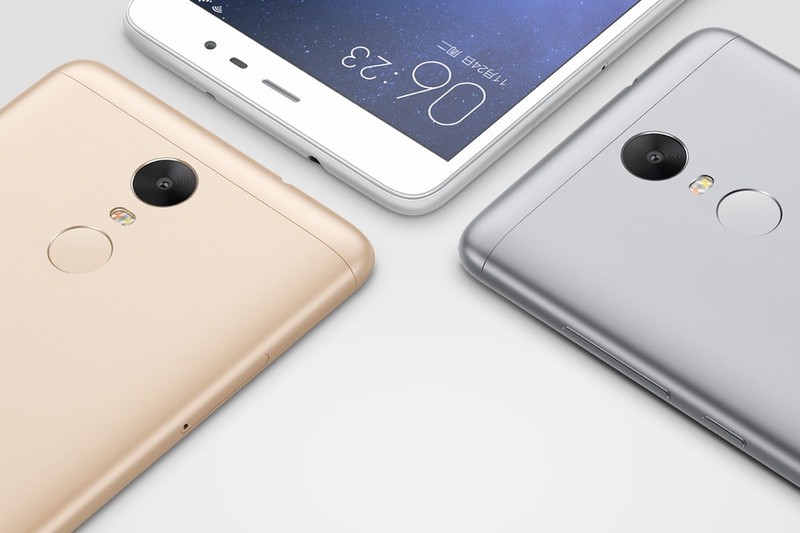
There’s also a Prime model of the Redmi 3S that will offer 3GB of RAM and 32GB storage, as well as a fingerprint sensor at the back. The main difference between the two phones is that the Redmi 3 is powered by a Snapdragon 616 SoC, whereas the Redmi 3S offers the Snapdragon 430.
The price is going to be the deciding factor for most customers, and as such Xiaomi is being very aggressive in this area, making the standard Redmi 3S available for just ₹6,999. The Redmi 3S Prime will retail for ₹8,999. Both phones will go up for sale starting August 9. What do you guys think of the pricing?
ASUS rolls out ‘all-new’ ZenFone Selfie in India with Snapdragon 615, Android 5.0 Lollipop
ASUS has introduced a refreshed variant of the ZenFone Selfie (ZD551KL) in India. Available for ₹12,999, the “all-new” phone offers a “powerful performance with a Qualcomm Snapdragon 615,” as well as “Android L” on the software side of things.

If that sounds incredibly exciting to you, there’s more! You also get a 5.5-inch Full HD display, 3GB of RAM, 16GB internal storage, microSD slot, 13MP front and rear cameras, and a 3000mAh battery. On the design front, ASUS notes that the ZenFone Selfie comes with a “diamond cut back, beautifully fashioned and aimed at delivering a luxury and designer experience to the user.”
What are you waiting for? Head to Amazon India to get your hands on the brand-new ZenFone Selfie.
See at Amazon
Still with us? Good. Instead of settling for something that came out over a year ago, you’re better off spending your money on the Moto G4 Plus. Sure, it costs ₹2,000 more than the ZenFone Selfie at ₹14,999, but you’re getting a 5.5-inch Full HD display, Snapdragon 617 SoC, 3GB RAM, 32GB storage, microSD slot, an excellent 16MP camera at the back, 5MP shooter up front, LTE, a 3000mAh battery, and most importantly, Android 6.0.1 Marshmallow.
See at Amazon
OPPO F1s review: Great hardware, inexcusably old software

OPPO’s latest Android phone looks a lot like its last one. But that isn’t necessarily a bad thing.
Following the F1 and the F1 Plus, we now have the F1s from OPPO, completing the trilogy of photography-oriented phones. Where the F1 Plus was a noticeable leap ahead of the F1, the F1s’ position is somewhere in the middle. On the face of it, it’s hard to tell it apart from the F1 Plus.
Indeed, with both the F1s and Plus on my desk side by side, it’s impossible to know which is which except if you’re looking at specific things — not necessarily a bad thing, since the F1 Plus is a nice piece of hardware. The new F1s is a little larger, a little less powerful, and is making its debut in India for ₹17,999 ($270).
OPPO (the parent company of OnePlus) has suddenly become one of the world’s top five smartphone vendors, so it’s very much a company to follow. The F1s isn’t particularly different from its predecessors, which means it has the same good and bad points that we’ve come across before.
| Operating System | Color OS 3.0 based on Android 5.1 |
| CPU | MediaTek MT6750 Octa-core |
| GPU | Mali-T860 MP2 |
| RAM | 3GB |
| Display | 5.5-inch 1280 x 720 IPS |
| Rear Camera | 13MP f/2.2 |
| Front Camera | 16MP f/2.0 |
| Storage | 32GB + microSD |
| Battery | 3,075mAh |
| SIM | Dual nano-SIM |
| Connectivity | MicroUSB |
| NFC | No |
| Fingerprint scanner | Yes |
| Dimensions | 154.5 x 76 x 7.38 mm |
| Weight | 160g |
Externally, the F1s looks a whole lot like the F1 Plus, but with subtle differences that give it an aesthetic advantage. The ugly antenna lines from the Plus are gone and what is left is a metal back with only the thinnest of breaks. This is likely due to the addition of plastic cutouts on top and bottom, but either way, it’s a more attractive chassis. The camera flash is now to the side of the lens, and while the design tweaks are minimal, what you get is an overall better look.
Round the front you’re looking at a 5.5-inch 720p LCD display with a physical home button beneath that doubles as the fingerprint sensor. And once again, OPPO nailed this. The fingerprint scanner on the F1s is crazy fast.
Even at 720p, OPPO did a nice job with the display
As usual OPPO did a nice job on the display as well. 720p isn’t the highest resolution for this size, but it looks really good. It’s visible in fairly bright sunlight and has the eye-protecting blue light filter mode built in that I’m now so attached to. OPPO went away from the AMOLED in the F1 Plus, no doubts to bring the price down a little, but it’s still great to look at, even side-by-side with the Plus. Colors are noticeably different to the AMOLED, but whites have a cooler tint, which I personally prefer.
What will split opinions is that the F1s comes pre-dressed with a factory fitted screen protector. Love it or hate it, it’s there. It’s also there to peel off if such things disgust you. Oh, and while the back of the F1s is metal, the sides are plastic simply painted to match. But as with the F1 Plus, the F1s is sleek, slim and generally a pretty good looking product.

You still get microSD support from OPPO, which will please folks who like that sort of thing, but you also get a decent amount of internal storage. Not as much as on the F1 Plus’s 64GB, but 32GB is a great starting point that I wish more companies used.
Hardware isn’t really OPPO’s problem, and this latest “Selfie Expert” phone isn’t breaking from that form. Where we usually find fault is when you turn it on and see the mess that is Color OS. Most disappointing is that OPPO has been teasing the stock-ish looking Project Spectrum for what seems like an eternity, but Color OS still prevails.
OPPO simply has to get off Android Lollipop in a hurry
The issue isn’t even what it looks like anymore, nor, thankfully, its overall performance. Color OS used to be pretty appalling in both areas but with version 3.0 big changes were made. There’s a much flatter, brighter appearance nowadays and it’s super smooth and snappy to use. But it’s still based on Android 5.1 Lollipop, and with Android 7.0 on the horizon that’s simply unacceptable.
In China, the version of Android might not be an issue. But even though the F1s isn’t slated for a North American or European launch, it will be sold in markets where people do care about this stuff. OPPO is now one of the big boys, and it absolutely has to up its software game.
If you want a more in-depth look then check out our review of the F1 Plus, which tells pretty much the same software story. Same good bits, same bad bits. Same Lollipop. That last one gives us the biggest sad face.
Bouncing back to things that are better to talk about: cameras. You’ve got the same basic set up on the F1s as on the F1 Plus, in that there’s a honking great 16MP front-facing camera on the front and a 13MP shooter on the back. And as always, megapixels don’t tell the whole story. You simply take amazing selfies with this thing.
Marketing buzzwords aside, if you’re fond of using a front facing camera then the OPPO is worth your attention. It won’t make you truly beautiful — much to my dismay — but it’ll make your self portraits look sharper than many a phone out there. The camera app is super simple to use and still looks like the one you’d find on an iPhone, but it’s the results that really matter.
And while the F1s won’t win any best-in-show awards, it has a competent rear camera, too. I took the F1s on a trip to China while reviewing it and was pleasantly surprised at its speed, ease of use and image quality.
You’ll get a decent day’s use out of the F1s, too, with a fairly sizeable 3,075mAh battery squeezed into its svelte frame. OPPO’s way of displaying battery usage stats to its users is still a mess, but you’re probably OK to ignore it throughout the day, anyway. The VOOC fast charger is also included in the box, offering you the chance of a quick top-up should you need it.

So, final thoughts. We haven’t gone as in depth with the F1s as we might have other phones, because for the most part you could read our F1 Plus review and get the general idea. The F1s is one of OPPO’s best phones to date, but the software still drags it down from becoming a truly great phone.
OPPO isn’t alone on that front, and heaven knows we’ve been saying it about other Chinese phone makers for long enough now. What’s currently here works just fine in China, but other parts of the world are going to want to see newer versions, the up-to-date security features and regular progress in keeping phones updated. OPPO is doing a lot right, but it needs to get this part nailed.
The F1s also does a lot of things well. It’s up for sale in markets such as India and, software aside, is a very nice phone. Hell, even the software it’s got is okay — it’s just dreadfully out of date. Fix that, and you’ve got a lot of phone for not a whole lot of money.
Interested? The phone will be available starting August 11 for ₹17,999 from Amazon India as well as brick-and-mortar stores across the country.
 AIVAnet