


Samsung unleashes the Galaxy Wide in South Korea
Samsung has revealed a new smartphone in South Korea called the Galaxy Wide. It’s believed the handset is a rebranded and improved version of the Galaxy On7. As reported by SamMobile, the device itself carries the model number SM-G600S with some interesting specifications.

The Galaxy Wide comes with a 5.5-inch TFT display, 1.2GHz Snapdragon 410 processor, 16GB of internal storage, 2GB of RAM, 13MP main shooter (with 5MP front-facing camera), and a 3000mAh battery. Samsung has loaded the latest version of Android Marshmallow on the Galaxy Wide too, but the unique listing here is the inclusion of a T-DMB chip for digital broadcasting in the region.
The Galaxy Wide will be priced at 319,000 Korean Won ($280) and is set to launch in a few weeks.
This is the Samsung Smart Glow ring you could see on Galaxy S8
Press images of the Samsung Galaxy J2 have leaked ahead of a launch later this week. That might not be of much interest to you, considering the phone is really for emerging markets and unlikely to make it onto these shores, but it’s what the images reveal that’s of note.
The picture that shows the rear of the J2 is particularly intriguing, as it shows the rumoured Samsung Smart Glow notification ring, which could be employed by the company on future handsets too.
Samsung Galaxy S8 anybody?
As we’ve reported before, the Smart Glow ring is thought to use LED technology to show a different colour around the camera lens, signifying different notifications. It could work a bit like the Edge lighting on S6 Edge and S7 Edge devices.
That more-than-likely rules it out from appearing on the soon-to-be announced Galaxy Note 7, considering we’re 99 per cent certain that too has Samsung’s Edge screen and tech, but for future phones that don’t have curved edge displays, it could be a winner.
- Samsung’s future phones might include a ‘Smart Glow’ ring for alerts
- Samsung Galaxy Note 7 selfies to be ridiculously easy and high quality using Smart Glow
SamMobile claims that the Smart Glow ring on the Galaxy J2 will light up to indicate incoming or missed calls and messages. It can also show a low battery level or help when taking selfies using the rear camera – something we’ve also focused on in the past.
Future generations would have more functionality though, it is said. Heart rate monitoring, for example, or weather information.
Time will tell for those. As for the J2, it is expected to be announced in India later this week.
Pocket-lint Adventures: Single track riding with the TomTom Bandit
Swinley Forest in Surrey has a cornucopia of activities for those who like to enjoy the great outdoors. This expanse of pine forest is part of the Crown Estate, but also home to a great selection of single track routes for riders of all abilities to enjoy.
We hit the trails, in the first of a series of Pocket-lint Adventures, taking the TomTom Bandit action camera along for the ride.
There’s something for everyone on the trails, with purpose-built tracks offering banked corners for fast descents, plenty of inclines to sweat up and clearly marked routes, divided into categories to suit your skill. You can even hire bikes if you need to – it saves cleaning it after!
The TomTom Bandit offers a wide range of mounting options, from handlebar mounts to helmet mounts and thanks to the quick release mechanism on the bottom, it’s easy to switch from one to the other. You might not like selfie sticks, but the Pole Mount is a great option for capturing the action from a fresh angle.
This action camera also doesn’t mind the spray from those muddy trails, just remember to keep the lens clean with a quick wipe whenever you stop for a breather, to keep your captured adventures looking nice and clear.
The remote control button is a handy accessory for starting and stopping capture with minimal fuss and with easy pairing, the live viewfinder on your smartphone means you can check the alignment and instantly playback and share those epic wipeouts.
We quickly edited this video using TomTom’s software. The camera’s sensors automatically highlight the action sequences, so it’s easy to find the interesting parts of your adventure, pull them together and share them with friends.
The TomTom Bandit has been a great partner for trail riding. We’re now getting ready for our next Pocket-lint Adventure in a few weeks.
China finished the world’s largest single-aperture telescope
For the past 53 years, Puerto Rico’s Arecibo Observatory has been the king of radio telescopes. No more. China has just finished construction of its Five hundred meter Aperture Spherical Telescope (FAST), which is 64-percent larger. That makes it the worlds largest single-aperture telescope — the world’s largest radio telescope is Russia’s RATAN-600, which has a sparsely filled aperture.
Nestled in a rural area of Guizhou province, FAST was built in an isolated valley, which is important for radio telescopes, but in order to ensure there will be no magnetic disruptions, some 9,000 people are being removed from their homes and rehoused in a neighboring county. Xinhua News Agency reported displaced families are also being paid 10,000 yuan (roughly $1,500) in compensation, which translates to an average year’s salary in the area.
Unlike Arecibo, which has a fixed spherical curvature, FAST is capable of forming a parabolic mirror. That will allow researchers a greater degree of flexibility. Although it’s 500 meters wide, FAST effectively offers an 300-meter dish that can be pointed anywhere ±40° from the zenith, with 10 times the sensitivity of Arecibo.
FAST will begin listening to the universe this fall. It will be tasked with surveying neutral hydrogen in the milky way and other galaxies, detecting pulsars and gravitational waves and looking for signs of extra-terrestrial life.
Via: The Next Web
Source: Xinhua News Agency
Microsoft’s Play Anywhere reaches PC and Xbox on September 13th
You won’t have to wait too long to see how well Xbox Play Anywhere works in practice. Microsoft has confirmed to Polygon that the cross-purchase, cross-play feature will go live on both Xbox One consoles and Windows 10 PCs on September 13th. You’ll still need games that support it, of course, but you can count on at least strong first-party support. Microsoft informs MCV that all the games it publishes from now onward will use Play Anywhere — in theory, that means the next Halo will be a PC title. The real unknown is whether or not many third-party games will follow suit.
Source: Polygon, MCV
Spongy electronic ‘nose’ can sniff out nerve gas and pesticides
When you’re trying to detect extremely dangerous chemicals, you don’t want to mess around — even a tiny amount can spell big trouble. It’s a good thing, then, that Belgian researchers have developed what could be the most sensitive gas sensor to date. Their electronic ‘nose’ uses spongy metal-organic frameworks (below) that can absorb and flag extremely tiny amounts of the phosphonates you find in harmful gases like sarin (aka a form of nerve gas) or pesticides. It’s so sensitive that, in some cases, it can find just a few parts per trillion — even the cleverest evildoer would likely have trouble hiding a chemical weapon.
The kicker is that it’s extremely portable. You could apply the framework as a film on an existing circuit, so you could use your smartphone to spot chemicals. And yes, it’d be useful for more than security checks. KU Leuven imagines using this to spot lung cancer in your breath, or to determine whether or not your food has gone bad. You might never have to wonder whether or not an object is hiding something nasty, as the answer would always be close at hand.

Source: KU Leuven
Syllable G600 headphones (review)
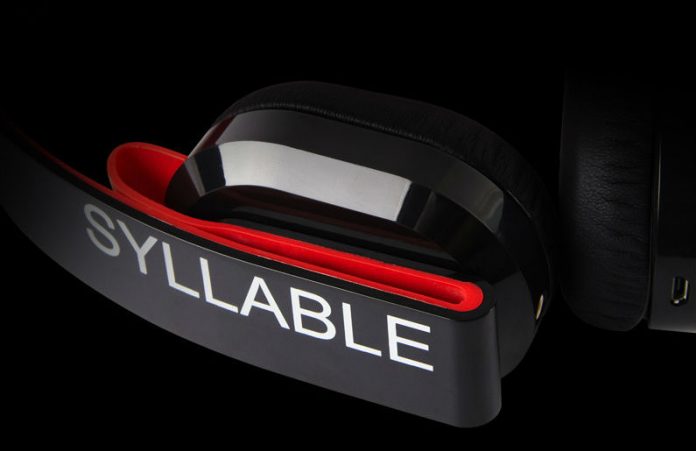
It’s not necessarily a rare thing to find a great pair of headphones for $30. On the other hand, finding an amazing pair of headphones for $30 is. I have made such a discovery with the Syllable G600 Bluetooth Studio headphones. Here are my thoughts.
Technical Specs
- Active noise cancelling technology
- Dual audio drivers on each side
- 2 hour charge time
- Up to 12 hours of playback time
- *250 hours standby time
- Bluetooth 4.0
- Built in HD microphone with noise cancelling technology
- 1 year manufacturer warranty
Design
These headphones look great. The exterior is made of a shiny black plastic with a Porsche red, rubber interior padding. The headphone cups themselves are also constructed from a shiny black plastic with a matte black padding inside.

On the right earphone you will find the power, volume, fast forward and rewind keys. The fast forward and rewind keys also double as the volume up and volume down keys. I personally do not like this design choice but it gets the job done.
On the left earphone you will find a 3.5mm headphone jack. The addition of this jack is fantastic because it allows you to the use the headphones wired if the battery has died. All you need to do is plug one end of the included male 3.5mm to male 3.5mm cable into the headphones and the other end into the device of your choice.
As much as I love the design of these headphones, they have one glaring flaw: the word “SYLLABLE” monogrammed in giant, white letters on both sides of the headband. Even with this small flaw, these headphones look and feel great. The build quality is superb and really makes you feel like you are using a $100 pair of headphones instead of a $30 pair.
Sound
The Syllable G600’s sound great. These headphones, hands down, are the best I have ever used. In fact, I would stack the G600’s against any pair of Beats by Dre studio headphones and wager that users would not be able to tell the difference in a blind test. But I must disclose that I have not owner a pair of Beats.
The bass, highs, mids and lows all sound phenomenal and in perfect balance. I literally have no complaints about the sound produced by the Syllable G600’s.
Battery Life/Functionality/Comfort
Even with extended use, the Syllable G600’s stayed pretty comfortable. There might have been some minor fatigue here and there, but it was so slight that I didn’t feel the need to take the headphones off because of it.

On the battery life front, I got about 8-12 hours of use with the Syllable’s connected to a Bluetooth device (usually my tablet). The included 3.5mm male to 3.5mm male cable allows you to continue to use the headphones after the battery has died. I love this feature and I am so glad that Syllable had the forethought to include it.
As far as the Bluetooth connection goes, I have no complaints. I noticed little to no skipping in my music while using the Syllables, and any that I did expereince was more likely caused by the device the headphones were connected to versus the headphones themselves.
Verdict
Without a doubt, the Syllable G600 Bluetooth Studio headphones are the best headphones I have ever used. They are comfortable, reliable, built well and sound fantastic. You will not find a better pair of headphones at this price; and as stated before, I would wager that these $30 Syllables are every bit as good as a pair of Beats.
Syllable G600 Bluetooth Studio Headphones – Amazon.com
1 of 6






*photos courtesy of Amazon.com and Google Images
Cyborg locusts with tattooed wings can sniff out bombs
“Men, bring out the sniffer locusts.” That’s something a bomb squad chief could say in the future, thanks to a team of engineers working to turn the insects into cyborgs that can be sent anywhere to sniff out explosives. It won’t be an easy feat — the researchers, who hail from the Washington University in St. Louis, will have to equip the insects with several pieces of technology. Good thing they have a powerful backer: the Navy. Team leader Baranidharan Raman has received a three-year $750,000 grant from the Office of Naval Research to make his dreams a reality.
Raman has been studying how the bug processes smell for years now. He and his team found that locusts can identify particular scents, such as those they’re trained to detect, even in the presence of other odors. Raman believes the cyborg bugs will be much more effective than robots, because their antennae have a ton of natural sensors. “Why reinvent the wheel? Why not take advantage of the biological solution?” he asked. “That is the philosophy here. Even the state-of-the-art miniaturized chemical sensing devices have a handful of sensors. On the other hand, if you look at the insect antenna, where their chemical sensors are located, there are several hundreds of thousands of sensors and of a variety of types.”
To turn ordinary locusts into bomb-sniffing machines, the engineers plan to implant an electrode into their brains to hijack their antennae and read electrical activity. Since operators need to get whatever info the bugs collect, the researchers are also developing a tiny backpack that can transmit data. The receiver’s red LED lights up in the presence of explosives, while the green LED lights up in the absence of any.
Finally, the engineers plan to tattoo the bugs’ wings with biocompatible silk that can convert light into heat. A laser, probably installed on the backpack, will allow an operator to control the cyborg bug. Focus the laser on the left wing to make the insect go left, and vice versa. It will function much like a remote-controlled drone. If Raman and his team don’t hit a snag along the way, they could be testing the first prototypes within a year’s time and could be done within two.
Via: BBC
Source: Washington University in St. Louis
Prince Online Museum revisits the musician’s web history
The late, great Prince may have declared that the internet was over, but he was its biggest fan in some ways. His websites were frequently grand projects that pushed the limits of both web design and digital music. And now, it’s easy to see this effort first-hand. Former Prince webmaster Sam Jennings has launched the Prince Online Museum, a timeline-based trip through some of the musician’s websites over the past 20 years.
It’s not a fully comprehensive view (you’re ‘only’ looking at 12 out of nearly 20 sites), but it gives you a good look at important moments in Prince’s internet history without having to use web archives. You’ll see the very start of his web presence (The Dawn circa 1996), the first online-only distribution of a CD (Crystal Ball in 1997) and the NPG Music Club’s groundbreaking media service (2001 to 2006). There’s even a peek at Prince Interactive, a 1994 project from the days when “interactive multimedia” CDs gave you experiences that weren’t possible on the early web.
Crucially, this isn’t a commercial venture. Jennings tells Billboard that there won’t be any downloads or subscriptions. This is ultimately a tribute to Prince — the only other goal is to inspire musicians who want to make a statement with their web pages.
Via: The Verge, Billboard
Source: Prince Online Museum
Juno has begun its tour of Jupiter after a five-year journey
Juno’s five-year journey has come to an end, and soon, it will start taking measurements and capturing images of the largest planet in our solar system. The spacecraft, which aptly carries Lego figures of the Roman god Jupiter, his wife the goddess Juno and Galileo, has entered Jupiter’s orbit after firing up its engines before midnight and performing a 35-minute maneuver. That was much harder to accomplish than it sounds — it had to be at the right speed to be captured by the gas giant’s gravity, or it would have slipped right past it. In the end, everything went well, and the spacecraft’s arrival was off only by a second.
“With Juno, we will investigate the unknowns of Jupiter’s massive radiation belts to delve deep into not only the planet’s interior, but into how Jupiter was born and how our entire solar system evolved,” NASA chief Charlie Bolden said in a statement.
Besides entering Jupiter’s orbit, the probe has also successfully turned toward the sun. Now that NASA is sure the spacecraft’s solar arrays can capture enough sunlight to power it, Juno’s initial 53-and-a-half day orbit has begun. We won’t have to wait long to see and hear more about the planet either: Bolden says the probe’s science phase will officially begin in October, but it will start collecting data much earlier than that.
Juno is slated to orbit Jupiter 37 times within the next 20 months to uncover its secrets. Those include understanding how it (and similar planets) formed and evolved, figuring out if it has solid core, mapping its magnetic field, measuring the amount of water, oxygen and ammonia in its atmosphere, as well as observing its majestic auroras. After it’s done, NASA plans to crash Juno into the gas giant to avoid collision with the planet’s biggest moons.
Success! Engine burn complete. #Juno is now orbiting #Jupiter, poised to unlock the planet’s secrets. https://t.co/YFsOJ9YYb5
— NASA (@NASA) July 5, 2016
#Juno turned back toward the sun, has power and started its tour of #Jupiter in an initial 53.5-day orbit pic.twitter.com/iwRSSOwPwX
— NASA (@NASA) July 5, 2016
#Juno is in Jupiter’s orbit! See how the team is feeling and find out what’s next at 1am ET: https://t.co/KX5g7yYnYG pic.twitter.com/TlcOjCVE4E
— NASA (@NASA) July 5, 2016
Fun trivia: Google is celebrating Juno’s successful arrival with a cute animated Doodle.
Source: NASA (Twitter)
 AIVAnet