


Ride-hailing apps like Uber will be legal in China soon
Considering how much business Uber does in China, it’s kind of hard to imagine that ride-hailing apps aren’t exactly legal in the country. Well, they weren’t, but they’re about to be. Chinese regulators have passed a new law that clears up the legal grey area companies like Uber and Didi Chuxing operate in. Starting on November 1st, ride-hailing apps will be legal, so long as they follow a few rules.
Specifically, the new regulations outline requirements for drivers — who must be licensed by local taxi regulators, have no criminal record and have at least three years experience behind the wheel. They also need to drive a car with fewer than 370,000 miles on the odometer. The ride-sharing companies themselves will have to acquire local taxi licenses to comply with the new laws, which still need to be adopted by local cities and provinces.
Despite this easing of regulations, there’s still some work to do: ride-sharing companies will need to acquire new licenses to comply with the new law, which itself needs to be adopted by local cities and provinces. That shouldn’t be too much trouble, though — Baidu is likely to go to the plate for Uber in negotiations with officials, and Didi is already appealing to local governments to adopt “market-driven approaches that encourage innovation.”
Despite some concerns on Didi’s part about the authority given to local taxi administrations, both companies seem optimistic about the new law. “We believe the Rules will usher in a new stage of growth for China’s online ride-booking ecosystem,” Didi said in a statement. Uber similarly endorsed the move. “This is a welcome step in a country that has consistently shown itself to be forward-thinking when it comes to innovation.”
Source: Engadget China, Ministry of Transport, Uber
iPad Continues to Outsell Samsung, Amazon, and Microsoft Tablets Combined
Apple released its fiscal third quarter earnings results earlier this week, confirming that it sold 9.95 million iPads from early March through late June. iPad shipments have now declined for ten consecutive quarters, but the lineup continues to outsell all Samsung, Amazon, and Microsoft tablets combined.
Taiwanese market research firm TrendForce has released new quarterly data that shows Samsung, Amazon, and Microsoft shipped an estimated 6 million, 2.2 million, and 700,000 units respectively for a combined total of 9.5 million, amounting to roughly 450,000 fewer tablets than the number of iPads sold.
Despite the shipment decline, reflective of a continued slowdown in the broader tablet market, Apple’s tablet revenue increased for the first time in ten quarters due to the iPad Pro’s higher average selling price. The 9.7-inch iPad Pro starts at $599, whereas the iPad Air 2 started at $499, while the 12.9-inch iPad Pro is priced from $799.
In terms of shipments, however, TrendForce says the iPad Air 2 was the key driver:
“The lack of changes in appearance and high prices work against the iPad Pro series. Consumers do not see these devices as a good bargain. The 12.9-inch iPad Pro maintained strong sales momentum for two quarters, while the 9.7-inch model lost its luster after just one quarter since its release. On the whole, the Pro series did not help expand iPad shipments in the second quarter as expected. The overall sales were instead sustained by iPad Air 2, which captured consumers’ interest with its reduced price tag.”
Worldwide tablet shipments in the June quarter totaled an estimated 33.54 million units, representing a quarterly drop of 4.8 percent and a year-on-year decline of 8.8 percent. Lenovo, Huawei, and ASUS were also among the top six vendors, with estimated shipments of 2.4 million, 2.2 million, and 800,000 tablets respectively.
With no new iPads models anticipated in the immediate future, TrendForce estimates Apple’s tablet sales will drop to 9.2 million sequentially.
Tag: TrendForce
Discuss this article in our forums
Apple Engineer to Discuss iOS Security at 2016 Black Hat Event
Apple engineer Ivan Krstic is scheduled to host a discussion at this year’s Black Hat Conference, offering a “Behind the Scenes” look at iOS security. Black Hat is an annual event designed for the global InfoSec community, giving security professionals a place to meet up and gain training on new techniques.
According to an overview of Krstic’s talk, three iOS security mechanisms will be discussed in “unprecedented technical detail,” including the first public discussion of Auto Unlock, a feature new to iOS 10.
HomeKit, Auto Unlock and iCloud Keychain are three Apple technologies that handle exceptionally sensitive user data – controlling devices (including locks) in the user’s home, the ability to unlock a user’s Mac from an Apple Watch, and the user’s passwords and credit card information, respectively. We will discuss the cryptographic design and implementation of our novel secure synchronization fabric which moves confidential data between devices without exposing it to Apple, while affording the user the ability to recover data in case of device loss.
Krstic will also cover the Secure Enclave Processor present in iOS devices that include the iPhone 5s and later, creating a discussion around how it enabled a new approach to Data Protection key derivation and brute force rate limiting within a small TCB, and he’ll cover browser-based vulnerabilities and new protective features in iOS 10 Safari.
The 2016 Black Hat Conference will take place from July 30 to August 4 at the Mandalay Bay hotel in Las Vegas, Nevada. Tickets are priced at $2,595.
Discuss this article in our forums
Bluetooth Headphone Revenue Overtakes Non-Bluetooth Ahead of iPhone 7 Launch
As the launch of the iPhone 7 approaches, Bluetooth headphone purchases are on the rise, according to new data shared by NPD Group. In June, Bluetooth headphone revenue overtook non-Bluetooth for the first time, accounting for 54 percent of headphone dollar sales and 17 percent of unit sales in the United States.
The overall headphone category saw seven percent year-over-year growth in pure dollar sales during the first half of 2016, but Bluetooth headphones saw double-digit growth during the same time period. A solid cost decrease helped spur Bluetooth headphone sales, with average selling prices down 5 percent. Nearly 30 percent of Bluetooth headphones sold during 1H 2016 were less than or equal to $50.
“Promotions and new product introductions have helped spur the growth we are seeing in Bluetooth headphones,” said Ben Arnold, executive director, industry analyst for The NPD Group. “Consumers are already embracing a wireless future and if, as rumored, the headphone jack is removed from the next iPhone, we expect this will continue to drive market share of the Bluetooth category.”
Apple’s Beats brand and LG dominated the Bluetooth headphone market during the first half of the year, accounting for approximately 65 percent of dollar sales. Bose, Jaybird, and Skullcandy were the other manufacturers to make it into the top five brands, in that order.
With the iPhone 7 and the iPhone 7 Plus, Apple plans to eliminate the headphone jack, requiring consumers to rely on Lightning adapters, Bluetooth-enabled wireless headphones, or headphones that include a Lightning connector. Apple’s decision will undoubtedly lead to even greater Bluetooth headphone sales as the headphone jack is gradually phased out across its product line and from competing products.
Tags: Bluetooth, headphone jack
Discuss this article in our forums
Protecting Your Privacy in Safari for iOS
Every time you visit a website on your iPhone or iPad, you are sharing information about yourself with the outside world. This guide runs through a number of methods you can use to gain more control over what gets shared, and who it gets shared with, whenever you use Apple’s Safari browser to access the web on an iOS device.
It also covers some methods you can use to prevent traces of your browsing history from showing up on your iOS devices. While you may trust friends and family not to go searching through your web history, it’s possible for them to unintentionally discover what you’ve been looking at, just by using Safari or performing a simple Spotlight search on your iPhone or iPad.
The guide assumes you are using the latest public release of iOS 9.3 (9.3.3 as of initial writing). If your device is running an older version, a message should have appeared on the screen that an update is available. Connect your device to a power source and then tap “Install Now” on the message to download the update over the air, or open the Settings app and tap General -> Software Update, and then tap “Download and Install”.
Alternatively, connect your device to a computer with an internet connection and with the latest version of iTunes 12 installed. Open iTunes, select your device (a device icon should appear just below the playback controls), click “Summary” in the sidebar, and then click “Check for Update” in the Summary screen. Click “Download and Update” if an update dialog appears.
Cookies, Location Services, and Tracking
Many websites attempt to store cookies and other web page data on iOS devices. Cookies are small data files that can include things like your IP address, device type, web browser version, the date you last visited the site, as well as any personal information you have provided, such as your name, email address, and any relevant preferences. This information is used to identify you when you revisit a site, so that it can offer tailored services, provide specific content, or display targeted ads.
Websites are increasingly upfront about their use of cookies – you’ve probably seen notices on popular sites requesting that you acknowledge their use. That’s largely because EU law requires sites based within its borders to get consent from visitors to store or retrieve cookie data, and as of September 2015, Google requires that any website using its advertising products comply with the law if any of its users are inside the EU, regardless of where the site itself is based.

By default, Safari accepts cookies and website data only from websites you visit, and attempts to block third-party cookies that try to target you with ads or create a profile of your online activities. If you don’t like the idea of being tracked at all, you can selectively block the use of cookies by following the numbered steps below. Note however that some pages might not work unless you allow the use of cookies, so if you run into login problems or other issues on familiar sites after adjusting these settings, then you might want to dial back the changes.
Additionally, Do Not Track is another feature you can enable to try to prevent sites from tracking your web visits across the web. With the feature turned on, Safari specifically asks sites and their third party content providers (including advertisers) not to track you. In reality, it’s up to the website to honor this request, but it’s an option worth enabling for a potential extra layer of privacy.
Lastly, you may have noticed how Safari asks if you want to share your location whenever you visit a geolocation-enabled website. If you don’t expect the site to provide helpful location-based services such as weather information or local amenities, you can deny individual requests and continue to do so on a case-by-case basis. Alternatively, you can disable location services in Safari completely, which is also described in the following steps.
On your iOS device, open the Settings app, scroll down the list, and tap “Safari”.
In Safari settings, tap “Block Cookies” under the Privacy & Security options, and choose one of the following: Always Block, Allow from Current Websites Only, Allow from Websites I Visit, or Always Allow.
Toggle on the button next to “Do Not Track”.
Return to the first menu in the Settings app and select “Privacy” from the list.
Tap “Location Services”, scroll down the list and select “Safari Websites”, and then tap on “Never” in the next screen. Again, be aware that defaulting to “Never” may impact the functionality of some sites you visit.
Enable Private Browsing
By enabling Private Browsing, you can prevent Safari from remembering the pages you visit and any AutoFill information, while any private tabs you open won’t be stored in iCloud. When using Private Browsing, Safari also automatically asks sites and third-party content providers not to track you, prevents sites from modifying any information stored on your iOS device, and deletes cookies when you close the related tab.
In Safari, tap the Pages icon (consisting of two squares) to bring up the open tabs view, and then tap “Private”. Notice how the interface turns a dark gray.
Tap the “+” icon to open a private tab.
When you’re done with the web session, return to the open tabs view, close your tabs, and tap “Private” again. Your private tabs are now cleared from memory.
Clear Browsing History
Clearing your web history in Safari has changed with iOS 9. You can no longer clear your history without also deleting all cookies and web data. This may affect stored login data for certain sites, so think twice before proceeding.
The first method described below is the ‘nuke’ option since it clears all history, cookies and website data on all devices signed into your iCloud account regardless of when the sites were accessed.
Open the Settings app and scroll down to Safari in the list.
At the bottom of the options screen, tap “Clear History and Website Data”.
The following alternative method allows you to limit the clearing of history, cookies and website data to a specific timeframe.
Open Safari and tap the Bookmarks icon (the open book).
Tap the first Bookmarks tab if it’s not already selected and select “History” from near the top of the list.
Tap “Clear” and select the option you prefer from the following: The last hour; Today; Today and yesterday; and All time.
Exclude Browsing History From Spotlight Searches
If you’d like to retain your browsing history but don’t want web pages you’ve visited to appear in Spotlight Search results, follow these steps.
Open the Settings app and tap “General”.
Select “Spotlight Search”, scroll down the Search Results list, and toggle off the switch for Safari.
Switch Search Engine and Disable Safari Suggestions
Just because you cleared your browsing history and web data in Safari or browsed in a Private window, doesn’t mean your searches aren’t still recorded elsewhere. For example, if you logged into a Google account during the session, searches you performed may be logged by Google and later show up as search suggestions when you start typing in the Google search bar when logged into the same account. In fact, your search and ad results may be customized based on your search-related activity, even if you’re signed out of your account.
To get around this issue, either consult the privacy help page of your preferred search engine to learn how to turn off tracking settings, or add a non-tracking search engine such as StartPage to your favorites (visit the site, tap the Share icon – the square with an arrow pointing out of it – and tap the star icon to “Add to Favorites”). The next series of steps shows you how to set Safari to use non-tracking search engine DuckDuckGo when you type in search queries into the address bar.
Another thing to reconsider is your use of Safari Suggestions. With this option enabled, your search queries, the Safari Suggestions you select, and related usage data are sent to Apple. Additionally, if you have Location Services turned on, when you make a search query in Safari with Safari Suggestions enabled your location is also sent to Apple. If you don’t want this information shared, turn off Safari Suggestions, which is also described in the steps below.
Open the Settings app and scroll down to Safari in the list.
In the Search options list, toggle off the “Search Engine Suggestions” and “Safari Suggestions” switches.
Tap “Search Engine” at the top of the list, and select DuckDuckGo from the available options.
Disable Frequently Visited Sites
By default, Frequently Visited Sites appear below your Favorites whenever you open a new tab in Safari. You can turn this feature off.
Open the Settings app, scroll down and tap “Safari” in the list.
Toggle off “Frequently Visited Sites” under the General section.
Turn Off AutoFill
Safari’s AutoFill feature remembers text and values you enter into online forms, and can be useful for speeding up logins and registrations as well as online purchases. If other people use your iOS device, you might not want this information to show up when websites are revisited. Here’s how to disable AutoFill.
Open the Settings app, scroll down, and tap on “Safari” in the list.
Tap to open the AutoFill menu and toggle off the switch next to the details you’d rather not include. You can also edit/delete stored bank cards from here by tapping “Saved Credit Cards”.
Finally…
If your privacy concerns extend to a desire for enhanced security and anonymity, consider subscribing to a Virtual Private Network (VPN) service that offers an iOS client or supports OpenVPN (Private Internet Access and IPVanish are two popular options), and using a Tor-powered browser for iOS.
Tags: Safari, privacy
Discuss this article in our forums
New iMovie for iOS Update Makes it Easier to Start and Share Projects
Apple today updated iMovie for iOS, its consumer-oriented video editing app designed for iPhones and iPads. iMovie version 2.2.3 makes it easier to start and share projects and it includes unspecified stability and performance improvements.
iMovie users are now able to start projects more quickly by selecting multiple photos and videos to insert into a project, and there are options for sharing to Facebook or Vimeo using the iOS share interface. Today’s update also brings support for Shared iPad, an educational feature that debuted as part of iOS 9.3.
With Shared iPad functionality, iMovie will now work for each student who accesses the app on a shared iPad.
What’s New
– Start projects quickly by selecting multiple photos and videos
– Share to Facebook and Vimeo using the standard iOS share interface
– Support for Shared iPad in iOS 9.3 or later
– Stability and performance improvements
Prior to today’s update, iMovie last saw an update in April of 2016, bringing minor improvements. The last major update to the software came in September of 2015 when iMovie 2.2 was introduced, bringing support for 4K video and 3D Touch.
iMovie for iOS can be downloaded from the App Store for $4.99. [Direct Link]
Tag: iMovie
Discuss this article in our forums
ZTE Axon 7 specs
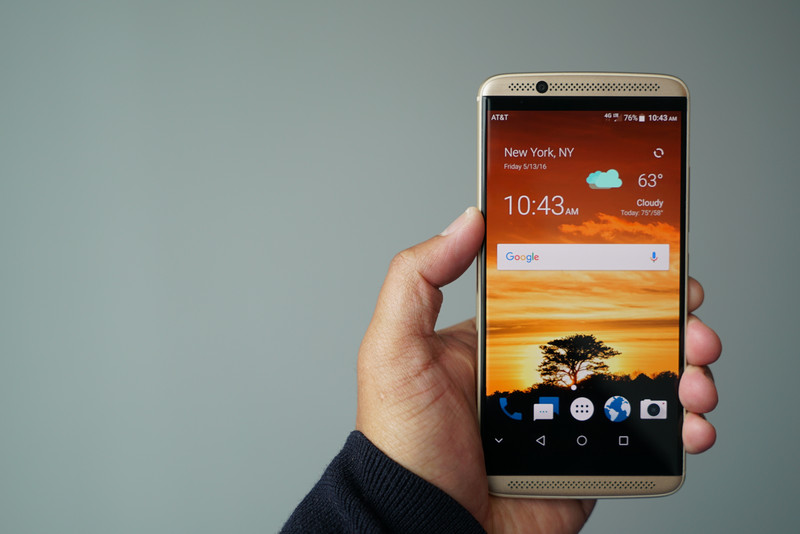
What are the ZTE Axon 7 specs?
The ZTE Axon 7 is a promising follow-up to the Axon and Axon Pro, maintaining its emphasis on swift performance, excellent build quality, and incredible sound. Here’s what’s inside the ZTE Axon 7:
| Operating System | Android 6.0.1 Marshmallow |
| Display | 5.5-inch, 2560x1440AMOLEDGorilla Glass 4 |
| Processor | Qualcomm Snapdragon 820Quad-core 2.15GHzAdreno 430 GPU |
| RAM | 4GB |
| Storage | 64GB |
| Expandable | microSD up to 2TB |
| Dual-SIM | Yes |
| Rear Camera | 20MP f/1.8, PDAFOIS 4K/30 video |
| Front Camera | 8MP f/2.21.12-micron pixels1080p/30 video |
| Battery | 3250 mAh |
| Charging | Quick Charge 3.0USB Type-C |
| Water resistance | No |
| Fingerprint sensor | Yes, rear |
| Headphone jack | Yes |
| Connectivity | Wi-Fi 802.11ac dual-band, Bluetooth 4.2 LE, NFCGPS, GLONASS |
| Network GSM | LTE Band B2/B4/B5/B12/B13/B17/B7/B3/B1/B20/B29/B30/B25/B26/B41HSPA B2/B5/B4/B1/B8 |
| Network CDMA | BC0/1/10 |
| Dimensions | 151.7 x 75 x 7.9mm |
| Weight | 175 g |
Video: 11 minutes of the flat Galaxy Note 7 we may never know
Prototype Korean Note 7 shown in Chinese video — but don’t expect this model to ever go on sale.
The Samsung Galaxy Note 7 is almost upon us, with launch events scheduled for Aug. 2 in London and New York. And if all the rumors are to be believed, it’ll sport an S7 edge-like curved screen — the first Note to do so in two years.
That’s a bone of contention for some Note fans, who’ve been reassured by sightings of a flat version of the phone on Chinese social networks in recent days. And now a new video has emerged from social network Weibo, showing the same edge-screenless Note 7 in prototype form for a total of 11 minutes.
A Note 7 which was never supposed to see the light of day.
The unit in question appears to be from Korean carrier SKT, with internals matching the international Galaxy S7 — an Exynos 8890 processor running things, with 4 gigabytes of RAM. It’s pictured running a re-vamped version of Samsung’s Marshmallow-based TouchWiz UX, with more liberal use of whites than what we’re accustomed to on the GS7, and a handful of re-tooled icons. And despite the lack of any edge screen, the prototype has all the “Edge Screen” software cues we’d expect from a phone with a curved screen.
That’s probably because this is a purpose-built testing device — identifiable by its lack of Samsung branding, and barcodes instead of icons over its capacitive buttons. In other words, it’s like this because it’s cheaper to build protos with flat screens, rather than wasting edge screens on a phone that’s never supposed to see the light of day.
Anyway, judge for yourself in the video below. And if you’re willing to part with a large amount of cash, you may eventually find one of these protos up for sale on the darker corners of the web. Otherwise, don’t hold your breath for a non-edge Note anytime soon.
via: 9to5
Telus adds even more destinations to its Easy Roam offering
Telus is looking to make it easier for customers to use their cell service while traveling abroad by adding even more countries to its Easy Roam options. In addition to the U.S., Telus says that customers traveling to England, China and more can now take advantage of its cheaper and less-confusing Easy Roam international roaming option.

From Telus:
Canadian travellers visiting our American neighbours already have access to Easy Roam for just $7 a day. Now, TELUS customers jetting off to Turks and Caicos, England or China, can tap into Easy Roam when travelling to 127 destinations around the world. Once the feature is added to their account, Easy Roam enables TELUS postpaid customers on almost all Canadian rate plans to access the minutes, text messages and data included in their existing rate plan for just $10 a day while roaming abroad.
All you have to do to get started, Telus says, is to either log into your account online to check your roaming options, or simply text TRAVEL to 7626. For much more on Telus’ roaming options, you can also check out the travel section of the carrier’s website.
Best clear cases for Samsung Galaxy Note 5

What are the best clear cases for the Galaxy Note 5?
Sometimes having a unique, flashy or busy-looking case can be a stylish accessory for your phone, but there’s nothing better than a minimalist, clear case that shows off the sleek beauty of your Samsung Galaxy Note 5.
While there are dozens of options for you to pick from, here are a few great ones to check out if you’re looking for a durable and reliable clear case for your Samsung phone.
- Spigen Ultra Hybrid
- Ringke Fusion
- Spigen Neo Hybrid Crystal
- CellularVilla Clear Cushion
- Naked Tough Case
Spigen Ultra Hybrid

Made from tough polycarbonate and a flexible TPU bumper, the Spigen Ultra Hybrid is a great quality case and a perfect fit for the Galaxy Note 5.
A raised bezel protects your phone’s screen, while all buttons and ports are easily accessible, so you don’t need to slide it on and off every time you’re charging it.
Even though the Ultra Hybrid is a clear case, you can choose to get clear or colored accents for the TPU bumper, like black and mint green.
See at Amazon
Ringke Fusion Crystal Clear

If you’re looking for a well-made clear case for your Galaxy Note 5, consider taking a peek at the Ringke Fusion Crystal Clear case.
Super thin and snug-fitting (plus it comes in eco-friendly packaging!), the Ringke Fusion is an anti-scratch case with a transparent TPU bumper that wraps around your phone for full protection.
All buttons and ports are easily accessible through dust caps that are there to prevent debris from blocking the ports of your Galaxy Note 5.
See at Amazon
Spigen Neo Hybrid Crystal

Designed with a bendable, tight-fitting, clear TPU shell and a hard polycarbonate frame that comes in three different colors (silver, gold, and blue), the Spigen Neo Hybrid is a great minimalist case for your Galaxy Note 5.
You get full access to all ports, as well as metal-plated buttons with the Hybrid Crystal, while the TPU material, which is not as slick, smooth, and slippery as polycarbonate, keeps your phone secure in your pockets and firmly in your grasp.
See at Amazon
CellularVilla Clear Cushion

By far the least expensive option on this list at around $7.99, the Clear Cushion case from CellularVilla is an affordable, great quality case for your Galaxy Note 5.
The Clear Cushion is designed with dual-layer, shock absorbing material, so if you drop your Galaxy Note 5, you won’t have to worry much about your phone screen shattering.
Made from an anti-stretch material, the Clear Cushion has cutouts throughout, so you have full access to all buttons and ports. Did we mention that this case adds little to no bulk to your Galaxy Note 5?
See at
Naked Tough case

Thin, smooth, and durable, the Naked Tough case from Case-Mate is a tough – yet stylish– option for your Samsung Galaxy Note 5.
This hard-shelled case is designed with a shock-absorbing bumper to protect your Galaxy Note 5, while metal buttons add a bit of style to the case’s minimalist overall look.
Designed to be super slim and nearly invisible on your phone, the Naked Tough case is well worth checking out if you’re looking for a thin, transparent accessory.
See at Case-Mate
What’s your pick?
Is there a clear case for the Galaxy Note 5 that you’re absolutely in love with? Let us know in the comments below and we’ll check it out!
 AIVAnet