


Pocket-lint Adventures: Monkeying around on Go Ape with TomTom Bandit
Although there’s lots to do at ground level in Alice Holt Forest, Surrey, some of the greatest adventures are to be had in the tree tops. With separate Go Ape courses for both adults and children, there’s plenty of monkeying around to be had, for big or little kids.
Go Ape is an easy adventure to get into, because you only need a brief introduction, and to demonstrate you understand how to use the equipment safely, before you’re off climbing your first ladder into the treetops. After that, all you pretty much need is nerves of steel.
Mixed into the adrenaline-fuelled ziplines and confidence-challenging balance beams, there’s a serene sense of calm. Those platforms are high, but the views are amazing. The sounds of walkers on the forest floor drift up, as you test your mettle again climbs, swings and all manner of high-wire trials.
The TomTom Bandit is a welcome companion, capturing the fun along the way. It’s light enough to carry, small enough to slip into a pocket and thanks to its water resistance, it doesn’t matter when it starts raining.
The unique quick-release mount on the bottom has an added advantage, as you can set the camera down to film from a level platform without needing any extra stands or mounts. Thankfully, the smartphone connection means you can check the view before you start your daring crossing, and make sure you capture the action.
With instant sharing from your phone, and the ability to edit in an instance, the Bandit will make sure that everyone gets to see just how much fun you’ve been having.
The TomTom Bandit has been a great companion for this Pocket-lint Adventure and we can’t wait to tackle the next.
Zemi Aria speaker review: Majors and minors
When we meet Francesco Pellisari, the designer of the Zemi Aria speaker, he’s a mixture of eccentric Italian and yet quiet in that seemingly genius-like manner. Does his latest speaker exhibit the same qualities as its designer?
We’re drawn to the Zemi Aria for a number of reasons: it’s striking to look at, with the same sort of distinction that the original B&W Zeppelin had; it also is distributed in Apple stores – or at least was, it’s since disappeared from the online listings – which means it has mass-market appeal and might already have you wondering whether it’s worth parting with £500 to own one.
The answer is a mixed bag. At its best the Aria is great. At its worst (i.e. at low volumes) it’s average and won’t suit all music genres. Here’s what we’ve come to think after using the speaker for a number of months.
Zemi Aria review: Design
The Aria is about the size of a bowling ball; all round, except for a cut-off front, complete with silver grille with a swirl of circular openings. To the back there’s an open port to for the on button, mini USB connector and power.
Pocket-lint
The speaker sits on a separate stand so it can be angled to a sensible position (and not just roll around aimlessly), which is important for the best possible sound projection. That front grille also helps with pseudo stereo separation, although its magnetic connection means it can be easily removed should you prefer.
There’s Bluetooth with aptX for optimum quality and Wi-Fi connectivity for Apple AirPlay connectivity. It does need a wired USB connection to setup via WiFi, though, which sounds like something from the distant past. We’re Android users, so have been restricted to Bluetooth playback – but have found the connection to be solid at all times.
Pocket-lint
There’s also an included remote control, should you want to use it, but we don’t think its silver and straightforward design fits with the Aria’s altogether more exuberant design.
Zemi Aria review: Sound quality
Now here’s where things get really interesting: because the Zemi Aria can sound really great… but it can also sound really dull. We’ve found it to be one of those speakers perfect for some situations, but quite the opposite for others.
Pocket-lint
When we first setup the Aria it was sat on our desk, as we so often do with review speakers. In this close-to-ears proximity its highs sound far too sharp, almost overly resonant – most notable with hi-hats and the like.
If you don’t want to disturb the neighbours then you’ll want to keep the volume down too. That was our predicament, so with the volume kept to a limited level we wondered what, indeed, it was about the Aria that was worth £500 – because at low volumes it just sounds muddy and lacking any pomp.
But warm the Aria up, set the volume higher, even massage an equaliser in iTunes to give a little enhancement to the low-end, and it can sound fantastic. At those mid-high volumes it can soar.
Pocket-lint
That point about an equaliser for bass is a repeat point of note, though, as the Aria is perhaps better set for classic music than it is bass-driven genres. That’s fine, but it won’t suit all, and with no on-board presets – Pellisari is particular about his audio preferences – you’ll need to use third-party software for tweaks.
Verdict
So there you have it: the Zemi Aria is a visually interesting, potentially great-sounding speaker. You’ll just need to raise the volume and, for certain types of music, tweak the bass for the best possible output.
At £500, however, the likes of the Naim Mu-so Qb give the Aria a lot to think about. This Pellisari creation lacks the more technologically advanced processes, there are no presets and no multi-room functionality either.
That and its lack of pomp at lower volumes hold it back from being a vision of greatness. Still, with the settings set right it’s a decent speaker, both visually and aurally.
It’s official: SoftBank is buying ARM for $31 billion
Japan’s SoftBank is acquiring ARM Holdings for $31 billion (£24 billion). The British chip design firm dominates the smartphone market, with its lineup of chips used in 95% of handsets today.

SoftBank CEO Masayoshi Son said that ARM would function as an independent business, with an intention to double its headcount in the UK over the next five years:
We have long admired ARM as a world renowned and highly respected technology company that is by some distance the market-leader in its field. ARM will be an excellent strategic fit within the SoftBank group as we invest to capture the very significant opportunities provided by the “Internet of Things”.
This investment also marks our strong commitment to the UK and the competitive advantage provided by the deep pool of science and technology talent in Cambridge. As an integral part of the transaction, we intend to at least double the number of employees employed by ARM in the UK over the next five years.
SoftBank intends to invest in ARM, support its management team, accelerate its strategy and allow it to fully realise its potential beyond what is possible as a publicly listed company. It is also intended that ARM will remain an independent business within SoftBank, and continue to be headquartered in Cambridge, UK.
This is one of the most important acquisitions we have ever made, and I expect ARM to be a key pillar of SoftBank’s growth strategy going forward.
Unlike traditional semiconductor firms like Intel, ARM does not fabricate its own processors. It licenses the IP for its designs to manufacturers like Qualcomm, Samsung, Huawei, NVIDIA, Apple, and others. Companies can license its Cortex processors, or its chip architecture and design their own CPU, much like what Samsung did with the Exynos M1 CPU on the Exynos 8890 SoC that powers the Galaxy S7. The number of devices running ARM-designed hardware has crossed 60 billion last year.
SoftBank is a major investor in the tech space, having acquired stake in U.S. carrier Sprint, China’s e-commerce giant Alibaba, India’s e-commerce vendor Snapdeal and local ride aggregator Ola Cabs among others in recent years.
Chinese group’s $1.2 billion takeover of Opera falls through, new deal in place
A Chinese consortium of internet companies has failed to acquire Opera over lack of regulatory approval, according to Reuters. The Norwegian software maker has renegotiated with the consortium for the sale of its browser business for $600 million.

The consortium made a $1.2 billion bid to fully acquire Opera in February, and the move was approved by its shareholders in the month of May. With the deal falling through at the regulatory level, Opera is now selling its desktop and mobile browser business. The Chinese group comprised of mobile game distributor Kunlun and security firm Qihoo, along with investment funds Golden Brick and Yonglian.
OPPO teases the F1s, its successor to the F1 selfie phone
OPPO has announced the F1s, which the company will launch as the successor to the F1 selfie phone that was released earlier this year. Unfortunately, OPPO failed to provide any specifications for the upcoming handset, other than carrying on “the F1’s legacy of superb photography, sleek design and snappy performance, while adding new features and taking others to new heights.”
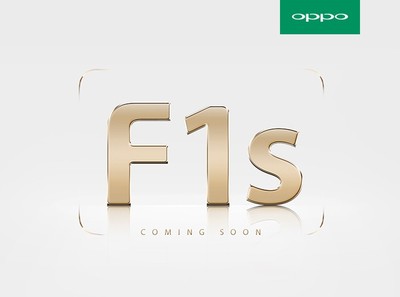
The company also noted just how popular the original F1 is in numerous markets, taking the $225-300 price bracket by storm. The OPPO F1s is set to arrive in August and we’ll hopefully have more details at hand as to exactly what’s new in the handset by that point.
Press Release
OPPO Announces F1s, Next-Level Successor to F1 “Selfie Expert”
Shenzhen, July 18, 2016 — Building on the strengths of its Selfie Expert F1, OPPO has announced a new successor to the device: the F1s. Set to arrive in August, the F1s will be one of OPPO’s core products for the second half of 2016, and will carry on the F1’s legacy of superb photography, sleek design and snappy performance, while adding new features and taking others to new heights.
At the beginning of the year, OPPO kicked off its photography-focused F series with the launch of the F1, which was positioned to give users the standout daily shooter they demanded at an amazing price. The success of the F1 helped propel OPPO to the highest year-on-year growth in Q1 of any of the top smartphone makers, growing shipments by 153.2%, according to IDC.
The device also occupied the top spot in the $225-$300 price range in India, Indonesia and Vietnam this May, grabbing the second spot in the category in Thailand and Malaysia.
“Global reception for the F1 has been incredible and users have given us a lot of great feedback, so we wanted to go one step further to bring them the ultimate experience. The upgraded F1s is going to be a huge hit,” said Sky Li, OPPO Vice President and Managing Director of International Mobile Business.
He also said that OPPO will continue to focus on perfecting and innovating smartphone photography going forward, with new breakthroughs on the horizon.
Google scrapped plans for own Oculus Rift VR headset
Google reportedly had plans to take on Oculus, HTC and PlayStation with its own high-end virtual reality headset. However, it was scrapped with the company said to prefer to continue down the mobile VR route instead.
Recode claims that Google is streamlining its projects, which include ditching the more ambitious plans for VR. It cites “sources familiar with the plans” for the information.
Scrapping the standalone headset came at some cost, claimed the sources, with around 50 employees originally working on it. Interestingly though, they were also working on a VR operating system separate to Android, it is said.
- What is Daydream and when is it coming? Google’s Android VR platform explained
- Best VR headsets to buy in 2016, whatever your budget
The VR unit still remains, but it is likely to be working full time on Daydream now, Google’s unified mobile virtual reality technology.
We’re still waiting for the virtual reality tech market to kick on like many predicted at the beginning of 2016. Pricing and initial shipping delays for both Oculus Rift and HTC Vive have ensured that take up of those headsets has been steady rather than explosive. However, the PlayStation VR headset is yet to be released, with units hitting stores in October.
It is thought its price and, more importantly, its compatibility with PS4 consoles millions already own globally could see VR gain momentum.
Softbank buys mobile chip designer ARM for $32 billion
Japan’s Softbank, which owns US carrier Sprint and many other firms, is set to buy mobile chip company ARM in a blockbuster £24.3 billion ($32 billion) deal. The UK company designs the processors used in virtually every mobile device, including most models from Apple, Samsung and HTC. While it doesn’t build them itself, it licenses the tech to Qualcomm, MediaTek, Samsung and others. If the deal goes through, it would be one of the largest acquisitions of a European tech firm ever, and a vote of confidence by Softbank in ARM’s business in post-Brexit UK.
Softbank has been freeing up cash lately through a variety of deals. It recently sold Clash of Clans maker Supercell to Tencent for a reported $8.6 billion, and cashed in $10 billion worth of shares in the Chinese retail giant Alibaba. The company owns US carrier Sprint, 28 percent of China’s Alibaba and the Japanese divisions of Yahoo and Vodafone. All told, it has participated in 140 deals worth over $82 billion in the last 10 years, according to the Financial Times.

Standalone VR headsets powered by ARM chips may flood the market over the next year.
ARM is a hugely important UK tech company, as over 15 million chips using its technology shipped last year. It became a tempting acquisition target following the UK “Brexit” vote to separate from Europe. That, in part, caused the UK pound to plummet 28 percent against the Japanese yen, effectively making the company cheaper. ARM is considered to be shielded from any potential Brexit fallout in the UK market, since it has customers around the world. However, there’s some concern that top UK engineers may flee to Europe and elsewhere once Britain’s EU divorce is finalized.
ARM was assured by Softbank that it would stay independent and keep its UK headquarters in Cambridge. The Japanese firm says it will also invest considerable sums into the business, “including doubling the UK headcount over the next five years.” It will also add employees outside of Britain. The deal would be an “all cash acquisition,” but is still subject to a number of conditions before it’s finalized.
Intel has often been seen as a suitor for ARM, but it’s now clear the purchase price may have been too rich for it to stomach. While ARM designs most of the chips used in mobile devices, it only had revenue of around $1 billion in 2015, and the purchased price is reportedly 70 times its net income. However, ARM has diversified from mobile and sells chips used in the “internet of things,” servers and network equipment and now, virtual reality.
Samsung is buying a stake in a Chinese car maker
Now that the smartphone market is cooling off, Samsung needs another way to keep raking in cash… and it’s going in an unusual direction to make that happen. The tech giant is buying a stake in Chinese automaker BYD that, at least at first, will help boost the two companies’ businesses in parts for electric cars and smartphones. What’s next may be more important, however. Samsung says that the two will talk about possible partnerships in “various businesses” — don’t be surprised if they work closely together.
Samsung has yet to reveal the size of the stake (BYD shot down rumors that it was 4 percent), so it’s not certain just how much of a commitment it’s making. Suffice it to say that the company stands to profit if everything goes to plan, though. The electric car market is quickly heating up, and Samsung could ride the bandwagon by supplying BYD with everything from batteries to processors. As it stands, Samsung might not want to sit on the sidelines when its big rival Apple is reportedly designing an EV of its own.
Source: Reuters
Galaxy S7 edge designed for the Olympics is now up for sale in the U.S.
Samsung designed a special variant of the Galaxy S7 edge to celebrate the 2016 Olympics in Rio, dubbed the Galaxy S7 edge Olympic Games Limited Edition. The manufacturer will be giving away the handset to all 12,500 athletes participating in the competition for free, and 2,016 units are being made available for sale in each of the following countries: the U.S., Brazil, China, South Korea, and Germany.
The phone retails for $849, and is set to go on sale at Best Buy later today. Who’s interested in picking one up?
See at Best Buy
Mercedes-Benz made a high-tech golf cart inspired by sports cars
File this one under the list of things to buy when you become stinkin’ rich. Mercedes-Benz has introduced a high-tech golf cart with the looks of a sports car, three years after it asked fans to submit ideas for a “golf cart of the future.” Now, don’t get too excited: it doesn’t have autonomous driving capabilities just yet. But the final product, designed by the automaker and its project partner (golf cart designer Garia), has a 10.1-inch tablet that displays its current speed and power consumption, as well as the vehicle’s controls.
You can tap on the screen to change driving modes (sport or eco) and to switch the headlights, heater, AC and wipers (among other parts of the cart) on or off. It also displays your vehicle’s position on a map of the golf course and gives you access to various programs like weather apps. Besides a tablet, the cart has integrated Hi-Fi Bluetooth speakers and, of course, a fridge.
Mercedes says it’s planning to add smartphone integration in the future, as well. For now, the companies are showing off their creation at the British Open and at various events in Denmark, Monaco and Germany in the coming months.

Source: Mercedes-Benz, A Real Sports Car
 AIVAnet