


AT&T starts selling the 8-inch Trek 2 HD tablet on August 5
AT&T has announced it will begin selling the 8-inch Trek 2 HD tablet on August 5, in its stores and online. The tablet will have Android 6.0 Marshmallow pre-installed.
Here are some of the other features that will be included with the AT&T Trek 2 HD tablet:
- Dual Front-facing Speakers: The tablet features Dolby Audio™ speakers that provide high quality sound.
- Battery Life: The AT&T Trek 2 HD contains a battery size of 4,600 mAh that provides up to 10.5 hours of usage.4
- Processor: Qualcomm Snapdragon 1.5Ghz Octa-core
- Internal Memory: Store images, videos and apps with 16 GB of internal storage,5 with the option for an additional 128 GB with a microSD card (sold separately).
- Camera: Capture brilliant photos & selfies with the tablet’s 5 megapixel rear and front-facing cameras.
Customers can purchase it for $0.99 with a two-year contract, or for $7.50 a month for 20 months. That usually means that it will have a no-contract price of $150.
Pokémon Go ‘tips’ that are total nonsense

Wanna know a sweet hack for leveling up faster? Go actually play the game.
Everyone’s looking for an edge in Pokémon Go. Maybe you don’t get to play as much as your friend, and that level and a half gain they have on you is sending that competitive itch you have into overdrive. Maybe your co-worker’s bike ride to work means they hatch eggs twice as fast as you because you drive. Maybe that little jerk at the end of your street has basically been playing nonstop because school is out and that makes it next to impossible to take and hold the local gym. Whatever the reason, we get it. Sometimes you need an edge, and the sudden popularity of Pokémon Go meant the internet was immediately filled with “hacks” to give you that edge.
We’ve been documenting these little hacks and testing them for ourselves. Some of them work. Surprise! Most of them are fake. To help you sort through these “tips” we’ve got everything that has been thoroughly debunked here, including an explanation for why people thought the trick worked int he first place.
No, Poké Balls cannot be recovered.
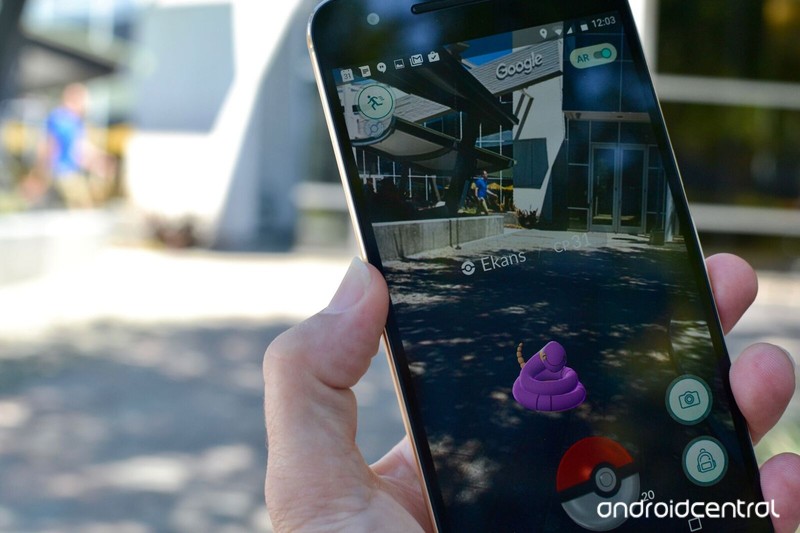
Yeah, this is going to start with a “tip” that was started right here on Android Central. The first week of Pokémon Go had a ton of server-side bugs, and that included delays in showing you how many Poke Balls you actually had left after a throw. When combined with a perfectly synced disappear animation and re-appear animation, it looked like you could tap on Poke Balls that didn’t hit their target and recover them.
Now that things have settled down a little, it’s clear this is not what has been happening in the game. There is no way to recover Poke Balls in the game, so don’t waste your time tapping behind that Porygon to and just get ready for your next throw. Maybe try a curveball throw this time?
Spinning your phone in circles is not hatching eggs faster.

You have to travel specific distances under specific speeds in Pokémon Go to hatch eggs, and players have been looking for shortcuts to this from day one. Some figured out that a skateboard or bicycle meant you could travel faster and hatch things quicker, but that’s not fast enough for everyone. People started trying all sorts of crazy things to get some extra kilometers in on those incubation meters, but all of them are crap. We know, we tested them with multiple phones on multiple carriers just to be sure.
Pokémon Go egg hatching works on a fairly simple formula. The app pings your GPS location once every 60 seconds, and measures the distance between each ping as the distance you’ve traveled. If that distance can be traveled under 15mph, that distance is added to your eggs as distance traveled. Every four minutes that information is added to your incubators.
How many steps your travel isn’t relevant, and if you’re walking circles around the same block over and over again you’ll find a lot of the distance you’re actually travelling isn’t being recorded because the GPS pings are only measuring in straight lines. Distance traveled is basically recorded “as the crow flies” because the game is only checking distance every 60 seconds.
To recap:
- Taping your phone to a ceiling fan will not make your eggs hatch.
- Shoving your phone between bike spokes will not make your eggs hatch faster.
- Leaving your phone on a Roomba while it cleans your house might help you hatch your eggs, but only if you have a really big house and the Roomba can reach from one end to the other.
But I’ve seen it work!
What you’re seeing when you go nowhere and traveled distance is still added to your incubators is GPS drift. When you see your character float around in the game while the GPS tries to lock down your actual position, there’s nothing the game can do to confirm whether that’s actual movement from you. As a result, GPS drift can count towards incubation movement. If your phone has a terrible GPS connection and you want to use that to your advantage, there’s nothing stopping you. Just stop taping your phone to your ceiling fan, that’s just asking for disaster.
Weather does not affect Pokémon spawns

Pokémon Go is not pulling data from weather services, and so cannot spawn Pokémon based on weather. As cool as it would be for Fire-type to spawn in greater capacity when it’s 103-degrees out, that’s not how the game functions right now.
Whether rain or snow or relentless Summer sun, the Pokémon that spawn around you are part of Niantic’s location-based system. This means you’ll find Water-type near water as it appears on your map, and an unhealthy amount of Rattata and Pidgey in the suburbs. There are some great tools available now to give you a better idea of where you can find what Pokémon in your area, so give this a shot instead.
Cemetaries do not have more Ghost-type Pokemon
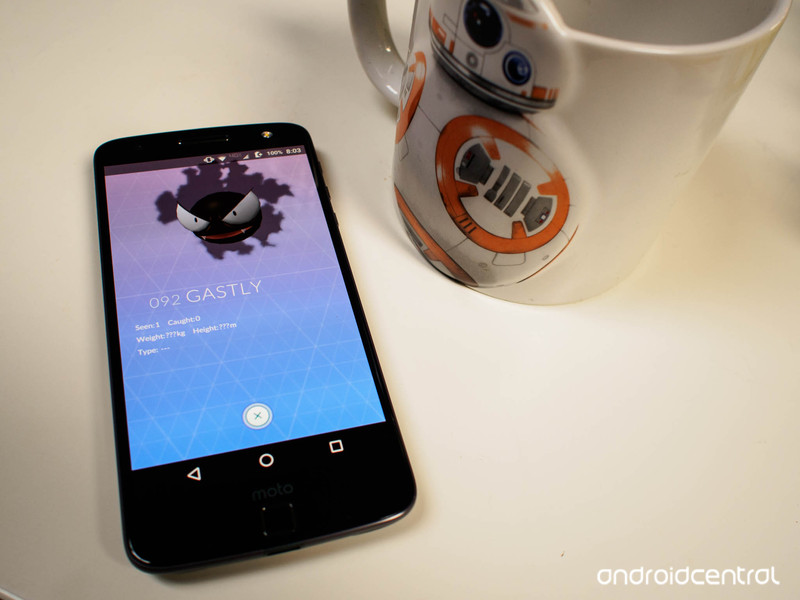
Don’t go looking for Pokémon in cemeteries, please. While this would make sense with the whole location-based thing, you will not find more Ghastly, Haunter, or Gengar in a cemetery. You may stumble across one or two during the day, but your best bet is to go looking for these and other Ghost-type Pokémon at night.
There are specific Pokémon that show up in greater volume after the sun goes down, so keep that in mind as you adventure!
There is only one way to control an Eevee evolution

In the regular Pokémon games, Eevee have many possible evolution paths and you have some control over those paths if you know the right combination of actions. In Pokémon Go, Eevee have an evenly random chance of evolving into the Fire-type Flareon, the Water-type Vaporeon, or the Lightning-type Jolteon after you tap the Evolve button on the screen. Rumors started saying you could control the evolution if you evolved based on attack type or at certain times of day or near specific locations, but none of that is true.
Currently, there’s only one way to control an Eevolution and it’s with an Easter Egg that hails back to the television series. If you change the nickname of your Eevee before you evolve it, you can control the kind of Pokémon it evolves into.
- For Jolteon, name your Eevee Sparky
- For Vaporeon, name your Eevee Rainer
- For Flareon, name your Eevee Pyro
This is guaranteed to work as long as you change the name before you hit the evolve button, so go have some fun!
We’ll be adding to this list as we discover and test these “hacks” that find their way onto the internet. If you have any you’d like to share, toss them in the comments!
Pokémon Go
- Join our Pokémon Go forums!
- How to deal with GPS errors in-game
- Which team should you choose?
- How to play without killing your battery
- The Ultimate Pokémon Go Game Guide!
- Listen to the Pokémon Go podcast!
ICYMI: NASA hunts for life hidden in an asteroid

Today on In Case You Missed It: NASA is planning a trip to get a sample of the large asteroid Bennu and see if any organic materials can be found on it. If you remember hypercolor t-shirts, you’ll want to know about an air pollution sensing shirt that changes color and patterns when carbon monoxide, radioactivity and particle pollutants are detected.
You’ll want to see this video from Japan showing a volcano’s eruption with a thunderstorm inside. As always, please share any interesting tech or science videos you find by using the #ICYMI hashtag on Twitter for @mskerryd.
Chinese satellite to test secure quantum communications
China is set to launch a satellite that could form part of an unassailable, worldwide communications network. The 600 kg (1,300 pound) QUESS craft, launching sometime in August, will perform the first ever quantum experiments in space. A special crystal onboard will generate pairs of “entangled” photons that will be fired at labs in China and Austria. Ground based teams will then perform tests to see if the photons remain bonded even when 1,200 km (700 miles) apart.
Quantum physics dictates that entangled particles are linked, so that if you change the property of one by measuring it, the other will instantly change, too. In theory, the particles stay linked even if they’re light-years apart, so quantum entanglement effectively defies Einstein’s principal that nothing can travel faster than light. Since there are still doubts that entanglement works over a long distance, the QUESS satellite team will do a so-called Bell test with entangled photons in China and Austria.
The same entanglement principal also helps cryptologists. Since measuring one entangled photon instantly changes the properties of the other, the photons can be used to create an encryption key. Any attempt to listen in by measuring a photon would instantly change the other, letting the two parties know that a breach has occurred.

Such effects have been demonstrated on the ground across a distance of 300 km (186 miles), but photons fired across fiber-optic cables or the air are eventually dispersed, making measurement impossible. The QUESS satellite, by contrast, will fire photons in clear space, theoretically increasing the test distances.
The team will run quantum experiments with the first satellite for about two years, but “if the first satellite goes well, China will definitely launch more,” physicist Chaoyang Lu tells Nature. He estimates that up to 20 satellites would be needed to generate a secure quantum communications network. Similar research is also being conducted by Canadian researchers who want to create entangled photons on Earth and fire them at tiny “cube sat” microsatellites. Italian researchers, meanwhile, plan to fire entangled photons off mirrors mounted on existing satellites.
The research may yield a completely secure, space-based “internet” within a decade. Quantum satellites could also join up to form a telescope with enormous resolving power that could “read license plates on Jupiter’s moon,” according to NASA physicist Paul Kwiat.
Source: Nature
Play Doom’s premium maps for free (if your friends bought them)
Id and Bethesda want to make sure that the action never stops in the new Doom’s multiplayer. That’s regardless of whether or not you’re buying the recently announced premium map pack, “Unto Evil.” With PartyPlay, so long as someone in your party has bought the add-on, everyone can keep playing together and vice versa.
It’s a very welcome measure of goodwill from the development team, and one that will likely pay off dividends. Bethesda and id aren’t the first to do this, of course — Crackdown and certain modes of Gears of War 3 included a similar feature as well — but it’s definitely a cordial addition to Doom.
This strikes a fan-friendly balance between giving away all of a game’s add-ons and splintering the player-base between DLC haves and have-nots. It also still allows a publisher to recoup costs after a game ships, so it will probably (hopefully?) become more common as time goes on. Where might we see it next? This fall’s Gears of War 4 on Xbox One.
Source: Bethesda
Reuters: FBI is investigating another Democratic Party hack
In addition to the hack of the Democratic National Convention, the FBI is investigating a second breach at the Democratic Congressional Campaign Committee (DCCC). Reuters reports that a “previously unreported incident” at the DCCC may have intended to nab donor information rather than to take money, according to sources. At this point, it’s unclear if any information was actually stolen or what details may have been accessed. When a donation is made though, the person typically submits their name, email address and credit card info. It also hasn’t been determined if any stolen details were used to access systems and sensitive information elsewhere.
If the DCCC doesn’t sound familiar, it’s a branch of the Democratic Party that raises funds for members who are running for seats in the US House or Representatives. The breach is said to have started as recently as last month. The DCCC has confirmed to Reuters the incident occurred and that it was similar in nature to the hack of the DNC. Reuters’ ources indicate that instead of being directed to a site that processes contributions, internet traffic was being directed to a fake website instead. What’s more, those sources say the IP address address of the site was similar to one used by hackers responsible for the DNC breach who are believed to have ties to the Russian government. The Kremlin has denied any involvement in the incident and subsequent release of DNC emails by WikiLeaks last weekend.
What’s more, the DNC and the DCCC share an office in Washington. The popular sentiment among Democrats is that Russia is hacking its systems to gain information that would sway the election in favor of the Republican nominee Donald Trump. Following the initial email dump, Trump urged Russia to find and release Hillary Clinton’s missing emails from her time as Secretary of State. Yesterday, the presidential candidate said that his remarks were meant to be sarcastic.
The FBI said earlier this week that it’s still working to determine the scope of the breach. Yesterday, Director of National Intelligence James Clapper said that the US government wasn’t ready to say who was responsible for the DNC email hack. He did explain that the last two election cycles saw cyber attacks of both President Obama’s campaign and those of his Republican opponents.
BREAKING: Dem. Congressional Campaign Cmte. confirms it has been target of a cyber-security incident, similar to DNC breach – Reuters
— CNBC Now (@CNBCnow) July 29, 2016
Source: Reuters
Apple’s negotiation tactics might be hurting its TV plans
We’re nearly a year into the era of the newest Apple TV, which packs plenty of power, access to apps and a reworked remote with Siri voice control. Despite the new hardware, rumors of a big Apple push into TV still haven’t turned into anything real. A report from the Wall Street Journal may help explain why by claiming negotiations with companies like Comcast and Time Warner Cable fell apart over things like how much the cable companies would pay Apple and how they would share customer information.
Attempts to bypass cable companies and negotiate directly with studios are said to have fallen apart in a similar fashion. The sides couldn’t work out which channels to include, if rates would increase annually the way they do with cable, or on implementing features customers want like a cloud DVR and the ability to skip ads. The studios are also leery of ceding too much control to Apple, aware of the influence it has gained in industries like music and books. Instead, Apple’s strategy — for now– seems to revolve around incremental improvements to the experience on Apple TV and picking up content like Carpool Karaoke to fill out its Apple Music package.

As I wrote in 2012 (when Apple television rumors were still a thing) despite the obvious reasons why Apple would want to be in the TV market, it has to deal with incumbents who are currently raking in massive amounts of money under the current setup. They have little incentive to make the special kinds of deals Apple wants so that it can control the customer experience to its liking. The only thing that may change that is if the business changes dramatically or regulations somehow force the industry into a new deal, and so far, neither has occurred.

At the moment, TV companies have dug into their positions deeper than ever. Dish is pushing Sling TV, AT&T purchased DirecTV and Hulu is… still trying. Comcast failed in an attempt to buy Time Warner Cable, launched a streaming TV service that it’s failed to expand beyond a couple of cities, and is pushing its next-gen X1 cable boxes. Time Warner’s HBO finally launched an internet-only version of its channel (that was initially exclusive to Apple products), while CBS has already signed up millions of customers for its apps — the list could go on and I haven’t even mentioned worldwide TV provider Netflix or Amazon Prime.
Apple CEO Tim Cook:
On the Apple TV question…you shouldn’t look at what’s there today and think we’ve done what we want to do. We’ve built a foundation that we can do something bigger off of.
It seems inevitable that someday, Apple will get to show and prove its vision for the future of TV. While the TV industry reacts to shrinking subscriber and sales numbers, Apple’s latest earnings report showed lower sales numbers that could make it more eager to strike a deal and CEO Tim Cook suggested on the earnings call that his company would do more with TV in the future. The only problem? We’ve heard that before, back in 2012, and with SVP Eddie Cue reportedly telling people “time is on my side” it’s hard to say who will blink first, if ever.
Source: Wall Street Journal
Twitter streams its first eSports tournament this weekend
Twitter is expanding beyond traditional stick-and-ball streams and moving into the lucrative eSports realm this weekend. As part of a partnership with Eleague and Turner Broadcasting, the microblogging service will air two days of Counter-Strike: Global Offensive play from Atlanta. The action starts today at 5pm Eastern with semi-finals. Eleague’s end-of-season championship play starts Saturday afternoon at 4 Eastern with two teams going head to head in a best-of-three series.
Of course, streams on Twitter or Twitch won’t replace this weekend’s traditional broadcast on the TBS cable network, but will serve as a different venue for a much different audience than TV. It’s a bit surprising that this will be the first time Twitter has streamed eSports, but hey, everyone has to start somewhere.
Source: Eleague
Sony’s ‘Driveclub VR’ is a PlayStation VR launch title
Sony will release a virtual reality version of Driveclub just in time for the launch of its upcoming PlayStation VR platform on October 13th. Driveclub VR will feature “brand new tracks” including a city track (pictured above) and let players view vehicles from multiple angles while they trade paint. Sony revealed the news in a blog post (which was subsequently pulled, so it was possibly published too early). Interestingly, other details were tweeted by Paul “Rushy” Rustchynsky, a developer for Codemasters.
@VG_Dave There is a collection of brand new tracks. Not sure I can comment on development yet – I’ll get back to you.
— Paul Rustchynsky (@Rushy33) July 29, 2016
The original Driveclub, from Sony’s first-party studio Evolution, had problems from the day it was launched, and the free PlayStation Plus version was about two years late. As a result, Sony decided to close Evolution, but the team behind it was quickly snapped up by F1 2016 developer Codemasters. Sony didn’t say which studio was behind the VR title (it’s listed as coming from Sony Interactive Entertainment), but on a NeoGAF forum, Rushy said that “the same development team who made Driveclub also made Driveclub VR.”
It’s still not clear whether the Driveclub VR is as big as the original game, or if it’s a smaller experience with a limited number of cars and tracks. Nevertheless, the fact that a triple-A racing game is coming to the PlayStation VR gives the platform an extra shot of legitimacy.
Source: Paul Rustchynsky (Twitter), Sony (Screengrab, translated)
WhatsApp Security Flaw Leaves ‘Trace of All Your Chats’ Even After Deletion
Popular third-party chat app WhatsApp is leaving a “forensic trace” of every supposedly deleted chat log, meaning anyone with access to your smartphone — or another device connected through the cloud — could potentially access data from the app. The discovery comes from iOS researcher Jonathan Zdziarski, who shared the information in a blog post after discovering the potential security flaw in the latest version of WhatsApp (via The Verge).
Zdziarski tested out his theory by beginning a few chat threads, then archiving, clearing, and deleting them, but found that none of the app’s deletion methods, even Clear All Chats, “made any difference in how deleted records were preserved.” The central flaw appeared to be in the app’s SQLite records, which retained the deleted chats in its database that could be accessed by a harmful individual with the right “popular forensics tools.”
In his post, Zdziarski mentioned that the problem isn’t unique to WhatsApp, and has even gone into detail about “forensic trace leakage” in Messages on iOS and OS X, and ways Apple could address such privacy issues, in a separate blog post. He explained succinctly that short-lived chats between friends and family using these apps are “not ephemeral on disk,” which not only could be a cause for concern with users, but could allow law enforcement legal access to thought-to-be-deleted WhatsApp messages thanks to the lack of encrypted communication between WhatsApp and iCloud.
The core issue here is that ephemeral communication is not ephemeral on disk. This is a problem that Apple has struggled with as well, which I’ve explained and made design recommendations recently in this blog post.
Apple’s iMessage has this problem and it’s just as bad, if not worse. Your SMS.db is stored in an iCloud backup, but copies of it also exist on your iPad, your desktop, and anywhere else you receive iMessages. Deleted content also suffers the same fate.
All the same, Zdziarski caps his post by mentioning there’s no reason for widespread panic to ignite because of the WhatsApp security flaw, mainly due to the fact that someone with malicious intent would need to jump through so many hoops to finally access the deleted messages. The iOS researcher stated that his purpose was for users to simply “be aware of WhatsApp’s footprint.” He also gives a few options for users looking to mitigate the issue, including periodically deleting WhatsApp “to flush out the database,” disabling iCloud backups, and avoiding the storage of backup passwords in Apple’s keychain.
Earlier in the year, Apple reiterated its intent to double down on user privacy and safety within its iCloud platform. Currently, encrypted data saved in iCloud is accessible by Apple with a key, which grants it access to accounts for assistive purposes, like if someone forgets their password. However, with the steadily growing data amassing in users’ iCloud accounts — from texts to pictures and personal health data — Apple is looking to provide end-to-end encryption in its cloud-based storage platform, meaning not even the company itself could gain access to the accounts of its users even if it wanted to.
Check out Zdziarski’s blog post for more details on the issue.
Tag: WhatsApp
Discuss this article in our forums
 AIVAnet