


Office 365 gets smarter with cloud-powered features
In case you couldn’t already tell, Microsoft is all about the cloud these days. Its cloud services were the highlight of its last earnings report, and now it’s bringing even more cloud intelligence to the Office 365 subscription productivity suite. That includes new features for Word, Outlook and PowerPoint that’ll make it easier for you to get work done.
Word
If you find yourself hopping between a web browser and your Word documents a lot, you’ll appreciate Researcher, a new feature that’ll let you dive into reliable sources right from Word. It uses the Bing Knowledge Graph to identify information related to your document (you can also specify what you’re looking for), and with a few clicks you can pull in quotes and other data into your files. Researcher will also properly cite where it’s getting that information from.
Another new feature, Editor, powers up Word 2016’s grammar proofing capabilities with the cloud. Microsoft says it’s using machine learning, natural language processing and its own linguistic expertise to polish you’re documents. Editor can suggest alternative phrasing when your language gets complicated, and it’ll also alert you of possible word confusion (like when you might mean affect instead of effect).
It’ll also get better over time, thanks to the cloud (and you can expect that to be true for all of the features mentioned today). Microsoft says an update this fall will add even more visual indicators to Word’s proofing alerts — grammar notifications will be highlighted with a blue double underline, while writing style alerts will get a gold dotted line.
Outlook

Microsoft is bringing features from the now defunct Accompli mobile email app into Outlook 2016 on the desktop. That includes Focused Inbox, which highlights the most important emails you’re getting, and “@mentions,” which lets you alert specific people that a message is important when they view it in Outlook. Focused Inbox is something that first showed up in the Outlook mobile app, which now includes elements of Accompli and the mobile calendar app Sunrise. The @mentions feature, which first appeared on Outlook on the web, automatically adds people to the “To:” field when you mention them, and you’ll also be able to filter messages that you’re mentioned in.
PowerPoint
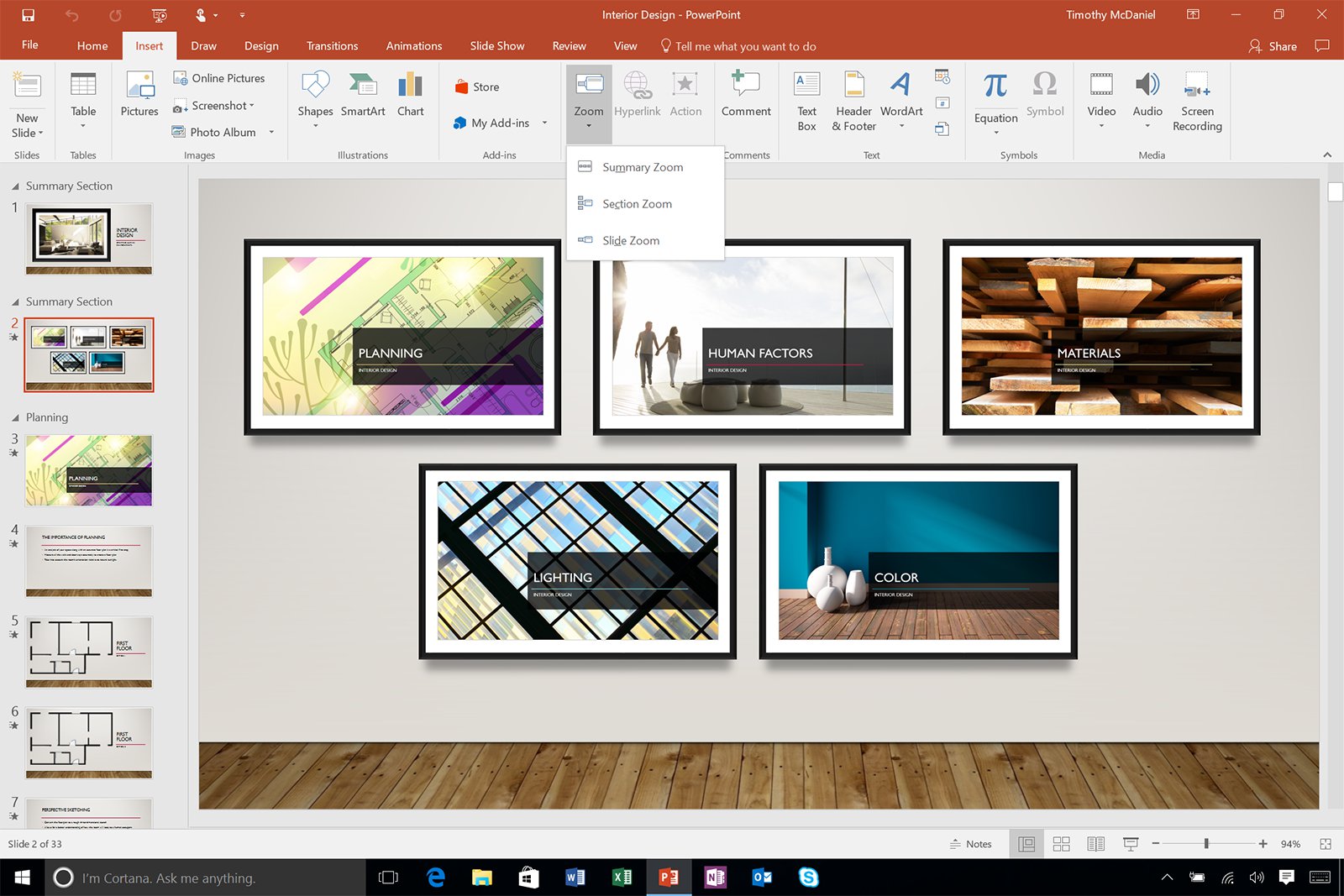
Finally, Microsoft is letting you create more flexible presentations in PowerPoint 2016 with a feature called Zoom. Instead of just stepping through slides in numerical order, Zoom lets you bounce around from a single summary slide, so you can tailor presentations to specific audiences. You can also create Zoom slides to step through sections of your presentation. The feature will be available to Office Insider users on desktops today.
Source: Microsoft
Android will now automatically send your location to 999 operators
When you call 999, operators need to know exactly where an emergency is before they can dispatch the required service. That information can be difficult to share if you’re in unfamiliar surroundings but a new update coming to Android will take all of the guesswork out of locating where you are. It’s called the Emergency Location Service and it uses available WiFi connections, GPS and mobile masts to pinpoint your location and share it with an operator while you’re speaking with them.
Google says that it isn’t in the business of collecting location data and that it’s new feature is “solely for the use of emergency service providers.” It is only sent when you make an emergency call, either directly to an operator or via your mobile network. The good news is that EE, BT, Three, Vodafone and O2 are all on board at launch.
Because the feature is enabled via a Google Play Services update, 99 percent of existing Android devices (Android 2.3 and up) are capable of supporting the Emergency Location Service. It’s already live in the UK and Estonia but Google says it is “actively engaging with more countries and operators” to make it available in new territories.
Source: Google Europe Blog
Microsoft Reveals New Authenticator App With Touch ID and Apple Watch Support
Microsoft recently announced an incoming update for its two-factor authenticator apps on iOS and Android, bringing a more robust suite of password authenticator abilities, along with a redesigned user interface, to each app (via The Verge). Set to launch on August 15, the update combines “the best parts” of the company’s previous authenticator apps into one service, letting users save data for both a Microsoft account (targeted at consumers) and an Azure AD account (targeted at enterprise users).
The update is planned to overhaul Microsoft’s existing, two-step verification iOS app, Azure Authenticator, while the Microsoft account app on Android will prompt users with a starting message to download the new app in the Android store. For iOS users, the company promised that any accounts saved in Azure Authenticator will be “automatically upgraded” into the new version of the app. Before the new update, the iOS app solely supported Azure AD accounts.
Also coming to Microsoft Authenticator is a new, “incredibly simple” user experience that the company promises maintains “the highest level of security” for all of the accounts linked to the app. There’s also a streamlined multi-factor authentication in the app’s one-click notifications, where users just click an “approve” button in the notification to finish an account’s login. In addition, fingerprint approval will be coming to the Microsoft Authenticator app for anyone who wants to bypass needing to type in a passcode.
On August 15th, we will start releasing the new “Microsoft Authenticator” apps in all mobile app stores. This new app combines the best parts of our previous authenticator apps into a new app which works with both Microsoft accounts and Azure AD accounts.
We’re just getting started on this new app! Now that we’ve finished consolidating into a single code base, we’re expecting to deliver new improvements at a very rapid pace.
In that same vein, Microsoft is making MFA challenges even easier to approve, thanks to Apple Watch support in the new update. The same “approve” button notification will appear on Apple’s wearable, letting users bypass needing to pick up their iPhone at all to finish up the authentication process. The company said that Samsung Gear devices will also be supported for those on Android.
Users on iOS can get ready for the incoming update by downloading Azure Authenticator for free from the iOS App Store. [Direct Link]
Tag: Microsoft
Discuss this article in our forums
New National Guidelines Could Halt Use of SMS for Two-Factor Authentication
The US National Institute for Standards and Technology has released a new draft of its Digital Authentication Guideline, which sets the rules that all authentication software eventually follows. In the document, NIST deprecates the implementation of SMS as a method with which users validate a second level of security on various accounts, “no longer” allowing its use in future guidelines as it is considered not secure enough (via TechCrunch).
Two-factor authentication via SMS (left) and an alternative trusted iOS device (right)
Setting up two-factor authentication through text messages is one of the most popular ways users add another layer of security onto an account, on top of a basic password, including those for Apple’s own software, like Apple ID and iCloud. Other than SMS, Apple allows users to implement two-factor authentication through a simple push notification sent to another “trusted device,” or a phone call.
If the out of band verification is to be made using a SMS message on a public mobile telephone network, the verifier SHALL verify that the pre-registered telephone number being used is actually associated with a mobile network and not with a VoIP (or other software-based) service. It then sends the SMS message to the pre-registered telephone number. Changing the pre-registered telephone number SHALL NOT be possible without two-factor authentication at the time of the change. OOB using SMS is deprecated, and will no longer be allowed in future releases of this guidance.
The new guidelines also make a point for companies to ensure that two-factor authentication notifications aren’t going through a VoIP service, which could be easily compromised. NIST also includes “limited use” of biometrics as a way for users to gain access to their second layer of authentication, meaning Apple could pivot to Touch ID as an alternative if SMS support for the security feature officially comes to an end.
Tag: Two-Factor Authentication
Discuss this article in our forums
Huawei P9 to make its debut in India on August 17
Huawei has sent out invitations to the media for an event on August 17, where the manufacturer is expected to launch the Huawei P9 in the country. We may also see the P9 Plus make its debut in the country.

Unveiled in April, the Huawei P9 offers a 5.2-inch Full HD display, Kirin 955 SoC with eight CPU cores (four Cortex A72 at 2.5GHz and four Cortex A53 at 1.8GHz), 3GB of RAM and 32GB storage or 4GB of RAM and 64GB storage, microSD slot, LTE, Wi-Fi ac, Bluetooth 4.1, and a 3000mAh battery. On the software front, there’s EMUI 4.1 atop Android 6.0.1 Marshmallow.
The highlight of the phone is a dual 12MP camera setup made in collaboration with German optics maker Leica. The phone also offers an 8MP front shooter.
We should know more about pricing and availability next month, but with the Galaxy Note 7 also slated to make its debut in August, Huawei will find it difficult to attract mainstream attention for its dual camera phone.
MORE: Huawei P9 review
BT ordered by Ofcom to make Openreach a legally separate company
BT has been handed a proposition by Ofcom to save breaking up with Openreach. The regulator has said BT could make Openreach become “a legally separate company” within the BT Group with its own board of directors. While these new positions would not be fulfilled by executives within BT, Engadget notes Ofcom would work with the company to select and remove appointments.

Ofcom also states that Clive Salley, Openreach’s CEO, should answer to the new board within the company, as opposed to anyone at BT. The reason Ofcom is suggesting a separation is due to concerns from service providers in the UK that Openreach is working in its parent company’s interests, something which it’s hoped this legal separation could help alleviate.
It’s believed a negotiation process will proceed, but with both Ofcom and BT standing firm on either side of the fence, it could take some time for an agreement to be met. As expected, BT wishes to instead make smaller changes to how things are ran, not wanting to separate itself from Openreach.
Update: BT has since issued a press release, revealing a plan to carry out Ofcom’s proposition and form an independent Openreach board of directors.
Openreach to be more independent and transparent
BT today confirmed it has volunteered significant governance changes to further increase the independence and transparency of its local network business Openreach. It believes these unprecedented changes, elements of which have been welcomed by Ofcom today, can form the basis for a fair, proportionate and sustainable regulatory settlement. They can also help Ofcom conclude its review and achieve its aims in a quicker timeframe.
The changes will enable BT to focus on its plans to further improve the UK’s digital infrastructure. The UK is already the leading digital economy in the G20 and BT will help it maintain that lead by investing a further six billion pounds in its fixed and mobile networks over the next three years. Capital expenditure has risen by more than thirty per cent at Openreach over the past two years and will rise again this year as the business focuses on delivering better service, broader coverage and faster speeds.
The main governance changes include: the creation of an Openreach Board with an independent Chair and a majority of independent members; the greater delegation of strategic, operational and budgetary responsibilities; and an enhanced consultation process with industry on future investment plans.
BT believes the re-organisation of Openreach addresses the concerns relating to governance set out by the Culture, Media and Sport select committee which last week requested that BT “allows Openreach much more autonomy over what it invests, when and where”. The changes also meet all of the objectives Ofcom outlined for the strengthened independence of Openreach in February1.
“More independent governance, with a responsibility to serve all customers equally”. BT will establish an Openreach Board as a board committee of BT plc, BT’s main operating company. It will have a majority of independent members, including the Chair, all to be appointed in consultation with Ofcom. The Board will be accountable for Openreach’s strategy and operational delivery. The Openreach CEO will be accountable to this Board and will report into the BT Group Chief Executive.
An obligation for Openreach to serve all its customers equally will be included in the Articles of Association of BT plc. This will supplement the legal obligations set out in the current regulatory Undertakings and strengthen Openreach’s purpose to serve all of its customers equally.
“Increasing Openreach’s autonomy over budget and decision making”.Openreach and its Board will enjoy a high level of autonomy. Openreach will produce Annual Operating and Medium Term Plans setting out its budgetary, strategic and operational objectives. The Openreach Board and CEO will also control how they deploy capital, within the overall budget agreed with the BT Board. This is in keeping with its wider corporate responsibilities and its legal duties as a public company
“Improving Openreach’s approach to consultation with customers”. A formal three stage process will be introduced whereby industry will be consulted in advance on substantial investment decisions and the development of new products. This process will include an early stage during which Openreach can engage with its communications provider customers on a confidential basis.
“Enhancing Openreach’s operational capacity”. Openreach will have access to sufficient capabilities and resources to make its own decisions and run its own operations.
Gavin Patterson, BT Group Chief Executive, said: “The UK is the most digitally advanced nation in the G20 and further investment is required if it is to keep and extend that lead. That’s why we are poised to invest a further six billion pounds in our UK networks over the next three years”.
“We have listened to Ofcom and industry and are introducing significant changes to meet their concerns. These changes will make Openreach more independent and transparent than it is today, something both Ofcom and industry have requested.
“Openreach is committed to delivering better service, broader coverage and faster speeds and these changes will enable it to do just that. Our proposals can form the basis for a fair and sustainable regulatory settlement and we believe they can also enable Ofcom to bring its Review to a speedier conclusion.”
BT’s re-organisation of Openreach will provide all the benefits that Ofcom is seeking while avoiding the extensive, disproportionate costs that would be incurred if assets had to be transferred into a newly incorporated subsidiary company. It will also ensure that Openreach continues to benefit from being part of the larger BT Group, which helps to reduce the risk it faces when investing in new products.
Openreach will remain a heavily regulated business with Ofcom determining the prices for more than ninety per cent of its products. It will continue to be overseen by Ofcom which already has powers to ensure that Openreach serves all of its customers on an equal basis, supporting what is an intensely competitive retail market. BT’s governance changes will serve to supplement and reinforce this existing regulation.
Patterson added: “Proportionality has to underpin any regulatory solution and we believe our proposals are a bold and appropriate response to the concerns outlined by Ofcom and others. We have considered the more extreme solutions proposed by others but they would be overly complex, disproportionately costly and time consuming to implement. They would also undermine Openreach’s ability to invest and create years of uncertainty.”
BT has discussed its governance changes at length with Ofcom over many months. It formally notified them on 19 July, stating that it intends to implement them within six months, subject to Ofcom agreeing to vary the existing Undertakings. It is calling on Ofcom to support these proposals as the best way forward for the country and as the foundation for the competition and investment in digital networks that the UK needs.
Sony Xperia XA Ultra comes to India for ₹29,990
Sony’s 6-inch Xperia XA Ultra has made its debut in India for ₹29,990, with the phone available for purchase starting July 27. The handset is powered by a MediaTek Helio P10 SoC, and offers 3GB of RAM along with 16GB of internal storage and a microSD slot.

The front of the Xperia XA Ultra is dominated by a 6-inch Full HD display and a 16MP shooter, and at the back you’ll find a 21.5MP camera with an Exmos RS sensor. There’s NFC, Bluetooth 4.1, Wi-Fi 802.11 a/b/g/n, and Android 6.0 Marshmallow. You also get a three-month subscription to Sony LIV and Hungama Play, as well as Kindle e-books valued at ₹1,000.
The Xperia XA Ultra will be available in white, black, and lime gold at all Sony retail stores as well as Croma and Reliance Digital starting July 27. Anyone interested in picking it up?
MORE: Xperia XA Ultra hands-on
How to fix “Snapchat login temporarily failed” error on Android

How do I fix login temporarily failed on Snapchat?
Unfortunately for users on Android devices, Snapchat has a habit of not always logging people into their accounts. While trying to open the app, some users have come across a message that reads:
“Oh no! Your login temporarily failed, so please try again later. If your login continues to fail, please visit https://support.snapchat.com/a/failed-login :)”
Snapchat has stated that Snapchatters using a rooted Android device may encounter this message more than others. While this is frustrating, there are a couple of other reasons this message could be appearing on your phone screen. Snapchat recommends three things to try if your login isn’t working:
Make sure you’re using the official Snapchat app from the Google Play Store on your Android device.
Double check that your system clock and date is correct.
Confirm that you have a valid Google Account on your Android device.
Once you verify that you have a valid Google Account, you can manually sync your account to your phone to make sure your Google Account is working.
How to sync and verify your Google Account on your Android phone
Launch Settings from your home screen, the Notification Shade, or the app drawer.
Tap Accounts. You may have to scroll a bit to find it.
Tap Add account.

Tap Google.
Enter your email.
Tap Next.

Enter your password.
Tap Next
Tap Accept in the lower right corner.

Tap Next in the lower right corner.
Tap a payment information option.
Tap continue in the lower right corner.

Tap Google.
Tap the more button; it’s the three vertical dots in the upper right corner.
Tap Sync now.

If your Google account isn’t valid, you may see a Sync Error message appear.
What do you think?
Is there a way you’ve tried that helps get rid of Snapchat’s error message on your Android phone? Let us know what other techniques have worked for you and which ones haven’t.
Pokémon Go just crossed 50 Million downloads in Google Play
No one could have predicted this result 20 days after launch.
Google’s Play Store listing for Pokémon Go changed this morning, revealing the game had just crossed the 50 Million downloads mark only 20 days after the game’s limited release in a couple of countries. Since that day, Niantic has slowly made Pokémon Go available to more countries as it scrambled to increase server capacity to handle the explosive popularity of the game. At the time of this writing, Pokémon Go is still not available worldwide but it’s quite close. This week will likely see the end of this slow global rollout, meaning more bursts of users are on the way.
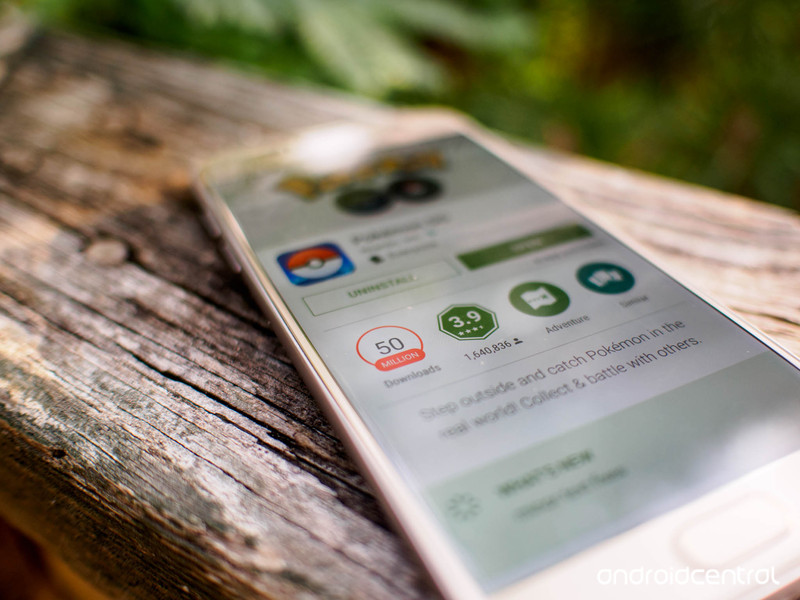
To put this install base into context, Pokémon Go now has more installs than Google Fit, Google Inbox, and the Google Cast app. It’s on track to pass Instagram on Android at this rate, and has not yet been in existence publicly for an entire month yet. It just goes to show that if you work hard and keep a brand alive and interactive for 20 years, you too can create a cultural phenomenon that sweeps the globe.
Pokémon Go
- Join our Pokémon Go forums!
- How to deal with GPS errors in-game
- Which team should you choose?
- How to play without killing your battery
- The Ultimate Pokémon Go Game Guide!
- Listen to the Pokémon Go podcast!
Verizon took $30 billion in revenue, added 615,000 postpaid additions in Q2 2016
Verzion has published the U.S. carrier’s results for Q2 2016, noting total revenues of $30.5 billion for the quarter. The company also recently finalized its acquisition of Yahoo, which will sit comfortably alongside AOL. Operating income for Q2 was $4.6 billion and the carrier announced 615,000 new postpaid net additions. Verizon now has 113 million retail connections, up just over 3% from last year.

Some highlights from the financial report:
- The composition of the 615,000 retail postpaid net adds was strong: Verizon added 462,000 4G smartphones to its postpaid base in second-quarter 2016. Net phone additions increased sequentially to 86,000, as the net gain in 4G phones was offset by a net decline in basic and 3G phones. Tablet net adds totaled 356,000 in the quarter. Net prepaid devices declined by 30,000, a significant improvement sequentially and year over year, primarily due to new prepaid pricing plans.
- The composition of the 615,000 retail postpaid net adds was strong: Verizon added 462,000 4G smartphones to its postpaid base in second-quarter 2016. Net phone additions increased sequentially to 86,000, as the net gain in 4G phones was offset by a net decline in basic and 3G phones. Tablet net adds totaled 356,000 in the quarter. Net prepaid devices declined by 30,000, a significant improvement sequentially and year over year, primarily due to new prepaid pricing plans.
- Verizon ended second-quarter 2016 with a total of 74.6 million smartphone connections. This is about 86 percent of the total phone base, with 4G devices at 82.5 percent of the retail postpaid connections base.
- Growth in 4G device adoption continues to drive increased data and video usage. Approximately 93 percent of Verizon’s total data traffic is on the LTE network. Overall data traffic on LTE has increased by about 44 percent year over year.
Aside from the slight dip in revenue compared to Q2 2015, this quarter just passed looked like a solid one for the company and we’re interested to see how Yahoo will help bolster future reports.
 AIVAnet