


First impressions: Android apps on the Acer Chromebook R11
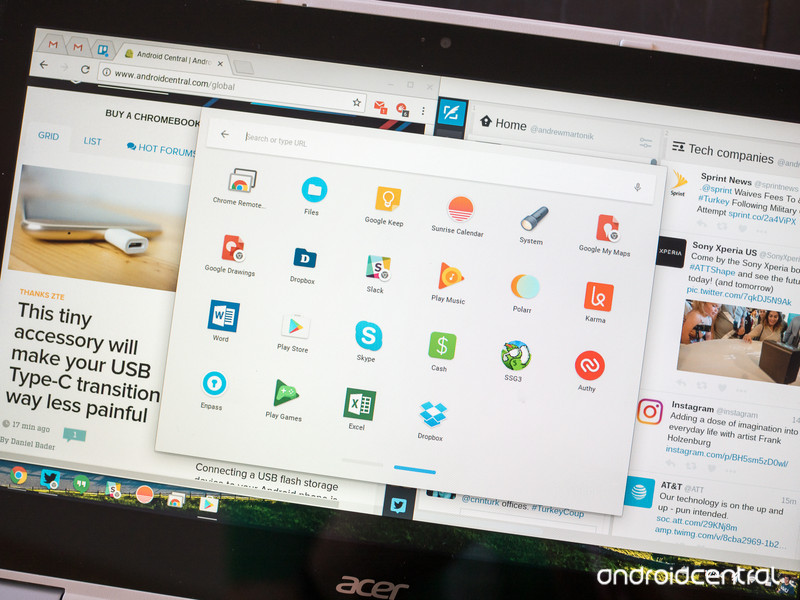
Keeping everything in perspective, this is a great glimpse into the future.
After watching Phil and Jerry have fun getting acquainted with Android apps on their ASUS Chromebook Flips, I finally had my opportunity to give the new and exciting setup a try on the Acer Chromebook R11. After previously relying on my demo experiences from Google I/O this year, I was excited to get started with it.
What I found was generally a mixed bag when it comes to usability, built on a base of great potential for the future. Here’s how it all works in the real world.
Smooth, simple and integrated — the Chrome OS way
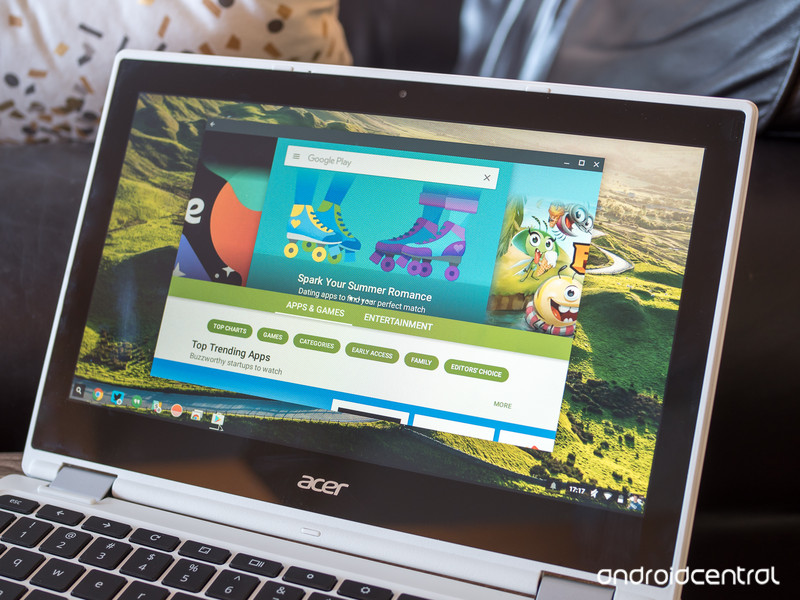
I absolutely have to applaud Google for how simple it all is. When I flipped my Chromebook R11 over to the Dev Channel and rebooted I had the Play Store loaded up and ready to go in seconds. The Play Store is completely familiar to anyone who’s used an Android phone before, but also feels at home here to an entirely new user. You can click around just fine, find apps and download the ones you like.
Google has built a fantastic base for Android apps.
Apps are perfectly integrated into the system as well, which is the next big part of the experience. Android apps are just regular icons in the Chrome OS app list. Notifications land in the notification area alongside Chrome OS notifications, and apps that need access to parts of your Google account can do so seamlessly. It’s clear to me that Google has done this the right way. The framework and system are properly implemented. This is the perfect structure of a seamless integration of Android apps into Chrome OS as just general “apps” going forward.
Right now, the issues are entirely with the actual user experience surrounding the apps. Let’s talk about the rough edges.
The experience isn’t all there yet
Android apps, as they currently exist in the Play Store, are in no way designed to be used on a laptop form factor with a keyboard and mouse. That’s just plain and simple, and no fault of the developers — they haven’t had a reason to make their apps for this style of device.
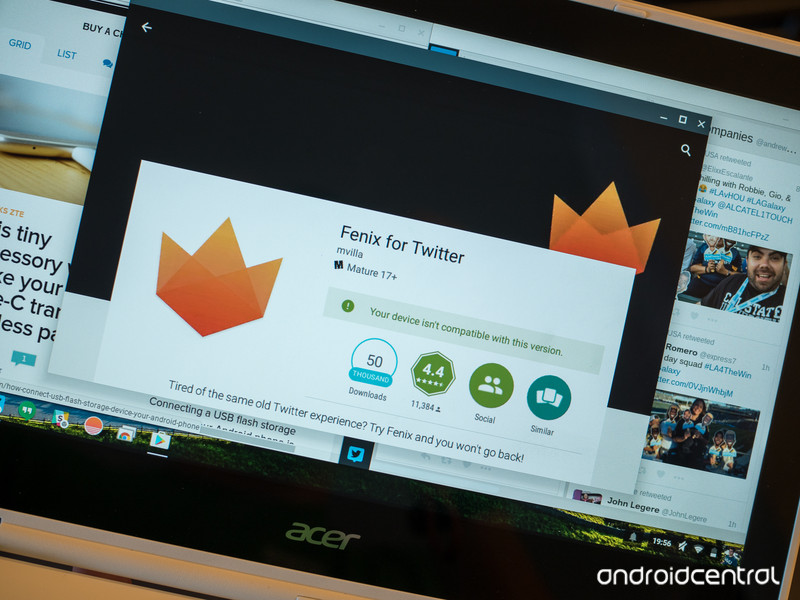
Android apps run and display just fine, but a vast majority can’t be resized — they’re stuck in a fixed-size landscape or portrait window, or in a full-screen mode. The apps often aren’t ready for keyboard input, so arrow keys don’t navigate text fields and you can’t use the enter key to submit a form. Apps of course rely on the “hamburger” and “overflow” buttons, which aren’t intuitive or easy to use on a non-touch device. That’s for the apps that are actually “compatible” with Chromebooks, which at this point feels like more of a simple majority of the Play Store than anything else. Even fewer should be marked as “compatible” it seems — there are lots of crashes here, too.
Android apps are neat, but the web still works really well.
Beyond that, it’s already clear that you don’t need to install an Android app for every kind of task on a Chromebook. As it turns out, the web running in a full-blown browser like Chrome is still a really great way to get things done, even with fully functional apps available. Gmail, Facebook, Slack, Google Docs/Sheets/Slides, Hangouts, Google Maps, Twitter … they all work pretty darn well on the web, and right now the apps don’t offer a better experience. Sure there are apps like Skype, Microsoft Word and casual games that perform well as Android apps in ways that web apps can’t; but others that you’d think would be great — like Google Calendar — are hamstrung by the Chromebook’s security paradigm that only lets you use it with a single Google Account.
Flipping the Chromebook R11 around into a “tablet” mode makes things quite a bit better, of course, as now you’re just dealing with the same kind of full-screen touch-only app experience as you’d expect on an Android tablet and the interface paradigm doesn’t create any problems. But then, of course, you’re wielding a 2-pound tablet that’s not really that comfortable to hold or use for a long period of time. Of course this opens up tons of possibilities for future convertible 2-in-1 devices that resemble a traditional tablet and can be “docked” into a keyboard … and indications are that those types of devices could be coming as soon as Android apps on Chrome OS roll out to the mainstream.
So for all of the potential I can see in Android apps on Chromebooks, and the proper groundwork that has been installed, I acknowledge we’re still quite a ways away from Android apps being the new go-to standard for getting things done on this platform. There’s so much left to do — and that’s why we’re here in Dev Channel watching it all be built before our eyes.
More thoughts to come
We’re just hitting the tip of the iceberg when it comes to using Android apps on Chromebooks, as you can see. With things still in the Dev Channel and just a few Chromebooks being supported at this point, we have a long runway to figure this all out and see how it comes together.
If you’re interested in learning more about the Chromebook R11 itself, sans Android apps and the Dev Channel, we’ll be bringing you a proper review of it soon!
Sony’s next flagship may sport a dual-LED flash, USB-C port
New photos of what appear to be Sony’s next smartphone have leaked out. The phone, under the model number F8331 or F8332, appears to sport a dual-LED flash for its rear camera, along with a USB-C port for charging and wired data transfer.
The photos first popped up on GSMArena (via XperiaBlog):


The F833X line will reportedly launch later this year. The phone is said to feature a 1080p display, along with 4K video recording for both its front and rear cameras.
Charging your Nexus on the go with the Monoprice 10,000 mAh USB-C battery

Nexus fans deserve a battery pack made just for them, too.
External battery packs that support Qualcomm’s Quick Charge 2.0 or 3.0 standards are quite easy to find, but when you’re looking for one that can do 5V/3A output for the latest Nexus phones’ “Rapid Charging” your options are … limited. Monoprice is well known for its accessories of all kinds, and amongst its stable of Select Series external batteries it offers a USB-C version perfectly targeted at the Nexus 6P and 5X users out there.
It’s a very standard 10,000 mAh battery pack that will give you all the capacity you need, but it has the added bonus of being charged by a USB-C port that also pulls double duty as an output at Nexus Rapid Charging speeds. How does it work in the real world? I’ve been using it for a couple of weeks, and here’s what I’ve found.
Design and build
Monoprice has gone with a long-and-skinny style of design that tapers off to the sides like a pillow, which is pretty standard for batteries of this capacity and makes it easy to slip in a bag (or a pocket, if you really want to). It’s covered primarily in hard and slightly textured black plastic, with a streak of fingerprint-attracting glossy plastic highlighting the Monoprice logo, power button and capacity indicating LEDs.
It’s a very standard design, with little flair — but there’s nothing wrong with that.
On the business end you’ll find a single USB-C port for both input and output, as well as a standard USB-A port as a secondary output. The USB-C port can output 5V/3A of power, while the USB-A is limited to 5V/2.4A. You get a small and simple USB-A to -C cable in the box for charging, but it charges up just fine with any other USB-C cable you have. This would normally be a bit of a downside for many people who would prefer to charge it with the more ubiquitous (at this point) Micro-USB port, but as this battery perfectly targets new Nexus owners, you’re going to have USB-C cables on you already.
I’m slightly disappointed by the plastic-on-plastic build after being spoiled by some batteries that sport sturdier metal enclosures, but it gets the job done and this thing is very clearly assembled well. And considering the very affordable price — about $30 — it’s hard to get too upset about the build. This is just an external battery, after all. It’s a tool, not a fashion statement.
Charging speeds and value

As anyone who’s used an external battery pack before knows, these batteries aren’t going to perfectly match the charging speeds of a wall charger, despite what it says on the box. Not only can voltages fluctuate when pulling from a battery to charge another battery, but in the case of a portable battery you’re often using the phone at the same time which makes it seem less effective as well.
There’s no Qualcomm Quick Charge, but Nexus users don’t care about that.
That truism extends to the Select Series 10,000 mAh USB-C battery, where it purports to offer 5V/3A charging — just like the charger in the Nexus 6P’s box. While it indeed triggers the “Rapid Charging” message on my Nexus 6P and 5X, the charging speeds are just a bit slower than what I can get from their included USB-C wall chargers. At full power the Monoprice Select Series battery charged my Nexus 6P at the nominal rate of about 1% per minute in testing, but over the course of a longer charge cycle, like adding 50% to the battery, power fluctuated enough to take longer than 50 minutes.
Even with that being the case, this battery offers faster charging speeds for the latest Nexus phones than the other external batteries out there that top out at 5V/2.4A (or more likely 5V/2.1A). The trade-off is not having Quick Charge 3.0 support for other devices — though you can always fall back to the 5V/2.4A port for a slower, steady charge of non-USB-C devices. (And yes, you can use both ports at once.)
If you’re using a Nexus 6P or Nexus 5X as your daily phone, and you need a big battery specifically for it, this is one to check out. Very few batteries out there will offer these Rapid Charging speeds, and the rest of the battery hits the usual requirements for this type of accessory. And at $30, it won’t set you back much either.
See at Amazon
See at Monoprice
Nexus 6P
- Nexus 6P review
- 5 things to know about the Nexus 6P
- Read the latest Nexus 6P news
- Learn about Project Fi
- Join our Nexus 6P forums
- Nexus 6P specs
Google Store
Huawei
Best Buy
Bell Media to broadcast new Star Trek series in Canada
While the new Star Trek series from CBS will stream on the company’s All Access service in the U.S. and Netflix in most of the rest of the world, Bell Media will be the official exclusive distributor of the series in Canada. Bell will have the right to show the series both online and on television.
Bell says that the show will launch on CTV in Canada on the same night as the U.S. premiere, with subsequent episodes broadcasting initially on the Bell-owned Space network in English, and Z in French. The episodes will then be available exclusively on Bell’s CraveTV streaming service.
In addition to the new Star Trek series, Bell has also acquired the rights to the past episodes of every other Star Trek series.
Press release:
New CBS STAR TREK Television Series to Live Long and Prosper in Canada with Bell Media
– Bell Media lands exclusive rights in Canada –
– Each episode of the new STAR TREK to be available in Canada day and date with the U.S. –
– Bell Media also licenses all 727 episodes of the STAR TREK television library –
LOS ANGELES and TORONTO, July 18, 2016 /CNW/ – CBS Studios International and Bell Media today announced a licensing agreement for the new STAR TREK television series in Canada. With Bell Media’s acquisition of the exclusive linear television and subscription video on demand (SVOD) rights in English and French in Canada, each episode of the new STAR TREK series will be available simultaneously with its release in the U.S.
Bell Media has also licensed all 727 existing episodes of the STAR TREK television library – which includes STAR TREK: THE ORIGINAL SERIES, STAR TREK: THE NEXT GENERATION, STAR TREK: DEEP SPACE NINE, STAR TREK: VOYAGER, and STAR TREK: ENTERPRISE.
The rollout for the new STAR TREK series in Canada will mirror the launch in the U.S. The first episode will premiere on Canada’s most watched broadcast network, CTV, on the same night as CBS. All remaining episodes will initially be televised on Bell Media’s cable networks, Space (in English) and Z (in French), and then later exclusively on CraveTV™, Bell Media’s streaming video-on-demand service.
The STAR TREK television library will return to Space (in English) and debut on Cinépop (in French), and will also be found among CraveTV’s leading lineup of premium television series.
The all-new STAR TREK will begin production in Toronto this September for its January 2017 premiere. The iconic and influential global franchise will return to television for the first time since 2005 with a new ship, new characters and new missions, while embracing the same ideology and hope for the future that inspired a generation.
“We are extremely pleased to significantly expand our partnership with Bell,” said Armando Nuñez, President and CEO, CBS Studios International. “Canadian fans will now be able to ‘beam up’ CBS’s highly anticipated new series, as well as all past episodes of the show’s vast library. Bell Media’s premium linear and digital platforms will be a great home for our new series, as STAR TREK celebrates its 50th anniversary.”
“Our acquisition of the new STAR TREK series delivers a unique and exclusive opportunity for Canadian advertisers to engage with this blockbuster new drama in a meaningful way,” said Mary Ann Turcke, President, Bell Media. “We are delighted to welcome STAR TREK back to Bell Media and amplify this iconic franchise through our multiple leading brands. With a high-profile premiere on CTV, a permanent base on Space – the long-time home of the series in Canada – and premium positioning on CraveTV – it’s ‘mission accomplished’ for Canadian STAR TREK fans.”
In the U.S., the new STAR TREK will launch with a special premiere episode on the CBS Television Network in January 2017. The premiere episode and all subsequent episodes will then be available in the United States exclusively on CBS All Access, the Network’s digital subscription video on demand and live streaming service.
As previously announced, the new STAR TREK marks the first original series developed for U.S. distribution on CBS All Access, which provides American viewers thousands of episodes of CBS’s current and past seasons on demand, plus the ability to stream their local CBS Television station live for $5.99 per month.
Alex Kurtzman and Bryan Fuller are co-creators and executive producers for the new STAR TREK, based on Gene Roddenberry’s original series. Fuller launched his career writing for Star Trek: Deep Space Nine and Star Trek: Voyager. Kurtzman is co-writer and producer of the blockbuster films Star Trek and Star Trek Into Darkness.
The series is produced by CBS Television Studios in association with Kurtzman’s Secret Hideout, Fuller’s Living Dead Guy Productions, and Roddenberry Entertainment. Alex Kurtzman, Bryan Fuller, Heather Kadin, Gretchen Berg & Aaron Harberts, Rod Roddenberry, and Trevor Roth will serve as executive producers.
About CBS Studios International:
CBS Studios International is the leading supplier of programming to the international television marketplace, licensing to more than 200 markets in more than 30 languages across multiple media platforms. The Studio participates in international channel ventures, currently comprised of 18 channels in 24 languages across more than 100 territories, reaching more than 70 million households worldwide. CBS Studios International also exports a diverse lineup of formats for local production around the world. The division distributes content from CBS Television Studios, CBS Television Distribution, Showtime, CBS News, CBS Films and a library of more than 70,000 hours of programming. CBS Studios International is a division of CBS Corporation.
About Bell Media:
With passion and an unrelenting commitment to excellence, Bell Media creates content and builds brands that entertain, inform, engage, and inspire audiences through the platforms of their choice. Bell Media is Canada’s premier multimedia company with leading assets in television, radio, out-of-home advertising, and digital media. Bell Media owns 30 local television stations led by CTV, Canada’s #1 television network; 34 specialty channels, including TSN and RDS, Canada’s most-watched specialty channels in English and French; and four pay TV services, including The Movie Network and Super Écran. Bell Media is also Canada’s largest radio broadcaster, with 106 licensed radio stations in 54 markets across Canada. Bell Media owns Astral Out of Home, one of Canada’s most dynamic and innovative out-of-home advertising companies with a network of more than 30,000 advertising faces in British Columbia, Alberta, Ontario, Québec, and Nova Scotia. Bell Media also operates more than 200 websites; delivers TV Everywhere with premium subscription on-demand streaming service CraveTV, as well as its innovative GO video streaming services including CTV GO, Discovery GO, TMN GO, and TSN GO; operates multi-channel network Much Digital Studios; holds an equity stake in digital startup Hubub; is partners in Cirque du Soleil Media, a joint venture with Cirque du Soleil; and owns Dome Productions Inc., a multi-platform production company. Bell Media is part of BCE Inc. (TSX, NYSE: BCE), Canada’s largest communications company. For more on Bell Media, please visit www.bellmedia.ca.
Where next for mid-range Android phones?

Tomorrow’s mid-range looks a lot like yesterday’s high-end, as phones around the $300-400 mark are set to become really good.
It wasn’t long ago that in order to get an Android phone worth bothering with, you had to pay top dollar. But in the past 12 months, with phones like the Moto X Pure and OnePlus 3 proving that a relatively affordable handset can be really good.
It’s a trend that’s sure to continue towards the end of 2016, as evidenced by the arrival of new “premium” mid-rangers like the Huawei-built Honor 8 abd Alcatel Idol 4s.
So where next for Android phones that don’t cost an arm and a leg? Here are a few things to watch out for in the year ahead.
1. Glass and metal

In years past, the mid-range Android space has been awash with generic plastic slabs. However the focus on build quality witnessed at the high end has started to trickle down to the mid-range. And the result is more mid-level phones that looks and feel great.
The OnePlus 3, a $400 phone, boasts a metal unibody as impressive as anything made by HTC. Meanwhile Alcatel has itself a decent approximation of a Galaxy S6 in the Idol 4. The same goes for Huawei with devices like the Honor 7 and Honor 8 — and even less expensive offerings like the Honor 5X.
A combination of increased competition in the middle of the market and manufacturers getting a better handle on working with premium materials is the cause. It’s easier (and more cost-effective) to make metal phones than it was two or three years ago — and it’s an increasingly easy way to differentiate.
2. Fingerprint security as standard

Since Android got native fingerprint support in Marshmallow, just about every mainstream phone worth bothering with has included the feature, whether it’s on the front, side or back of the device. (And expect to see them built into your screen soon.)
Honor has arguably led the way when it comes to fingerprint scanners in affordable handsets, with the Honor 5X bringing decent biometric security for under $200. The same goes for Lenovo’s Moto G4 Plus — very much a budget handset, but proof that paying less for a phone doesn’t have to compromise your security. Expect to see this feature included as standard in mid-level phones in 2017, with fingerprintless handsets being mainly confined to the budget space.
3. Flagship-class performance and Quad HD

It’s been a long time since phone hardware was a bottleneck for performance in an Android phone. When a phone stutters or slows down, poorly-optimized software is usually to blame. Nevertheless, having more horsepower to throw at the OS certainly helps, and mid-range phones have benefitted this past year from the arrival of new chips from Qualcomm — Snapdragon 625, 650 and 652.
The octa-core 625 is basically a much, much more efficient version of the older (slower, power-hungry) Snapdragon 615, backed up by a more capable GPU. Expect this to power mass-market phones with Full HD screens that actually have the power to run at 1080p without performance stutters.
Meanwhile Snapdragon 650 and 652 bring ARM’s new Cortex-A72 cores into the mix, delivering beefier performance for “premium” mid-rangers like the Sony Xperia X and Alcatel Idol 4s. Thanks to these chips, we’re going to finally start seeing 2K phones priced around the $400 level, bringing improved visual fidelity to more people.
Having used Snapdragon 650 phones in recent months, performance in day-to-day apps is virtually indistinguishable from more expensive handsets, with only heavy-duty multitasking and gaming showing any real difference. And that gap is only going to narrow in 2017.
4. No Daydream VR — for now

While 2K screens in mid-range phones might seem like a good thing for Google’s Daydream VR endeavor — set to launch with Nougat — in reality it’s a bit more complicated.
Daydream comes with a set of standards that phone hardware must meet, and that has to do with not just pixel density but performance and thermals — i.e. how much heat the phone puts out under heavy computational load. And with their less efficient 28nm manufacturing process, we’d question whether Snapdragon 650 or 652 are up to the task.
That said, Qualcomm is undoubtedly working on mid-level chips that are Daydream-ready for launch in the coming year.
5. USB-C and quick charging

As batteries become bigger — a trend across the entire industry, not just flagship phones — you need to come up with ways to charge them in a reasonable amount of time. Qualcomm QuickCharge is one option, but it’s not free.
Another possibility that’s less encumbered by licensing fees and proprietary charger requirements is 3A or 4A charging over USB Type-C. This is the way the Nexus 5X and 6P handle quick charging, and the OnePlus 3’s Dash Charge works similarly.
That’s mainly thanks to the USB Type-C connector that’s becoming increasingly common in high-end phones. Expect to see it — and with it faster charging — in mid-level phones in the coming year.
6. A new baseline for photo quality

There’s always going to be room for improvement in smartphone cameras. And as high-end phones built out more advanced low-light performance and ever faster autofocus capabilities, mid-rangers are starting to reach the level of some of 2015’s flagships. Case in point: The OnePlus 3, with its 16-megapixel, optically-stabilized camera that manages Galaxy S6-level performance.
OnePlus doesn’t have the massive resources of Samsung, LG or Apple; that means it can’t license the expensive image processing software that make the Galaxy S7 or LG G5 take some of the best photos possible on a phone today. Nevertheless, the fact that decent, impressive camera performance is within the reach of a less expensive phone bodes well for the year ahead.
What are you hoping to see from mid-range phones over the next year? Hit the comments and let us know!
Android 7.0 Nougat Developer Preview 5 now available
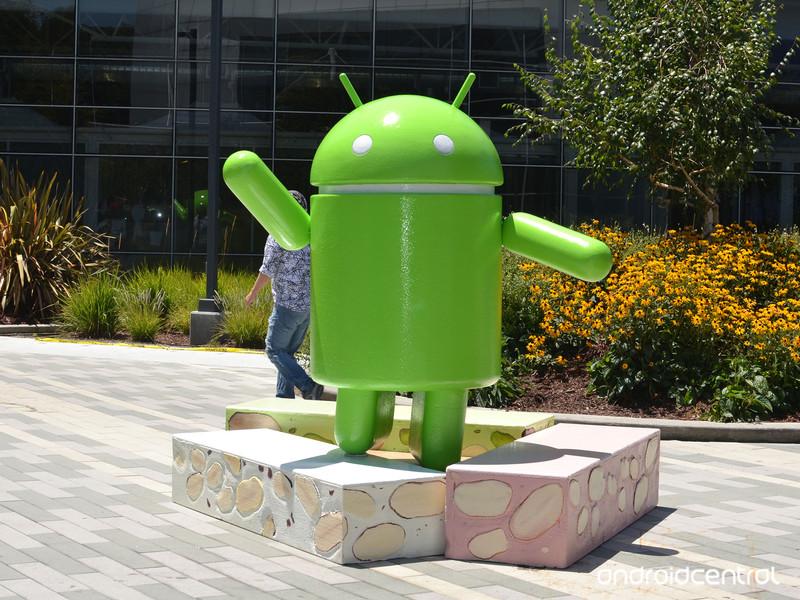
Fifth and final preview build for Nexus devices comes with ‘near final’ system images.
Right on schedule, Google has released the fifth and final Developer Preview of Android 7.0 Nougat. Per the Nougat preview roadmap, these builds include “near final” system images for late testing before the final, stable release of Android 7.0 later this summer. As for build numbers, we’re looking at build NPD90G
According to Google, the new preview images include:
- The final N APIs (API level 24) and latest system behaviors and UI
- The latest bug fixes and optimizations across the system and in preinstalled apps
As such, we should expect this build to be a reasonable approximation of what Nougat in its finished form will look and act like. We’ll have more on any significant changes once we’ve gotten a good look at the new preview.
System images for the new preview are live now on Google’s developer site, and over-the-air updates should be rolling out for those enrolled in the Android Beta Program starting today.
More: Android Developers
Android Nougat
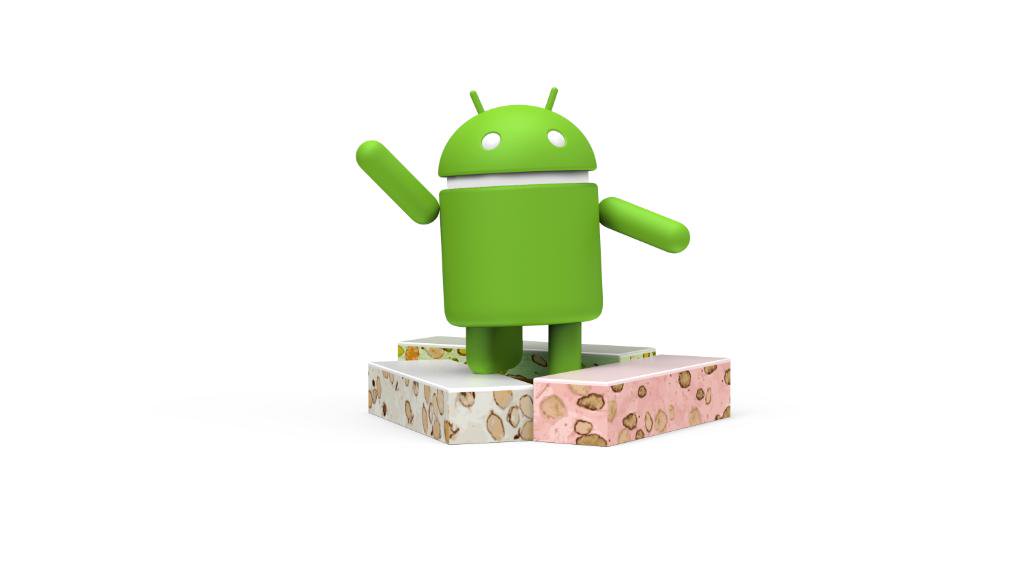
Android N (currently in Developer Preview status) is now Android Nougat! It’s the 12th nicknamed version of Android and will be released to the public in the fall of 2016. Here’s everything you need to know so far!
- What’s new in Android Nougat
- All Android Nougat news
- Should you use the Android N Dev Preview?
- About the Android Beta Program
- Join the Discussion
There’s still no Easter Egg in Android Nougat Developer Preview 5 :(

Nope. Nothing at all when you tap the “N” graphic in the latest Android 7.0 Developer Preview. Just a cat emoji and a no entry sign. Looks like we’ll have to wait for the final Nougat release.
Touché, Google.

Android Nougat

Android N (currently in Developer Preview status) is now Android Nougat! It’s the 12th nicknamed version of Android and will be released to the public in the fall of 2016. Here’s everything you need to know so far!
- What’s new in Android Nougat
- All Android Nougat news
- Should you use the Android N Dev Preview?
- About the Android Beta Program
- Join the Discussion
Server capacity delayed Japanese ‘Pokémon Go’ launch
Pokémon Go may be a smash hit in the US, Canada, UK, New Zealand and about 20 other countries — but did you know that nobody is playing the game in the Japan? It’s not for want of trying. Despite being the franchise’s homeland, Pokémon Go still isn’t available to Japanese users. What’s the deal? According to Niantic’s CEO, Japan’s servers just aren’t good enough to handle the game.
“At present, the server capacity in Japan is not powerful enough,” Niantic’s John Hanke told Forbes. “We are working hard with our partners in Japan to enable the servers to keep up with demand once the game goes online there.” That should sound familiar to players who already have access to the game. Pokémon Go has dealt with server issues ever since day one, and international expansion was slowed to ensure that new markets were able to handle the popular augmented reality title.
Even so, it’s a bit odd to think that Japan, of all places, is having to do without a Pokémon game — at least for now. Niantic says it expects to launch the title in its home country by the end of the month.
Via: Siliconera
Source: Forbes
Apple Seeds Third Beta of iOS 10 to Developers
Apple today released the third beta of iOS 10 to developers for testing purposes, two weeks after seeding the second beta and more than a month after first unveiling the new operating system at its 2016 Worldwide Developers Conference.
Today’s update is available as an over-the-air download to those who installed the first beta or the beta configuration profile and it’s available for direct download through the Apple Developer Center.
iOS 10 is a major iOS update with a host of new features and design tweaks, including a new Lock screen experience with 3D Touch-enabled notifications, a more easily accessible camera, a redesigned Control Center, and a new widgets screen.
Subscribe to the MacRumors YouTube channel for more videos.
Messages has been entirely overhauled with features that include background animations, bubble effects, Digital Touch, handwritten notes, Tapback replies, predictive emoji, and its own dedicated App Store, and Photos has gained impressive facial and object recognition capabilities along with a Memories feature for rediscovering forgotten moments.
Over the beta testing period, Apple will tweak the features introduced in iOS 10, and in iOS 10 beta 2, Apple launched the Messages App Store and added organ donation signup functionality, among other changes. New changes in beta three will be listed below.
iOS 10 is currently available to developers and public beta testers, with a full public release planned for the fall. For full details on iOS 10, make sure to check out our iOS 10 roundup.
What’s new in iOS 10 beta 3:
Locking haptic feedback – When locking an iPhone 6s or 6s Plus, there’s a small haptic vibration to let you know the device has been properly locked. On other devices, there’s a new sound when pressing the power button.
Touch ID – There’s a new Accessibility option that allows users to open an iPhone with Touch ID with just a finger on the button, which is the way Touch ID worked in iOS 9.

Keyboard sound – The muted popping-style keyboard sound that was introduced in beta one and removed in beta two has been reintroduced in beta three.
Related Roundup: iOS 10
Discuss this article in our forums
Apple Debuts iTunes Match With Audio Fingerprint for Apple Music Users
Apple has introduced a fix for a persistent and frustrating Apple Music bug that caused pre-existing music libraries to sometimes be improperly matched with Apple Music songs, reports The Loop.
To make sure songs are correctly matched, Apple is now using iTunes Match audio fingerprint for Apple Music, a more accurate matching method than the metadata matching that was previously employed. Apple Music matching now also offers up DRM-free music files, just like iTunes Match.
Apple has been quietly rolling out iTunes Match audio fingerprint to all Apple Music subscribers. Previously Apple was using a less accurate metadata version of iTunes Match on Apple Music, which wouldn’t always match the correct version of a particular song. We’ve all seen the stories of a live version of a song being replaced by a studio version, etc.
Using iTunes Match with audio fingerprint, those problems should be a thing of the past.
According to The Loop, the version of iTunes Match that is now available to Apple Music subscribers is actually the same iTunes Match service that iTunes users have been paying for as a separate subscription, with all Apple Music subscribers now eligible to use the full version of iTunes Match at no cost. Confusingly, while Apple Music had song matching available previously, it was not the same service that was offered through iTunes Match.
Current Apple Music and iTunes Match subscribers can let their iTunes Match subscriptions expire while continuing to get the same functionality, and should see no changes.
iTunes Match users who are not Apple Music subscribers will need to continue to pay for iTunes Match. Apple Music subscribers will know if they have access to iTunes Match because there will be a “Matched” label in the iCloud Status of iTunes on the Mac.
Users who had songs matched incorrectly via iTunes Match will see their songs rematched to the correct song thanks to the changes that Apple has implemented, and no downloaded copies of songs will be deleted.
Apple is gradually rolling out access to iTunes Match, switching one to two percent of Apple Music subscribers over to the new version each day. The rollout will take some time, and Apple is monitoring the process to make sure there are no issues.
Tags: iTunes Match, Apple Music
Discuss this article in our forums
 AIVAnet