


Microsoft’s Play Anywhere reaches PC and Xbox on September 13th
You won’t have to wait too long to see how well Xbox Play Anywhere works in practice. Microsoft has confirmed to Polygon that the cross-purchase, cross-play feature will go live on both Xbox One consoles and Windows 10 PCs on September 13th. You’ll still need games that support it, of course, but you can count on at least strong first-party support. Microsoft informs MCV that all the games it publishes from now onward will use Play Anywhere — in theory, that means the next Halo will be a PC title. The real unknown is whether or not many third-party games will follow suit.
Source: Polygon, MCV
Spongy electronic ‘nose’ can sniff out nerve gas and pesticides
When you’re trying to detect extremely dangerous chemicals, you don’t want to mess around — even a tiny amount can spell big trouble. It’s a good thing, then, that Belgian researchers have developed what could be the most sensitive gas sensor to date. Their electronic ‘nose’ uses spongy metal-organic frameworks (below) that can absorb and flag extremely tiny amounts of the phosphonates you find in harmful gases like sarin (aka a form of nerve gas) or pesticides. It’s so sensitive that, in some cases, it can find just a few parts per trillion — even the cleverest evildoer would likely have trouble hiding a chemical weapon.
The kicker is that it’s extremely portable. You could apply the framework as a film on an existing circuit, so you could use your smartphone to spot chemicals. And yes, it’d be useful for more than security checks. KU Leuven imagines using this to spot lung cancer in your breath, or to determine whether or not your food has gone bad. You might never have to wonder whether or not an object is hiding something nasty, as the answer would always be close at hand.

Source: KU Leuven
Syllable G600 headphones (review)
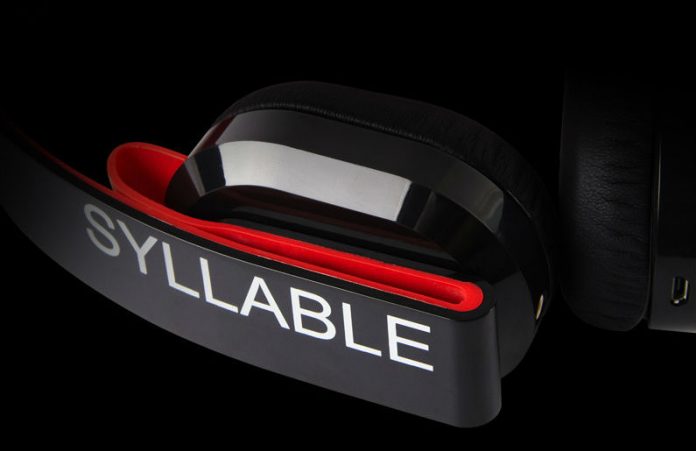
It’s not necessarily a rare thing to find a great pair of headphones for $30. On the other hand, finding an amazing pair of headphones for $30 is. I have made such a discovery with the Syllable G600 Bluetooth Studio headphones. Here are my thoughts.
Technical Specs
- Active noise cancelling technology
- Dual audio drivers on each side
- 2 hour charge time
- Up to 12 hours of playback time
- *250 hours standby time
- Bluetooth 4.0
- Built in HD microphone with noise cancelling technology
- 1 year manufacturer warranty
Design
These headphones look great. The exterior is made of a shiny black plastic with a Porsche red, rubber interior padding. The headphone cups themselves are also constructed from a shiny black plastic with a matte black padding inside.

On the right earphone you will find the power, volume, fast forward and rewind keys. The fast forward and rewind keys also double as the volume up and volume down keys. I personally do not like this design choice but it gets the job done.
On the left earphone you will find a 3.5mm headphone jack. The addition of this jack is fantastic because it allows you to the use the headphones wired if the battery has died. All you need to do is plug one end of the included male 3.5mm to male 3.5mm cable into the headphones and the other end into the device of your choice.
As much as I love the design of these headphones, they have one glaring flaw: the word “SYLLABLE” monogrammed in giant, white letters on both sides of the headband. Even with this small flaw, these headphones look and feel great. The build quality is superb and really makes you feel like you are using a $100 pair of headphones instead of a $30 pair.
Sound
The Syllable G600’s sound great. These headphones, hands down, are the best I have ever used. In fact, I would stack the G600’s against any pair of Beats by Dre studio headphones and wager that users would not be able to tell the difference in a blind test. But I must disclose that I have not owner a pair of Beats.
The bass, highs, mids and lows all sound phenomenal and in perfect balance. I literally have no complaints about the sound produced by the Syllable G600’s.
Battery Life/Functionality/Comfort
Even with extended use, the Syllable G600’s stayed pretty comfortable. There might have been some minor fatigue here and there, but it was so slight that I didn’t feel the need to take the headphones off because of it.
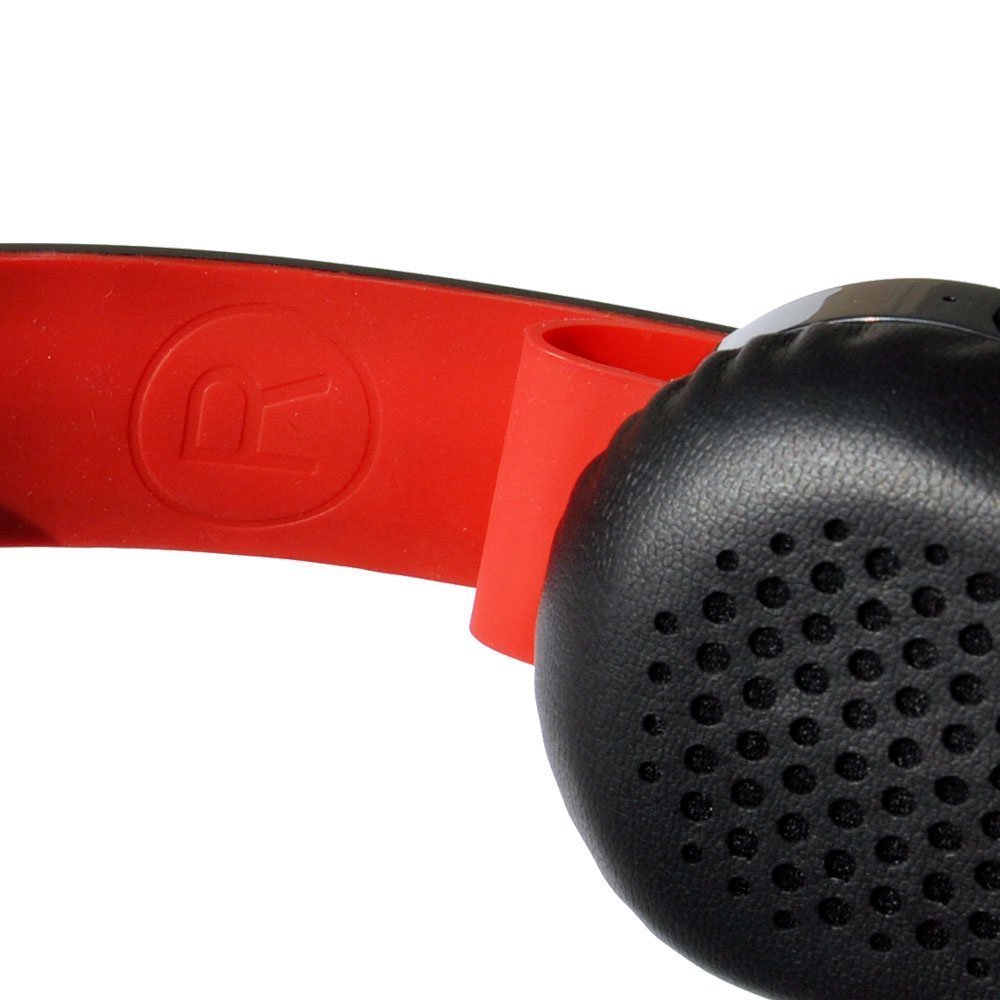
On the battery life front, I got about 8-12 hours of use with the Syllable’s connected to a Bluetooth device (usually my tablet). The included 3.5mm male to 3.5mm male cable allows you to continue to use the headphones after the battery has died. I love this feature and I am so glad that Syllable had the forethought to include it.
As far as the Bluetooth connection goes, I have no complaints. I noticed little to no skipping in my music while using the Syllables, and any that I did expereince was more likely caused by the device the headphones were connected to versus the headphones themselves.
Verdict
Without a doubt, the Syllable G600 Bluetooth Studio headphones are the best headphones I have ever used. They are comfortable, reliable, built well and sound fantastic. You will not find a better pair of headphones at this price; and as stated before, I would wager that these $30 Syllables are every bit as good as a pair of Beats.
Syllable G600 Bluetooth Studio Headphones – Amazon.com
1 of 6





*photos courtesy of Amazon.com and Google Images
Cyborg locusts with tattooed wings can sniff out bombs
“Men, bring out the sniffer locusts.” That’s something a bomb squad chief could say in the future, thanks to a team of engineers working to turn the insects into cyborgs that can be sent anywhere to sniff out explosives. It won’t be an easy feat — the researchers, who hail from the Washington University in St. Louis, will have to equip the insects with several pieces of technology. Good thing they have a powerful backer: the Navy. Team leader Baranidharan Raman has received a three-year $750,000 grant from the Office of Naval Research to make his dreams a reality.
Raman has been studying how the bug processes smell for years now. He and his team found that locusts can identify particular scents, such as those they’re trained to detect, even in the presence of other odors. Raman believes the cyborg bugs will be much more effective than robots, because their antennae have a ton of natural sensors. “Why reinvent the wheel? Why not take advantage of the biological solution?” he asked. “That is the philosophy here. Even the state-of-the-art miniaturized chemical sensing devices have a handful of sensors. On the other hand, if you look at the insect antenna, where their chemical sensors are located, there are several hundreds of thousands of sensors and of a variety of types.”
To turn ordinary locusts into bomb-sniffing machines, the engineers plan to implant an electrode into their brains to hijack their antennae and read electrical activity. Since operators need to get whatever info the bugs collect, the researchers are also developing a tiny backpack that can transmit data. The receiver’s red LED lights up in the presence of explosives, while the green LED lights up in the absence of any.
Finally, the engineers plan to tattoo the bugs’ wings with biocompatible silk that can convert light into heat. A laser, probably installed on the backpack, will allow an operator to control the cyborg bug. Focus the laser on the left wing to make the insect go left, and vice versa. It will function much like a remote-controlled drone. If Raman and his team don’t hit a snag along the way, they could be testing the first prototypes within a year’s time and could be done within two.
Via: BBC
Source: Washington University in St. Louis
Prince Online Museum revisits the musician’s web history
The late, great Prince may have declared that the internet was over, but he was its biggest fan in some ways. His websites were frequently grand projects that pushed the limits of both web design and digital music. And now, it’s easy to see this effort first-hand. Former Prince webmaster Sam Jennings has launched the Prince Online Museum, a timeline-based trip through some of the musician’s websites over the past 20 years.
It’s not a fully comprehensive view (you’re ‘only’ looking at 12 out of nearly 20 sites), but it gives you a good look at important moments in Prince’s internet history without having to use web archives. You’ll see the very start of his web presence (The Dawn circa 1996), the first online-only distribution of a CD (Crystal Ball in 1997) and the NPG Music Club’s groundbreaking media service (2001 to 2006). There’s even a peek at Prince Interactive, a 1994 project from the days when “interactive multimedia” CDs gave you experiences that weren’t possible on the early web.
Crucially, this isn’t a commercial venture. Jennings tells Billboard that there won’t be any downloads or subscriptions. This is ultimately a tribute to Prince — the only other goal is to inspire musicians who want to make a statement with their web pages.
Via: The Verge, Billboard
Source: Prince Online Museum
Juno has begun its tour of Jupiter after a five-year journey
Juno’s five-year journey has come to an end, and soon, it will start taking measurements and capturing images of the largest planet in our solar system. The spacecraft, which aptly carries Lego figures of the Roman god Jupiter, his wife the goddess Juno and Galileo, has entered Jupiter’s orbit after firing up its engines before midnight and performing a 35-minute maneuver. That was much harder to accomplish than it sounds — it had to be at the right speed to be captured by the gas giant’s gravity, or it would have slipped right past it. In the end, everything went well, and the spacecraft’s arrival was off only by a second.
“With Juno, we will investigate the unknowns of Jupiter’s massive radiation belts to delve deep into not only the planet’s interior, but into how Jupiter was born and how our entire solar system evolved,” NASA chief Charlie Bolden said in a statement.
Besides entering Jupiter’s orbit, the probe has also successfully turned toward the sun. Now that NASA is sure the spacecraft’s solar arrays can capture enough sunlight to power it, Juno’s initial 53-and-a-half day orbit has begun. We won’t have to wait long to see and hear more about the planet either: Bolden says the probe’s science phase will officially begin in October, but it will start collecting data much earlier than that.
Juno is slated to orbit Jupiter 37 times within the next 20 months to uncover its secrets. Those include understanding how it (and similar planets) formed and evolved, figuring out if it has solid core, mapping its magnetic field, measuring the amount of water, oxygen and ammonia in its atmosphere, as well as observing its majestic auroras. After it’s done, NASA plans to crash Juno into the gas giant to avoid collision with the planet’s biggest moons.
Success! Engine burn complete. #Juno is now orbiting #Jupiter, poised to unlock the planet’s secrets. https://t.co/YFsOJ9YYb5
— NASA (@NASA) July 5, 2016
#Juno turned back toward the sun, has power and started its tour of #Jupiter in an initial 53.5-day orbit pic.twitter.com/iwRSSOwPwX
— NASA (@NASA) July 5, 2016
#Juno is in Jupiter’s orbit! See how the team is feeling and find out what’s next at 1am ET: https://t.co/KX5g7yYnYG pic.twitter.com/TlcOjCVE4E
— NASA (@NASA) July 5, 2016
Fun trivia: Google is celebrating Juno’s successful arrival with a cute animated Doodle.
Source: NASA (Twitter)
Lasers and microwaves lead to better quantum computing circuits
If you’re going to craft a quantum computer, you need to corral lots of quantum bits (qubits) to perform calculations… and Penn State researchers have found a way to make that happen. They’ve developed a technique that relies on lasers and microwaves to steer a tightly packed, 3D grid of atoms that serve as qubits. When you want to change the state of these atoms, you hit them with crossed laser beams and then bathe them in uniform microwaves. In a test, scientists had enough control to spell out “PSU” across a three-layer array of 125 atoms.
The tech has a long way to go. You’d need many more qubits to make a fully functional computer, to start with. Penn State’s team also wants to improve the reliability (it’s at 99.7 percent now) and create quantum entanglements that have particles react to each other. If all those pieces fall into place, though, you could see truly complex quantum computers (not just ones with a few atoms) that pull off calculations which are impractical or impossible for today’s machines.
Via: PCWorld
Source: Penn State, Science
How to watch NASA’s Juno spacecraft enter Jupiter’s orbit
NASA launched its Jupiter-exploring Juno spacecraft on August 5, 2011, but thanks to some patriotic timing, it’s arriving at the gas giant today on July 4th. That’ll give space fans some additional fireworks, as NASA and JPL will be broadcasting the crucial orbit insertion starting at around 10:30 PM ET. If all goes well, the craft will fire its main engine for 35 minutes and scrub 1,212 mph from its current 37,000 mph velocity. That’ll give it just the right speed to be captured into a 53-day orbit around the planet.
If you’re a space nerd — and even if you’re not — the event should be exciting. To catch it live, tune in to NASA’s Juno Mission Control Live broadcast on Ustream, starting at 10:30 PM ET. Another way to follow along is with NASA’s Eyes on Juno app for Mac or PC that gives you a simulated ride aboard the craft.
Juno has just one chance to make the crucial engine burn and achieve orbit — if the motor fails, it’ll go flying off into space. A miscalculation could also send it too close, as its first orbit will put it at a very tight 2,900 miles from the top of Jupiter’s atmosphere. The Jovian planet has a very intense magnetic field, which could also knock out Juno’s sensitive instruments, even though they’re shielded by titanium. Did I mention that it takes 48 minutes for the craft to send a signal back to Earth?

Those potential issues will create a lot of suspense, but if things unfold as expected, Juno will be captured by Jupiter’s gravity and enter orbit around 11:38 PM. From there, it’ll point its antenna toward Earth, and start sending telemetry around 12:16 AM. Hopefully at that point, we’ll get some nice images from the craft’s high-resolution JunoCam (the first image is shown above).
It’ll make two 53 day orbits, then do another engine burn to push it into a 14-day orbit, where the science will begin. Astronomers hope to discover whether Jupiter has a rocky core by measuring its magnetic field, for one. They also aim to discover more about metallic hydrogen, which nobody has been able to create on Earth. (On Jupiter, pressures amount to hundreds of millions of tons per square inch.)
There will also be lots of unprecedented high-resolution images of the planet, better showing its storms, bands and spots. Juno will do all this with just 500 watts of solar power, as Jupiter is five times farther from the source of its power, the Sun, than Earth.

Around November 3rd, NASA will take suggestions from the public as to where they should point Juno’s cameras. On the 37th and final orbit, the space agency will deliberately steer Juno into Jupiter’s clouds, where it’ll burn up. NASA wants to ensure it doesn’t crash into Jupiter’s moon, Europa, and contaminate it with bacteria that may have sneaked onboard, however unlikely that scenario is.
The mission is programmed to last a relatively short 20 months, because the intense radiation is expected to quickly fry the spacecraft’s electronics. If things go better than expected, however, the mission could be extended another few months. Bear in mind that they said the same thing about the Mars rover Opportunity, and the damn thing is still going.
Source: NASA
Save $15 on this case and holster combo for the HTC One M9 today!

Want to keep your HTC One M9 protected at all times? If so, Amzer’s hard shell and holster combo is what you will want to take a look at. The hard shell case will protect your phone from drops and dings, and the holster gives you a safe place to keep it when not in use. Right now you can save $15 on the combo, making it just $4.95.
Save $20 on this HTC 10 tempered glass screen protector

Want to keep the screen of your HTC 10 free of scratches for the long haul? If so, Ventev’s toughglass screen protector is what you will want to install on your phone. The glass will prevent scratches from your actual screen, and potentially even help keep it safe during a fall, all for just $14.95 today!
 AIVAnet