


Review: Ultimate Ears’ UE Roll 2 Features Louder Sound and Longer Range
Ultimate Ears today added to its speaker lineup with the launch of the UE Roll 2, a successor to the original UE Roll. The UE Roll 2 looks like the current version of the UE Roll, but it has been upgraded with a longer Bluetooth range and louder sound.
I own an original UE Roll, so Ultimate Ears sent me a UE Roll 2 for a comparison review ahead of the new speaker’s rollout. When it comes to design, the palm-sized UE Roll 2 is physically identical to the original UE Roll. It features the same flat, circular design with a bungee cord in the back and a flap to cover both a microUSB port used for charging and a 3.5mm audio-in jack.
 Original UE Roll on left, UE Roll 2 on right
The UE Roll 2 isn’t the most portable speaker out there due to its size (it’s not going to go in a pocket), but because it’s flat, it fits well in a purse or a backpack. It weighs about a half pound, so it’s not going to add a lot of weight if you need to travel with it, and with the stretchy bungee cord, you can attach it just about anywhere.
 Original UE Roll on left, UE Roll 2 on right
The UE Roll 2, like the original UE Roll, comes in a range of bright colors and it features a “life-resistant” shell that’s waterproof and dust proof. It has an IPX7 rating, so it’s waterproof for up to 30 minutes at a depth of one meter. The UE Roll 2 successfully survived being submerged for an extended period of time and it also made it through several shower trips. Since the UE Roll 2 is essentially weatherproof and impact resistant, it’s ideal for backpacking, hiking trips, the beach, and other outdoor activities.

The UE Roll 2’s build quality is the same as the first UE Roll, and I can vouch for its durability. I’ve had my original UE Roll for about six months and it’s been in the shower most of those days with no ill effect. The UE Roll 2 even ships with a little floatie device in the package, which can be used to float the UE Roll 2 in a pool or a bathtub.

According to Ultimate Ears, the round shape of the UE Roll 2 offers 360-degree sound with deep bass, and it’s definitely loud enough to fill a room or entertain a group of people at a pool or beach party. The UE Roll 2 is supposed to be 15 percent louder than the original UE Roll and I can confirm that there’s a definite difference in loudness. I don’t have a way to measure decibels, but the max volume of the UE Roll 2 far exceeds the max volume of the UE Roll.
As for sound quality, I prefer the UE Roll 2 (and the original UE Roll) to all of the other similarly priced (and similarly sized) speakers I’ve owned like the Jawbone Jambox and mini Jambox, the Boombot Rex, and the Oontz Angle. The sound projection is better, it sounds clear and crisp, and there’s little distortion even at max volume.

The UE Roll 2 has a longer Bluetooth range than the UE Roll, so it doesn’t need to be as close to an iPhone or iPad. While the original UE Roll had a range of 65 feet, the new one has a range of 100 feet. The battery life in the UE Roll 2 is unchanged — it’ll last for nine hours on a full charge which is long enough for a full day’s use or multiple days with occasional use.
Connecting the UE Roll 2 to an iPhone is a simple process that takes just a few seconds, done through the Bluetooth menu in the iPhone’s settings app. Once connected, it’ll play whatever’s playing through the iPhone, and there’s also a UE Roll app that goes along with it.

The UE Roll app is nifty because it allows you to link two UE Roll 2 speakers together with both streaming from the same source (Double Up) or set it up so it’ll play songs from multiple iPhones, so everyone at a party can choose the music (Block Party).
There’s also an option to adjust the equalizer and a feature for using the UE Roll 2 as an alarm clock to play music from an iPhone. The UE Roll app is also used for firmware updates, monitoring battery life, controlling volume, and turning the speaker on and off.

There are few negatives to the UE Roll 2, but it’s worth noting that it doesn’t include speakerphone functionality, and unlike the UE Boom 2, there are no built-in features for pausing music or skipping to the next song.
Bottom Line
As someone who uses a UE Roll on a daily basis, I can recommend the UE Roll 2 to anyone looking for a colorful waterproof speaker that also puts out a lot of sound. I’ve used mine in the shower for several months now and it’s still as good as new.
The UE Roll 2 is ideal for the shower, the pool, or the beach, but it puts out good sound even if you don’t want to take advantage of its water resistance, and in my opinion, it’s a good looking little speaker.

The UE Roll 2 is noticeably louder than the UE Roll, but given that it’s identical to the first version, anyone happy with the original UE Roll probably won’t need to upgrade. For new buyers looking for a waterproof speaker or original UE Roll owners looking for a second speaker to take advantage of the linking function in the app, the UE Roll 2 is worth the price tag.
How to Buy
The UE Roll 2 can be purchased from the Ultimate Ears website for $99.99 starting today.
Note: Ultimate Ears provided a UE Roll 2 to MacRumors free of charge for the purposes of this review. The original UE Roll was purchased by the author. No other compensation was received.
Tag: Ultimate Ears
Discuss this article in our forums
Multi-Angle Movie Maker GroupClip Launches on iOS
Collaborative video creation app GroupClip launched on iOS yesterday, allowing users to record the same event on multiple devices and combine clips in the cloud to produce multi-angle movies.
The app enables users to invite up to four friends in any location into the same movie project and start recording clips straight away. As video is synced to the cloud, each user has access to everyone else’s footage, and can combine and edit them to create individual multi-angle videos.
Users can select clip segments to feature prominently in their final projects, and drag and drop clips into position. Multiple layout templates are on offer within the app (including a picture-in-picture option) for users to create their collage, and photos can also be imported into film projects.
GroupClip Animation Appstore groupclip.com from Burner on Vimeo.
Users can also add music to videos using songs on their devices, but the app will reject songs protected by copyright restrictions. Finally, completed movies can be shared over social media or saved to devices.
GroupClip is a free download for iPhone and iPad on the App Store. [Direct Link]
Tag: GroupClip
Discuss this article in our forums
iPhones Too Expensive in India, Says Apple CEO Tim Cook
Apple CEO Tim Cook admitted that iPhones are too expensive in India, during an interview with Indian news channel NDTV on Monday, the last day of his weeklong visit to the country (via TechCrunch).
According to a recent report from Deutsche Bank, India is among the most expensive places in the world to buy an iPhone. Prices there average 31 percent higher than the U.S., with only iPhones in Sweden, Indonesia, and Brazil proving more costly.
NDTV’s Vikram Chandra broached the subject with Cook on air. “You’ve got an iPhone here which is more expensive than it is in the U.S., with less functionality than it would have in the U.S., and in a country where purchasing power is a fraction of what it is in the U.S.,” Chandra said.
Cook acknowledged the disproportionate cost by suggesting that the iPhone was overpriced rather than too expensive. “The duties and the taxes and the compounding of those takes the price and it makes it very high. Our profitability is less in India, it’s materially less — but still I recognize that prices are high,” he said.
“We want to do things that lower that over time, to the degree that we can,” Cook continued. “I want the consumer in India to be able to buy at a price that looks like the U.S. price.”
Chandra’s interview covered a few more topics, including how Apple saw itself investing in its Indian presence. “What we see here is talent,” said Cook. “That means getting the development community moving on iOS. We’re also using a lot of skills in India for maps – the maps facility will be several hundred million dollars worth of work.”
Cook also said the company wants to bring all its existing services to India, including Apple Pay, and that if the need arose to offer something unique in the country, Apple would look at that too, although he acknowledged the possible cultural limitations: “I don’t believe personally in trying to be something you’re not. We are what we are. We’re a California company.”
The interview rounded off Tim Cook’s weeklong trip to India, during which he met with Prime Minister Narendra Modi, mingled with Bollywood stars, watched a cricket game, visited temples, and attended business meetings in Mumbai.
Tag: India
Discuss this article in our forums
Roundup: LG G5 cases from MobileFun

It’s great that as soon as a new smartphone drops, there’s already a sea of cases to choose from. But with that said, narrowing down the perfect case can take some effort. There are so many styles, colors, and sizes (depending on the extent of protection).
Sometimes promo pics don’t tell the whole story, so hopefully we can help. MobileFun is an online accessory retailer that reached out to us to let us try a few LG G5 cases on for size. If you’re shopping for a way to keep your G5 safe, let’s see if one of these cases tickle your fancy.
Official Mesh Folio Quick Cover Case (Silver)


In case you didn’t know, LG has its own “official” case for the LG G5. It’s called the Mesh Folio Quick Cover Case, and as implied, has a flap/cover that goes over the G5’s display. If you’re not a fan of this style of case, hold up. The flap has a window cutout that allows the G5’s Always-On information to be displayed. Certainly nifty.

All the aesthetics of around the case are nice. The cover is made from this metallic mesh material, while the back tray mimics the G5’s metal shell. The two pieces are connected by a shimmery silver fabric that wraps around the phone’s side. LG put a “+” and “-” where the volume are located.

I loved the feel of the case, and that the screen turns on/off as you open/close the cover. The fit is immaculate. However, I was hugely bugged that the cover doesn’t get secured somehow. It’s just left to flap around. It’s an oversight, in my eyes, and I’m sure the screen unintentionally turning on and off will impact battery life somewhat.
LG Folio Mesh Quick Cover Case
1 of 6


LG G5 Official Mesh Folio Quick Cover Case link
Obliq Flex Pro Case (Black)

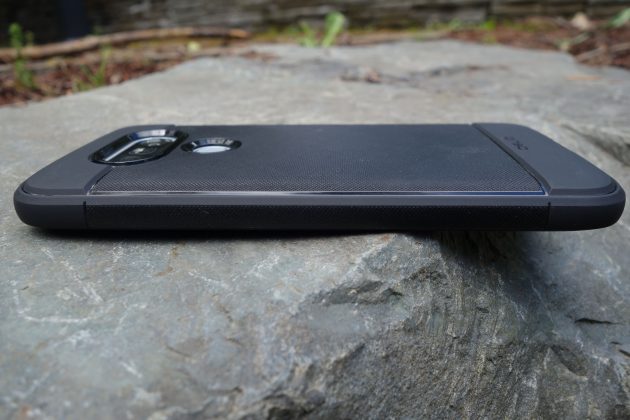
The Obliq Flex Pro case is more tuned for those who care about protection. It adds sizable thickness to the G5 (but not like an Otterbox). I really like the material. It’s not hard plastic; the entire case is rubbery. It wraps around nicely to engulf the phone with protection.


The Flex Pro case is also super grippy. There’s texturing all over, which not only looks classy, but should help out the most buttery of hands. There’s a good amount of lip around the front of the phone, for additional peace of mind that you’re well protected.
LG G5 Obliq Flex Pro Case
1 of 6




LG G5 Obliq Flex Pro Case link
Caseology Skyfall Series Case (Black/Clear)


Caseology is another long-standing case manufacturer. The Skyfall series also provides ample protection, and the clear case model that we have allows the G5’s chassis to shine. Sure, there are tons of clear cases out there, but Caseology tries to one-up them with a trick.

The Skyfall Series is dual-layered, and the top layer can be removed if you wish to change it up. The “layer” is really a black frame that clips onto the core, TPU-like material. It surrounds the perimeter of the case, which means that it doubles up the protection if the phone ever meets the ground.

The primary case material feels robust on its own. It’s more slim than thick, but covers the phone from every corner (and makes an ease-of-mind lip around the entire front of the phone).
LG G5 Caseology Skyfall Series Case
1 of 4


LG G5 Caseology Skyfall Series Case link
MobileFun has a ton of other compelling cases for the LG G5, check them out!
Ultimate Ears UE900s in-ear headphone review: Solid universal from a “Pro” brand
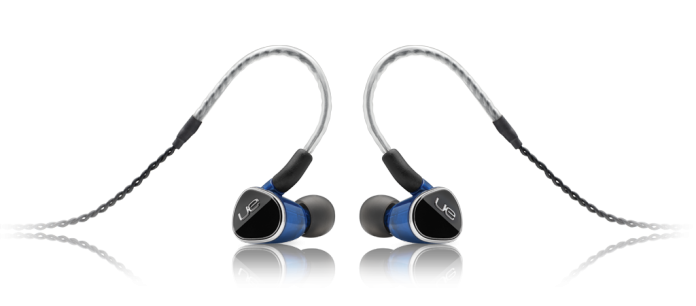
Ultimate Ears is probably more recognized by its successful UE Boom line of Bluetooth speakers. But the company actually started out in the niche market of high-end custom in-ear monitors (IEMs). That fortunately still continues today. While the main Ultimate Ears webpage headlines its speaker devices, you’ll be able to find a portal to the manufacturer’s “Pro” page, where its custom IEM practice is alive and well.
But that isn’t what we’re reviewing today. Ultimate Ears doesn’t forget about the more traditional universal in-ear that most people are comfortable with. Our friends over there were kind enough to let us sample its latest model – the UE 900s.

Let’s find out if it can stand out from the crowd and maintain Ultimate Ear’s audio prowess.
Design
The UE900 is quite a unique looking earphone. As soon as you unpack it, you’ll receive an eyeful of blue.
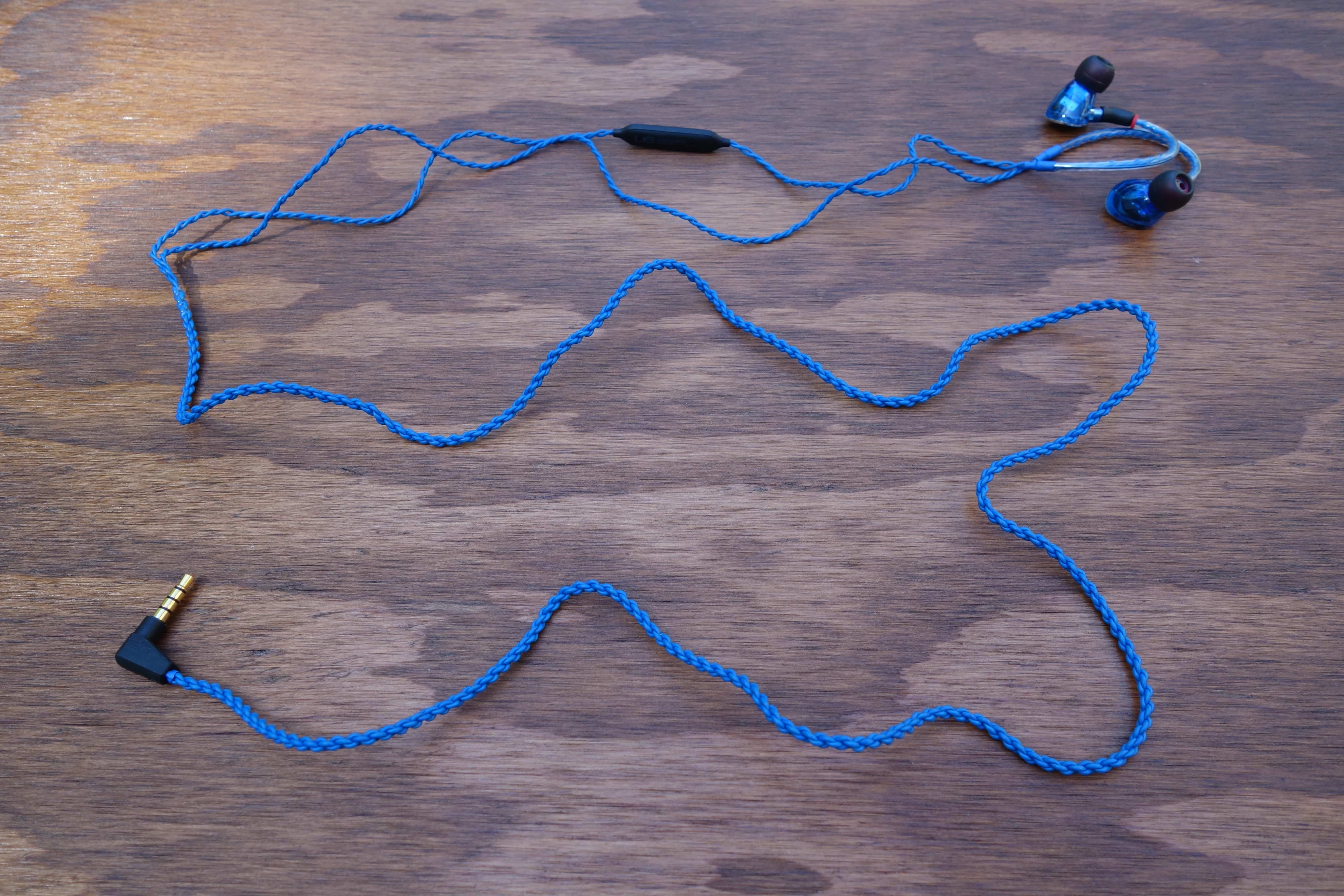
Its braided cable is not shy whatsoever; it dominates the presentation. I will say that you have to have a taste for it. I know many users prefer a non-flashy headphone.
The earpieces are a bit more understated, but still look cool. They have a triangular shape and the construction is two-piece between a transparent, blue plastic shell and a glossy black cap. The cap bears the UE logo and a nice silver trim.


The transparency allows you to peek at the tiny driver electronics within. I love when manufacturers to this. It’s a subtle touch that looks neat and allows the earphones to speak for themselves. That said, I wasn’t very impressed with the plastic material. It feels cheap in-hand. It’s good that it makes the UE900s super lightweight, but I question the durability. Also, at the sizable price, I’d expect more premium considerations.

 Removing the eartip shows a fairly typical nozzle. Except, if you look closely, the nozzle bore isn’t so standard. Instead of one large hole, there is a large and a small one. Ultimate Ear’s design choice was to separate the high/mid and the low-end frequency streams. The UE900s use a system of quad balanced armature drivers: one for highs, one for mids, and two for lows (sub-bass and bass). So you essentially have two drivers outputting out of each bore, which seems like a good way to do things.
I’m glad to report that Ultimate Ears included detachability in the UE900s’ design. The earpieces use an efficient MMCX connection, so you can easily pop them off the cable.
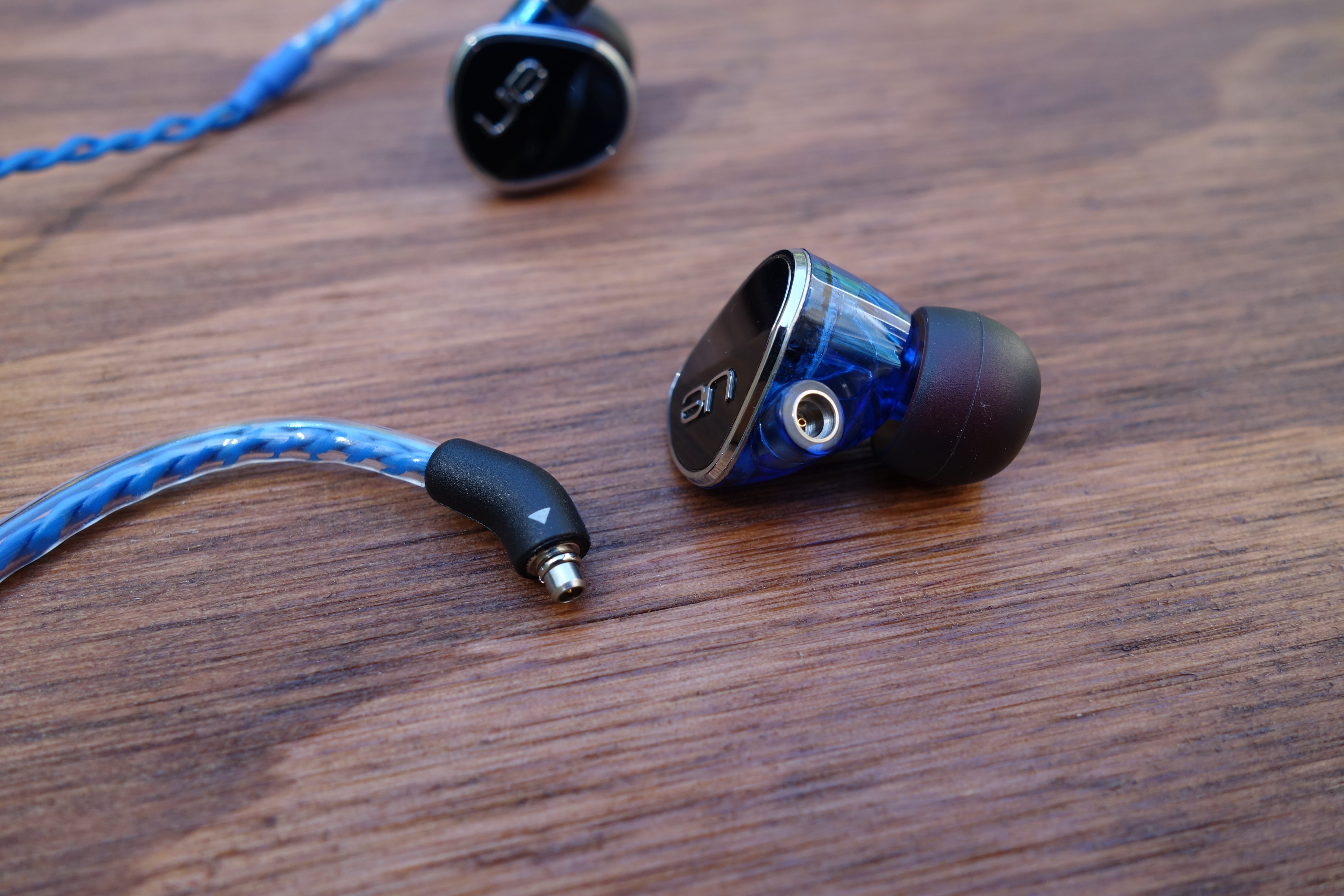
The benefit of this capability is that you can switch to a different cable (there are lots of third-party MMCX cables) or replace the stock one if it goes bad (instead of having to replace the headphones).
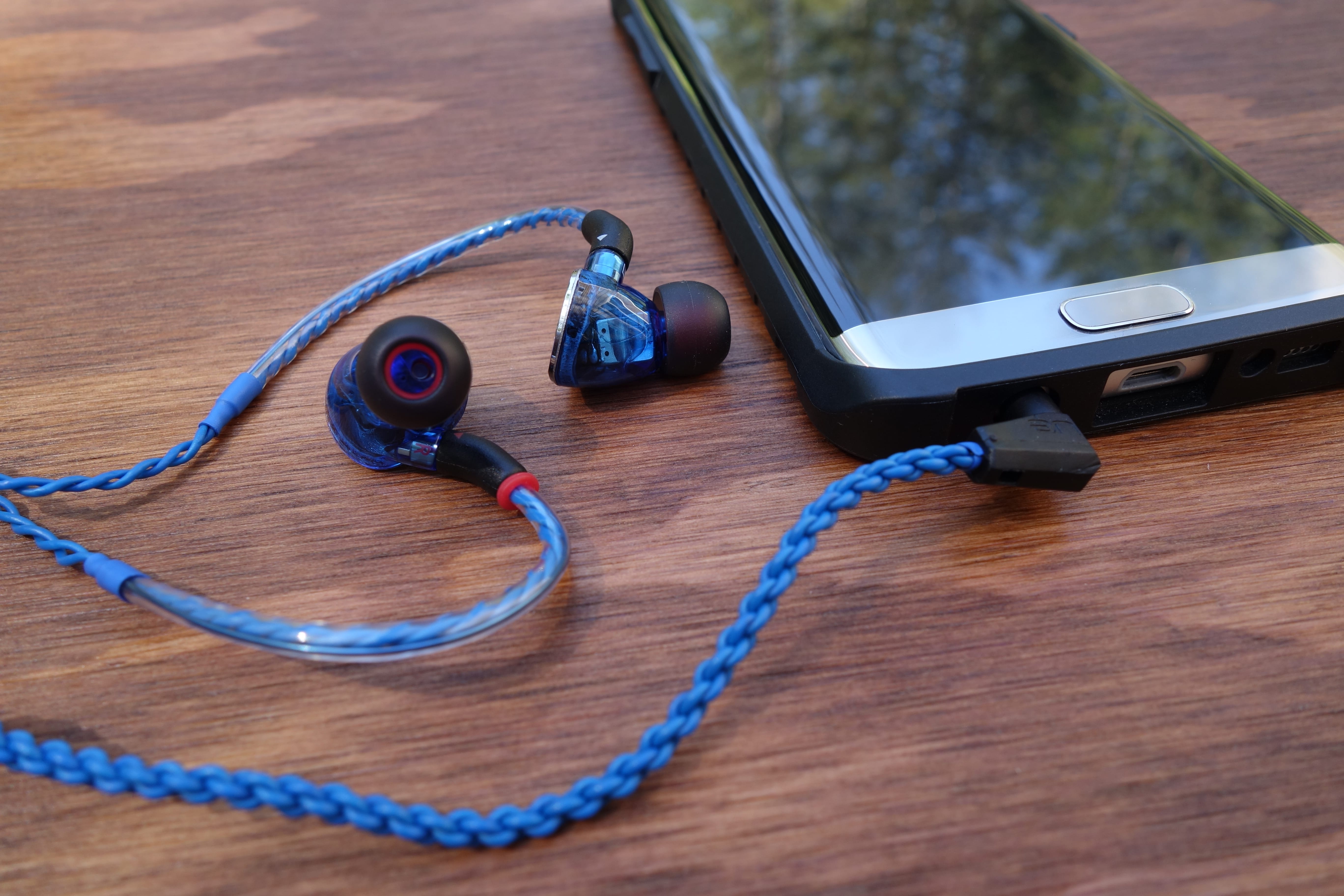
The cable is also lightweight. Two very thin cables braid out of each earpiece, then they combine at the y-split (which is just a shrink-wrapped plastic strip). It’s a simple but interesting look. Down the right earpiece, there’s an in-line remote/mic unit. Ultimate Ears also includes a detachable clip, if you want to keep things tidy.

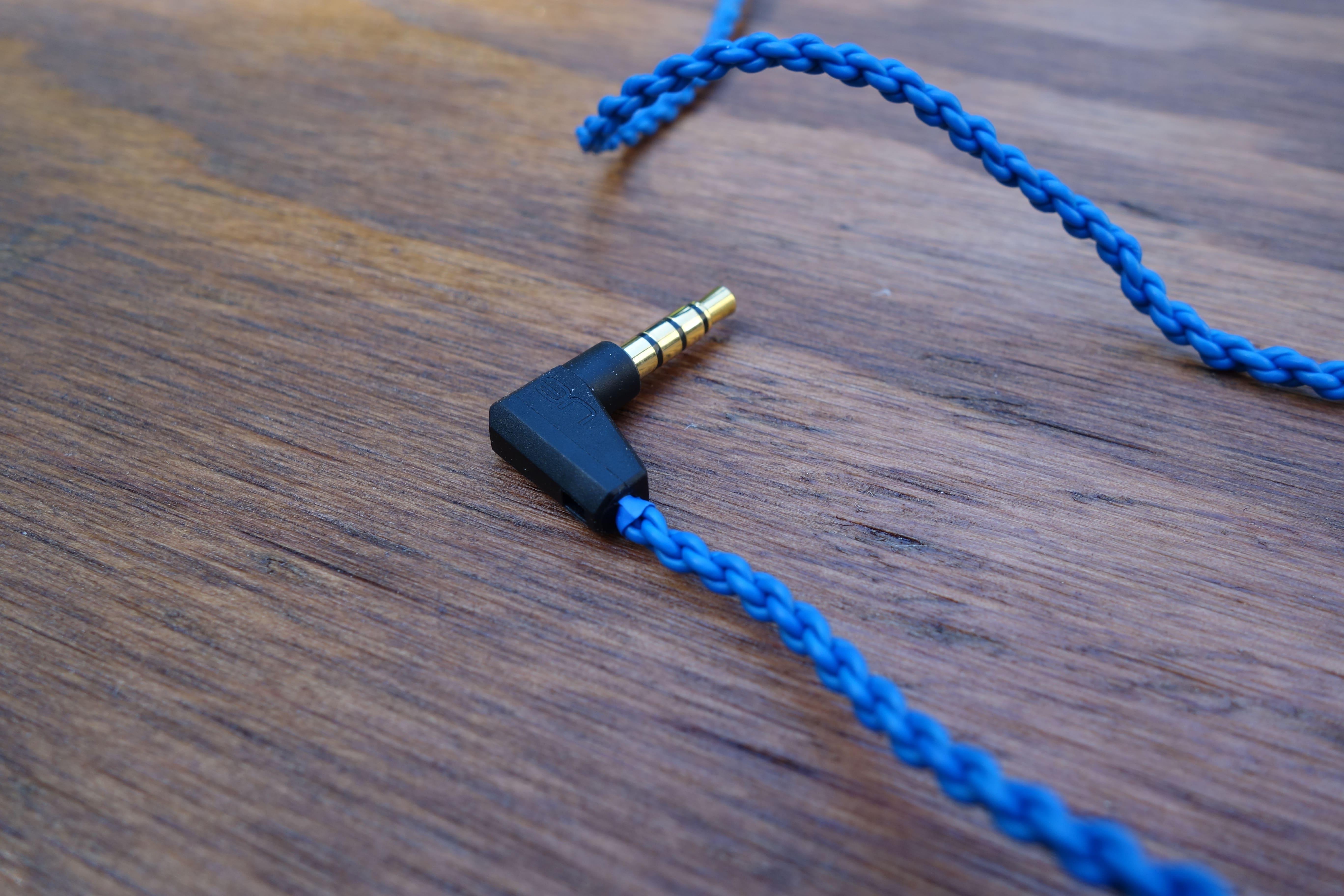
The end of the wire is terminated by a standard-looking, right angle 3.5mm jack.
Usability
I was impressed with the range of eartips that Ultimate Ears packed. There are a whopping six different sizes. What’s more, three of those also include foam tips. This is very considerate, and you should have no problem finding a suitable fit.

Though, it’s interesting that the tips don’t have a protective mesh, to catch ear wax that tries to get inside the nozzle. I’m guessing that UE forewent them because the bores are thin, but I’m still suspicious.
I found the fit of the UE900s to be satisfyingly comfy. If you haven’t been introduced to this type of wear, upon donning the earpieces, you route the cable around and down your ear. Many high-end earphones follow this design, as it’s a more secure fit and reduces microphonics (noise from the cable rubbing on you).
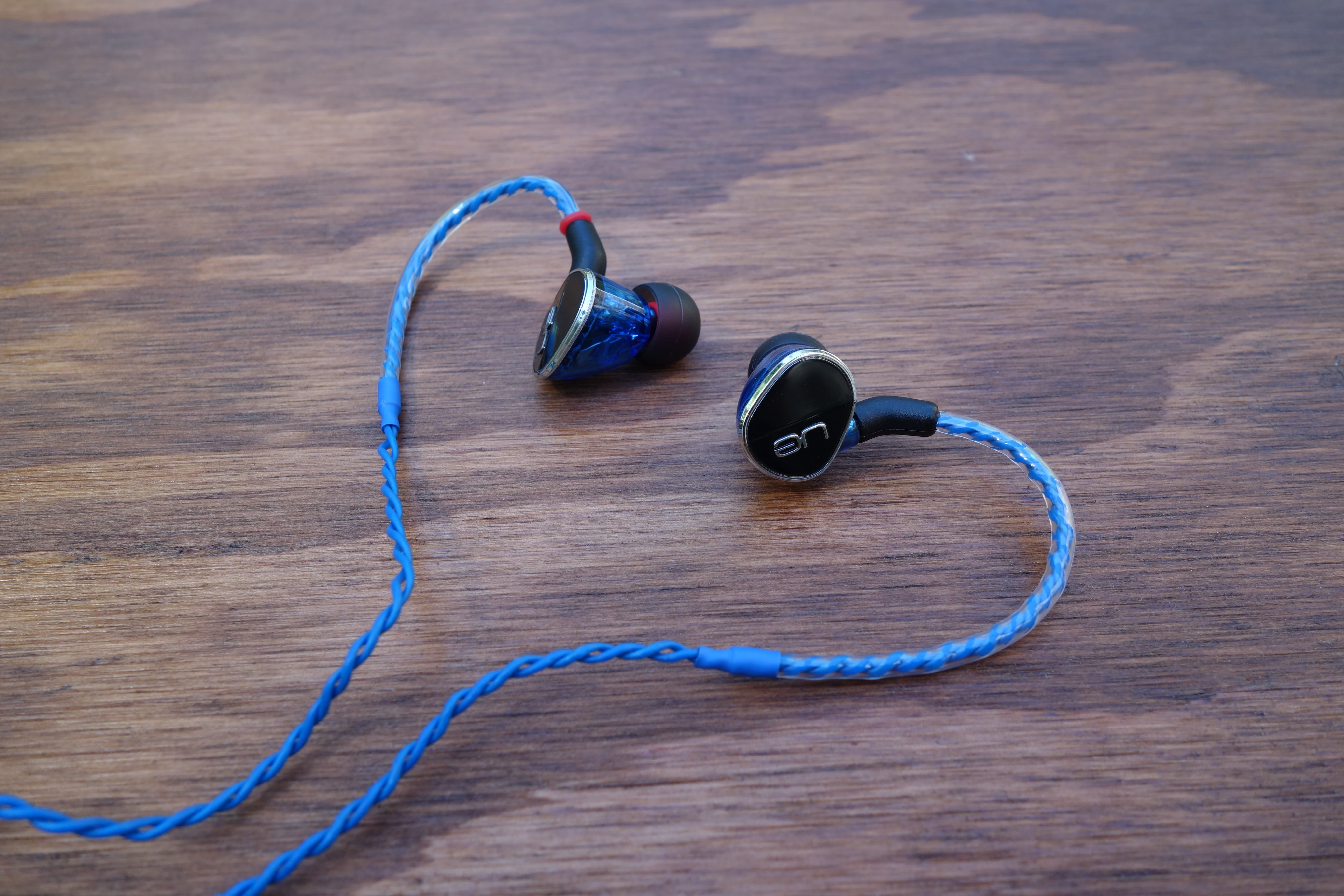
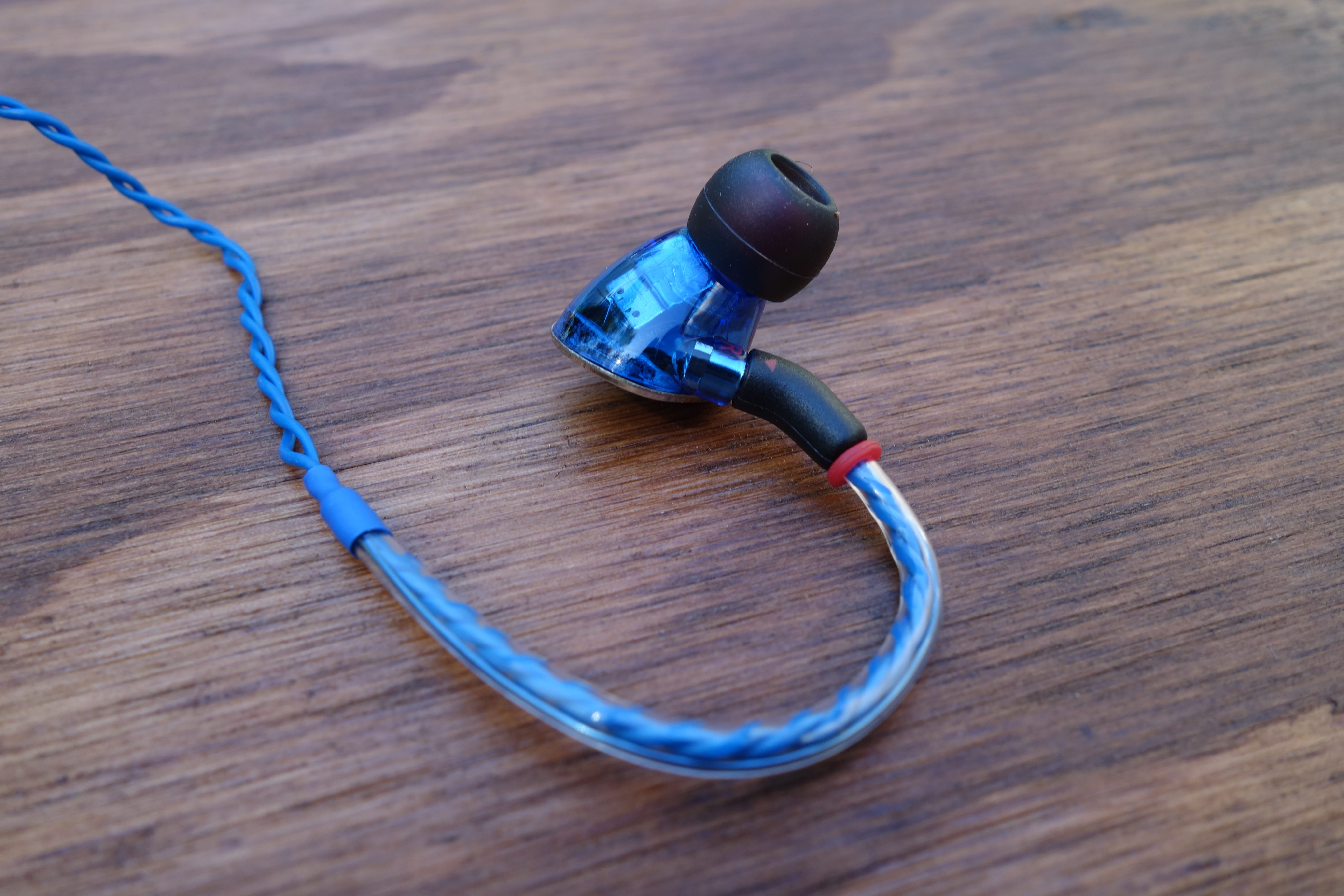
This also means that a short section from the earpiece is wrapped with stiff plastic. This “memory wire” is meant to help guide the cable nicely around your ear. Some can be thick and annoying, but I like UE’s implementation. It’s not uncomfortable and maintains its shape really well.
The downside of the braided cable is that it’s not tangle-resistant. Quite the opposite, actually. It tangles really easily. At least UE didn’t skimp on the length. You’ll get about 15″ from the end of the memory wire to the y-split, and then 33″ to the jack.
The playback remote is fairly standard. You have three buttons – the middle is play/pause and the top and bottom can change the track or volume. Holding down the middle button will also toggle the mobile device’s voice function (i.e. Google Now). Regarding usability, I think the buttons could be better defined. It’s kind of hard to tell them apart (you can’t see it with the headphones on). But that’s something you can get used to.
Sound
In my mind, the UE900s has a lot to live up to. This is mostly because of the brand name that it carries (Ultimate Ears has positioned its name to mean excellence), but also because it’s the only universal in-ear in the company’s lineup. It has to justify its existence among a slew of intimidating custom IEMs.
In short, the UE900s make me a believer. There’s a lot of satisfaction to be found in this sound. One of the first things that stood out to me was the imaging. Despite being an in-ear, different elements of the sound manage to have clear variation of placement within the simulated space. Sure, most high-end earphones do this to an extent. But on the UE900s, the imaging also has depth. It feels like the sounds echo and fill the space, making the listening experience satisfyingly encompassing.
I own a couple high-end earphones, and likewise, get the sense that Ultimate Ears knows what its doing. From an audiophile-grade perspective, I wouldn’t say that this is perfection. The soundstage (perceived distancing of sounds) could be wider, and the mid-range could be stronger. But gawd are these engaging and fun.
The UE900s’ treble is magnificent. It’s prominent, clear, and highly detailed. The bass is also good, but I feel like it could be a mixed bag for people. It has an emphasized oomph that will satisfy bassheads, but it can lean on boomy territory (risking definition for impact). So to my ears, it can steal some spotlight from the mids, making the sound signature slightly V-shaped.
But with all this said, I feel like the UE900s’ skillful audio delivery makes up for it. When I stop being analytical and just listen, it’s one of the most satisfying reproductions I’ve heard.
Final Thoughts
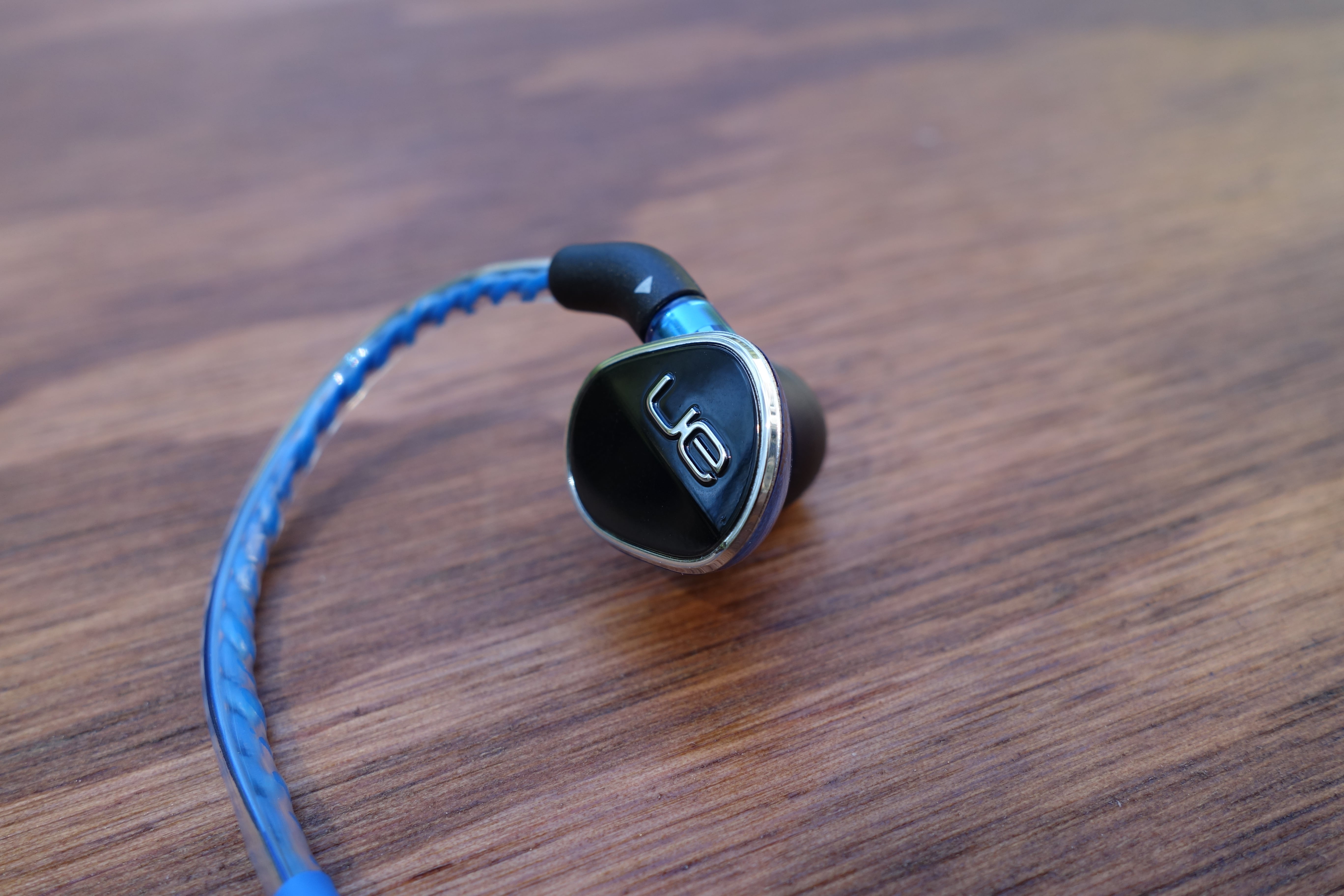
The UE900s aren’t perfect, but I feel like they do much more right than wrong – and what they do right is bangin’. Its audio quality brings UE’s expertise and delivers a super enjoyable listening experience. The fit and detachable cable considerations are also great things.
I certainly feel like the UE900s are worth the price (currently at $279 on Amazon). I’m glad that Ultimate Ears has a killer universal earphone that can stand up with its high-end lineup.
UE 900s product page
AUKEY’s 5-port Type C and Quick Charge 3.0 charging block is the most advanced charger you can get today (review)

In the last couple of years we have seen advancements in charging specs and hardware. Generally faster charging speeds and reversible plugs are a good thing, but for most of us this change is a pain in the rear. USB type C brings us a fully reversible plug which is very nice to have, but almost all of our products still use microUSB.
Mix in compatibility or quality issues, and it just makes for a mess for us consumers who need to sort out who makes good third party accessories for our devices.
I can tell you with 100% certainty that AUKEY is one of the brands I use and recommend without hesitation. From headphones, to portable batteries, to chargers, AUKEY is a brand I rely on heavily.
I’ve been using AUKEY’s 5-port charging block with USB Type-C and Quick Charge 3.0, and am here to tell you why you should consider picking one up for your own needs.

Specs
- $42.99 at Amazon
- Quick Charge 2.0 and 3.0 compatible
- 4 standard USB type A ports
- 1 USB type C port compatible with devices like the HTC 10, LG G5, and Nexus 6P
- Includes one USB type C cable
- 5.7 x 5.6 x 1.5 inches
Design and Usage
Being an Android blogger means I have dozens of devices to plug in and charge. Single port chargers aren’t an option for me, and many of you are in the same boat. Smartwatch, tablet, smartphone, wireless speaker, portable battery, etc. Charged separately and you would need five wall plugs which is a wire mess. Also there is a good chance that all five chargers are not the same – some might be older and some might be made for type C. Simply put, it’s just easier with a charging station.
While many flagship smartphones are making the switch to USB type C, the biggest one of all, the Samsung Galaxy S7, decided to stick with microUSB. Not to mention that almost no mobile accessories have made the switch – it’s a pain in the rear.
That’s why I love using AUKEY’s 5-port charger with USB type C. It suits all of my needs, does it with a nice compact build, and it charges all of my type C devices without issue. I’ve charged the HTC 10, LG G5, Pixel C, Xiaomi Mi5, and Nexbit Robin with the USB type C port on the AUKEY charger and it worked flawlessly. No fried devices. It also charged my LG G5 in the fastest way possible, where it went from 0-80% in about 30 minutes. The AUKEY 5-port charger is also compatible with my Samsung Galaxy S7 edge and fast charges it as well.
Like all of AUKEY’s products I use, the 5-port charging block is built to the highest standards. Seams and lines are exactly where they should be, and there is no question AUKEY takes pride in the quality of its products.

Summary
AUKEY is a brand that I trust wholeheartedly. I’ve been using its products for many years and am still in love with what they have to offer. The 5-port charging block costs $42.99 at Amazon and comes with free Prime shipping.
It’s built incredibly well and has the latest charging standards that should get you through the next few years. I highly recommend this 5-port charging block from AUKEY.
Get the AUKEY 5-port charging station from Amazon for $42.99.
Learn more about AUKEY and its products at http://www.aukey.com.
Geek Squad employee allegedly searched PCs for the FBI
An astute PC technician is supposed to report any illegal content they see while fixing a machine, but one employee of Best Buy’s Geek Squad might have gone too far. The defense in a child pornography case alleges that the FBI paid Geek Squad agent Justin Meade to search customers’ computers for illegal material, bypassing the warrant the FBI would need to conduct its own searches. A secret informant file supposedly shows that Meade was considered a source for child porn investigations between 2009 and 2012, leading to the bust in question. Attorneys for the accused, Dr. Mark Rettenmaier, want the evidence tossed out as a result.
Both the FBI and Meade deny that there were any orders to conduct searches. The agent says he was only following Geek Squad’s reporting policy, which also forbids payments from law enforcement. However, the FBI also acknowledges that it paid Meade $500 for an unmentioned reason — the question is whether or not this was an after-the-fact reward or an incentive.
It’s far from certain that the accusation will stick. The defense could have valid concerns that the FBI violated a constitutional right… or it could be blowing smoke to distract from damning evidence. Either way, this isn’t going to quiet fears (however overblown) that law enforcement might use device repair shops as fishing nets for crooks.
Source: LA Times
Facebook auto-translates 200 million lines of text every day
Facebook reaches more than 1.6 billion users in every corner of the Earth. Making sure everybody understands one another, at least at the linguistic level, has fallen to the company’s machine learning algorithms. According to Alan Packer, Facebook’s Director of Engineering for language technology, the digital babelfish is doing a pretty great job of it.
Speaking at MIT’s Emtech Digital conference in San Francisco on Monday, Packer also noted that Facebook’s translation service understands more than 400 languages and dialects. What’s more, the service understands both the words themselves and their larger social context. If, for example, the system sees that the post it’s translating is asking for hotel recommendations in Paris, it could promote that post to the user’s French friends, suggest a specific Parisian pal for insights or search other public posts for those recommendations.
While Parker remained mum on whether a universally-translated Facebook experience could garner users more international connections, he did tell TechCrunch, “The mission of the translation team is removing language as a barrier to making the world more open and connected.” Of course, with the recent advent of 24-hour Facebook Live kitten cams, who needs words?
Source: TechCrunch
Watch the most powerful x-ray laser zap droplets of water
Scientists at Stanford University’s SLAC National Accelerator Laboratory wanted to better understand explosions caused by x-rays, and we got a cool short movie out of their efforts. They filmed droplets and jets of water being vaporized by the lab’s Linac Coherent Light Source (LCLS) — the most powerful x-ray laser in the world. Claudiu Stan, one of those scientists, explained that “understanding the dynamics of these explosions will allow [them] to avoid their unwanted effects on samples.” On the other hand, the data they gathered could also lead to new ways of using those explosions to trigger changes in their samples.
The team used an ultrafast optical laser as their light source and a high-resolution microscope to take a photo of the setup every time an x-ray pulse hits the liquid. They then strung those images together to show how the x-ray completely rips apart the jets and droplets of water. The scientists published their findings in Nature Physics, but if you’re only here for the cool videos (aren’t we all?), check ’em out below.
Source: National Accelerator Laboratory
DJI drones can start streaming live aerial videos on Facebook
DJI has updated its Go app to add a feature it promised in April: the capability to stream videos over Facebook Live using compatible drones, including the latest Phantom and Inspire. Sure, you can already stream aerial footage of sprawling landscapes, events and whatever you usually cover on YouTube. But the new feature could help expose your work to even more people — plus, Facebook’s probably the best venue to show your videos to your parents and grandparents. Android users will have to wait a bit for the update to go live, but iOS users can update their apps and access the feature right now. In case you’d rather stream via Twitter, though, compatible DJI drones can do live broadcasts via Periscope, as well.
Source: DJI
 AIVAnet