


Hulu will offer live TV in early 2017
That talk of Hulu getting into live TV? It’s real. Company chief Mike Hopkins has announced that you’ll see live entertainment, sports and news on the streaming service in early 2017. He didn’t say which networks were involved or what it might cost, but the Wall Street Journal leak had suggested that at least Disney and Fox (including channels like ESPN and FX) were signing on. You’ll hear more about Hulu’s plans over the course of this year, Hopkins says.
Hulu is a bit late to the live TV streaming party, as companies like Dish (Sling TV) and Sony (PlayStation Vue) have had a presence for months. However, it has a few advantages. On top of being a veteran in the on-demand TV world, it can point to major TV providers (including Disney and Fox) that have direct stakes in the company — they have a vested interest in Hulu’s success. While those networks still make a big chunk of their revenue from people watching conventional TV, they may steer you toward Hulu if you’ve already cut the cord.
There’s more on the way, too. Hulu has revealed that it’s getting into documentaries, beginning with the exclusive US streaming rights to Ron Howard’s upcoming documentary on the first half of The Beatles’ career (tentatively titled The Beatles: Eight Days A Week). You’ll have to wait until the fall to see it, but it’s evident that Hulu wants to rival Netflix’s variety and prevent the next Making A Murderer from going to its competition.
Via: The Verge (1), (2)
Source: Hulu
Apple Forced to Share ‘iPhone’ Trademark in China With Leather Accessory Maker
Apple no longer has the exclusive rights to the “iPhone” trademark in China after the Beijing Municipal High People’s Court ruled in favor of leather goods manufacturer Xintong Tiandi Technology earlier in March. As reported by Legal Daily [Google Translate], the decision will let the Beijing company continue to sell leather bags and cases with the brand name “IPHONE” on each cover without fear of legal blowback from Apple (via Quartz).
The Cupertino company filed for a trademark of the iPhone name in China back in 2002, specifically centering around computer software and hardware, but Xintong Tiandi didn’t do the same for leather goods until 2007, the year the iPhone launched in the United States. The leather case maker was granted that trademark in 2010. Following a few years of growing iPhone success, Apple decided to take the case to the Chinese trademark authority in 2012, subsequently filing a lawsuit in a lower Beijing court, and eventually losing both.
Xintong Tiandi’s trademarked IPHONE case
The Chinese trademark authority’s decision stemmed from its belief that “the general public will not link the trademark in dispute with Apple to harm its [Apple’s] interests,” stating that Apple could not prove “iPhone” was a well-known brand in China before Xintong Tiandi trademarked it in 2007.
Apple continued to appeal, all the way to the Beijing Municipal High People’s Court, but the final decision has come and echoes the trademark authority’s conclusion that the company can’t prove it was a known trademark before 2007, since Apple’s iPhone didn’t launch in China until 2009. The court’s judgement also made no distinction between the two stylizations of Apple’s “iPhone” and Xintong Tiandi’s “IPHONE” moniker.
Apple retains the computer software and hardware rights to the iPhone trademark, but with the new ruling, Xintong Tiandi can continue to manufacture and sell its “IPHONE” branded cases to the Chinese public. The accessory maker hopes that Apple will work with it moving forward to create a market that is beneficial to both definitions of “iPhone” consumers.
Xintong Tiandi wrote on its website that the court’s decision is a reflection of a “free market.” “We will also make full achievement of the ‘iphone’ trademark, and work together [with Apple] to benefit more iphone consumers!,” it said on the site.
China is Apple’s second largest market in total revenue following the United States, and the company has been following a steadfast strategy of expanding its presence in the country with numerous retail shops opening frequently over the past few months. Still, unease and concern with China’s strict internet policies have led to a few mishaps with Apple products. Most recently, that included the unexpected closure of the iTunes and iBooks stores when a dystopian film depicting Hong Kong in an unfavorable light launched on Apple’s digital platform in the country.
Tag: China
Discuss this article in our forums
Samsung says no to OLED TVs for 2017, something else is coming
Samsung may have once been an OLED television creator but it’s left that in the past to focus on its own Quantum Dot, Nano-Crystal tech. Rumours were circulating that it may begin OLED production again in 2017, but that’s now been shot down.
Samsung vice president Park Dong-Gun has said unequivocally, to The Korea Herald, that the company has no intention to manufacture OLED televisions.
LG is currently leading the OLED charge with its televisions that are rapidly dropping in price.
OLED is a very appealing format as it offers a wide colour gamut, fast refresh rates plus excellent brightness and blacks. The problem is they’re still relatively expensive to produce so the price is still higher than the LCD alternatives out there.
Samsung has been championing its own alternative to OLED, which is more affordable to manufacture and offers nearly as good results, some would say. This uses its Quantum Dot technology for its SUHD TV range – more on that in the link below.
According to The Korea Herald, Samsung may also be introducing something new for 2017 as the vice president’s “tone and manner was stronger than ever”. We’re taking that with a pinch of salt but would love to see something as good as OLED that was actually affordable. CES 2017 in January could be very interesting indeed.
READ: Samsung SUHD TVs: 4K resolution meets quantum dot tech
Garmin Vivomove watch is the GPS specialist’s stylish analogue wearable you’ll want
Garmin, the sports GPS specialist, has taken the covers off its first analogue fashion watch, the Vivomove.
The world of wearables is fast filling up and Garmin, as a leader in that field for decades, is competing on all fronts. The new Vivomove looks stylish and clearly appeals to those that want to wear an activity tracker all day and night but without compromising on design. Something the Withings Activité has been offering for a while now.
The Garmin Vivomove is primarily an analogue watch but doubles as an activity tracker for step counting and sleep monitoring. The watch is water resistant to a hefty 50 metres depth and features a battery that will keep going for a year before needed a cheap swap out.
The Vivomove will be available in three models: Sport with silicone strap, Classic with leather strap and Premium with full steel body and leather strap. All the straps are interchangeable and finishes on the watch include black, white, rose gold-tone, stainless steel and gold-tone.
The watch shows progress towards the step goal for the day while a red bar alerts the wearer to when they’ve been inactive for too long. Connecting to the Garmin Connect app, which is done automatically via the smartphone app, will allow for deeper analysis of data including sleep patterns.
The Garmin Vivomove is available from May for £140 in black or white Sport, £180 for black or rose gold-tone with leather strap Classic, or £240 for stainless steel or gold-tone with leather strap Premium.
Sports bands will be priced at £23 while leather bands cost £46.
READ: Withings Activité review: The wearable you’ll actually want to wear
NextVR and Live Nation team up to stream ‘hundreds’ of concerts
NextVR has already brought many important firsts when it comes to live VR broadcasting, so after golf, NASCAR, political debates and basketball, it’s targeting live music. The company is teaming up with concert promoter Live Nation to stream “hundreds” of performances in virtual reality to fans worldwide. To increase the you-are-there feeling that makes VR broadcasts unique, it’s planning “optimized” 3D audio to go along with the views from the front row, on-stage and backstage.
A short Coldplay clip was part of the company’s initial demo reel on NextVR’s app, and concerts felt like a natural fit for what it’s trying to do. At its best, it can bring everything we love about concert going and provide a special view of artists at work — all without getting shoved by fellow fans or charged exorbitant service fees for tickets.
The concert broadcast schedule is still TBA, but the first live event will take place this summer, available in NextVR’s free app for the Gear VR headset (support for additional VR platforms is also coming soon, but not yet announced). Live Nation says it’s the “largest producer” of live music concerts with over 25,000 events a year, so there’s plenty to choose from and it promises a “regular supply of world-class music shows.” Top tours currently listed on its website include everything from Beyoncé: The Formation World Tour or Drake Summer Sixteen to Steely Dan with Steve Winwood or or Journey and the Doobie Brothers — hopefully we find out the schedule soon so I can make a decision on these Selena Gomez tickets.
Source: NextVR, Live Nation Entertainment
Claw inspired by sea urchins’ mouth can scoop up Martian soil
A sea urchin’s mouth looks pretty terrifying, but the teeth inside can demolish even the toughest rocks. That’s why the nightmare fuel inspired a group of UC San Diego researchers to create a claw-like device that can scoop up soil on extraterrestrial environments. The group of engineers and marine biologists 3D-scanned the mouth of a Strongylocentrotus fragilis, which is more commonly known as pink urchin, for the project. To copy the animal’s mouth, they arranged the device’s teeth in a dome-like formation. They open outwards and close in, just like one of those claw games in the arcade.
The group also mimicked the T-shaped structure found on each urchin tooth. They found that teeth with these structures called keels “experienced 16 percent less stress than teeth without keels when subjected to a 10-pound load.” It took them three tries to get the right design, 3D printing each one for testing. The team attached the final product to a small remote-controlled rover and had it scoop up dirt that has the same density as Martian soil.
They believe the claw is a more effective solution than shovels for collecting sediments on moons and other planets, as it doesn’t disturb a big part of the surface. If NASA or private companies like SpaceX are interested, the researchers envision tiny rovers roaming other worlds and scooping up dirt to bring back to a bigger, main vehicle.

Source: UC San Diego Jacobs School of Engineering, JOVE
Sky’s Now TV gets a kid-centric streaming pass
Every company with a video streaming service seems to be targeting Britain’s youth at the moment. In the last six months, the UK has been introduced to the BBC’s iPlayer Kids app, Sky Kids and YouTube Kids, to name just a few. Now it’s the turn of Now TV, Sky’s standalone streaming platform, to offer a service dedicated to children’s TV. It’s called the Now TV Kids Pass and will launch on June 21st for £2.99 per month.
In return, you’ll get access to six live channels — Nickelodeon, Nick Jr, Nicktoons, Boomerang, Cartoon Network and Cartoonito — and thousands of episodes available on demand. These include popular shows like SpongeBob SquarePants, Adventure Time and The Powerpuff Girls. Later in the year, Sky will be adding the exclusive Morph episodes that it’s commissioned from Aardman Animations. The app will also pull in content from CBBC, CBeebies, and Channel 5’s Milkshake! programming block.
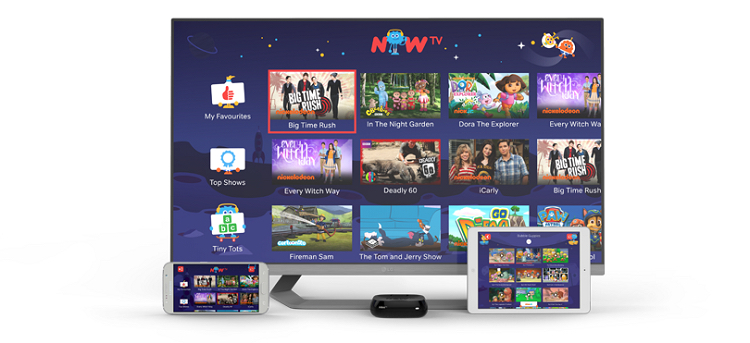
Everything will be displayed in a new kid-friendly interface, which includes large title cards and colourful characters. The service will also offer some parental controls, such as age-restricted PIN locks, to ensure little viewers never stumble across any inappropriate content.
The new Kids Pass means that Nickelodeon, Nick Jr and The Disney Channel will be moving out of the Now TV Entertainment Pass. Disney’s exit is notable given that it’s not part of the new Kids Pass — we suspect that’s a move on Disney’s part to encourage take up of its new DisneyLife streaming service. In exchange, Sky says it will be adding Nat Geo Wild to the Entertainment — we’ll let you decide if that’s a fair swap.
Source: Sky
Biotech firm wants to deliver organs using a passenger drone
Do you remember the EHang “delivery drone for humans” from CES 2016? The company is still around, and has cranked up the level of hype with a new deal. It will develop and produce 1,000 copies of the drone for Lung Biotechnology PBC, a company that wants to manufacture lungs and other artificial organs. The biotech firm plans to station Ehang’s drone, which will be re-purposed as the “Manufactured Organ Transport Helicopter (MOTH),” outside its facility. Then, it will transport artificial organs to needy patients at hospitals, according to the news release.
As a reminder, the EHang 184 drone is designed to carry a single person up to 10 miles at 65 miles per hour, “simply by entering a destination into its accompanying smartphone app.” For the new partnership, it would be re-purposed to carry organs, which Lung Biotechnology plans to manufacture using either pig-to-human xenotransplantation or stem-cell regeneration. The craft would fly pre-programmed flight plans to charging pad-equipped hospitals within the MOTH’s 10 mile delivery radius.
The idea of a smartphone controlled drone that transports xenotransplanted organs sounds like tech nirvana, and a noble cause, to boot. “Currently, organ transplants are limited by the number of brain-dead donors, which results in thousands of deaths on organ transplant waiting lists each year,” says the PR. However, this organ transplant network in the sky has some serious regulatory and physical realities to hurdle.
Let’s start with the artificial organs: They don’t exist yet. Lung Biotechnology is a legitimate firm with $700 million yearly sales that has invested a lot of money in transplantation-ready pig organs and teamed with Craig Venter, one of the first scientists to crack the human genome. Nevertheless, nobody has reported research that could lead to artificial organs anytime soon. And when they do, the US Food and Drug Administration will have to sign off on them, a process that could also take years — so transportation is the least of its problems.

Genetically modified pig organ for xenotransplantation (Chris Maddaloni/Nature)
The other issue is the drone itself. As far as we can tell, it’s never test-flown its intended human-carrying mission, and we’ve only seen one short video (above) of the craft in flight at all. Even if EHang has made huge strides in developing the $200-$300,000 craft, there are massive regulatory hurdles. A drone that size would have to be certified by the FAA, a process that can be costly and time-consuming, especially for an unknown entity like a drone. Finally, the FAA is considering rules that would completely ban heavy drones from flying over people, which pretty much kills the organ delivery business plan.
Lung Biotechnology thinks the idea is feasible, though, through the use of upcoming US air traffic programs. “The well-known locations of transplant hospitals and future organ manufacturing facilities makes the EHang technology ideal for Highway-In-The-Sky (HITS) and Low-Level IFR Route (LLIR) programs,” says company CEO Martine Rothblatt. However, the long-delayed HITS program still hasn’t launched, and may not be fully operational until 2025.
Despite the plan’s many holes, it’s a fun idea that marries several types of emerging tech into one fantastical vision. EHang and Lung Biotechnology have signed a 15 year deal, so they are looking far down the road. However, given the limitations of the tech and numerous regulations still to clear, even that might not be long enough.
ICYMI: Robot running buddy, mechanical sea life and more

Today on In Case You Missed It: A horse-sized, standing CT scanner has been invented to keep your equine pals from being tranquilized before images are taken; a sea urchin mouth was used as inspiration for a robot that could be sent to Mars to collect samples; and NASA engineers and MIT students created a robot for Puma that can be programmed to ‘race’ training runners.
If you’re less of a runner, more of an observer, the Kung Fu art of Tobias Gremmier may be more your speed. As always, please share any great tech or science videos you find by using the #ICYMI hashtag on Twitter for @mskerryd.
Amazon Fresh expected to launch in the UK this month
Although Amazon UK has made a small foray into the world of groceries, it has yet to fully take on Britain’s supermarkets with the launch of its Fresh service. That could soon change, however, after The Grocer got wind that the company has already begun servicing a small number of customers from its east London depot. It’s also apparently told suppliers to begin deliveries within the next couple of weeks.
Bol, seller of “super food”, revealed to the grocery magazine that it will begin offering chilled meals via Amazon Fresh from May 18th. Amazon already offers next-day delivery for 4,000 basic food and drink items, as well as and home and cleaning supplies, but Fresh is designed to compete with the major supermarkets not only on price but with speedier delivery.
Although Amazon will likely launch in London first, the company recently signed a national deal with Morrisons, one of the “big four” supermarkets, to stock its fresh and frozen goods. Sainsbury’s, another of the major chains, is also finalising its takeover of Argos, further blurring the lines between supermarket and household retailer.
Via: The Guardian
Source: The Grocer (Paywall)
 AIVAnet