


Android app pirate pleads guilty to criminal copyright infringement
An individual involved in running third-party Android app marketplace Applanet has pleaded guilty to criminal copyright infringement, the U.S. Department of Justice (DoJ) announced. According to the DoJ, Aaron Blake Buckley entered his guilty plea in response to charges that he sought to help distribute pirated versions of Android apps normally available on Google Play worth over $17 million. An associate of Buckley’s, Gary Edwin Sharp II, previously plead guilty to the same charges in January.

From the DoJ:
According to statements made in court, the conspirators identified themselves as members of the Applanet Group. From May 2010 through August 2012, they conspired to reproduce and distribute more than four million copies of copyrighted Android apps through the Applanet alternative online market without permission from the victim copyright owners, who would otherwise sell copies of the apps on legitimate online markets for a fee. On Aug. 21, 2012, the FBI seized the Applanet website, which marked the first seizure of the domain name for a website involving a mobile device app marketplace.
The release also notes that Sharp has also admitted to having a role in running a separate third-party app marketplace called SnappzMarket Group. Both Buckley and Sharp are scheduled to be sentenced on August 1.
It turns out the camera on your phone matters
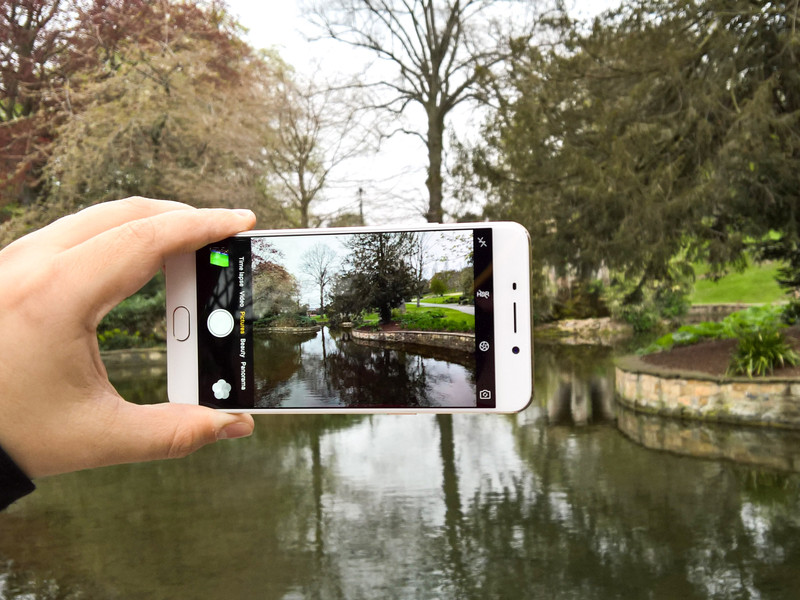
In last week’s poll we asked how important the camera on your phone was. Many people always carry around their phone, and primarily use the camera there. That means that deciding whether the camera on your phone matters will directly impact how awesome all of your photos look. Trying to decide how much the camera on your phone matters can be difficult when faced with choices, but it’s worth thinking about.
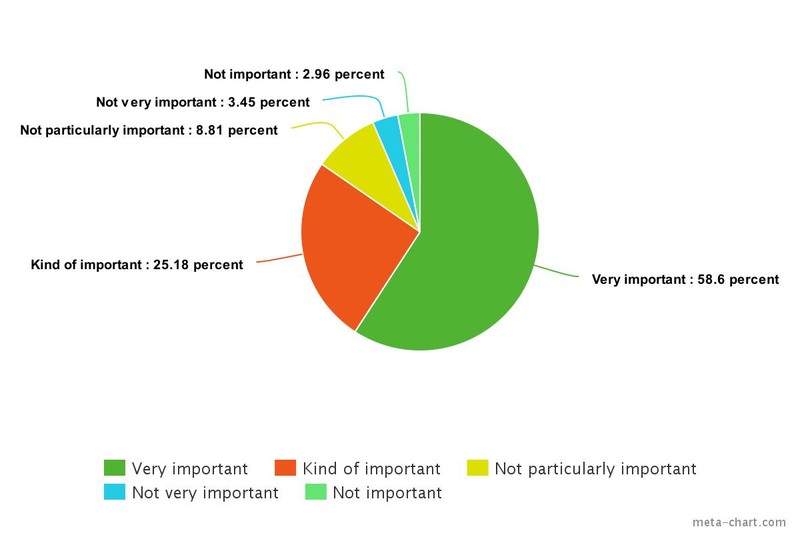
First place was snatched up by “Very important” snatching up a respectable 58.6 percent. “Kind of important” took second place, with 25.18 percent of the vote. “Not particularly important” managed to take third place with 8.81 percent of the vote. In fourth place, with 3.45 percent of the vote was “not very important”, followed by “Not important” in last place with only 2.96 percent of the vote.
Is there something more important than the camera on your phone? Be sure to pop into the comments and let us know!
Casey Neistat’s social video app Beme comes to Android

Beme, a social video app that was launched by popular YouTuber Casey Neistat on iOS in 2015, is now available on Android. In addition to launching on Android, today also marks the app’s official foray into full release territory after having been in beta since last year.

If you’re unfamiliar with Beme, the app is meant to encourage you to share video of what you’re doing without taking you out of the moment. Rather than staring at your phone’s display while you record, you simply open the app and then hold the phone’s screen to your chest to instantly start capturing what you’re looking at. Once you’re done, just pull the phone away to stop recording and your clip is instantly shared. Of course, you can also record by simply holding a hand over the sensors on the front of your phone, but the screen will remain a solid color to keep you from watching the viewfinder.
The goal, of course, is to allow you to stay “in the moment” and share real experiences without filtering the content. You can also browse through the app to check out clips from other users around the world, then send reaction shots to the uploader.
If you’re interested, you can grab Beme on Google Play now. Also be sure to check out Neistat’s rundown of the app in the YouTube video below.
Samsung Galaxy Note 6 and maybe new Gear VR could have USB Type-C
Although Samsung has already announced two flagship smartphones this year, rumours have been floating around for the company’s next phablet, the Galaxy Note 6, including a recent report about the larger phone featuring USB Type-C.
According to SamMobile, the South Korean phone maker is working on the successor to the Galaxy Note 5. It is reportedly a water- and dust-resistant device, like the Galaxy S7, and it could feature fancy stuff such as an Iris scanner and a USB Type-C port. Samsung is expected to adopt the reversible connector, though it’s unknown if it will support USB 3.1 or an older standard.
If the Note 6 were to support USB 3.1, the connector would provide USB Power Delivery 2.0 for faster device charging as well as the ability to deliver HDMI and Display Port video signals. Now, here’s the thing: Samsung’s Gear VR virtual reality headset works with select Samsung Galaxy devices, including last year’s Galaxy Note 5, but neither of those products offer USB Type-C.
If the Galaxy Note 6 were to have a USB Type-C port, would that spur Samsung to release a new Gear VR with USB Type-C alongside the Note 6? The current headset comes with a microUSB port, but SamMobile said it could imagine a second-generation version with the connector upgrade.
The Samsung Galaxy Note 5 launched in August 2015, so we’ll likely have to wait until later this summer before we know for sure.
New Hulu subscription service to stream broadcast, cable TV channels
Hulu is reportedly working on a new subscription service for US cord-cutters.
Cord cutters are people who ditch cable television in favour of an internet-based service, and according to The Wall Street Journal, they’ll soon have a new service to choose from a company that already offers on-demand programming. Hulu, which is similar to Netflix in that it lets subscribers watch content from major networks, is developing a service that’s all about live TV.
Details are scarce but the idea is that the service will offer popular broadcast and cable TV channels. It’s a cable TV-like service that hasn’t yet been named, but it’s thought to be subscription-based and likely priced around $40 a month. It won’t offer hundreds of channels, as Hulu, which is co-owned by Walt Disney and 21st Century Fox, wants to focus on quality and not quantity.
Disney’s ABC, ESPN, Disney Channel, the Fox broadcast network, Fox News, FX, and Fox’s national and regional sports channels are all expected to be offered with the service. Comcast Corp’s NBCUniversal, which is also an owner in Hulu, so far hasn’t agreed to license its networks.
However, at that price and with those live TV channel offerings from Disney and Fox, it appears as though Hulu’s upcoming subscription service will be a lot like Sling TV and Sony’s PlayStation Vue, both of which stream live programming and cost a bit more than, say, Netflix.
SoundCloud Go music streaming expands to the UK, Ireland
We thought SoundCloud Go could use some polishing when it launched in the US just over a month ago, but the ad-free, offline-enabled option is already expanding to other countries. CTO and co-founder Eric Wahlforss tells Reuters that the subscription option is now available in the UK and Ireland for 9.99 pounds/euros per month, with plans to roll out in “multiple” additional countries this year. There’s no word on the number of paying customers yet, as Wahlforss says many users are still in their trial period. Still, he says the company is “well funded” and even though it’s not profitable yet, it’s looking to go worldwide with the paid option over the next couple of years. If you signed up day one then you’ve already exhausted your free month so let us know, are you sticking with SoundCloud Go?
Are you paying for SoundCloud Go?
Source: Reuters
Apple CEO Tim Cook Teases ‘Great Innovation’ in Product Pipeline on CNBC’s Mad Money
Apple CEO Tim Cook today sat down with CNBC Mad Money host Jim Cramer, where he discussed his thoughts on innovation, the future of the iPhone and the Apple Watch, the growth of Apple services, Apple’s performance in China, and more.
Last week, Apple reported its first year-over-year revenue decline since 2003, announcing $10.5 billion in profit on $50.6 billion in revenue. Apple also saw its first ever decline in year-over-year iPhone sales, leading one Wall Street analyst to claim Apple’s best days are behind it.
“I couldn’t disagree more,” said Cook when asked about the comment, attributing the perceived sales dip to an abnormally high upgrade rate in late 2014 and 2015 as people upgraded to the iPhone 6 and pointing towards growth opportunities in China and India. Cook went on to tease future advances in iPhone technology that will inspire people to buy new devices.
We’ve got great innovation in the pipeline. New iPhones that will incentivize you and other people that have iPhones today to upgrade to new iPhones.
We are going to give you things you can’t live without that you just don’t know you need today. That has always been the objective of Apple. To do things that really enrich people’s lives. That you look back on and you wonder how did I live without this.
He reiterated Apple’s future plans later in the interview when questioned on whether Apple is still innovating. “We’re fairly secretive,” he said, “but I would tell you we’re incredibly excited about things we’re working on.”
Cook also commented on Apple acquisitions. “We’ve acquired a lot of companies. We generally acquire a company every three to four weeks on average,” he said. “We’re always looking,” he added on the topic of potential major acquisitions.
On the Apple Watch, Cook didn’t give many hints about what’s coming in the future, but he said he believes it will be seen differently in retrospect, much like the iPod. “You’ll see the Apple Watch getting better and better,” he told Cramer. “We’re still in learning mode.”
If you look at iPod, iPod wasn’t viewed as a success, but today it’s viewed as an overnight success. […]
And so I think that in a few years we will look back and people will say, “How could I have ever thought about not wearing this watch?” Because it’s doing so much for you. And then it will all of a sudden be an overnight success.
Cook also addressed concerns about China, which led billionaire Carl Icahn to sell his full stake in Apple earlier this year. Apple’s sales fell 26 percent in Greater China in the second quarter of 2016, and recently, Apple was forced to take down the iTunes Movies and iBooks stores in China on concerns from Chinese officials that believe Apple is “too deeply established” in core industries in the company.
“I could not be more optimistic about China,” he said. According to Cook, the Android-to-iPhone switch rate has been “huge” in China, up 40 percent in the first half of 2016 compared to the first half of 2016. He says Apple is working with Chinese regulatory authorities to get its iTunes Movies and iBooks services back online in the country. “We’re pretty confident and optimistic that we’ll be back online and offering those to our Chinese customers soon.”
Cook also spoke at length on the dip in Apple stock, the company’s quarterly performance and predictions for next quarter, smartphone penetration in China and India, and Apple’s customer loyalty and potential for growth in services.
Cook’s segment aired on Mad Money on CNBC at 6:00 p.m. Eastern Time. Part one and part two of the full episode are now available on the CNBC website and are embedded above.
Tags: Tim Cook, CNBC
Discuss this article in our forums
Must-own apps for the bibliophile in all of us [Roundup]

Words speak.
They have voices that resonate from within, rather than echoing out. Words take you to far off galaxies or worlds where the power of electricity was never harnessed. Worlds of wizardry and time travel and romance and dragons. Words are what transform raw emotion into poetry, and give substance to messages from Dreamland. Words are what separate us from the rest of the animal kingdom.
Melodramatic, right?
Hopefully it kept you reading, though; for this week’s Roundup, I gathered a few of my favorite e-readers for your downloading pleasure. There are number of obvious ones, and a couple you might not expect.
And so, without further tangential verbosity, I present you with AndroidGuys’ favorite e-readers.
Play Books, by Google
This is one of the obvious ones – I’d be remiss in my Google Fanboy duties if I didn’t include Google’s excellent e-reader app, which not only allows the access of ebooks but also the perusal of a vast collection of purchasable literature – from poetry, to novels (both literary and graphical in nature), to comic books (which should not be confused with the aforementioned graphic novels). Google’s e-reader app may not have the name recognition or quite the selection of Amazon’s, but don’t let that stop you from giving it a long, hard look.
Kindle, by Amazon

Another obvious one. For a while there, Kindle was the only real option for purchasing digital literary content. And while it’s no longer the only player in the game, it’s still top dog – especially with that gift that keeps on giving, Amazon Prime. Kindle sports a number of innovative features, including Word Runner – a feature that aims to increase your reading speed by flashing words on your screen at an increasingly fast pace – and Word Wise, which expands your vocabulary by defining tough words for you as you reach them. It also lets you pull popular quotes directly from the books you’re reading, which I find extremely valuable on occasion. When it comes to e-reader apps, Kindle is still the name to beat.
NOTE: Kindle is also a platform of hardware sold specifically for use with Kindle books – Amazon has a pretty strong selection of devices across many price points to fit any budget, from the brand new Kindle Oasis (starting at $289) to the currently-on-sale classic Kindle ($60).
ComiXology, by Amazon
All my life, I’ve heard that comics aren’t literature; from teachers, from family, from anyone older the age of 30, really. But I insist that comics and graphic novels can be every bit as artistic as are novels by the greats. Is every one a masterpiece? No – but neither is every book that comes along. Classic graphic novels like Watchmen and The Killing Joke are classic pieces of storytelling, and more recent favorites like Saga truly are masterpieces.
But I digress.
ComiXology is, at its core, Kindle for comics; a combination e-reader/library/store built for the expressed purpose of enjoying comics and graphic novels. Prices range from reasonable to exorbitant, as one would expect, but on occasion you can find a hidden gem for a song. If you’re looking to get started with comics but are overwhelmed by the sheer variety of content, I highly recommend giving the above three a shot; you can’t go wrong with those.
POETRY, by Poetry Foundation

Between Kindle and Play Books, you have access to more than enough novels to last a lifetime. POETRY, however, gives you something different; access to thousands of classic and contemporary poems of all sorts. POETRY lets you search for poems by line, randomly select a poem to fit a specific mood, or download your favorites. Kindle and Play Books give you access to collections of poems that you often have to pay for – POETRY turns your phone into a database of emotive words.
Audiobooks, by Audible
Not everyone has time to sit down and a read a book. Between work, school, commute times, family, relationships – whatever – we rarely have time for leisurely reading. Sometimes, though, we might have time to listen to one. Audible is the foremost provider of audiobooks, with thousands of books over dozens of genres to choose from. Persistent bookmarks mean you never have to look for your place, regardless of which device you’re listening on, and variable speed narration lets you find the perfect speed to which you can listen to your books.
There you have it; in my opinion, the best apps for getting your daily fill of literary content, whatever your medium of choice may be. Think I missed one? Have a better recommendation? Maybe you just wanna pitch your favorite piece for others to read – leave us a comment below.
DuPont Corian Charging Surface review – CNET
The Good The DuPont Corian Charging Surface look great, and as countertops alone, they perform as expected. The countertop also supports both Powermat- and Qi-enabled devices.
The Bad The chargers are overpriced, and the wireless connection often doesn’t work well at all.
The Bottom Line I can’t recommend DuPont Corian Charging Surface countertops to anyone.
Visit manufacturer site for details.
DuPont’s Corian Charging Surface countertops sound like the perfect marriage of kitchen design and contemporary technology. The concept conjures the idea of a whole countertop that acts like a wireless device charger. Sounds great.
You’ll need to replace your counter wholesale to add the wireless chargers, so it’s no small upgrade. Once you find a local fabricator that offers the charging tech, you can expect to pay between $150 to $200 per charger, plus $60 or more per square foot of DuPont’s Corian or Zodiaq countertop material. Between the costs and the commitment for perspective buyers, DuPont’s charging tech has to be perfect. Our experience with a charging Zodiaq Quartz counter in the CNET Smart Home was anything but.
The charging technology isn’t responsive enough even with phones like the Samsung Galaxy S7 that support wireless charging natively (Qi tech in Samsung’s case, although the DuPont chargers also work with PowerMat’s charging technology). With the plug-in rings that grant wireless charging to iPhones and other devices without native support, you’ll spend so much time searching for the exact, pin-point spot that makes the charging connection, you’re better off just tracking down a cable.
As much as I like the idea of a carefree, countertop-charging existence, DuPont’s Corian Charging Counter Surface will only bring frustration and regret. Stick with standalone charging mats.
This countertop is hiding a secret (pictures)
See full gallery


1 – 5 of 7
Next
Prev
What’s with the price?
This was my first question when I heard how much it cost to install a DuPont Corian Charging Surface. The Corian countertops themselves aren’t too expensive, comparatively. Sixty bucks per square foot is about midrange, and like any surface, it comes with pros and cons. From a design standpoint, the countertops look fine. It’s an acrylic material, and surface-level scratches can be buffed out easily. But it’s susceptible to heat damage, unlike higher end stone counters.
We installed Zodiaq Quartz countertops at the Smart Home, which will set you back $75-$90 per square foot — but it looks sharper and boasts better durability. Deciding whether to purchase DuPont Corian or Zodiaq surfaces will just depend on your budget and particular kitchen needs.
The price that really stands out to me, though, is that of the chargers. Ostensibly, the high price of up to $200 per charger is earned by the convenience of wireless charging in a countertop. But that doesn’t explain why the chargers cost so much more than the quality, standalone wireless chargers you can find online for $30-$60. Even chargers embedded in furniture from online stores like IKEA cost significantly less than DuPont’s.
The DuPont chargers also offer almost nothing special, besides their incidental attachment to the countertop. Although DuPont says the charger is made to have greater range than most others (since it has to connect through a countertop), they end up taking more of your time than usual trying to find a charging connection. And it’s not just finding the sweet spot above the charger; it’s also finding the exact orientation necessary to maintain that connection.
Sony A6300 review – CNET
The Good The Sony A6300 delivers class-leading photo and video quality, plus good performance and features for shooting action.
The Bad Myriad small annoyances mar the experience and it has the trademark poor battery life of Sony’s A series. Plus it really could use in-body image stabilization.
The Bottom Line A respectable update to its very popular A6000 mirrorless interchangeable-camera model, the Sony A6300 remains great but also retains some of the drawbacks of its predecessor.
The Sony A6300 experience, as with many of its A series interchangeable-lens camera (ILC) models, feels like soaring through the sky one minute only to smack into a window the next. It flies with a beefed-up autofocus system, excellent 4K video (with supporting features) and improved low-light photo quality over the A6000’s already great images. Combined with the usual advantages of an ILC — smaller body and lenses, better photo preview and more streamlined video shooting — there’s a lot to appeal to enthusiasts who might otherwise buy a fast general-purpose dSLR.
It’s priced at $1,000 (£1,000, AU$1,700) for the body, and $1,150 (£1,100) for a kit with the 16-50mm f3.5-5.6 power-zoom lens. There doesn’t seem to be any official kit pricing in Australia, but I’ve seen it for AU$1,800.
That kit lens is one of my least favorites, though — it feels cheap, slows camera startup a lot, and the inexpensive power zooms generally have worse quality than their manual counterparts. It seems a waste for this camera.
Sony A6300 full-resolution photo samples
See full gallery


1 – 5 of 10
Next
Prev
Best quality, for the moment
It really is a moving target, but for now the A6300 seems to have the best photo quality in its price class: most accurate automatic white balance, with nicely rendered detail, decent tonal range and above average noise profile even with the default Creative Style setting. It pushes the contrast a little, but doesn’t mess with the actual hues.
It’s not a huge lead, though. For example, you won’t see much difference from the much-cheaper A6000 in the JPEGs until you hit about ISO 6400; below that, they’re practically identical. The A6300’s JPEGs are only really clean through ISO 800; you can push that through ISO 3200 by shooting raw to avoid the aggressive noise reduction and to expand the shadow areas that get clipped.
As you’d expect from Sony, the 4K video is quite good; sharp, with an excellent noise profile and well preserved tonal range in low light. Highlights will blow out with the default settings, though, as with many cameras.
Analysis samples

JPEGs are clean through ISO 800; by ISO 1600, in-focus areas look good but you can see noise-suppression artifacts in even slightly out-of-focus regions.
Lori Grunin/CNET

By ISO 3200, even in good light you can see a lot of detail loss in JPEGs.
Lori Grunin/CNET

The A6300 delivers excellent color, saturated but neutral with no hue shifts.

You can see why the A6300’s photos appear much better than the A6000’s at high ISO sensitivities: it looks like there’s better signal processing, resulting in raw files with a much better noise profile. (ISO 12800, raw with no software processing)
Lori Grunin/CNET

At high ISO sensitivities, you can improve the perceived detail by processing the raw rather than shooting JPEG. (ISO 6400)
Lori Grunin/CNET
Fast — not fastest
For the most part, the A6300 performs almost identically to the A6000; that shouldn’t have surprised me, but it did. (I retested the A6000 with our current setup for the purposes of comparison.) That’s both good and bad.
At most operations it’s fast, at least as fast as good performers in its class at single- and two-sequential-shot focusing and shooting under most conditions. Though my tests indicate it’s reasonably speedy in dim light, I frequently experienced slow focus or complete inability to focus in low light situations that usually aren’t a problem for dSLRs I shoot with. And that’s with a better-than-kit lens, in this case the Vario-Tessar T* E 16-70 mm F4 ZA OSS.
 AIVAnet