


Android hardware profits estimated to have halved in 2014

2014 has certainly been an interesting year for Android, but hardware manufacturers have been having a tougher time over the past twelve months, especially when it comes to turning a profit.
According to analyst Chetan Sharma, global profits within the Android hardware market are estimated to have dropped by approximately 50 percent compared to 2013. Despite the continued growth in Android’s market share and record smartphone shipments, a worse than expected year for some of Android’s largest manufacturers and the growth in nibble low-cost competitors has eaten into manufacturing profit margins.
Samsung’s substantial market presence and poor financial year is one of the largest factors in this decline in averaged profitability. In Q3 2014, Samsung’s IT & Mobile Communications division saw a 74 percent decline in profitability compared with the previous year and has averaged a 35 percent quarterly decline in mobile profits this year.http://embed.chartblocks.com/1.0/?c=546b614dc9a61d340d999f8a&t=8d5a273b4d8afcfHTC and Sony are two other big smartphone brands that have seen profits squeezed lately. LG’s slightly lower cost hardware has seen its smartphone shipments improve, but profits are still hard to come by. The real winners this year have been low cost Chinese manufacturers, which have managed to substantially undercut the big brands with considerably cheaper, high-end hardware. Xiaomi has risen to become one of the global market’s largest players in a very short space of time due to its competitively priced hardware. This business model is proving profitable and has begun to spread to other Android manufacturers, but lower retail prices are resulting in smaller profits.
It is important for Google that the ecosystem stays healthy and balanced. Without profitability, some of these players will eventually disappear and it will primarily become a Samsung + Chinese OEMs ecosystem. – Chetan Sharma
Cheaper prices for the same hardware is clearly beneficial to consumers, at least in the short term, but Google will no doubt be keeping a close eye on the profitability of its essential partners. The risk is that the rise of cheaper Chinese OEMs will start hurting Google’s own profit margins, as these companies tend to ship their own customized versions of Android and often don’t include Google’s own services with their devices.
Others have a slightly less pessimistic view of this power shift in the Android ecosystem, seeing the rise of cheaper OEMs as a market efficiency. Samsung’s decline in profitability is no accident, other OEMs in the Android space may simply be doing a better job at providing the hardware consumers want at a price they are more willing to pay. Many have said that low cost manufacturers can’t sustain profits in the long term, but they are the fastest growing Android OEMs at the moment.
Android momentum in the broader startup ecosystem continues despite some of the near term profitability questions of the manufacturers, – Rich Wong, Accel Partners
The next twelve months will reveal whether or not this shift towards lower cost manufacturers will result in a changing of the guard, or if some of the traditional brands can rejuvenate their profits with superior products.

Accessory of the Day: Belkin 12 outlet surge protector, $13.13

Protect your valuables and ensure every piece of equipment has power with a high-quality surge protector. This Belkin 12-outlet surge protector features a 6-foot cord, safety covers, detachable cord-management clip, and a lifetime warranty. Grab one for just $13.13 and you’ll have it within two days (Prime customers). Great buy!
Join Prime and get this deal with FREE two-day shipping!

The post Accessory of the Day: Belkin 12 outlet surge protector, $13.13 appeared first on AndroidGuys.

The Army may ditch fitness tests for unfit, ‘ponytail-wearing’ hackers

It’s a truth, often forgotten, that no-one can be perfect at everything. We may laud Justin Timberlake’s musical, dancing and acting ability, but he’s probably a terrible plumber. It’s a problem that the Army is beginning to understand, since the sort of people who can successfully fight in a cyber war are more likely to be bad at assault courses, climbing ropes and carrying heavy objects. It’s with this in mind that Lt. Gen. Robert Brown, head of the Combined Arms Center at Fort Leavenworth, says that the US Army may relax its fitness requirements for digital soldiers.
Speaking at the New America Foundation, the Telegraph reports that the officer said that the best cyber soldiers “are not natural candidates for a military career.” He went on to add, delightfully, that these teens “grew up on Google and wear ponytails,” and they’re probably listening to some of that gosh-darn it loud rock and roll music, too. Of course, this is an off-hand remark from a single officer, although it’s a sentiment that’s been uttered before, most recently by Maj. Gen. Allen Batschelet in October. Still, it looks as if all those hours of Uplink may just get you out of having to do the regulation 100 pushups, 100 sit-ups and 2-mile run.
Filed under: Internet
Source: The Telegraph
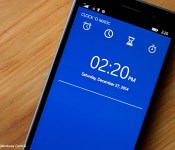
Clock O Matic, a very simple time keeping solution for your Windows Phone

Clock O’ Matic is a very clean and simple clock app that delivers a world clock, alarm, stopwatch and countdown timer to your Windows Phone. With its no-nonsense interface, Live Tile support and multiple alarm/timer abilities Clock O’ Matic is an impressive Windows Phone app.
In using Clock O’ Matic, it comes across as an app with a lot of potential. If the developer can address few issues causing stability issues, Clock O’ Matic will be an attractive option for those looking for a complete time keeping solution.
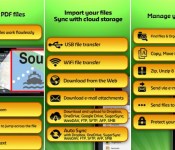
PDF Reader ‘GoodReader’ Removes iCloud Drive Functions to Comply with ‘Mandatory’ Apple Policy
PDF reader app GoodReader has removed a number of operations related to iCloud Drive to comply with Apple’s guidelines. Specifically, developer Good.iWare has disabled GoodReader‘s ability to create and delete new folders inside iCloud along with the ability to move iCloud files. The developer called the iCloud usage policy “mandatory” and also included VoiceOver compatibility along with a big fix for opening iCloud containers.

Important iCloud functionality change:
– to ensure the compliance to Apple’s iCloud usage policy, the following operations have been disabled: creation of new folders inside iCloud, deletion of folders inside iCloud, moving of files and folders inside iCloud.
We apologize for the inconvenience, but the iCloud usage policy is mandatory.
The changes to GoodReader come a week after Panic’s file management app Transmit was forced to disable its send to iCloud Drive feature which also led to the removal of all Share Sheet file transfers to other third-party services. However, Apple later reversed its course on Transmit as the app reinstated its sending feature in an update shortly after.
While Apple introduced a number of new features with iOS 8, a number of developers have been forced to remove key features from their apps for reasons that are unclear. For instance, Notification Center widget Launcher was removed after the launch of iOS 8 in September, and Apple has also asked apps like Drafts and Neato to remove widget functionality. Apple also asked calculator app PCalc to remove the calculator functionality from its Notification Center widget, but later reversed its decision.
GoodReader is a $4.99 download for the iPhone and iPad. [Direct Link]
Report: Samsung to begin Lollipop rollout in US in January

With OEM skins, Android updates are something of a mixed bag, especially among top-tier products: the question isn’t really one of if, but instead when. Motorola, for example, has shuttered its Motoblur skin entirely, and gets updates out the door quickly. Samsung on the other hand, still requires some down-time before it can begin the roll-out. This year has seen the Korean giant speed things up considerably, with a [limited] Lollipop roll-out in select parts of Europe for the Galaxy S5 flagship some weeks ago. However, American customers are still left standing. But, not for long?
Thanks to Reddit user SamsungRep2015, we now know that the USA distribution for Android 5.0 Lollipop will begin in January. As nothing has been officially verified by Samsung USA, this information is still “unofficial”, however Reddit mods have apparently verified the authenticity of said user’s employment at Samsung. S/he reports that the Galaxy S5 will be the first to receive the update, followed by the Galaxy Note 4 and Galaxy Note Edge, and then the Galaxy S4 and Galaxy Note 3, with tablets (such as the pair of Galaxy Tab S flagships) apparently coming in the fourth wave. The following screen capture reported to be from Samsung internal e-mails was also posted:

Despite the above image, there is no information provided as to which carriers this update will be coming to and when, nor is there any indication as to what version of Android Lollipop will be pushed: since its release, there have been three builds (5.0, 5.0.1, and 5.0.2) although the most recent seems to be currently relegated to the 2013 Nexus 7. Also missing are any details of the purported Galaxy Note 2 Lollipop update that may be reaching Europe eventually.
Still, as they say, “you can’t look a gift horse in the mouth”, and thus the effort Samsung is making to update its devices in a generally timely fashion is still something worth considering.

Upcoming VAIO smartphone could help reshape Japanese market

Once upon a time, Sony was King of the Hill, offering new and exciting products, concepts, and form factors to an endless array of electronics. Fast forward to April 2014 and the unthinkable sale of the VAIO brand to Japan Industrial Partners (JIP).
Although Sony retains a 5% minority share in the new “VAIO Corporation”, just a quick stroll down the aisle of a major electronics store here in Tokyo will serve as a sad reminder of days gone by, as the Sony logo is absent both from branding and displays. Still, JIP has a difficult task of building (back) the VAIO brand: as of yet, the only two products it offers are essentially the same as those which Sony released, although that it’s about to change.
Set to release in Japan next year, the VAIO smartphone line might be a bit of a surprise for what it’s not going to be, given the brand’s pedigree: top-of-the-line. While little is known about the specs of the new device (set to launch as early as January), The Nikkei has reported that it will have a 5-inch screen, and that, “price including service charges has yet to be set but will likely fall between that of major brands and the low-priced handsets already in the market.” Additionally there are plans to “feature an app that can manage email as well as phone and video calls all together.”

The device will be sold by local MVNO (mobile virtual network operator), Japan Communications, which provides pre-paid service under the brand name “b-mobile”, and which leases bandwidth on NTT docomo’s wireless network. Manufacturing for the VAIO smartphone will be outsourced, thus further reducing the cost burden on the fledgling VAIO Corporation.
While the prospect of a mid-range VAIO phone might not be that enticing to those overseas, it stands to have an enormous impact in Japan, where the brand name still has a major “mindshare” in the heads — and hearts — of Japanese consumers. Perhaps more importantly however, it also stands to be at the forefront of a major shift that is about to occur with the mobile market here at-large.

For years now, Japan’s government has been trying to allow consumers the freedom of choice with wireless communication, despite the best efforts of the “big three” (carriers) who have actively sought to keep things the way they have always been. At the moment, only NTT docomo will “unlock” phones (for a fee of course, of about $30), and even then the effort provides questionable benefit for the average consumer, as “unlocking” will only allow for the insertion of non-Japanese SIM cards. For all intents and purposes, the devices are very much locked, and thus only benefit Japanese citizens traveling overseas and eBay sellers.
Finally, however, things are set to really change. As a result of new legislation, The Nikkei reports that, “starting in May, Japan’s communications ministry will require that handsets be sold unlocked so they can work with the SIM cards of any carriers. The move is expected to prompt many users to switch from major carriers to MVNOs, which the ministry expects will double their service contracts to 15 million in 2016.” Indeed the past year has seen a large number of MVNOs crop up, and more recently, even local stores are partnering with MVNOs to create brand-new services, such as the collaboration between shopping chain Aeon Retail, ISP/MVNO Biglobe, and Fujitsu to release the Arrows M01 as part of the new Aeon Mobile product line-up.

With the new legislation in-tow, consumers will have an incredible amount of choice not just among carrier offerings, but among these MVNO products as well, which stand to be significantly cheaper in terms of running costs: a standard 2-year contract with NTT docomo costs about $80 a month, and includes the now mandatory “unlimited calling” plan, 2GB of data, and a monthly device installment. Things can get much more expensive should the customer want more data (the 8GB plan will tack on an extra $30 or so). In the event they don’t want to sign a two year agreement, the aforementioned monthly fee will increase by $20. Even should the customer want a data-only plan (i.e. no voice calling), the running cost will be about $70. MVNOs provide much cheaper service, often require no subscription at all, and use the same network.

Still, even with all the positive potential pending, as The Nikkei points out, “Vaio is rather late to enter the market for cheaper smartphones, products that many Chinese, South Korea companies and startups are already offering. But it contends that it can still capture demand by offering a handset with superior design for a reasonable price.” Given the potential for major MVNO growth in Japan next year, and coupled with the Japanese love for domestic products (especially Sony), there is a good chance the VAIO smartphone will garner a fair share of interest. Of course given that Sony itself has its Xperia line, how far that interest goes will remain to be seen.
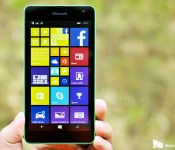
Seven things to know about the Microsoft Lumia 535

The Microsoft Lumia 535. The first Lumia Windows Phone to do away with the Nokia badge and be replaced by Microsoft’s own. It’s an interesting device far beyond its new badge, though. There are plenty of Lumia phones to choose from – and even Windows Phones in general – for the more budget conscious, but the Lumia 535 offers an experience that not all the rest do.
So, if you just picked one up, or you’re thinking hard about it, here’s seven things you need to know.

New York City Considering Apple Pay for Future Parking Ticket Payment System
The city of New York is considering new measures (PDF) that would allow drivers to pay their parking tickets with alternative payment methods like Apple Pay, PayPal, and Bitcoin, reports MarketWatch. Currently, the city says it is collecting roughly $30 billion in parking ticket revenue each year, as the region’s Department of Finance is looking for a “convenient way for motorists to expeditiously pay their parking tickets via a smartphone or mobile device.”

The primary objective of this RFI is to identify and assess mobile platforms that support the payment of parking tickets and learn about their current use and future viability. A secondary objective is to identify existing mobile platforms that support the request for a hearing of parking tickets and learn about their current use and future viability.
New York City’s Department of Finance also outlined its requirements for the new payment system, noting that it should allow users to take a picture of a ticket or scan it in to see the details of a parking violation. The city also notes that the graphical user interface (GUI) of the mobile payment system should be “simple” and allow for quick payments that meet payment-industry standards for security.
New York City drivers are currently able to pay for tickets online, via mail or at a courthouse, but the current online system is incompatible with mobile devices and subjects credit and debit card payments to a 2.5% fee. The city hopes to gain more knowledge on a new mobile parking ticket payment system by January 15 through its formal Request for Information, but there are no definite dates as to when the new measures would be implemented.
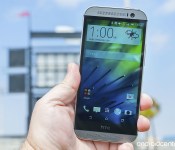
HTC One M8 on the cheap on Vodafone PAYG

If you’re looking to round off 2014 with a bargain, Vodafone UK has a deal that’s worth a look. The carrier is selling its branded HTC One M8 on Pay As You Go for £289, well below the £350-400 you’ll pay elsewhere for the handset. The device will likely be locked to Vodafone, but if you’re already on that network — or have an easy way to SIM-unlock it — then this is a pretty good deal for one of the top Android phones of 2014.
 AIVAnet
