



PlayStation’s push for indie games is epitomized by ‘The Tomorrow Children’

“It’s important to me to be able to express what I want to express.” These words come from Dylan Cuthbert, “Game Designer/Programmer/Anything” at Q Games, as he explains how his team came up with the back story for The Tomorrow Children. The forthcoming title is — by Cuthbert’s own admission — a little bit “out there;” a mix of Minecraft-esque collaborative building, social economics and a Soviet Union-themed post-apocalyptic dystopia. It’s definitely a little on the fringe. Multiplayer shooters and herculean protagonists have their place, but, as Cutbert alludes to in his gambit above, it’s probably not here. Indie doesn’t mean small though, and The Tomorrow Children, I learn, is an example of how companies like Q Games can keep to their own script (or lack of), and still benefit from the considerable support afforded by a partnership with Sony.
Earlier, during a preview session for The Tomorrow Children, the game is described as a “Marxism simulator.” The backstory? An experiment to unite all human consciousness went terribly wrong, destroying society. Over the following decades the few survivors try to rebuild humanity. Your role is to venture out into “the void” (the empty space left by the experiment,) and build a new world. Oh, there are also giant creatures to contend with that you kill and mine for materials. Y’know, all that usual stuff.
The off-beat storyline is accompanied by equally expressive artwork. Cuthbert tells me it’s inspired by sources as diverse as (among other things) old Czech puppetry, and the 1960s British drama The Prisoner. The result is cinematic, in a vintage French art house kind of way. Cuthbert is keen to point out that a lot of these decisions weren’t planned up front (as would be required by a AAA studio,) and that one of the main privileges of being independent is being able to, basically, do what you want.

But there’s a paradox. The Tomorrow Children is an indie title in spirit, but Sony is financially involved with the project. So, how does this reconcile with Q Games’ approach to game making? According to Cuthbert, it’s not only not a problem, it’s for the greater benefit of (his company’s) indie games.
“I think it doesn’t matter what size the game is [financially], as long as it’s an expression of the creator… and it hasn’t been meddled with… We just really enjoyed creating the technology [for the game], and obviously to create that technology we needed a bigger project to kinda buoy it up.”
“From the start, Sony was positive, said start experimenting and they were hands off. They just let us do anything we wanted basically.” And the result speaks for itself. How many other blockbuster titles have you opening Matryoshka dolls to collect DNA to rebuild your population? “In this game we’ve explored more ‘different’ ideas than we ever have before” says Cuthbert. Suggesting that despite dealing with suits doesn’t have to mean compromises. So, perhaps money and indie spirit aren’t so mutually exclusive after all?
The Tomorrow Children will be available in the coming months on PlayStation 4.
Filed under: Gaming, Software, Sony
.CPlase_panel display:none;

YouTube refreshes television app for set-top boxes, game consoles and smart TVs

If you use YouTube’s app on your TV, get ready for a new UI (finally!). The app has a much cleaner look now, in line with Google’s Material Design, and includes features that you’re used to seeing on your computer, smartphone and tablet, such as a guide that pops up on the left side, latest videos from your subscriptions and curated channels. The refreshed interface should pop up soon — it’s available now with Xbox One, and Google plans to roll it out to other devices within the next few weeks.
Filed under: Home Entertainment, Software, HD, Google
Source: YouTube
.CPlase_panel display:none;

Humble Bundle finally has the Android app it deserves

As great as Humble Bundle is at bringing content to your devices on the cheap, it’s worth pointing out that its Android app has been a bit lackluster — at least until today. Even though the application wasn’t completely terrible per se, there’s no doubt its looks and functionality could benefit from a makeover. The good news is there’s a new Humble Bundle app on Google Play, featuring a redesigned, cleaner user interface and some novel tools for fans of the service to use. In addition to the fresh, more intuitive design, the app now lets you sideload APKs with more ease and, for the first time, download e-books and music directly to it. It’s also easier to keep track of your purchases, including old and new, which is definitely a good thing if you often get in on the Humble deals. Let us know in the comments below if you’re liking the new app so far.
Filed under: Portable Audio/Video, Internet, Software, HD, Mobile, Google
Via: Android Police
Source: Google Play
.CPlase_panel display:none;

Activision’s dipping its toe into indie gaming with ‘Geometry Wars 3: Dimensions’

Activision creates and publishes a small group of blockbuster video games aimed at mainstream consumers. The world’s largest game publishing company handles some of gaming’s most culturally impactful titles: the Call of Duty franchise, this year’s Destiny, and the entire Blizzard catalog. This week at Gamescom 2014, Activision announced its first smaller effort in many years with Geometry Wars 3: Dimensions. As the name implies, Dimensions is the third entry in the Geometry Wars franchise — a beloved series that debuted as a minigame within the first Xbox console’s Project Gotham Racing 2. People like it so much in that completely unrelated game that it spawned into its own series.
Sadly, the studio behind the originals (Bizarre Creations) was shuttered after a commercial flop with the critically-lauded racer Blur. Some of the folks from Bizarre are back on Dimensions, now part of a new studio named Lucid. But this isn’t the return of Activision’s expanded portfolio, says Activision CEO Eric Hirshberg.
“I wouldn’t read too much into it in terms of a sea change in our business strategy,” Hirshberg told us in an interview. “It’s a passion project, a skunkworks project that we’re excited about, but it doesn’t signal an overall shift in our approach to the business.”

So, no, the move to re-launch Sierra as a label within Activision — while neato — is not part of a bigger push into the burgeoning indie game movement. Hirshberg also pointed out that some of his company’s tentpole franchises, such as the mega-popular kid’s series Skylanders, started out as “small, scrappy” projects rather than intended from the jump as the monsters they’ve become.
Activision’s taking a cautious approach with the new initiative, even. Hirshberg stressed that his company isn’t “taking our eye off the ball” of the prize: blockbuster games aimed at mainstream folks. For now, Hirshberg said Geometry Wars 3: Dimensions is “a cool passion project to hopefully make some gamers happy and do something we think is cool.” As far as we’re concerned, as long as there’s more Geometry Wars to play, everyone wins.
Filed under: Gaming, Software, HD, Sony, Microsoft
.CPlase_panel display:none;
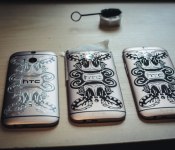
HTC announces extremely limited HTC One M8 Phunk Studio Edition

HTC on Thursday announced a very limited edition of its HTC One M8 smartphone. Called the Phunk Studio Edition, it will be offered in a run of only 64 devices and launch on August 14 as part of a campaign. Phunk, a Singapore-based “contemporary art and design collective”, is slated to celebrate its 20th anniversary… Read more »
The post HTC announces extremely limited HTC One M8 Phunk Studio Edition appeared first on AndroidGuys.
.CPlase_panel display:none;

Apple Meets With Thai Officials to Discuss ‘iPhone 6’ Approval Disclosure
According to a report from Thailand’s Thai Rath newspaper [Google Translate], Apple has already met with officials at the country’s National Broadcasting and Telecommunications Commission (NBTC) to discuss the recent disclosure that two iPhone 6 models have been approved by the government agency for import into the Asian country.
NBTC secretary Takorn Tantasith earlier this week released the approval information on two “iPhone 6″ models A1586 and A1524, reportedly in accordance with guidelines that require the public announcement of approved hardware. The declaration, which he also broadcast on Twitter, contained only the product name and model numbers, but no other details about the iPhone 6 handsets. As noted by several observers, the iPhone 6 approval was the first time a specific device was named in a Tweet by the NBTC secretary, making it an obvious deviation from usual practice.
 4.7 and 5.5-inch iPhone 6 mockups compared to iPhone 5s
Apple is unsurprisingly upset with this public notification, claiming the disclosure released confidential information about its upcoming handset. The NBTC secretary countered Apple’s assertion, arguing that that these announcements do not reveal confidential product details and are meant to protect consumers. He said Apple would be within its rights to penalize Thailand for this leak by canceling its plans to release the iPhone in Thailand later this year, but he stands by his decision to disclose the approval. Translation by a MacRumors reader:
The Secretary General said that everything is done according to the protocol and on August 8 the NTBC has approved the two phone models. He insisted that all that was disclosed is not considered a trade secret and Apple only requested for the specification to remain a secret. As for the specs, the NBTC did not disclose anything.
Apple requested a meeting with NBTC officials to discuss the situation, with Apple emphasizing that the new device may not necessarily be called “iPhone 6″ but otherwise resolving the matter.
Mr. Takorn said that representatives from Apple South Asia from the Singapore HQ arrived to “have a chat” with him and clarified that the 2 phone models may not use the name “iPhone 6” to market and the company want to make sure that the NBTC understands this fact. Apple in Singapore will also explain the situation to Apple in the US about this matter. Apple also reassured the NBTC that this “leak” has no effect in Apple’s plan to launch and sell the iPhone in Thailand.
Rumors suggest Apple is working on two iPhone models for release in the upcoming months. The next generation handset is expected to be unveiled during a September 9 press event with a 4.7-inch model slated to go on sale shortly after the announcement. A larger 5.5-inch model may debut alongside the smaller model or up to a few months later.
.CPlase_panel display:none;
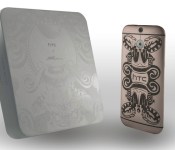
This tattooed HTC One M8 is the company’s latest Limited Edition

Of the many phone makers in the world, HTC is one of the best (if not the best) at churning out Limited Edition collector’s items that focus on unique design and features. The latest in a long series of such products (most of which are highlighted in the gallery below) is a collaborative effort with Singapore-based design collective Phunk Studios, in which the group made a specially designed HTC One M8 with its own unique packaging. Only 64 of them were created (32 in gold, 32 in silver), and they’re being used as a sneak preview of the collective’s upcoming Wonderment exhibition. As you might expect, these unique devices won’t be for sale, but HTC will be providing Engadget with one of them to give away to a lucky reader. That giveaway will take place in the coming weeks, so keep an eye out for it!
Filed under: Cellphones, Wireless, Mobile, HTC
.CPlase_panel display:none;

Xbox One retail units acting as development kits still ‘in the roadmap,’ not a priority

It’s been over a year since Microsoft first announced plans to help democratize game development on Xbox One. The plan at the time was to enable retail units to double as development kits. The effect of that move is twofold: it brings down the cost of dev kits (which are often thousands of dollars), and it opens up the possibility of console game development to a much broader audience. College students, for instance.
The functionality was said to arrive not long after last November’s Xbox One launch. Over a year later, that functionality still hasn’t hit the Xbox One. Microsoft’s head of Xbox, Phil Spencer, says it’s still in the cards. When, however, is still unknown.
“I know, I know, I know,” Spencer told us in an interview this week at Gamescom, the annual gigantic game show in Cologne, Germany. “I don’t love that it was a year ago that we talked about it here and it’s still not available.” He said it’s still “in the roadmap,” but there are a variety of priorities ahead of it. Those priorities, he said, are driven by developers’ requests.
“There’s been such a great response to [the Xbox indies program] that the request from the community so far hasn’t been the retail-to-dev kits,” Spencer said. That program, dubbed “ID@Xbox,” offers developers two free dev kits and direct access to Microsoft’s console support staff. Indies can harness all the same bells and whistles on the Xbox One that the big studios can. All that said, the ability to turn retail Xbox One consoles into development kits took the indie program another full step up: anyone could become a console game developer.

“I just want to listen and take the feedback and not just do something because I wanna go do it,” Spencer said. In so many words, Spencer doesn’t want his team to spend resources (time/money/etc.) delivering a service that developers aren’t asking for. “I wanna do something because the consumer — developers in this case — get what they’re asking for.”
At the same time, this initiative wouldn’t impact existing devs as much as it would impact students and the general public. We can’t know who’s upset that this doesn’t exist yet because the folks who would use it may not even know they want to develop games just yet. Perhaps they’d be inclined if their Xbox One would assist in the process. For now, though, it sounds like we’re depending on the ID@Xbox program for indies on Xbox One.
.CPlase_panel display:none;

HTC’s Zoe app is a social network that uses highlight reels

HTC’s days of acting like a wallflower at the school dance are over — the company’s ready to explore its social side. Its first attempt is to turn Zoe, one of its most creative software features, into a social network that not only lets you share photos and videos with your friends, but allows them to pitch in and edit them as well. Known simply as the Zoe app, the new program launches in open beta today and will be available on several Samsung, LG and other Google devices. Finally, HTC is looking outside of its own user base and reaching out to those who may never have touched any of its products before.
The Zoe app was created by a new HTC division called Creative Labs, which is led by Sense UI head Drew Bamford. It’s the first of several projects the team has in the works, and is the only publicly known project so far. The app has been in limbo as a mere placeholder for the last five months, and the service won’t graduate to final status until sometime this fall.

It’s a logical step for Zoe, which started out as a photography feature on the HTC One M7. Named after an old-fashioned zoetrope which spun around and around to create a short movie, the feature fit the description. It recorded a few seconds of video and a burst of 20 images and turned it into a Harry Potter-esque moving picture. This breathed life into photo galleries and added flash to Video Highlights, a feature which stitched up to 16 Zoes, stills and video clips of your choice and mashed them into a cool 30-second highlight montage. These reels are set to whatever music you want and you can even select one of several different themes to ensure each reel portrays the right mood. They’re both utilized in the new app, and are certainly more entertaining than the traditional family vacation slideshow.
As neat as Zoe and Video Highlights were, there wasn’t much you could do with them aside from uploading them to YouTube or generating a unique URL to show off your content. To share a prized reel with friends and family required effort and, unless loved ones subscribed to (and actively visited) your YouTube account, an easier way for them to view your stuff. You don’t have to worry about this when using Facebook and Instagram; take a picture, do a bit of editing and within seconds your memory will be uploaded and viewed by everyone you’ve ever known.

The Zoe app isn’t quite that quick and easy yet, but it’s definitely an improvement over how it was before. Just like other social networks, there’s a feed comprised of your followers, as well as a “discover” feed in case you want to explore a bit (although there’s no way to specific searches for people or topics). You find friends using your Google or Facebook account, but unfortunately there isn’t a way to search for specific people who may not be in your personal rolodex. (HTC says it’ll be included in the final release.) Similar to Instagram, your feed is a vertically scrolling page that consists of your friends’ montages, and you can like or comment on each one.
So far it sounds like your average social network but with 30-second highlight reels instead of pictures or 15-second videos. One unique benefit to Zoe, however, is the ability to collaborate and edit any montage you want by “remixing” it. The app grabs all of the shots used in that clip and gives you the chance to remove whichever ones you want and add a few photos of your own, change the theme and the music, and presto — you’ve just remixed your friend’s vacation reel. Of course, you can even do it to your own clips, and remixing can be as simple as rearranging the order in which those shots are displayed in the clip, so it’s up to you to determine how deep you want to dive into the editing process.
I haven’t decided yet if this is really cool or really creepy; perhaps it’s a little bit of both. Say you go on a trip with friends and you want to pool your photos and videos together to make an epic montage. Done. It’s so much easier to do it this way than getting them all onto the same desktop computer and sideloading them into one HTC device. Now, it’s all cloud-based. It even works if you use more than one phone (or hopefully a tablet, once Zoe is out of beta) and you want to bundle two different albums together. On the creepy side, there’s something weird about the idea of a follower doing whatever they want with my own content. At least HTC has safety measures in place, should you choose to use them: If you only want certain folks seeing and editing your clips, you can add them to a whitelist so only they can see it.

Finally, when you’re done picking out the pictures and videos you want, selecting the right theme and song to go with it (you can use your own tunes and select whatever 30-second segment you want) and you’re ready to send it off, you have the choice of making it public or private, inviting specific people to do a remix or sharing it as a URL through other apps (Gmail, messaging, Twitter and so on).
I’m impressed with the app so far, even though there’s plenty of room for improvement and more features (it’s only in beta, after all). But I’m happy to see a once-exclusive HTC feature now spreading its wings to other Android devices. It gives HTC more exposure to people who normally choose other phone brands, not to mention that it stands a more realistic chance of attracting a decent number of active users. There are two challenges that Zoe will need to address. First is the massive popularity of other social networks; HTC may not be trying to compete with Instagram and others on a direct level, but most people don’t want to add yet another social network to their already large arsenal. The other challenge is visibility: Will Zoe get top billing (or anywhere close to the top) on the Google Play Store? That alone could be a make-or-break factor for HTC’s success.
The beta program will roll out today to several devices, including any device with HTC Sense 6, as well as the Nexus 5, LG G2 and G2 Pro, Samsung Galaxy S4, Galaxy S5 and Note 3. According to HTC, Zoe should be compatible with Android 4.4 smartphones when it leaves beta this fall.
Filed under: Cellphones, Wireless, Mobile, HTC
.CPlase_panel display:none;

Berlin bans Uber to protect passengers and its taxis

It’s safe to say that Uber has become a victim of its own success, provoking the ire of the global taxi industry and also its fellow ridesharing competitors. While it’s enjoyed some leniency in the US, European regulators have put the boot into the app, with Berlin becoming the latest city to ban Uber cars from its roads. In a statement, Berlin’s State Department of Civil and Regulatory Affairs said that Uber puts passenger safety at risk by using “unverified drivers in unlicensed vehicles,” and threatened to levy a €25,000 ($33,400) fine each time it violates the ban. Drivers won’t escape action either, receiving €20,000 ($26,750) fine if they’re caught pursuing passengers.
Given the rise of unlicensed taxis in European cities, Berlin’s ruling does address a legitimate concern. However, the state department has acknowledged that the “protection of the taxi industry” was also a key factor in its decision. Uber says it intends to challenge the ban and has vowed to continue operating while it contests the ban in court. It’s not all doom and gloom for the company, however: by bringing the case before a judge, Uber can seek a review of antiquated taxi laws, allowing it to operate freely if it gets the ruling overturned.
Filed under: Internet, Software
Via: BBC News
Source: Berlin State Department
.CPlase_panel display:none;
 AIVAnet