


My new default file browser: Tomi File Manager

Sometimes, I’m just not satisified with what my phone comes with my default, such as the messaging app or the file browser. When I first heard about Tomi File Manager, I saw the pictures and was impressed with an app that looks to take file browsing to the next level. Not only was it actually… Read more »
The post My new default file browser: Tomi File Manager appeared first on AndroidGuys.
.CPlase_panel display:none;

Apple CEO Tim Cook, Phil Schiller Take On ‘Ice Bucket Challenge’ to Promote Awareness for ALS
Apple CEO Tim Cook today took the “Ice Bucket Challenge,” which is designed to raise awareness for amyotrophic lateral sclerosis or ALS, also commonly known as Lou Gehrig’s Disease.
The challenge asks people to pour buckets of ice water over their heads (documented on film and shared on social media sites) and then tag three friends to do the same. Friends unwilling to complete the challenge are asked to donate money towards ALS, but as noted by The Verge, many participants have chosen to participate and donate money to the cause.
According to Instagram and Twitter photos, Tim Cook had a bucket of ice water dumped on him at Apple’s Cupertino campus this afternoon during the company’s weekly beer bash, after being challenged by Apple marketing chief Phil Schiller yesterday.
 Image courtesy of Instagram user world_of_possibilities
Phil Schiller, who dumped a bucket of ice water over his head at a beach in Half Moon Bay, also challenged actor Chris O’Donnell. Cook has gone on to challenge Apple board member Bob Iger, musician Michael Franti, and Beats co-founder Dr. Dre.
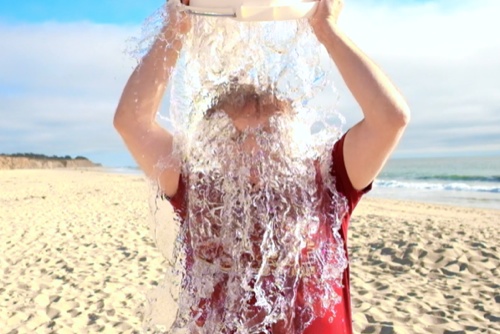 Phil Schiller takes the challenge
Many notable celebrities and tech industry leaders have completed the ice bucket challenge in recent weeks, including Facebook founder Mark Zuckerberg and Microsoft CEO Satya Nadella. As of August 12, the challenge has raised more than $4 million in donations.
.CPlase_panel display:none;
The gaming industry is booming and Sony’s lead is growing

Earlier this week Sony announced that it’d sold over 10 million PlayStation 4s to date, but that isn’t the half of it: the company’s latest gaming console is once again dominating the sales charts overall. As Sony tells it, July marks the seventh consecutive month that the PS4 outsold Microsoft’s Xbox One. Hardware isn’t the only area Sony is trumping its rival either, as The Last of Us: Remastered led software sales last month by a “considerable” margin ahead of number-two-seller Minecraft on the Xbox 360 and PlayStation 3. The gaming sector as a whole is incredibly healthy, too. The NPD Group reports that even though software sales are down overall for July (something it attributes directly to the lack of an NCAA Football release this year), hardware is picking up the slack. Comparing life-to-date numbers of the PS4 and Xbox One to their predecessors, the new consoles are outselling the PS3 and Xbox 360 by almost a whopping 80 percent. That puts this July ahead of last by 13 percent in terms of total money spent in the area, according to NPD.
Nintendo seems to be doing pretty well, too, despite that massive $97 million loss. The outfit says that Mario Kart 8 has now sold over a million copies in the US alone, and the Wii U has increased year-to-date sales by 60 percent compared to 2013.
What about Microsoft? Well, Redmond’s lack of a formal announcement should speak for itself. When we reached out for a comment, a company spokesperson reminded us that the Xbox One sales numbers more-than doubled in June (still no word on what they doubled from) and that “this momentum” continued into July. And, well, that’s about it. When you look at how many Xbox One software-bundled systems that Microsoft is releasing this fall, just how far behind the company is to its main competition (Sony) should be pretty apparent — the firm’s desperate and essentially giving away some of its biggest games in the hopes that people will buy an Xbox One.
Filed under: Cameras, Gaming, HD, Sony, Microsoft, Nintendo
.CPlase_panel display:none;

Rocket recycling: watch SpaceX’s Falcon 9 fly back to Earth

Back in mid-July, one of SpaceX’s two-stage Falcon 9 rockets blasted off from Cape Canaveral to deposit a series of 6 Orbcomm satellites in low earth orbit. In case you’re not terribly familiar with how these things work, it’s the rocket’s first stage (and its 9 Merlin 1C engines) that does most of the heavy lifting, and SpaceX hopes that these expensive boosters can be recovered and reused. We caught a glimpse of that particular Falcon 9′s first stage splashing down in the Atlantic Ocean thanks to a camera mounted on the rocket itself, but SpaceX posted a video today that gives us a look at the events from a different angle — specifically, from a chase plane coming along for the ride. Sadly, the plane lost sight of the first stage just as it tipped over and fell into the water, but the rest of rocket’s journey was well documented. Hitting the water compromised the booster’s hull, though the data collected gave SpaceX confidence that it’ll ultimately be able to land one of these things safely on dry land.
Filed under: Science
Source: SpaceX (YouTube)
.CPlase_panel display:none;

Engadget Daily: NVIDIA Shield review, HTC’s Zoe app and more!

Today, we review the NVIDIA Shield tablet, take a ride in a Manchester United-themed Mini Cooper, get productive with a tablet keyboard case and more! Read on for Engadget’s news highlights from the last 24 hours.
.CPlase_panel display:none;
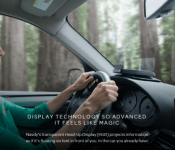
Navdy, the heads-up display (HUD) that can be used in your existing Car
 I don’t get excited often, but a new product called Navdy has me properly excited. Navdy is a heads-up display (or HUD) device that can be used in existing cars; previous concepts we’ve seen in this space have needed to be custom built into the car, so a standalone option that anybody can adopt in any car is naturally extremely attractive. Check out the video that shows Navdy in action:
Able to be used in all cars made after 1996, the Navdy uses unique display technology to make it see like the display is about 6 feet away, and is controlled without touch, only voice commands. It can even read out notifications you receive from messages or social media, is compatible with iOS and Android, but its prime use is sure to be turn-by-turn car navigation directions displayed on the HUD right in front of the driver.
Navdy has just started taking preorders for the HUD device and has since broken $1 million in preorder sales in just its first week, eclipsing its intended target of $60,000 – that target tumbled in the first 2 hours. If you’re interested in preordering this nifty little gadget before it ships in 2015, you can put your hard-earned cash at www.navdy.com/preorder. The Navdy unit will set you back $299 USD, a 40% discount on the expected retail price ($499) of the device, with global shipping to be added on top of that.
Press Release
Navdy, the First Head-Up Display (HUD) That Works in Any Car Surpasses $1 Million in Pre-Sales in the First Week of its Campaign
SAN FRANCISCO– (August 14, 2014) – Today Navdy, the breakthrough HUD that allows drivers to view information from their smartphone as a transparent image floating outside of their car’s windshield, is announcing an incredible milestone. Navdy surpassed $1 million dollars in sales just one week into its pre-order campaign, hitting its original goal of $60,000 in just two hours. Demand was so strong that during the first 24 hours of launch a Navdy device was being ordered on average every minute.
This incredible early adoption validates the company’s mission to make the experience of using smartphone apps in the car easy, safer and intuitive. With Navdy, drivers no longer need to look down and fumble around with their phone to navigate, communicate or control their music.
Navdy’s instant success can be attributed to its advanced projection display, user-friendly touch-less gesture controls and comprehensive functionality. While competitors are working with auto manufacturers to build an infotainment system to be sold as expensive option packages for new cars, Navdy is the world’s first true HUD that works in the car you own on both iOS and Android and can be easily installed or shared between multiple cars.
You can still pre-order Navdy during its campaign at http://navdy.com/preorder.
To see how Navdy works check out the video here: https://www.youtube.com/watch?v=pKL4PJICS40
Navdy is the world’s first in-car platform that offers:
¦ Advanced display technology: Projects a transparent image directly within your field of view that appears to float six feet in front of your windshield so you can maintain your focus on the road while viewing navigation instructions, incoming calls, speed, etc. It’s the same technology used by airline pilots to keep their eyes on the runway while landing an airplane.
¦ Works in any car: The device can be easily mounted on any car dashboard.
¦ Intuitive touch-less gesture and voice controls: You never need to look away from the road while using Navdy. Glance-able apps are controlled with intuitive touch-less hand gestures, while voice recognition lets you ask for directions. Navdy’s noise cancellation technology and wide angle gesture sensors are specifically designed to create an optimal driving experience.
¦ All the apps you need: Navdy works with navigation apps such as Google Maps for turn by turn directions, and music apps such as Spotify, Pandora, iTunes Music and Google Play Music. Navdy can read aloud or display notifications from text messages or social media apps, subject to Parental Control settings. Navdy is compatible with iPhone (iOS 7+) and Android (4.3+) smartphones.
¦ Integrated with your car: Navdy links to your car and is able to display information such as your speed, RPM, miles-to-empty, fuel economy stats, tire-pressure warning or battery-voltage warning from the car’s computer, all presented on your windshield within your field of view. For the first time driver’s can customize their dashboard.
¦ Tuned for the driver: Critical information like turn-by-turn directions and your speed do not disappear when a phone call comes in the way your navigation app disappears to the background on a smartphone when a call comes in. The information you need, when you need it is always present and clearly within your field of view.
Pricing & Availability
Navdy is still available at the introductory price of $299, a 40% discount from its projected retail price of $499. Early customers will also be rewarded for spreading the word to their friends and family; every time someone buys Navdy from your referral you’ll earn a $30 discount, which means after 10 referrals your Navdy is free! Early customers will also have the chance to vote on which smartphone apps and features they’d like Navdy to support when it ships in early 2015.
About Navdy
Navdy is based in the Mission District of San Francisco. It was founded by entrepreneur Doug Simpson and serial inventor Karl Guttag, and is supported by a highly accomplished veteran team. In 2013 it went through the acclaimed Highway 1 Incubator program and continues to work closely with Highway 1’s parent, PCH International, whose world class supply chain and manufacturing capabilities are used by companies such as Apple, Beats, and Google. For more information visit:http://www.navdy.com
//<![CDATA[
ord = window.ord || Math.floor(Math.random()*1E16);
document.write('’);
//]]>
The post Navdy, the heads-up display (HUD) that can be used in your existing Car appeared first on AndroidSPIN.
.CPlase_panel display:none;

Samsung’s ‘Smart Home’ dreams get bigger with $200 million SmartThings buy

Count Samsung in — it’s officially purchasing home automation startup SmartThings, a move that should help it keep up with the Joneses, aka Apple and Google. TechCrunch has sources confirming a $200 million pricetag, matching the amount it heard last month when rumors of the deal leaked out. In a blog post, SmartThings CEO Alex Hawkinson said the team would continue to be run independently, but that it’s moving home base to Palo Alto, where Samsung has one of its Innovation Centers. He says Samsung is ready to get behind its vision of an open smart home platform that works for third party devs as well as different hardware manufacturers, and already has support from some 8,000 apps. SmartThings has gone from Kickstarter to playing with the big boys, now we’ll see if its Hub device and wide-open strategy can get your doorknob, stove, drapes and lightbulb all on the same page.
The next big thing is already here: @SmartThings, @Samsung, and the Open Platform: http://t.co/94ZNhfIos8
– SmartThings (@smartthings) August 14, 2014
Filed under: Household, Samsung
Source: SmartThings, Samsung (Businesswire)
.CPlase_panel display:none;
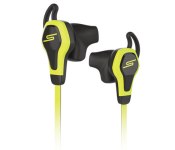
SMS Audio makes Intel’s heart-rate tracking earbuds a reality

Back at CES, Intel showed off its smart earbud concept that matched tunes to your pulse, and now it’s bringing similar tech to the masses. Thanks to a partnership with 50 Cent’s SMS Audio, the heart-rate-tracking chops will hit the gym inside the headphone maker’s new BioSport offering. Looking to “motivate and encourage” peak activity levels, the in-ear option packs a biometric optical sensor needed to monitor both physical exertion and relaxation. What’s more, the audio add-on syncs the collected data with RunKeeper to keep tabs on progress, and as you might expect, the pair is IPX4 certified for sweat and water resistance. So how did the collaboration come about? Well, I had a chat with Intel’s New Devices Group head Mike Bell and SMS Audio President Brian Nohe about just that.
If you’ll recall, SMS Audio revealed the first sweatproof devices in its Sport line back at CES, and now, with the new BioSport earbuds, it’s adding to the options in that series. In terms of design, the earbuds have a hook shape that helps keep them in place, and they grab power from your phone’s 3.5mm jack. As you might expect, the two companies tout the convenience of not having to strap on (or carry) a third device to keep tabs on your pulse while you’re at the gym. And there’s a tangle-free cord and in-line controls here, too.
“This project between our two companies is a much further refinement of that hardware you saw at CES.”
SMS Audio had been working on sport-focused portable audio devices, but in addition to regular options, it sought to add in the biometric component that would offer increased value to those looking to keep track of physical activity. Nohe told me the product came about pretty quickly due to Intel’s wearable-minded department and both companies’ interest in moving rapidly. “This project between our two companies is a much further refinement of that hardware you saw at CES. We’ve been able to take the same basic electronics, but use SMS’ expertise in fit, sound and sweatproof materials,” Bell said, when asked about Intel’s prototype.

Bell went on to say that similar devices require proprietary software that locks you into one company’s ecosystem, so to avoid that scenario, the device will support the popular RunKeeper app at launch. He did say that the demo music-changing app is still on the shelf, but didn’t tip off an official release, although more software compatibility is in the works. “We were really intent to bring most of the stuff, if not all of the stuff at CES, to market and we needed a partner who complemented us and really knew the market,” Bell continued. “And we were looking for the best.”
“We spent a lot of time on materials — as we do with all of our products. SMS is really known for the quality and durability — it’s something that 50, when he first started the company, made sure was there,” Nohe explained. So, what about a wireless option? Well, the headphone maker has found that wired headphones are still the most popular amongst the masses due to several factors, one of which is price. “We certainly could make them wireless, and it would be easier to just run everything off of a battery,” Bell said. However, cutting the cord requires one more charger to worry about, an extra clip (which BioSport sought to eliminate in the first place) and the added heft required for the earbuds themselves. The concept here was to keep the tech invisible and the ease of use the same as a regular pair of earbuds — no extra steps or setup needed.
Unfortunately, there’s no word on pricing, but you can expect the in-ear headphones to arrive in Q4.
Filed under: Portable Audio/Video, Wearables, Intel
.CPlase_panel display:none;

Beats Music Creates Documentary On Spike Lee’s ‘Do the Right Thing’ [iOS Blog]
Beats Music, now owned by Apple, has created a documentary to celebrate the 25th anniversary of Do The Right Thing, a Brooklyn-based film created by Spike Lee. The 22-minute short features Spike Lee and Danny Aiello revisiting some of the original spots where the movie was shot, contrasted by shots from the film itself.
It also delves into some behind the scenes information on the building of the set and the creation of the movie, revisiting many of the actors who starred in the film and getting details on the making of the movie from the original crew.
Towards the end, the documentary features a huge block party thrown by Beats Music in the Brooklyn neighborhood where Do The Right Thing was filmed, with celebrity attendees like Erykah Badu, Dave Chapelle, Wesley Snipes, and Mos Def. The family-friendly event featured a performance of “Fight the Power” by Public Enemy along with activities for kids and adults alike.
As noted by Variety, Beats Music’s new documentary suggests the company remains dedicated to expanding the Beats Music brand even after its purchase by Apple. According to rumors, one of the many potential reasons Apple purchased Beats was to up its “coolness” factor among younger consumers, a position Beats has earned with both edgy advertising campaigns like the Do the Right Thing documentary and celebrity endorsements.
.CPlase_panel display:none;

The man responsible for pop-up ads reveals why he cursed us

To hear Ethan Zuckerman — an early Tripod employee and current head of MIT’s Center of Civic Media — tell it, Tripod’s bread and butter became analyzing the sites people created and targeting ads for them. The traditional banner ad could be a tricky proposition for a brand, though, since they could imply some sort of corporate endorsement of whatever’s on a given site (Zuckerman mentions a car company mortified to see one of its banners on a site discussing anal sex). That’s where the pop-up came in: they allowed ads to appear on a site without actually being on the site. Turns out, Zuckerman was instrumental in making these terrible things, well, a thing. To quote his statement to Wired:
Not only did I deploy what was probably the first popup, I wrote the javascript and the server-side Perl to launch it.
Little did Zuckerman and company know that they inadvertently released a scourge upon the rest of the internet — as they say, the road to hell is paved with good intentions.
Source: The Atlantic
.CPlase_panel display:none;
 AIVAnet