



US officials say monkey selfies can’t be copyrighted (because it had to be said)

Here’s a friendly tip for all wildlife photographers out there: don’t let mischievous monkeys (and other jungle animals) push the shutter in your stead. The U.S. Copyright Office just released a new public draft of its compendium of practices, and in it, the agency clearly states that it will only recognize original works created by a human being. This new section’s first example of works it cannot register? “A photograph taken by a monkey,” alluding to the controversial simian selfies that took the internet by storm weeks ago. People have been debating whether photographer David Slater actually owned the right to those images (a couple of which you can see above) since the black crested macaque used the equipment he set up. Slater even made plans to bring Wikipedia to court for refusing to take those pictures off the website, which he claims has been robbing him of much-needed royalties.
Aside from monkey selfies, the agency also won’t grant copyright protection to murals painted by elephants, driftwood sculpted by the ocean and songs allegedly composed by the Holy Spirit. You can also add paintings, sculptures, tapestries, etc. created by machines without human input to the list… which is likely a necessary addition due to all the Picasso-bots popping up these days.
[Image credit: David Slater/Wikimedia 1, 2]
Via: Los Angeles Times
Source: Copyright
.CPlase_panel display:none;

US House of Representatives faces Wikipedia ban thanks to trollish edits

We already know that the United States Congress (or the countless people it employs) can’t seem to stop editing Wikipedia articles, but do they need to be such jerks about it? Case in point: Wiki tinkerers using an IP address connected to the US House of Representatives have been blocked from making edits to articles for the third time this summer. The first two bans were relatively short, but this time the block will stick for a month because a congressional staffer (or staffers) associated with the IP address made a handful of offensive edits that denigrated transgender people. And the straw that seemed to break the admin’s back? A particularly distasteful change to the page devoted to Orange Is The New Black.
You see, someone tied to that House IP address edited a description of series regular Laverne Cox from “a real transgender woman” to “a real man pretending to be a woman”. You can check out the full (and we mean full) debate on the offending IP address’ talk page, but the month-long block may wind up punishing more than just the offender. It seems that multiple users are being affected by the newly instated block, a point at least one Wikipedia editor just doesn’t buy. The thing to remember here is that well-meaning House members and staff can still edit their hearts out as long as they’ve registered an account to do so. What’s coming under fire are the awful trollish tendencies that emerge when a person is digitally disassociated with their identity — too bad Wikipedia admins can’t edit human behavior too.
Via: The Hill
Source: Wikipedia
.CPlase_panel display:none;
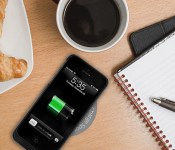
ChargeSpot Pocket will wirelessly charge both Qi- and PMA-compatible devices

If a wireless charger doesn’t work with a phone or tablet with the capability, it’s likely because they adhere to two different wireless charging standards. See, there’s more than one out there, and that’s making it hard for businesses, venues, offices and even OEMs to adopt the technology. One product that could potentially help with those issues is a new wireless charger called ChargeSpot Pocket, which works with both Qi Wireless and PMA or Power Matters Alliance. Sure, that’s just two standards out of three (leaving out the third one called A4WP), but the product can certainly cater to more customers than an alternative that works with only one standard can.
ChargeSpot Pocket was designed to be installed under surfaces to serve as hidden power sources — for instance, restaurants can stick some under tables, and patrons can simply place their phones on the table to recharge. Business owners or managers can simply check its accompanying web interface to monitor usage. Some Canadian restos and offices already have ChargeSpot Pockets installed in their premises, but now more people can buy some through the company’s website.
Source: ChargeSpot
.CPlase_panel display:none;

Swiss startup creates a wearable chair so you can rest anywhere

Most of the wearable gadgets getting people hot and bothered either strap onto your face or your wrist, but Swiss startup noonee has cooked up a little something that straps to your legs instead. Well, fine, maybe it’s not exactly little: in a bid to keep factory line workers more alert and more comfortable during their shifts, the five person team has developed a locking leg support device they call the Chairless Chair. Once you get strapped in, all it takes is a press of a button to get settled — the aluminum and carbon fiber frame holds whatever position your legs take and essentially becomes, well, an invisible chair. The secret sauce here is a battery-powered dampening system eases the load on your lower back and legs by supporting the your body weight and directing it down into your heels. Noonee’s curious wearable is still firmly in the prototype phase (though Audi and BMW will soon take the thing for spin on its production lines) but if it works as well as the team says it does, expect every haggard commuter — or frenzied blogger cranking out stories at a trade show — to own one soon enough.
Via: CNN
Source: Noonee
.CPlase_panel display:none;

NTT Docomo and Huawei want to augment LTE networks with WiFi spectrum

Love LTE data speeds, but fear the bane of network congestion? Researchers at NTT Docomo and Huawei may have a solution. The two firms just announced that it has successfully broadcast LTE service on the unlicensed 5GHz spectrum — a frequency typically used for WiFi. Potentially, the 5GHz band could be used to enhance LTE service in high-use areas, a practice researchers are calling License-Assisted Access (LAA). LAA isn’t an official standard yet, but Huawei and NTT Docomo plan to continue working together to support it. The specifics are a little granular, sure, but we’re not about to scoff at getting better reception. Check out the duo’s official statement at the source link below.
Source: NTT Docomo
.CPlase_panel display:none;

Twitter can now prompt attachments via hashtag

Thinking about using a hashtag in your next tweet? Watch out — Twitter might use it as an excuse to attach a video or image to your message. A promotion for ABC’s new TV comedy “Selfie” revealed that Twitter can now prompt users to attach media to a tweet based on the hashtags they use. iOS users who compose a message with #SelfieABC, for instance, will be asked if they want to attach the TV show’s first episode in the tweet.
Users still have to manually select “attach” to embed the suggested object in the tweet (and it only seems to be working on iOS for now), but it’s an interesting evolution on what hashtags are capable of. As for the show? It’s a modern, over-the-top take on My Fair Lady with internet humor and meme references liberally sprinkled on the surface. Sound like your kind of show? The first episode is just a tweet away.
Filed under: Apple
.CPlase_panel display:none;

Moto X+1 press images get leaked out by @evleaks, no less
 Long live the king, it seems. @evleaks has come out with what he calls his “retirement gift” to us, a series of Moto X+1 press images. The Motorola device pictured appears to confirm all the rumours that we’ve been hearing, like the dual speakers and continued support for wood back covers. We recently allegedly saw the Moto X+1 line up against its predecessor, the Moto X, however the Moto X+1 in these press images seem to be subtly different in a few aspects, including the size of the speakers and the position of the infrared sensor. It’s possible the phone shown in the previous leak was just an early prototype, or is actually one of the many other phones that Motorola is supposedly cooking up before Christmas.
The Moto X+1 is allegedly going to feature a 5.2-inch 1080p display, and the jury is still out whether it will carry the Snapdragon 800 or 801. Regardless of what it does have inside, it seems likely Motorola is going to produce another pleasantly good flagship device that will be running Android KitKat. The press images in question are for the Verizon branded Moto X+1 which is rumoured to be announced on September 25th in just over a month. We’re not anticipating any exclusivity of the device on any carriers, so expect to hear about those as the announcement date nears.
What do you think about the appearance of the Moto X+1 press images? Let us know your thoughts on the device in the comments.
//<![CDATA[
ord = window.ord || Math.floor(Math.random()*1E16);
document.write('‘);
//]]>
The post Moto X+1 press images get leaked out by @evleaks, no less appeared first on AndroidSPIN.
.CPlase_panel display:none;
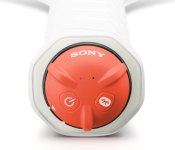
Sony’s Smart Tennis Sensor will outfit racquets in the US and Canada for $200

We got an up-close look at Sony’s tennis gadget back at CES, and after a May launch in Japan, the accessory is prepped to hit the court in the US and Canada. The Smart Tennis Sensor plays nice with rackets from Wilson, Prince and Yonex to capture information about your swing, serve and more to a companion app on both iOS and Android. You can also opt for Memory Mode to hold details on up to 12,000 shots with internal storage for post-match analysis. The add-on is IP65-rated to keep water and dust at bay while you collect data on your game. As you might expect, in addition to all the action tracking, you can broadcast your progress to all your pals via the social network of your choosing. There’s still no exact word on an arrival date in North America, but Sony says Wilson will start selling the $200 gadget through its tennis retail channels “by the end of January 2015.” Even if you have to wait a full year after the device first broke from cover, at least you’ll be able to grab one before the great outdoors tempt with spring weather.
.CPlase_panel display:none;

Engadget Daily: Lumia 930 review, remote-controlled moths and more!

Today, we visit Seattle’s Living Computer Museum, go hands-on with the Lumia 930, ponder remote-controlled moths, learn about Sony’s plan to reclaim “20 lost years,” and more. Read on for Engadget’s news highlights from the last 24 hours.
Filed under: Misc
.CPlase_panel display:none;

Estimote’s stickers let you add tiny sensors to just about anything

The problem with the internet of things is that you often have to buy expensive add-ons or replacements to get all those clever sensors; you may not want to buy a bike computer just to track your rides. If Estimote has its way, you won’t have to. Its new Sticker beacons let you graft wireless sensors on to nearly any object, giving it location, motion and temperature data that you can check through apps. You can figure out the length of your last bike trip just by slapping a sticker on the frame, or find out when your flowers need watering by using an augmented pot. Estimote even pictures stores using the tags to automatically cue up product info on a nearby screen, so you could find out whether some hot new shoes come in your size just by taking them off the shelf.
Right now, you have to be a tinkerer to make use of the stickers. Estimote is taking pre-orders for a $99 Dev Kit that includes 10 beacons, and you can’t exactly run out and find supporting apps; you’ll have to write your own in the short term. You should see them in the wild soon after testing wraps up, though, as the company is already partnering with big names like Behance (Adobe), Cisco and the Guggenheim Museum to make the Sticker technology a practical reality. It may not be long before you can add some smarts to many of your belongings without breaking the bank.
Filed under: Household, Peripherals
Source: Estimote
.CPlase_panel display:none;
 AIVAnet

