


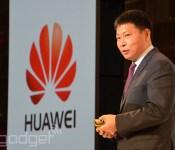
Huawei boss says Tizen has ‘no chance’ of success

Fans of mobile operating systems not called “Android” or ‘iOS” might be sad to hear what Huawei’s head honcho just told the Wall Street Journal. In an interview, Richard Yu spoke about the company’s plans regarding Tizen, Windows Phone and a long-rumored homegrown OS, and basically said they were all doomed.
According to the executive, unnamed mobile networks had asked Huawei to make Tizen smartphones, but Yu feels that the platform has “no chance to be successful.” It’s a bit of a u-turn, since the company has previously had a research unit looking into the Samsung-made software, but Yu said that he shut it down.
On the subject of Windows Phone, Yu conceded that Huawei had spent two years losing money on its W series handsets, saying “it has been difficult to persuade customers to buy a Windows phone.” That’s why, at least for now, a follow-up to the promising, yet flawed W1 and W2 is off the table.
That leaves the company with Android as the only thing its handsets can run, and when asked about this potential over-reliance on Google, Yu admitted that he’s concerned, but has “no choice.” On the upside, he did emphasize that he has a “good collaboration” with the search engine, before swiftly moving on to other matters, like writing off any plans for a homegrown operating system of its own. In his own words, Yu feels that “it’s easy to design a new OS, but the problem is building the ecosystem around it.”
Filed under: Cellphones, Software, Mobile, Samsung, Microsoft, Google
Source: Wall Street Journal
.CPlase_panel display:none;
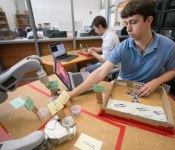
MIT study says robot overlords could make for happier human workers

New research from MIT reckons that robots controlling human tasks in manufacturing is not only more efficient than flesh-and-blood middle-management, but preferred by people that do the work too. Automation in the manufacturing process has been around for decades, but the new study aimed to seek out the sweet spot where human workers were “both satisfied and productive.”
“We discovered that the answer is to actually give machines more autonomy, if it helps people to work together more fluently with robot teammates,” said project lead Matthew Gombolay. The study was composed of groups of two humans and one robot, working in three test conditions. One had all tasks allocated by a human, another where all tasks were allocated by the robot and the final scenario had one human allocating tasks to themselves, while the robot allocated tasks to the other meatsack. Researchers found that when the robot was on top, not only was the group most effective, but the human workers also preferred it, saying that the robot’s choices apparently “better understood them.”
Gombolay adds: “Instead of coming up with a plan by hand, it’s about developing tools to help create plans automatically,” he said. These algorithms could then adjust for and instantly develop alternate schedules when things go wrong. Future uses of these kinds of algorithms could be applied to things like search-and-rescue drones, and human-robot collaborative work like construction.
Source: MIT
.CPlase_panel display:none;

Ralph Lauren is making a tech-infused polo shirt

US Open ball boys will be sporting the latest in wearable tech starting this Monday, according to the NYT: Ralph Lauren’s “Polo Tech” shirts. Of course, nearly everything the company makes is a “wearable,” but these particular shirts contain conductive silver threads and other sensors designed to measure performance. The apparel maker said it wanted to do something different from the usual sports bands while eliminating the complexity: “You’re just putting on a shirt.” It’ll still have the tech, though, measuring factors like your heart rate, breathing and movement, and relaying them to a smartphone or computer (though there’s no word yet on exactly how). It won’t be limited to athletic wear either, as Ralph Lauren plans to also launch sensor-equipped dress shirts later in the year. We’re not sure what you’d do with those — hanging out at the yacht club can’t burn that many calories.
[Image credit: AP/Ralph Lauren]
Filed under: Wearables
Source: The New York Times
.CPlase_panel display:none;

Scientists grow whole organs inside animals for the first time

Researchers have had success growing organs in controlled lab environments, but repeating that feat inside a complex, messy animal body? That’s more than a little tricky. However, researchers at the University of Edinburgh have managed that daunting feat for the first time. They’ve grown thymus glands inside lab mice by “reprogramming” the genes in tissue-regenerating cells and partnering those with support cells. The team didn’t have to use scaffolds or other “cheats” to trigger the growth; it just injected the cells and waited. There weren’t even any obvious limitations. The organs were full size (unlike the baby-like results from some experiments), and they were just as efficient at producing virus-fighting T-cells as the real deal.
The catch, as you might have guessed, is the scale. Mice aren’t nearly as challenging to work on as humans, and the thymus is one of the simplest organs in any animal. It wouldn’t be nearly as easy to give you a new heart or lung. If the University keeps making progress, though, it could shake up the transplant process. Patients wouldn’t have to wait for donors whose tissues are good matches, and people who’ve lost much of their immune system (such as bone marrow transplant recipients) could rebuild faster. You won’t get on-demand organs any time soon, but the concept isn’t as far-fetched as it once was.
[Image credit: Rama, Wikimedia Commons]
Filed under: Science
Via: BBC
Source: University of Edinburgh, Nature
.CPlase_panel display:none;
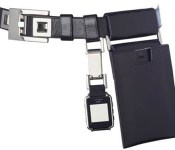
Smartwatch belt gives you wearable tech without the convenience

Have you ever wanted smartwatch notifications without the convenience of having something on your wrist? No? Apparently, no one told that to the design team at Suzi Roher. The fashion outfit’s new Urban Tech Belt includes a “digital watch computer” that lets you check calls, play music and read messages without grabbing your smartphone… which is stored in a holster just a few inches away. Yes, you’re supposed to avoid reaching for a pocket or bag by reaching for your belt. Not much of a time-saver, really. And did I mention that this will cost a steep $725 when it arrives in January? Fashion and technology produce some beautiful things together, but this time you’re better off buying one of Roher’s usual belts and rolling the savings into a stylish smartwatch that will actually make your life easier.
Filed under: Cellphones, Wearables, Mobile
Source: Suzi Roher
.CPlase_panel display:none;
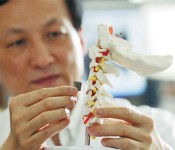
Boy gets the first 3D-printed vertebra implant

3D-printed implants just got one of their biggest real-world tests to date. Peking University Third Hospital has successfully implanted the first 3D-printed vertebra in a 12-year-old boy with cancer in his spinal cord. The bone substitute is made from titanium powder like many orthopedic implants, but promises to be both safer and longer-lasting than conventional replacements. Since it’s designed to mimic the shape of the child’s original vertebra, it doesn’t need cement or screws to stay in place; healing should go faster, too. The construct is full of small holes that let natural bone grow inside, so it should eventually become a permanent, stable part of the spine that won’t need adjustments at some point down the road.
CCTV notes that the full results of this surgery won’t be available for some time. He’ll have to wear gear that keeps his head and neck still for the next three months, and it will likely take much longer than that before we know how well the implant holds up in real-world conditions. If everything goes smoothly, though, the surgery will be proof that 3D-printed bones are useful virtually anywhere in the body — and, in some circumstances, might save your life.
[Image credit: Peking University Third Hospital]
Filed under: Science
Source: Forbes
.CPlase_panel display:none;

Nexus X, not Nexus 6, is the name of the new Google device, releasing around Halloween
 Today has been an explosion of information regarding Google’s rumoured Nexus device for this year, what we have previously been calling the Nexus 6. That name was picked for logical reasons – it is after all the 6th Nexus phone and is expected to be 5.9-inches – however, all the news about the device appears to agree that its name is actually the Nexus X. Phone Arena brings up the point that Philip K. Dick’s book, Do Androids dream of Electric Sheep?, actually refers to androids called Nexus-6, so a name-change would probably avoid a copyright fight. The Nexus X, however, is still not the device’s official name; this name is only used internally at Motorola where the device’s model number is XT-1100.
Today’s rumours go on to suggest that the Nexus X will be releasing around Halloween, right around where we expected considering past Nexus phone launches. And like previous launches, there won’t be an announcement to launch the device, and presumably will go on sale immediately after going live; no details on price haven’t been supplied yet.
We’re expecting the Nexus X to have a 5.9-inch Quad HD display, Snapdragon 805 processor with 13MP camera and optical image stabilization.
Source: Phone Arena
//<![CDATA[
ord = window.ord || Math.floor(Math.random()*1E16);
document.write('‘);
//]]>
The post Nexus X, not Nexus 6, is the name of the new Google device, releasing around Halloween appeared first on AndroidSPIN.
.CPlase_panel display:none;
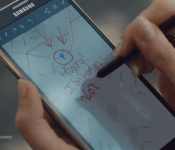
Samsung Teases Galaxy Note 4 in New Video

IFA 2014 is almost here, so Samsung wanted to remind us that the Galaxy Note 4 will be showing it’s big, pretty face at the event. The video below pays a little homage to the craft that human beings has performed in history, which then have led to some innovations to help the every day man. The S-Pen is the main focus in this teaser video which is being referred to as “a truly notable invention”.
So are ready to Note? IFA is right around the corner, so you Galaxy Note fans are probably ready. Let us know what you think about the video of the Galaxy Note 4.
//<![CDATA[
ord = window.ord || Math.floor(Math.random()*1E16);
document.write('‘);
//]]>
The post Samsung Teases Galaxy Note 4 in New Video appeared first on AndroidSPIN.
.CPlase_panel display:none;
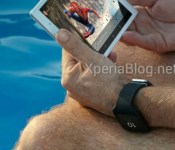
Business as usual: Sony Xperia Z3 Tablet Compact and new SmartWatch get leaked ahead of IFA 2014 announcement
 One thing that has always plagued Sony‘s device releases is the sheer number of leaks that happen prior to launch, and it appears that the release of the Sony Xperia Z3 Tablet Compact and new SmartWatch is no different. The image above was leaked by XperiaBlog and appears to show the existence of a mini-tablet, expected to be the Z3 Tablet Compact , and a rather slick looking wearable which we’re expecting to be the SmartWatch 3.
The SmartWatch in particular looks to be a very different design to its predecessors, and we know it won’t be running Android Wear thanks to Sony’s heavy investment into its in-house Android operation system, whereas the Z3 Tablet Compact looks to be a very familiar design. As depicted in the picture, the Z3 Tablet Compact looks like it’s going to be waterproof, and is expected to have a screen size of about 8-inches; last year’s SmartWatch was also waterproof so expect this new one to be the same. Both devices are expected to be announced at IFA 2014 in just a few week’s time.
What do you think about the Sony Xperia Z3 Tablet Compact and SmartWatch 3? Are either of these devices on your wishlist? Let us know your thoughts.
Source: XperiaBlog
//<![CDATA[
ord = window.ord || Math.floor(Math.random()*1E16);
document.write('‘);
//]]>
The post Business as usual: Sony Xperia Z3 Tablet Compact and new SmartWatch get leaked ahead of IFA 2014 announcement appeared first on AndroidSPIN.
.CPlase_panel display:none;
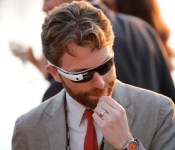
How would you change Google Glass (Explorer Edition)?

It’s always tough asking for people’s opinions on a device when so few instances of the hardware are available. Even a year after its release, getting hold of Google Glass (Explorer Edition) is a long and expensive process that few outside of the tech fraternity will bother with. Still, we’re fairly sure that plenty of you have at least tried a pair on – the last time we were in the same city as Alexis Santos, he was stopped every five minutes by curious passers by. Now, when we forced Mr. Tim Stevens to review it, he said that Google Glass was a fascinating prototype, with plenty of potential, but unless you’re the sort of person who would describe $1,500 as chump change, you should steer clear. The two-hour battery life wasn’t ideal, and there were more than a few privacy concerns that, in hindsight, have been borne out. Personally, the most exciting feature for me was the navigation coupled with the bone-conducting headphone, and there’s nothing greater than having directions beamed directly into your cranium. Still. The question here is simple: if you had a meeting scheduled with Sergey Brin, what would you tell him to change for version two?
Filed under: Wearables, Google
Source: Engadget Product Forums, Engadget Product Database
.CPlase_panel display:none;
 AIVAnet
