



Uber uses its fleet to deliver food with new ‘UberFresh’ service

Like Uber but instead of needing to go somewhere, you want to eat lunch? UberFresh is perfect for you. Oh wait, do you also live in Santa Monica, CA? Because then it’s actually perfect for you. The service starts today, and, as advertised, you’ll swipe to the “UberFresh” section of your Uber app and a driver will bring you lunch. No, you don’t get in the car and go somewhere; think of it like app-based food delivery. For the service’s initial launch, your lunch options are limited to a single item per day (there’s a menu on Uber’s site right here). Admittedly, the options for the first week look pretty delicious, and the Yelp rankings for each restaurant back up Uber’s choices as at least somewhat legit.
There’s no update to download; you just have to live in Santa Monica and open up Uber. Head below the break for full instructions, care of Uber.
HOW TO ORDER:
1. Toggle to the uberFRESH option on the far right of the slider between 11:30 am and 2:30 pm from August 26th – September 5th. (Closed on weekends and Labor Day)
2. Set your delivery location within the Santa Monica coverage area and request away
3. Upon arrival, meet your driver outside to grab your delicious lunch
This is hardly Uber’s first foray into food. The company annually sponsors an ice cream truck day, wherein ice cream trucks are dispatched to a wide variety of locales (144 cities this year), on-demand. Today’s addition of UberFresh is far more substantial, with a handful of restaurant collaborations and a test market in Santa Monica. Uber repeatedly calls it a test, and even has a definitive start and stop time for its run (“from Tuesday August 26th until Friday September 5th with the possibility of an extension; closed weekends and on Labor Day”).
The aim isn’t just to move into food delivery, but to “disrupt” yet another industry; the legal battles Uber faces in “ridesharing” are likely less of a concern when it comes to food. As Uber puts it, this is UberFresh’s raison d’être:
“Typical food delivery takes 45 minutes – 1 hour. uberFRESH delivers you healthy, fresh food in about 10 minutes. Rather than standing in long restaurant lines, trying to find parking at your favorite restaurant, or dealing with unpredictable delivery times, uberFRESH brings you a great lunch on-demand with none of the hassle.”
The only rub is that drivers currently will not bring the food inside; it’s all “curbside” delivery. Here’s hoping there’s not a lot of rain in Santa Monica’s near future. For that tradeoff, though, there’s the standard no tipping policy and ease of use that comes with Uber. It’s an interesting experiment for sure, and one that’ll need to grow tremendously before reaching larger markets.
Filed under: Cellphones, Handhelds, Tablets, Transportation, Internet, Software
Source: Uber
.CPlase_panel display:none;

Canadian cable giants launch a Netflix rival

The service will initially work on mobile devices, the web, Xbox 360 consoles and cable set-top boxes when its public beta test launches in the first week of November. Naturally (if unfortunately), Rogers and Shaw customers will have first crack. The pricing is definitely competitive at $9 Canadian per month, although you may not want to chuck any existing subscriptions just yet. While Shomi will have 340 TV series and a strong dose of Canadian content (30 percent), it has just 1,200 “cult-classic and fan-favourite” movies — if you want to watch a recent blockbuster, you’re probably better off sticking with Netflix for now.
Filed under: Home Entertainment, Internet, HD
Source: Shomi, Canada Newswire
.CPlase_panel display:none;

Back to School 2014: The 10 best tablets

By design, tablets are less about work and more about play — though you’ll find some notable exceptions in our roundup of top slates for the back-to-school season. Among them are Microsoft’s Surface Pro 3, which features a keyboard case that makes typing on the go bearable, and the ASUS Transformer Book, which also gives you hardware keys via a bundled dock. Of course, there are still plenty of slates made for enjoying your downtime. Click through the gallery below to see them all, and don’t forget to check out the rest of our guide!
Filed under: Apple, Sony, Microsoft, Nokia, ASUS, Google, Amazon, Acer
.CPlase_panel display:none;

BitTorrent Sync lets you share folders on your PC using web links

Yes, cloud services like Dropbox make it easy to share folders through public directories and links, but you still have to put those folders in the cloud in the first place. Wouldn’t you rather share them straight from your PC? BitTorrent hopes to make things that direct with its big Sync 1.4 update. Now, you can share folders with others just by giving them web links; you don’t have to wait for the files to reach a remote server, or rely on Sync’s slightly more obtuse Key system. You don’t have to sign up for an account, either, and you can still limit access to prevent others from messing with precious documents. About the only headache is that your recipient needs Sync, although BitTorrent promises that it will walk first-timers through the process.
The 1.4 release is also an excuse for BitTorrent to give Sync a much-needed interface makeover. While a lot of the basic concepts remain intact, the new front end is both prettier and easier to understand on Macs and Windows PCs — arguably very important when people are more likely to be trying Sync for the first time. You can grab the desktop upgrade (which includes Linux) right now, and matching updates for both Android and iOS should be ready later today.
Filed under: Internet, Software, Mobile
Source: BitTorrent Blog
.CPlase_panel display:none;

Supersonic subs cross the Pacific in under two hours

The distance between Shanghai and San Francisco is around 6,135 miles (9.873 km), and a team of scientists aims to make that trip possible in 100 minutes. Researchers at Harbin Institute of Technology’s Complex Flow and Heat Transfer Lab have developed new tech that allows submarines to traveling a crazy high speeds beneath the water’s surface. The solution? Create an air “bubble” of sorts that leverages supercavitation, a technology applied to torpedoes, to reduce drag cause by water while in route. Theoretically, this means that the underwater vehicles could reach the speed of sound (around 5,800km/h or 3,694 MPH while submerged), reducing the travel time between the aforementioned cities to under two hours.
As you might expect, several issues face the implementation of the tech — like the fact that the sub would have to be launched at a high rate of speed to maintain the requisite air bubble. Traditional steering methods (read: rudders) won’t work inside the air pocket either, as they won’t have water to push back on. However, to combat the two conundrums, researchers say allowing a vessel to constantly “shower” a liquid membrane on its surface will reduce drag until it gets up to speed. From there, the same membrane creates the supercavitation and controlling the friction on it would aid navigation. Even with those issues under control, a rocket engine with a range that would enable such long trips still needs to be developed. So for now, you’ll have to stick to spending several hours flying the friendly skies.
[Photo credit: Sam Yeh/AFP/Getty Images]
Filed under: Transportation
Via: Inhabitat
Source: South China Morning Poster
.CPlase_panel display:none;

L.A. Unified School District Suspends $1 Billion iPad Contract with Apple
Los Angeles school district superintendent John Deasy halted the district’s iPad contract with Apple in mid-rollout, reports the LA Times. The $1-billion multi-year contract would supply LAUSD students with iPads that were pre-loaded with curriculum from Pearson.

The contract was administered in phases with an initial $30-million investment to equip a pilot group of students with iPads. Additional payments totaling almost $1 billion would expand the project to additional students and build out the wireless infrastructure to support tablet usage at the district’s schools. Each phase was subject to approval with the option of canceling the project if it no longer met the district’s needs.
Deasy’s suspension follows criticism of the project rollout and its bidding process, which some claim was modified to favor Apple and Pearson. While issues with securing the iPads surfaced shortly after rollout, the contractual complaints were detailed in a district technology committee draft report that was obtained recently by the LA Times.
Among the findings was that the initial rules for winning the contract appeared to be tailored to the products of the eventual winners — Apple and Pearson — rather than to demonstrated district needs. The report found that key changes to the bidding rules were made after most of the competition had been eliminated under the original specifications.
In addition, the report said that past comments or associations with vendors, including Deasy, created an appearance of conflict even if no ethics rules were violated.
While Deasy responds to these criticisms, the technology program at LAUSD is moving forward with other devices and alternative curriculum being adopted by schools in the district. The district is expected to purchase up to 18,000 laptops with Apple and Pearson invited to bid on this new contract.
.CPlase_panel display:none;

Apple Launches Apple TV Channel for 2014 London iTunes Festival
Apple today launched its iTunes Festival channel on the Apple TV ahead of the festival’s start on September 1. Similar to previous years, the iTunes Festival channel contains information relevant to the upcoming London version of the popular music festival.

Ahead of the event, the channel allows you to browse information on the history of the festival, details on the Roadhouse, and the performance schedule for next month. When the festival begins, Apple TV owners can watch HD streams of both live and archived performances.
Apple recently filled its performance calendar adding well-known musicians such as Mary J. Blige and Tony Bennett to the festival lineup. These performers will join previously announced acts such as Maroon 5, Pharrell Williams and Lenny Kravitz. Tickets for the concert are available for free via a lottery system and through local radio station promotions.
Apple’s iTunes Festival iOS app is also showing as having an update available to support the upcoming concert series, but many users are reporting errors when trying to update their apps.
.CPlase_panel display:none;
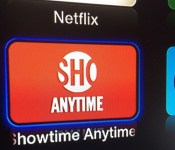
Premium Channel ‘Showtime Anytime’ Comes to Apple TV
In addition to the return of the iTunes Festival channel for Apple TV today ahead of September’s concert series in London, Apple has also added a new Showtime Anytime channel to its set-top box.

The Apple TV channel is a companion to the Showtime premium cable network and offers limited free content to all users. Most content, which includes live and on-demand shows and events, is limited to customers who subscribe to the network through a participating cable provider.


.CPlase_panel display:none;

Los Angeles freezes its iPad program for schools

Los Angeles’ grand dreams of putting iPads in schools came into question a month ago, and they’ve now come to a screeching halt. Superintendent John Deasy has suspended a contract with Apple to both “take advantage of an ever-changing marketplace” (read: diversify hardware) and, crucially, to investigate recently raised ethical concerns. Allegedly, both Deasy and a top deputy have close links to executives at both Apple and curriculum provider Pearson, calling the whole iPad program into question; it suggests that officials were doing personal favors rather than taking kids’ needs into account. Deasy is quick to claim that his team was only working closely with Apple and Pearson on the pilot, not the contract, and offered a deal to another major vendor. Whether or not that’s true, the suspension suggests that the vision of an iPad in every LA classroom may never come to pass — it’s more likely that the broader device selection is here to stay.
[Image credit: Schooltechnology.org/Lexie Flickinger, Flickr]
Via: KTLA
Source: LA Times
.CPlase_panel display:none;

Messaging’s mission impossible: One inbox to rule them all

My phone buzzes. I glance at it and see a text message from my husband, who wants to know if I can pick him up from work. Later that day, my phone buzzes again. This time, it’s a Facebook Messenger notification from my mother, who wants to chat about an upcoming trip. At the same time, a friend pings me using Twitter’s Direct Messages. Next, a colleague strikes up a conversation on Google Hangouts. Realizing it would be easier to handle all of these with a computer, I flip open my laptop so I can chat with everyone simultaneously. Within the span of a few hours, I’ve chatted with four different people on four completely different messaging platforms. And the juggling doesn’t stop there.
It used to be that sending an SMS was enough. Now there’s a seemingly endless number of ways to stay in touch with someone. And it’s not just dedicated messaging apps like WhatsApp or Line either. Instagram added direct messaging this past December; Vine followed suit earlier this April; and even Pinterest joined the bandwagon recently by letting pinners chat with other pinners. And, of course, Twitter has had direct messaging for almost eight years now. While variety and choice are generally good things, all of these messaging services introduce a perplexing problem: We have too many inboxes.
Being able to send messages within different applications isn’t all bad, of course. If I think of an interesting photo or video I want to share with just my friends on Instagram, I can do so within the app easily. The same with Pinterest — I can continue the collaboration process of pinning designs and planning a home remodel, for example, without having to use another messaging service. And, of course, messaging apps like WhatsApp and Facebook Messenger are a lot cheaper to use than traditional SMS — for US users at least, there’s no need to fork over exorbitant messaging fees every month or, if you’re on a limited plan, cough up pennies with every text.

But the problem is all of these messaging services and apps are siloed experiences. Messages can’t be shared outside of their respective ecosystems. Worse still, I have an obligation to use all of them because different people in my social circle use different apps. When I travelled to Malaysia earlier this year, WhatsApp was the app of choice amongst my friends. A couple of my other pals use Snapchat, so I have that installed on my phone too. A few other early adopter friends (most of whom are admittedly tech writers like myself) use Slingshot, Facebook’s Snapchat alternative, so I’ve got that as well. I also installed Path’s Talk app and Line to chat with a few people, though they were mostly to exchange fun stickers. I even downloaded that silly Yo app, even if I only ever use it in jest.
Forrester researcher Thomas Husson said in a report on messaging apps entitled “Messaging Apps: Mobile Becomes The New Face Of Social” that the “fragmented nature of the social media ecosystem is inherent to the fact that individuals have multiple identities.” Basically, people use different apps and networks for different reasons. For example, people tend to use LinkedIn to talk with potential business partners, while they might use Facebook Messenger only with friends or family. Further, some messaging apps tend to be more popular in certain parts of the world — Line, for example, has a stronger following in Asia — which, if you have friends all over the globe, would mean you’re constantly switching between services.
What’s the big deal, you might ask? Our smartphones and computers are certainly more than capable of handling these disparate systems, and besides, it’s not that difficult to switch between apps, right? Well, sure, but that doesn’t make it any less annoying. I shouldn’t have to have a dozen different messaging apps on my phone to talk with all the people in my life. Chris Heuer, a longtime social media user and CEO of Alynd, a social business startup, expresses the same frustration over too many apps: “I think what’s missing in this whole discussion on messaging now is that the messaging is now often done within the context, instead of messaging being the context.” It’s the reason why he dislikes the fragmentation of Facebook Messenger away from the core Facebook app. “Now I have another app I have to open and that will waste more time I don’t have … I’ve got enough apps. I want less, not more.”

Several years ago, there was a similar problem with too many instant-messaging protocols. I used all of them — AOL, Yahoo, MSN, GChat and, yes, even ICQ. I remember installing all of these apps on my computer and keeping them all logged in at the same time because, for some reason, my friends and coworkers just couldn’t agree on the same IM platform. Then, something wonderful happened. All-in-one apps like Trillian and Adium came along to unite most of the disparate IM services under one program. At last, I could launch just one app to chat with everyone.
What we need, then, is an equivalent universal inbox for messaging. No, not just for all your email and text messages. For everything. We need a smart inbox that’ll sort messages by service, label them appropriately and will let you continue conversations within just one app.
There are a few solutions out there that come close to solving the problem. The Hangouts app for Android, for example, is able to handle both Google’s IM system and text messages. If you’re a loyal BlackBerry fan, you already know that the OS from Waterloo has a unified inbox that can house emails, texts and messages from Facebook and Twitter in one place. Disa.im is an Android app currently in alpha that promises to combine SMS, WhatsApp, Hangouts and Facebook messaging in one place as well. There’s also an app called Messages+ that promises to do the same thing, though it seems to fall short — it doesn’t support incoming messages for WhatsApp and we weren’t able to use it to send a message on Facebook.

Still, none of these really live up to the dream of that one, true universal inbox for everything. Which is, sad to say, probably more fantasy than reality. Not only because most of these apps are walled gardens, but also because some, like Snapchat and Slingshot, are based around messages that are meant to disappear after you’ve read them. Further, new messaging features and apps crop up all the time, making it tough to keep something like a universal inbox up-to-date.
The alternate solution, of course, is to insist on just one communication method for people to contact you. You probably won’t be able to keep in touch with as many people in your life, and it might be harder for people to reach you. But, perhaps, that’s the price to pay for sanity.
Hold on, my phone’s buzzing again.
Filed under: Software, Mobile, Facebook
.CPlase_panel display:none;
 AIVAnet