



$1,000 Google Play Giveaway [DEALS]

How would you like to get your hands on $50 worth of Google Play Store credit? What about $100…or $150? If you head to our deals page between now and the end of September you can toss your name in the hat for a prize. We’re working with our friends at StackSocial to help give away… Read more »
The post $1,000 Google Play Giveaway [DEALS] appeared first on AndroidGuys.
.CPlase_panel display:none;
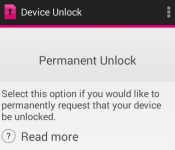
T-Mobile will now unlock select phones via an app

Now that phone unlockers have been given the governmental green light, T-Mobile’s trying to make the very process of unlocking less of a hassle… albeit very slowly. You see, the magenta-hued carrier has created a Device Unlock app that’ll let you either temporarily unshackle your phone for 30 days (perfect for those brief stints abroad) or do the deed permanently. Sound too good to be true? You may have a point. You’re still bound by T-Mobile’s eligibility requirements if you try to permanently unlock your device, for one, and the app only works with Samsung’s decidedly mid-range Galaxy Avant (on which the app comes preloaded) right now. The folks at Android Central couldn’t help but sideload the app onto a few other devices, but didn’t have much luck freeing any of them from T-Mobile’s tight grip. Here’s hoping this limited release is just a pilot program of sorts — we’ve reached out to T-Mobile to see if they’re willing to share any more.
Via: Android Central
Source: Google Play
.CPlase_panel display:none;
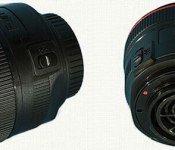
Fujin is a vacuum cleaner for your DSLR

There you are, happily reviewing photos from your recent getaway to Maui, when you notice your pics have been adorned with a smattering of little black dots; your DSLR’s got some grit on its sensor. Rather than whipping out the compressed air and Q-tip, however, you could dredge you camera’s internals using an interesting little gizmo from the Japanese company IPP. It’s called the Fujin, which literally means “blowing sand,” and it works just like a vacuum cleaner. Screw this bad boy on your Canon shooter in place of the lens and it’ll suck the dirt and dust right up — according to the manufacturer, at least. Don’t give up on your sensor cleaning solution just yet though, this $34 accessory isn’t available in the US.
Filed under: Cameras
Via: SlashGear
Source: IPP
.CPlase_panel display:none;
China Refutes Report That It Banned Government Purchases of Apple Products [Mac Blog]
Earlier this week, a Bloomberg report claimed China’s National Development and Reform Commission and the Ministry of Finance had prohibited government purchases of Apple hardware. While we acknowledged in our initial report that there was dispute about the reason for Apple’s omission from the list, China’s Central Government Procurement Centre, the finance ministry, and Apple have all come forward to officially refute the Bloomberg report (via Reuters). According to the official statements, Apple never intended to be on the procurement list in question.

At the center of this controversy is a procurement list for energy-saving products and is one of several similar lists issued by the government. Chinese government officials said Apple has not submitted the necessary paperwork for inclusion on this energy-saving products list. Apple also confirmed in an emailed comment that it has never been on that particular list.
“Even though Apple has the certification for energy-saving products… it has never provided the necessary verification material and agreements according to the regulations,” said a Finance Ministry fax sent to Reuters on Thursday evening, a statement closely mirrored by the Central Government Procurement Centre in their own announcement on Friday.
Government agencies reportedly are still free to purchase Apple products even though they don’t appear on this energy-saving list. Most of the products included in the supposed ban still appear on the Central Government Procurement Centre website, though they were offline temporarily this week for a routine price adjustment.
China is a growing area of opportunity for Apple with the company expanding its retail presence rapidly in the country. Apple now has eleven retail stores in the country and has partnered with China’s three major wireless carriers, including China Mobile, which is the world’s largest carrier by subscriber numbers.
Note: Due to the political nature of the discussion regarding this topic, the discussion thread is located in our Politics, Religion, Social Issues forum. All forum members and site visitors are welcome to read and follow the thread, but posting is limited to forum members with at least 100 posts.
.CPlase_panel display:none;

Moto X+1 benchmark appears on Geekbench, Snapdragon 801 in tow

We’ve been seeing Moto X+1 leaks for a while now, the alleged device even posed for the camera. The device is expected to arrive soon and now we have some benchmark results to share with you. Motorola XT1097, otherwise known as a Moto X+1 has appeared on Geekbench. The benchmark says that the device is… Read more »
The post Moto X+1 benchmark appears on Geekbench, Snapdragon 801 in tow appeared first on AndroidGuys.
.CPlase_panel display:none;

Nexus tablet codenamed Flounder certified in South Korea

It seems the idea of a new Nexus 6 or Nexus 8 being released is a case of when rather than if. We’ve had various leaks that suggest the Nexus 8, which seems to be codenamed Flounder, exists but no sign of a release date. It seems that the Nexus 8 or HTC Volantis has… Read more »
The post Nexus tablet codenamed Flounder certified in South Korea appeared first on AndroidGuys.
.CPlase_panel display:none;
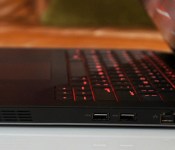
The Alienware 13 is the smallest and lightest gaming laptop in Dell’s lineup

Y’all remember the Alienware M11x, right? That compact, netbook-sized gaming laptop with the glowing keyboard that made it look like a spaceship? Anyway, Dell discontinued it back in 2012, only to release several big-screen machines the following year. Well, it looks like someone at the company saw the error of their ways: Dell just announced the Alienware 13, and while it’s not the brand’s smallest notebook ever, it’s definitely the smallest the company has put out in quite some time.
The machine won’t arrive until November, unfortunately, but for now, here’s what we know: This little guy will weigh in at 4.5 pounds — about two pounds lighter than the Alienware 14. It will also measure less than an inch thick, making it an obvious competitor to the super-thin Razer Blade. Similar to the Blade, which rocks a 3,200 x 1,800 touchscreen, the Alienware 13 will be offered with a 2,560 x 1,440 touch panel. Keep it mind, though, that it will actually come standard with 1,366 x 768 resolution. There will also be an in-between 1080p option, according to Dell. Neither of those will support touch, however — just something to consider as you’re going through all the configuration options online.
On the inside, it makes use of NVIDIA’s GeForce GTX 860M GPU, and can be configured with either an SSD or a traditional hard drive. It will eventually rock Intel’s next-gen Broadwell CPUs too, just not at launch. Keep it mind that these are still full-voltage processors, so while the Alienware 13 might have a smaller footprint, you probably shouldn’t expect it to run any cooler. The battery, meanwhile, is rated for up to eight hours of video playback, though surely the runtime will drop once you’re playing games unplugged. No word on price yet, or even full spec options. Dell says it’ll reveal all that sometime… later, closer to when the machine goes on sale. Until then, enjoy the hands-on photos.
Filed under: Gaming, Laptops, Dell
.CPlase_panel display:none;

Leaks, lies and the bottom line

“The iPhone 6 will be released globally on September 19th,” an email in my inbox reads. I don’t know who the tipster is, nor how they came across this nugget of information. The communication came from an email service called Leak, which allows anyone to send emails anonymously so the receiver can’t trace it or reply to it. It could’ve come from Apple CEO Tim Cook himself and I’d have no way of knowing. (Though I doubt it.)
Leaks like this not only show up all the time, they’ve increased in number over the years — and now that it’s easy to start anonymous rumors without accountability, our inboxes will simply give up. We are becoming a leak-obsessed culture. Nearly everyone wants to know about tomorrow’s devices, today, and few (if any) smartphones get launched without someone spilling the beans. The next iPhone hasn’t even been announced yet, but millions of people already think they know what it looks like and what it will do, thanks to images of its supposed chassis, casing and sapphire display. Even if the leaks aren’t accurate, it’s too late — there are likely plenty of folks who have already (bizarrely) decided whether to buy it or not.
Spoiler alert!

Leaks like the iPhone 6 images are the consumer electronics equivalent of spoilers. The “show” in this case is the product launch event in which new devices are shown off to the world for the first time. Accurate or not, leaks tarnish the experience of seeing the final product officially unveiled: They set expectations too low or too high, and you’ll probably look elsewhere for a new device if the images are unflattering. A smartphone’s fate could be sealed before it officially exists.
While most people hate spoilers — try tweeting about the end of a Game of Thrones episode on a Sunday night, I dare you — they seem to love leaks. When popular vlogger Marques Brownlee showed off the alleged next iPhone’s sapphire display cover in a video, it generated millions of views. Professional leaksters like Sonny Dickson and Evan Blass (who recently retired his @evleaks persona) have amassed hundreds of thousands of followers eager to see the next big thing.
While most people hate spoilers, they seem to love leaks.
Leaks are a rule, not the exception, in our increasingly connected world. Rumors can originate from multiple sources: Employees willing to risk their careers to get the word out; publicly accessible websites and listings, including the FCC and China’s TENAA databases; controlled leaks sent out by the company on purpose; and a network of suppliers, partners and carriers who all get their hands on the device closer to release. “[Companies] rely on a fairly complex supply chain of parts and manufacturing provided by other companies, and as such it’s extremely difficult to avoid leaks,” said Jan Dawson, chief analyst at Jackdaw Research.
Even worse, apps like Leak and Secret (which allows you to post confessions to friends anonymously) make it harder to distinguish truth from fiction, because it emboldens both the legit tipsters and the imposters. A week before Google VP Vic Gundotra left the company, someone posted a Secret claiming that the exec was interviewing; shortly after, another post on Secret declared that TechCrunch Editor-in-Chief Alexia Tsotsis would leave the company the next day. (Tsotsis appeared on video the day of her rumored departure to prove that she was, in fact, not leaving.)
Collateral Damage

When Apple’s iPhone 4 prototype was left in a bar, the company’s curtain of secrecy lifted like nobody had ever seen before. This mistake arguably got more press coverage than the official unveiling itself, but company attorney George Riley stated in court documents that the incident cost his employer immensely. Riley said: “By publishing details about the phone and its features … people that would have otherwise purchased a currently existing Apple product would wait for the next item to be released.” That said, Apple’s iPhone release schedule is hardly unpredictable, evidenced by the fact that it rarely moves launch events to other times of the year; most fans were likely already aware that the iPhone 4 would come out soon, and were going to wait until it arrived in stores regardless. But in theory, any unforeseen hit to potential quarterly sales could be devastating to the company’s earnings reports and investor expectations.
Dawson believes there are two scenarios in which leaks cause financial harm: A new phone appears to be coming out sooner than people expect, which typically decreases sales; and when unflattering leaks make the phone look less compelling than people hoped, prompting them to buy something else instead. Given recent whispers that the new iPhone will come in two sizes, both of which are larger than the 5s, the latter argument makes sense; if people trust those rumors, they may have already decided whether or not they’ll buy one.
Much of the damage comes during product launches, the result of deflated hype that normally builds ahead of the keynote.
For a company like Apple, loss of sales is only half the issue. Dawson argues that much of the damage comes during product launches, the result of deflated hype that normally builds ahead of the keynote. “[Apple] relies on showmanship and the big reveal, and leaks take the wind out of that pretty badly, especially if they’re detailed and accurate.” When companies are eager to wow audiences with a whiz-bang presentation, they put a lot of emphasis on the element of surprise and — they hope — delight.
Ken Hong, global communications director at LG Electronics, reckons the in-hand experience of the device itself (or at least the first impressions from the press) outweighs the damage that any rumor could do to the company. “The industry has evolved to the point where journalists don’t attend press conferences to only hear product details, but also to experience products and to meet the people behind the products.”

Damage caused by false leaks are difficult to predict, because it depends on the expectations they set. “The only time [inaccurate rumors] really help,” said Ramon Llamas, mobile analyst at IDC, “is if that company surpasses those expectations, in which case, we’re all happy.” One example Llamas used was when rumors in 2006 claimed that the original iPhone would look like the iPod classic, complete with a click wheel. The final product was fortunately nothing of the sort. (We later learned that Apple had considered a click wheel early on, but dropped the concept for a touchscreen.)
Alternatively, inaccurate leaks can also lead to disappointment when the product is finally announced, if expectations are too high. Early rumors indicated the Samsung Galaxy S5 would come with a quad HD display and eye scanner. Later reports refuted these claims, and each new leak leading up to the launch event felt like a downhill plunge to many eager fans because the flagship just didn’t have the same oomph as the first leaks suggested. Samsung eventually released a quad HD version of the GS5 later, but it’s currently only available in Asia.
With so many false rumors floating around, Hong says it’s difficult to prove that leaks hurt a company’s bottom line. “No one knows if the leak is true or not until the company confirms it,” he said. “It may have been different five years ago when everyone believed the leaks they heard, but that’s no longer the case.”

Blass believes the positive results are more evident than the negative. “Whenever you see hundreds of comments in a leak thread, discussing the most … minute details of the leaked device, that’s a big win for the manufacturer,” he said. “The main goal of a marketing team is to get new product in front of as many eyeballs as possible.” Instead of enjoying one or two news cycles, leaks give a product exposure for a much longer period of time.
Companies can also use public reaction from leaks as a focus group. Sonny Dickson, a full-time leakster known for his Apple and Samsung rumors and images, says that feedback based on early images and rumors can help companies make a few last-minute product tweaks. “I’m just a part of the product cycle,” Dickson said.
Regardless of how it impacts the company, all of us — the consumers — are directly affected. Leaks and rumors typically embody our first impressions of an upcoming device, and we tend to have an early emotional attachment or detachment to it. Seeing a cool new phone for the first time is thrilling and exciting; it satisfies our inner geek. But it also influences our decision to buy or pass on the rumored device. Additionally, we’ll tell friends and family about it, and the word of mouth will spread.
“The main goal of a marketing team is to get new product in front of as many eyeballs as possible.”
Leaks can encourage competition between manufacturers. “If I leak an Apple part that is very important to their next product and the public reacts well, I’ve just created pressure on Apple’s competitors,” Dickson said. “They’re going to have to work harder to counter this hype and create hype of their own.” Over time, this competition results in better products for consumers to enjoy, and increases the speed at which new features come out.
Blass points out that consumers and companies aren’t the only ones impacted by leaks. “In my mind, the biggest, and most disturbing, real-world effect of leaks has to do with the teams that build and market the handsets themselves,” he said. “You go to work every day, toiling in secret for months or even years, all in preparation for a single day, a single launch, a single moment in time, when the product is supposed to be revealed to the world, on stage, for the first time. Leaks take a lot of the magic out of those launches, and thus they slowly eat away at phone teams as they watch their carefully laid plans slowly laid bare for the entire world to see.”
Damage Control

Earlier this year, Mat Smith and I visited wireless companies in South Korea to be briefed on upcoming products. We had to sign non-disclosure agreements, which are written documents stating that we could not disclose the things we saw or heard until a later date. As we entered many of the buildings on one company’s campus, we were required to leave our electronic equipment at the door, and the list of unapproved devices included nearly every conceivable thing capable of recording imagery, sound or data. (So, nearly everything was banned.) Manufacturers are obviously taking steps to protect their trade secrets, yet the products we saw were leaked through other sources shortly after we returned home. Can anything be done about it?
The answer’s likely, “No.” Most companies do things like watermarking confidential firmware to track leaked screenshots, mandating non-disclosure agreements to be signed by partners and putting phones in boxy disguises when the team needs to test the network in the real world. But those actions only go so far to prevent leaks. After all, Blass retired @evleaks last week for personal reasons, but others will step up to take his place; the community of leaksters is extremely competitive. “It’s like putting a finger in one hole in the dike,” LG’s Hong said. “More [leaks] will appear.” One industry insider, who asked to remain anonymous, said their company cannot make contingency plans based on the likelihood that leaks will occur; they simply have to “roll with the punches.”
“It’s like putting a finger in one hole in the dike; more [leaks] will appear.”
High-profile launches are often the most difficult to keep quiet about. “The more people care about the information, the more likely it is to leak,” said Dawson. The biggest leaks are incredibly valuable: Gizmodo got its hands on the lost iPhone 4 prototype for a few thousand dollars and was rewarded with millions of page views. As long as the public craves the latest phone leaks, details will surface somehow.
Some executives, such as Huawei’s Chairman of Devices Richard Yu, have tried an “if you can’t beat ‘em, join ‘em” strategy. Yu has notoriously leaked images through Sina Weibo, a social media service in China. (He’s also discussed unannounced products with Engadget in multiple interviews.) Others have attempted to quell future leaks by inflicting punishments on those who make a living from leaking their products. Taylor Wimberly, former editor-in-chief of AndroidAndMe, said Motorola representatives kicked him out of a press event because he leaked the original Droid.
Companies will always fight leaks, but they will never win. Leaks are just a fact of life in our digital age, so consumers may as well embrace them. The question remains: With technology making it easier for any armchair Photoshopper to create deceptive rumors, won’t it become more difficult to separate the wheat from the chaff? Dickson says no, because it comes down to the leakster’s track record. “If [a leak] doesn’t pan out, are people going to trust the source the next time? When I leak a product, I leak it with confidence.” If all of his competition establishes a similar mindset, the future of leaks may not be bleak after all.
[Image Credits: Getty Creative, Gizmodo, @evleaks]
Filed under: Cellphones, Wireless, Mobile
.CPlase_panel display:none;

China wants you to use your real name on social media

Social media’s reputation for usurping the political classes means that it terrifies most some world leaders. That’s probably the reasoning behind China’s decision to pass a law mandating that users of internet-based communication services like IMs and social media must use their real name, or else. According to the state-run Xinhua News, users will now sign up to a service like WeChat, but won’t gain access until they pass a background check. A spokesperson for the State Internet Information Office (SIIO) claims that “a few people” are using online chat services to spread dissent, slanders, rumors, terrorism, violence and pornography, which they claim is harming the overall health of China’s leaders online population.
Meanwhile, those who already have an online presence will find their access limited until they submit to this same real-name vetting process. In addition, users will now be required to follow the “seven bottom lines” when using social media, a list of rules that include respecting the national interests, maintaining public order and upholding the socialist system. Should someone be found breaking these rules, the offending material will be deleted, their account will be closed and, presumably, they’ll be dragged off for interrogation a friendly chat. Naturally, the authorities believe that the new rules will protect citizens’ rights to freedom of speech, which the SIIO defines as enjoying “the convenience of such services.” They must be using a different dictionary.
[Image credit: Wikimedia Commons]
Filed under: Cellphones, Internet
.CPlase_panel display:none;

BBC’s iPlayer redesign comes to a much wider range of TVs and set-top boxes

Since the BBC announced a substantial iPlayer redesign earlier this year, it’s been rolled out to different platforms in stages, starting with the web and most recently, iOS, Android and Windows Phone. A limited line-up of connected TVs and set-top boxes, as well as the PS3 and PS4, were granted access to the new-look iPlayer at launch (though in preview mode initially). Today, the BBC’s announced a vastly expanded roster of smart TVs, Blu-ray players and set-top boxes that’ll receive the iPlayer update within a week. Its diffusion to other TV-connected gear will continue, too, with an Xbox One app and updates for YouView, Virgin Media TiVo and BT Vision set-top boxes expected to be released by the end of the year. In order to conserve resources, the BBC’s also said it’ll be retiring the aged “Bigscreen” version of iPlayer next month. Apparently, only 0.1 percent of viewers still use it, and various devices will be able to access the new version of iPlayer anyway.
Filed under: Home Entertainment, Internet, HD
Source: BBC
.CPlase_panel display:none;
 AIVAnet

