


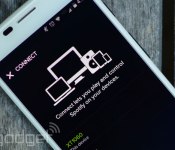
Spotify Connect’s seamless streaming arrives on smart TVs

In order to properly celebrate the first year of Spotify Connect, the streaming outfit is rolling it out to a new set of devices. The feature already played nice with a smattering of wares, and now, you’ll be able to leverage the seamless listening experience on that smart TV. Starting with Philips’ Android-powered units, beaming tunes from your smartphone or tablet will be a breeze — all while sorting the controls from that mobile device. According to Spotify, this is “the first in a long line of smart TVs” that will hit shelves with the add-on. Alongside Libratone, B&O and Sony, Connect is now available on Bose, Panasonic and Gramofon audio gadgets with support multi-room systems tacked on for good measure. With the news of new partners, the feature will be available on over 100 wares by the year’s end.
Filed under: Home Entertainment, Software, HD
Source: Spotify
.CPlase_panel display:none;

Engadget Daily: HTC One for Windows, 3D-printed ‘bump keys’ and more!

Today, we investigate the world’s most successful sex toy, take the Windows Phone-powered HTC One for a spin, learn about 3D-printed keys that can open most any door, and more! Read on for Engadget’s news highlights from the last 24 hours.
Filed under: Misc
.CPlase_panel display:none;
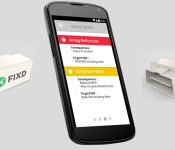
Get your car to tell you what’s wrong with a $50 dongle

We imagine that the blind terror that we experience when visiting an auto shop is the same when a car mechanic visits Best Buy. After all, to us, that check engine light represents a multitude of problems that send most of us into a panic. That’s the issue that Fixd is hoping to eliminate, thanks to the fact that almost all cars nowadays have an On Board Diagnostics port – which is how those mechanics diagnose what’s wrong. Fixd itself is a small Bluetooth transmitter that plugs into the OBD II port, pushing data to your smartphone. As soon as it recognizes a problem, it can tell you what needs to be done, and how much it’ll cost. It’ll even work with multiple vehicles, and will also let you know when it’s time to take the car in for its annual service. Naturally, it’s a Kickstarter project, requiring $50 to get hold of the device and its corresponding iOS or Android app when it ships early next year. On the upside, just imagine the first time you use it, stride straight into Joe’s Auto Repair and tell them exactly what’s busted.
Filed under: Transportation, Wireless
Via: Mashable
Source: Kickstarter
.CPlase_panel display:none;

NASA’s massive Space Launch System rocket is slated for a 2018 launch

Upstarts like SpaceX might get most of the attention, but let’s not forget that NASA — you know, the folks who actually put 12 guys on the moon — isn’t done pushing to explore the heavens just yet. Case in point: the agency is working on a whopper of a rocket called (unimaginatively enough) the Space Launch System that’ll eventually propel a manned Orion capsule in Mars’ direction, and officials just green-lit that massive booster for development. The formulation phase is over folks, time to build this crazy thing. There is, however, a downside. You see, the SLS was originally slated to make its first official test flight with an uncrewed Orion capsule in December 2017, but it’s looking at this point like that inaugural launch will actually take place nearly a year later. Yeah, we can hardly wait either, but it was going to be a long while before all the development and infrastructure fell into place anyway — NASA associate administrator Robert Lightfoot reaffirmed in a statement that we won’t be flinging humans at the red planet until the 2030s. Think you can beat that, Mr. Musk?
Filed under: Science
Source: NASA
.CPlase_panel display:none;

Hail nearby medics with the GoodSAM smartphone app

In a serious medical emergency, action in the first few minutes can be key to a positive outcome. An ambulance might be only a few miles away, but what if someone with medical training, who could provide immediate care while the cavalry’s on route, was sitting just next door? It’s this kind of scenario a doctor with London’s Air Ambulance service had in mind when he created GoodSAM, an Android and iOS app that sends out a request for any nearby professionals to lend a hand in an emergency.
Well, there are actually two different apps. GoodSAM Alerter is available to everyone, and it’s through this you can broadcast a call for help. During the app registration process, you can also add medical details you think could be important for the first person on the scene, should you be the one in trouble. The app uses GPS and Google Maps to pinpoint your location, then notifies the nearest person who might be able to provide aid, before hailing others if they’re unavailable. Once you’ve made a request for immediate support, the app then asks if you want to call the emergency services, assuming you haven’t already.
GoodSAM Responder is the app for those who can actually do the helping. As you’d expect, the registration process is much stricter — you need to prove you have the right qualifications and training to give emergency care. If you fit the bill, you’ll be the one receiving notifications of people in need through the Responder app. Confirm you’re able to help, and the app will direct you to the scene, as well as set up a messaging channel with the smartphone that sent the alert. Responders also have access to a crowd-sourced map of defibrillator locations if they need to find one quickly. GoodSAM isn’t the first app of its kind, but it could be the first to have a global impact. We’re told the app is currently most useful in London due to a high number of registered responders, but it’s hoped with ongoing awareness campaigns the app will become a valuable tool worldwide.
[Image credit: David Holt London/Flickr]
Filed under: Cellphones, Software, Mobile
Via: Sky News
Source: GoodSAM
.CPlase_panel display:none;

Boston Children’s Hospital preps surgeons with custom 3D-printed models

Undoubtedly, 3D printing has taken root in a variety of disciplines, and medicine is no stranger to leveraging its tool kit. At Boston Children’s Hospital, surgeons are using printed models to prep for the operating room. “With 3D printing, we’re taking a step that allows experienced doctors to simulate the specific anatomy of their patients and allows the best of the best to become even better,” says Peter Weinstock, MD, PhD. Dr. Weinstock is working on an in-house service that’s capable of constructing the models in short order. Using scans from the hospital’s radiology department and a 3D printer capable of super high-resolution output (16 microns, to be exact), the models allow doctors to examine details of a baby’s skull or brain. What’s more, the machine can use multiple materials to sculpt the final result, simulating the unique facets of bone, skin and blood vessels individually. For surgeons-in-training, the custom-made prints can illustrate the details of a medical condition rather than an average look.

Filed under: Misc
Via: ABC News
Source: Boston Children’s Hospital
.CPlase_panel display:none;

Instagram shows how Hyperlapse stabilizes your jittery videos

Instagram has already revealed a bit about how Hyperlapse turns your shaky handheld footage into smooth time-lapses, but what if you really want to know what makes it tick? Don’t worry — the company will happily satisfy your curiosity with a deep dive into the app’s inner workings. Ultimately, you’re looking at a significant extension of the Cinema tech used in Instagram itself. It’s still using your phone’s gyroscope to determine the orientation of the camera and crop frames to counteract any shakiness. The biggest change is in how Hyperlapse adjusts to different time-lapse speeds. It only checks the positioning for the video frames you’ll actually see, and that crop-based smoothing effect will change as you step up the pace.
Importantly, Instagram’s approach contrasts sharply with what we saw in Microsoft’s similarly-named technique. There, Microsoft is calculating a 3D path through the scene and stitching together frames to create a seamless whole. That approach is potentially nicer-looking, but it’s a lot more computationally intensive; Instagram is taking advantage of your phone’s built-in sensors to create a similar effect without as much hard work. You don’t need to know the nitty-gritty about Hyperlapse to appreciate the effect it has on your clips, but the post is definitely worth a read if you have unanswered questions.
Filed under: Cellphones, Internet, Mobile, Facebook
Via: 9to5Mac
Source: Instagram Engineering Blog
.CPlase_panel display:none;
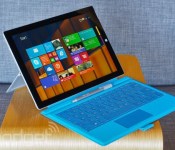
Microsoft’s Surface Pro 3 tablet lands in 25 more countries

Microsoft’s Surface Pro 3 has only been available in a handful of places so far, but it’s about to get a much, much wider audience. As promised, Microsoft is launching its latest Surface in 25 more countries. Most of them are Asian and European nations, including China and the UK; if you’re reading this, there’s a good chance that you can snag a Windows slate for yourself. All five models are available, so you won’t have to settle for a device you don’t want. You’ll have to be a little more patient if you want the docking station, though. It’s available for pre-order today, but you’ll have to wait until September 12th to pick one up on impulse.
Filed under: Tablets, Microsoft
Source: Surface Blog
.CPlase_panel display:none;

Nimblebit’s ‘Tiny Tower Vegas’ Now Available Worldwide [iOS Blog]
The sequel to Nimblebit’s popular free-to-play tower building game Tiny Tower is now available for download worldwide after soft launching in several countries earlier this summer. Tiny Tower Vegas incorporates the same tower building gameplay found in the original game, melding it with several Las Vegas-themed mini games like poker and slot machines.
As in the previous game, the idea is for players to continually build up and manage a tower filled with various businesses that generate coins. Like many free-to-play titles, Tiny Tower Vegas includes various countdown timers for functions like restocking floors, which can be sped up with the use of real life currency.
Tiny Tower Vegas can, however, be played without investing any real money. There are three types of currency in the game: coins, bux, and poker chips. Coins are earned from the tower’s occupants, while bux are won from the included gambling mini games, which are played using poker chips. While poker chips can be purchased in app, there are also continual mini events in the game that reward players with the currency.
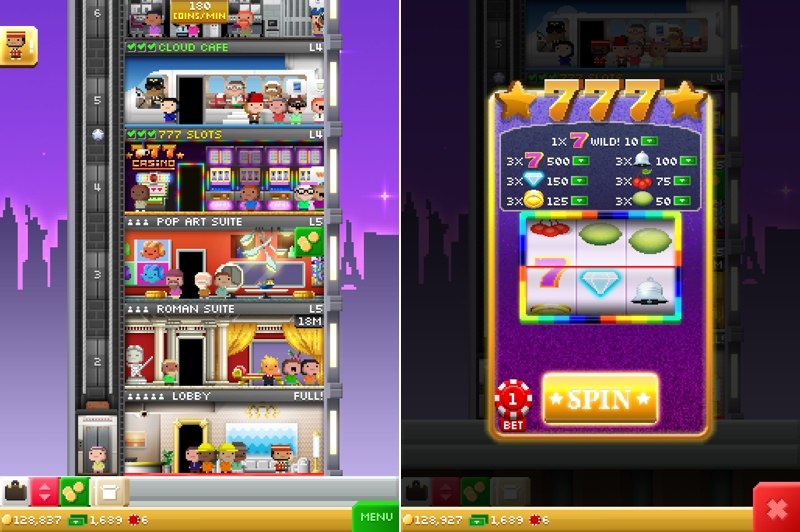
The game includes several tower customization options and features that were available in the original Tiny Tower, including a BitBook with funny status updates, elevator upgrades, and multiplayer options that allow users to visit friends’ towers and team up with other users in the Players Club.
Tiny Tower is back, and this time we’re going to Vegas, baby!
– Build and manage your own hotel & casino filled with shopping, dining & entertainment floors!
– Amass a fortune of bux by betting chips in a multitude of casino games!
– Earn chips when your friends visit and play the games in your tower!
– Customize your tower with impressively themed roofs, elevators and lobbies!
– Keep tabs on the thoughts of employees and guests by reading the “BitBook” virtual social network!
Tiny Tower Vegas is a universal app that can be downloaded from the App Store for free. [Direct Link]
.CPlase_panel display:none;

Apple Denied Sales Ban on Samsung Devices From Second Patent Trial [iOS Blog]
Apple has again been denied a permanent injunction on Samsung products that infringe on its smartphone patents, reports Bloomberg. Judge Lucy Koh today rejected Apple’s plea for a sales ban on nine different Samsung devices involved in the second Apple vs. Samsung patent infringement trial.
According to Koh, Apple did not demonstrate irreparable harm in the form of lost sales, despite efforts to target specific infringing features on the Samsung devices.

“Apple has not satisfied its burden of demonstrating irreparable harm and linking that harm to Samsung’s exploitation of any of Apple’s three infringed patents,” the judge wrote. “Apple has not established that it suffered significant harm in the form of either lost sales or reputational injury.”
Earlier this year, a jury ruled that Samsung had willfully infringed on three Apple patents, ordering the company to pay $119.6 million in damages. Devices involved in the lawsuit included the Galaxy S III, Galaxy Note II, and Galaxy Tab 10.1.
The $119.6 million that Samsung owes from the second trial is in addition to the damages awarded to Apple in the original Apple vs. Samsung trial, which added up to approximately $890 million after a recalculation.
Apple and Samsung agreed to end their non-U.S. patent disputes in early August, but their battle in the United States is ongoing despite efforts to find “common ground.”
.CPlase_panel display:none;
 AIVAnet