


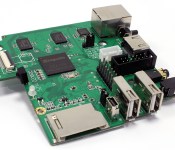
Imagination Technologies will give its ‘Raspberry Pi on steroids’ away for free

Grab someone in the street and ask them about Imagination Technologies and they’re more likely to run away than tell you that it’s the company that designs the graphics chips for Apple’s mobile devices. The company is more than just the home of PowerVR, however, and bought MIPS in order to become a direct rival to ARM, its more famous UK chip-design neighbor. Now, the company has decided to produce a Raspberry Pi-style development board in the hope of taking MIPS mainstream, describing it as “Raspberry Pi on steroids.” Aside from the differences in hardware and chip architecture between the two devices, there’s one big change in approach: Imagination Technologies is giving its board away for free.
The romantically-named MIPS Creator CI20 is a barebones board that’s capable of running Linux distros like Debian 7, as well as Android 4.4, and measures 90.2mm by 95.3mm. The hardware is packing a 1.2GHz MIPS32 CPU, 1 GB RAM and a PowerVR SGX540 GPU – the same GPU that is used inside Google Glass, Kindle Fire, Razr I and Galaxy Tab 3 7.0. Combining that graphical prowess with dedicated video controllers that’ll support 1080p at 60fps makes the C120 ideal as a barebones HTPC, something the company takes great pains to point out. There’s also 8GB of on-board storage and a full-size SD card reader, a step up from both the BeagleBone Black and the Pi Model B+. Connectivity-wise, in addition to the usual Ethernet port, the CI20 also comes with Bluetooth 4.0 and 802.11 b/g/n WiFi as well as two full USB ports and a HDMI-out port.
Of course, you’re probably itching to find out how to get hold of one of these for precisely zero money, but it won’t be as simple as fluttering your eyelashes in the direction of its Kings Langley HQ. The company is asking that you sign up on its online store (it’s in the source link) to register, offering up both your personal details as well as the details of the project you’re planning to develop — for instance, a nice HTPC — with the hardware. The company will then work with you to garner feedback from your projects in the hope of, at some point in the future, selling a future variant in the same way as the Raspberry Pi is now.
Filed under: Misc
Source: Imagination Technologies, Request a MIPS Creator CI20
.CPlase_panel display:none;

London to start trialling wirelessly-charged buses

While London’s public transport network is getting more hi-tech by the minute, the city’s buses and trains aren’t as green as they could be — at least not yet. Transport for London (TfL) has already deployed 800 hybrid and a handful of all-electric buses on the capital’s streets, but keeping them charged isn’t easy when they’re miles from a depot. In a bid to keep them running as efficiently as possible, TfL has kicked off a new trial that will see inductive charging stations built into four east London bus stops, allowing its Enviro400H E400 hybrid buses to charge wirelessly while they pick up passengers.
Once TfL has completed the necessary installations, the charging system will be tested on electric hybrid buses traveling route 69 (for locals, that’s between Canning Town and Walthamstow) from next year. Topping up at regular intervals means they can run for longer using only their batteries (instead of falling back onto diesel power), which reduces their running costs and impact on the environment. TfL says the trial will allow it to gauge whether wireless charging can stand up to the pressure of powering buses full of tourists and commuters across the whole city.
[Image credit: wirewiping, Flickr]
Filed under: Transportation
Via: Pocket-lint
Source: TfL
.CPlase_panel display:none;

Lockheed Martin to track space junk from the Australian Outback

In the movie Gravity, masses upon masses of floating debris hurtled through space at alarming speeds and collided with the heroine’s space shuttle, killing her crew. Space junk isn’t just something made up for the movies, though — it’s a real issue that’s costing space agencies a whole lotta money. As such, Lockheed Martin has teamed up with Australian company Electro Optic Systems to build a space object tracking facility in western Australia, which the latter has been planning for years. While the U.S. Air Force’s debris-tracking Space Fence (also developed by Lockheed Martin) uses radar systems, this one will use an optical technology like those found in telescopes to zoom in on objects, and lasers to calculate their speed and distance from Earth.
Space agencies typically avoid debris by moving vehicles when trackers warn that they’re bound to collide with floating junk. When the Lockheed Martin facility’s construction wraps up in 2016, it’ll be able to track 200,000 pieces of space junk, which could be anything from rocks to pieces of old satellites, even those as small as a baseball. Seeing as even the tiniest speck of trash can shatter windows on space vehicles, the new facility can help save NASA and other agencies some serious cash.
[Image credit: Gravity/Warner Bros. Pictures]
Filed under: Science
Source: The Wall Street Journal, Lockheed Martin
.CPlase_panel display:none;
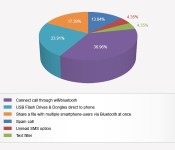
6 ‘Missing’ smartphone features: PriceBag Survey
 We have feature-laden smartphones today, be it flagship devices or their mid-range counterparts. But there are certain features that you always need but nobody bothers about working on them. The features that you need the most are not gimmicks like Quad HD displays but stuff that would make your life easy and will be used everyday voluntarily. We did a survey of 455 people and compiled a list of features that we think are necessary for easing everyday life:
Spam Call

What if someone you did not want to talk to calls you and you don’t get to know when that person called, unless you check your notifications? In today’s times when the Do Not Disturb systems can be bypassed, a feature which allows you to stop pesky callers from disturbing you and you can turn it on and off at your own free will would do wonders. Who knows you might need to call these pesky callers and want to talk to them about something that is important for you. After all, fail-safe measures are necessary too. 13.04 per cent respondents voted for this feature which we call Spam Call.
Unread SMS option
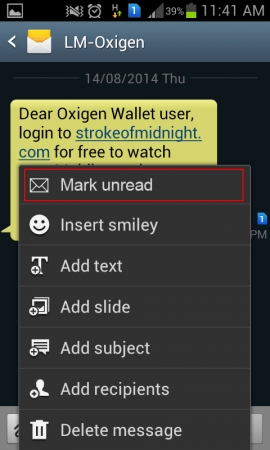
You receive some odd 5 SMSes on an average daily, even if you are using WhatsApp or other Internet Messengers. But some of those messages are important and when you need to look at them again, you need to search through your message inbox for them. But what if you could read them and mark them as unread? That would make looking at important messages handy and your life easy. This feature, we call it Unread SMS option, had 4.35 per cent respondents gunning for it.
Text filter
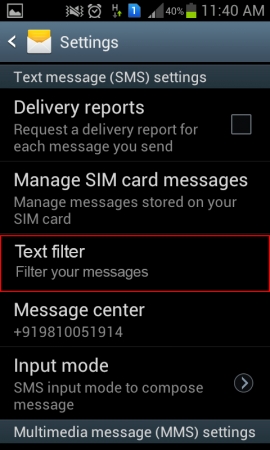
There are certain messages that you don’t ever want to read but still have to encounter, like property dealers’ messages for instance. What if your phone could block these messages from landing in your inbox on the basis of what is written in them. For sure you would thank the phone maker who brings this feature to their smartphones(s). The feature called (by us) Text Filter got the yes vote from 4.35 per cent of total respondents.
Connect call through Wifi/Bluetooth

Why is it that we have to rely on our mobile carriers to talk to any person we want? Should this dependence not be cut down upon? What if you could call someone using Wifi and Bluetooth connections? That would have few advantages like (a) you will reduce your dependence on intercom networks at workplace or residence; (b) the connections would be faster and more reliable, reducing call drop rates and; (c) you will be able to talk for as long as you want without having to worry about racking up sky-high bills. A whopping 36.96 per cent of all respondents want their phone to have this feature. We wonder what telecom operators have to say about it.
USB Flash Drives & Dongles direct to phone
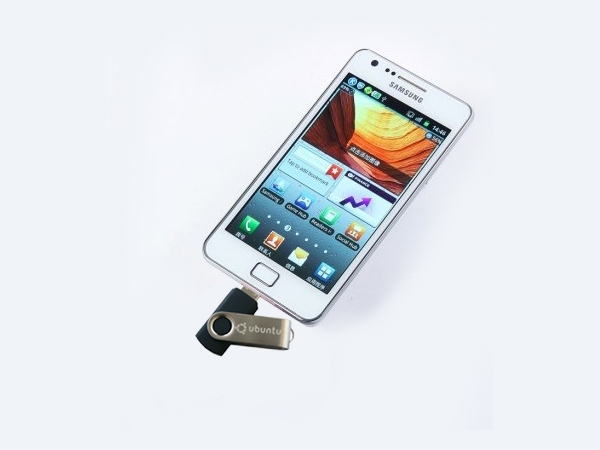
There is something called USB On-The-Go which enables you to connect your phone to your pendrives to expand storage. However, that is where its usability ends. Now imagine, you have your web dongle and your 3G connection is running at low speed. If your phone could connect to internet using that dongle, it would just enable you to finish your tasks faster. A downside is that 3G adoption rates would come down, but then 3G rates would also get slashed, making the high-speed network accessible to more users than ever. Among one of the most prudent features, it had 23.91 per cent respondents at its side. Time to bring down the 3G data rates, telecom operators.
Share a file with multiple smartphone-users via Bluetooth at once
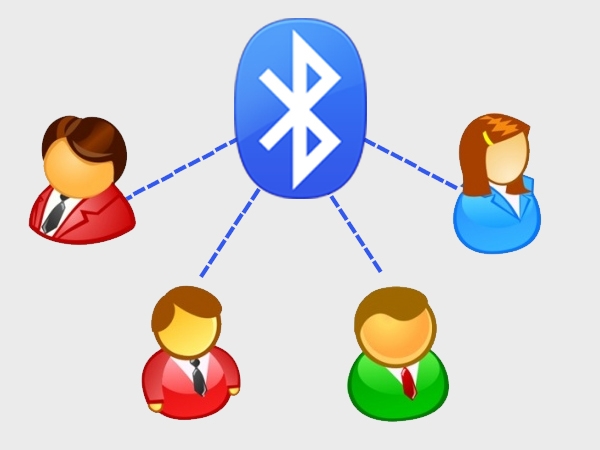
Right now, your phone can connect to only one Bluetooth device at a time. But there are times when you want to share a file with multiple users and fast. Due to Bluetooth’s limitations, you need to resort to means like e-Mail, Internet Messengers, etc. If your phone could connect to more than two devices via Bluetooth, it would just make your tasks easier and Bluetooth more useful for you than it is right now. Out of the total 455 respondents, 17.39 per cent want this feature to be packed in their phones.
Via PriceBag
.CPlase_panel display:none;

LG’s big screen phone-of-the week gets a laser camera

Now that LG’s flagship G3 is a big success, it’s pulling a Samsung by throwing esoteric spin-offs like the G3 Stylus against a wall to see what sticks. The latest is the not-so-brilliantly named Gx2 (the company already has a G2x) that packs a huge, 5.7-inch screen and laser camera focus borrowed from the G3. Other specs are run-of-the-mill: a quad-core 1.2GHz CPU, 1.3-megapixel front camera, 1.5GB of RAM, 8GB memory, 720p screen resolution and a 3,200mAh battery that should run forever. Oddly the meek 8-megapixel camera doesn’t seem to deserve the laser system, but maybe there’s a “focus buff” market we’re unaware of. Pricing and availability have yet to be revealed, but it’s likely to stay in Asia.
Filed under: Cellphones, Mobile, LG
Source: LG (Translated)
.CPlase_panel display:none;

Apple to Reportedly Launch Thinner MacBook in Late 2014 or Early 2015
Apple will launch a thinner MacBook near the end of this year or early next year, according to a new report from Digitimes. Citing supply chain sources in Taiwan, the report notes that component production has already begun in small volumes. Apple will also reportedly cease production of the 13-inch non-Retina MacBook Pro by the end of 2014.

A report last month claimed that Intel’s continued delays of its Broadwell chip may cause Apple to push back the release of its 12-inch MacBook until late this 2014 or early 2015. The 12-inch MacBook is said to include a Retina display and may either be a successor to the MacBook Air or join Apple’s current 11-inch and 13-inch models.
A previous report in June stated that Apple would begin production of a 12-inch MacBook Air in the third quarter of this year, with Quanta Computer in charge of assembly. The 12-inch MacBook Air was also described as appearing similar to the 11-inch and 13-inch models, but featuring a Retina display and internal changes to various components.
Other reports throughout the year have also shared information on a 12-inch MacBook Air, with NPD DisplaySearch and KGI Securities analyst Ming-Chi Kuo also stating that the new notebook would feature a Retina display. A user on a Chinese forum who previously shared accurate information noted that the 12-inch MacBook Air would incorporate a new cooling system and button-less trackpad design.
If Apple is indeed looking to launch a new MacBook late this year or early next year, the company may unveil the notebook at an October event following the introduction of the iPhone 6 in September.
.CPlase_panel display:none;

Tokyo’s Shibuya gets a big-screen Google voice search terminal

Arguably, the whole convenience of Google’s search and map skills (and by association, the voice-guided version) is the fact it’s on your smartphone — which is right in your pocket. However, In a bid to explain to Tokyo-ites that there’s more to the eminently tech-friendly Shibuya outside of That Starbucks and the scramble-crossing, Google’s erected a temporary structure right outside the station. Not only can you make voice search requests for the nearest tech store or… french patisserie, it’ll display a map and directions on a huge 138-inch screen — which you can then take a photo of, presumably, with your smartphone.

As you can see, the interface looks almost identical to voice-based interactions on Android phones. There’s a giant mic to pick up your commands over the throngs of people constantly ducking in and out of the nearby station. From our time with it, Google’s robots still found it hard to pull out simple commands from the buzz of the crowds. When it does pick it up, it’ll then parse what you’re saying and offer up suggestions just like, well, Google voice search. The collaboration with Shibuya’s tourist board and local businesses aims to offer visitors some navigational help when getting around. Given the area’s reputation for tangled back-alleys and hidden shops, you might need all the assistance you can get.
Filed under: Google
.CPlase_panel display:none;
3D-printed ‘bump keys’ are a tech-savvy lockpicker’s best friend

We’ve all locked ourselves out of our homes or offices at least once, but what do you do when there aren’t any handy spare keys laying around? Well, seeing as how we live in the future, you could always 3D print one. Printing a plastic replica of a key you’ve already got in your possession is a piece of cake, but the real trick for the curious and the criminal alike is figuring out how to print a key that’ll open locks without having an original key on hand. Wired spoke to a pair of lockpickers who did just that — with just a photo of a keyhole, some understanding of the lock’s depth and a bit of crafty purpose-built software called Photobump, security consultants Jos Weyers and Christian Holler can print so-called “bump keys” that allow them to jimmy open nearly any lock with just a bit of elbow grease.
Haven’t heard of bump keys before? Long story short, they’re specially filed keys that you slip into a keyhole and hit with a mallet. Why? The energy from that thump is transferred up from the key’s grooves and into the two layers of pins that normally keep the lock from rotating — if you strike the bump key just right while trying to turn it, that top layer of pins will leap out of the way long enough for you to unlock the whole shebang. If that sounds a little too easy, well, you’ve got a point. Thankfully, Weyers and Holler aren’t trying to sell their tech to the highest, most nefarious bidder — they’re instead trying to coax manufacturers into crafting locks that can better resist these sorts of techniques.
Source: Wired
.CPlase_panel display:none;

Apple makes its mobile ads longer, bigger

Next time you’re playing a favorite game on your iPhone and iPad, a huge ad — or worse, a minute-long video roll — might take over the screen. iAd platform’s full-screen interstitial banner and pre-roll video ads, which were first announced earlier this year, are now available to developers. The full-screen ads appear as transitional screens, say, whenever you reach the end of a game level, while the video ads come in 15, 30 and 60-second variants. These are already available on other ad platforms, of course, but iAds were typically more unobtrusive, just banners that you can click on to launch advertisers’ websites. As you’d expect, these new options will cost devs a lot more money. But if Apple does unleash an iPhone with a much larger screen (possibly this September), then these ads might just be worth their cash.
Filed under: Cellphones, Tablets, Mobile, Apple
Via: The Verge, Apple Insider
Source: Apple Developers
.CPlase_panel display:none;
HP recalls 6 million laptop power cords after reports of burns

Heads-up: if you’re holding on to an HP or Compaq laptop sold between September 2010 and June 2012, you may need to swap out its power cord. HP has recalled the cabling for about 6 million of these older portables (5.6 million of which reached the US) after 29 incidents where the cord either burned or melted. As is usually the case with these kinds of programs, you just have to prove that you’re using an affected system to get a free replacement. This certainly isn’t what you want to hear if you’re bringing one of these computers to school, but it beats losing your power cord to a fire in mid-semester.
Via: Reuters
.CPlase_panel display:none;
 AIVAnet