



How would you change Google Glass (Explorer Edition)?

It’s always tough asking for people’s opinions on a device when so few instances of the hardware are available. Even a year after its release, getting hold of Google Glass (Explorer Edition) is a long and expensive process that few outside of the tech fraternity will bother with. Still, we’re fairly sure that plenty of you have at least tried a pair on – the last time we were in the same city as Alexis Santos, he was stopped every five minutes by curious passers by. Now, when we forced Mr. Tim Stevens to review it, he said that Google Glass was a fascinating prototype, with plenty of potential, but unless you’re the sort of person who would describe $1,500 as chump change, you should steer clear. The two-hour battery life wasn’t ideal, and there were more than a few privacy concerns that, in hindsight, have been borne out. Personally, the most exciting feature for me was the navigation coupled with the bone-conducting headphone, and there’s nothing greater than having directions beamed directly into your cranium. Still. The question here is simple: if you had a meeting scheduled with Sergey Brin, what would you tell him to change for version two?
Filed under: Wearables, Google
Source: Engadget Product Forums, Engadget Product Database
.CPlase_panel display:none;
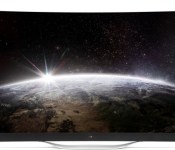
LG’s first 4K OLED TV is ready to kill LCDs once and for all

LG only just brought its 55-inch 1080p OLED to a $3,500 price that’s within the limits of mainstream credit cards, and it’s already back with something better. The curved 4K OLED TV we saw at CES is about to go on sale in Korea, and will arrive soon everywhere else, meaning well-heeled buyers don’t have to choose between Ultra HD resolution and the sweet black levels offered by this newer display technology. We don’t have an official US price for the TV yet, but HDGuru’s usually reliable retail sources say the 77-inch model (there’s also a 65-inch version in) will arrive for about $7,000 next month. In Korea it’s priced at about 12,000 won ($11,753), however US prices are usually much lower. LG exec Hyun-hwoi Ha isn’t mincing words either, calling the new display “the pinnacle of technological achievement” and saying the tech will overcome LCDs in sales in just a few years. Can OLED pull off what plasma couldn’t? LG is betting it will — meanwhile Samsung seems convinced that OLED isn’t quite ready for prime time.
Filed under: Displays, Home Entertainment, HD, LG
Source: LG Newsroom
.CPlase_panel display:none;
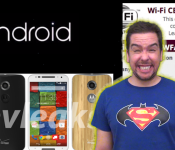
Android L to be Lemon Meringue Pie?! Moto X+1 Gets Press Render! – The ManDroid Show

Happy Sunday Android friends. I apologize for being so late for The ManDroid Show this week. Looks like we might have our name for Android L, and I will say I am not a fan. Lollipop or Lava Cake would’ve been fine, but long as that Material Design is running buttery smooth, I guess the name shouldn’t matter. The Moto X+1 finally gets an official render, and it might see an official name as well. Enjoy the show!
Android News
Android L official name?
HTC Nexus tablet gets Wifi cert
Leaked render of Moto X+1
//<![CDATA[
ord = window.ord || Math.floor(Math.random()*1E16);
document.write('‘);
//]]>
The post Android L to be Lemon Meringue Pie?! Moto X+1 Gets Press Render! – The ManDroid Show appeared first on AndroidSPIN.
.CPlase_panel display:none;

App security flaw makes your iPhone call without asking

If you’re an iPhone user, you may want to be cautious about opening messages that contain phone numbers in the near future; they may cost you a lot of money. Developer Andrei Neculaesei notes that maliciously coded links in some apps will abuse the “tel” web handler (which covers dialing) to automatically make a phone call the moment you view a message. Potentially, an evildoer could force you to call an expensive toll number before you’ve had a chance to hang up. The exploit isn’t limited to any one app or developer, either. Facebook Messenger, Gmail and Google+ all fall prey to the attack, and it’s likely that other, less recognizable apps exhibit similar behavior. Apple’s Safari browser will ask you before starting a call, but FaceTime’s behavior lets you pull a similar (though not directly related) stunt.
In many cases, it’s the developers who are to blame. They’re supposed to put tighter controls on what happens when a number comes in, such as giving you a warning. However, Apple could theoretically mitigate the issue by requiring prompts for all phone links. You may not have to worry about a spam flood in practice, but let’s hope app writers act quickly — as Android users have already learned, “tel” exploits can cause a lot of grief if left unchecked.
Filed under: Cellphones, Internet, Mobile, Apple, Google, Facebook
Via: PCWorld
Source: Algorithm.dk
.CPlase_panel display:none;

HTC One M8 for Windows, ‘Halo 2: Anniversary’ and other stories you might’ve missed

This week, we got our hands on the HTC One M8 for Windows, anticipated the release of Halo 2: Anniversary, learned about monkey selfie rights, investigated issues with Secret’s anonymity and more! Read on for Engadget’s news highlights from the last seven days. Oh, and be sure to subscribe to our Flipboard magazine!
.CPlase_panel display:none;

China’s government-backed operating system should hit desktops in October

China’s next try at a government-supported operating system may soon become a practical reality. The Chinese Academy of Engineering tells the People’s Post that a desktop version of China Operating System (COS) should be ready by October, with mobile device support coming later. That’s pretty quick considering that we first heard about the software in January, although there’s a chance it could slip. Xinhua claims that the project is suffering from both a lack of funding and developers “pulling in different directions” — not totally surprising if true, since it’s the work of a public-private alliance that might not always share the same vision.
Still, the team is optimistic that its efforts will eventually bear fruit; it believes COS could replace existing desktop operating systems within two years, and their mobile counterparts within three to five. It may have a realistic shot at this when the Chinese government has lately been giving both Apple and Microsoft platforms the boot in response to fears about American surveillance. However, that could still be a daunting task in at least some situations. Right now, the Chinese smartphone market is dominated by Android devices, many of which come from local manufacturers like Xiaomi. There isn’t exactly a rush to replace Google’s platform with something brand new, no matter how well-made it might be.
Filed under: Desktops, Laptops, Software, HTC
Via: Reuters
Source: Xinhua
.CPlase_panel display:none;
 AIVAnet