


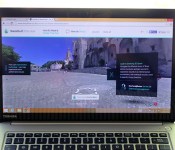
Sounds of Street View takes you on a virtual vacation

You can only experience so much of a place by poking around it in Google Maps, and that’s why Amplifon, a hearing aid company from the UK (seriously), put together a little getaway-in-a-browser called Sounds of Street View. The name really says it all – once you pop on your headphones (trust us, it’s important), you can virtually explore Place du Palais, Hawaii’s Hapuna Beach and Balboa Park in San Diego complete with some much-needed aural ambience. It’s a surprisingly comprehensive experience too: as you “cruise” down the streets of Avignon, France, you’ll hear the lilting tune of an accordion give way to the din of a dining crowd and a church bell ringing in the distance. Is it just like being there? Erm, not quite, but it’s way cheaper than a plane ticket at the very least. Alas, those are the only three locales available at the moment so you can’t vicariously experience the ceaseless thrum of Hong Kong or New York City… until a crafty developer uses the provided cobbles together the soundscape for you, anyway.
Source: Sounds of Street View
.CPlase_panel display:none;
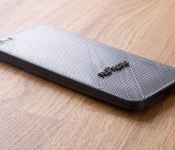
Leave your phone at home without feeling uneasy about it

Finally, there’s a device with a spec sheet that’ll let you feel good about leaving your other phone elsewhere. Enter the noPhone: a solid brick of plastic that stands in at the size and weight comparable to any of those popular handsets. What’s more, the device has a 0-megapixel camera, infinite battery life and is both waterproof and shatterproof. All of that looks good on paper, but the real selling point is how the noPhone’s features improve communication. Eye-to-eye contact and conversing with actual spoken words at dinner are on their way back to couples everywhere. That’s because you won’t be using this slab to text or call someone else, but you can leave it in your pocket to feel like the tether is still intact. No word on a release date or pricing just yet, but you can see the gadget in action on the other side of break.
Filed under: Cellphones, Mobile
Via: Fast Company
Source: noPhone
.CPlase_panel display:none;

Schematics Allegedly Reveal M7 Successor Chip ‘Phosphorus’
Apple is unsurprisingly working on a new version of the M7 co-processor for the upcoming iPhone 6, claims GeekBar (Via G 4 Games) in a post on Weibo. In this latest report, a new set of schematics allegedly showcase this new co-processor chip, which is internally labeled “Phosphorus.”

GeekBar claims “Phosphorus” will be the successor to the M7, collecting motion data as well as processing other health-related information handled by Apple’s new HealthKit API. This chip potentially is the power behind Apple’s new Health app for iOS 8, which will import data from the iPhone and other third-party devices in order to create an overview of the user’s health.
Apple introduced its new Health tracking app and its HealthKit API at WWDC in June. Besides encouraging developers to build health and fitness-related functionality into its device, Apple also may be talking to hospitals, health institutions and insurance companies in order to expand its HealthKit initiative beyond the user’s device. In one scenario, data from the Health app could be shared with a health insurance companies in order to lower a healthy subscriber’s monthly premium.
.CPlase_panel display:none;
TSMC Reportedly Ahead of Schedule With New 16nm Technology for Apple’s A9 Chip [iOS Blog]
According to China’s Economic Daily News [Google Translate, via Digitimes], Apple’s reported current A-series chip partner Taiwan Semiconductor Manufacturing Company (TSMC) is ahead of schedule with its next-generation 16nm process for chip production. The Chinese-language report claims TSMC will begin 16nm volume production in Q1 2015, a full quarter earlier than its originally projected Q2 2015 start. This advancement may pave the way for TSMC to supply Apple with the future A9 processor that would be used in the late 2015 iPhone.
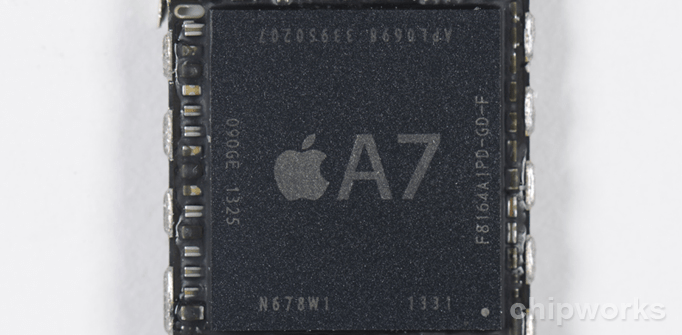
TSMC is reportedly installing this 16mm capability in its manufacturing plants with the potential for a monthly output of 50,000 wafers. This capability positions TSMC favorably against Samsung as the two companies vie to supply Apple with processors for both its current and future iPhone and iPad models.
Reports from last year suggested Samsung, GlobalFoundries and TSMC would share production of Apple’s A9 processor in 2015. Samsung is expected to handle the lion’s share of the production, providing up to 40% of Apple’s processor supply, although TSMC may be looking to alter that balance with its accelerated work. GlobalFoundries, TSMC and possibly even Intel may be used to complement Samsung’s production to provide the remaining chip inventory necessary to meet Apple’s demand.
.CPlase_panel display:none;

Europe launches two navigation satellites into the wrong orbit

Arianespace, the company that launches satellites for the European Union, has had to concede that its latest mission hasn’t been a complete success. Friday’s launch conveyed two satellites, Dorea and Milena, into orbit to help build out Galileo, the EU’s homegrown alternative to GPS and GLONASS. Everything had gone to plan when the Soyuz rocket reached the upper atmosphere and deployed the satellites, but shortly after, authorities realized that the units were in “noncompliant orbit,” which means they’re spinning around the planet in the wrong orbit.
For its part, Arianespace has already launched a full investigation in partnership with the European Space Agency and European Commission in the hope of finding and fixing the problem before the next launch. It’s not the first time that Galileo has suffered a setback, running well past its deadlines and sailing far over its initial budget. With the loss of these two satellites, it’s not clear if the union can still expect to have the system up and running by 2017, or if the pair can be rescued. Speaking to AFP, Galileo co-ordinator Jean-Yves Le Gall has said that restoring Doresa and Milena to their working orbit would be “complicated,” but then that’s probably why they call it rocket science.
Filed under: GPS, Transportation, Science
Source: Arianespace
.CPlase_panel display:none;

What you need to know about Amazon’s fight with e-book publishers

Unless you’ve been living in a book-free cave, you may have heard that retail giant Amazon and book publisher Hachette are having a little tiff. It’s all about digital versions of books — so-called e-books — and it boils down to this: Amazon wants to sell most of them for $10, and Hachette wants to set its own prices depending on the title and author. In the latest volley, Amazon tightened the screws by listing Hachette’s printed titles as unavailable on its site, halting pre-orders and pulling some product pages completely. In a blog post, Amazon claimed it was trying to do well by consumers and (confusingly) invoked George Orwell. Meanwhile, 900-plus authors — including household names like Stephen King and J.K. Rowling — said they were innocent victims and took out a $104,000 ad decrying Amazon’s hardball tactics. The dispute shows no sign of abating.
So, who’s right and, more importantly, who will win?
WHAT’S IT ABOUT?

Amazon and Hachette’s fight erupted when negotiations broke down, but how did it go so wrong? Amazon is far and away the largest e-book retailer, with Kindle e-reader sales of around $4 billion last year, and e-book earnings estimated between $265 million and $530 million. While that might not sound like a lot for a $74 billion company, Amazon has nurtured e-books over time and makes large margins on them (unlike other goods it sells, often at a loss). Hachette, meanwhile, isn’t exactly David to Amazon’s Goliath: French parent company, Lagardère, raked in 7.2 billion euros ($9.5 billion) last year.
Once Amazon got big enough to dictate terms, it declared $9.99 to be the de facto price for e-books. Simon & Schuster, Penguin, Hachette and other publishers wanted to set their own prices, but had no leverage against Amazon’s dominance. To change that, they struck a deal with Apple to create the “agency” model, which let them set retail prices while giving Apple and other retailers a fixed, 30 percent cut. Amazon was forced to take those terms, but it promptly complained to the US Department of Justice (DoJ). A judge eventually ruled that Cupertino and the publishers conspired to raise prices — a cardinal sin in the US. The court forced publishers to tear up all the agency e-book agreements and renegotiate terms with Amazon.

Once those negotiations started, Hachette and Amazon quickly found themselves at loggerheads. Hachette wants to set wholesale prices at about 70 percent of retail and pay authors whatever cut they can negotiate — usually about 10 percent. That leaves 30 percent or less to Amazon, depending on discounts. It’d be a pretty rich deal for the publisher, which takes less profit on printed volumes. Amazon, on the other hand, is willing to keep its e-book margins at 30 percent but is adamant that the price for most titles be the pre-agency rate of $9.99, 30 to 50 percent lower than what they are now (depending on the title). It also proposed that publishers split the 70 percent balance with authors, rather than taking so much of it.
When Hachette wouldn’t budge, Amazon curtailed supply of its 5,000 titles by halting pre-orders, delaying shipments (despite plentiful supply), eliminating discounts and removing titles entirely. Hachette said it wouldn’t back down either, adding that “Amazon … considers books to be like any other consumer good. They are not.” Without taking sides, the 900 members of Authors United (many not published by Hachette) decried Amazon’s order-stalling tactics, saying they’re being used as pawns. Amazon — which also has a publishing arm — trotted out its own scribes, along with the “me-too” Readers United group.
WHAT’S THE ARGUMENT?

Amazon grinds suppliers to keep its competitive edge, and publishers are no exception. It claims that reduced e-book prices actually result in higher sales and more money for all the players, not less. The online giant further argues that high e-book prices are unjustified since publishers have no printing, returns, resales and warehousing to deal with. It believes high prices are hurting the book industry, which must compete against video games, movies, television and other rival forms of entertainment. That was where it quoted Orwell, who said in the 1930s that publishers should “suppress” the new menace of paperbacks (he was joking).
Meanwhile, Hachette thinks a one-size-fits-all pricing model is unworkable; it wants the ability to set pricing for its own books, both higher and lower than the $10 standard. It said that it would only settle on an agreement that valued the publisher’s role in “editing, marketing and distributing” books. As a final dig, it accused Amazon of harming authors with its current actions, and believes it — not publishers — should compensate them for losses once the dispute is settled.
Amazon has received a lot of bad press of late. Not necessarily because of its negotiating position, but due to its tactics: slowing Hachette sales (see Stephen Colbert’s rant, above) is a prime example. Publications like the New Yorker have argued that, despite Amazon’s high-road arguments, it only cares about profits, not consumers. Some authors have also sided with Hachette: they say that publishers often lose money developing talented writers until they’re finally successful. But one WSJ pundit believes that the publishing industry is dying and that higher prices are the last thing it needs. And Forbes argued that the free market will ultimately decide who wins anyway.
But is it a free market? Some antitrust experts think that Amazon is now a monopoly, since it controls about 65 percent of the e-book trade (and 30 percent of printed titles). For instance, author Douglas Preston told the New York Times that his e-book and paperback sales were down around 60 percent since Amazon began slowing Hachette orders. Pundits say such consequences prove that Amazon has an iron grip on retail book sales — something they believe the DoJ may look into, just as it did with “agency” price-fixing.
WHY SHOULD I CARE?

Assuming you do believe that books are just boilerplate consumer goods, lower prices win every time. Amazon says you’ll pay less for books and more money will go into author’s pockets if it prevails. And while publishers contribute plenty toward the production of books, it’s hard to see why they deserve 60-70 percent profits on e-books, which are virtually free to distribute. Amazon, on the other hand, does offer clear consumer benefits like bulletproof customer service, “look inside” previews, millions of titles and deep discounts (in most countries). Amazon arguably deserves its large share of the e-book market too, since it was largely responsible for creating it in the first place with the Kindle.
However, let’s be clear: lower prices will make Amazon even more dominant in the e-book market. It could then put more more competitors out of business, and we know what happens to companies with few rivals — take Comcast (please). If you hold the position that books are culturally and socially important, unlike t-shirts and banana slicers, you may feel even more strongly. If publishers lose influence, literature could be ruled primarily by the forces of the economy, reducing the number of interesting or cutting-edge books. Finally, Amazon and Hachette can afford a long fight, but imagine the plight of a newly-published Hachette author right now. That’s why I’ll still use Amazon, but if I need a Hachette title, I’m heading to another retailer — I hear that Barnes & Noble has a new Nook.
WANT EVEN MORE?

Amazon and Hachette’s dispute has dominated the tech news, but the New York Times has a nice take on how it’s hurting authors. The WSJ has an in-depth argument as to why it supports Amazon, while Forbes thinks the free market will sort things out. The Guardian is neutral, but believes that the battle was overdue and that publishers need to change their business model anyway. Hachette has presented its side of the story here and Amazon has a mini-essay on its Reader’s United site. If you’re looking for alternatives to Amazon’s Kindle ecosystem, Barnes & Noble has the Galaxy Tab 4 Nook, now made by Samsung — and plenty of Hachette titles. And don’t forget Apple, which arguably started the whole thing. It took a dig at Amazon by discounting Hachette pre-orders.
[Image credits: Joe Klamar/AFP/GettyImages (Lede/Jeff Bezos at Amazon 2012 event); AP Photo/Mark Lennihan, File (Hachette trade show); Matt Cardy/Getty Images (Amazon Warehouse); Alamy (woman browsing books)]
Filed under: Handhelds, Tablets, Software, Amazon
.CPlase_panel display:none;

Royal Caribbean’s latest ship sports a robot bar, super-fast connectivity

Assuming you weren’t traveling on the Carnival Ecstasy or Crown Princess, your last cruise ship probably had flushing toilets and 24/7 electricity, but not much else in the way of tech amenities. Royal Caribbean’s latest vessel, the Quantum of the Seas, promises so much more. We’ve already met the ship’s Virtual Balconies, which use 80-inch displays to bring a live sea view to windowless staterooms, but the company just announced a slew of other features, including a new venue called Bionic Bar where you can place an order on a tablet and watch a robotic bartender mix up your concoction.
There’s also a smart check-in process that uses RFID tech to get guests from “sidewalk to ship” in 10 minutes, RFID wristbands that let passengers charge purchases and open cabin doors, and speedy satellite connectivity, with support for multiplayer gaming from the Xbox Live SeaPlex, video chats and streaming content. Quantum is expected to begin sailing passengers from New York City in November before making its way to its base in Shanghai, China next year.
Filed under: Robots, Transportation
.CPlase_panel display:none;
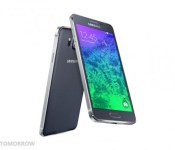
The Galaxy Alpha was just the start; Samsung to launch A series devices soon
 If you like the direction that Samsung took with the Galaxy Alpha, you may be glad to hear that it won’t be the last time Samsung uses that design philosophy. According to SamMobile, Samsung is looking to launch a new line of devices called the A series, of which the Galaxy Alpha was the first, and three more devices are expected to be announced in coming weeks. These devices are expected to carry the model numbers SM-A300, SM-A500 and SM-A700, with the three spanning three different price points. The A300 is going to be the most basic model with a 960×540 display, whereas the other two devices will have a higher spec HD display.
According to the report, these devices will all incorporate metal in their frame, like the Galaxy Alpha, and will have better quality front facing camera than usual (possibly 3.7MP). These devices are set to be launched in Q3, however it’s not clear if they will make a showing at IFA next month. Whether this A series will take some of Samsung’s attention away from its main Galaxy S line remains to be seen, but it seems Samsung is committed to delivering new devices with this new design.
What do you think about Samsung continuing with more Galaxy Alpha devices in the A series? Let us know your thoughts in the comments.
Source: SamMobile
//<![CDATA[
ord = window.ord || Math.floor(Math.random()*1E16);
document.write('‘);
//]]>
The post The Galaxy Alpha was just the start; Samsung to launch A series devices soon appeared first on AndroidSPIN.
.CPlase_panel display:none;
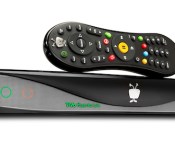
TiVo’s first box just for cord cutters is the Roamio OTA DVR

For the past eight years, a CableCARD and a TiVo DVR have went hand and hand, but no more. Within the next few weeks the limited edition TiVo Roamio OTA DVR will be available from select Best Buy stores for an initial prices of $49 (plus $15 a mo service with a one-year commitment). This is $150 cheaper than the existing base model TiVo Roamio and still boasts the four tuners, 500GB of storage, integrated WiFi and the almost the same software and accessories (TiVo Stream, but doesn’t support a TiVo Mini). The main features that are missing, for a fourth of the price, is a CableCARD slot and whole-home capabilities. This means you’ll need an antenna and should ideally live somewhere with decent over-the-air reception. It’s an especially interesting offering for those looking to cut the cable/satellite cord, while keeping access to new shows from the big networks. TiVo might not be kidding about this being a limited edition either: the company is clear in pledging its allegiance to its cable TV customers while at the same time attempting to appeal to those not interesting in paying more than twenty bucks for a monthly TV subscription. So, depending on the reception from customers and partners, we could see TiVo axing the Roamio OTA if things don’t work out.
Filed under: Home Entertainment, HD
.CPlase_panel display:none;

Jawbone knows how many of its users were roused by the Napa earthquake

Think you could sleep through an earthquake? Probably not, judging by data from Jawbone. The company says that almost everyone using its Jawbone Up device to track their sleep near South Napa was awakened by yesterday’s earthquake. About 90 percent of its users were asleep, and the closer you were to the epicenter, the more likely it is you woke up. Farther out, about half the users in San Francisco and Oakland arose; almost nobody was disturbed 75 to 100 miles away in Modesto. Since Jawbone’s fitness trackers push data to smartphones and other devices, the company was able to get a quick and detailed look into how the locals felt. The stats are interesting, to be sure, but may give you pause if didn’t realize Jawbone could publish your exercise stats at a moment’s notice.
Filed under: Wearables
Source: Jawbone
.CPlase_panel display:none;
 AIVAnet