



Coin’s Bluetooth credit card stand-in will reach 10,000 lucky testers this fall

If you’re one of the adventurous early adopters who pre-ordered Coin, you might finally get the chance to try it out. To recap: This Bluetooth-enabled piece of plastic acts as a stand-in for up to eight different cards, so that you only have to carry one when you’re out and about. Until now, Coin has been available to beta testers, but only 1,000 of them — a far cry from the multitudes who already placed pre-orders. (The startup sold 20,000 units alone in the first five hours its fundraising campaign was open.) Now, in an effort to fully QA the product before it hits stores, the company will expand its beta program to 10,000 people over the coming months. Which means you, dear reader, could finally get your hands on one.
As you might expect, the accompanying app will also become available, with the iOS version arriving next week, on August 28th, and the Android edition following a month later, on September 25th. Obviously, whichever OS you use, you’ll need the application to store all your cards. By the way, this might be a good time to clarify that although the Coin device itself can store just eight accounts, the app can hold an unlimited number of cards. And that’s not just credit cards, mind you, but debit, gift and loyalty cards, too. So, even if you choose not to put a card on your Coin device, you can still retrieve your card info at any time — say, if you want to buy something online. The app has a clean UI too, with the cards arranged in a carousel. If you do need a certain card at the ready, you can swap cards on and off your Coin with the aid of a small connector that plugs into your phone’s headphone jack. Basically, it looks like a Square reader, complete with a standard credit-card swipe slot.
After being treated to a brief demo, the initial setup process struck us as straightforward, if a bit tedious: You have to use your phone camera to photograph both the front and back of each card. You’ll also have to manually enter some information to verify you are, in fact, the owner of the card. Then again, this is just a one-time step, and the actual device is very easy to use: Just press a button on your Coin to cycle through different cards. A small screen on the device itself will show you which card you’re about to use — the Visa ending in “1234,” or maybe the Amex ending in “5678.” If you’re new to Coin, you might fear somewhat for the device’s battery life, but the company claims it can last two years without a recharge, even with that low-power display. It’s unclear what happens when the battery does eventually run out; CEO Kanishk Parashar says the company will have an upgrade plan in place by the time the first generation of devices need a refresh.
In addition to that first-time setup process, Coin will have other security features as well, including an alarm that tracks the number of times the card is swiped. You can also lock the device to just one card before you hand it over at a store or restaurant. A Bluetooth-powered leash will send you an alert if you start to walk away without your Coin. It also allows the device to automatically unlock when it’s near a phone, but Parashar says that feature might not make it into the final edition. Also, if you use a chip-and-pin credit card (popular in Europe and other regions), Coin doesn’t support those cards yet, but it’s working on it. Stay tuned.
As a warning, availability will favor people who pre-ordered the earliest. If you get invited to the beta program, you can either opt in or wait until the first-generation model ships early next year. If you do join the beta, the pre-order price you paid gets you a non-final, pre-production device; you can later buy the final edition for a discounted price of $30 (it will eventually retail for $100). That’s important because if you choose not to participate in the beta, you’re getting a final device for the pre-order price you paid. You’ll miss out on early access, yes, but you also won’t need to shell out an extra $30 just to get a complete, polished piece of hardware. Definitely something to think about.
Some other things you should know: Beta testers are entitled to a 50 percent discount on all Coin products for three years. And if you pre-order multiple Coins, you can also choose to give away the extras as gifts, and send them to your friends instead. Don’t mistake this for a OnePlus One invite system, though; it’s not like everyone will automatically have invitations to give away. In any case, we hope to test one ourselves, but until then, we’ve embedded the demo video below, in case you missed it the first time around — not everyone is an early adopter, after all.
Filed under: Misc
.CPlase_panel display:none;

India makes ‘liking’ blasphemous content illegal

India’s previously criticized Facebook for not censoring material that was critical of its government, so let’s agree that the country has something of a strained relationship with social media. Now, however, the south-west state of Karnataka has announced that even clicking ‘like’ on a post could land you in jail for 90 days before you even get to see a magistrate. Because India has no blasphemy laws, any material that could offend someone’s religious beliefs is prosecuted as hate speech, and that includes uploading, forwarding, sharing, liking and retweeting something. We hate to be cynical, but we can’t imagine it’ll be long before the first dissenting voice gets thrown in jail to protect the feelings of the government general population
Filed under: Internet, Facebook
Source: MediaNama
.CPlase_panel display:none;

If Secret isn’t anonymous, we’re all screwed

People have been airing their dirty laundry and slinging shade on Secret — an anonymous sharing app — for months now. Who could blame them? It’s fun, it’s freeing and accountability basically doesn’t exist there… or so some may believe. Kevin Poulson at Wired spoke to a security researcher named Ben Caudill and the takeaway is clear: your secrets aren’t necessarily as secret as you think. And the kicker? The process of tying real people to the things they said was a shockingly simple one if you understand how Secret finds and displays people’s messages.
You see, once you have at least seven people in your phone’s contact list using Secret, the app will tag those posts as coming from a “friend”. But what if only one of those contacts is actually real? That’s what Caudill seized on: by clearing out his contact list, and adding the target’s contact information along with a handful of dummy accounts he created, any secret the target posted would be properly tagged as a friend post. Voilà — a relatively quick and easy way to unmask just about whoever you want… as long as you can scrounge up their email address and phone number.
As Wired points out, the trick definitely worked, but only in one direction. Thankfully, there’s still no (publicly disclosed) way to suss out a user’s identity starting from a secret they’ve already shared with the world. Secret CEO David Byttow confirmed that this particular issue has been taken care of, which makes it one of the latest in a long list of bugs (42, to be precise) that’ve been closed since Secret opened up its bug bounty program six months ago. Still, we can’t help but wonder how long it’ll be before someone without white-hat scruples stumbles upon some security flaw and starts going to town with it. Remember, Secret users: you can always unlink your comments if you start getting cold feet.
Source: Wired
.CPlase_panel display:none;
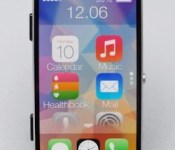
More Supply Chain Claims of Likely Early 2015 Launch for iWatch
 Earlier this week, KGI Securities analyst Ming-Chi Kuo released a report claiming Apple may not launch the iWatch until 2015 due to manufacturing difficulties associated with the new device. A follow-up report from Taiwan’s Economic Daily News (via G 4 Games) echoes this assertion with supply chain information hinting at an early 2015 debut for Apple’s wearable device.
Anonymous supply chain sources told Economic Daily News that Apple is requesting delivery of hardware components for the iWatch as it prepares to start assembly of the wristwatch device in September. Sources claim it will take Apple several months of manufacturing refinement before it has a final product that is ready for retail shelves.
Once it hits production, iWatch yield is rumored to be lower than first predicted, with one million watches rolling off factory lines each month. Because of the lengthy and limited production process, Apple may not be able to launch the iWatch fully in 2014. Instead, the company may decide to offer the iWatch in limited quantities at the end of this year or wait until 2015 to start selling the wearable device.
While Apple tends to unveil a product and release it shortly after the announcement, the company has utilized a protracted launch strategy with select new products. Apple introduced the original iPhone six months ahead of its retail availability and unveiled the first iPad two months before it went on sale.
Most recently, Apple used a similar strategy with its Mac Pro, unveiling the machine six months before it was made available for purchase in December 2013. When it finally went on sale, the Mac Pro was available in limited quantities for several months following its initial retail release.
(Image: iWatch concept by SET Solution)
.CPlase_panel display:none;

‘Halo 2: Anniversary’ edition shows some games get better with age

Halo: The Master Chief Collection promises to be the ultimate compilation for fans of John-117′s adventures and online competitors alike, featuring remastered versions of all four numbered Halo titles (and access to the Halo 5: Guardians beta when it’s live). Undoubtedly the most exciting part of the package is Halo 2: Anniversary, a fully remastered version of the 2004 title that set the bar for online multiplayer gaming on consoles. With attentive level design, balanced gameplay and a strong online ranking and matchmaking system, the game spawned a pro scene that’s persisted from sequel to sequel, console to console. Halo: Combat Evolved may have introduced us to Master Chief’s world, but it was Halo 2 that assured the franchise’s legendary status, and it’s coming back for more.
Microsoft’s 343 Industries, the studio compiling The Master Chief Collection, showed off more footage of Halo 2: Anniversary at Gamescom last week. Four fantastic games updated for a new generation of hardware is a mouth-watering proposition, but Halo 2 is the jewel in the crown, being the only title to receive a complete visual overhaul. The other three main installments in the saga haven’t needed nearly as much attention. Halo 3 and 4, which both made increasingly efficient use of the Xbox 360′s horsepower, have improved lighting and run at higher frame rates. Halo: Combat Evolved Anniversary has received more or less the same treatment, since it’s a heavily remastered version of the original game anyway.
It’s key to the modernization of Halo 2 that the core experience remains unchanged, emphasized by a player’s ability to switch between classic and remastered visuals on the fly. The transformation is remarkable. The graphical detail is so far improved as to be almost incomparable to the original, and jumping between these two views instantaneously is something to marvel at in itself. As an ex-Halo 2 addict, I expected nostalgia to impact my enthusiasm for the reboot in the same way the remake of your favorite childhood film is always a disappointment. Instead, I’m only excited for a new game — one that just happens to have a multiplayer experience I already know and love. Not to mention online co-op has been included in the Anniversary version, previously only a feature of the Halo 2 PC release.
Halo 2‘s online ranking system, which is based more on won/lost games than play time, remains intact. (In fact, all games in The Master Chief Collection will use this rating method, though progress will be separate for each one.) The studio has even made a point to preserve Halo 2‘s glitches, many of which were an important part of high-level play — I got the impression from 343, however, that including an option to disable them is being considered. Every multiplayer map ever conceived for the game will be included in Anniversary, and they’ll be old and new matchmaking modes, as well as a few favorites that were created for later games. Six remastered versions of popular levels have also been rebuilt specifically for the Xbox One and modified with power-ups, additional weapons and a new vehicle, the “Gungoose.”
Long story short, whether you’re an old hand or new blood, you’re getting an all-access pass to revisit one of the most important console games in history. Multiplayer appeal has been so carefully considered, in fact, I’d be surprised if we didn’t see a healthy resurgence in competitive play when The Master Chief Collection launches this November, 10 years after Halo 2 graced the original Xbox. And I mean beyond promotional tournaments like the one held at Gamescom. It’s never been easier to drum up interest in such competitions, either. No longer is the community reliant on complicated streaming setups and highlight clips buried on YouTube. Ten years on, Twitch is our window to that world; Twitter is our forum. You can even bet on e-sports matches these days to make watching them a little more interesting.
A solid fan base is what allows 343 to invest in making things like Halo 2: Anniversary and The Master Chief Collection happen. And as if the game compilation wasn’t fan service enough, true devotees will also be able to get all the UNSC-approved content they could ever want through the new Halo Channel.
The Halo Channel

Launching for the Xbox One, Windows 8.1 and its mobile equivalent on the same day as The Master Chief Collection, the Halo Channel is a portal to all manner of video content related to the game franchise. Some may have played around with Halo Waypoint on the Xbox 360, which was a similar front for hosting interviews, strategy tips, machinima, the Halo Legends animated shorts and more. You could also digest news and fiction, buy games, review your Halo career and earn in-game achievements and new gear for your Avatar.
The Halo Channel is more than just a Waypoint update with a prettier UI. It wants to be the HBO of Halo, with scheduled programming and on-demand content connecting seamlessly with The Master Chief Collection and later, Halo 5. Rather than just a video dump, you’ll be able to interact with practically everything on the Halo Channel in one way or another — a new weekly show called The Bulletin, for example, will run polls and solicit viewer feedback from within the Channel’s apps. Twitter is fully integrated, too, so you’ll be able to check your feed and tweet about the new episode of Red vs. Blue while you’re watching it. The Channel will also be tailored to individuals based on their viewing habits, though you can bet everyone will be seeing a lot of the new live-action series Halo: Nightfall on their home screens.
Nightfall‘s narrative will intersect with Halo 5: Guardians, and watching the show will unlock things in-game, and vice versa. Even when you’re enjoying an episode, more content will never be far away; 343 used a clip from Halo 4: Forward Unto Dawn to show an overlay that’ll give you a synopsis of the scene, the characters involved, the gear in-shot — everything you need to know from Halo lore about what’s on-screen.

Personally, I’ve never cared much for Halo media outside of the games, which is why I was most interested to hear about the Twitch integration. The Halo Channel not only pulls streams and their associated chatrooms from Twitch, but also bundles in other game data like an activity log and team/player scores. This feeds into making the multiplayer aspect of The Master Chief Collection and Halo 5 extra accessible, and I can’t wait to catch a stream with this richer, more informative layout. And when you’re pumped after watching someone nail a long-range sticky, you can jump straight into matchmaking right from the Channel app. In which case, see you online.
Filed under: Gaming, HD, Microsoft
.CPlase_panel display:none;

Could one of these gadgets upgrade your golf game?

With golf season in mid-swing, is your handicap going down, or just your morale? If it’s the latter, a few extra lessons might be in order. Given that I write for Engadget (and not Golf Digest) I can’t school you, but I can help you with some technology tips. There’s a glut of golf devices designed to help you score better, and I tested swing sensors from Zepp Golf and 3Bays, along with the presidentially-approved Game Golf shot-tracking system. For good measure, I also tried a Pebble watch with the Golf Pad GPS and scoring system — and even a pair of shoes from Ogio, better known for laptop bags. So, how’d it go? Pretty good, actually — you’ll probably still want those lessons, but these gadgets can get you going in the right direction. Also, and perhaps most importantly, they’re kind of fun, too.
Filed under: Cellphones, Wearables
.CPlase_panel display:none;

China Telecom iPhone 6 Ad Suggests Simplified Model Lineup for Different Carrier Technologies
According to a Sina News report (via ZDNet), China Telecom this week briefly announced plans to sell an unlocked version of the iPhone 6 in order to compete with rival carriers. The Sina report sources a Weibo post from China Telecom’s Shanghai office that was posted earlier this week and later deleted.
The move suggests Apple is planning to sell a version of the iPhone 6 that will support all wireless networks in the country, including dual 4G (TDD-LTE and FDD-LTE), WCDMA, CDMA2000, GSM, and CDMA1X. This opens up LTE to China Telecom subscribers and makes the country’s number three carrier more competitive with its bigger rivals China Unicom and China Mobile.
Apple currently sells three different models each of the iPhone 5s and 5c in China in order to accommodate the different technologies used by the country’s carriers. But with updated modem and antenna technology for the iPhone 6, Apple may be able to streamline its model lineup to more efficiently support the various carrier technologies.

As part of its advertisement, China Telecom used an iPhone 6 rendering from a Behance gallery posted early last month by Tomas Moyano and Nicolas Aichino. The renderings have been fairly popular around the web, including in our own stories, but differ from most recent leaks in some aspects such as omitting a protruding camera ring and showing rear shells featuring different colors at top and bottom.
Apple is expected to unveil the iPhone 6 at a press event to be held in early September. The handset may include larger 4.7-inch and 5.5-inch display options, a faster A8 processor, an improved iSight camera and a new Touch ID sensor. Sales of the 4.7-inch version are expected to begin at the end of September, with the 5.5-inch model launching either alongside or up to several months later than the smaller model.
.CPlase_panel display:none;

[OP-ED] Why a 5.9-inch Nexus 6 makes perfect sense for Google
 The supposed codename for the Nexus 6, “Shamu”, couldn’t been more descriptive – for a device that is rumoured to have a 5.9-inch display, it is nothing short of a ‘whale’ of a phone. Plenty of people have already sworn off the phone, saying that if it really is 5.9-inches, that it will be much too big a phone for them. And that’s probably the truth of it, but somehow I don’t think Google minds too much. Let me explain.
We’ve long associated the Nexus line of devices with fantastic value and as all-round great devices with entries in every major form factor an Android fan could hope for. It started with phones, then tablets were added, and it appears that the emphasis is strongly on phones again. But the 5.9-inch Nexus 6 threats to break that trend, not because it’s not going to be good value or provide fantastic performance, but because it’s simply not a device that many of us want or, perhaps more literally, are able to hold in one hand. But what if that isn’t the point of the device? What if that isn’t the point of any of the Nexus devices?
 Let’s rewind to something that head of Android and Nexus engineering at Google, Dave Burke, said at Google I/O earlier this year when he was questioned about the status of Nexus and confirmed that “we are still invested in Nexus”; it’s what he said shortly after that which is the most interesting:
“When we are working, there are sort of two outputs. We’re building a Nexus device and we’re building the open source code. There is no way you can build the open source code without the phone or tablet or whatever you are building. You have to live and breathe the code you are developing… You can’t build a platform in the abstract, you have to build a device (or devices). So, I don’t think can can or will ever go away. And then, I think Nexus is also interesting in that it is a way of us explaining how we think Android should run. It is a statement, almost a statement of purity in some respects. I don’t see why we would ever turn away from that, it wouldn’t make sense.”
Without reading too far into Burke’s passage, it should be sufficiently obvious that Google is using the Nexus as its hardware platform to match its software development needs – devices for developers, if you will. It stands to reason then that Google would want to continue to try and cater for devices of all shapes and sizes, and while they have had smartphones with screen sizes from 3.7-inches (Nexus One) right up to 5-inches (Nexus 5), Google has yet to really support phablet devices in any capacity.
 “But doesn’t Google want their devices to be a commercial success,” I hear you ask? Quite simply, I would say no. Many of us will remember when the Nexus 4 was launched, it went out of stock almost immediately. That was attributed to a lack of supply, but not because manufacturer of the phone, LG, didn’t make enough; it was because Google didn’t anticipate that people would like the device so much. LG has previously said that they simply get orders from Google to make a certain number of devices, after which the relationship is over. So as a commercial exercise, it wouldn’t seem like the Nexus is a particularly good one, but what’s happened is that Android has gotten so good as an operating system that even the average person can appreciate the speed and functionality of stock Android, which has caused a huge increase in popularity.
This isn’t to say that Google is simply ignoring its customers or deliberately going out of their way to burn bridges by making a whale-sized phone. But for Android to continue developing as a platform and to make it as robust as possible with devices of all shapes and sizes, I believe that a 5.9-inch Nexus 6 makes perfect sense for Google to release later this year.
But that’s me just rambling: what do you think about the rumoured 5.9-inch Nexus 6? Do you think I’m wrong about the Nexus line?
//<![CDATA[
ord = window.ord || Math.floor(Math.random()*1E16);
document.write('‘);
//]]>
The post [OP-ED] Why a 5.9-inch Nexus 6 makes perfect sense for Google appeared first on AndroidSPIN.
.CPlase_panel display:none;

Apple Blocking ‘Secret’ in Brazilian App Store After Court Ruling [iOS Blog]
 Apple has started blocking downloads of anonymous communication app Secret [Direct Link] following a preliminary injunction that was granted recently by a Brazilian civil court judge (Via 9to5Mac). According to the injunction ruling shared by Gigaom earlier this week, Apple is required to remove the app from the Brazilian App Store and remotely delete the app from customers’ devices.
Local media noted claimed earlier today that Secret was still listed in the Brazilian App Store, but that Apple was preventing users from installing the app on their iOS devices. The app now appears to have been removed entirely from the the Brazilian store.
Apple reportedly has not started deleting the app from user’s devices per the injunction requirements, and it is unclear whether Apple plans to comply with that portion of the order or pursue the issue further. The injunction also applies to the Android version of Secret and a similar Windows Phone Secret client titled Cryptic, but Microsoft and Google are not yet complying with the injunction terms.
The injunction stems from a civil case filed by public prosecutor Marcelo Zenkner, who took action after receiving complaints about bullying on the anonymous social network. Secret allows users to post messages and comment while keeping their identity hidden. This anonymity provision violates Brazilian law, prompting the judge to issue the injunction earlier this week. Google, Apple and Microsoft have ten days to comply with the ruling or face daily fines of 20,000 reals ($8,890 USD).
.CPlase_panel display:none;

Engineers develop damage-detecting ‘skin’ for airplanes

Modern aircraft require lots of ground checks to ensure they’re safe to fly, but researchers at BAE Systems believe they’ve found new hi-tech way to minimize that down time. Using tens of thousands of micro-sensors, the aerospace giant has developed a new type of “smart skin” that can detect damage and report back health statistics to its operator. BAE says the experimental coating might sense wind speed, temperature, movement and strain in the same way that human skin detects and sends impulses back to the brain, reducing the need for personnel to make physical inspections on the ground. On top of that, maintenance crews could also replace parts before they become unsafe or inefficient. While its new smart skin is still very much in development, BAE reckons it can shrink its self-powered sensors down to the size of a grain of rice and then spray them onto new or existing aircraft like paint. Planes with feelings, it appears, won’t just be limited to animated Disney films.
Filed under: Transportation
Via: Daily Star
Source: BAE Systems
.CPlase_panel display:none;
 AIVAnet