


Apparently, Porsche Design is still working with BlackBerry

Since 2012, Porsche Design and BlackBerry have worked together on two high-end handsets that offer a retooled exterior and… not much else. That didn’t stop the duo from selling the tweaked aesthetic for over $2,000, though. It seems that the pair is up to its old tricks once more, as the P’9983 (code named “Khan”) phone has unofficially broke from cover. According to N4BB, the second QWERTY device from the two companies will sport BlackBerry 10 on its 3.5-inch touchscreen with 3GB RAM, a dual-core 1.7 GHz processor and 64GB of storage inside. BlackBerry is also set to debut its rather unique 4.5-inch square Passport device soon, complete with its own personal assistant. But this leak begs the question: Why?
If you’ll recall, there was the QWERTY P’9981 two years ago, and then in 2013, the tandem unveiled a pricier version of the touchscreen Z10. Why continue to crank out limited-edition devices with expensive price tags when the company has been on the ropes for quite a while? I reached out to both Porsche Design and BlackBerry on the matter, and while the Canadian handset maker provided the ol’ “we don’t comment on rumors” business, I’ve yet to hear back from the former. One possible explanation is that the high-end retailer wants to keep its shelves stocked with fresh devices, and BlackBerry was happy to continue to help do just that.
Porsche Design only offers one brand of luxury smartphone on its site.
But why would Porsche Design, a luxury brand that appears doing just fine on its own, would still want to associate itself with an outfit that’s having its fair share of troubles? Is there a partnership agreement that has to be fulfilled? Was this device in the works before BlackBerry hit the skids? Well, when the partnership began, the design outfit’s CEO and a few other of its executives fancied BlackBerry devices as their daily communication tools, so the affinity for those handsets is firmly rooted. Also, Porsche Design only offers one brand of luxury smartphone on its site. It’s also worth noting that previous releases were only available in select markets — like the UK and the Middle East — which certainly seems to target a specific customer base.
Take Vertu for example. If it weren’t for the premium materials and design details, those phones sport a rather modest spec sheet. And that’s exactly what you have here with the rumored P’9983: a highly polished exterior with run of the mill internals. We’ve yet to find out any concrete details, but we’d surmise a select few are going to buy this thing when it eventually arrives with a $2,000+ price tag. Unless of course, you really like BlackBerry gear.
Filed under: Cellphones, Mobile, Blackberry
Via: The Verge
Source: N4BB
.CPlase_panel display:none;

Google buys design firm behind OLPC and Slingbox

Man, Google’s checkbook is really getting a workout this summer. According to a report from Bloomberg, the search giant just acquired yet another company, and unlike the other two companies it bought this month, it isn’t an mobile app startup No, no: its latest target is a small product design firm called Gecko, and Google’s looking to bring those design smarts to bear on its ambitious Google X projects.
You might not heard of Gecko, but you’ve almost certainly come across one of the products they’ve helped design. There’s the original Fitbit, for one, to say nothing of Jawbone’s early Bluetooth headsets, the friendly looking One Laptop Per Child notebook and a whole host of Dell PCs over the years. Gecko’s technical bonafides and awfully pretty designs seem almost beyond question, but what’s still unclear is what projects Gecko will start (or has already started) pitching in on. There are some we could probably cross off the list, though: Google’s internet-beaming balloons might not need a facelift, and there isn’t a lot you can do to gussy up a pair of smart contact lenses. Gecko’s forté lays in consumer tech design – perhaps the next big Google Glass revision (which the folks in Mountain View have been trying to inject with style for a while now) will look like something people will actually want to wear.
Via: Bloomberg
Source: Gecko Design
.CPlase_panel display:none;

NSA and GCHQ employees may be undermining the agencies’ work to hack Tor
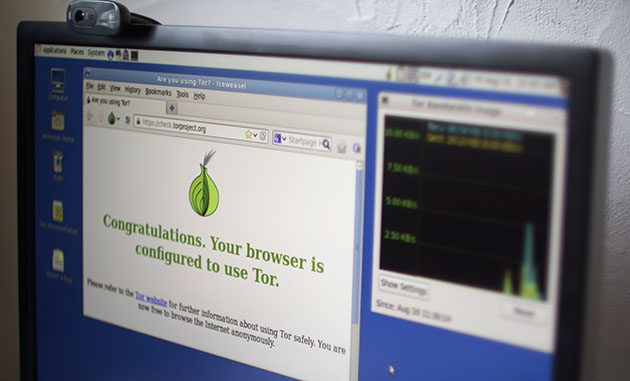
It’s no secret that US and British spy agencies are trying to crack the Tor network, but new information suggests that the agencies’ floundering efforts may be sabotaged from within. For the uninitiated, Tor is a web browser that anonymizes a person’s identity, location and browsing activity using various technologies — it’s also a known gateway to the so-called “dark-web” that hosts sites like the Silk Road. Naturally, spy organizations see it as a threat, but the Tor Project’s Andrew Lewman says some of the agencies’ employees are undermining their own hacking efforts. “There are plenty of people in both organizations who can anonymously leak data to us and say, maybe you should look ere, maybe you should fix this,” he told the BBC in a recent interview. “And they have.”
Technically, Lewman can’t know if these suggestions are coming from spy agencies, but he says it makes sense. Tor’s anonymous bug reporting system makes it impossible to tell where the reports come from, but the issues that are coming in are so granular, he says, they have to be coming from users who have spent hundreds of hours scrutinizing Tor’s source code. “It’s a hung,” Lewman admits, but he’s convinced its accurate. NSA whistleblower William Binney has reportedly told Lewman that NSA employees are upset by the organizations activity recently, and may be leaking data to Tor as a subtle retaliation. Naturally, neither the NSA or GCHQ commented on the matter — but the possibility of spies undermining themselves for the sake of ethics is fascinating. Check out the full interview at the BBC source link below.
Source: BBC
.CPlase_panel display:none;

Text adventure ‘game’ offers a taste of what clinical depression is like

Unless you’re deep in the throes of it yourself, actual, clinical depression can be incredibly hard to wrap your head around. Sure, you can scroll through the Wikipedia article all you like, but intellectually knowing about and feeling depression are two completely different beasts. Zoe Quinn’s Depression Quest (which recently hit Steam after a year floating around on the web) is an experience that sort of straddles the line between the two, and — in spite of a related mess that’s still unfolding — is still worth checking out.
The thing to bear in mind is that Depression Quest isn’t a really a game. On a purely mechanical level, it has more in common with visual novels (though DQ doesn’t really have any visuals to speak of) and the choose-your-own-adventure books of yore. The choices available to you fluctuate depending on the ones you’ve already made, and while it’s not hard to figure out how to reach the “best” ending, it’s still frustrating to see what options get shut out as you embark down branching mental paths.
What it is — at least to me — is evocative. As you guide your nameless protagonist through pained days and seasons (don’t worry, the whole experience is pretty short), you might feel the occasional twang of empathy as you blow off a fictional coworker’s invitation to hang out or struggle with the prospect of adopting a kitten. At times that twang might grow into a dull throb when some of these situations strike a little too close to home. They certainly did for me; I’d occasionally read through a paragraph or two of exposition only find to myself asking some weighty questions when I finished. Am I weird for feeling the same way? Should I choose the “right” option, or what I know I’d do in that situation? Do I need to explore some of the options available to my protagonist? It’s that weird sort of cognitive dissonance that can make Depression Quest such an experience.
That’s not to say the experience is a flawless one. Quinn admits in a prologue that the story doesn’t strive for medical accuracy, and you’ll occasionally be struck by how clichéd and hamfisted things can get. If you frequent Tumblr or spend your time in the geekier corners of the web, you’ll probably also know that Quinn has recently been caught up in a personal and ethical firestorm or two (which has been dissected endlessly elsewhere) that might color your perception of her work. Try to resist that urge. At worst, you’ll get sick of Depression Quest, quit Steam after 10 minutes and move on with your day. At best, though, you just might get a taste of the sort of self-loathing and smothering ennui that so many people with depression experience to varying degrees everyday.
Source: Depression Quest
.CPlase_panel display:none;

Buyer’s Guide: Discounts on MacBook Air, Mac Pro, Apple Accessories, and More [Mac Blog]
This Week’s Buyer’s Guide includes deals on the MacBook Air, the Mac Pro, the Retina MacBook Pro, and several different Apple accessories.
There aren’t many deals on the iMac, the iPad, the Retina iPad mini, or the 2014 Retina MacBook Pro this week, but make sure to check back next week for new discounts because prices tend to fluctuate on a week-to-week basis.
MacBook Air
A few sites are offering deals on the 2014 MacBook Air this week, dropping the price as much as $150. The 11.6-inch 1.4Ghz/4GB/128GB MacBook Air is available from B&H Photo and Adorama for $799, down from $899.
The 13-inch 1.4Ghz/4GB/128GB MacBook Air is available for $849 from Best Buy and Amazon, a discount of $150.

Mac Pro
Stock configurations of Apple’s Mac Pro desktop computer are available at slightly discounted prices from several retailers this week. The 6-core 3.5Ghz/16GB/256GB machine can be purchased for $3,739.99 from Best Buy, Amazon, and B&H Photo, while the 4-core 3.7Ghz/12GB/256GB machine for $2,839.99 from Best Buy, Amazon, and B&H Photo.
Retina MacBook Pro
The sole deal on the 2014 Retina MacBook Pro is for the 13-inch 2.6Ghz/8GB/256GB model, available for $1,379 from Adorama and B&H Photo.
There’s a solitary deal on the 2013 15-inch 2.0GHz/8GB/256GB Retina MacBook Pro, which is available for $1,599 from Amazon, Adorama, and B&H Photo, a discount of $400.

B&H and Adorama, as always, are a good choice for buyers who live outside of New York and New Jersey, as the sites only charge sales tax in those states.
Apple Accessories
The Apple Smart Cover for the iPad Air (pink) is available for $22 from DailySteals, a discount of $17. CrossOver 13, which lets users run Windows software on the Mac, is available at 50% for $30 from StackSocial. Case-Mate also has a site-wide sale going on, with up to 60% off most of its products with the promo code P85Z3N4.

Finally, Beats By Dre Tour In-Ear Headphones can be purchased from Groupon for $110, a discount of $40.
MacRumors is an affiliate partner with some of these vendors.
.CPlase_panel display:none;

The best way to draw a self-portrait is with your blood and a CNC machine

Snapping a selfie with your phone is easy enough these days, but in order to create a self-portrait, a Brooklyn-based artist chose a slightly different route. 44-year-old Ted Lawson hooked himself up to a CNC machine (which he refers to as a “robot”) intravenously so that the device could draw a life-sized nude self-portrait with his blood. For the “Ghost in the Machine” work, Lawson had to remain connected to the output device while it plotted its marks to compose the sketch. “I’m generally not into doing selfies, particularly nude ones, but when I came up with the idea to connect my blood directly to the robot (CNC machine), it just made too much sense to not try one as a full nude self-portrait,” he said. Lawson goes on to say that folks that may criticize his use of the machine for the piece, but leveraging the tool for drawing takes “just as much skill and practice to use as a pen.” For a look at the process (obviously, not for the squeamish), head on past the break.
Filed under: Misc
Via: Lost At E Minor
Source: AP
.CPlase_panel display:none;

The Big Picture: Neptune’s largest moon, Triton

Neptune has more moons than we have planets in our Solar System, with a total of 14 (and counting) orbiting around it. Its largest, Triton, is big enough to practically be considered a planet, so much so that scientists often compare it to Pluto. (You know, the planet which isn’t really a planet, but some people think it should be a planet? Yeah, that’s the one.) Now, courtesy of old NASA footage from the Voyager 2 spacecraft, we’re getting a closer look at Triton and how it looked back in 1989. Not only that, but NASA’s taken images from the aged trek and used them to create the best global map of Triton yet, with color schemes which “are a close approximation to Triton’s natural colors.” The map, according to NASA, features a resolution of 1,970 feet per pixel, which makes for very, very interesting viewing action.
Source: NASA
.CPlase_panel display:none;

CarKarPlay display mirrors your smartphone on your dashboard

Remember the good old days when mini Bluetooth keyboards just became a thing? Then you may recall a brand called iPazzPort, who is now launching what appears to be the world’s first wireless display dedicated to mobile devices. Much like the brand, the device itself is just as awkwardly named: CarKarPlay. It’s pretty much just a 7-inch, 800 x 480 screen with WiFi radio for AirPlay, Miracast and DLNA connections, meaning it’ll support wireless screen mirroring from iOS plus Android, as well as media streaming from DLNA-enabled apps or devices — including some Windows Phones. As the name suggests, it’s all about having a bigger screen in your car.
I got to test a CarKarPlay with an iPhone 4 plus an HTC One (M8), and both worked fine: It’s just a matter of connecting the phones to the CarKarPlay’s WiFi hotspot, and then switching on the relevant screen mirroring protocol — AirPlay on iOS, and Miracast on Android (usually labeled as something like “media output,” “cast screen” or “screen share” in the settings menu); though the latter takes noticeably longer to connect, sometimes around ten seconds. Once sorted, I had no problem with watching YouTube videos, browsing photos or looking at the map on the bigger screen. The M8 also supports DLNA, which lets me beam images and stream music.
The CarKarPlay is listed for $150 on Amazon at the moment, and it comes with a car mount kit (or you can just use the device’s kickstand), a USB car charger, a wall mount charger plus a 3.5mm jack cable for audio output. Don’t expect top-notch screen quality here — its vibrance and viewing angle are behind that of IPS screens on most phones these days. You’ll also definitely want to use the bundled audio cable to plug the CarKarPlay into your car’s audio system, as the built-in speakers are way too quiet (and the fact that they are rear-facing isn’t helping).
Perhaps one can be more forgiving if it’s priced $50 cheaper; though I also long for an advanced model with an IPS screen plus louder speakers and even an internal battery, so that I could use it more often. It should also be pointed out that protected content from the iTunes Store can’t be streamed over AirPlay here, but that’s nothing new.
Filed under: Displays
Source: Amazon
.CPlase_panel display:none;

Man lands in jail for using phone to pirate movie at the theater

The concept of someone recording films at movie theaters for pirating purposes seems so outdated. Yet, that’s still happening in some parts of the world, apparently. Most recently, there’s the case of Philip Danks, a 25-year-old UK man who just got sentenced to 33 months of jail time after using his phone to record a film in the theater and, subsequently, upload it to his website to let the internet download it at no cost — at least initially. So which movie, you ask? None other than Fast & Furious 6. According to Universal Pictures, Danks’ pirated upload was downloaded nearly 780,000 times, which the studio claimed resulted in a loss of about £2.5 million, or about 4.1 million in US dollars. After his initial arrest, and before he pleaded guilty to the charges yesterday, Danks took to his Facebook page to share his feelings about the ordeal: “Seven billion people and I was the first. Fuck you Universal Pictures.” He’s now facing 33 months in jail, as well as 120 hours of unpaid community service.
Filed under: Cellphones, Misc, Home Entertainment, HD
.CPlase_panel display:none;

BlackBerry Takes Advantage of iMessage Spam Reports to Tout BBM
BlackBerry is taking advantage of reports of iMessage’s vulnerability to spam messages to tout its BlackBerry Messenger app. In a blog post, the company highlights a report from earlier this week that said iMessage users see quite a bit of spam, with accounts run by spammers responsible for more than 30 percent of all spam messages on mobile devices.
BlackBerry suggests that iMessage users switch to BBM to avoid spam and lists five reasons why BBM is superior to iMessage. According to the company, BBM is safer primarily because it does not utilize a phone number or email address and it only accepts messages from contacts.

1) BBM is architected in a way that protects our 85 million users against spammers. iMessage works off of phone number or Apple ID. Anyone who has your number or Apple ID can send you messages whether you want them to or not. With BBM, users have a lot more control due to our “invite and accept” paradigm. In other words, both parties need to be mutually committed to being contacts in order to send and receive messages.
2) BBM gives you control. There’s no spam on BBM due to its self-policing system. Users are in control of their contact list and there is no way to send a message without being contacts. You can’t control someone showing up to your house, but you don’t have to open the door. With BBM someone can request to be added to your list, but you don’t have to accept their invite.
BlackBerry also uses its list to highlight BBM’s encryption that protects messages from “spying or hacking,” its ability to block contacts, and its cross-platform availability.
Despite all of BBM’s apparent perks, BlackBerry has had trouble convincing users to adopt the app due to competition from iMessage and other messaging apps like WhatsApp, Kik, WeChat, and more. In late 2013, BlackBerry users on Android, iPhone, and BlackBerry phones sent and received approximately 10 billion messages per day, while WhatsApp processed upwards 50 billion messages per day.
Listed as number 56 in the social networking section of the App Store, BBM is ranked far below competing messaging apps. BlackBerry itself has also been struggling in recent months as iOS and Android make gains in the enterprise market.
The initial report on iMessage spam pointed towards Apple’s deep integration of mobile and desktop as the reason for iMessage’s popularity with scammers. While the uptick in iMessage spam has been recent, Apple does have some measures in place to combat spammers. There’s rate-limiting on the iMessage network to stop users from sending hundreds of messages and there is a spam reporting protocol in place, but Apple will likely need adopt more aggressive measures in the future to limit spam messages due to the platform’s growing popularity with spammers.
.CPlase_panel display:none;
 AIVAnet