


Microsoft teases new camera-focused Windows Phones on September 4th

You won’t have to wait long if you’re hoping for a new round of Windows Phones with powerful cameras. Microsoft has just sent out a save-the-date notice that asks the media if it’s ready for “more face time” at a Berlin event on September 4th, just ahead of the IFA technology show. There’s a Lumia 1020-style camera module not-so-subtly woven into the text, too. While there are no dead giveaways in the teaser, it’s not hard to figure out the references. Our hunch is that “face time” is an allusion to “Superman” (aka the Lumia 730), the selfie-oriented Windows Phone that leaked just a few days ago. The module is slightly more cryptic, but it might be hinting at the aluminum-clad, 13-megapixel “Tesla” (Lumia 830) that reportedly surfaced last month. We’re headed to IFA, so you should expect to hear much, much more about any new Lumias within a few weeks.
Filed under: Cellphones, Mobile, Microsoft, Nokia
.CPlase_panel display:none;

Lomography gives its DIY 35mm camera a flash upgrade

Last summer, Lomography debuted its offering that allows photogs to build their own 35mm SLR. Now, the retro-minded snapshooting outfit is lending the Konstruktor more film-shooting skills with flash kits. Thanks to a $20 accessory package, the latest version of the DIY camera can be paired with a Lomography flash should the need arise — if you’ve already splurged for proper lighting add-on. Those who’ve yet to take the leap can nab a bundle that includes the disassembled Konstruktor F, requisite accessory kit and a choice of flash for $103-$111 (depending on said selection). Not only can you put together the camera you’ll use for to capture that next road trip, but you can ensure those images will be well lit, too.
Filed under: Cameras
Source: Lomography
.CPlase_panel display:none;
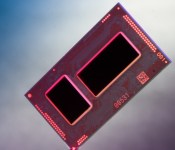
Intel Shares New Details on Low-Power Core M Broadwell Processors
Intel today released new details on its next-generation 14-nanometer Broadwell processors, which are designed to combine high-performance and low power to allow for more efficient devices. Haswell ushered in an era of impressively long battery life, which is expected to improve even further with Broadwell.
In a list of features on the new chips, Intel says Broadwell will usher in “new form factors” with systems that are thinner and run both silently and cool, with two times reduction in thermal design point.
 Intel’s 14-nanometer Broadwell package
– The combination of the new microarchitecture and manufacturing process will usher in a wave of innovation in new form factors, experiences and systems that are thinner and run silent and cool.
– Intel architects and chip designers have achieved greater than two times reduction in the thermal design point when compared to a previous generation of processor while providing similar performance and improved battery life.
– The new microarchitecture was optimized to take advantage of the new capabilities of the 14nm manufacturing process.
– Intel has delivered the world’s first 14nm technology in volume production. It uses second-generation Tri-gate (FinFET) transistors with industry-leading performance, power, density and cost per transistor.
– Intel’s 14nm technology will be used to manufacture a wide range of high-performance to low-power products including servers, personal computing devices and Internet of Things.
As has been previously announced, the 14-nanometer Broadwell-Y Core M chip will be the first of the Broadwell processors to hit the market, with retailers releasing Core M devices in the fall. Designed specifically for low power devices such as two-in-one tablet/computer hybrids, the Core M’s low wattage allows for fanless operation and its smaller physical size means it can fit comfortably in devices that are “razor-thin.”
AnandTech has released a detailed look at the Broadwell architecture with a preview of Core M, pointing towards “substantial” GPU increases for the Broadwell line of chips and limited CPU performance improvements.
Apple is said to be working on a 12-inch Retina MacBook that has a slimmer form factor than the existing MacBook Air and a fanless design that aligns with some of the properties of the Core M Broadwell chip, but existing MacBook Air computers utilize the Haswell-U series chips that run at 15 watts while the Core M operates at approximately 5 watts, making it unclear whether it would be possible for a Retina MacBook to be powered by the new chips.
Intel’s Core M processors are expected to ship during the 2014 holiday season, with additional Broadwell chips becoming available in early and mid-2015. The first devices utilizing Core M processors will be shipping before the end of the year.
.CPlase_panel display:none;

Sprint announces Galaxy Tab 4 7.0 with Sprint Spark
 A Sprint Spark supporting tablet will be finding its way to customers hands starting August 15th. Sprint has announced the new Samsung Galaxy Tab 4 7.0 will be ready to rock just in time for school. The Galaxy Tab 4 brings a 1.2GHz quad-core processor, 1.5GB of RAM, a 3MP rear camera, a 1.3MP front camera, sports a 7-inch screen with a resolution of 1280 x 800 and runs Android 4.4. The new addition will be offered in a 8GB or 16GB options in wither white or black.
“As the first tablet to offer the enhanced LTE experience of Sprint Spark, Samsung Galaxy Tab 4 is an incredible tool that fills the void businesses and consumers face when they want to get things done away from the home or office,” said David Owens, senior vice president-Product Development, Sprint. “Students heading back to school will appreciate the ability to slip this slim tablet in their backpack without sacrificing the performance necessary to get school projects done, and businesses will appreciate being able to leave their laptop at the office without sacrificing the tools to get the job done.”
Price wise consumers are looking at $299.99 full price options or you can get it on the Sprint Easy Pay for $0 down and $12.50 a month. Sprint will also be running a special offer that will give purchasers a $10 a month credit service plan credit on qualifying data plans over $10. If you put that together on the Sprint Easy Pay, you basically will be paying $2.50 a month plus your data plan for the tablet. Not a terrible deal.
Via Sprint
//<![CDATA[
ord = window.ord || Math.floor(Math.random()*1E16);
document.write('’);
//]]>
The post Sprint announces Galaxy Tab 4 7.0 with Sprint Spark appeared first on AndroidSPIN.
.CPlase_panel display:none;
Round ‘True Tone’ Flash for iPhone 6 Revealed in Latest Part Leak
Over the last several months, a number of drawings, mockups, and even rear shell parts for the iPhone 6 have consistently shown a round hole for the LED flash next to the rear camera. That feature has been one of the primary sources of skepticism about the legitimacy of these leaks, as many observers have argued it suggests Apple would have to be abandoning the pill-shaped “True Tone” dual-LED flash introduced in the iPhone 5s.
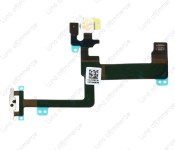
Earlier today, we highlighted a new photo set from Nowhereelse.fr [Google Translate] showing a number of components said to be from the iPhone 6, but one part we neglected to feature shows Apple has indeed developed a new round version of the True Tone flash. The part shows both white and amber LEDs within a single round flash component.

This round flash module is integrated into a purported iPhone 6 flex cable that contains several arms with a power button, a logic board connector, a microphone, and the round True Tone flash. The cable had been seen in a previous leak late last month, but only from the rear where the flash itself was not visible.
 iPhone 5s flash module identified in iFixit teardown analysis.
Apple added the dual-LED True Tone flash to the iPhone 5s, replacing the white-only flash module in previous iPhone models. The True Tone flash includes both white and amber LEDs in order to improve white balance and add support for more than 1,000 different color temperatures.
Besides a round flash module, Apple may also improve the photo-taking abilities of the iPhone 6 with an enhanced camera module featuring either optical or electronic image stabilization. The high-quality rear camera may come with an aesthetic cost in some users’ eyes, however, as at least the 5.5-inch model has been rumored to require a slight protrusion from the thin body to accommodate the camera, as seen on the current iPod touch.
The iPhone 6 is expected to launch in two different sizes including a 4.7-inch or 5.5-inch display, along with a more durable Touch ID. Apple is expected to unveil its next-generation handset at a September 9 press event with the retail launch to follow shortly after the announcement.
.CPlase_panel display:none;

Apple Debuts Two New ‘Your Verse’ iPad Stories Featuring Electropop Group ‘Yaoband’, Detroit ‘Slow Roll’ Cofounder
Apple’s “Your Verse” website highlighting the various ways that people use their iPads has been updated with two new stories, featuring electropop group Yaoband and Jason Hall, founder of a biking program in Detroit.
Luke Wang and Peter Feng, the two Chinese musicians who make up Yaoband, use their iPads to capture audio samples, turning them into beats. In a video on Apple’s site, the duo are depicted using the iPad to capture sounds like water flowing over rocks in a river, water dripping from a faucet, a spoon on a bowl, a ringing bell, and more.
Various audio apps then allow them to mix sounds, styles, and techniques, creating a unique sound. To capture and make music, Feng and Wang use apps like iMaschine, iMPC, Music Studio, Notes, MIDI Designer Pro, Figure, and TouchOSC.

With iPad, Luke Wang has the power to make every show unique. “I’ll add new apps, new techniques, and new ideas during the show,” he says. By adding fresh elements to the music, even in a live performance, Yaoband lives up to its vision of an ever-evolving sound. “Creativity and innovation are the essence of music,” says Peter. “For us they’re what keep the power of music alive.”
Jason Hall, who cofounded Detroit’s Slow Roll city bike ride that thousands of people participate in, uses his iPad to organize the event, plan routes, create posters, communicate with other organizers, check the weather, and more. Hall uses apps like Mail, Calendar, Facebook Pages Manager, Prezi, Penultimate, and Phoster, managing each bike ride from start to finish on his iPad.

“I wanted to convince other people to see Detroit the way I was seeing it,” he says. “The plan was, let’s start a bike ride and see if people want to go with us.”
It began simply enough. Just 10 friends on a Monday night ride. Soon it was 20. Then 30. In its second year, the ride grew from 130 to 300 cyclists in two weeks. As the numbers increased, Hall turned to his iPad and made it the command center for all things Slow Roll. “We use it for everything we do, from mapping to communicating to ordering new T-shirts,” he says.”
Apple’s newest stories, which are part of its “What will your verse be?” campaign and a continuation of its “Life on iPad” ad campaign, join several previous stories that have shown the iPad being used in a multitude of creative ways. Featured iPad users have included conductor Esa-Pekka Salonen, travel blogger Chérie King, mountaineers Adrian Ballinger and Emily Harrington, choreographer Feroz Khan, and biologist Michael Berumen.
.CPlase_panel display:none;
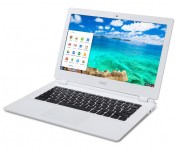
NVIDIA Tegra K1 packed inside the new Acer ChromeBook 13
The worlds first, but definitely not the last, NVIDIA Tegra K1 powered Chromebook has been announced today by Acer. In case you haven’t been following along with the Tegra K1, it is a 192 GPU core chip that is capable of bringing high-end desktop graphics to mobile friendly devices. NVIDIA announced the powerhouse back at CES in January of this year and have steadily been getting it into various products, like this Chromebook and the new NVIDIA Shield Tablet. The chip can even handle 64-bit systems.

As for the Acer ChromeBook 13, you are looking at the first Chromebook to be launched with this insane powerhouse chip. The name of the Chromebook does allude to the screen size being 13-inches, but it also offers up the expected battery life being 13 hours too. In terms of other Chromebook battery life, you have the Acer C720 at 8.5 hours, the Samsung Chromebook at 6.5 hours and the HP Chromebook advertising 6 ours. The NVIDIA Tegra K1 adoption and the battery life is probably the best aspect of this Chromebook, but the remaining specs sound pretty good too.
- 16GB internal storage that is expandable to 32GB
- 2GB of RAM that can be doubled to 4GB if so desired
- 2 USB 3.0 ports
- HMDI out
- SD card slot
- 18mm thick
The Chromebook 13 will be a Wi-Fi only model with no 3G or 4G options. That may or may not matter since many people tether or use a hotspot device anyways. Interestingly enough it will come in two different screen resolution options. A conservative 1366 x 768 that will run $279 and a 1920 x 1080 for $299. For $20 more (says Phandroid), it seems silly to not grab the HD variation. They don’t mention the weight, at least not that I could find, but with it only being 18mm thick it should be pretty light as well.
The Acer ChromeBook 13 is scheduled to go up for pre-orders later today via Amazon and Best Buy later today. We will keep checking in and be sure to let you all know when it becomes available. Until then, what do you guys think? Are we finally seeing some Chromebooks that are both affordable and powerful?
Via Nvidia blog
//<![CDATA[
ord = window.ord || Math.floor(Math.random()*1E16);
document.write('’);
//]]>
The post NVIDIA Tegra K1 packed inside the new Acer ChromeBook 13 appeared first on AndroidSPIN.
.CPlase_panel display:none;

What you need to know about ‘Minecraft’

Chances are that if you don’t play Minecraft yourself, you’ve probably at least heard of it or know someone who does. The charming indie game has invaded nearly every facet of pop culture, casting its blocky spell on everything from Legos to feature films and has even been used for tourism. With over 54 million copies sold, Sweden-based developer Mojang made $128 million last year largely thanks to Minecraft and has become one of the most successful game studios in the world. But what actually is Minecraft? We’re glad you asked!
WHAT IS IT?
At its core, Minecraft is a massive, open-ended, first-person game with a focus on exploration and crafting.
Every time you load a new game, the environment is randomly assembled so no two plays will be exactly alike. Unlike most games, Minecraft offers little in the way of directions, or a campaign/story mode to work through for that matter: It’s a free-form, easygoing affair with the player figuring out what they can and can’t do through trial and error (or by scouring a wiki). Think something like Grand Theft Auto‘s gigantic environment, but instead of attempting a hyper-realistic world, everything is pixelated blocks.
Objects in the world are made of gravity-defying, 1 x 1 blocks that can be stacked and manipulated to form just about anything one could imagine, from intricate recreations of Game of Thrones‘ Westeros, to movie posters, and even Game Boy emulators capable of playing the first level from Super Mario Land. Hell, the Danish government has servers running so would-be tourists can check out a 1:1 recreation of the happiest country replete with highways, houses and landmarks.
Minecraft’s official trailer, which now has over 98 million views on YouTube
That’s just the tip of the iceberg, though, and we’re sure there are at least a few crazy projects going right now that we don’t even know about.
There’s no score, and no real “end” (though that’s up for debate, and we’d be spoiling bits if we got into the argument too deeply here). In the game’s main mode, you start in a world full of resources (rock, wood, etc.) and are “tasked” with making a life for your character (who’s named Steve). A day/night cycle provides constraints: use the daylight to gather resources and build, with the intent of surviving the night.

The Creeper in his natural environment
Zombie-like creatures roam the land at night, and the only way to survive is by building housing to keep them out. Should that not provide enough challenge, a green enemy lovingly named the “creeper” lives primarily underground, where you mine for resources. Enter the wrong mining cavern and you may end up suddenly exploded. Any resources you’ve got on your person remain where you died until you can go retrieve them. It’s a delight!
The game is available on just about every platform: Android, iOS, Mac, PC, PlayStation 3 and Xbox 360, with updated versions coming to the PS Vita, PlayStation 4 and Xbox One this year. Minecraft was initially released for free as a work-in-progress back in May 2009 and developed by one person, Markus “Notch” Persson. Since then, numerous updates have been released, with the full release coming about two-and-a-half years later in November 2011. Essentially, the public was playing along as the game was being developed under its very fingertips.
WHY SHOULD I CARE?
For starters, single-developer games are pretty rare, and ones that are this successful are even more unique. As a result, Notch has become a bit of a celebrity in the gaming community and now has some 1.7 million followers on Twitter. Minecraft‘s success, however, has had a price. After filing for a trademark for Mojang’s follow-up, Scrolls, publisher Bethesda Softworks (known for the role-playing series The Elder Scrolls, among others), filed a trademark lawsuit over the Swedish developer using the word “scrolls.” It all worked out in the end, but Mojang had to agree to not use the word in subsequent releases.

Winterfell, from Game of Thrones, recreated entirely in Minecraft
Minecraft is also the progenitor of releasing a game to players before it’s done. The concept of PC-gaming platform Steam’s Early Access program practically owes its existence to this, and it isn’t going to stop there either. Sony has admitted that it’s flirting with the idea of releasing unfinished, alpha versions of games on the PS4, too.
Notch’s baby has also had a tremendous impact on video games as a whole, creating an entire genre and style of play. Titles like Rust (which also happens to be a Steam Early Access title), Terraria and the upcoming PS4 stunner No Man’s Sky likely wouldn’t exist had Minecraft not popularized the idea of virtual free-form exploration and building. Even established franchises like Everquest have taken notice, with the next game, Landmark, taking a few pages out of Minecraft‘s customization and crafting book.
The game is also a blank canvas that can be used for just about anything. Sure, recreations of Great Britain are impressive, but even more so is that it’s been used in the classroom as a teaching tool for proper online behavior and collaborative problem-solving. It’s even been implemented to get kids interested in architecture and civics.

A group of kids playing Minecraft Edu at school
WHAT’S THE ARGUMENT?
Getting access to a game before it’s fully finalized might sound like a great idea on paper, but in practice that’s not always the case. There are numerous games on Steam right now under the Early Access banner that are simply unplayable. Whereas Minecraft was free to start, people are paying for these test-builds (which will convert into the full version if completed) in the hopes that eventually the full release will fix the gamut of glitches they’re encountering. The thing is, that’s placing an awful lot of faith in oftentimes unproven developers to finish a game; there have already been notable disasters delisted from Steam, and there will assuredly be more.
WANT EVEN MORE?
If you can put the pickax down long enough, check out Rolling Stone‘s recent profile of Notch that chronicles the effects his youth and father’s suicide had on both the way he designs games and him as a person. Should you want even deeper inside the man’s head, Persson also maintains a personal blog. Still not satisfied? How about booking travel to Europe for this year’s Minecon convention? Better gear up with a Creeper mask and foam diamond-sword ahead of time, though. Or, maybe you haven’t played the game just yet and all of this has gotten you curious to try it out. Well, there’s a super-limited free demo that should give you an idea of what it’s all about before you buy the real deal.
[Image credits: Fortunatemend/Imgur (Winterfell); KJarrett/Flickr (Minecraft classroom)]
Filed under: Cellphones, Desktops, Gaming, Handhelds, Home Entertainment, Tablets, Software, HD, Sony, Microsoft
.CPlase_panel display:none;

The $25 Nokia 130 proves Microsoft’s not done with dumbphones

Facebook is itching to connect the next billion people. So is Google. Microsoft has been itching to get in on the fun too, and while there’s no shortage of cheap Windows Phones to entice all those first-time smartphone shoppers around the world, the folks in Redmond still have their eyes on the most developing of developing markets. That’s why the company just pulled back the curtain on what may be the dumbest of dumbphones: the Nokia 130, a $25/€19 device that makes phone calls, fires off SMS messages and… that’s about it.
Alright, maybe that’s not totally fair — after all, the 130 does accept microSD cards, sport an LED flashlight (no camera here, natch) and play videos. Just, you know, don’t expect to cruise the web on this thing. Microsoft’s trying to position it as a first cell phone, or a backup in case you don’t want to ruin your fancy smartphone while traipsing through the backcountry. Here’s the thing, though: the release of the 130 isn’t just Microsoft cleaning house, a last spasmodic cough meant to clear the pipes for newer, smarter devices to come. Microsoft vice president Jo Harlow told Re/code that the company is committed to the low-end cause, adding that Microsoft doesn’t have anything else to reach that valuable swath of users. Need even more proof? Check out this tweet from Microsoft spokesperson Doug Dawson:
@greengart @jonfingas To clarify – We will continue to offer a portfolio of Nokia-branded mobile phones. Our smartphones will be WP.
– Doug Dawson (@theDougDawson) August 11, 2014
It’s not hard to see how Microsoft could gain some ground with this approach. If they hook first-time phone buyers with cheap, robust hardware, they’ve got a target pool they can tease with the promise of a more-connected future through services like OneDrive working in tandem with Windows Phones. But whether or not things go down exactly that way? That’s another story entirely.
Via: Re/code
Source: Microsoft
.CPlase_panel display:none;

Smartisan’s CEO wants to be the next ‘Steve Jobs of China’

Xiaomi’s regular channeling of Apple — from its stage presentations all the way to disguising Aperture’s icon as a phone’s camera — has earned its CEO Lei Jun the “Steve Jobs of China” nickname. Or rather, “Lei Bu Si,” a Chinese combination of “Lei” and “Jobs.” It’s also a double entendre — something along the lines of “endless shocks” — that mocks Xiaomi’s aggressive marketing. It’s no wonder Lei hates the comparison. Fortunately for Lei there’s another Chinese CEO gunning for that title. Meet Luo Yonghao, an English teacher turned founder and CEO of smartphone startup, Smartisan, with designs on being the next great tech visionary.
My first Luo experience was back in late March last year. I watched him unveil Smartisan OS, an Android ROM with a very unique grid UI, in front of over 3,000 people in Beijing. The presentation was about three hours long, but the charismatic Luo gave a thorough reasoning for every tiny detail, from his deliberate avoidance of the squircle icon to the absence of wallpaper personalization and the inclusion of intentionally out-of-sync second hands on the world clock page (mimicking real-life clocks in hotels and banks).
It’s possible this Chinese man is even more anal than Steve Jobs.
You’ll have to see the insanely long list of features to fully appreciate Luo’s obsession. His storytelling format and blunt criticism of others (featuring lovely words like “stupid,” “idiots” and “bumpkins”) were refreshing changes from the typical smartphone launch. For the crowd who paid to get in, they were mainly there to be humored — they loved it when Luo jokingly thanked McDonald’s for keeping his team fed during late nights. The CEO even went as far as introducing some of his single colleagues in his slideshow, in the hopes of helping them find romance.

I met the chubby 42-year-old entrepreneur for the first time a couple of weeks after the show. To my surprise, he thought the launch event was a disaster: He had little time to prepare, started late, struggled on the stage and went over the original two-hour duration. Luo also admitted that the software was far from ready (and the hardware wasn’t due until a year later), but he had to show it to the world in order to keep his team of just 23 people confident. If you think he was being humble, you’re wrong. Unlike many execs, Luo speaks his mind, both on and off stage, with a flat tone, fast pace and sometimes deadpan sense of humor.
Luo and his Xiaomi counterpart share vastly different backgrounds. While Lei finished his college education and made his way up in the corporate world, Luo started off as a high school dropout, much like how Jobs was a college dropout. Luo took on odd jobs like running a lamb skewer shop, selling computer parts and reselling smuggled cars. Of course, those were far from ideal for a comfy life, so Luo taught himself English and became a teacher at Beijing’s renowned language school, New Oriental. That’s where he got his first taste of fame. His students were so amused by Luo’s bold humor and off-topic stories, that they secretly recorded his lessons and shared the audio clips online. Luo became an internet sensation, and the Chinese search engine Baidu recognized him as one of the top 10 personalities of 2005 and 2006.
After resigning from the language school in 2006, Luo dabbled in other businesses. Dissatisfied by other platforms censoring his ballsy, often critical posts about Chinese authorities, he launched a blogging platform of his own dubbed Bullog. Bullog attracted bloggers who weren’t afraid to speak up, and quickly became one of the most influential websites in China. The government eventually shut the website down three years later, but Luo didn’t fight back, because, in his words, “I had to feed my family.”
About a year before Bullog was killed, Luo co-founded and ran an English school as its principal until he started running Smartisan in 2012. Between those years, he also managed to squeeze in some side projects. He published an autobiography, hosted a popular series of talks about his entrepreneurship, organized a fridge-smashing protest against Siemens for refusing to fix loose doors, and acted as a copyright activist for Beijing-based font studio MakeFont. Perhaps most notably, Luo wrote, directed and even made a cameo in a micro movie.
I encountered Luo again this past March, two months before the Smartisan T1′s unveil. By that time, Smartisan was already occupying some of the floors in Motorola’s Beijing headquarters. The meeting rooms were buzzing with life, and Luo came out to greet me at the elegantly refurbished reception area before taking me to a much quieter floor with desks soon to be occupied.
“After the software unveil, recruitment and funding were a lot easier,” said a cheery Luo. Smartisan now employs about 350 people, many of whom are ex-Motorola staffers.

But that smile hides Luo’s craftier side. A few days before we reconnected, he was approached by Meizu’s Vice President Li Nan, who made an offer to acquire Smartisan. Given Meizu’s history and Luo’s celebrity status, it would have been an interesting combination; but despite Luo’s public endorsement of his rival company’s craftsmanship, he kindly rejected the offer.
Luo would later tell me about his bizarre encounter with Meizu, but unbeknownst to me, he’d already shared it on Sina Weibo — a Chinese Twitter-like platform where he often interacts with fans, friends and enemies. Luo lost his cool, calling Meizu’s Li a “temporary worker,” as a mocking reference to CEO Jack Wong’s 10-year absence prior to his return to office earlier this year. That said, it seems that Luo had successfully embarrassed his rival here, albeit in a not-so-classy way.
In May, I joined some 5,000 people in Beijing (plus 2.74 million online viewers) to witness Luo’s much-anticipated launch of his first smartphone, the 3,000 yuan (about $480) T1. To put that into perspective, Xiaomi’s recent launch of the cheaper Mi 4 hosted nearly 4,000 people at the same venue. This time, Luo managed to condense his presentation down to two hours, still managing to pack in plenty of surprises. Most impressively, the CEO employed former Apple designer Robert Brunner, the same guy behind the Beats branding and designs, to craft the phone’s hardware and packaging.

As at the Smartisan OS launch, Luo patiently detailed the T1′s design, from the tidy positioning of the front sensors to the symmetrical button arrangements and the customizable hard Android buttons. Later, Luo showed off this thoughtfulness by offering a 200 yuan (about $30) “SmartCare+” warranty, which gets you two free front or back glass-panel replacements within a year. He even bought the t.tt domain name (at a rumored cost of $325,000) to save us the hassle of spelling out Smartisan.com.
When I went to see him backstage after the show, he was mumbling to his colleagues about how he should have focused more on the software. Luo looked tired, but he was gracious enough to have a chat with me. He reiterated that he plans to enter the overseas market in a year or two, but before that, he’ll need to acquire some design and technical patents for the sake of self-defense and learn some slang for his English presentations.
“What I see in Apple is that its success model can be easily replicated,” Luo said. “Everyone thinks Steve Jobs’ feat can’t be reproduced, but I think it can be. The premise is: Can you find the person who has what it takes to tackle the core elements? If you can, then I don’t think there’s a problem.”

According to Luo, he has all the right ingredients to be the next Steve Jobs. He’s spent years studying industrial, UI and human-interaction design purely out of interest; he ran a business for three years that apparently generated a $2.76 million annual revenue; and he’s passionate about gadgets and arts — alternative music and woodwork, in particular.
According to Luo, he has all the right ingredients to be the next Steve Jobs.
“The idea first came to me when I had dinner with a friend almost three years ago,” Luo said. “I told him I really wanted to make a phone, and he said, ‘Why not? The only genius in this industry is Steve Jobs, and he is dead. The others are doing a sloppy job; they’re all just as bad. So why don’t you do it?’ I was moved, so I started to take a serious look at the feasibility.”
It’s still too early to say whether Luo has made it. Xiaomi’s Lei may not have Jobs’ personality traits, but he has the numbers — he already sold 26.11 million phones and thus generated a revenue of about $5.32 billion in the first half of this year. Luo, on the other hand, is currently having trouble keeping the supply chain and Foxconn’s production lines under control — he estimates it will be weeks before he reaches the desired 1,800-unit-per-day target. With the rumored 180,000 orders taken in total so far, it’s going to take Smartisan a very long time to meet the demand, let alone replace some of the faulty units from the first batch. For now, we’ll have to refrain from officially crowning him the next “Steve Jobs of China.”
And that may be for the best. After all, he’s simply known as the Luo Yonghao in China.
[Image credit: Smartisan (Luo Yonghao); Netease (Siemens protest)]
Filed under: Cellphones, Mobile
.CPlase_panel display:none;
 AIVAnet