



Android 4.4 update available for T-Mobile Xperia Z1s
It has been a long time coming for Sony Xperia Z1s owners here in the states on T-Mobile, but you all finally have Android 4.4.4 updates pending your install.

The firmware version is 14.4.B.0.37. You will be prompted through the device about the update, but the Sony PC companion app is the only way to install it, as you can see above. With the update you wills e the newer Xperia home launcher, transparent navigation and status bar, white status bar icons, improved stability, Wi-Fi calling, better reception, better audio and improved touchscreen response. Along with compatibility for the Sony SmartBanf SWR10.
If you don’t have the Sony PC Companion app on your PC yet then you will want to get that up and running first. You can download it from Sony. Your device should prompt for the PC Companion software to be installed anyways though. This update will most liekly break root if you have it, but it should be easy to root again. It also still keeps the bootloader locked.
//<![CDATA[
ord = window.ord || Math.floor(Math.random()*1E16);
document.write('’);
//]]>
The post Android 4.4 update available for T-Mobile Xperia Z1s appeared first on AndroidSPIN.
.CPlase_panel display:none;
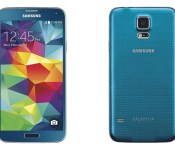
Best Buy nabs Electric Blue Samsung Galaxy S5

The exclusive color will be available starting from August 17 Best Buy will soon be carrying an Electric Blue version of the Samsung Galaxy S5 smartphone. Slated to arrive on August 17, the phone will be sold for AT&T, Sprint, and Verizon. Pricing remains the same as the other versions available; $199 with a two-year… Read more »
The post Best Buy nabs Electric Blue Samsung Galaxy S5 appeared first on AndroidGuys.
.CPlase_panel display:none;

Amazon’s same-day delivery expands in six cities

If you’re the sort who just can’t wait to get household goods but cringe at having to brave the lines at the local store, today might be your lucky day. Amazon has officially expanded its same-day delivery options in six cities that include Baltimore, Dallas, Indianapolis, New York City, Philadelphia and Washington, DC. You can now order from a catalog of a million common items (such as movies, games and supplies) and expect to get the shipment within hours. You can pull the trigger as late as 12:15PM in most places, and up to 1PM in Baltimore and Washington. Just be prepared to pay for those urgent arrivals. As before, same-day shipping costs $10 (plus 99 cents for every extra item) if you’re an ordinary customer, and $6 for all items if you’re a Prime subscriber.
Source: Amazon (1), (2)
.CPlase_panel display:none;

Dictatorship simulator cuts too close to the bone for Thailand’s dictator

In Tropico 5 you play El Presidente, the dictator of a small island, given free reign to build the world according to your whim while violently suppressing your opponents. Unfortunately, tongue-in-cheek games about that sort of subject don’t go down so well with an actual military dictatorship, like the one running Thailand right now. The junta, which has already censored the internet and banned Facebook and Bitcoin, has now outlawed sales of the game. The only reason given is that Tropico 5′s content might have somehow affected peace and order in the country — possibly by showing the wider population how dictatorships work. Stefan Marcinek from the game’s developer says that the move sounds like it “could have come from one of El Presidente’s own edicts.” Between this and Manuel Noreiga’s decision to sue Activision, it’s time the military dictators of the world learned the meaning of that phrase about glass houses and throwing stones.
Filed under: Gaming
Source: ABC News, New Era Thailand
.CPlase_panel display:none;

Why Uber’s ridesharing revolution could be undone by archaic laws and aging industry

Like electric cars, the decentralization of broadcast television, renewable energy and other burgeoning technologies, the world of “ridesharing” — largely embraced by consumers — is facing tremendous pushback from entrenched players around the world.
These entrenched players take archaic laws and employ them to keep new competition out. This concept isn’t new to business, or even transportation business. The fight over Uber, Lyft and other ridesharing programs is the same fight that’s played out across human history time after time: A new technology threatens to upend an existing technology, and the industry supported by the existing technology stands together to push back against the inevitable. Remember buying CDs at your local music store? Exactly.
DISRUPTION AND CHAOS
In the case of Uber and its ilk in New York City, the entrenched players are the so-called black cab companies. We’ll spare you the minutiae of different forms of hired car in NYC — this is what matters: Yellow cabs are only legally allowed to pick up street hails, while black cabs are only allowed to operate on an arranged pick-up basis.
Initially, this meant that ridesharing services weren’t allowed to operate in NYC at all. But when NYC’s Taxi & Limousine Commission (TLC) announced and began a pilot program for yellow cabs to use services like Uber, black cab companies banded together to sue the NYC government and the TLC. They even succeeded in temporarily shutting down the pilot program.
New York City’s ridesharing battle is a great example of the challenges rideshare companies face globally. In Belgium, taxi regulation law dictates that Uber will be fined €10,000 (about $13K) for reach ride it offers. In France, the existing taxi industry continues to protest services like Uber, which they say threatens their livelihood (as in NYC, French taxi licenses are very costly). Those protests have turned violent in at least one case.
ARCHAIC LAWS AND ENTRENCHED PLAYERS
There are two major hurdles that ridesharing services must overcome to operate freely: existing laws/regulations/licensing and entrenched industry.
Rather than combat these issues from the start, ridesharing companies took their case to consumers. Uber opened in 2009 starting with San Francisco, while Hailo opened in 2011 in London, and Lyft also began operations with SF (but in 2012). Each company is a variation on the concept of “ridesharing,” but how they work for you and me is generally the same across the board: A mobile phone app scans for available rides near your location, and when it finds them, you can choose to be picked up. Some have payment options built in, while others don’t. And some make it optional. Uber, for instance, offers a variety of transportation services depending on the locale (including a helicopter for one day).
After establishing a base of drivers and passengers, ridesharing is now being challenged by both legislators and existing taxi/limousine companies.
AFTER EXISTING LAWS ARE CHANGED, THE REAL BATTLE BEGINS
Using NYC as an example once more, the initial challenge was a legal loophole; since ridesharing apps act as a means to “hail” a car to a location — which is partially illegal in NYC — yellow cabs couldn’t use the service. Yellow cabs make up the vast majority of NYC’s car services. Only after the city’s Taxi & Limousine Commission declared a trial were ridesharing services allowed to operate.

Of course, having cleared the initial hurdle of the TLC, New York’s black cab companies filed suit.
Their suit claims that services like Uber blur the line between traditional yellow cab and black cab services, that it disadvantages elderly customers (a demographic that tends not to own smartphones) and that it enables discrimination (ridesharing apps allow drivers to choose who they pick up).
Let’s be clear: Black cab companies are not concerned with any of these complaints. The reason the lawsuit exists is to attempt to prevent companies like Uber from encroaching on long-established businesses. It’s a lawsuit against innovation, against consumers and — above all — a lawsuit over money. It’s a lawsuit against the potential for competition.
FOUR-WHEELED TORTOISES
This same scenario exists in some form everywhere that ridesharing faces legal challenges. Are ridesharing companies perfect? No. Are they in the business of making money? Yes, absolutely. Their ability to even compete with existing car services is the issue. Uber and others offer a service that consumers want: an easier, better experience taking car services. Consumers should be able to make the choice.

And history agrees. In 1650s London, the “watermen” who operated ferries whisking Londoners up and down the Thames petitioned their government to limit horse-drawn carriages. Rather, the watermen specifically petitioned for the removal of “these upstart four-wheeled tortoises.” Their reasoning? That their business “hath been long reputed very useful to the Commonwealth,” and that the watermen and families would be “utterly ruined.” They also argued that the horses ate too much hay and defecated in the streets. In so many words, they argued that “these guys are trying to compete for our business!” Less than 10 years later, horse-drawn carriages were officially regulated by English law, and, well, there aren’t so many watermen rowing down the Thames these days.
It might not be Uber, or Lyft, or Hailo, or any of the services operating right now, but the world of taxi services is ready for innovation. Though we’re currently stuck in the quagmire of entrenched players fighting legal battles to keep that innovation at bay, time will win. It always does. Hopefully for us that’s sooner than later.
[Image credit: AP Photo/Mark Lennihan (lead taxi photo), Uber (video one), TestTube (video two), AP Photo/Paul White (Spanish protest photo), Internet Archive Book Images/Flickr (Thames Watermen)]
Filed under: Cellphones, Transportation, Internet, Mobile
.CPlase_panel display:none;

Pandora deal helps indie musicians get noticed on internet radio

The agreement is big, whether you’re an up-and-coming artist or just want to hear music beyond the big three record companies. Merlin’s labels represent about 10 percent of streaming music worldwide, so you’re likely to notice if you listen to enough tunes. Of course, this isn’t quite a selfless gesture. On top of the extra attention it draws to Pandora, the pact gives the company a better shot at offering service outside of the US. It has offerings in Australia and New Zealand, but the lack of direct artist connections has made it hard to expand elsewhere. That may prove crucial — Pandora has to compete against international heavyweights like Apple and Spotify in the online radio space, so it might not want to depend on one country for its success.
[Image credit: Spencer Platt/Getty Images]
Filed under: Internet
Via: CNET
Source: Pandora (1), (2)
.CPlase_panel display:none;
China Said to Ban Government Purchases of Apple Hardware Amid Heightened Security Concerns [Mac Blog]
According to Bloomberg, China’s National Development and Reform Commission and the Ministry of Finance have prohibited government purchases of Apple hardware, citing security concerns as the reason for the ban.

Ten Apple products were not included on a recent government procurement list from June that governs the spending of public funds, according to anonymous government officials who provided the information to Bloomberg. Products include the iPad, iPad Mini, MacBook Air and MacBook Pro.
Earlier procurement lists also banned antivirus software from Symantec and energy-efficient computers from Microsoft. Tension between China and companies in the US has been heightened following accusations of hacking and spying.
“When the government stops the procurement of products, it sends a signal to corporates and semi-government bodies,” said Mark Po, an analyst with UOB Kay Hian Ltd. in Hong Kong. “The Chinese government wants to make sure that overseas companies shouldn’t have too much influence in China.”
The reason for Apple’s omission from the list of approved hardware is apparently being debated, however, with Caixin reporting [Google Translate] stating that Apple simplify failed to qualify for a semi-annual update to the list of approved vendors of energy-efficient devices. The report speculates that a miscommunication may have resulted in Apple failing to submit the required information for inclusion on the list.
Apple has a growing presence in China, with 26 percent revenue growth reported in Q3 2014 due to increases in iPhone, iPad and Mac sales. Apple recently opened its eleventh retail store in China and has made a concerted push to attract Chinese developers to the iOS App Store. Apple currently is the fifth largest smartphone vendor in the country, accounting for 7% of market share.
Note: Due to the political nature of the discussion regarding this topic, the discussion thread is located in our Politics, Religion, Social Issues forum. All forum members and site visitors are welcome to read and follow the thread, but posting is limited to forum members with at least 100 posts.
.CPlase_panel display:none;
ABC News’ New Apple TV Channel Showing Strong Live Video Usage
Roughly six weeks ago, ABC News launched a new Apple TV channel offering a wide range of live and on-demand content from both national and select local feeds. Based on the first 30 days of availability, ABC News has now put together an infographic that offers a look at how the channel is being used. Among the interesting observations:
– Live video usage on Apple TV, which accounts for 20 percent of channel views, is 50 percent higher than on mobile and desktop combined.
– Apple TV viewers spend 65 percent more time per visit than desktop users.
– Peak usage for the ABC News Apple TV channel falls at 9 PM Eastern Time, likely due to that time period encompassing evening viewing hours for most of the United States.
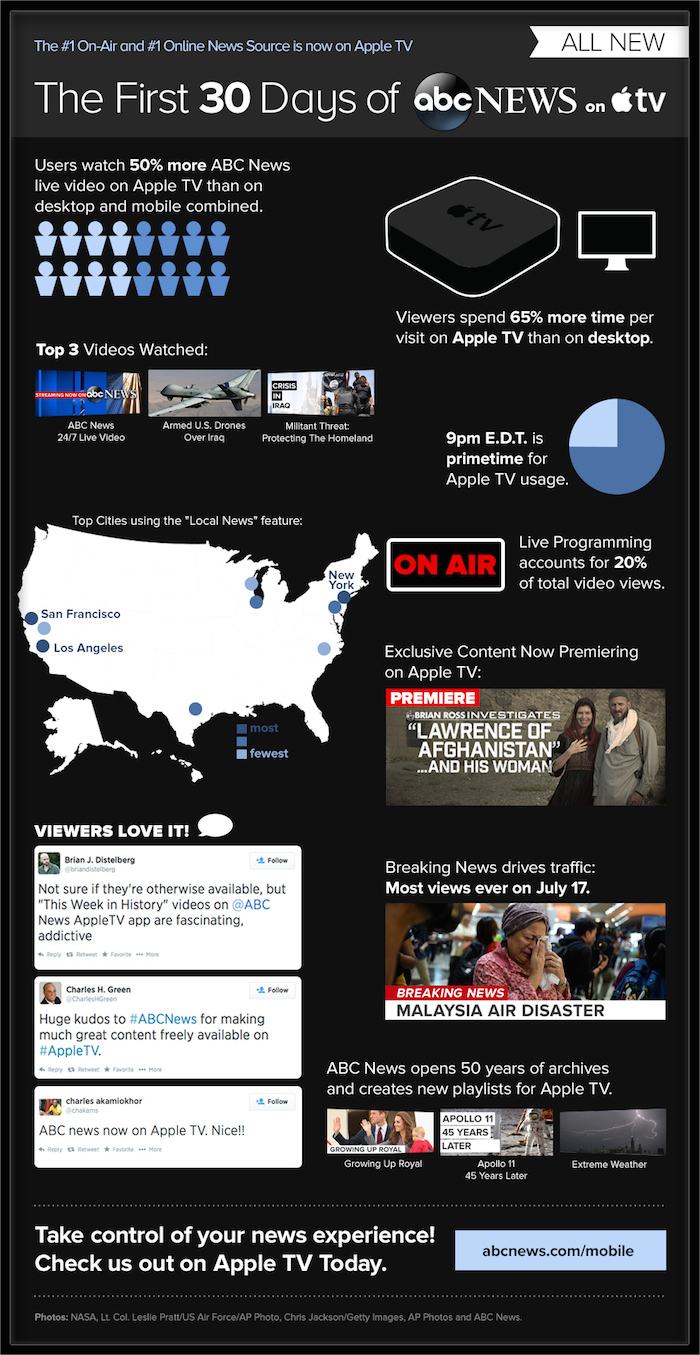 Click for full infographic
Alongside today’s usage data release, ABC News is also announcing the addition of three new local stations to the channel: Albuquerque (KOAT), Boston (WCVB), and Honolulu (KITV). The new additions join the original nine local stations made available on the channel at launch.
Apple has been adding new channels to the Apple TV at a fairly rapid pace, at least in the United States, although many of them require authentication through an existing cable service provider. The company has long been rumored to be working on a more powerful set-top box, but the latest rumors have suggested the device is unlikely to arrive until 2015.
.CPlase_panel display:none;

Sprint dials up Marcelo Claure as new CEO

Sprint on Wednesday announced it has selected Marcelo Claure as the new President and CEO, replacing Dan Hesse. Claure, who was a member of the Sprint board of directors is Founder and CEO of Brighstar Corp. He will resign from his post on August 11 whereupon SoftBank will acquire his remain company shares. Hesse, who… Read more »
The post Sprint dials up Marcelo Claure as new CEO appeared first on AndroidGuys.
.CPlase_panel display:none;

Sony calls it quits on PlayStation Mobile for Android

Sony has officially confirmed it will no longer support the PlayStation Mobile for Android endeavor. Designed to bridge the game between PS Vita and Android gaming, the certification process will still run for devices powered by Android 4.4.2 and older. Anything newer, however, and Sony is not making any guarantees for quality of experience or… Read more »
The post Sony calls it quits on PlayStation Mobile for Android appeared first on AndroidGuys.
.CPlase_panel display:none;
 AIVAnet