


Pebble Launches Limited Edition Classic Smart Watches in Blue, Pink, and Green [iOS Blog]
As of today, the classic Pebble Smart Watch is available in three limited edition colors, including Fly Blue, Hot Pink, and Fresh Green. The bright neon colors are a deviation from Pebble’s line of classic smart watches, previously available in Jet Black, Gray, Arctic White, Orange, and Cherry Red.
Pebble’s new color variations extend to both the face and the band, which remains interchangeable, but the new watches are only available in limited quantities. Watchfaces to accompany the new colors can be downloaded from the Pebble app store.
First introduced in 2012, Pebble’s classic smart watch connects to the iPhone via Bluetooth LE, delivering alerts and notifications. The watch is water resistant with a 5 to 7 day battery life and includes changeable watch faces and a readable daylight display. Pebble also sells its second-generation Pebble Steel smart watch, which includes a stainless steel body, a slimmer profile, and a face covered with scratch-resistant Gorilla Glass.
The Fly Blue, Hot Pink, and Fresh Green Pebble smart watches can be purchased from the Pebble website for $150.
.CPlase_panel display:none;

Pebble’s smartwatch now comes in pink, blue and neon green

If you’d like a smartwatch that’ll match the glow sticks at your next rave, then we’ve got good news for you. Pebble has just announced a Limited Edition run of its original smartwatch in three eye-popping colors: Fly Blue, Fresh Green and Hot Pink. They’re decidedly more fun and hip than the classier Steel Pebble released earlier this year, but that’s intentional: We’re told that this Limited Edition run is specifically targeted at the younger back-to-school crowd. Like the original Pebble watches, all three colors are available for $150 each.
Myriam Joire, Pebble’s chief evangelist, tells us that the idea for the colors actually originated from a “#ColorMyPebble” campaign that ran a couple of years ago as part of the original Kickstarter. The winners were orange and gray, but the team always wanted to expand its color repertoire beyond that to include the runners-up, and now it has. Interestingly, getting the color of the silicone band to match that of the polycarbonate watch proved to be a challenge — Joire joked that the team spent some time deciding on just the right shade of pink.
Of course, as with the original Pebble, the watchbands on the Limited Edition versions can be swapped out to your heart’s content — any 22mm watchband will do. “Customizing is a big part of what we want our watches to be,” said Joire. Speaking of customization, Pebble also released a set of new text watch faces to match the new colors, which should be available on the Pebble appstore starting today. Also available is a new app from The Weather Channel. And last but not least, Pebble also announced that an animated Reading Rainbow watch face with an 8-bit LeVar Burton should be coming soon, to coincide with the release of the special Reading Rainbow Pebble watches later this year.
Filed under: Wearables
Source: Pebble
.CPlase_panel display:none;

The FBI uses malware to combat online anonymity

Online anonymity is a beautiful, terrible thing, so naturally governments and law enforcement types are eager to see what happens behind the web’s closed doors. Naturally, that includes the folks at the FBI: According to Wired, the FBI has been using “network investigative techniques” — like highly specific, purpose-built malware — to help peel back popular anonymizing service Tor’s layers of obscurity to catch criminals.
The bureau’s efforts began in earnest with an involved child pornography investigation dubbed Operation Torpedo back in 2012. They eventually lucked out by gaining access to a CP site called Pedoboard, arresting the operator, taking over the servers, and delivering malware to visitors who thought they were protected by Tor.
There’s no denying that some good has come from the bureau’s use of malware, as Wired’s Kevin Poulsen points out that more than 12 child porn aficionados are headed to trial as a result. The flip side of that coin is that the FBI’s success with Operation Torpedo led to another effort to bypass the anonymity that Tor provides… and possibly exposed some innocent people’s information to the FBI’s eager eyes. With a little Javascript, understanding of Firefox and Tor security issues and a “tiny” Windows program, users of some Tor-hidden services like Tormail (hosted by an outfit called Freedom Hosting, which itself was being investigated for “tolerating” child porn) essentially had their IP addresses unmasked.
Source: Wired
.CPlase_panel display:none;

Apple will reportedly announce its next iPhone on September 9th

Grab that box of sodium chloride, folks — it’s rumor time. Re/Code is reporting that Apple will hold its next iPhone event on September 9th. And while any publication can pull a date out of the hat and report on it, this particular entity has a good track record predicting Apple events (even when it was AllThingsD). This date places it just a few days after Samsung’s upcoming product launch at the IFA trade show in Berlin; traditionally, this is where the Korean manufacturer announces its next Note flagship smartphone, so it’s not too hard to see Apple taking on its arch rival with a similar-sized product. Still, it’s not set in stone, so we’ll let you know as soon as we get official word from Cupertino.
[Image Credit: Getty Images]
Filed under: Cellphones, Wireless, Mobile, Apple
Source: Recode
.CPlase_panel display:none;

Slingbox M1 review: A pricey streamer, but worth it for frequent travelers

It’s been 10 years since Sling Media was founded, and here we stand with the fifth-generation Slingbox, the M1. Like all Slingboxes before it, the M1 can stream live and DVRed programs to your mobile devices, but this time, it’s $150, making it the least expensive model yet. In particular, it’s $30 cheaper than its predecessor and boasts the same feature set, but with the addition of built-in WiFi, so you don’t need to park the box next to an Ethernet jack. So do the price cut and built-in WiFi make it a more worthwhile purchase? Let’s find out.
Hardware and setup
At 1.7 x 7 x 4.3 inches the M1 is slightly smaller than the Slingbox 350 it replaces. The notification lights and connections are almost the same too, with the M1 dropping the USB port and picking up a WPS (WiFi Protected Setup) button around back. The power and “someone is streaming something” LEDs are exactly the same, though the network indicator will now light up for either wired or wireless connections. This time, though, the crazy texture is gone, replaced with a glossy black plastic. Overall, the design feels like a step down from the 350.
The WPS button can, of course, be used to facilitate the super-easy WiFi Protected Setup, but also serves to kick off the wireless setup via the app for those who don’t use WPS. Basically, you hold down the WPS button until the network LED blinks and then launch the app to follow the prompts until you enter your SSID. Aside from just getting the connection info from your phone — if that’s even possible — it couldn’t be simpler. For those of you who’ve embraced the post-PC-era idea, you’ll be thrilled to know this is the first Slingbox you can set up using the mobile app.
Like the previous generation of Slingboxes, the M1 has an integrated IR emitter that can control your set-top box as long as it’s within a line of sight, and also includes a 3.5mm jack for an included external IR emitter. While there’s no doubt that IR is the only truly universal way to control set-top boxes, there are other methods. I really wish Sling would add control via IP to the devices that support it (TiVo and DirecTV). At the very least, this would be more responsive and reliable than IR, but it could also mean two-way control. This could bring the M1 more in line with the way Sling streaming works when integrated into a Dish Network DVR — so you can browse a list of recordings via the app instead of relying on streaming the DVR interface and sending button presses to navigate.
I’d be remiss if I didn’t take the time to explain why the omission of HDMI on the M1 isn’t a big deal, because it isn’t. While HDMI is the de facto standard of home theater video interconnects today, it isn’t well-suited for a Slingbox because it’s usually encrypted. Assuming Sling could even obtain a license from the folks who control HDCP, it’d without a doubt come with strings attached — strings, I imagine, you wouldn’t like. So as long as HD set-top boxes output both HDMI and component simultaneously, I won’t miss the DRM-laden input on our Slingbox — the analog sunset is bound to eventually rain on your parade there.
The only other component limitation worth mentioning is that while the M1 will stream 1080p video, the component video specification doesn’t officially support it. But considering no major broadcaster in the US broadcasts 1080p, this also isn’t a real problem. Plus, I found the quality of the M1′s de-interlacer sufficient, so really, the lack of HDMI and native 1080p sources is a non-issue.
Software

The big deal here is that the PC and Mac desktop clients are back, but first, some bad news: The desktop client is the only free app. So, if you’d like to stream content to your iPhone, iPad, Kindle Fire tablets, Android, Windows Phone or Windows 8 (modern UI) it’s still going to cost you $15 (per platform). Windows and Windows Phone 8 support is coming too, according to Sling’s website.
The other bad news — depending on your perspective — is that the M1 isn’t supported by the Slingbox.com web viewer. That’s not something I’d miss, but surely there’s someone out there who will. At launch, Sling also said you can now stream content to your Apple TV or Roku via the mobile app, and use them as the remote (no on-screen controls), but a support article on Slingbox.com indicates this functionality will also be coming to the Chromecast. This isn’t a completely new feature, but the ability to do a “full handoff” so you don’t have to keep the app open is a welcome change.
The picture quality still starts out low, and ramping up to a high-quality feed still takes longer than I’d like, but I continue to be impressed by the quality of Sling Media’s adaptive bit-rate technology. Its ability to adjust the quality depending on the available bandwidth (from audio only up to high-quality 1080p) is very much appreciated and something I wish every streaming device could match. On WiFi, I saw between 1,885 and 3,685 Kbps to my iPhone 5s, while the connection via AT&T LTE only peaked at 1,052 Kbps (the Slingbox was connected to the internet via a 75/35 FiOS connection). In either case, the video and audio quality was almost always watchable during my testing, which means the M1 lives up to the Sling name when it comes to streaming quality.

The desktop client is indeed back and it’s about time. There are three views: standard, full window and full video. Full video is like any other full-screen app — no borders, no menus; just video from edge to edge like a TV. Standard and full window are both “windows” smaller than the full screen, with the difference being that standard includes a guide on the side to make it easier to find the channel you’d like to watch. Ultimately, the desktop app is just a SlingPlayer app, but since it’s one that doesn’t require a web browser and works like a real application, that’s enough in my book.
There is one change I’ve been waiting for — and continue to wait for — and that’s an easier way to watch sports. I firmly believe the best use case for a Slingbox is watching out-of-market sporting events while traveling, and for some time now, I’ve been bemoaning the lack of software to make this easier. Something like TiVo’s What to Watch Now sports filter, Media Center’s Sports lounge or a mobile version of the SlingTV’s UI with stats and scores from Thuuz would be perfect. Instead of taking you to live TV or the typical grid guide when launching a SlingPlayer app, it’d take you to a list of scores (or just a list of games, for those who dislike spoilers), with streaming access to a game just a tap away.
The competition
Netflix, Hulu, Amazon Prime, HBO Go, WatchESPN; the list of streaming options today goes on and on. None of them require an upfront cost or installation. But each of these has a different selection of content, and none of them offer the same selection of live sports programming that traditional cable and satellite TV packages do. The proliferation of live sports streams online is on the rise, but it still has a relatively limited selection. It’s also plagued by regional blackouts, and the adaptive streaming is pretty unreliable — the streams can stop completely, instead of just degrading in low-throughput situations.
While sports fans are the least likely to cut the cord, most others still pay for traditional TV and about half have a DVR. And even if you do already have a cable box, Sling could enhance the experience by allowing you to stream content you already paid for. The Dish Hopper and the TiVo Roamio both bake in place shifting, with Dish using Sling’s technology and TiVo fans wishing the Roamio did too (read our Roamio review to see what I mean). Ultimately, Sling continues to offer a unique product that’s almost as useful as it was 10 years ago, before all these other streaming options were available.
Wrap-up

It’s been two years since we reviewed the previous-generation Slingbox and not much has changed. WiFi is included now and the price is lower, but our main complaints are still unaddressed — upfront cost, non-sports-optimized view, IR control only and having to pay for each of the mobile apps. Of course, none of that diminishes the value of the Slingbox, even at a time when there’s no shortage of video-streaming options. The reality is that even 10 years after Sling Media was founded, the primary limitation in video streaming is content licensing; as it happens, the Slingbox isn’t bound by such things. So, in an age when Aereo is considered a copyright violation, I’m glad there’s still a Slingbox. Because despite the relatively high price, when it comes to streaming content you already paid for, particularly live sports, the Slingbox is still your best bet.
Filed under: Home Entertainment, HD
.CPlase_panel display:none;
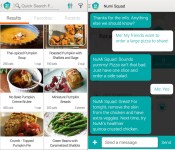
NutriSystem updates its NuMi app, a DIY digital weight loss system

If you were hoping to stay in shape or lose weight, you may want to try Nutrisystem, which just updated it’s NuMi app for Android with improved features. According to Nutrisystem, NuMi is a weight loss system that integrates live, one-on-one weight loss support for the “do-it-yourself dieter” as well as those transitioning from a structured meal plan or… Read more »
The post NutriSystem updates its NuMi app, a DIY digital weight loss system appeared first on AndroidGuys.
.CPlase_panel display:none;

Samsung’s Galaxy Alpha will allegedly be even thinner than the iPhone 5s

Samsung Galaxy Alpha leaks are extremely persistent. This might indicate that the August 13 will indeed be the device’s release date, as it was rumored. We’ve seen images of the device and alleged specifications from multiple sources, you can check all that out if you follow this link. New images of the device leaked from… Read more »
The post Samsung’s Galaxy Alpha will allegedly be even thinner than the iPhone 5s appeared first on AndroidGuys.
.CPlase_panel display:none;

Steve Jobs’ Vision of Widespread Free Public Wi-Fi Guest Networks Yet to Take Hold
 In a commentary piece arguing for users to open up free guest networks on their Wi-Fi access points to the public, Re/code‘s Walt Mossberg shares the story of how Steve Jobs saw such networks as the future of Internet access, supplementing cellular networks to allow for faster and broader access for users.
Mossberg notes that Jobs envisioned the open Wi-Fi networks during development of the original iPhone, which was hampered by a “lousy, sluggish cellular-data network.” An open Wi-Fi network built on the cooperation of both business and private citizens who were wiling to share their Wi-Fi connections with strangers would have addressed this problem by offering another connectivity option for iPhone users.
His idea was to get as many wireless router makers as possible to build in a “guest network” option — essentially a second Wi-Fi network, securely walled off from the rest of the home network, and with its own name. Then, he hoped that the industry would encourage people to share their bandwidth with strangers via these guest networks. That way, a smartphone user could walk around, moving from one Wi-Fi hotspot to another, without logging in — much like people using cellular data move from one cell tower to another.
While there are certainly potential issues with security and bandwidth hogging by guest users, Mossberg argues that these issues are not insurmountable, and in fact some companies have made strides in this area. On a micro level, Apple’s AirPort base stations have supported guest networks since 2009, and on a broader scale, some Internet service providers such as Comcast have been working to turn customers’ home routers into Wi-Fi access points available to other customers as a public network.
Use of Wi-Fi to supplement cellular coverage is also growing, with one example being T-Mobile’s effort in the U.S. to route phone calls over a more reliable Wi-Fi network instead of the cellular connection. Apple is adding iPhone support for the feature as part of iOS 8 later this year.
.CPlase_panel display:none;

Google Launches 64-Bit Version of Chrome Canary Browser for OS X [Mac Blog]
Following the launch of a 64-bit beta version of Chrome for Windows 7 and 8 users last week, Google has quietly added 64-bit support to Chrome Canary for OS X, the experimental build of its Chrome web browser designed for Mac users, and to its Mac Dev channels.
As noted by The Next Web, the latest build of Chrome Canary, version 38.2114.2, has 64-bit clearly listed in the About section of the browser, but Google has not yet officially announced the addition of 64-bit support.

According to Google, 64-bit support adds speed, allowing the browser to take advantage of the latest processor optimizations, and stability on Windows, with the same benefits likely available on the Mac.
64-bit support for the Windows version of Canary arrived in early June, before making its way to Beta channels in late July, and it’s possible 64-bit support for Mac could follow a similar timeline, eventually making its way to Google’s stable Chrome browser.
.CPlase_panel display:none;

Apple Says App Store Saw Record Revenue, Customer Transactions in July
 July was a record-setting month for App Store revenue, according to Apple, seeing both record revenue numbers and a record number of customers making transactions. The company revealed the news to CNBC.
Apple’s app store saw record-setting revenue numbers in July, the company told CNBC.
The Cupertino-based company also said that its app store saw a record number of customers making transactions.
During the company’s recent financial results call covering the third fiscal quarter of 2014, Apple CEO Tim Cook noted that iTunes software and services were the fastest growing part of Apple’s business during the quarter that ended in June. iTunes billings grew 25 percent year over year to an all time quarterly high, and Apple saw iTunes revenue of $4.5 billion, largely due to the continued success of the App Store.
As of June, Apple has had 75 billion cumulative App Store downloads, paying out a total of $20 billion to developers, with $5 billion paid in 2014 alone. According to app-tracking site AppShopper, there are 1,211,461 apps available in the App Store, including over 1 million iPhone apps and 610,000 iPad apps. Apple also has more than 21,000 Mac apps available in the Mac App Store.
.CPlase_panel display:none;
 AIVAnet