



Makerbot plants its 3D-printing flag in Europe

Makerbot has just announced the launch of an EU division called Makerbot Europe in order to replicate its US 3D-printing success overseas. The company has already been successfully selling its Replicator Mini (above) and other models through distributor Hafner’s Buro in Europe. However, it decided to acquire its distributor outright to make it easier to sell and market the 3D printers across Europe. Former Hafner chief Alexander Hafner will run the new division. MakerBot was itself recently bought by industrial 3D-printer maker Stratasys for $400 million, or so after selling nearly 22,000 3D printers across the US.
Filed under: Robots
Source: Makerbot
.CPlase_panel display:none;

Share iconic movie quotes with Quotacle’s GIF maker

We love a great idea, but when it doesn’t pan out as expected, it’s easy to get really bummed out. Today’s poorly executed great idea is called Quotacle, a web database of hundred of movies (not a typo) that lets you pull up choice quotes and export a GIF. That all sounds great, beyond the limited library, but each clip is far longer than it needs to be, resulting in a low resolution, yet very large file that dramatically minimizes the impact of an otherwise punchy quote. We took the liberty of cleaning up the Anchorman bit seen above, which just wasn’t effective at the 11 seconds you’ll find on Quotacle. Still, the site’s a decent resource for pulling up random flicks, and you can download an MP4 version instead and handle the GIF building on your own.
Filed under: Home Entertainment, Internet
Via: Verge
Source: Quotacle
.CPlase_panel display:none;

Apple officially brings Beats into the fold

A smidge over two months after Apple announced its plan to nab Dr. Dre’s headphone and music streaming interests, the folks in Cupertino have officially welcomed Beats to the family. The US government didn’t seem to take issue with the purchase, giving the final stamp of approval. Both sides have also posted statements on their respective sites celebrating the union that’s now a done deal. The $3 billion dollar purchase of the Beats brand brings not only popular audio devices and a personalized streaming service into Apple’s fold, but also the talents of CEO Jimmy Iovine, Dr. Dre and music head Ian Rogers to the table for future projects. In the meantime, if you’re looking to purchase from Beats, it has moved sales to the new owner’s online store.
Welcome to the family—Jimmy, Dre, Luke, Ian and the entire beats team! http://t.coqECVlXlYQZ
– Tim Cook (@tim_cook) August 1, 2014
Filed under: Portable Audio/Video, Apple
.CPlase_panel display:none;

Watch This App: Mechanical Gears Watch Face

So you’ve got an Android Wear device and now you’re looking for some Android apps to go along with it. We’ve got you covered. Our Watch This App column is designed to help educate readers in the various apps available for the platform and highlight the best of the bunch. Watch This App: Mechanical Gears Watch Face This Wear app…… Read more »
The post Watch This App: Mechanical Gears Watch Face appeared first on AndroidGuys.
.CPlase_panel display:none;

Home Button and Sensor Flex Cables From 4.7-Inch and 5.5-Inch iPhone 6 Shown in New Photos
Nowhereelse.fr [Google Translate] has published several high-resolution images purportedly showing flex cables from both the 4.7-inch and the 5.5-inch iPhone 6. These latest images add to the growing number of flex cables and other internal components for the iPhone 6 that have surfaced in the past few months.

These images include a possible look at the home button cables from both iPhone 6 models. The photos show two different designs for the part, each with a square section for the Touch ID sensor but distinct from the iPhone 5s part. While Apple’s iPads are also rumored to be gaining Touch ID functionality this year, the parts shown in the photos are compact enough that they are much more likely to be for the iPhone.

Another set of photos shows a flex cable with the ambient light/proximity sensors and a microphone. The corresponding part from the iPhone 5s includes the device’s FaceTime camera, but the camera is not included on the purported iPhone 6 cable.
As the rumored September launch of the iPhone 6 approaches, we expect to see additional part leaks, especially for the 5.5-inch model which may enter mass production in the coming month. Supply chain reports claim the 4.7-inch model entered mass production in July.
Rumors suggest Apple may stagger the launch of the iPhone 6, introducing the 4.7-inch model in September and following that launch with the 5.5-inch version later in the year.
.CPlase_panel display:none;

Apple Welcomes Beats to the Family as Beats Electronics Closes Its Online Store
Apple today updated its website with a new page celebrating its acquisition of Beats Electronics and Beats Music.
Today we are excited to officially welcome Beats Music and Beats Electronics to the Apple family. Music has always held a special place in our hearts, and we’re thrilled to join forces with a group of people who love it as much as we do. Beats cofounders Jimmy Iovine and Dr. Dre have created beautiful products that have helped millions of people deepen their connection to music. We’re delighted to be working with the team to elevate that experience even further.
And we can’t wait to hear what’s next.

The page also links visitors to the the front page of the revamped Beats Electronics website, which contains a message from the Beats team about joining Apple.
As part of these changes, Beats Electronics also has confirmed the closure of its online store. Going forward, all transactions will be handled through Apple’s Online Store and customers are advised to contact Apple about purchases made after August 1, 2014.
Apple’s acquisition of Beats Electronics and Beats Music is moving forward, with the deal recently receiving regulatory approval from the European Commission. U.S. regulators are expected to weigh in on the deal in a decision to be announced sometime this quarter.
In other acquisition news, Bloomberg also reported that Vivendi sold its 13 percent stake in Beats Electronics to Apple for $404 million. This stake was held by Vivendi’s Universal Music Group.
.CPlase_panel display:none;
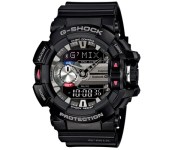
Casio’s next G-Watch uses Soundhound to discover new music

Casio’s team of smart-ish G-Shock watches is getting a new member next month that’s fixated on finding new music. The romantically-named GBA-400 retains the same smartphone-friendly features that we’ve already seen, but this time you’ll be able to control music playback right from the bezel. The biggest feature, however, is that discovery app SoundHound has been baked into the accompanying G’Mix app. Once you’ve Shazamed, uh SoundHounded the track, its details will pop on the timepiece’s built-in LCD display, which we have to admit, is pretty neat. If you’re interested in picking one up, you’ll have to take a trip to Japan, where it’s launching on September 19th, priced at 23,000 yen (around $225) plus tax.
Filed under: Wearables
Source: Casio (Translated)
.CPlase_panel display:none;

James Cameron found himself at the bottom of the ocean

James Cameron emerges from the DEEPSEA CHALLENGER after his successful solo dive to the Mariana Trench, the deepest part of the ocean. (Mark Thiessen/National Geographic)
There came a moment halfway through Deepsea Challenge 3D when I realized James Cameron’s new film isn’t really about exploring the depths of the ocean in the name of science. It’s about James Cameron visiting the bottom of the ocean because James Cameron felt like it.
Ostensibly, of course, the film, which is set for a nationwide release on August 8th, is about much more than that. Backed by a team of scientists and engineers, Cameron spent seven years building a submersible capable of reaching the deepest point in the ocean, seven miles below sea level. Following a series of tests, many of them documented in this film, Cameron finally piloted the Deepsea Challenger into those depths, reaching the Mariana Trench in March 2012 and making him the first person to complete that journey since the Trieste touched down in 1960. This time, though, the vessel was kitted out with a couple 3D cameras, allowing Cameron to document the experience on video for the first time. (In fact, the documentary only features a few minutes of footage from the trench, but more on that later.) Basically, this film offers a first, if fleeting, look at the Earth’s crust from 36,000 feet down under — which means Cameron, the Academy Award-winning director, is as much an explorer here as he is a filmmaker.
This film offers a first look at the Earth’s crust from 36,000 feet down under — which means Cameron, the Academy Award-winning director, is as much an explorer here as he is a filmmaker.
And he never lets you forget it, either. By the time the first 45 minutes are up, we’ve seen clips from three of Cameron’s films, including Titanic, Avatar and The Abyss, along with dramatized flashbacks to Cameron’s childhood, when he dreamed of being the next Jacques Cousteau. (I can’t make out everything I jotted down in that darkened theater, but I believe the word I used was “masturbatory.”) Even interviews with Cameron’s wife, Suzy Amis, feel like a bizarre kind of Cameron propaganda — that’s partly because audiences will recognize her as Rose’s granddaughter from Titanic, and also because her main purpose is to vouch for how serious her husband is about deep-sea travel.
To be fair, some of this was unavoidable. In producing The Abyss, the 1989 deep-ocean sci-fi film, Cameron consulted with various members of the deep-sea-diving community, including Don Walsh, one of the two men aboard that original 1960 voyage into the Mariana Trench. By the time Cameron began work on the Deepsea Challenger in 2005, he had already led seven deep-water expeditions, including three to the Titanic, and one to the wreck of the Bismarck, a World War II-era battleship that sank in the North Atlantic. The point is: Cameron isn’t just another Richard Branson, a rich guy with time on his hands and a penchant for spaceships. The man has experience piloting remotely operated underwater vehicles, and sending him down 36,000 feet unaccompanied was not a stunt. He knows a thing or two about submersibles, not to mention 3D cameras and underwater lighting techniques.

The DEEPSEA CHALLENGER is the centerpiece of DEEPSEA CHALLENGE. (Mark Thiessen/National Geographic)
It’s all a bit much, though. The film too often feels like an infomercial for James Cameron, sometimes at the expense of actual science talk. At one point, for instance, the film touches on underwater earthquakes, and how studying them might help us better prepare for the tsunamis they cause. We’re then treated to a brief montage reminding us of the devastating 2011 tsunami that ravaged eastern Japan. It’s thrilling to see a wall of water in 3D, but the moment quickly passes: Cameron moves on and never mentions the subject again. I’m no scientist, as you all know, so it’s not my place to question Cameron’s claim that this kind of exploration will one day aid tsunami research. But without much explanation as to why these expeditions are helpful, those clips of homes floating down the street come dangerously close to feeling like props.
I can’t make out everything I jotted down in that darkened theater, but I believe the word I used was “masturbatory.”
Meanwhile, we only find out in a postscript at the end of the film that Cameron’s flagship voyage led to the discovery of 68 new species — over 100 if you count the other dives. Not mentioned in the film: One shrimp-like amphipod produces the same compound already used in clinical trials to treat Alzheimer’s disease. And then there’s my personal favorite: a see-through sea cucumber the size of a crayon (I mean, what?!). Those are just two of the life-forms managing to survive in the darkness at 36,000 feet below sea level. Seems kind of important, right? Or at least interesting enough for Cameron to discuss? And yet, it comes as an afterthought as the final credits are about to roll. Even then, you’d have to be reading the companion site to appreciate how fascinating this stuff is. Which is insane: If I were James Cameron, I would constantly be reminding you that I discovered a sea cucumber.

James Cameron is believed to have discovered a see-through sea cucumber, similar to the Enypniastes pictured here. (Census of Marine Life)
Then there are the topics that don’t get lip service at all. Is deep-sea mining a possibility? Will we ever see tourist expeditions, à la what Branson is proposing with Virgin Galactic? Did you know that the Mariana Trench has been proposed as a nuclear-waste dump? I did, but that’s only because I read it on Wikipedia. After 90-some-odd minutes, the most sincere reason Cameron offers for his voyage is that he was able to satisfy his inner 9-year-old.
Ironically, too, Cameron’s final cut features very little footage from seven miles below. In movie-time, it takes about 10 minutes to get to the bottom of the ocean, at which point we spend little more than 10 minutes looking around. To be fair, there’s not much to see. The terrain is “flat and featureless,” to quote Cameron himself, with no animal tracks. Also, Cameron’s stay was shorter than expected: He had intended to spend five hours down there, but left after three due to a series of mechanical failures.
The film too often feels like an infomercial for James Cameron, sometimes at the expense of actual science talk.
For that reason, then, the most rewarding parts of the film are the parts where we get to see Cameron and team testing the Deepsea Challenger in increasingly deep (and difficult) waters. One failed shallow-water attempt early in the film is particularly riveting, as is that final, eerily quiet descent into the deep. At one point, we hear a startling crack many feet underwater — the sound of something possibly going very wrong. It made me wonder who would be crazy enough to test this gear, and it’s fun to think that person is actually James Cameron.
Much like Titanic itself, Deepsea Challenge 3D manages to be suspenseful, even though we know precisely how it’s going to end. If only the final product weren’t so shallow.
[Image credit: Mark Thiessen/National Geographic (James Cameron; Deepsea Challenger); Census of Marine Life (Sea Cucumber)]
Filed under: Misc
.CPlase_panel display:none;

Surprise, surprise: Mini flagship devices are reporting lower than expected Sales
 Those well versed in the smartphone market will know there is one type of device that is an obvious disappointment: mini flagship devices. Samsung, HTC, LG and Sony have all done it; after announcing their new flagship device, they quickly follow it up with a mini device that resembles the flagship device only in name, with less powerful hardware, sometimes less features, and yet the price often remains higher than mid range devices. Sources in Taiwan have reported that these devices performing poorly due to “uncompetitive performance price ratios”. This is especially obvious in the Asian region where mid range devices are sometimes half the price of these so-called “mini” devices.
The only exception to the above rules is the Sony Xperia Z1 Compact, which ditched the “mini” nomenclature in hopes of avoiding the stigma associated with these devices. Unfortunately, according to this report, the Z1 Compact has also under-performed on its expectations. This is a shame as the Z1 Compact is the only “mini” device that is a genuinely impressive smartphone, with all the flagship hardware squeezed into a 4.3-inch frame. With this feedback in mind, expect manufacturers to shy away from “mini” devices.
What do you think about the performance of these mini flagship devices? Let us know your thoughts in the comments below.
Source: DigiTimes via Phone Arena
//<![CDATA[
ord = window.ord || Math.floor(Math.random()*1E16);
document.write('’);
//]]>
The post Surprise, surprise: Mini flagship devices are reporting lower than expected Sales appeared first on AndroidSPIN.
.CPlase_panel display:none;
 AIVAnet