


Obama Signs Cell Phone Unlocking Bill Into Law, iPhone Unlocking No Longer Illegal
United States President Barack Obama will today sign a bill that makes cell phone unlocking legal again, writing the Unlocking Consumer Choice and Wireless Competition Act into law following its unanimous approval by the Senate and House of Representatives.
Obama has long supported the act, which was originally introduced via a 2013 “We the People” petition that gathered more than 100,000 signatures calling for cell phone unlocking to be made legal. It first became illegal to unlock a cell phone in January of 2013, after an exception in the Digital Millennium Copyright Act expired, restricting U.S. customers from shifting their service to other carriers or using their devices abroad with local SIM cards.

Now that cell phone unlocking is once again legal, consumers and third-party unlocking services will be able to unlock paid-for cell phones and tablets without receiving express permission from carriers and without facing criminal penalties. The changes will make it easier for consumers to take their devices to the carrier of their choice after contractual obligations have been fulfilled and it will also be easier to use existing devices abroad.
The bill not only restores the rights of consumers to unlock their phones, but ensures that they can receive help doing so if they lack the technological savvy to unlock on their own.
The most important part of this joint effort is that it will have a real impact. As long as their phone is compatible and they have complied with their contracts, consumers will now be able to enjoy the freedom of taking their mobile service — and a phone they already own — to the carrier that best fits their needs. At a time when partisan gridlock all too often threatens progress on everyday issues that matter to consumers, working together we listened to your voices, and the American people benefited as a result.
In December of 2013, U.S. cellular carriers and the FCC also came to an agreement over a set of voluntary principles that will make it easier for wireless customers to unlock their devices and switch from carrier to carrier after a contract has been fulfilled.
Note: Due to the political nature of the discussion regarding this topic, the discussion thread is located in our Politics, Religion, Social Issues forum. All forum members and site visitors are welcome to read and follow the thread, but posting is limited to forum members with at least 100 posts.
.CPlase_panel display:none;

Beats Music CEO Ian Rogers to Also Head Up iTunes Radio
 Apple’s $3 billion acquisition of Beats was finalized today, and as the two companies merge into one, the positions some former Beats employees will take on at Apple are becoming clearer.
According to a new report from The Wall Street Journal, Ian Rogers, who serves as the CEO of Beats Music, will take Apple’s own iTunes Radio streaming music service under his wing, heading up both streaming music services. Rogers will likely report to Eddy Cue, the SVP of Internet Software and Services at Apple, who oversees all of Apple’s content stores.
Rogers, a former Yahoo executive, will run both teams to create cohesion in Apple’s streaming-music options, according to the people familiar with the matter. Pandora and Spotify, the two-biggest streaming music services, each offer both a free ad-supported service and a subscription-based service.
As previously reported, Beats co-founders Jimmy Iovine and Andre Young (aka Dr. Dre) are also expected to take on senior roles at the company, and while it remains unclear exactly what the duo will do at Apple, Iovine may also become involved with iTunes, securing deals and marketing opportunities.
Earlier today, Apple posted a message on its website welcoming the Beats team to the family, as Beats shut down its own online store. While many former Beats employees are transitioning to Cupertino or continuing to work in a Los Angeles office, approximately 200 employees in human resources, finance, and other areas where there was overlap with Apple have only been given temporary positions as the company tries to find new roles for them.
.CPlase_panel display:none;
The early design history of NASA’s spacesuits
Filed under: Transportation, Wearables, Science, Alt
.CPlase_panel display:none;
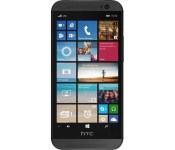
HTC One with Windows Phone shows up on Verizon’s site

The cat’s out of the bag, it seems. Just days after we received leaked details of HTC’s One (M8) for Windows, Verizon has posted a picture on its web servers (still available as I write) that confirms the smartphone’s existence. The device is largely what we expected; it’s a straightforward adaptation of the Android-based One for Windows Phone 8.1, complete with custom camera features and TV remote control. There aren’t many other clues, although WPCentral has heard that Verizon will carry the handset on August 21st following an already announced HTC event on August 19th. That makes sense, especially since the image not-so-coincidentally shows Friday the 22nd on the calendar — a day after the rumored release.
Filed under: Cellphones, Mobile, HTC, Verizon
Via: PCMag, WPCentral (1), (2)
Source: Verizon
.CPlase_panel display:none;

El Salvador, Libya, Nicaragua, Paraguay, and Tunisia get Google Maps Navigation

Slowly but surely Google services make their way across the globe. For those visiting other parts of the world, or those living in them who have navigational dilemmas, Google Maps Navigation can be a modern marvel. More locals have recently been introduced in Google Maps Navigation that many might find useful. The new locales include El Salvador, Libya, Nicaragua, Paraguay, and Tunisia.
If you happen to be in one of the mentioned locations, give it a go and let us know how it works out for you.
Pick up Google Maps in the Play Store
Source: Google Via: AndroidPolice
//<![CDATA[
ord = window.ord || Math.floor(Math.random()*1E16);
document.write('’);
//]]>
The post El Salvador, Libya, Nicaragua, Paraguay, and Tunisia get Google Maps Navigation appeared first on AndroidSPIN.
.CPlase_panel display:none;

Verizon and T-Mobile Galaxy S5 get new OTA Updates
If you happen to own a Samsung Galaxy S5 on either Verizon or T-Mobile, then be on the look out for an update that being pushed out to your device. Each update is a little different in terms of what it will bring to your device.
On the T-Mobile side of things you can expect to be moved to baseband version G900TUVU1BNG3 and carries a file size of 38.6MBs. The update turns on T-Mobile VoLTE service to the flagship device which allows for phone calls to be made over LTE data services. Your location and coverage will have an impact on how well, or if, it works at all. The update is rolling out now and be picked up as a OTA or through Samsung Kies.
As for Verizon’s version of the device there are quite a few additional things you might notice. The software Version moves to KOT49H.G900VVRU1ANE9 and it will bring along updates to the Caller Name ID, Message+ and Cloud apps from Verizon. There is also a fairly substantial list of bug fixes as well.

We don’t see a file size mentioned on the Verizon support page for the device, but we imagine it will be fairly large. You will want to make sure you are over 50% on your battery life and have a Wi-Fi connection available to download either update.
Via 9to5Google
//<![CDATA[
ord = window.ord || Math.floor(Math.random()*1E16);
document.write('’);
//]]>
The post Verizon and T-Mobile Galaxy S5 get new OTA Updates appeared first on AndroidSPIN.
.CPlase_panel display:none;

SanDisk 128GB Micro SDXC cards on sale for $99

Back in February SanDisk announced their new 128GB Micro SDXC card. When it launched it started out at a hefty $199.99 and has since seen a variety of sale price tags and is now at the lowest sale price I have personally seen, $99.99. We had a chance to review the card and it performed as expected. Since the review it has safely resided in my Xperia Z and has never failed me once. There is something very rewarding knowing that I have more storage in my phone than I really need.
We know for certain that the Galaxy S5, HTC One M8 and the LG G3 all have supported listed for 128GB cards. I know for a fact that it works just fine in the Sony Xperia Z, Z1s and the Lenovo Yoga tablets. If storage on your mobile device is a concern, especially with these hi-res camera and 4K video recording ability, it is hard to not take a good hard look at picking one of these up if you have the chance. Heck, it even comes with the typical adapter to take it from a micro SD to a full size SD card giving you more options to use it. Hit the link below to get one ordered as soon as you get a chance.
Order your SanDisk Ultra 128GB MicroSDXC

//<![CDATA[
ord = window.ord || Math.floor(Math.random()*1E16);
document.write('’);
//]]>
The post SanDisk 128GB Micro SDXC cards on sale for $99 appeared first on AndroidSPIN.
.CPlase_panel display:none;
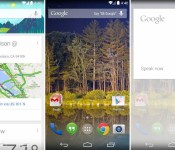
Google Now Launcher is no longer exclusive to Nexus and Google Play Edition devices

Many people like Google Now Launcher, mainly because of its nice design, big icons, “OK Google” hotword which makes the service very accessible and a very handy feature which makes Google Now only 1 swipe away. There’s much more to like when it comes to this launcher though, but not many people were able to… Read more »
The post Google Now Launcher is no longer exclusive to Nexus and Google Play Edition devices appeared first on AndroidGuys.
.CPlase_panel display:none;
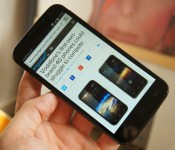
Vodafone’s Smart 4 power: too expensive for an own-brand 4G phone

4G is now a mainstream technology in the UK, meaning network operators can chase more frugal consumers with low-cost, own-brand handsets. It’s unlikely O2 and Three will get involved in this race to the bottom; they simply don’t have the experience EE (through its sub-brands Orange and T-Mobile) and Vodafone do in self-made handsets. EE was the first to make a move with the £99 Kestrel, and Vodafone recently launched its rebuttal: a pair of smartphones in the Smart 4 turbo and Smart 4 power. I’ve already commented on their price tags (£135 and £175, respectively), which are high enough to make you wince considering their competition. And, after spending a little quality time with the higher-end Smart 4 power, I can’t say I feel any different.
Vodafone’s Smart 4 power screams “I’m an OEM handset.” Made by the same Chinese group that counts Alcatel as its consumer-facing business, the device lacks any stand-out aesthetic features to separate it from a sea of other Android reference designs. There’s a hearty serving of bezel above and below the display, where the earpiece, front-facing camera and standard capacitive Android keys sit, with the earphone jack, micro-USB port and power button/volume rocker in their normal positions. The back of the device adds a small amount of personality to the otherwise generic composition; not only because the white plastic contrasts against the black of the rest of the device, but also because of the metal detailing around the primary camera, the neat silver Vodafone logo and slit-style loudspeaker grille. Being white does mean it’s easily dirtied, however.

Build quality is nice and solid, with all the plastic components fitting together snuggly. You’d expect a phone with a 5-inch display to have an above-average footprint, but the power’s is a little too grand for my liking. At 141 x 71 x 9.5mm, it’s tall, wide, thick and in my opinion, a little uncomfortable to use. Some of this is also down to its weight: 162g isn’t particularly kind to the pocket or wrist. I wasn’t as offended by the 960 x 540 resolution screen as I thought I’d be. App icons look bloated and cartoony at such a low pixel density (220 ppi) and video/gaming quality suffers, but it’s not as much as a turn-off as the spec sheet might suggest. Color temperature is pretty good, but viewing angles and sunlight readability? Not so much.
Having been spoilt of late by low-cost phones with the superb quad-core Snapdragon 400 chipset — significantly cheaper than the Smart 4 power, I might add — I wasn’t expecting a comparable experience with the power’s quad-core 1.3GHz Mediatek processor. I’m pleasantly surprised, then, to report no noticeable lag when whipping through the Android homescreen and app carousels. The simple, relatively unencumbered Android 4.4 build almost certainly deserves some credit for that. A few races on Asphalt 8: Airborne with the graphics settings maxed-out confirmed the handset’s no slouch in the performance department, though I’d be interested to see whether the processor would cope as well paired with a higher-resolution display.

The Smart 4 power also packs an adequate 1GB of RAM, a 5-megapixel main camera and VGA front-facer. One of the more frightening specs you should be aware of is the less than 2GB of available on-board storage, which games like Asphalt 8 can basically consume on their own. This makes a microSD card almost a compulsory accessory. The real issue I have with the power is not the chunky design, low-res screen, basic camera options or lack of storage; it’s the price. You simply can’t ask people to pay £175 for a pay-as-you-go handset of this calibre when the Xperia SP is cheaper on the same network — not to mention the superb Moto G (4G edition) is less expensive unlocked, and EE’s Kestrel, while not perfect, costs a two-figure sum.
If you’re a Vodafone contract customer who’s thinking about upgrading to a 4G tariff, and is being incentivized towards the Smart 4 power, it’s not like you won’t survive. If you have any choice in the matter whatsoever, though, it’s one to avoid.
Filed under: Cellphones, Mobile
.CPlase_panel display:none;

IRL: Two weeks with Samsung’s Level portable audio line

Samsung’s plan to launch its own “premium” portable audio line was unveiled long before Apple nabbed Beats. I must admit I did an eye roll reading the announcement, given the names of the products in the Level line: On, Over, In and Box. The group offers options for all listening preferences, with appropriately named on-ear, over-ear, in-ear and Bluetooth speaker options at prices that certainly rank at the higher end. After two weeks with the lot, I’m not ready to part with my Beats Pill XL or B&O H6s for Sammy’s new kit. Here’s why.
Level Over Headphones

Let’s start at the top with the $350 Level Over Bluetooth headphones. While mostly plastic, these cans do have some nice faux-leather ear cups and a stitched headband. There are some silver accents, too. In fact, I’d argue the entire line keeps up the premium appearance a lot better than some of Samsung’s other devices, which, rightly or wrongly, have earned a reputation for feeling chintzy. That’s not the case here, though.
The Level Over has the usual bulkiness you’d expect from wireless over-ears, but once I got used to the weight (my usual pair isn’t nearly as heavy), they’re actually quite comfy. They don’t feel like they’re pinching my head, and the ear cups and headband are both nicely padded. What about the audio? Well, I actually prefer the Level On to these. The Level Over headphones, while far from the best I’ve heard, provide clear tones and are capable of a blistering volume (if you can handle it) without distorting when plugged in. Those who scoff at Beats’ bass-heavy tuning will find solace here, but I tend to prefer a bit more bump than the Over has to offer. Treble and the mid-range are instead favored, and it’s particularly noticeable when streaming hip-hop tracks, like the last Kendrick Lamar LP, for example.
Pairing the headphones with a MacBook Air, iPhone 5s and Moto X didn’t produce a max volume that I’d think some would favor — it’s somewhere close to the middle when the unit is plugged in. Connecting via NFC is an option too, with a properly outfitted device (same goes for the Level Box). If you’re after the Bluetooth chops, there are much better options that will provide better sound. There’s a touchpad on the right ear cup for on-board volume control, but even with that cranked all the way up, I could’ve used a few more decibels than Spotify on my Motorola handset could muster. After about a day and a half, I was looking for an outlet to recharge — a process that takes a couple of hours to complete.
Of course, there’s the Samsung Level app for tweaking the EQ on mobile devices, but it makes modest improvements to the audio experience, so I tended to skip it entirely. It also requires the cans to be connected via Bluetooth to make adjustments — as does that volume slider. The same can be said for the built-in microphone: while it works just fine, I prefer to make calls the old-fashioned way.
Level On Headphones

These were actually my favorite of the bunch. The Level On headphones share the same dapper stylings as the Level Over (save for the headband stitching) and wear really comfortably. I recently used the new Beats Solo2 set for a couple weeks only to find my head feeling pinched about 15 minutes into each session. That’s far from what I found here; the On is relatively light and doesn’t feel like it’s clamping down in-use, despite taking some small aesthetic cues from Dr. Dre’s recent offering. What can I say? The fit is just really nice.
In terms of sound, I prefer these are my top pick here. Having the volume dial fixed halfway from my laptop or phone was the sweet spot, offering a smidge more bass that its pricier stablemate. Unfortunately, cranking it up further makes for a treble-heavy mess that’s a little painful to endure. So long as you’re not looking to blast out your eardrums, the audio is actually pretty solid. I did find that the in-line remote here (and on the Level Over) wasn’t of any use to adjust volume on my Moto X or MacBook. But if I’m honest, I don’t tend to use that feature while seated at my desk or traveling. That gripe aside, the $180 price seems fair.
Level In Headphones

If I were you, I’d skip these entirely. The Level In headphones have a rather bland silver and black exterior to them, but that’s really the only good thing I have to say. The buds are quite large and, given that bulk, didn’t stay in my ears well if I was doing anything other than sitting still. I put on bigger plastic tips to no avail, and trying to wear these on a run turned out to be quite frustrating. I’d be willing to overlook that major issue if the sound quality were respectable, but it’s not. There are loads of options for half the price (or less) that handle tones much better than the Level In. Actually, I have a pair of $50 UE in-ears that put these to shame. Samsung’s Level In headphones do have the usual in-line remote you’d expect from a set of $150 earbuds, if you’re still considering making the leap.
Level Box Speaker

Finally we arrive at the Level Box, Samsung’s compact new Bluetooth speaker. At $170, it’s more expensive than the similarly sized (and infinitely customizable) Jawbone Jambox and the UE Mini Boom. The Box does have a solid aluminum top that certainly contributes to the high-end look, but as I found with the Level Over, looks can be deceiving. The unit pairs quickly and easily and features accessible top-mounted controls, but once I started listening in, it didn’t take long to go back to the super-sized Beats Pill. I’d compare the sound quality here to Jawbone’s popular speaker: It’s serviceable, but that’s about it. And you certainly won’t have to contend with too much bass.
While it’s a convenient device to pack for a day trip, the audio just isn’t good enough to make it a desktop or bookshelf staple. I did find the 15 hours of promised battery life to be accurate; I could always get through at least a full day before needing a charge. As I’ve already mentioned, there are other wireless speakers I prefer — of course, the one I use most is $130 more — and for an extra 30 bucks, the regular UE Boom is a solid alternative. For those looking for a capable gadget, though, the Box may do just fine, but folks seeking quality audio will need to look elsewhere. And yes, you can use it to wrangle those speakerphone calls too.
Wrap-up
After two weeks with the entire group, I can honestly say that none of the options are must-haves. While I do like the Level On headphones the best, on account of their comfort and overall sound quality, they don’t make a strong enough case for me to ditch my trusty B&Os. As for the other items in the set, there are far better choices for the same or a little less money. Frankly, the in-ears are way overpriced and the Bluetooth speaker is average at best. And at $300, I’d expect a lot more out of a set of wireless over-ear headphones than what’s offered here, even if the touch controls are quite handy. I will say this, though: I’m curious to see how the next round of “premium” audio devices from Samsung develops. The company’s done a respectable job on the design here (aside from the Level In), but I’d like to see audio improvements next time around.
Filed under: Portable Audio/Video, Samsung
.CPlase_panel display:none;
 AIVAnet