


Daily Roundup: Google aquires Nest, SimCity goes offline, Mark IV hands-on and more!

You might say the day is never really done in consumer technology news. Your workday, however, hopefully draws to a close at some point. This is the Daily Roundup on Engadget, a quick peek back at the top headlines for the past 24 hours — all handpicked by the editors here at the site. Click on through the break, and enjoy.

Sprint abandons its ‘One Up’ program
In the shadow of T-Mobile’s UnCarrier endeavor, Sprint’s “One Up” early upgrade plan is being replaced with a new program that rewards users for adding lines to their account. Click the link for more details.

SimCity soon to gain offline mode
SimCity’s troublesome online reboot in early 2013 left users seriously disappointed. In an effort to remedy the situation, EA Maxis announced this morning that an offline mode will be available soon. Follow the link for more information.

GameFace Mark IV hands-on
The Mark IV is a prototype VR headset that, unlike the Oculus Rift, runs wire-free. Click the link for the hands-on and watch as Engadget’s Ben Gilbert takes it for a spin.

Google acquires Nest
Today, Google acquired Nest’s line of home automation products for a whopping $3.2 billion. iPhone users have no need to fear, however, as Google has pledged to continue support for both iOS and Android. Click on through for the rest of the story.
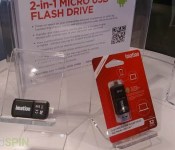
Imation 2-in-1 Micro USB Flash Drive Solves on Device Storage Limits
It is no secret that storage still drives our connected devices. Whether you have a device with no SD card support, store everything in the cloud but find yourself without network connection or if you are just looking for a quicker and more portable way to carry/transfer data. The use case scenarios are pretty endless with Imations new 2-in-1 Micro USB Flash Drive.

“The new Imation 2-in-1 Micro USB Flash Drive provides consumers with something extremely valuable: additional storage space, no batteries or internet required,” said Toshi Hokari, executive director, product management and marketing, Imation. “Whether it’s used to transfer photos or videos to a computer or another Android device, or to easily view content on the go, the 2-in-1 Micro USB Flash Drive solves a major headache mobile device users often experience—running out of storage space at critical times.”
The design and functionality of the 2-in-1 device are pretty remarkable. Give it a little pull to reveal the USB plug that is neatly tucked away inside. Plug it into your PC or Laptop and transfer whatever you want to it. Store it conveniently on your keychain for travel. Push the top down to access the Micro USB portion and connect it directly to your Android device and have instant access to your additional media content or files.
Being able to easily transfer files and media between two devices without a PC or waiting for the cloud is certainly another win for many of us. How many times have you been out with friends and wanted a movie they had on their phone, or maybe just a large ROM file? Plug in, copy it over and move on. Or maybe you have hit that dreaded “Storage full, move or delete files” message while you on a trip. Pop in the drive, copy them over and you are set.


 This little guy already made itself useful to us while at CES. A company ran out of press kits but had them all on his laptop. I handed over the Imation Flash Drive and he copied them over and I was on my way. I plugged it into my Xperia Z later that night to read through the files and send them off to some of the team.
The 2-in-1 USB flash drive is scheduled for launch this quarter with some very reasonable price tags included. It will be available in three sizes: 16GB for a suggested MSRP of $29.99, 32GB for a suggested MSRP of $39.99 and 64GB for a suggested MSRP of $64.99. Of course it won’t be compatible with EVERY device on the market. Your Android device does need to support OTG (On-The-Go) connections. If you have no clue if your device will support it, then head over to Imation’s compatibility list and find out. If you are good-to-go, then hit the links to Amazon below to pick up the size you want at a slight discount. They are in order from 16Gb to 64GB
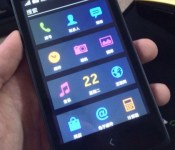
Images of Nokia’s first Android phone leak
An upcoming phone being made by Nokia code-named “Normandy” has pretty much only been seen as renders until today, when @seamissu leaked a photo of the device on Twitter.
The device was first seen in November thanks to @evleaks, and it has been said that Nokia has the device nearly ready for consumer release.
Reports have suggested that Nokia has forked Android, similar to how Amazon uses it, to create a customized operating system, a move that gives more control over the experience, differentiating it from other Android devices, while still allowing most Android apps to work on it.
Previous leaks have also suggested that the device has one capacitive back button, is running Android 4.4 KitKat with a Qualcomm Snapdragon processor and that its OS has styling similar to that of Nokia Windows Phone devices.
One other photo was leaked today by Chinese blogger Zhang Zhicheng.

This photo supposedly shows the Android app launcher on the device, but it could be an order version since the UI doesn’t exactly match up with the polish of some previous leaks.
Who knows if this device will ever see the light of day as Nokia is awaiting final notification of the acquisition of its Devices and Services division to Microsoft, expected at the end of this quarter.
via @seamissu Twitter, Neowin
The post Images of Nokia’s first Android phone leak appeared first on AndroidGuys.
HP rumored to launch its first Android smartphone any day
HP could possibly branch out to the smartphone world very soon
2013 began a trend of low-budget off-contract smartphones. With the Nexus 5, Moto X, and Moto G debut, contracts have begun to become a thing of the past. Rumor has it, HP will soon be included on this list, as well.
The folks at 9to5Google have gotten word that HP could possibly launch their first Android-powered smartphone as soon as next week. Supposedly, the phone will launch for around $200 (off contract), and will somewhat resemble Samsung’s 5.5-inch Galaxy Note. To produce a phone for only $200, they are taking some obvious cost-cutting procedures.
HP has been talking about smartphones for quite some time, and now it’s becoming a reality.
It’s always nice to see a big company like this take a different path. And if the phone turns out anything like the Galaxy Note or HP Slatebook line, we’ll be pretty happy about this.
The post HP rumored to launch its first Android smartphone any day appeared first on AndroidGuys.
Court Denies Apple’s Request to Remove Compliance Monitor in E-Book Antitrust Case [iOS Blog]
 U.S. District Judge Denise Cote today denied Apple’s attempts to thwart its antitrust monitorship, reports Reuters. Apple had asked the court for both a stay on the original order requiring an external compliance monitor (due to a pending appeal) and the removal of Michael Bromwich, the attorney appointed to serve as the company’s monitor. Both requests were denied.
Apple Inc lost a bid on Monday to block an antitrust monitor appointed after a judge’s finding that the company conspired to fix e-book prices. At a hearing, U.S. District Judge Denise Cote in Manhattan denied Apple’s request to stay an order requiring an external compliance monitor pending the company’s appeal.
Apple also sought to have the judge disqualify the lawyer chosen to serve as monitor, Michael Bromwich.
Apple and appointed antitrust compliance monitor Bromwich have ongoing disagreements since November, when Apple filed a formal complaint over Bromwich’s fees in the case, which amounted to $138,432 over a two week period. The company also complained that Bromwich was overstepping his bounds by demanding lawyer-less meetings with key Apple executives and board members.
Bromwich, for his part, claimed that he experienced “a surprising and disappointing lack of cooperation from Apple and its executives”, filing a complaint against the company in late December. Apple responded by requesting his removal last week, stating that Bromwich had a personal bias against the company.
Earlier today, the Department of Justice condemned Apple’s actions, stating Apple had “chosen a campaign of character assassination over a culture of compliance” and suggested that Bromwich was open to negotiating with Apple on the original fee dispute.
Judge Cote plans to issue a decision explaining her reasoning on the denial in the near future, at which point Apple will have 48 hours to request an emergency stay from the federal appeals court in New York.
Apple was originally found guilty of conspiring with publishers to raise the retail price of e-books in July. As part of its punishment, the company was forced to hire an external compliance monitor to ensure that it complies with antitrust requirements in the future.
     |

New ZAGG invisibleSHIELD On Demand Program aims to Protect Everything
ZAGG is a name many across the globe know and love. They make a line of high quality screen protectors for various device models. Some people swear by them as their number one screen protector. It should come as no surprise that ZAGG made a slew of announcements at CES this year. Such as the new Sparq Powerbank, combination Auto/Wall charger, GO Fuel and invisibleSHIELD GLASS. While all of those are great announcements, it is the custom invisibleSHIELD On Demand program that is really going to revolutionize how ZAGG makes its way to your device.
 Smaller retail stores have limited shelf space and can only house so much inventory for products. Places like Radio Shack will easily carry InvisibleSHIELD screen protectors for the most popular and higher end devices, but that only blankets a small portion of the consumers. With the ZAGG invisibleSHIELD On Demand store owners will be able to save front end space and valuable inventory space with the machine you see above. It allows people to walk into a supporting store and buy an invisibleSHIELD made for their device on the spot. Giving store owners, ZAGG and consumers more flexibility and coverage for more devices than ever before.
When we spoke with ZAGG about it we found out a few details. Like a few select Radio Shacks are already using the product. Everything is preset and automated via a tablet and a custom UI. Click the device they need protection for and hit go. When materials are low, the app sends out a re-order request so that the store has another roll delivered before they run out. We did fail to get the details on if multiple materials will be available for the various lines of protection. Judging from the size of the machine though, we think there should be a few different spools inside to give retailers and consumers the choice between standard, HD or other variants.

Twitter’s web look refreshed to match your phone

Where one of Twitter’s app designs goes, the rest will follow — hot on the heels of its latest Android and iOS releases, the social network is rolling out a new web interface with a matching look. The change is primarily cosmetic at first glance, although you can now personalize the accent color in addition to usual elements like backgrounds and profile photos. Not everyone is seeing the new look at this stage, but we’d expect it to reach many of Twitter’s web users in the near future.
Filed under: Internet
Source: Twitter (1), (2)
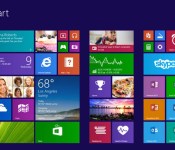
Microsoft may preview Windows ‘Threshold’ in April, launch it in 2015

Microsoft may have just released Windows 8.1 a few months ago, but it’s reportedly on the cusp of previewing its next major Windows version, Threshold. The SuperSite for Windows hears from sources that Microsoft will provide a “vision” for the OS at its Build conference in early April. While there aren’t many details of what the software involves beyond an emphasis on cross-platform unity, the tipsters claim that Threshold will likely be called Windows 9 and center around a refined interface that’s better-suited to desktop users. Whatever the OS looks like, don’t expect to see it in action this spring. Provided the rumors are accurate, the crew in Redmond would only start work on Threshold after Build, and it would ship the finished code in April 2015. The sneak peek would mostly set expectations for developers worried about Windows’ future in an unreceptive PC market.
Filed under: Software, Microsoft
Via: ExtremeTech
Source: SuperSite for Windows
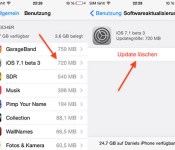
Over-the-Air iOS 7.1 Download Files Deletable in Beta 3
The third beta of iOS 7.1 includes a feature that allows users to delete the over-the-air installation files that are automatically installed whenever an iPhone is connected to AC power, according to German site Macerkopf.de [Google Translation]. Deletable installation files will allow users who do not wish to upgrade their devices to new versions of iOS to free up valuable space on their devices.
Previously, updates downloaded over-the-air could not be removed, an issue that received attention in September after iOS 6 users were forced to install iOS 7 or lose 3.1 GB of storage space to the installation file.

Users with iOS 7.1 beta 3 who have not installed the update will see it listed in the Settings menu, under General –> Usage, where it can be removed like any other app or file. The file can be deleted if it was downloaded over-the-air in the background or manually.
While over-the-air files can be deleted in iOS 7.1 beta 3, there is a possibility that this is a beta-only feature that will not make it into the final release of the software. Apple often adds and removes features during the course of beta testing, such as the dark keyboard that was available in iOS 7.1 beta 1 and removed in beta 2.
First released to developers last week, iOS 7.1 beta 3 also includes a number of visual changes that give iOS 7 a revamped look and feel, including a redesigned Phone dialer, an improved keyboard, and darker colors for the Phone, Messages, and FaceTime apps. It is unclear when Apple plans to release iOS 7.1 to the general public, but a December report suggested the update could launch in March after a lengthy beta testing period.
| |
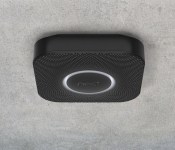
Google Acquiring Tony Fadell-Founded Nest for $3.2 Billion
Google is acquiring Nest, the smart-home appliance maker that is behind the Nest Thermostat and the Nest Protect smoke detector, for a reported $3.2 billion in cash.

iPod co-creator Tony Fadell is the co-founder of the company alongside another former Apple employee, Matt Rogers. Nest tweeted that it will operate independent of Google.
Big news! @Google acquiring Nest to help fulfill our goal of reinventing unloved home products. Nest will stay Nest. http://t.co/0L8hNBhmYc
— Nest (@nest) January 13, 2014
Larry Page, CEO of Google, said: “Nest’s founders, Tony Fadell and Matt Rogers, have built a tremendous team that we are excited to welcome into the Google family. They’re already delivering amazing products you can buy right now–thermostats that save energy and smoke/CO alarms that can help keep your family safe. We are excited to bring great experiences to more homes in more countries and fulfill their dreams!”
According to Re/code, Nest has raised more than $80 million in venture funding and was scheduled to close another $150 million round soon.
| |
 AIVAnet