


Traffic ticket for driving with Google Glass gets dismissed in court

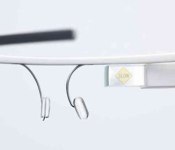
Pay attention to the road. At least, until the cars are able to drive themselves. That’s the rule, and it was probably one of the reasons why Google Glass early-adopter Cecilia Abadie got ticketed for donning the wearable at the wheel. It was a second citation, alongside speeding, although it was dismissed by San Diego Court Commissioner John Blair, noting that: “There is no testimony it was operating or in use while Ms. Abadie was driving.” However, he did say earlier that Google’s wearable did however, fall “within the purview and intent” of the state’s ban on driving with a monitor. This particular case might have been dismissed on lack of evidence, but we reckon those wider implications (and resultant legal tussles) are far from over.
Filed under: Cellphones, Transportation, Wearables, Google
Source: Reuters
This is what game devs are saying about Valve’s prototype VR hardware

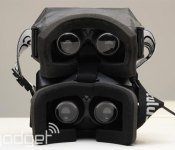
We’ve seen quite a bit the Oculus Rift, but another major player in the coming virtual reality revolution has eluded us: Valve. Save for adding an experimental VR mode to the Steam Client Beta, the company’s experiments in the space have been kept largely under wraps. That changed this week during Steam Dev Days, however, when select developers were given a peek at the company’s R&D efforts. Some of those developers are even talking about their experiences, though their descriptions are still pretty vague. Tripwire interactive’s David Hensley, for instance, tweeted this week that wearing the company’s VR hardware prototype was like being in a “lucid dream state.” In fact, Hensley compares it to the holodeck featured on Star Trek, thanks largely to the advanced physical tracking Valve employed in its demo. Users could reportedly walk around a confined space and have their movements (including simple actions like crouching) mirrored in the virtual world. “It’s hard to explain just how immersive it felt,” Garry Newman (creator of Garry’s Mod) wrote on his blog. “Imagine being in a room and looking around seeing and hearing things in that room. That’s what it was like.”
As impressive as the full-room tracking experience sounds, the prototype’s other improvement are just as notable. According to Newman, Valve’s headset offers a less nauseating experience compared to his time with Oculus’ Rift, though he doesn’t seem completely sure why. Hensley credits it to a higher resolution image and lower latency than Oculus dev kits available today, noting that he’s heard it’s comparable to the Crystal Cove prototype shown at CES (though he admits he hasn’t used both units). Unfortunately, we’re not likely to see these improvements in the public anytime soon — Valve’s efforts seem to be largely experimental, as the firm has already stated that it doesn’t plan to release hardware of its own. Still, it sounds like an great example of where the technology could be headed in the future, even if that future is rather far flung.
Filed under: Gaming
Nintendo slashes 2014 sales forecast for Wii U from 9 million to 2.8 million

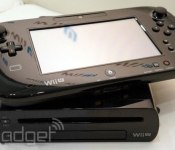
It’s not even financials season yet, but Nintendo is trying to lower expectations in advance. In a statement today, it’s announced that it’s reassessed unit sales for its flagship Wii U console, shaving hacking it down from 9 million for April 2013 – March 2014 to just 2.8 million — less than a third of the original estimate. It’s also less than the number of Wii Us that Nintendo sold in its launch year. That was 3.45 million, if you’re counting.
The revised predictions are due to disappointing hardware sales during the holiday season and that’s having an understandable knock-on effect on software sales too. Nintendo now predicts that instead of selling 3.8 million titles, the numbers will be around half of that: 1.9 million, which is at least an uptick from 2013. Alas, it’s still an across-the-board bad news sort of announcement, however, with forecast console sales for the original Wii and the 3DS also bumped down in the process. (Nintendo now expects to sell 13.5 million 3D handhelds, down from 18 million.) This will all hit the company’s financial results, with the games maker now expecting to announce a 35 billion yen ($336 million) loss, with part of this being put down to marked down Wii U consoles, something that Nintendo didn’t predict would happen back in March 2013.
Source: Nintendo (PDF)

Nintendo is spending more on R&D as Wii U’s star continues to fade

Nestled inside Nintendo President Satoru Iwata’s statement on those brutally slashed sales forecasts , he touched on what the company is doing to (hopefully) reverse the current downward trend. Research and development is apparently getting some heavy support, with the Nintendo No.1 saying that’ the company is strengthening both the existing “development structure” as well as “new research and development activities.” Will that entail Nintendo’s next console, heavy-duty improvements to the existing Wii U, or just a new fitness dongle? We don’t know and Nintendo isn’t giving us much for our imagination to run on just yet, but it sounds like the company’s planning for a brighter fiscal future. Now, let the flights of wild fancy begin.
Source: Nintendo
Japanese carrier says it’s ‘not the right time’ for Tizen OS smartphones, delays launch plans

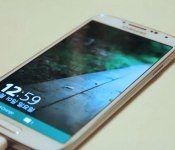
Tizen is trying to make all the right moves when it comes to getting its Tizen mobile OS off the ground and into people’s hands. However, to the surprise of… not many people (probably even Samsung), it’s going to be a struggle. NTT Docomo has canceled its plans for launching a Tizen smartphone early this year, citing timing as the issue. A spokesperson, talking in a briefing yesterday, told Engadget Japanese that its smartphones sales hadn’t increased substantially since the year before (despite this being the first year the carrier has started selling iPhones) stating that there wasn’t space for three mobile OSes in Japan’s current smartphone climate. It’s not ruling out the eventual arrival of Tizen hardware, however. Maybe Docomo is waiting on those new handsets promised to appear in Barcelona. MWC is just a month away.
Filed under: Cellphones, Software, Mobile, Samsung
Source: Engadget Japanese
Adobe Creative Cloud Adds 3D Printing in Photoshop, Enhancements for Other Apps [Mac Blog]
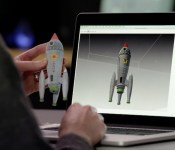
Adobe today announced several updates to its Creative Cloud suite of apps, including a significant upgrade to Photoshop with the addition of support for 3D printing.

With today’s release of Photoshop CC, designs can be printed to a locally connected 3D printer or via built-in access to popular online 3D print services. Photoshop CC supports the most popular desktop 3D printers, such as the MakerBot Replicator, and also supports the full range of high quality materials available on Shapeways — the 3D printing community and marketplace — including ceramics, metals, and full color sandstone. Additionally, Photoshop users can now directly upload their 3D models to the Sketchfab 3D publishing service, and embed them in their Behance profile using Sketchfab’s interactive 3D viewer.
Other new additions for Photoshop CC include Perspective Warp and Linked Smart Objects.
Adobe’s enhancements to Photoshop CC come as part of a broader Creative Cloud update that sees several other applications receiving upgrades including:
– Illustrator CC: Live Corners, a more intuitive Pencil tool with Path Segment reshaping, and SVG export.
– Indesign CC: EPUB 3.0 support and simplified hyperlink creation and management.
Adobe’s Creative Cloud is a subscription service with a variety of plans offering users access to the applications historically made available through the company’s flagship Creative Suite bundles. Creative Cloud offers enhanced cloud-based services and mobile integration, with the company deploying regular feature updates to subscribers at a more rapid pace than seen with the traditional standalone software purchase system.
     |
Poor Build Quality and High Price of iOS 7 Game Controllers Due to Strict Apple Guidelines
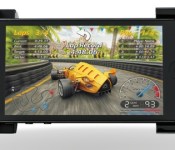
Current MFi game controllers designed to work with devices running iOS 7, including offerings from MOGA, Logitech, and SteelSeries have all been unpopular with reviewers due to their high price tags, their build quality, and lack of game support. While it has been unclear why each manufacturer has chosen a $99 price tag and why all controllers have suffered from the same quality control problems, a new report from 9to5Mac sheds some light on the issue.
As it turns out, the main issue driving up price is Apple’s strict guidelines on the creation of the controllers. Apple is requiring manufacturers to source the pressure sensitive analog switches used in buttons and thumbsticks from a single supplier, Fujikura America.
 MOGA Ace Power
According to manufacturers that spoke to 9to5Mac, pressure sensitive switches may have been an area where costs could be cut if they were not forced to use Apple-approved supplies. Apple isn’t setting specific prices for the controllers, but these supply costs, coupled with licensing fees and other component costs are edging the controllers to the $100 range.
Along with cost, other construction limitations may be affecting build quality. In addition to specifying the build of the pressure-sensitive buttons, Apple also has requirements that cover the joystick range of motion, d-pads, color, labeling, layout, and more.
There are other limitations of the program as well. For instance, the d-pads must be one circular button, opposed to just a raised cross shape or separate buttons for up, down, right, and left that you find on PlayStation and Xbox controllers and that many gamers prefer. The requirements also extend to the color, labeling and layout of the face buttons, thumbsticks, triggers, etc. It’s all meant to control quality and make it easy for developers to update apps to support all controllers, but in some areas Apple’s controller specification might not be strict enough.
Quality issues can also be chalked up in part to the rapid development of the first crop of MFi controllers. Apple introduced the API back in June, but developers and manufacturers had little time to get a controller out before the holiday season. One Logitech employee expressed disappointment over the quality of the controller and said that it was “put together in haste.”
 SteelSeries Stratus
One final problem with the controllers lies in developer hands, with some developers expressing reluctance to implement support for subpar hardware and others seeing no need to add support to their games.
For other developers, especially those that developed games specifically for the touchscreen, controller support just doesn’t make sense. App developer Massive Damage compared the controllers to Kinect: “An optional piece of equipment with relatively low market penetration that a developer has to program and design for explicitly.” It won’t introduce controller support in any of its games “until iPhones come with controllers out of the box.”
According to accessory maker Signal, the company currently developing an Xbox-style MFi game controller, it is not currently possible to create a reasonably priced controller (matching the cost of low-priced generic Bluetooth controllers) with the quality of those from Microsoft or Sony under the MFi program.
Though MFi game controllers are riddled with issues, there is room for improvement in the future. It is possible that with more development time, second-generation controllers could have a better build quality, and it is also possible that Apple could relax its restrictions in the future to make it easier for companies to source less expensive components. Existing controllers will also see improvements as developers embrace the technology and build specific support into a wide range of suitable games.
| |

Big Retailers Begin Rolling Out iBeacon Trials
As Apple rolls out its iBeacon technology across its Retail Stores and investigates using it to enable mobile payments, a number of large retailers are testing the technology in their establishments.
Today, Shopkick announced it would be starting an iBeacon trial at 100 American Eagle stores in the U.S. This follows announcement earlier this month that InMarket would introduce iBeacons to more than 200 Safeway and Giant Eagle grocery stores in a number of markets across the country.
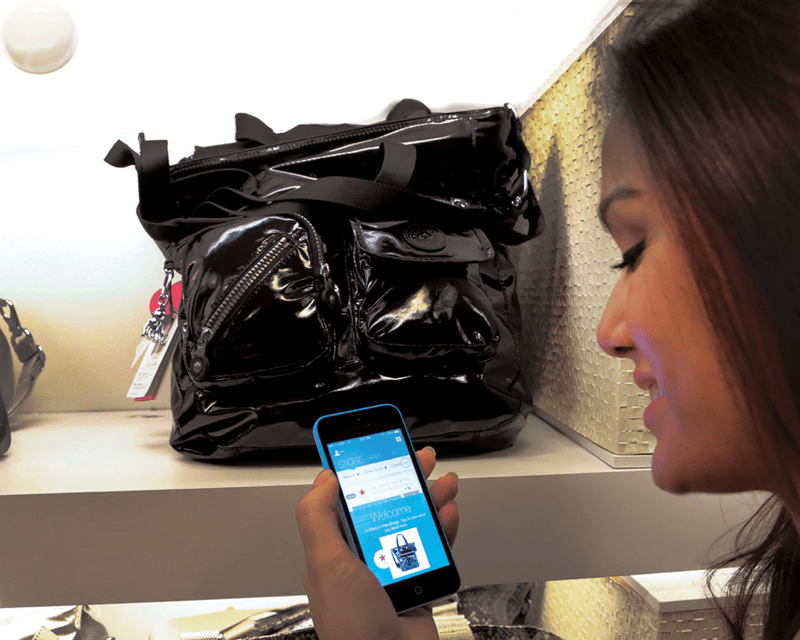
As shoppers enter an American Eagle Outfitters store, shopBeacon will welcome and show them location-specific rewards, deals, discounts and product recommendations – without them even having to remember to open the app. It can also tie at-home browsing behavior to in-store benefits; if the customer “likes” a specific product online, if they so choose, shopBeacon can remind them where in the American Eagle Outfitters store that product is sold. Even better, in the future, it can also deliver department-specific offers throughout the store – so must-have skinnies show up at the most useful time: in the jeans department.
Companies introducing iBeacons seem to understand the appeal of the devices, but it remains to be seen how consumers will respond and if they will download apps for individual stores — a necessity for the iBeacons to have any effect. Shopkick previously performed a retail trial of iBeacons in two Macy’s locations.
If the larger American Eagle trial is successful, Shopkick could introduce the technology to its other retail partners including Best Buy, Crate & Barrel, JCPenney, Old Navy, Sports Authority, Target and more.
| |
Apple Seeds OS X Mavericks 10.9.2 Build 13C39 to Developers [Mac Blog]
Apple today seeded build 13C39 of OS X 10.9.2 to developers, marking the second developer beta iteration of 10.9.2. The release comes almost a month after the first OS X 10.9.2 beta, build 13C32, was seeded to developers.
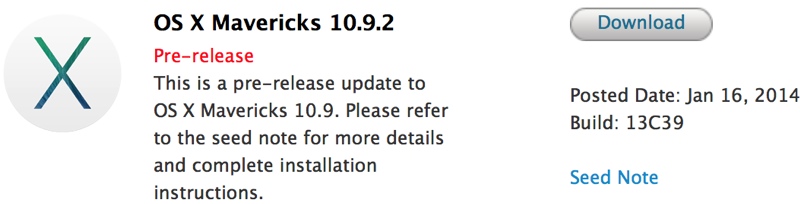
The update is available to registered developers through the Software Update mechanism in the Mac App Store as well as through the Mac Dev Center.
The first seed of OS X 10.9.2 introduced FaceTime Audio to the Mac and asked developers to focus testing on Mail, Messages, VPN, Graphics Drivers, and VoiceOver. The second build allows Mac users to block people on iMessage and FaceTime as can be done in iOS 7.
Apple has also seeded Safari 7.0.2 for Mavericks and Safari 6.1.2 for Lion/Mountain Lion, asking developers to focus on General Website Compatibility, Accessibility, AutoFill features, Printing and Emailing from Reader, Dragging Tabs Between Monitors, and Extension Compatibility.
| |

Sonnet Shipping First New Thunderbolt 2 PCIe Expansion Chassis
Sonnet today announced the first Thunderbolt 2 expansion chassis, allowing owners of late 2013-era MacBook Pro and Mac Pro models to add two or three PCIe cards to their machines.
There are three new options, desktop and rack mount three-slot chassis, plus a two-slot desktop version.
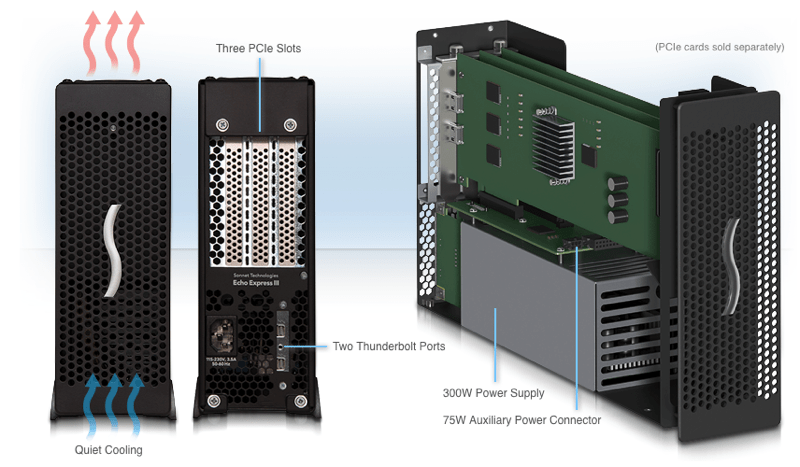
The Echo Express III-D, Echo Express III-R, and Echo Express SE II incorporate ultra-fast Thunderbolt 2 technology, which delivers twice the throughput of 10 Gb/sec Thunderbolt and provides sufficient bandwidth to support many of the highest-performance and most-demanding PCIe cards. The new expansion chassis support every kind of Thunderbolt-compatible PCIe card available — enabling the use of professional video capture, audio interface, 16Gb and 8Gb Fibre Channel, 10 Gigabit Ethernet, SAS and SATA HBA, and RAID controller cards with Thunderbolt-enabled iMac®, Mac® mini, Mac Pro®, MacBook Air®, and MacBook Pro® computers. Plus, the Sonnet systems’ dual Thunderbolt 2 ports support full-bandwidth connectivity with Thunderbolt 2-equipped host computers, full backward compatibility with 10 Gb/sec Thunderbolt-equipped computers and devices, and daisy-chaining of other Thunderbolt 2 and Thunderbolt devices.
Customers who purchased Thunderbolt 1 equipped expansion chassis can get free upgrades to the Thunderbolt 2 version. All the Thunderbolt 2 chassis are fully backwards-compatible with older Thunderbolt equipped Macs.
The desktop three-slot version is available for $979, the rack mount three-slot is $1,199, and the two-slot desktop is $499.
| |
 AIVAnet