



T-Mobile will soon pay you to switch from a smaller carrier

Some Americans have no doubt been tempted by T-Mobile’s willingness to pay early termination fees for switchers, but the offer has many catches — you have to jump ship from a major carrier, for one thing. However, the network tells Re/code that its requirements will soon loosen up. It plans to extend the deal to cover the fees from more than a dozen smaller providers, including US Cellular. Magenta will also accept more devices for trade-ins, and they won’t even have to be in working order; if a broken phone is your excuse to switch, you may still get some cash. It’s too early to say whether expanding the incentive program will have any meaningful effect on T-Mobile’s bottom line, but it’s hard to complain about getting a better bargain.
Filed under: Cellphones, Wireless, Mobile, T-Mobile
Source: Recode
Daily Roundup: Moto G Google Play edition, Spotify’s desktop app goes unlimited and more!

You might say the day is never really done in consumer technology news. Your workday, however, hopefully draws to a close at some point. This is the Daily Roundup on Engadget, a quick peek back at the top headlines for the past 24 hours — all handpicked by the editors here at the site. Click on through the break, and enjoy.

Moto G Google Play edition hands-on
Motorola’s Moto G is the latest phone to get made over with stock Android. And starting at just $180 for the 8GB model, it’s the cheapest Play edition available. Click on through for more details.

Xbox multimedia exec steps down
In the midst of Microsoft’s massive internal restructuring, Variety reports that Blair Westlake has resigned from his position as VP of Microsoft’s Media and Entertainment Group. Follow the link for more information.

Jawbone Era hands-on
What you’re looking at is Jawbone’s second-generation Era Bluetooth headset. This $100 device packs a 10-hour battery and is 42 percent smaller than the previous model. Click through for our hands-on photos.

Spotify Desktop goes unlimited
Spotify removed all stipulations from its desktop app, allowing users to listen to whatever they want without a subscription. Click the link for details.
Filed under: Misc

Valve’s investing in VR, but has no plans to release its own hardware

Remember that Oculus Rift prototype that ran away with our Best of CES 2014 award? Turns out Valve helped make it a reality. Speaking at Steam Dev Days, Valve’s Michael Abrash explained that the two companies collaborated on the Crystal Cove prototype’s new tracking features, which combines sensors, markers and an external camera to keep track of the user’s head and body position. In fact, the software company seems to be pitting most of its hopes for the space on the VR startup, noting that it currently has no plans to ship a Valve-produced headset. Although Abrash doesn’t expect virtual reality technology to become mainstream for another two years, he does say that the Crystal Cove prototype is a big step in the right direction.
Even so, there’s still a lot of room to grow: headsets still need to shed their tethers, improve optics and solve multiple head and eye tracking issues. There are also content hurdles to overcome. According to Oculus founder Palmer Luckey (also taking the stage at Steam Dev Days), developers should be focusing on creating experiences tailored to VR. “Stop thinking about porting existing games,” read one of his slides. We’d have to agree: EVE’s Valkyrie demo is one of the most compelling VR experiences one can have, and it’s built specifically for the Rift. Despite the issues facing the budding technology, Valve seems confident that it will flourish, and pledges to continue working with Oculus to drive the VR revolution onward. Sounds mighty fine to us.
[Image credit: @DaveOshry]
Filed under: Gaming
Source: Twitter (1), (2), (3)

Microsoft: Xbox One is #1 in the US for December with 908,000 consoles sold

Microsoft and Sony already went head to head with worldwide sales numbers for 2013 and while the PS4 rode is out front there (4.2 million to 3 million), the Xbox One apparently sold more systems in the US last month. December figures from the NPD group arrived today, and Microsoft is touting 908,000 sales for the XB1 that put it atop the next-gen videogame systems, and 643,000 for the Xbox 360. That puts it third overall on the home hardware list and first for its generation of hardware. Per Joystiq, Sony’s response to the data is that the PS4 remains “cumulative leader for next-gen sales” since its launch November 15th, a week ahead of the Xbox One.
Nintendo hasn’t released specific data yet, but the 3DS was the highest selling console overall for both the month of December and all of 2013, and Liam Callahan of the NPD said the Wii U enjoyed its “highest month for unit sales.” The NPD’s release has more details about software, where GTA V took the crown overall for 2013, ahead of Call of Duty Ghosts, Madden NFL 25 and Battlefield 4. Microsoft is also pointing to those numbers, saying the Xbox One took six of the top 10 spots for next-gen game sales, and total software sales of 4.8 million to PS4′s 4.2 million. Now that fans have plenty of sales numbers to represent why their chosen next-gen game system is the best, the rest of us can get to the exciting business of waiting for the first round of major software updates.
NPD: Xbox One and Xbox 360 were the top selling consoles for each generation in the US in December. 908k (Xbox One) and 643k (Xbox 360)
– Larry Hryb (@majornelson) January 16, 2014
Some good #NPD SW facts: #XboxOne YTD 2013: 4.8M retail games vs. 4.2M for PS4. COD & BF4 both sold better on #XboxOne.
– Aaron Greenberg (@aarongreenberg) January 17, 2014
Filed under: Gaming, Home Entertainment, HD, Sony, Microsoft, Nintendo
Source: Xbox News Wire, Joystiq
Google’s new wearable project is a smart contact lens with medical uses

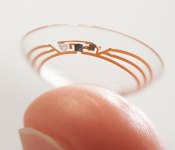
Google loves wearables and this time it’s getting even closer to your body with a developmental smart contact lens. Through miniaturized electronics, it can apparently measure the levels of glucose in your tears, offering diabetics an easier way to monitor their condition without the needles and the blood — something we’ve reported on before. A tiny (really tiny) wireless chip and glucose sensor are wedged between two layers of “biocompatible” contact lens material, and Google is saying that it’s already working on embedding tiny LED lights for notifications, too. There’s been no shortage of developmental contact lens tech over the last few years, but the clout of Google means this could well be the most realistic mainstream offering, in addition to its very practical use cases. Google is currently angling for partners with more expertise in the medical market to help make it happen and is “in discussions with the FDA” to ensure the tech ticks all the right healthcare boxes before it progresses further.
Recode‘s got a deep dive on the make-up of the smart contact: we’ve added their science textbook-grade diagram right after the break.

Filed under: Wearables, Google
Source: Google (Google+), (2)
DoubleTwist’s new Android app records songs played on iTunes Radio (updated)

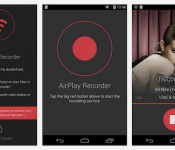
Those clever guys and gals at DoubleTwist have been freeing music from iTunes’ grasp for years, so we suppose it was only a matter of time before they figured out how to do the same with songs played on iTunes Radio. The app’s called, quite appropriately, iTunes Radio Recorder, and it circumvents Apple’s DRM by turns your Android phone into an AirPlay device — not literally, mind you, the app on your phone simply populates as an optional AirPlay streaming device in iTunes on your computer.
Once the app is selected for AirPlay streaming, music is played and recorded in real-time, so a five minute file will take five minutes to record. Not quite as quick as a download, but it is an elegant way to circumvent Apple’s digital audio shackles. As for piracy or legal concerns? DoubleTwist has none. According to company Co-founder and President Monique Farantzos: “Recording has been around for decades, from audio cassettes (remember mix tapes?) to TuneIn radio’s recording feature. Given that Apple built their iPod empire on letting millions of people rip CDs based on fair use, we don’t see how they could object to this app.” So, there you have it. Go forth, friends. Listen. Record. Enjoy the fruits of iTunes streaming and DoubleTwist’s coding labors… while it lasts.
Update: We mistakenly reported earlier that iTunes Radio streams are protected with DRM, when in fact, they are not.
Filed under: Software, HD, Mobile
Via: @jonlech (Twitter)
Source: Google Play

HBO Go is coming… to PS3 and PS4

HBO Go is en route to PlayStation. While there isn’t a release window for the premium service’s streaming app, Sony’s VP of business development assures it’ll be “soon” for the PS3, with the PS4 version to follow. However, we do know that as with other streaming services on the platforms (including Amazon Instant Video and Netflix), the app’s functionality won’t be locked behind a paywall, like it is on Sony’s biggest console rival.
PS3 getting its very own @HBOGO app, with a PS4 app to follow: http://t.co/L82wJr8eyb Time to catch up on Game of Thrones!
– PlayStation (@PlayStation) January 17, 2014
Filed under: Gaming, Home Entertainment, HD, Sony
Source: PS Blog

Oculus’ best practices explains how to create a VR experience that doesn’t make people sick

Couldn’t make it out to Valve’s Steam Dev Days to hear Palmer Luckey gab about how to build a good virtual reality experience? No worries – Oculus’ new VR Best Practices guide will fill you in on the details. The 39-page document is designed to help combat simulator sickness, which can leave users of a poorly optimized virtual reality experience feeling nauseous, disoriented and uncomfortable. Inside it has guidelines for minimum framerates, graphics aliasing and response times, but most of it focuses on creating an experience that feels natural to the user.
Seemingly simple things, like a player’s walking speed or limitations in camera control, can have a major impact on how uncomfortable a player can feel in a virtual space. The user’s awareness of their own presence in VR is also pretty important. “Looking down and having no body is disconcerting,” the document reads. “A full character avatar can do a lot to ground the user in the virtual environment.” The guide has health warnings too, suggesting that users take 10 to 15 minute breaks for every hour spent in the Oculus Rift and declaring its 3D technology potentially unsafe for children. Gee, that sounds familiar.
Today, we’re excited to share our VR Best Practices with all of you: https://t.co/GY6FNDvOyx
– Oculus VR (@oculus) January 16, 2014
Filed under: Gaming
Code hints that Google may bake fitness sensor support into Android

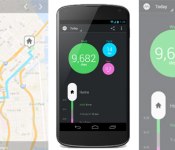
KitKat brought pedometer functions to Android, but that’s not necessarily enough for smartphone owners who want to track their fitness routines. Google may be aware of that desire for more athletic info, though. Google Operating System has discovered code (shown below) for a future “Fitness API” that would supply apps with activity data from an Android device’s sensors. We don’t know much more than that, however. There aren’t any clues as to when (or if) the API would be ready, and it’s uncertain whether the software is tied to either a new OS revision or a Google Play Services update. Still, don’t be surprised if your favorite Android fitness app becomes much more sophisticated in the near future.

Filed under: Cellphones, Mobile, Google
Via: Droid-Life
Source: Google Operating System
Google Drive dev tools promise better and more powerful apps (video)

If you’re an Android user, there’s little doubt that you’re familiar with Google Drive, Mountain View’s preferred cloud storage service that competes with the Dropboxes, SkyDrives and iClouds of the world. Of course, Drive can also be used by developers to build better apps, and today Google has rolled out a new Drive Android API to make devs’ jobs even easier — and provide us all with better app experiences. The main attraction is a feature called transparent offline syncing, which, for users, means that cloud storage is treated the same way as local storage.
So, you get the benefits of massive amounts of storage provided by GDrive, without needing to spend on more storage in your phone. And, should you not have a good enough connection to the cloud, the API automatically shifts to storing your data locally until it has good enough reception to send it to the servers. Because of this, developers can design more capable, powerful and generally better app user experiences for less endowed (read: cheaper) and flagship handsets alike. Speaking of which, Google says these features will work on 98 percent of all Androids, so most of us will reap their benefits.
Additionally, the API integrates tightly with Google Play Services, which reduces apps’ download size (making for faster downloads) and means fewer updates are needed down the road. Well, developers, what are you waiting for? Watch the video above for a full description of the API’s capabilities and get to making us all better apps!
Filed under: Storage, Internet, Mobile, Google
Source: Google Developers blog
 AIVAnet