



Skype update for iOS brings two-way HD video chat to newer Apple devices

Did you get a new iPad or iPhone this holiday? If so, Skype has a treat in store for you — it just updated its iPad and iPhone apps to support two-way HD video chat on all A7-equipped devices. Not that Skype is leaving older hardware without an upgrade, mind you. The same update lets the software receive chat messages in the background, and those messages will sync faster across every gadget you own. Whether or not you live on the cutting edge, you’ll definitely want to visit the App Store for the update.
Filed under: Cellphones, Tablets, Mobile, Microsoft
Via: iDownloadBlog
Source: App Store (iPad), (iPhone)

Latest LG phone leak keeps hope alive for keyboard lovers

Smartphones with keyboards are increasingly rare, but LG must see some life left in the category — @evleaks has just posted a leaked press shot and specs for the Optimus F3Q, a landscape slider reportedly headed to T-Mobile. While the image doesn’t do much beyond confirm the five-row keyboard from an abstract image seen last month, the rumored specs suggest that the F3Q won’t be much different than its touch-only counterpart. It will supposedly ship with the F3′s 4-inch WVGA display, dual-core 1.2GHz Snapdragon, 5-megapixel camera and 2,460mAh battery; it may even run Android 4.1. There’s no mention of launch details in the leak, but the modest spec sheet hints that LG’s QWERTY handset will get an entry-level price.
Filed under: Cellphones, Mobile, LG, T-Mobile
Source: @evleaks (Twitter)
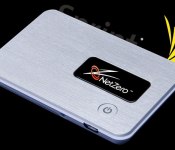
NetZero’s mobile broadband now works wherever Sprint has 3G

Like the person who thinks socks with sandals is a bold fashion statement, WiMAX is a mobile technology that rarely gets invited to the cool parties anymore. NetZero, realizing that its WiMAX-powered mobile broadband needs to move with the times, signed a deal to use Sprint’s 3G, and latterly 4G, to bolster — and eventually replace — the service. Stage one of that agreement has now gone live, enabling NetZero users to hop onto Big Yellow’s EV-DO, which is more robust than Clearwire’s equivalent. The only disappointment, it seems, is that you’ll now have to wait until the fall before 4G services come online.
Source: NetZero

Starbucks plans to secure user information with updated iOS app (update)

Following this week’s revelation that Starbucks’ mobile apps store data such as user names, passwords and even location coordinates in plain text, a company executive announced today that a refreshed application is in the works. Curt Garner, the beverage giant’s chief information officer, says that the new iOS app will “add extra layers of protection” to the “added measures” that he claims already “sufficiently address the concerns” referenced in yesterday’s post. Garner also emphasizes that no information has been compromised using the methods outlined this week. There’s no firm timeline for the updated iOS app, but the company reiterated that the current version offers sufficient protection — and we imagine they’ll be sticking to that story right up until a fix is available.
Update: According to the Starbucks Twitter account, an update is now available. We’re not seeing it via the web, but a check of our iOS device reveals v2.6.2 with “additional performance enhancements and safeguards.” The press release doesn’t go into detail about changes, saying only “As promised, we have released an updated version of Starbucks Mobile App for iOS which adds extra layers of protection. We encourage customers to download the update as an additional safeguard measure.”
Update for Starbucks iOS Mobile App is now available.
– Starbucks Coffee (@Starbucks) January 17, 2014

The Engadget Show 49: CES 2014 wrapup

Grab a wearable, switch on the ‘ole curved TV and fire up your favorite 3D printer. We came, we saw, we conquered and now we’re ready to distill it all for you in the form of some high-quality video content. We’re not going to suggest that it’ll replace the seemingly endless stream of posts we’ve churned out over the past week or so, but if you’ve got a cocktail party full of guests you need to impress tonight, it’ll help you drop some serious CES 2014 tech news knowledge on their collective heads.
We’ve pulled together some top editors to offer up an abbreviated view of tech’s biggest show of the year, charting trends in old standby categories like HDTV, mobile, tablets and cars, to emerging spaces set to define the changing face of the show for years to come. Oh, and we’ve also tossed in some fun video of the show’s gadgets, because, well, it wouldn’t be much of an Engadget Show without that sort of thing, now would it? Toss in a bit of video of your long-time host getting a bit welled up the end, and you’ve got yourself a little thing we like to call The Engadget Show 49.
‘Til we meet again, Engadgeteers.
Filed under: Announcements, Cellphones, Desktops, Cameras, Displays, Misc, Gaming, GPS, Handhelds, Home Entertainment, Household, Laptops, Meta, Peripherals, Podcasts, Portable Audio/Video, Robots, Tablets, Transportation, Wearables, Wireless, Storage, Networking, Science, Internet, Software, HD, Mobile, Alt, Apple, Samsung, Sony, Microsoft, HTC, Nokia, ASUS, Google, Amazon, Verizon, Sprint, AT&T, LG, AMD, Intel, Blackberry, T-Mobile, HP, Dell, Acer, NVIDIA, Nikon, Canon, Facebook, Nintendo

The Engadget Podcast is live at 4PM ET!

We’re back and (sort of) recovered from a week in the desert at the world’s biggest tech trade show. But Terrence, Ben, Marc and Joseph just can’t get enough of each others handsome faces, so they’ll be cramming into the studio to talk about the week’s biggest stories. Also, don’t be surprised if they briefly wax poetic about CES, wrist rashes and the inevitable rise of our robot masters.
Filed under: Podcasts

Dyson’s latest vacuums still look alien, boast more sucking power

Over the years, Dyson’s managed to vault its line of household suction beasts into the world of enviable gadgets — a rare feat for a home appliance. And the company hasn’t been sitting on its laurels with recent successes: Dyson’s engineers have been hard at work to make them smaller, lighter and more powerful. The latest upright and hand-vac models — the DC 58/59 and the DC65 — are a testament to this ethos.
While the sleek, space-age design has remained virtually unchanged from previous models, there are a series of under-the-hood improvements and some of the changes were tailored specifically for the US market. The new DC65 upright vacuum arrives in three flavors: Multifloor ($499), Animal ($599) and Animal Complete ($649), and boasts a remodeled airflow and new brush design, which are said to improve suction by 25 percent. For wire haters, the cordless varieties got overhauled too in the DC58 ($250) handheld and DC59 ($500) digital slim; both arrive with Dyson’s new V6 digital motor that hits 110,000RPM to get at those fine specks of dreck that have settled into your floor’s nether regions. All these models will be landing at Best Buy starting January 19th, just in time to prepare for spring cleaning.
Update: Dyson’s initial release estimates were incorrect. The DC65, DC58 and DC59 will all be available starting January 19th.
Filed under: Household

Intel’s revenue and profit stay flat in Q4 as PC sales level off

Intel may have just validated concerns that the PC market was relatively weak in the fourth quarter. The company has reported a net profit for the period of $2.6 billion based on revenue of $13.8 billion, which is only slightly better than its performance last year; it’s also a drop from what we saw in the summer. The company believes that Q4 showed “signs of stabilization” for the PC business, although the numbers also hint that a recovery isn’t coming any time soon. While the firm’s Data Center and Other Intel Architecture groups did boost their revenue year-over-year by 8 and 9 percent, respectively, its PC Client division was flat. In other words, any extra cash came largely from embedded chips (including mobile) and servers, not regular desktops and laptops.
The Q4 results have also given Intel a chance to look back at its results for all of 2013, and they too suggest that the PC market hasn’t been kind to the processor giant. The Data Center group was the only one to boost its revenue during the year; the PC group saw its revenue drop 4 percent, while the Other Intel group dipped 7 percent. It’s not entirely surprising, then, that Intel is shifting its focus from traditional PCs to wearables and other forms of ultra-mobile computing, where it’s more likely to see long-term growth.
Filed under: Desktops, Laptops, Intel
Source: Intel
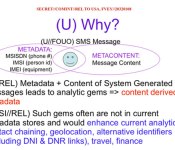
Put your emoji where we can see them! The NSA collected text messages, too

Secretly sifting through your text messages isn’t just for overprotective parents and paranoid lovers anymore. Now the NSA’s prying eyes have shifted from your call logs and location data to your texts in a not-so-secret initiative called Dishfire. The Guardian reported that the NSA collected some 200 million text messages per day globally, extracting location data, contact information and credit card numbers. This revelation, unsurprisingly, sprung from documents leaked by Edward Snowden. According to the paper, the British intelligence agency known as the Government Communications Headquarters (GCHQ) also used the NSA’s database to cull information about “untargeted and unwarranted” communications by UK citizens, noting that the program collects “pretty much everything it can.”
In addition to collecting and storing data from texts, a 2011 NSA presentation titled “SMS Text Messages: A Goldmine to Exploit,” revealed a second program, referred to as “Prefer.” Under Prefer, the agency used information pulled from automated text messages, missed call and network roaming alerts and electronic business cards to collect information pertaining to users’ travel habits and social connections. While the documents, complete with smiley face Venn diagrams and gemstone metaphors, stated that US phone numbers were either removed or minimized. The same cannot be said for numbers from the UK and elsewhere.
In a response to the report, an NSA spokesperson told The Guardian that the information would only be used against “valid foreign intelligence targets.” Meanwhile the GCHQ claims it used the Dishfire data to develop new targets. According to a representative from the UK carrier Vodafone, the findings came as a shock and the program sounded like it circumvented UK privacy and security standards.
Joseph Volpe contributed to this report
Filed under: Cellphones, Wireless, Mobile
Source: The Guardian

Rdio now lets you listen to tunes for free on the web

Good news, Rdio loyalists: Spotify users aren’t the only ones who are now able to stream music for the unbeatable price of free. Presumably as a result of the Cumulus Media deal revealed earlier this year, Rdio customers can now listen to the entirety of the service’s streaming library via a desktop browser for zero cost, as long as they’re willing to sit through a few ads. According to Rdio, those interstitials will consist of “new feature announcements, messages from partner brands, notifications about exclusive content and other helpful tips.” Of course, if commercials aren’t your thing, you can still cough up $9.99 a month to get rid of them courtesy of Rdio’s Unlimited service. Combined with free mobile stations and lots more supported countries, Rdio is certainly helping to make the streaming music space a whole lot more competitive.
Filed under: Internet, Software
Source: Rdio
 AIVAnet