



[Review] myCharge Hub 6000 mAh Power Bank
One of the gems I received at CES while visiting the great folks at myCharge was their Hub 6000 mAh Power Bank. Note that this has also been listed simply as the 6000 Power Bank, as it’s called in the instruction manual. No matter what you call it though, the myCharge Hub 6000 mAh Power Bank is an external battery unlike any other.
What You Get
The myCharge Hub 6000 mAh Power Bank has a clean look. Everything is contained in a small rubber-accented, smooth plastic, and lightweight package without any ports or cables exposed. Its dimensions (per Amazon) are 2.5 x 1.1 x 4.5 inches and it weighs 9.3 oz. Mine came with pull-string bag, an instruction manual and a quick start guide (retail versions may be slightly different).


It Transforms
As mentioned earlier, there’s no ports or cables exposed. Quickly though, you’ll notice that you can start pry away the rubber port protectors and cables to reveal what makes this external battery unique. You’ll find a fold-out outlet prong for wall charging, a micro USB Cable (0.5-1A output depending on load), a Lightning Cable (1A output), and a USB port (2.1A output). This can charge on all three ports simultaneously giving a combined 27 extra hours of talk time at a maximum output of 3.6 amps. You can click the power indicator button to see how much power is left in the battery: Green is 71-100%, Yellow is 41-70%, Red is 11-40%, and Flashing red is 0-10%. Note that the cables are short, but are very flexible, so you can charge a single devices and hold the battery right underneath it all in one hand easily.


Performance
The myCharge Hub 6000 mAh Power Bank had an output while charging my One near 1A constantly. It actually charges faster than the wall does; in a charge vs time graph, the myCharge has a steeper slope (meaning it’s charging more in a shorter time) than plugging into a wall charger. This can been shown below, highlighted by my crude blue effects:

First slope is myCharge, second is wall charger
Final Thoughts
Pros:
- $78
- 6,000 mAh capacity, high grade Lithium ion battery (no cheaposshere)
- Fast charging
- No cables required (unless you have a tablet) for charging devices or the unit itself
- Very light
Cons:
- Wider shape doesn’t fit so well in a pocket as other external batteries do
- $78 may be more than anyone is willing to spend on an external battery
The myCharge Hub 6000 mAh Power Bank is my go-to external battery at the moment. I bring it with me wherever I go (or it’s always in my car). I’ve used countless external batteries in the past and I must say that this is probably one of, if not the favorite of mine. If you’re interested in getting a myCharge Hub 6000 mAh Power Bank, check it out below:
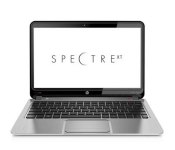
How would you change HP’s Envy Spectre XT?

We’ve always prided ourselves on having a crack team of laptop reviewers, who run the rule over almost every mobile computer available. One that earned a measure of praise was HP’s Envy Spectre XT, which addressed plenty of our complaints that we’d lodged against the original Envy 14 Spectre. The only things that remained stuck in our collective craw were the unimpressive battery life and poor audio, but otherwise it received a clean bill of health from us. But now that you’ve had some time to spend with this hardware, you can share with us what it’s been like to live with it on a daily basis. So why not come on down to our forum and dish the dirt?

Weekly Roundup: Google acquires Nest, President Obama speaks out on surveillance and more!

You might say the week is never really done in consumer technology news. Your workweek, however, hopefully draws to a close at some point. This is the Weekly Roundup on Engadget, a quick peek back at the top headlines for the past seven days — all handpicked by the editors here at the site. Click on through the break, and enjoy.

Google acquires Nest
Google acquired Nest’s line of home automation products for a whopping $3.2 billion. iPhone users have no need to fear, however, as Google has pledged to continue support for both iOS and Android. Click on through for the rest of the story.

President Obama speaks out on surveillance
In a speech last week, President Obama addressed concerns surrounding the NSA’s data collection and surveillance programs. While the NSA won’t stop gathering private information anytime soon, Obama is putting a few restrictions in place to prevent governmental abuse. Click the link for all the details.

Privacy-focused Blackphone
Spanish manufacturer Geeksphone says it’s working on a privacy-focused smartphone for release at MWC. The Android-based handset, called Blackphone, will utilize a “PrivatOS” skin to secure calls, texts and web browsing. Follow the link for details.

Google’s smart contact lens
Google’s developing a smart contact lens that can measure glucose levels from your tears, offering diabetics a pain-free way to keep tabs on their health. Click through for more information.

Verizon’s Edge trade-in program now lets customers upgrade after just 30 days

Sick of your new phone already? Verizon would like a word with you. Over the weekend, the company made some changes to its Edge upgrade program, drastically reducing the amount of time customers need to wait before pursuing an upgrade. The plan originally allowed trade-ins for devices that were half paid off and about six months old; now the waiting period has been reduced to a mere 30 days. Verizon told CNET the tweak was technically a promotion, but it’s not actually much of a deal. Although the wait-time has been reduced by a factor of six, the amount due hasn’t changed a penny: users seeking a new device still need to pony up at least 50 percent of the phone’s value, even if they’ve only been using it for a few weeks. While it’s always good to have options, maybe it’s a better idea to sort out your buyer’s remorse during your carrier’s return window.
Filed under: Cellphones, Verizon
[Op-Ed] Why a Smartwatch Won’t Grace My Wrist
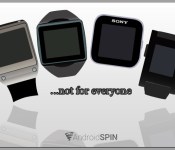
The smartwatch is an interesting trend that is starting to gain more traction. Last year there were a number of devices that made their way to market and to consumers hands. Obviously some had more success than others. The Pebble clearly stands out in my mind as being one of the bigger successes of the year. Omate pulled in quite a bit of funding, but hasn’t really taken off, in my eyes, the way Pebble did. Of course there was the Motorola MOTOACTV, Sony Smartwatch 2 and the Qualcomm Toq. Again, none were all that successful. Yes, I am fully aware there were others, like the AGENT, Meta, i’m Watch and others. We can’t leave the Samsung Galaxy Gear out of the mix, even though it came out much later in the year. While the Gear is nice, it’s limited connectivity to Samsung devices, by default at least, is a bit of a turn off when it comes to multiple device uses and users.
 All of the watches mentioned above have their pros and cons. Each takes on a different approach to what they feel a smart watch should look like and be. Mostly sticking to the square or rectangular design with a mix of LCD and E-paper screens. Limitations that are obviously created due to the screens used. Some are touch controlled others navigate via button controls on the side. I can easily give each device its own merit and recommend one to someone that might need something more than what I feel is necessary or needed in a smartwatch, but none of those listed are going to be taking money out of my bank account.
My idea of a smartwatch doesn’t involve half of what the devices above have. While Pebble MIGHT be a bit more acceptable for me, I still can’t pull the proverbial trigger. I know the title of this editorial said ”Why a Smartwatch Won’t Grace My Wrist“, however that is technically a lie. It is only a lie depending on how you look at things though. While I have no use, or see a need for, any of the smartwatches above, that doesn’t mean that by classification that there aren’t smartwatches that I do see as being useful, beneficial and that can enrich my smartphone life. A smartwatch, in my opinion, just needs to be an extension of my phone. First and foremost though, it needs to be a watch followed up with a few little perks at an affordable price.
This year at CES 2014 I saw two ‘smartwatches’ that I would quite easily spend my hard earned dollar on. The Martian Notifier and the Cogito Original. By classification they are smartwatches, but I see them more as being ‘connected devices’. Both watches take the traditional approach and are a watch, first and foremost, followed by a smart aspect. They give you what a traditional watch was created to do in the first place, the time. While one could argue that you can just look at your phone for that, it would defeat the purpose of a watch and the ease of just looking at my wrist. While Cogito states some limitations by device and Android OS version, both will still connect to multiple devices. They give me quick glance access to notifications that are important to me (SMS, Calls, Email and the likes) combined with the time without having to touch or tap or shake to get it.
 Certainly the more elaborate smartwatches, like the Galaxy Gear, deliver notifications to your wrist, but from my experience they require a bit more user interaction when one is received. Where as the Notifier and Cogito just lets you know what is waiting so you can decide if it is important enough to look at it or not. For instance, on the Notifier a 96 x 16 px screen scrolls a readout ticker style of the senders name or number followed by the message and you can choose to have it scroll 40 characters or the entire message. As a married man, I just need to see if the wife is texting. Having to reach for my phone all the time to check it a serious pain. (Yes, I have special tones and things for her, but that doesn’t mean I remember what is what or that I even heard it go off.)
I would like to say that I will never wear or use a smartwatch, but in all actuality I will. It just won’t be one that duplicates my phone on my wrist. It will be one that gives me the time and lets me know simple things, like who is calling or what the wife wants me to get at the store without pulling my phone out. Something with a classic look and design with the time being the real focus. One that I don’t have to remember to plug in every night so that I am not wearing a black screen the next day.
What are your guys thoughts? Is a full featured smartwatch up your alley? Do you want widgets, a keyboard, a fitness tracker, changeable watch faces, movies and a camera, or are you more like me? Aiming for the extension of my smartphone rather than a wristable duplicate. Let me know. I am very interested in hear what all you guys think the primary shift is going to be in the smartwatch category this year.
Image credits to Kristian Bell/AndysVinyl
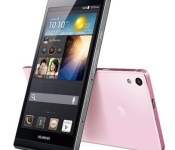
Huawei tweaks Ascend P6 chipset, tacks on an ‘S’ for good measure

We had some issues with Huawei’s Ascend P6 when we reviewed it last year — despite a sleek thin design, a gorgeous display and a solid camera, it simply lacked oomph. Now the company has given the handset a slight revision, bumping its original 1.5GHz quad-core processor up to 1.6GHz. Unfortunately, the phone’s new silicon still doesn’t support LTE, and not much else has changed: the phone still has 2GB of RAM, a 4.7-inch display and a 2,000mAh battery. All in all, it doesn’t sound too different from the original model, but it Huawei did tweak its moniker; it’s now the Ascend P6 S. Well, that’s something. Folks looking for the revision will find it at Huawei’s Vmall store at the source link below.
Filed under: Cellphones
Via: GSMArena
Source: Vmall

IRL: the iPad Air

By now, we’ve written nearly everything there is to say about the iPad Air, but that doesn’t mean we can’t revisit it here in “IRL.” In particular, our own Jon Fingas bought one to see if it was lighter and faster than his third-gen model. Surprise: it is.
 I like big-screen tablets, but I’m not a fan of the bulk that comes with them — a 1.5-pound slab isn’t especially comfortable to hold during an hour-long reading session. That’s why I leaped on the iPad Air when it launched this fall. In theory, it’s a large tablet that’s as nice to hold as more compact devices, including the iPad mini. But does it really defy the laws of physics?
Almost. The Air isn’t quite weightless, but it’s still wonderfully compact and light. I have no problems holding the tablet while I’m reading a couple of book chapters or playing an involving game. I can even thumb type with it, which wasn’t realistically possible with previous full-size iPads. It’s hard to imagine going back to any heavier slate after this; I’d rather carry an Ultrabook instead, since the added weight at least comes with more functionality.
The Air is also one of the quickest mobile OS tablets I’ve used. Web browsing is about as fast as you’d expect from a desktop, and most current apps don’t seem to faze it. I just wish developers would make better use of the A7 chip; right now, the best showcases for its processing power are media editing tools and intensive games like Infinity Blade III. iOS 7 runs smoothly and is certainly easy to use, although I’ve very occasionally seen the iPad crash without warning. It’s clear the software is still rough around the edges.
If there’s any major concern, it’s simply that the iPad Air won’t sway those who want a more PC-like experience. If you want to view more than one app at a time, you’ll have to get a suitably equipped Android or Windows tablet. There also aren’t any widgets, live tiles or other elements that would make better use of the screen real estate. While the iPad is excellent at most everything it does, there’s room for it to do more.
– Jon Fingas

Tesla’s toy boat: A drone before its time
Welcome to Time Machines, where we offer up a selection of mechanical oddities, milestone gadgets and unique inventions to test out your tech-history skills.

The military complex has certainly embraced the concept of telerobotics, especially in the use of drones, but luckily the technology has also led to other, more peaceful applications. Drones have been used to entertain, take on laborious tasks and even deliver packages (and burritos!). As we pursue the development of remotely controlled and autonomous craft, we must tread carefully or suffer the same fate as the fabled Icarus. Nikola Tesla saw both the terrible as well as the beneficial consequences for this technology when he debuted the “remote control” and the jury is still out as to whether we’ll succumb to a dystopian Terminator-style future or reach a peaceful stasis, where we harness the usefulness of robots and autonomous devices, and avoid the worst-case scenarios. Head past the break for more of the story.

Nikola Tesla’s Remote Control Boat
Tesla once said, “The world moves slowly, and new truths are difficult to see.” It was his way of responding to the crowd’s stunned disbelief upon viewing his scientific wizardry at New York’s Madison Square Garden in 1898. Using a small, radio-transmitting control box, he was able to maneuver a tiny ship about a pool of water and even flash its running lights on and off, all without any visible connection between the boat and controller. Indeed few people at the time were aware that radio waves even existed and Tesla, an inventor often known to electrify the crowd with his creations, was pushing the boundaries yet again, with his remote-controlled vessel.

Tesla’s presentation, which was part of an Electrical Exhibition, was decried as magic by some, but it’s unsurprising that others would focus on its potential as a weapon. It wouldn’t be the first time that well-known inventors had made a foray into war devices. Thomas Edison had been involved in the Sims-Edison Electrical Torpedo Company and in 1892 demonstrated the merits of its wire-guided torpedo. This 31-foot-long device was powered and controlled through a hardwired tether and manipulated by a remote on-shore operator, with the goal of harbor defense by delivering an explosive payload into invading vessels. A few months prior to Tesla’s radio-controlled presentation, W.J. Clarke, general manager of the US Electrical Supply Company, made use of radio waves for yet another warlike implementation. He proceeded to blow up toy ships by wirelessly detonating floating mines with radio waves, cribbing the basic design for his machine from Italian inventor Gueglielmo Marconi.
 When Tesla unveiled his own invention at the 1898 exhibition, the display consisted of an indoor pool, a 4-foot-long miniature ship and a control box equipped with various levers. The deck of the ship was studded with antennae for receiving signals, with the tallest located in the center and two others topped with small light bulbs. The lights would help an operator gauge the position and direction of the vessel in the cover of darkness. Its motion was driven by a screw propeller, with a keel and rudder situated in the standard positions for a nautical vessel. Inside the boat’s hull, there was an electric motor driving both the propeller and rudder, a storage battery and a mechanism for receiving the radio signals sent from the control box. Without the limits of a wired connection between the controls and the remote device, Tesla’s invention would allow operators to effect changes in speed and direction, and control on-board gadgets (such as lights or moving parts), even from a moving vehicle.
Although newspaper headlines chose to focus on the use of Tesla’s device as a wirelessly controlled torpedo, his plans for the invention were not wholly aimed at warfare. In a 1900 article from Century magazine, Tesla described a moment of self-realization, seeing his own mind and body as an automaton, reacting to external stimuli and situations. He stated that contemporary automatons were simply using a “borrowed mind,” and responded to orders from a distant and intelligent operator. Tesla believed that one day we may be able to endow a machine with its “own mind,” where it, too, can act on environmental stimuli of its own accord. According to Margaret Cheney’s Tesla: A Man Out of Time, when asked about the boat’s potential as an explosive-delivery system, Tesla retorted, “You do not see there a wireless torpedo; you see there the first of a race of robots, mechanical men which will do the laborious work of the human race.”
Inhabitat’s Week in Green: Passat BlueMotion, jellyfish drones and a pig-cloning factory
Each week our friends at Inhabitat recap the week’s most interesting green developments and clean tech news for us — it’s the Week in Green.

The North American International Auto Show kicked off last week in Detroit, and Team Inhabitat went to the Motor City for an early look at the industry’s eco-friendly offerings. Topping the list at this year’s show is Ford’s C-MAX Solar Energi, a hybrid electric car with a set of high-efficiency SunPower photovoltaic panels installed on its roof. Also in Detroit, Audi unveiled its Allroad Shooting Brake Concept, a compact plug-in hybrid that’s designed to handle “light off-road conditions.” And Volkswagen showed off its new Passat BlueMotion concept, which boasts the highest highway fuel economy rating of any non-hybrid mid-size sedan. Auto companies have good reason to be bullish on eco-friendly cars — just ask Tesla. The electric automaker recorded its highest sales figures in history in the fourth quarter of 2013. But despite recent advances in fuel efficiency, a new University of Michigan study makes a case for ditching personal cars altogether, proving that cars are the most inefficient form of transportation.
Wind farms are great and all, but they’re big and expensive to operate. Wouldn’t it be great if we could use a shrink ray like in Honey, I Shrunk the Kids and scale windmills down to a tiny size without losing much efficiency? Researchers at the University of Texas are working on producing teeny-tiny windmills that are just 1.88mm wide and could be used to charge mobile devices. Meanwhile, Spain is embracing wind energy on a large scale. Last year, the country generated 21.1 percent of its energy from turbines, making wind Spain’s top energy source for 2013. In California, an enormous 579MW solar power plant just went online. The plant will ultimately provide enough electricity to power 255,000 homes. And in Las Vegas, a new grove of solar trees is providing the energy to light the “Welcome to Las Vegas” sign.
The big news out of Silicon Valley last week was that Google had acquired Nest, the maker of energy-saving thermostats for $3.2 billion. The acquisition is a big validation for green tech, and it instantly made Nest a household name. Google’s experimental X Lab also made headlines by unveiling a smart contact lens that can monitor the glucose levels of diabetics. In other science and tech news, a South Korean designer unveiled a conceptual scuba mask that turns divers into human fish, and researchers at NYU created a tiny drone that mimics the movement of a jellyfish. Also in the “biomimicry” file, the company Bioglow has taken a cue from fireflies to create the world’s first light-producing plant, and our resident biomimicry expert Dr. Tamsin Woolley-Barker explained what the humble water flea can teach us about innovation. In a particularly disturbing development, the world’s first cloning factory is now open for business in China — and it clones 500 pigs a year. The company’s cafeteria serves as a testing ground for “genetically enhanced” meats, vegetables and even yogurt. In an attempt to learn more about the mysterious colony collapse disorder affecting bees, scientists are planning to fit 5,000 honeybees in Australia with tiny sensors to study how environmental changes impact the behavior of bee colonies. Japan is getting creative in its effort to remove the manmade debris that is cluttering up outer space — the Japan Aerospace Exploration Agency is preparing to launch a satellite equipped with a 300-meter magnetic net that will sweep up space junk. Boeri Studio shared with Inhabitat new photos of its vertical forest skyscraper nearing completion in Milan, and in anticipation of summer, the company Netatmo recently produced “June,” a smart bracelet that monitors UV exposure, letting its wearer know when they’ve soaked in too many rays.
Filed under: Misc

Paramount now releases movies only in digital form

While it’s no secret that film-based movie distribution won’t last much longer in the US, the big Hollywood studios haven’t officially completed their transition to digital. However, one of them may have quietly made that leap — sources for the LA Times claim that Paramount is the first large studio to send its major movies (not just smaller flicks) to American theaters solely in digital form. Anchorman 2 was reportedly the company’s last high-profile analog release, while The Wolf of Wall Street was the first to go all-digital. Paramount hasn’t commented on the apparent leak. If the report is accurate, though, the 8 percent of US theaters without digital equipment now have little choice but to upgrade if they want to offer the same selection as most of their peers.
Filed under: Home Entertainment, HD
Source: LA Times
 AIVAnet