


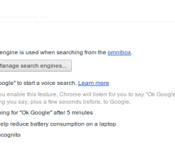
Google’s voice search could soon be baked into Chrome, no extension required

Back in November, the folks in Mountain View trotted out the beta version of a Chrome extension that brought “OK Google”-enabled voice search to the desktop, no clicks required. That’s all fine and dandy, but what if it said control was a standard option on the desktop, capable of being toggled on or off with a click? Well, the Chromium folks are working on just that, with options for the browser to stop listening after five minutes and working incognito. Items like this that pop up in Chromium have a tendency to turn into standard Chrome features at some point. There’s no telling when we’ll be able to use spoken word as a standard search tool, but there’s always the beta add-on for sorting hands-free queries in the meantime.
Filed under: Internet, Software, Google
Source: Francois Beaufort (Google+)
LG G Pro 2 due in February – Korean report
LG will introduce the G Pro 2 at Mobile World Congress in late February, says Korea’s ETNews. The handset is expected to run Android 4.4 KitKat and feature a 6-inch display, 3GB RAM, and Qualcomm’s Snapdragon 800 processor.
LG has a history of unloading a number of devices in the days leading into MWC so we should look for that this year, too. It’s not clear whether this will come stateside or if we’ll have to wait for a successor to the G2 instead.
ETNews (translate)
The post LG G Pro 2 due in February – Korean report appeared first on AndroidGuys.
Nokia’s Mobile World Congress event could be long-awaited foray into Android
Nokia may finally announce its first Android-powered smartphone at Mobile World Congress, according to the latest round of reports. An invitation being sent out today has people buzzing that we could be a matter of weeks away from seeing the rumored Normandy device.
The invitation has Nokia hosting an event on Monday, February 24, which is the eve of the annual mobile conference. The rumor mill has been in full swing these last few weeks with chatter that Nokia’s Android handset is around the corner. Adding fuel to the fire, sources within Nokia have told The Verge that they plan to launch said device in Barcelona.
Lest you believe this could be something related to Microsoft or the next version of Windows Phone, The Verge reports that that WP 8.1 won’t be fleshed out until April.
Would you consider switching from your current smartphone to a Nokia device that runs Android? What is it about their hardware that you like (or don’t)?
The post Nokia’s Mobile World Congress event could be long-awaited foray into Android appeared first on AndroidGuys.

Sony gets into genetic analysis with aim of helping docs pick better treatments

We tend to forget that many companies celebrated for their shiny things also have significant interest in health care; everyone gets sick, after all. Sony is one of this gang, producing medical-grade equipment and the like under its own name, as well as buying up and investing in outfits that have other, specific expertise. Starting February 2014, Sony will also become part owner of P5, a new venture that’ll provide human genome analysis in Japan, which just happens to be one of the world’s largest pharmaceutical/biotechnology markets. With help from M3, which Sony’s invested in, and DNA specialists Illumina, P5′s quest is also to marry genetic data with other info, like medical histories, to make headway in the area of personalized medicine (where therapies are selected for the individual, not just the affliction). We doubt Kaz Hirai will be heavily involved, aside from his efforts to find the “Xbox fanboy gene” and any way to silence it, of course.
Dan Cooper sought out the totally legit image used in this report.
Source: Sony
Maingear Pulse 17 review: portability, paint and power come at a hefty price

Whisper it, but we think that 2014 is going to be a watershed year for PC gaming. Despite dwindling interest in the platform (compared to smartphones and tablets), heavy-duty machines for polygon cranking are gaining more prominence. After all, the Xbox One, PS4 and Steam Machines are all, broadly speaking, gaming PCs in boxes that will more comfortably sit beneath your DVR. But what does this mean for the traditional desktops and laptops we grew up with?
It’s a question that high-end outfit Maingear is wrestling with as it releases the Pulse 17. The 17-inch gaming notebook was trumpeted as the “world’s thinnest,” and more than just a desktop replacement. No, this is designed to go places, and that’s why as much time has been spent on the outside as the in. But will an expensive paint job really be what sells you on this gear? Join us as we give this machine a proper shakedown.
Hardware

Laptop design has always skewed toward the conservative, with black, gray or aluminum shells that rarely get high-gloss paint jobs or other eye-catching styles. That probably explains why one of the more notable build-to-order features available for the Pulse 17 is a custom paint job. Using Glasurit, a car paint normally found on high-performance vehicles, the outside of the chassis is coated in a shade of your choosing. For $299, you can get a unit painted with selected tints like Alpine White, Furious Fuchsia or Synergy Green, but kick in an extra $50 and you can pick any shade you fancy.
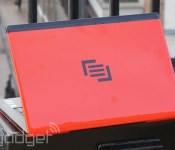
As you can see in the pictures, our review unit is coated in Rosso Scuderia, more commonly known as Ferrari Red — although we suspect Maingear’s lawyers would blanch if we actually invoked the name of the Italian sports car manufacturer. In fact, as soon as we opened the box, we were instantly reminded of one of Acer’s old Ferrari-branded laptops, and if you’ve spent more than three minutes watching Top Gear on BBC America, you’re probably subconsciously grunting the word “powerrrrrr” at the mere sight of it.
If you’re the sort of keen-eyed gamer who can spot a Clevo chassis at ten paces, then you may be wondering where you’ve seen the Pulse 17 before. Unsurprisingly, Maingear does not produce laptop shells itself, and this time is utilizing the same shell we’ve previously seen on MSI’s GS70 Stealth. Rather than just offering a copycat machine, however, Maingear differentiates itself with the aforementioned custom paint job and the option to swap in a few higher-spec internals like a bigger HDD, as well as promising no bloatware and, for Windows 8 haters, offering to swap out Redmond’s latest and greatest for Windows 7 for a small fee. In the same vein, buyers will also get a small plastic box that holds a handwritten quality-assurance sign-off sheet from the person who tested and set up your gear, a nice touch that emphasizes the personal nature of the business here.

The Pulse 17 is solidly put together and the plastic is squeak-free, leaving you under no illusions that you’re balancing a high-quality piece of kit in your lap. Admittedly, your lap is probably the last place you should set up with this, as it’s really intended more for desks — but if you do, there’s a square of sandpaper-style material to ensure that the high-gloss paint job won’t send this sliding away from your thighs and onto the floor. Speaking of which, from a photography perspective, that shell will pick up every fingerprint and speck of dust within a 10-mile radius, so be prepared to have a cloth on standby if you want your prized device to remain pristine.
The extra room afforded by a 17-inch chassis allows for every input and output imaginable. Down the left side of the Pulse, you’ll find a trio of 3.5mm audio jacks, a pair of USB 3.0 ports, two DisplayPort (1.2) slots, an HDMI-out (1.4) and Ethernet holes nestled beside the vent. On the opposite end, there are two more USB 3.0 ports, an SD card reader, power and the Kensington lock slot located by the other vent.
When the Pulse 17 was launched, it was marketed as the world’s thinnest 17-inch laptop, although it’s still a sizable slab despite the record. It’s large, but considering that it’s 16.47 inches wide and 11.29 inches deep, the fact that it’s only 0.86 inch thick means that it’s not as bulky or boxy as you might expect, and it happily sat in the main compartment of our messenger bag during our testing. The svelte hardware does mean that there’s one sacrifice in favor of portability — there’s no optical drive included on the Pulse 17, so if you’re planning to re-install Windows from your disc or watch a Blu-ray, you’ll need to make an investment on an external unit.
Display and sound

In our experience, a 17-inch laptop is going to have to pull triple duty, not only as a machine for work and play, but also as an impromptu home theater. Imagine, for instance, the legions of dorm rooms where students will huddle around whoever has the biggest display to watch Netflix or stage an MST3K marathon. Thankfully, neither sound nor vision disappoint on the Pulse 17. The stereo speakers, which are embedded into the hinge, provide amazingly clear and rattle-free sound, even when we put them to the nastiest torture test we could think of: 12 rounds of dubstep on a Monday morning.
For power users, there’s a fine line between a good display and a great one. Being able to pick out those few pixels that hint at an enemy combatant’s shadow is the difference between life and death, at least in the digital world. Here, users will be staring into a 17.3-inch TFT LCD panel with a 1,920 x 1,080 resolution, 300-nit WLED backlight, 262,000 colors and a 60Hz refresh rate. If that pile of stats didn’t tell you all you need to know about this screen, don’t worry — the CliffsNotes version is that it’s very good. If we were in the business of nitpicking (we are), then we’d suggest that the backlight should have been stronger, just in case you found a LAN party taking place outdoors. But you can’t have everything, even with a $2,000 laptop.
Keyboard and trackpad

Another benefit of having all of that real estate is that not only do you get a full-size keyboard, but there’s also plenty of space between each key. The SteelSeries-branded island-style buttons on show here are as comfortable and easy to use as a desktop keyboard and there’s a very good amount of travel when you do want to hammer out a term paper. The only downside that we found is that the unit is very soft in the click, as if someone’s inserted sponges between you and the membrane, which makes everything feel a little less responsive than on other machines.
If you thought that your color choices ended as soon as you opened the Pulse 17, you’ve got a pleasant surprise coming. Since Maingear’s laptop uses MSI’s chassis, it also comes with the unit’s color-changing keyboard backlights. While difficult to see in our images, hints of red, gold, yellow, green, light blue, dark blue and purple could be produced according to your whim. We primarily stuck with a pulsing red, but quickly switched over to light blue when we realized that it added a hint of Tron to the proceedings — and if we’re honest, there’s always a need for more Tron in this life.
One of our main gripes with the Pulse 11, it has to be said, was the size and usability of the trackpad. In the end, we found ourselves resorting to the mouse in order to write the review, which landed the unit a sizable demerit. Here, we’re delighted to report, no such issue exists. With the Pulse 17, a full-sized unit sits between our wrists, which is both accurate and has a satisfying click hidden beneath the surface. While we still switched to a keyboard-and-mouse setup for gaming, it was only down to style, and we’d be more than happy to go rodent-free while taking this on the road.
Performance and battery life
| PCMark7 | PCMark Vantage | 3DMark06 | 3DMark11 | ATTO (top disk speeds) | |
|---|---|---|---|---|---|
| Maingear Pulse 17 (2.4Ghz Core i7-4700HQ, GeForce GTX 765M) | 6,070 | 20,315 | 20,484 | E6,566 / P4,226 / X1,309 | N/A |
| Razer Blade 14-inch (2.2GHz Core i7-4702HQ, GeForce GTX 765M) | 5,837 | 19,505 | 19,815 |
E6,364 / P4,161 |
546 MB/s (reads); 253 MB/s (writes) |
| MSI GT70 Dragon Edition (2013) (2.4GHz Core i7-4700MQ, GeForce GTX 780M) | 6,111 | 20,250 | N/A |
E10,519 / P7,416 |
1.19 GB/s (reads); 806 MB/s (writes) |
| Razer Blade 2.0 (2.20GHz Core i7-3632QM, GeForce GTX 660M) | N/A | 17,120 | 15,876 |
N/A |
N/A |
| Razer Edge Pro (1.9GHz Core i7-3517U, NVIDIA GT 640M LE 2GB) | 4,949 | 13,536 | 10,260 |
E2,507 / P1,576 |
409 MB/s (reads); 496 MB/s (writes) |
| Samsung Series 7 Gamer (2.30GHz Core i7-3610QM, GeForce GTX 675M) | N/A | 11,515 | 21,131 |
N/A |
N/A |
To belabor the sports car metaphor a little more, Maingear wouldn’t have been so bold as to paint this laptop in Ferrari Red if it didn’t think it had the engine performance to match it. That should be borne out with its benchmarks, which will happily out-punch the rest of the field in almost every test. Of course, the one question that everyone will be asking is how well does this perform when it’s pushing out top-tier game titles?
Testing it with Batman: Arkham Origins, we found that if we played at a resolution of 1,920 x 1,080 with every graphics option at maximum, the frame rate bounced around the 30 fps mark when our hero was mooching through the corridors of Arkham Asylum — but dropped down to 25 fps when engaged in combat with multiple bad guys. Now, the game is certainly playable at that frame rate, but let’s be honest, even amateur gamers consider 30 fps to be the bare minimum for enjoyment. In order to get to that point, we pushed the settings down to normal, and got around 50 fps while wandering the halls, and between 37 and 42 fps in combat.
It’s a similar story when we tested Call of Duty: Ghosts and BioShock Infinite. With BioShock set to a resolution of 1,920 x 1,080 and with graphics set to Ultra, we got 25 fps. Push that texture detail down to high, and we bounced between 29 and 30 fps. Only when we pushed the resolution down to 1,600 x 900 were we able to get a frame rate above 35 fps. When we played a slightly less graphically intense game like Saints Row IV, we achieved 35 fps at full settings even in busy scenes full of pedestrians and the usual carnage that the game offers.
| Laptop | Battery Life |
|---|---|
| Maingear Pulse 17 | 3:47 |
| MSI GT70 Dragon | 4:34 |
| Razer Blade 2.0 | 3.29 |
| Samsung Series 7 Gamer | 2:11 |
The last time we ran the rule over a Maingear laptop, battery life came in at just under the three-and-a-half-hour mark. Since the Pulse 17 has a much larger power pack, but also a much larger display, we were expecting the factors to even themselves out and produce a reasonably similar life. Turns out, we should go with our hunches more often, as during our standard video rundown test, we managed to crank out a time of 3:47. When writing this review (in a text editor or browser), we found ourselves able to eke out closer to five hours before we started reaching for the power cable, but other than that, you’re going to be keeping yourself moored to a wall socket.
Software

Maingear’s usual promise is to avoid bloatware, and the company continues to do right by its enthusiast crowd here. Instead of being faced with the regular tedious demonstration versions and trials for the usual suspects, the unit here is almost spotless. The only programs you’ll find here that weren’t included on the Windows demo disk include the MSI Keyboard LED manager, which enables you to tweak the keyboard backlight to the color of your choice. Then there’s a network-management app from Qualcomm and Creative’s Sound Blaster Cinema app to help bolster the noise this machine can make. And that’s it. To be honest, knowing that we won’t be faced with a deluge of pop-ups and requests for our credit card details is probably an indictment on the rest of the PC industry, and so Maingear deserves props for not succumbing to the temptation.
Configuration options

Maingear is very much a build-to-order outfit, but here you’ll find a reassuring dearth of options. After all, the Pulse 17′s base configuration is rock-solid, and so your choice is removed from the equation. With a starting price of $2,099, your first decision concerns that custom paint finish, which will set you back between $299 and $349. Internals-wise, you’re getting a 2.4GHz Intel Core i7-4700HQ paired with 16GB of DDR3 RAM and an NVIDIA GeForce GTX 765M GPU with 2GB of GDDR5 RAM.
What you can decide, however, is if you want to swap out that 256GB SSD in favor of a 512GB unit, which costs an extra $533. That will sit alongside the non-negotiable 1TB HDD in the second bay. The only other customizations (aside from external displays, peripherals and the like) are to add a CableCARD tuner or swap out the Qualcomm WiFi module for a $49 Intel unit. On the software side, Windows 8.1 64-bit edition comes standard, and you can get the Pro edition for an extra $49, or downgrade to Windows 7 for either $110 or a $16 rebate, depending on the version that you pick.
The competition

When it comes to high-end gaming laptops, there’s a group of companies, all of which are releasing machines with similar specifications and similar price points. At times, finding differences between them all and trying to declare a victor is akin to trying to slice a hair lengthwise with a chainsaw. Naturally, our comparisons need to begin with the Pulse 17′s not-so-evil twin, MSI’s GS70 Stealth. It’s probably best to imagine that the two companies shook hands and agreed that MSI’s uppermost offering would sit immediately beneath Maingear’s rebadged version. With the Pulse, users are entitled to order a bigger SSD, custom paint finish, the better wireless unit and the opportunity to downgrade to Windows 7. That is, however, as far as the differences go, and it’d be an insult to your intelligence to suggest otherwise.
Open our tour of the market to include other manufacturers, and you’ll find plenty that offer 17-inch units with similar specs, although many use Intel’s Core i7-4700MQ processor as opposed to the 4700HQ. Just to clarify: Those chips are almost exactly the same; the only difference being that the HQ can be overclocked a little further than its twin. One such entrant is Alienware’s imaginatively named Alienware 17, which offers the 4700MQ and 16GB RAM, but only a 750GB HDD for $1,949. If your budget can stretch to $2,649, however, then you’ll get an 80GB SSD paired with the HDD and a GeForce 780M with 4GB GDDR5 RAM thrown in for good measure. What we should add is that the Alienware unit is nearly two inches tall, so it’ll earn a demerit from the portability enthusiasts out there.
Then there’s Razer’s Blade Pro, where you’ll find the same CPU and graphics, but only 8GB of DDR3 RAM and a 128GB SSD for $2,300. Of course, what you’re losing in raw computing power, you’re gaining in Razer’s unique control panel, which ditches the numerical keypad in favor of 10 adaptive keys and a customizable LCD trackpad. Rounding out our brief foray into the market is Digital Storm’s 17-inch Krypton, which, for $1,960, offers a 4700MQ, 16GB RAM and a 128GB SSD alongside a 750GB HDD, albeit in a bulkier chassis. The upside to that is in the graphics department, where you’ll get a GTX 770M paired with 3GB RAM. It’s certainly not an exhaustive sojourn, and there are plenty of other candidates, for which we’re sure your personal allegiances will inform your buying decision as much as what we’ve written here.
Wrap-up

When you’re at this end of the market, it’s not surprising to see that we’re fulsome in our praise for the Pulse 17. After all, you’re spending the thick end of $3,000, so you’d expect an experience that’s close to perfect. What that does, however, is make sure that our minor gripes with this unit are magnified only in relief to the excellence elsewhere. For instance, the slightly spongy keyboard action would be ignored on a lesser device, but here, it’s just something we’re gratingly aware of. The weak backlight shouldn’t trouble anyone who doesn’t arrange LAN parties in sun-drenched grasslands, but it’s still something that could have easily been fixed.
In every other regard, then, we have to award this device close to top marks. From a meat-and-potatoes hardware and performance perspective, it’s efficient, quick and powerful. From a portability perspective, it’s certainly the most comfortable — or is that least cumbersome — 17-incher we’ve seen. Then there’s that Glasurit paint job, which shouldn’t affect our judgment, but damn it, it just appeals to some primal part of our psyche that we all have. If we had this sort of cash to throw around, and we needed a high-performance gaming laptop that would make us the envy of the dorm, then this is what we’d get.
Filed under: Laptops

Pope Francis sees the internet as a blessing for communication

Some may see the internet primarily as a source of anger or a dangerously addictive distraction, but not Pope Francis. In a message for the Catholic Church’s World Communications Day, the pontiff called the internet a “gift from God” for social outreach. It helps people meet, experience differing opinions and feel a sense of unity, he says. However, he’s also aware of the potential for abuse. Digital citizens can choose to see only things that reinforce their existing views, and they risk isolating themselves from real people. The internet is potentially “rich in humanity” and kindness, but only if we put in that effort — something we’d do well to remember regardless of our belief systems.
Filed under: Internet
Via: The Verge
Source: News.va
Samsung’s all-but-official Galaxy Note 3 Neo won’t be released in the US or UK

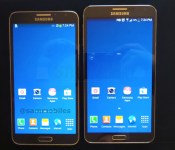
We’ve seen plenty of leaked information about the Galaxy Note 3 Neo, a purported entry-level version of Samsung’s popular handset. But while the South Korean giant has yet to make the device official, that hasn’t stopped the company from talking about it. Earlier today, Android Central reported it had received confirmation from Samsung that the Note 3 Neo wouldn’t be coming to the United Kingdom. Furthermore, a Samsung representative has now told Engadget the unannounced smartphone won’t be released in the US either, telling us it’s only expected to arrive in “select countries/regions” and that each will announce their availability in due time.
As a refresher, the Galaxy Note 3 Neo is said to feature a 5.55-inch, 720p screen alongside 2GB of RAM, a 3,100mAh battery and an all-new Exynos hexa-core chip. Now we just have to wait for Samsung to formally launch the thing — and fret not if you’re in the US or UK, as we’re sure there will be retailers on the internet willing to take your money in exchange for this Note 3 variant.
Filed under: Cellphones, Mobile, Samsung
Via: Android Central
Samsung Galaxy Note 3 Neo press images leak ahead of debut
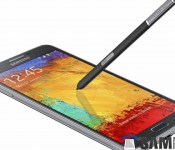
Guess what! The Samsung Galaxy Note 3 Neo (or, Lite) looks an awful lot like the standard version of the plus-sized device. A source close to SamMobile has passed along the press renders of the upcoming device, advising it’s already set to launch on a Belgian retailer’s website. The photos, as you can see here, show the Note 3 Neo looking very much like its original counterpart.
Specifications were not shared with the photos but we already have a solid idea as what to expect. Powered by Android 4.3 Jelly Bean, it should feature a 5.5-inch 720p HD (Super AMOLED) display, an 8-megapixel rear camera, 2GB RAM, 16GB internal storage (with microSD), and a 3100mAh battery. The Note 3 Neo should also boast the same suite of software and functions such as S Note, Multi Window, Air Command Action Memo, and Scrapbook.

We should look for Samsung to announce the Galaxy Note 3 Neo any day now; however, don’t expect it in the U.S. any time soon.
The post Samsung Galaxy Note 3 Neo press images leak ahead of debut appeared first on AndroidGuys.

Huawei pays off Apple and Microsoft-led consortium in Android patent spat

While Google does all it can to avoid the Android patent headache brought on by the “Rockstar” patent group, another of the consortium’s targets has decided it wants out. FOSSPatents reports that Huawei, one of seven Android OEMs sued alongside the search giant, filed a joint motion with Rockstar and its subsidiary to dismiss claims that it infringed on numerous networking and UI patents. The move suggests that the Chinese company chose the less costly option of settling instead of embarking on an expensive legal battle. Bear in mind that the Rockstar consortium counts Apple, Microsoft, BlackBerry, Sony and Ericsson as members, which closed the purchase of thousands of patents previously owned by Nortel for $4.5 billion. With a deal seemingly worked out, Huawei is free to use Rockstar’s patents without fear of future reprisals, leaving Samsung, LG, ASUS, HTC, Pantech, ZTE and Google firmly in Rockstar’s crosshairs. Huawei’s settlement prove decisive, however, as it demonstrates the group’s patent claims have merit, which could motivate the remaining phone makers to broker their own deals.
Filed under: Cellphones, Software, Mobile, Microsoft, Google
Source: FOSSPatents

Former Foxconn Employees Charged with Accepting Bribes from Supply Chain Partners
Several former Foxconn employees have been charged in Taiwan for allegedly accepting kickbacks from partner companies in Foxconn’s supply chain, reports The Wall Street Journal. According to the report, a former general manager is being held on bribery charges and three former employees are released on bail. However, Apple and other Foxconn clients are not being investigated as authorities do not believe those companies were involved in the kickback scheme.

The bribery allegations were made public last year when an internal Foxconn audit revealed several employees were accepting kickbacks from supply chain companies. Foxconn then acknowledged the criminal activity and turned the employee(s) over to the Chinese police for investigation.
“We can also confirm that our internal investigation found these violations to be limited to the procurement of consumables and accessory equipment related to a small part of our business,” Foxconn said in a statement. “The employees in question are no longer with our company.”
The charges come as Foxconn has been under fire multiple times in recent years for labor violations. The company has also been working with Apple to improve conditions for employees in its city-like factories, but it has been a slow process. After agreeing in 2012 to examine worker pay and limit working hours, a recent Fair Labor Association report shows the company now is meeting the FLA’s 60-hour work week, but still exceeds China’s legal limit for weekly working hours and overtime. 
     |
 AIVAnet