



Scientists replicate kitty whiskers to help robots ‘feel’

Given how important feline whiskers supposedly are for sensory perception, they don’t stop the typical house cat from knocking every fragile object in your apartment to the ground. In an effort to replicate that level of precision synthetically, researchers at the University of California Berkeley have harnessed nanoparticles to create ultra-sensitive fibers that could grant automatons whisker-like powers. By coating elastic fibers with a layer of carbon nanotubes and silver nanoparticles, scientist Ali Javey and his team created a material that they claim is 10 times more sensitive to pressure than all previous resistive or capacitive pressure sensors (like those found in smartphones). As Javey tells it, these faux whiskers could be used for spatial mapping in difficult environments. Moreover, their high sensitivity could even keep track of your heartbeat and pulse rate — ideal for human-hunting robots of the near future.
Filed under: Robots, Science, Alt
Via: SlashGear
Source: Berkeley Lab (1), (2) (PDF)

Facebook gets into nerd feud with Princeton, hilarity ensues

In the tech industry, barely a week goes by without one entity saying that another one is doomed. Mostly, however, we just ignore them, but when Princeton claimed that Facebook would collapse in 2017, the social network decided to get its own back. With tongue placed firmly in cheek, data scientists Mike Develin, Lada Adamic and Sean Taylor copied Princeton’s slightly suspect method to discover that the university would effectively run out of students by 2021. Then the team went one step further, analyzing Google trends and Facebook likes to learn that, if social engagement stats are to be believed, the planet will run out of air at some point in 2060. If you like it when major corporations go all reductio ad absurdum on their rivals, then head down to the source link and enjoy this timely reminder that not all scientific studies are created equal.
Filed under: Internet, Facebook
Source: Facebook, Original study (PDF)

Get GO Launcher Prime for free, thanks to AppSales
 If you’ve never heard of AppSales before, you should get intimately familiar with their website and Android app as they provide the latest discounts and deals regarding apps on the Play Store (games included) and will give you a notification to let you know what is on sale. The latest deal on AppSales will let you get GO Launcher Prime, which is normally $5.99, for free via the use of an activation code. As per the deal description:
Using the code “appsales” allows you to unlock all GO Launcher Prime features for free. To enter the code open the menu and go to Preferences > About GO Launcher EX > Enter Activation code. This offer is only valid for new users of GO Launcher Prime. Existing users won’t find the dialog to enter the code.
This isn’t a bad deal as GO Launcher EX was once (and is) one of the most popular custom launchers on Android to date with somewhere between 100,000,000 and 500,000,000 downloads and GO Launcher Prime is just a further extension of that. It’s capable of doing some really great themes from a huge community library as well as transition animations and other customization options. Plus, it’s free! So jump on the deal if it takes your fancy; hurry though as it’s only available from January 24th to the 25th. Hit the download link below to get to GO Launcher EX and get the process started to upgrading to GO Launcher Prime for free.
Application: GO Launcher EX
Price: Free
Source: AppSales
What Google Play Services 4.1 means for Android games: an interview with Pocket Gems Android Product Lead, Arjun Dayal
 Many of you will have heard that Google recently updated its Google Play Services to 4.1, bringing in a whole slew of updates that improves the back-end of quite a few of Google’s services, but most notably for Android gamers, it added a few improvements related to games.
The 4.1 update introduces brand new framework that allows Google Play Games to manage matchmaking as well as handle turn-based games for 2-8 players. While any improvement to the games ecosystem is good, it’s not always immediately obvious how this is. To help elucidate what these changes mean for Android games, we were fortunate enough to interview Arjun Dayal, Android Product Lead at Pocket Gems, the publisher behind such popular games as Animal Voyage and Tap Paradise Cove, and find out their perspective of the changes.

SY: Thanks for joining us today, Arjun. First off, with the changes to Google Play Services 4.1 coming in, what does this mean for both Pocket Gems, and more broadly, for Android games in general?
AD: Much of mobile game development is moving away from being a primarily single player experience to an immersive social one. This Google Play Services update, with its new features such as matchmaking, will reduce the barrier for all developers to create multiplayer experiences that push the boundaries of what’s possible in game design. We’re excited to see more market innovations in social that better connect players with their peers as a way of improving engagement across mobile.
For Pocket Gems, we’ve been excited for years about innovations that help connect players to their peers, and have built tech to support that multiplayer vision. Now, we’re focused on making those multiplayer experiences real-time with the goal of taking mobile player engagement to the next level.
SY: Do you think with these changes and the onus of matchmaking and turn-based game saving now on Google that we’ll be seeing more competition in the genre of turn-based and multiplayer games? And for those already in the space, is it frustrating to see such a fundamental framework change come in when some developers have already come up with ways to circumvent the previous deficiency?
AD: We’re definitely going to see more competition in the multiplayer space, and that’s great for players across mobile. It’s a positive for the industry when complex systems like turn-based matchmaking are solved at a platform level. This update enables game developers to focus core resources back on player experience and improving product quality with the additional cycles saved. It’s not frustrating for us to see framework changes for tech we’ve already built. In many ways it’s a positive validation that the concepts we’ve been building internally are the future of the market.
 SY: Seeing as this change brings Google Play Services more in line with Game Center on iOS, will we be seeing more games be simultaneously developed on iOS and Android instead of the standard iOS release followed by an Android release several weeks/months later?
AD: Players want great games on their favorite devices regardless of if they use an Android phone, iPad, or Kindle. Platform SDK updates and cross-platform tech have made the challenge of simultaneous release more achievable and we’re excited to be innovating on that front.
We’ve invested in systems and cross-platform tech that allow us to launch our titles simultaneously. For example, we launched our game, Animal Voyage, simultaneously across multiple platforms and have seen very positive responses from our players who appreciate the wider support. We hope that as time goes on the best experiences continue to win out and players are able to enjoy our products on any device anywhere around the world.
SY: What other differences still exist between iOS and Android that you as a developer would want to be implemented
AD: Both Android and iOS continue to evolve rapidly and we think that’s great for the industry. We’re not concerned with the feature differences at this point, but are more focused on ensuring we can utilize the tools on both platforms to create the best experiences for our players.
 SY: Fragmentation is obviously a very common and overarching theme for Android that will probably haunt it forever, lest it become iOS. From a developer’s perspective, what does fragmentation mean for you and the games you develop?
AD: Our primary goal is to develop the best experience for as many players as possible. While being a difficult challenge, device fragmentation has actually allowed us to expand our reach around the world by making devices more accessible to all types of players.
That said, it is a challenge to develop games for the 3500+ existing Android devices, not including OS considerations, that have a wide variety of specs.
At Pocket Gems, we’ve solved this challenge by having a very rigorous QA process for our games across a matrix of device types and operating systems. This process ensures we catch potential issues early in the build cycle when they’re more easily fixed. That said, we still do make decisions to not support specific devices when their performance specs are not capable of supporting the new game play experiences we’re developing.
Google Play’s newer build rollout feature has also been a helpful way for us to monitor product quality of releases and ensure our updates are the highest quality possible.
SY: Finally, what can we expect from Pocket Gems in the near future? Any games on the horizon?
AD: We’ve got some awesome games from different categories and genres set to roll out in the next year. Nothing official to announce just yet, but you can expect us to be pushing the boundaries of real-time multiplayer and 3D. Stay tuned!
SY: Thanks for your time, Arjun
Hopefully those answers will give you a better idea of what’s going on in the Android gaming world at the moment. It’s always good to know that Google is on the ball and making changes that make game developers, and in turn, gamers, happy.
Arjun is the Android Product Lead at Pocket Gems focused on creating original Android games and bringing new cross-platform products to market. Previous to Pocket Gems, he worked at Microsoft where he helped create the first release version of the Xbox Kinect.

Apple Celebrates Thirty Years of Macintosh with Homepage Tribute, Visual Timeline, ‘Mac 30’ Video
To celebrate the debut of the original Macintosh 30 years ago today, Apple has posted a tribute on the homepage of its website, and has also created a special “Thirty Years of Mac” section accompanied by a new “Mac 30″ video looking at the past and present of its signature desktop computer.
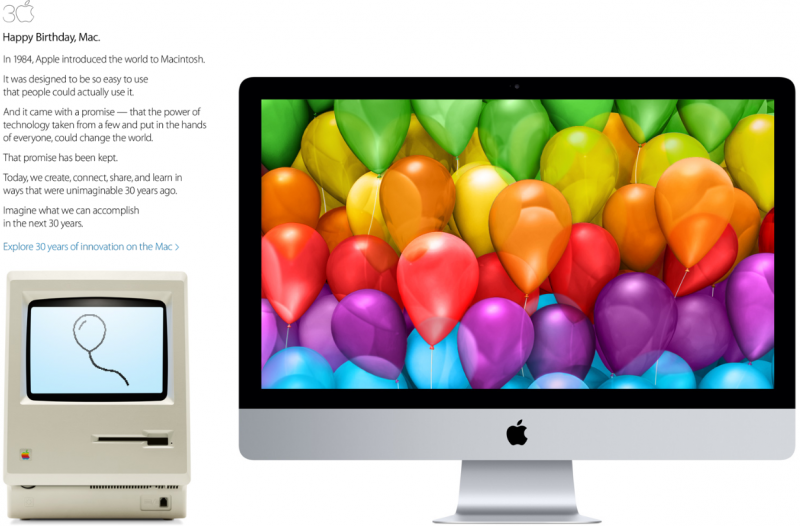
Happy Birthday, Mac.
In 1984, Apple introduced the world to Macintosh.
It was designed to be so easy to use that people could actually use it.
And it came with a promise — that the power of technology taken from a few and put in the hands of everyone, could change the world.
That promise has been kept.
Today, we create, connect, share, and share, and learn in ways that were unimaginable 30 years ago.
Imagine what we can accomplish in the next 30 years.
The special “30 Years” section of Apple’s website allows users to scroll through a visual timeline of the Macintosh’s history, beginning with the first Mac in 1984 all the way to the recently released Mac Pro. Each page in the timeline is introduced by a passage on the Mac’s impact on an individual or entity, such as the Macintosh II’s role in the creation of computational program Mathematica by Theodore Gray or the role the MacBook Pro played in helping create online coding tutorial platform Codecademy.

Pages in the visual timeline also include retrospective information on every Macintosh with photos, and are also followed by research about the most popular uses for a particular Mac. Apple also includes a page for users to input data about their first Mac, which asks questions about location and ownership. The data given by users can be found on another section that gives a visual look at what models were chosen by people as their first Mac, with live updating information.

Meanwhile, the Mac 30 video on the website includes remarks about the Macintosh by notable individuals such as music composer Hans Zimmer and designer Iris van Herpen, and also features a visual look of the computer’s impact in various industries.
In addition to the festivities on Apple’s website, three Apple executives spoke to MacWorld about the Macintosh’s illustrious history, which will be followed by ABC News airing an interview tonight with Apple CEO Tim Cook about the computer’s thirtieth anniversary. Jonathan Zufi, author of the coffee table book “Iconic: A Photographic Tribute to Apple Innovation,” also created a new website that includes photos of macintosh computers and portables from Apple’s early years.
     |

Apple gushes on 30 years of making Macs (video)

This year signifies the 30th anniversary of the Macintosh computer, and who better to reflect on this achievement than the almighty creator Apple? Cupertino has dedicated a corner of its website to such a retrospective, the focal point of which is an inspirational video starring several fans who talk about what Macs have meant to them (embedded below). After learning that Moby is still a thing and that Macs represent a “truly worldwide democratization of creativity,” you can peruse a slick, interactive timeline that walks you through all the iterations and how innovative each one was. You can also tell Apple about your first Mac and what you used it for, with that data populating polls around the site. There are worse ways to kill time, so if you’ve got some to spare, head to the source link and bathe in Cook & Co’s glory.
Filed under: Desktops, Laptops, Apple
Source: Apple

South Korea rules smartphone users can delete Android bloatware

In a move that we can only hope inspires other mobile regulators, the South Korean government has struck a major blow against Android bloatware. Yonhap News reports that Korea’s Ministry of Science, ICT and Future Planning (MISP) is bringing the hammer down on preinstalled Android apps, introducing new guidelines that will enable users to delete them. Carriers won’t be forced to make apps related to Wi-Fi, user settings, NFC or app store removable, but even with core services excluded, it puts almost 60 apps installed by the country’s three biggest providers at risk. Samsung and LG won’t escape the judgement either, with more than half of their 40 default apps facing a less than certain future.
The ministry said preinstalled apps are an “inconvenience” to users and cause “unfair competition” between operators and carriers, so it asked them to offer detailed information to users on how much storage their preinstalled apps take up. It also intends to apply the same rules to Google’s suite of apps and services, which includes Gmail and Hangouts, although the regulator is still in talks with the search giant. Samsung, LG, SK Telecom and others have until April before the rules come into effect, which could mean Korean users will be able to tweak apps installed on their new Galaxy S5, should the device launch in the coming months.
Filed under: Cellphones, Wireless, Internet, Software, Mobile, Google
Via: ZDNet
Source: MSIP
Backup Software Plus External Storage Equals Data Stability

There are many options in backup software, from the programs offered with many major operating systems to selections for purchase or lease that range in features and price depending on your needs. While it is important to know just what your software can do and how to use it to its fullest potential, it is just as critical to see the software as just one piece in the entire computer backup puzzle. You need to know how to use the other elements of the equation as well, to arrive at a complete data security solution that works best for you. Most importantly, avoid the fate of two-thirds of computer users who reported losing home computer files; with Nova backup software used properly as part of an overall computer security and stability system, you will keep your files safe and current.
Understand Your Software
Depending on your computing needs and usage, the backup software needs to be flexible and customizable to your size and scale of data usage, but also should be programmable and automated so that it removes much of the human error factor of forgetting to run a back up on schedule. Most software allows you to set the schedule for the various types of backup, whether full system or incremental update, and use the type of file security that makes most sense in your case, including file compression for maximum efficiency and high-strength encryption to preserve the integrity of your data.
External Storage
An integral part of every solid file maintenance system is a means of external storage of data. Obviously, it makes no sense to store the backup files on the same hard drive that has the original files, or even on a separate drive that is physically present on the computer that you use every day. The USB port on your computer allows attachment of an external hard drive that can hold massive amounts of data, from 500 gigabytes or more on up to a few terrabytes, so you can be sure to include all your files in the backup. For smaller amounts of data, such as incremental updates capturing recently added or changed data, you could use a flash drive or perhaps even a rewritable compact disc, depending on the size of storage needed by your system.
Remote Storage
A range of quality options in remote storage of backup files and data online allows the value of secure location, apart from your equipment, and redundancy, maintaining multiple mirror versions of your critical data. Many companies provide features such as online access to your files and regularly scheduled backups that take the guesswork and risk of forgetting out of using your backup storage. While most companies provide these mentioned features, developing a technical career could give you a competitive advantage when applying for IT jobs. Using a web-based service with backup software makes sense, as you are able to store significant quantities of data at reasonable prices with a great deal of stability and security guaranteed. Many people find that a blend of systems, including some self-maintained data storage on a USB-connected external hard drive or flash drive, together with the stability and regularity of system backup on a remote datacenter system that provides full retention and easy access to backed up files, is the best solution to computer system stability.
Presented by CSI Now
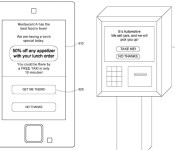
Google patents ads that offer a free ride to your next shopping spree

Having items shipped to our door when we order them — or even before — is nice, but a new Google patent flips things around and offers potential buyers an immediate trip to the store. Apparently, Mountain View’s toying with the idea of arranging transportation for customers who want to visit its advertisers’ stores. Unfortunately, that doesn’t mean everyone can get a limo ride: Google will look at people’s information (location, job, purchasing history, etc.) to determine what kind of transportation to offer.
Since the businesses will shell out cash for the arrangement, high-profile customers likely to spend more will get the VIP treatment and might even be driven around in one of Google’s self-driving autos. As for the rest of us, well, we’ll just have to make do with discounted tickets or reduced taxi fares. The company has quite the patent collection, so we might never see this happen, but those intrigued by the idea can check out the full filing at the USPTO website.
Filed under: Misc
Via: Slashdot
Source: USPTO

Netatmo’s Weather Station scores customized climate alerts, helps you avoid frost bite

IFTTT, an internet service that lets you connect various devices and apps together using a set of triggers and actions, has long played nice with home products like the Philips Hue lights, the Belkin WeMo Light Switch and the WiThings WiFi Body Scale. Now it’s added one more to the list, and that’s the Netatmo Personal Weather Station. As a reminder, Netatmo’s weather station is an aluminum cylinder tricked out with WiFi-linked sensors that can tell you all sorts of information about the surrounding air quality, humidity, pressure, temperature, noise levels and even CO2 levels via a mobile app. IFTTT’s integration, however, adds the ability to create personalized alerts. For example, you can set it so that your Philips Hue light glows red if the Netatmo station detects extremely high CO2 levels. Or you can have IFTTT send you a text message to put on a sweater if the temperature drops below 40 degrees. There are plenty more trigger-action recipes you could come up with of course, or you could just head to IFTTT’s Netatmo channel to see what others have created. Now you no longer have to, like, rely on your five senses to figure out what’s going on around you.
Filed under: Misc
Source: IFTTT’s Netatmo channel
 AIVAnet