



TV stations try sharing their airwaves to make room for 4G traffic

TV stations selling spectrum in the FCC’s upcoming wireless auction may soon have a viable alternative to moving or shutting down their channels. Two Los Angeles broadcasters, KJLA and KLCS, have agreed to participate in a CTIA-backed pilot project that will test whether or not they can share airspace without interference. If the trial is successful, stations will have much more incentive to give up their frequencies for the sake of phone carriers eager for 4G bandwidth — networks will get to both keep their channels as well as reduce their operating costs in the process. Cellular providers will have to wait patiently for results, though, as the trial will run through the first quarter of the year.
Filed under: Cellphones, Wireless, Mobile
Via: Recode
Source: CTIA

Twitter experimenting with pop-up notifications on the web

Twitter isn’t shy when it comes to experimentation. The social network tests some new features by rolling them out to regular users, albeit on a very limited basis, while other projects, such as @eventparrot, are made available to the entire community. The latest unreleased tool to make an appearance is a notification window that pops up whenever you receive a reply or mention, a la the screenshot above. Engadget editor Sarah Silbert noticed the pop-up in her own account, but she seems to be the only staffer with access to this particular tool. We reached out to Twitter for more information, but reps weren’t able to share anything related to this particular implementation.
The company has gone on the record before to shed some light on its otherwise mysterious experiment program — in the past, engineers have “tested various features with small groups,” and that appears to be the case here as well. Have you come across any Twitter features that your friends haven’t seen? Let us know in the comments, and feel free to send us a tip with a screenshot, too.
Filed under: Internet

AT&T Adds 1.2M Smartphones, 566,000 New Subscribers in Q4 2013 [iOS Blog]
 AT&T today announced its 4Q 2013 earnings, revealing the company added 1.2 million postpaid smartphones to its network (both upgrades and new subscribers) and gained 809,000 new subscribers, with 566,000 being postpaid customers with a contract. It is unclear how many of AT&T’s new customers were choosing iPhones, however, as AT&T, like Verizon, no longer reports quarterly iPhone activations or sales.
Smartphones made up 93 percent of total phone sales and 77 percent of the postpaid phone base. The carrier also added 440,000 new tablets during the quarter.
Compared to the year-ago quarter, AT&T gained 300,000 fewer new subscribers, but saw a record low contract churn rate of 1.11 percent and an overall churn rate of 1.43 percent. A company’s churn rate is the percentage of customers that leave the carrier during the quarter. It appears that AT&T is managing to retain most of its subscriber base at this point, but during the next quarter, T-Mobile’s efforts to lure AT&T customers may become more apparent.
AT&T Next, AT&T’s smartphone and tablet upgrade program, has drawn more than 1.5 million customers since it was first launched in July of 2013.
Earlier in January, AT&T competitor Verizon announced smartphone activations of 8.8 million along with 1.7 million new subscribers. Verizon continues to have a bigger postpaid customer base than AT&T at 96.2 million wireless customers compared to AT&T’s 72.6 million.
Overall, AT&T announced a profit of $6.9 billion on $33.2 billion in revenue.
     |
Samsung confirms QHD AMOLED display, also working on UHD
It seems like yesterday when the Samsung Galaxy S4 was introduced, an amazing smartphone with a lot of capabilities. And now, the Mobile World Congress is just around the corner, and word is on the street that Samsung will unveil the Samsung Galaxy S5 at the mega event. We have heard a lot about it, like it will have a QHD display, 4GB RAM, an IRIS scanner and what not. But that’s all rumor, how about something solid?
Yesterday at the Semiconductor and Display Technology Road-map Seminar 2014, Samsung revealed that they are working on a smartphone with AMOLED QHD (2560 x 1440) (psst, Galaxy S5) but that’s not it, they are also working on UHD AMOLED (3480 x 2160) display for future smartphones. A smartphone with such display, probably a dream of every Android fan, right?
Although, let’s enjoy the 4K display first, alright Samsung? We really hope to see the S5 at the MWC next month, what are your thoughts? Tell us about it in the comment box below.
Source: GforG
The post Samsung confirms QHD AMOLED display, also working on UHD appeared first on AndroidGuys.
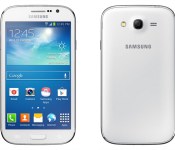
Samsung’s Galaxy Grand Neo melds ultra-basic specs with a mid-size screen

Let’s say you like the idea of a big-screened Samsung smartphone, but even the Galaxy Grand 2 is too rich for your blood. Are you stuck? Not at all — the company has quietly released the Galaxy Grand Neo, a more frugal take on an already cheap handset. The new device keeps the Grand 2′s quad-core 1.2GHz processor and 8GB of expandable storage, but scales down to a 5-inch 800 x 480 display, a 5-megapixel rear camera and a VGA front shooter. Few will be blown away by the hardware, then, although there is a healthy 2,100mAh battery inside. Let’s just hope that the pricing becomes more competitive. As of this writing, the Grand Neo sells for a relatively high €260 ($355) after tax in the Netherlands; we can think of a few smartphones that offer considerably more for your money.
Filed under: Cellphones, Mobile, Samsung
Via: GSM Arena, GSMinfo.nl (translated)
Source: Samsung, Belsimpel.nl (translated)

Verizon LTE now available in 35 NYC subway stations

Many commuters around the world take underground connectivity for granted at this point, but New Yorkers are still disconnected more often than not while riding the subway, or even just waiting for a train. Now, thanks to Transit Wireless, Verizon customers can surf the web via LTE in 35 Manhattan subway stations. Platforms for select trains are now online, with most of the participating stations located on the city’s west side, including Times Square and Columbus Circle. Service is notably absent at Penn Station and Grand Central, though that latter hub is slated to get LTE soon, when 40 additional stations come online as part of the next installation phase. Click through to the source link for the full list of 35 stations that offer LTE today.
(AP Photo/Mary Altaffer)
Filed under: Wireless, Mobile, Verizon
Source: Transit Wireless (MarketWatch)
NVIDIA updates TegraZone to support all Android devices
NVIDIA today issued an update to its TegraZone app (v 2.9) which sees much wider device support. No longer relegated to Tegra-powered devices, it lets players and gamers from other smartphones and tablets access the game portal. Also included in the update, the TegraZone offers enhanced support for the NVIDIA Shield, Android HID controllers for set-top boxes, and even micro-consoles.
Features in TegraZone 2.9
- Supports Google Play Game Services – provides achievements for downloading games, submitting reviews and ratings, and spreading the word about games featured in TegraZone
- Uses your Google+ login to personalize your TegraZone experience
- TegraZone Collections will allow highlighting of special interest groups of games by feature, genre, or publisher
- Sharing shortcut icon makes it easier to share via your favorite social network
- Dynamic loading of additional content when you scroll to the bottom of games lists and news
- Archived news items are now viewable
The post NVIDIA updates TegraZone to support all Android devices appeared first on AndroidGuys.
Build anything you want with Legos, in Chrome

Let’s be honest: You’re never too old to play with Legos. Thanks to the latest Chrome experiment (and a little help from WebGL) you can build whatever your heart desires directly from your browser. Using Maps, you’re able to choose a location-specific plot before starting to build, brick by brick. As you might expect, creations can be viewed across Google+ circles with categories for sorting, and tutorials will help hone those plastic contractor skills. If you really wanna get hands-on, use your phone or tablet’s touchscreen for a more tactile feel. Itching to get started? You can begin construction right here.
Filed under: Internet, Software, Google
Source: Google
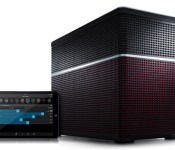
Line 6’s Amplifi duo claims to ‘reinvent’ guitar amps with Bluetooth streaming and iOS controls

Line 6 has been known to push the boundaries of guitar amps: It was one of the first to offer built-in effects for that type of gear. Now, the outfit says it has reinvented the amplifier once more by packing Bluetooth streaming and iOS app controls into its new Amplifi 75 and 150. For learning new riffs alongside Kerry King or simply for easy listening, the amp is compatible with Android, iOS, Mac and PC gadgets for beaming tunes from your repository of choice. To further integrate that mobile device, Line 6′s Amplifi Remote iOS app toggles every dial from an iPhone or iPad. That piece of software also accesses a cloud-based community for sharing and rating tones in addition to storing amp, pedal and effects presets for safekeeping.
As far as specs go, Amplifi is available in either 150 or 75 watts, as their numeric labels suggest. The 150 houses a 12-inch Celestion speaker as part of its five-speaker stereo setup while the 75 packs an 8-inch “custom speaker.” Line 6 says that this arrangement offers a “truly immersive guitar experience” that’s never sounded so “wide and spacious.” Both units offer wet/dry effects to boost said sound quality, tap tempo/tuner, four onboard presets and USB connectivity. If that sounds like the kind of innovation you’re after, the pair is priced at $400 and $500 respectively, and both are available now from guitar retailers. You can take a closer look at the amplifier in the video that awaits after the break.
Filed under: Misc
Via: Gizmag
Source: Line 6

CyberpowerPC stuffs full-size graphics into a tiny gaming desktop

Not interested in buying a Steam Machine this year, but still want a tiny gaming PC? Never fear — CyberPowerPC has just released the Zeus Mini, its latest take on a conventional small computer with full-sized performance. The system is just 4.4 inches thick and 18 inches deep, but it has room for fast video cards like AMD’s R9 290 or NVIDIA’s GeForce GTX 780. You’ll also find a high-end AMD Kaveri or Intel Haswell processor inside, and there’s space for a large liquid cooling system if you insist on a silent rig. Zeus Mini prices start at $599 for a basic variant with a 3.7GHz AMD A10 chip and integrated graphics, but demanding players can shell out $1,479 for a flagship model with a 3.5GHz Core i7 and GTX 780 video.
Filed under: Desktops, Gaming, AMD, Intel, NVIDIA
Source: CyberpowerPC
 AIVAnet