


Yahoo Sports App Updated With GIF Creation From Full-Game Video [iOS Blog]
 Yahoo has updated its Yahoo Sports app with a new feature called Loops, which allows users to create GIFs from footage from any of the four major sports leagues in America (the NFL, NHL, MLB and NBA).
Loops provide a new way for sports fans to easily capture, transform and share their favorite sports moments, right away or later on. Think of Loop as an animated GIF, with captions, effects and comments added to memorable moments in every game.
Users first scrub through footage from entire games from the major four sports leagues, choosing any point in any game to “loop”. Once users choose a moment, they can add text or effects to their “loop”. Finally, they can upload it to the Yahoo Sports app and share it via Facebook, Twitter, Tumblr or send a link to their Loop via email or Messages.
The app was also updated with a redesign for iOS 7, improved scoring indication for football games, new team and player pages, and various bug fixes.
Yahoo Sports is a free universal app available in the App Store. [Direct Link]
     |

Apple Said to Be Targeting Fall 2014 Launch for 12-Inch iPad Focused on Enterprise
Amid rumors of a larger “iPad Pro” perhaps arriving in 2014 with a larger display in the range of 12-13 inches, Evercore analyst Patrick Wang yesterday released a research report indicating that supply chain sources are indeed supporting the circulating claims.
According to Wang’s sources, Apple is looking to launch a 12-inch iPad in the fall of this year, targeting enterprise with a new “hybrid” device intended to bridge the gap between tablets and notebooks. Wang believes that the larger iPad will unsurprisingly also include a new A8 processor from Apple that may be a quad-core chip, as well as increased storage.
Arriving in fall ‘14, Apple goes Enterprise with an 12” iPad. Powered by the A8 chip (perhaps 4C), this expands ARM’s reach and, once again, transforms the traditional notebook market as we know it.
– Expect a 2-1 hybrid – think iPad + MBA – similar to how most iPads are used in the workplace and in the same spirit of MSFT’s Surface.
Wang points out that bill-of-materials estimates peg the cost of the Intel processors used in the MacBook Air in excess of 20% of the machine’s cost, while the ARM processors used in Apple’s iPad represent only about 5% of total cost for high storage capacity models. The much lower pricing for Apple’s A-series chips could allow the company to pose a serious threat to the business notebook market for those applications where a new and larger iPad would be appropriate.

In his note, Wang points out that Apple faces two primary challenges in penetrating the enterprise notebook market with a larger iPad. The first is storage capacity, with the current iPad maxing out at 128 GB, while the second is support for the full Microsoft Office suite that is entrenched in the enterprise market. Microsoft has been reported for some time to be working on a version of Office for iPad, and the most recent reports have indicated that it could arrive in fall of 2014 following completion of the “Touch First” interface for Windows earlier in the year.
| |

Jailbreak Tweak ‘AppLocker’ Locks Individual Apps With Touch ID [iOS Blog]
Following the December release of the evasi0n jailbreak for iOS 7 devices, several new jailbreak tweaks for the iPhone 5s are in the works, including a newly updated version of AppLocker that is designed to take advantage of the Touch ID sensor of the iPhone 5s.
AppLocker is a tweak that has existed for some time, allowing users to lock individual apps with a password. With iOS 7 and an iPhone 5s, AppLocker is able to lock and unlock apps using Touch ID’s fingerprint recognition capabilities. iDownloadBlog has a detailed video of the tweak in use:
AppLocker is only able to access fingerprints that have been entered into the iPhone 5s via the Touch ID menu in the Settings app, and different fingerprints are not distinguished by the system, so there is little setup needed to install the tweak. As demonstrated in the video, app unlocking works as seamlessly as standard device unlocking with Touch ID.
At the current point in time, Touch ID on non-jailbroken devices is limited to unlocking the phone and making purchases in the App Store. It is likely that Apple will expand the use of Touch ID in the future, but it remains unknown whether Apple has plans to release a Touch ID API that would allow the functionality to be built into individual apps as in the AppLocker jailbreak tweak.
The security implications of the Touch ID-supported AppLocker tweak are unknown, as Apple has said that all Touch ID data (in the form of a mathematical representation of a fingerprint) is stored in a “Secure Enclave” inside the A7 processor that is walled off from the rest of iOS and unavailable to iOS or other apps.
According to the developer of the tweak, who spoke to Cult of Mac, AppLocker is not accessing Touch ID data, but rather confirming that a finger is authenticated. “All I am doing is asking iOS, ‘Hey, is this finger authenticated?’ and I get either a ‘Yes’ or a ‘No,’” he said.
The Touch ID functionality in AppLocker 2.2 is currently available for download on jailbroken devices via the ModMyi repo. The update is free for current AppLocker users and $0.99 for new purchasers.
| |
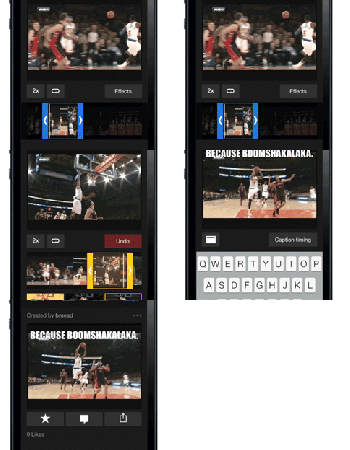
Yahoo Sports for iOS adds Loops for capturing clutch catches, epic fails

Fancy making your own social media commentary during the big game? Yahoo Sports for iOS now lets you capture those monster dunks in animated GIF form. The company has officially labeled the creations Loops, and users can add their own commentary as captions on top of the moving picture. As you might expect, files can then be shared via Tumblr, Twitter, Facebook and e-mail. Not to be left out, the app was revamped for iOS 7 with speedier performance in its sneakers. For a look at some samples, click over to the source link and take a peek.
Source: Yahoo

Researchers turn to Twitter in the search for time travelers

Whether or not time travel is even physically possible remains to be seen. But researchers at Michigan Technological University have already started scouring the internet for evidence that we’ve been visited by tourists from the future. The theory is that anyone who has moved backwards through space-time may have left their mark by tweeting, updating Facebook or posting on Google+ (who knows, maybe it’s super popular in the future). The team began looking for mentions of two particular terms, “comet ISON” and “Pope Francis” before they would have entered our lexicon on September 21, 2012 and March 16, 2013, respectively. The ability to backdate Facebook posts and the fact that Google Trends only picks up popular terms limited he effectiveness of those particular tools, but that did not deter the researchers.
They also performed a version of an experiment first conducted by Stephen Hawking in 2012, who sent out an invitation to a party after he’d already thrown it. Not surprisingly, no one traveled back in time to attend after they’d received the invitation. The Michigan Tech team decided to use Twitter hastags instead. They asked people to tweet with #ICanChangeThePast2 and #ICannotChangeThePast2, then searched for messages including those tags that would have been sent before they put out the call to the would be time travelers. Unfortunately, none of their work turned up any evidence that there are currently people from the future in our midst. Of course, we already know they’re here — Nic Cage is the only evidence we need. The full academic paper awaits you at the source link.
Filed under: Science, Internet, Alt
Via: The Daily Dot
Source: Searching the internet for evidence of time travelers

NSA wants to make a quantum computer that cracks tough encryption

While the NSA can inflitrate many secure systems without breaking a sweat, there are still some encryption methods that it just can’t crack. That may not be a problem in the long term, however. The Washington Post has published documents from Edward Snowden which reveal that the agency is researching a “cryptologically useful” quantum computer. The dramatically more powerful hardware could theoretically decode public encryption quickly enough to be useful for national defense; conventional PCs can take years, even when clustered together. That kind of decrypting power is potentially scary, but you won’t need to worry about the privacy of your secure content just yet. It’s not clear that the NSA is anywhere close to reaching its goal, and any success could eventually be thwarted by quantum-based encryption that’s impossible to break by its very nature. Still, the leak is a friendly reminder that we shouldn’t take existing security methods for granted.
Filed under: Networking, Internet
Source: Washington Post

Netflix adds director’s commentary option to House of Cards season one

You’ll have to wait until Valentine’s Day to get the next dose of Netflix’s popular series House of Cards, but it’s doling out some love early. Starting today, fans can revisit season one with optional director’s commentary tracks from all six directors: David Fincher, James Foley, Joel Schumacher, Charles McDougall, Carl Franklin and Allen Coulter. As shown above, viewers get the additional commentary option under the alternate audio/subtitles menu and it should be available on all devices. Usually these kinds of extras are tied to physical media, but Netflix announced recently it would give them a test run starting with its original content like this show and Orange is the New Black. If you appreciate the extra insight give them a spin, we know the streaming company makes many of its decisions based on analytics so vote with your play button — if you’re waiting for 4K we should hear more about that very soon.
House of Cards S1 Director’s Commentary feat. David Fincher and more – Now live on Netflix: http://t.co/Ut6TckaVYn pic.twitter.com/8sSL99O5Lx
– House of Cards (@HouseofCards) January 3, 2014
Filed under: Home Entertainment, HD
Source: Netflix
Corning Announces New ‘3D’ Shaped Gorilla Glass
Corning has announced a new shaped Gorilla Glass product to offer glass solutions for curved devices like smart watches. Corning is one of Apple’s main suppliers for the glass in the iPhone and iPad, and, with Apple rumored to have a smart watch production the works, Corning’s new product would make for a logical source component for the new device.
Product design continues to drive the consumer electronics industry. More than half of the top 10 smartphone manufacturers already market devices that incorporate cover glass with subtle curves, and the demand for even more-dramatic form factors is increasing. Corning’s 3D-forming technology meets this demand and expands the design possibilities for industrial designers.
The relationship with GTOC allows Corning to provide a “one-roof” solution. “We can now take Gorilla Glass all the way from flat sheet to a finished 3D-shaped product in Asia, expediting turnaround times and minimizing logistical complexity,” said James R. Steiner, senior vice president and general manager, Corning Specialty Materials. “That’s a win for Corning and our customers.”
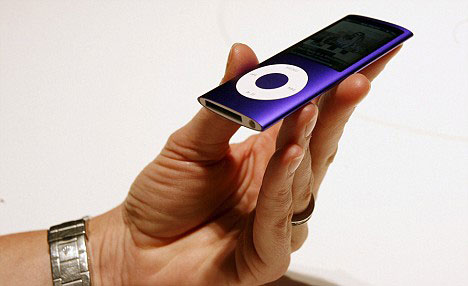
Apple has used curved glass in some of its products in the past, most notably in a previous generation iPod nano. There have been a number of rumors about Apple developing curved glass iPhones, most recently in November when Bloomberg said Apple would release 4.7″ and 5.5″ iPhones next fall with slightly curved screens.
| |

Mac Pro CPU Upgradeability Confirmed With Processor Swap
Following the release of the Mac Pro, a quick teardown by Other World Computing (OWC) revealed that the tower’s Intel Xeon E5 processor was socketed and removable, theoretically allowing for future upgrades. All CPUs in the Mac Pro were found to use the same LGA 2011 socket standardized on the Mac Pro’s motherboard.
Today OWC confirmed that the Mac Pro’s processor is indeed upgradeable, successfully replacing the default Intel E5–1650 V2 6-core 3.50Ghz processor with an Intel E5–2667 V2 8-core 3.30GHz processor with 25MB of L3 cache, an option not offered by Apple. The upgraded processor gave OWC’s machine a 30 percent multi-processor performance boost, outperforming Apple’s standard 8-core option with a Geekbench score of 27004 vs. 24429.

With a replaceable CPU, customers can purchase more affordable lower-configuration Mac Pros that can be updated in the future as processor prices drop. Prices for multi-core processors today remain high, with the CPU OWC used from Intel priced at $2000. Apple’s own CPU upgrade options range in price from $500 to $3500. Based on the 3.7Ghz quad-core Intel Xeon E5 with 10MB of L3 cache, pricing from Apple is as follows:
– 3.5GHz 6-Core Intel Xeon E5 with 12MB of L3 cache: +$500
– 3.0GHz 8-core Intel Xeon E5 with 25MB of L3 cache: +$2000
– 2.7GHz 12-core Intel Xeon E5 with 30MB of L3 cache: +$3500
The upgradeable CPU in the Mac Pro is a deviation from standard practice for Apple, with most consumer-oriented Macs featuring soldered processors. Along with a removable CPU, Mac Pro buyers are also able to upgrade memory and other components. In a recent teardown, iFixit gave the Mac Pro a repairability score of 8 out of 10, highlighting the easily accessible internal components and the non-proprietary screws.
Apple’s Mac Pro is currently available exclusively through the online Apple Store. Due to low supply and high demand, new orders are not expected to ship until February or later, but customers who placed orders shortly after the computer went on sale have begun receiving units.
| |
Wearable Technology at CES 2014: Smart Watches, Activity Trackers, Glasses, and More
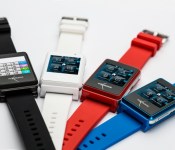
As it was during last year’s Consumer Electronics Show, wearable technology, in the form of a variety of smart watches, fitness trackers and even smart glasses, will be a major focus of CES 2014, which is slated to begin next week.
This year, CES will feature an all new TechZone exhibit called “WristRevolution,” featuring smart watches (both already released and upcoming) from a wide array of companies highlighted by PCWorld, including Kronoz, Cookoo, Sonostar, Metawatch, Archos, Burg, and Pine. Major companies like Qualcomm and Sony will also exhibit smart watches, as will seasoned veteran Pebble.
 Kronoz ZeNano
Some of the watches, like the Cookoo, offer notifications and more bundled in a standard watch style design, while other products, like the Sonostar, carry a more futuristic wraparound design. Some, like the Kronoz, allow users to answer calls directly on their wrists, and others, like the Pine, also include biometric sensors for measuring heart rate.
Witness the unveiling of next generation tech wearables. The all-new WristRevolution TechZone at the 2014 CES is where style, sensors and connectivity intersect. From customizable and downloadable watch faces to internet-connectivity and app-based programs, the standard wristwatch transforms into a GPS, music player, health monitor, alert and message indicator and more. The WristRevolution TechZone will showcase the latest developments and discoveries for the next wave of advancement for this pocket-sized tech.
Smart watches have soared in popularity over the course of 2013, following the release of the Pebble Smart Watch and an onslaught of rumors about Apple’s smart “iWatch,” inspiring companies like Samsung to launch their own smart watch offerings.
Along with smart watches, wearable activity trackers like the Fitbit, the Jawbone UP, and the Nike FuelBand are expected to be a popular exhibition category at CES. The show will see old favorites from companies like Fitbit and Basis, showing off their newest offerings the Fitbit Force and the Carbon Steel Basis Tracker, respectively, as well as newer devices like the Lifeband Touch from LG.
Spurred by the popularity of Google Glass, several companies will show off smart glasses, with Epson, Vuzix, GlassUp, and more exhibiting various smart eyewear products. GlassUp, like Google Glass, is designed to allow wearers to view incoming notifications like emails, text messages, app updates, and more, but it is far more simple than Google Glass, lacking key features like a camera.

Wearables that don’t fall into other categories, like the MYO armband, will be exhibited as well. First introduced last year, the MYO armband is designed to detect motion and muscle movements, allowing its users to control a Mac, PC, or other device through gestures. The Kiwi Move, a small motion-tracking dongle, works similarly to an activity tracker but can be worn anywhere, while the Lumo is a back brace designed to sense and correct posture. Intel has also promised to unveil some non-specific “innovative wearables” during CES.

Wearable technology will also veer into some radical new arenas at CES, with i4c debuting VOYCE, a wearable monitor designed for dogs. The collar, which includes a number of biometric sensors, measures vital signs.
In addition to the above mentioned products, many other wearable surprises are expected to debut at CES this year, skyrocketing wearable technology to a new level of popularity. CES 2014 will take place from Tuesday, January 7 to Friday, January 10 in Las Vegas.

| |

